The probable cause of death of the patient shown below is:

What is the phenomenon shown in the image?

What does this picture depict? (AIIMS May 2016)
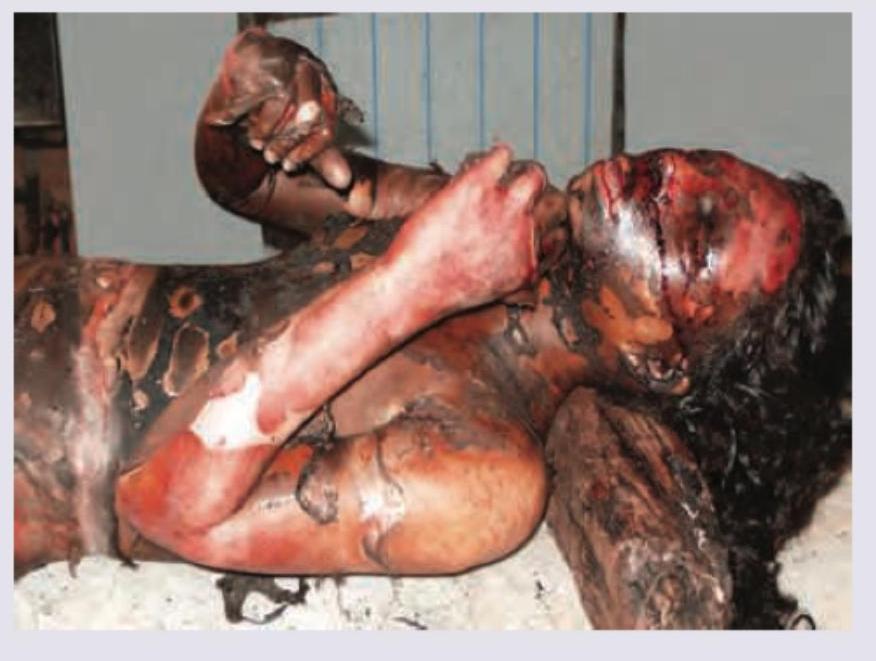
The image shows presence of:

The image shows presence of:
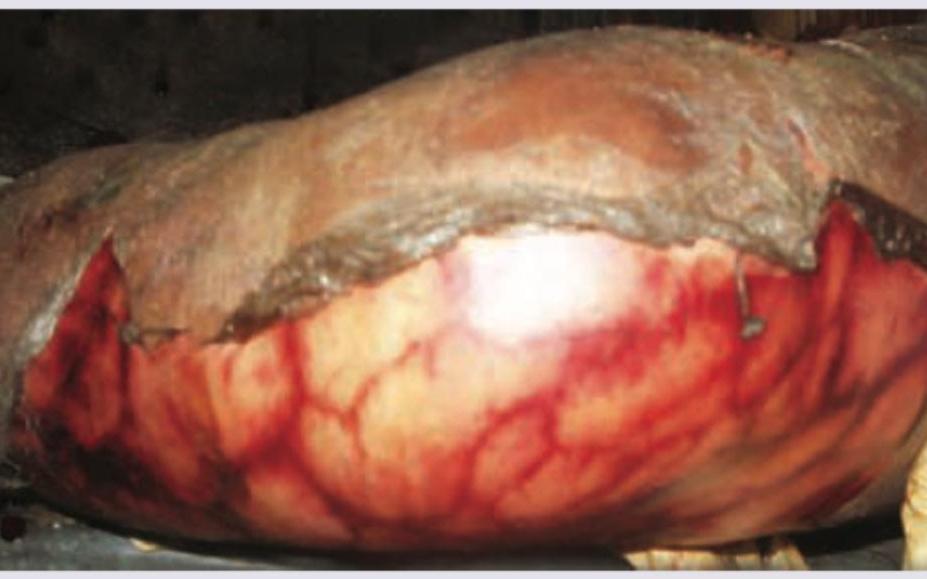
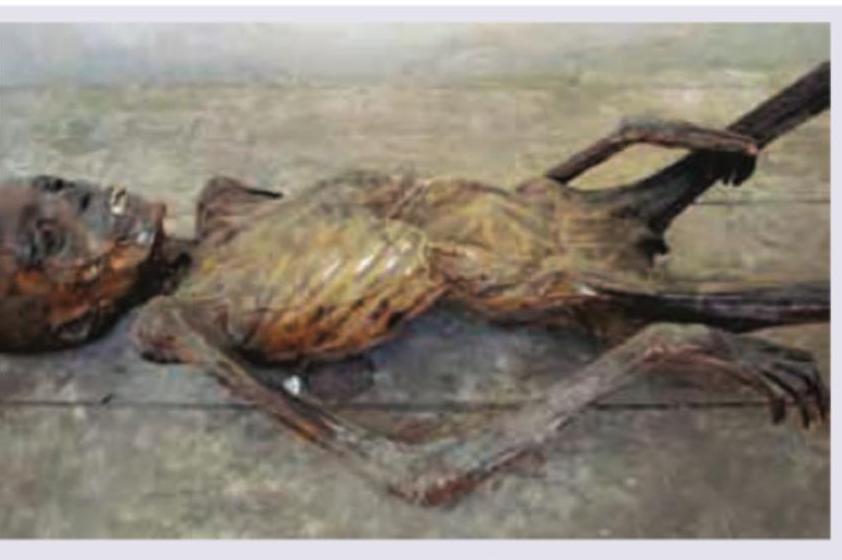
A body recovered from a fire scene shows the posture depicted in the image. This finding is best described as:
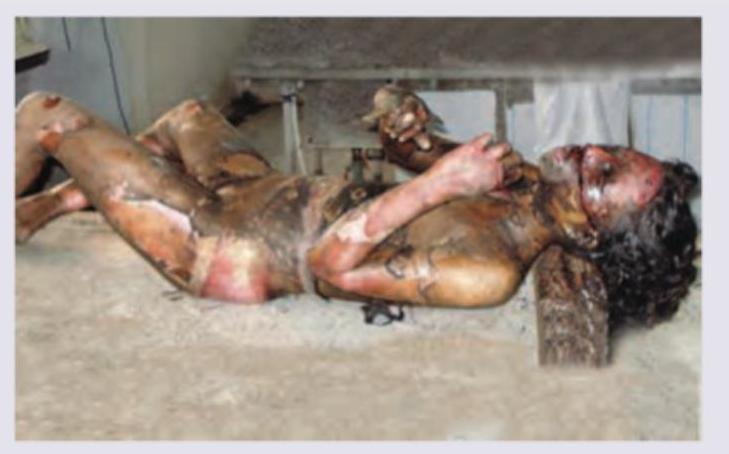
All are true about the image shown in the figure except:

Identify the postmortem change shown in the image:

Identify the post mortem lividity of the image: (AIIMS Nov 2018)

Which of the following is true regarding adipocere formation?
Explanation: **Hanging** - The image on the left displays a **ligature mark** on the neck that is *oblique* and *incomplete*, which are characteristic signs of judicial or suicidal hanging. The mark is also relatively dry and parchment-like, fitting with a postmortem finding from suspension. - The second image, showing extensive **tissue disruption and hemorrhage** in the neck, is consistent with injuries sustained in a hanging, particularly if the fall from a height causes significant cervical spine and associated soft tissue trauma. *Strangulation* - Strangulation typically presents with a more **horizontal and complete ligature mark** around the neck. - It often shows signs of **external neck compression**, such as petechial hemorrhages above the ligature site, which are not clearly visible or exclusive to this image. *Throttling* - Throttling involves manual compression of the neck by human hands, leading to **finger marks or bruising** on the neck. - It does not typically produce a distinct, continuous ligature mark like the one seen in the first image. *Gagging* - Gagging involves covering the mouth to prevent vocalization or breathing and would cause signs of **asphyxia** localized to the mouth and nose area, not the neck. - There would be no ligature mark or direct neck trauma from gagging itself.
Explanation: ***Pugilistic attitude*** - The image shows a body in a **"pugilistic attitude"** or **"boxer's pose"**, characterized by **flexion of the elbows, knees, and hips**, with clenched fists resembling a boxer's fighting stance. - This posture is due to **heat-induced coagulation and shortening of muscles** during exposure to high temperatures, such as in fires. - It occurs because **flexor muscles are stronger than extensor muscles**, and when heated, they contract more forcefully, pulling limbs into this characteristic flexed position. - This is a **postmortem phenomenon** that occurs regardless of whether the person was alive or dead when exposed to fire. *Seen in antemortem burns* - While the person may have sustained antemortem burns, the **pugilistic attitude itself is a postmortem change** that develops due to heat stiffening of muscles after death. - Antemortem burns show **vital reactions** such as blistering with protein-rich fluid, surrounding inflammation, soot in airways, and elevated carboxyhemoglobin levels - features not indicated by this posture alone. *Seen in postmortem burns* - While this statement is true (pugilistic attitude does occur in postmortem burns), the question asks for the specific **name of the phenomenon** shown in the image. - The posture results from **muscle protein denaturation and dehydration** when the body is exposed to temperatures above 65-70°C, causing muscle contraction and shortening. *All are correct* - This option is incorrect because "Seen in antemortem burns" is not an accurate description of the pugilistic attitude, which is specifically a **postmortem heat-related change**.
Explanation: ***Pugilistic attitude*** - The image shows a body with arms and legs flexed, resembling a **boxer's stance**. This posture occurs due to the **coagulation and shortening of muscular proteins** during intense heat exposure, such as in fire deaths. - This characteristic posture is a key indicator of exposure to high heat and is often seen in bodies recovered from fires. *Postmortem caloricity* - **Postmortem caloricity** refers to a transient rise in body temperature after death, which can occur in conditions like sepsis or heatstroke, and is not a physical posture. - It describes a **thermal change**, not a muscular artifact or body position. *Cadaveric spasm* - **Cadaveric spasm** is a rare form of instantaneous rigor mortis that occurs immediately at the moment of death, usually due to extreme exertion or emotional stress. The body maintains the position it was in at the time of death. - Unlike pugilistic attitude, it doesn't involve the progressive and massive muscle contraction caused by heat, and it fixes the precise position at the moment of death. *Rigor mortis* - **Rigor mortis** is the stiffening of muscles that occurs several hours after death, due to the depletion of ATP and subsequent failure of muscles to relax. It typically resolves within 24-48 hours. - While it involves muscle stiffening, it is a **generalized phenomenon** that follows a predictable timeline and does not specifically create the flexed, "boxer-like" posture seen in the image.
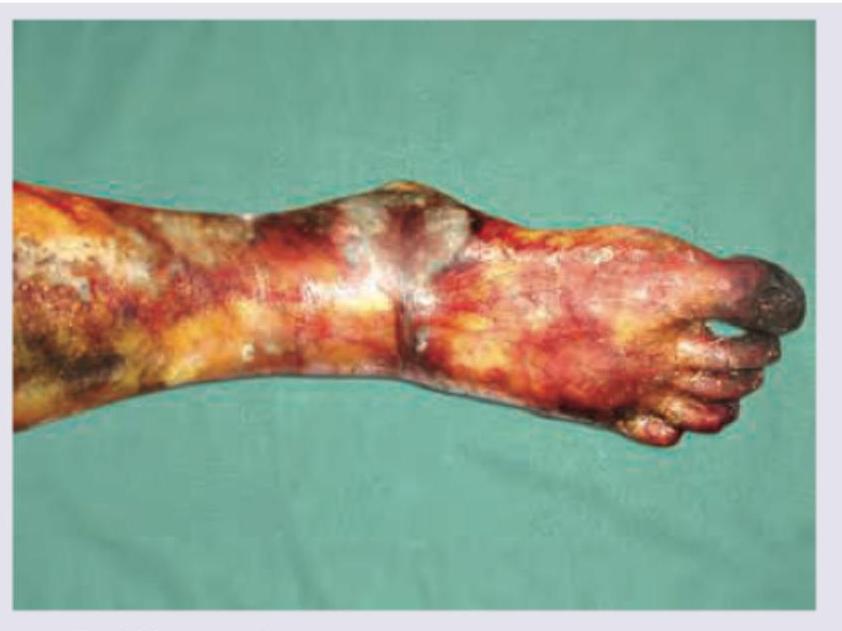
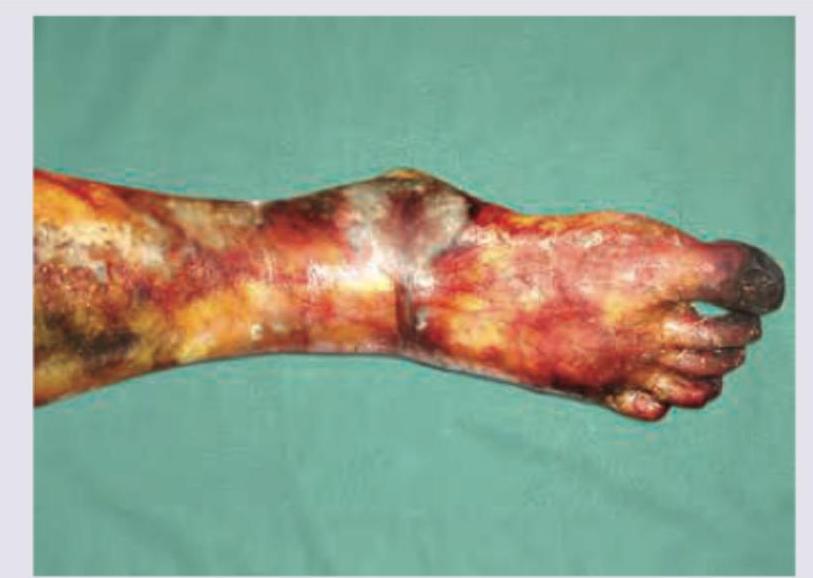
Explanation: ***Red marbling of skin*** - The image clearly displays a **reticulated, tree-like pattern of reddish-purple discoloration** on the skin, which is characteristic of **red marbling**. - This phenomenon occurs as a result of **hemolysis of red blood cells** within the blood vessels after death, followed by their diffusion into the surrounding tissues, especially along superficial veins. - Typically appears within **24-48 hours post-mortem** and is more prominent in dependent areas. *Adipocere* - **Adipocere** (also known as "grave wax") is a grayish-white, greasy, or waxy substance formed from body fat post-mortem, usually in damp and anaerobic conditions. - It does not present as the reddish-purple branching pattern seen in the image. - Formation requires weeks to months in appropriate environmental conditions. *Tardieu spots* - **Tardieu spots** are petechial hemorrhages (small punctate hemorrhages) that occur in cases of asphyxia or sudden congestion. - They appear as discrete, pinpoint hemorrhages rather than the **continuous reticulated vascular pattern** characteristic of red marbling. - Most commonly found on visceral surfaces (heart, lungs) and conjunctiva. *Postmortem contusion* - A **postmortem contusion** refers to a bruise or injury inflicted after death, which may show areas of blood accumulation. - While there may be discoloration, it does not typically show the **distinct vascular, reticulated pattern along venous channels** that characterizes red marbling. - Postmortem injuries lack vital reaction and infiltration seen in ante-mortem bruises.
Explanation: ***Marbling*** - The image depicts a **marbled pattern** of superficial veins that become visible due to **hemolysis** and **denatured hemoglobin** staining the vessel walls. - This phenomenon typically occurs 12-24 hours post-mortem, resulting from the breakdown of blood in the vessels and is a sign of **putrefaction**. *Filigree burns* - Filigree burns, also known as **Lichtenberg figures**, are fern-like, arborescent patterns on the skin caused by **lightning strikes**. - They represent the path of current over the skin and are transient, unlike the venous pattern seen in the image. *Goldilocks phenomenon* - The "Goldilocks phenomenon" in medicine typically refers to an optimal, intermediate range for various physiological or therapeutic parameters. - It describes a concept, not a visual finding on a body. *Arborescent burns* - Arborescent burns are another term for **Lichtenberg figures** or **filigree burns**, which are characteristic of lightning injuries. - The pattern seen in the image is due to post-mortem changes in blood vessels rather than an electrical injury.
Explanation: ***Heat stiffening*** - The image displays a cadaver with **extensive burns** and a characteristic posture often referred to as the "**pugilistic attitude**" or **boxer's stance**. - This posture, caused by the **coagulation of muscle proteins** and shortening of muscle fibers due to intense heat, is a clear indicator of **heat stiffening**. *Cold stiffening* - This condition occurs when the body is exposed to **extreme cold**, causing fat to solidify and joints to become rigid. - While it also causes stiffening, it would not be accompanied by the extensive burn injuries visible in the image. *Rigor mortis* - Rigor mortis is a post-mortem change characterized by the **stiffening of muscles** due to a lack of ATP, which prevents the separation of actin and myosin filaments. - While present in all deceased bodies, the specific "pugilistic attitude" seen here is a direct result of **heat-induced muscle contraction**, distinguishable from rigor mortis alone. *Gas stiffening* - Gas stiffening, or putrefaction, involves the accumulation of **gases produced by bacterial decomposition** within tissues, which can cause swelling and some degree of rigidity. - The image depicts burn injuries and a specific heat-induced posture, not the generalized swelling and discoloration associated with significant gas stiffening.
Explanation: ***Disappears last from muscles of face and neck*** - **Rigor mortis** follows **Nysten's law**, meaning it appears and disappears in a **specific sequence**. - It first appears in the small muscles of the **face and neck**, then progresses to the upper limbs, trunk, and finally the lower limbs. - It **disappears in the same order** it appears - starting from the face and neck first, NOT last. - Therefore, the statement that rigor mortis "disappears last from muscles of face and neck" is **incorrect**. *Voluntary muscles are affected after the involuntary muscles* - **Rigor mortis** primarily affects skeletal (voluntary) muscles in descending order of size. - The **myocardium** (cardiac muscle) may develop rigor mortis, but the classical progression described by Nysten's law applies to voluntary muscles. - Involuntary smooth muscles are generally not significantly affected by rigor mortis. *Takes 12 hours to pass off* - The onset of **rigor mortis** typically begins in small muscles of the face and neck within **2-4 hours** after death. - It becomes generalized by **6-12 hours** and usually **persists for 12-36 hours** before passing off. - The duration is highly variable depending on ambient temperature, muscle mass, and muscle glycogen stores at death. *Can cause postmortem emission of semen* - **Rigor mortis** in the seminal vesicles and other male reproductive organs can cause contraction. - This leads to the **expulsion of semen** postmortem, a well-documented phenomenon. - This occurs due to stiffening of muscles involved in the ejaculatory process after death.
Explanation: ***Adipocere*** - The image displays a cadaver with a **waxy, soap-like consistency** which is characteristic of **adipocere** formation, a postmortem change where fatty tissues are hydrolyzed into fatty acids. - This process typically occurs in **moist environments** (such as wet soil or water) and can preserve the body's contours for extended periods. - Adipocere formation usually requires **weeks to months** to develop and is also known as **grave wax** or **saponification**. *Putrefaction* - **Putrefaction** involves the decomposition of body tissues by bacteria, leading to discoloration, gas formation (bloating), and liquefaction of organs. - While putrefaction often precedes adipocere formation, the body in the image does not show the typical advanced signs of putrefaction such as severe bloating or greenish discoloration, but rather a more preserved, waxy appearance. *Rigor mortis* - **Rigor mortis** is the stiffening of muscles after death due to the depletion of ATP, a temporary condition that sets in within hours and resolves within 24-48 hours. - The image shows a body in an advanced state of decomposition or preservation, clearly beyond the transient phase of rigor mortis. *Mummification* - **Mummification** is the preservation of a body through dehydration, occurring in dry, hot, or cold environments. The tissues become leathery and shriveled. - The corpse in the image appears waxy and somewhat hydrated, not desiccated and shriveled like a mummified body.
Explanation: ***Suggillation*** - Suggillation refers to the extravasation of blood into the tissues due to crushing pressure or trauma, often seen in cases of severe blunt force injury, leaving **diffuse, purplish discoloration.** - In post-mortem examination, a **suggillation** can be distinguished from common **livor mortis** (lividity) by its darker color and by the fact that it is not blanchable under pressure, indicating **capillary rupture and hemorrhage** rather than just pooling of blood. *Tattooing* - Tattooing involves the insertion of **indelible ink** into the dermis of the skin, creating permanent designs. - Tattoos have distinct, often patterned, appearances and would not resemble the **irregular, deep discoloration** of lividity or hemorrhage. *Putrefaction* - Putrefaction is a later stage of decomposition, characterized by the breakdown of tissues by bacteria, producing **gases, discoloration (greenish-black), and foul odors.** - This process is distinct from the **vascular pooling** or **hemorrhage** that forms suggillation; putrefaction typically starts later (after 24-48 hours) and involves more widespread tissue destruction. *Decomposition* - Decomposition is the broader process of decay of organic matter after death, encompassing various stages like **autolysis, putrefaction, and skeletonization.** - While suggillation occurs post-mortem, it is a specific type of **post-mortem bruising** or lividity, distinct from the generalized tissue breakdown and gaseous changes seen in advanced decomposition.
Explanation: ***Preservation by saponification*** - Adipocere, also known as **grave wax**, is formed through the process of **saponification**, where body fat hydrolyzes into fatty acids. - This process leads to the formation of a **waxy, grayish-white substance** that can preserve the body tissues. *High temperature needed* - Adipocere formation is actually favored by **cooler temperatures**, which slow down putrefaction and create a more conducive environment for saponification. - **High temperatures** typically accelerate decomposition, making adipocere formation less likely. *Cool and dry climate needed* - While a **cool environment** is favorable, adipocere formation primarily requires a **moist or wet environment**, such as burial in damp soil or immersion in water. - A **dry climate** would generally lead to mummification rather than adipocere formation. *Occurs within minutes to hours* - Adipocere formation is a **slow process** that usually takes **several weeks to months** (typically 3 weeks to 3 months) to become evident, and even longer to fully develop. - It does not occur within minutes or hours, which is the timeframe for early post-mortem changes like livor mortis or rigor mortis.
Postmortem Changes
Practice Questions
Medicolegal Autopsy
Practice Questions
Death Cause, Mechanism and Manner
Practice Questions
Time Since Death Estimation
Practice Questions
Sudden and Unexpected Deaths
Practice Questions
Injuries and Wound Examination
Practice Questions
Blunt Force Injuries
Practice Questions
Sharp Force Injuries
Practice Questions
Firearm Injuries
Practice Questions
Internal Examination in Autopsy
Practice Questions
Histopathology in Forensic Practice
Practice Questions
Death Certification
Practice Questions
Get full access to all questions, explanations, and performance tracking.
Start For Free