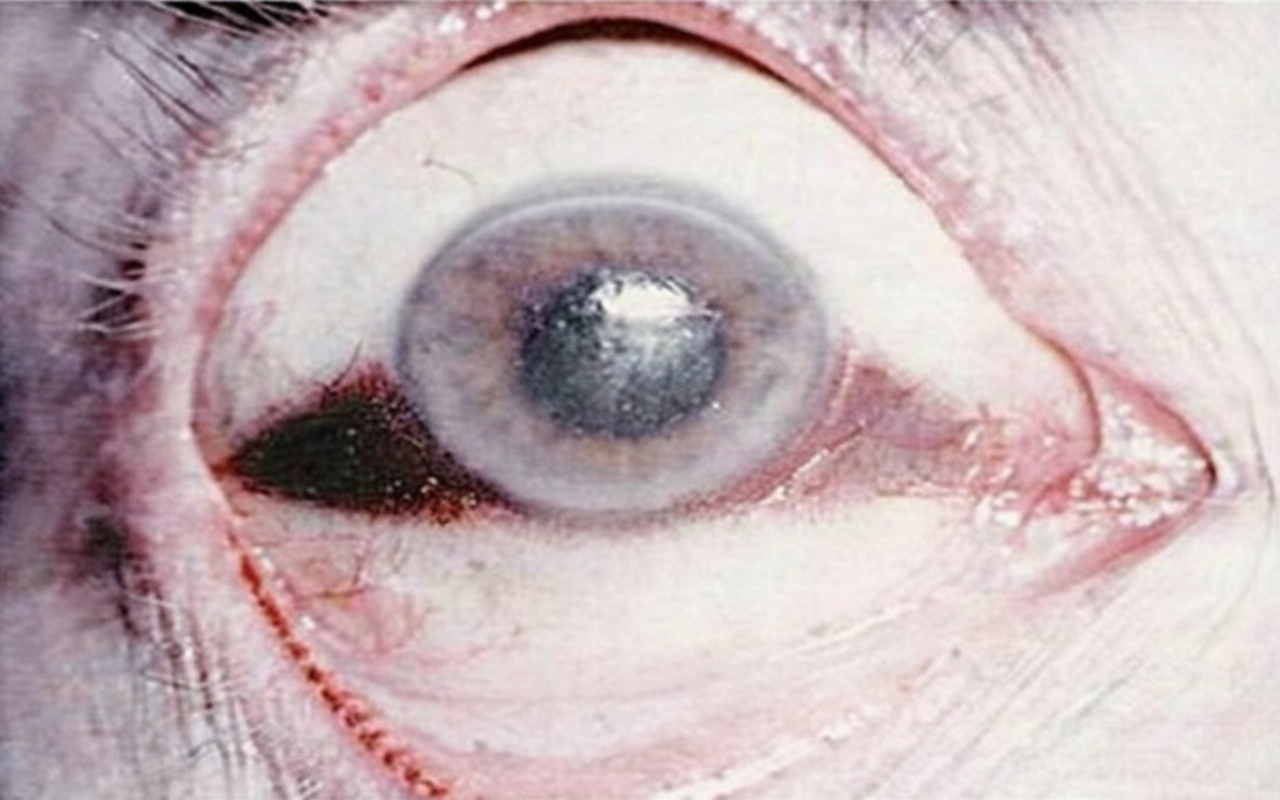
Colliquative liquefaction is typically seen within which timeframe after death?
The rate of cooling of a corpse helps in determining which of the following?
What is synonymous with a pugilistic attitude?
Zasko's phenomenon is seen during which of the following stages?
Which of the following can be considered as various modes of death?
Study of death in all its aspects is known as:
Marbling is noticed after how many hours?
Which is the first internal organ to putrefy?
Pugilistic attitude is seen in death due to which of the following causes?
Postmortem caloricity is seen in all the following conditions, EXCEPT:
Explanation: **Explanation:** The correct answer is **D. 1 week**. **Understanding the Concept:** Colliquative liquefaction is a specific stage of **putrefaction** where the body's tissues soften and turn into a semi-fluid, creamy mass. This process is driven by two mechanisms: **autolysis** (self-digestion by intracellular enzymes) and **bacterial action** (primarily by *Clostridium welchii*). In a temperate climate, while the first signs of putrefaction (greenish discoloration) appear at 24–48 hours, the generalized liquefaction of internal organs and the formation of "putrid soup" typically reach their peak around **7 days (1 week)** after death. **Analysis of Options:** * **A. Immediately:** At death, molecular life continues; no gross morphological changes of decomposition occur this early. * **B. 24 hours:** This is the timeframe for the appearance of the **greenish discoloration** over the right iliac fossa (the first sign of putrefaction). * **C. 72 hours:** By this stage, features like bloating, marbling, and glove-and-stocking skin peeling are prominent, but the organs have not yet fully liquefied into a colliquative state. **High-Yield Clinical Pearls for NEET-PG:** * **Order of Organ Putrefaction:** The **larynx and trachea** are usually the first internal organs to putrefy, while the **prostate** (in males) and **non-gravid uterus** (in females) are the last due to their muscular structure. * **Casper’s Dictum:** This rule of thumb for the rate of putrefaction states that 1 week in air = 2 weeks in water = 8 weeks buried in earth (Ratio 1:2:8). * **Temperature Dependency:** The "1-week" rule applies to temperate climates; in extreme tropical heat, this process can be significantly accelerated.
Explanation: **Explanation:** The rate of cooling of a corpse, medically termed **Algor Mortis**, is one of the most reliable methods for estimating the **Time Since Death (TSD)**, especially during the first 18–24 hours post-mortem. **Why Option A is Correct:** After death, metabolic heat production ceases, and the body begins to lose heat to the environment through conduction, convection, and radiation until it reaches equilibrium with the ambient temperature. By measuring the core body temperature (usually via a chemical thermometer placed in the **rectum** or through a liver puncture) and applying formulas like **Marshall and Hoare’s** or **Glaister’s formula**, forensic experts can back-calculate the approximate time of death. **Why Other Options are Incorrect:** * **B. Manner of Death:** Refers to the legal category (Natural, Accidental, Suicidal, Homicidal). Cooling rates do not indicate the intent or circumstances. * **C. Place of Death:** Cooling depends on the environment, but it cannot pinpoint a specific geographical location unless there is a drastic temperature difference between two suspected sites. * **D. Cause of Death:** Refers to the specific injury or disease that led to death (e.g., Myocardial Infarction, Gunshot wound). Algor mortis is a physiological change, not a diagnostic tool for the underlying pathology. **High-Yield Facts for NEET-PG:** * **Glaister’s Formula:** $TSD = \frac{\text{Normal Body Temp} - \text{Rectal Temp}}{1.5}$ (Rate of cooling is roughly 0.4 to 0.7°C per hour). * **Sigmoid Curve:** The cooling of a body follows an inverted S-shaped curve; it is slow initially (lag phase), rapid in the middle, and slow again as it nears ambient temperature. * **Factors accelerating cooling:** Lean body mass, children (high surface area to volume ratio), naked body, and cold/windy environments. * **Post-mortem Caloricity:** A condition where the body temperature rises after death instead of falling (seen in Tetanus, Strychnine poisoning, Septicemia, and Heatstroke).
Explanation: **Explanation:** The **Pugilistic Attitude** (also known as the Fencing or Boxer’s attitude) is a post-mortem finding seen in bodies recovered from fires or exposed to extreme heat. It is characterized by the flexion of the elbows, knees, hip, and neck, with the fingers hooked like claws, resembling the stance of a boxer. **Why Option A is Correct:** The term is synonymous with a **Defensive Attitude** because the posture mimics a person trying to defend themselves from an attack. However, it is crucial to understand the underlying medical concept: this is **not a vital reaction**. It occurs due to the **heat-induced coagulation and shortening of muscle proteins**. Since flexor muscles are bulkier and more powerful than extensor muscles, their contraction overcomes the extensors, resulting in a generalized flexed posture. It can occur in both ante-mortem and post-mortem burns. **Why Other Options are Incorrect:** * **B. Assault attitude:** This is not a recognized forensic term for heat-related contractures. * **C. Bowstring attitude:** This refers to **Opisthotonus**, a state of severe hyperextension and spasticity (seen in Tetanus or Strychnine poisoning), which is the opposite of the flexed pugilistic stance. * **D. Bayonet attitude:** This is not a standard forensic term; "Bayonet deformity" is typically associated with orthopedic fractures (like Smith’s fracture). **High-Yield Clinical Pearls for NEET-PG:** * **Mechanism:** Denaturation of proteins (coagulative necrosis) leading to muscle shortening. * **Medicolegal Significance:** It does **not** indicate that the person was alive at the time of the fire; it is a purely physical change due to heat. * **Differential Diagnosis:** It must be distinguished from **Cadaveric Spasm**, which is a vital reaction occurring at the moment of death. * **Associated Finding:** Heat fractures (often in the skull) may occur alongside this attitude due to the expansion of intracranial fluids/gases.
Explanation: **Explanation:** **Zasko’s Phenomenon** refers to the mechanical irritability of muscles observed immediately after death. It is a characteristic feature of the **Primary Relaxation** stage. 1. **Why Primary Relaxation is correct:** Immediately following somatic death, the body enters a state of primary relaxation where all muscles become flaccid. During this period, although the person is clinically dead, the individual cells and tissues remain metabolically active (molecular life). If a muscle is struck firmly (e.g., with a percussion hammer or the edge of a hand), it responds by contracting or forming a localized swelling. This mechanical excitability is known as Zasko’s phenomenon. It typically persists for 1–2 hours after death. 2. **Why other options are incorrect:** * **Rigor Mortis:** This is the stage of post-mortem rigidity caused by the depletion of ATP. Muscles become stiff and lose all irritability; therefore, they cannot respond to mechanical stimuli. * **Decomposition:** This stage involves the putrefaction and autolysis of tissues. The muscle proteins are broken down by enzymes and bacteria, making any physiological or mechanical response impossible. * **Secondary Relaxation:** This occurs after rigor mortis passes off due to the onset of decomposition. The muscles become flaccid again, but since the tissue is dead at a molecular level, there is no irritability or response to stimuli. **High-Yield Clinical Pearls for NEET-PG:** * **Supravital Reaction:** Zasko’s phenomenon is a type of supravital reaction, used to estimate the time since death (usually within the first 2 hours). * **Pupillary Reaction:** Another supravital sign is the response of the iris to chemical miotics (pilocarpine) or mydriatics (atropine), which can persist for several hours after death. * **Sequence:** Primary Relaxation → Rigor Mortis → Secondary Relaxation.
Explanation: In Forensic Medicine, it is crucial to distinguish between the **modes**, **manners**, and **types** of death. ### **Why Option C is Correct** The **Modes of Death** (also known as Bichat’s Triple Hierarchy of Death) refer to the physiological systems that fail first, leading to the cessation of life. According to Bichat, there are three primary modes: 1. **Coma:** Death beginning at the **Brain** (e.g., head injury, poisoning). 2. **Syncope:** Death beginning at the **Heart** (e.g., hemorrhage, sudden cardiac arrest). 3. **Asphyxia:** Death beginning at the **Lungs** (e.g., hanging, drowning, strangulation). ### **Analysis of Incorrect Options** * **Option A (Somatic, Molecular):** These are the **Stages/Levels of Death**. Somatic death is the clinical death of the person as a whole, while molecular death is the subsequent death of individual cells and tissues. * **Option B (Suicide, Homicide, Accidental):** These represent the **Manner of Death**, which describes the legal circumstances under which death occurred (Natural vs. Unnatural). * **Option D (Brain death, Natural, Unnatural):** These are **Types of Death**. Brain death is a clinical/legal status (as per the THOA Act), while natural/unnatural refers to the etiology. ### **High-Yield Clinical Pearls for NEET-PG** * **Bichat’s Rule:** If any one of the three systems (Brain, Heart, Lungs) stops functioning permanently, the other two will inevitably follow. * **Suspended Animation:** A state where vital signs are so low they cannot be detected clinically (mimics death). Common in drowning, hypothermia, and neonates. * **Brain Stem Death:** In India, this is legally recognized for organ transplantation under the **Transplantation of Human Organs Act (1994)**. It requires two certifications by a medical board 6 hours apart.
Explanation: **Explanation:** The correct answer is **D. Thanatology**. **Thanatology** is derived from the Greek word *'Thanatos'* (meaning Death) and *'Logos'* (meaning Study). In Forensic Medicine, it refers to the scientific study of death in all its aspects, including the causes and phenomena of death, the changes that occur in the body after death (post-mortem changes), and the legal and social implications surrounding it. **Analysis of Incorrect Options:** * **A. Trichology:** This is the branch of medical science that deals with the study of **hair** and scalp disorders. In forensics, it is relevant for DNA analysis and trace evidence. * **B. Ornithology:** This is a branch of zoology that concerns the study of **birds**. It has no direct relevance to forensic pathology. * **C. Odontology:** Forensic Odontology involves the application of **dental science** to legal investigations, primarily for identification through dental records or bite mark analysis. **Clinical Pearls for NEET-PG:** * **Somatic (Systemic) Death:** The complete and irreversible cessation of the functions of the "Tripod of Life" (Brain, Heart, and Lungs). * **Molecular (Cellular) Death:** Occurs 1–2 hours after somatic death; it is the death of individual cells and tissues. * **Suspended Animation:** A state where vital signs are at such a low level they cannot be detected by clinical examination (e.g., drowning, electrocution, hypothermia). * **Brain Stem Death:** The legal criteria for organ transplantation, characterized by the permanent loss of brain stem reflexes.
Explanation: **Explanation:** **Marbling** (Arborescent markings) is a characteristic sign of decomposition caused by the reaction of hydrogen sulfide ($H_2S$) gas—produced by putrefactive bacteria—with the hemoglobin of decomposing red blood cells within the superficial veins. This results in the formation of **Sulfmethemoglobin**, which stains the vessel walls and surrounding tissues a greenish-black or brownish color, creating a linear, branching pattern resembling the veins of a marble stone. 1. **Why 36 hours is correct:** In a temperate climate, marbling typically becomes prominent and well-developed between **24 to 48 hours** after death. For examination purposes, **36 hours** is considered the classic "peak" or mean time for this phenomenon to be clearly visible across the shoulders, chest, and thighs. 2. **Why other options are incorrect:** * **18 hours:** This is too early for significant bacterial gas production and hemoglobin breakdown to manifest as marbling. * **24 hours:** While marbling may *begin* to appear at 24 hours, it is often faint. 36 hours is the more definitive textbook milestone for established marbling. * **48 hours:** By this time, generalized skin discoloration (greenish discoloration of the abdomen) and bloating usually begin to overshadow the distinct linear patterns of marbling. **High-Yield Clinical Pearls for NEET-PG:** * **First sign of putrefaction:** Greenish discoloration of the skin over the **Right Iliac Fossa** (due to the superficial position of the caecum). This occurs at **12–24 hours**. * **Mechanism:** $H_2S$ + Hemoglobin = Sulfmethemoglobin. * **Sequence:** Marbling follows the initial greenish discoloration and precedes pressure effects like bloating and "foaming at the mouth." * **Site:** Most prominent on the shoulders, neck, outer aspects of thighs, and chest.
Explanation: **Explanation:** Putrefaction is the final stage of decomposition, driven by bacterial action and autolysis. The sequence in which organs putrefy is determined by their **water content, vascularity, and bacterial load.** **Why the Brain is the Correct Answer:** The **brain** (specifically the infant brain) is among the first internal organs to putrefy. This is due to its high water content and soft consistency, which facilitates rapid autolysis. In adults, the **larynx and trachea** are often cited as the very first internal structures to show signs of decomposition, but among the major solid organs listed in standard options, the brain (especially in infants) and the **stomach/intestines** (due to high bacterial load) are the earliest. **Analysis of Incorrect Options:** * **Heart (A):** The heart is composed of dense muscular tissue. It is relatively resistant to putrefaction and decomposes much later than the brain or abdominal viscera. * **Kidney (C):** While the kidneys decompose before the heart, they are more solid and less prone to rapid liquefaction compared to the brain or the gastrointestinal tract. * **Prostate (D):** The prostate (in males) and the non-gravid uterus (in females) are the **last internal organs to putrefy**. This is due to their dense, fibromuscular structure, making them highly resistant to decomposition. **High-Yield Clinical Pearls for NEET-PG:** * **First external sign of putrefaction:** Greenish discoloration of the skin over the **Right Iliac Fossa** (due to the formation of sulphmethaemoglobin in the caecum). * **First internal organ to putrefy:** Larynx, trachea, and brain (infant). * **Last internal organ to putrefy:** Prostate (male) and Non-gravid uterus (female). * **Casper’s Dictum:** Rate of putrefaction follows the ratio **1:2:8** (1 week in air = 2 weeks in water = 8 weeks buried in earth).
Explanation: **Explanation:** The **Pugilistic Attitude** (also known as the "Fencing Posture") is a characteristic post-mortem finding seen in bodies recovered from fires or exposed to extreme heat. **Why Burns is the correct answer:** This posture is a **physicochemical phenomenon** rather than a vital reaction. When the body is exposed to high temperatures, the proteins in the muscles undergo **thermal coagulation and dehydration**. Since the flexor muscles are generally bulkier and more powerful than the extensor muscles, their contraction overcomes the extensors. This results in the flexion of the elbows, knees, hips, and wrists, with the fingers clenched into a fist, resembling the stance of a boxer (pugilist). It is important to note that this occurs regardless of whether the person was alive or dead at the time of the fire. **Why other options are incorrect:** * **Drowning:** Typically presents with findings like fine, leathery froth at the mouth/nose and Cadaveric Spasm (if the victim clutched at weeds/sand). * **Hanging:** Characterized by a ligature mark, subconjunctival hemorrhages, and potentially "La Face Recurvee" (pale face) or "La Face Bleue" (cyanosed face). * **Heavy Metal Poisoning:** Arsenic or Mercury poisoning may lead to features like rice-water stools or tremors, but they do not cause thermal muscle contraction. **High-Yield Clinical Pearls for NEET-PG:** * **Differential Diagnosis:** Pugilistic attitude must be distinguished from **Rigor Mortis** (a biological process) and **Cadaveric Spasm** (instantaneous rigor). * **Medical-Legal Significance:** Its presence does **not** indicate the cause of death was burns; it only indicates exposure to heat. * **Heat Ruptures:** Intense heat can also cause skin splitting (heat ruptures), which may be mistaken for incised wounds. These can be differentiated by the absence of hemorrhage and the presence of intact nerves/vessels across the floor of the split.
Explanation: ### Explanation **Postmortem Caloricity** refers to a paradoxical rise in body temperature for the first 1–2 hours after death, instead of the typical cooling (*Algor mortis*). This occurs when the rate of heat production (due to chemical or bacterial activity) exceeds the rate of heat loss. **Why Drowning is the Correct Answer:** In **Drowning**, the body is submerged in water, which has a much higher thermal conductivity than air. This leads to rapid heat loss from the body surface. Consequently, the body cools significantly faster than normal, making postmortem caloricity impossible. **Analysis of Incorrect Options:** * **Sunstroke:** Death occurs due to a failure of the thermoregulatory center, leading to an extremely high body temperature at the time of death (hyperpyrexia). * **Septicemia:** Intense bacterial activity and the release of pyrogens continue to generate metabolic heat immediately after death. * **Tetanus:** Violent antemortem muscular contractions and convulsions generate massive amounts of glycogen-driven heat that persists postmortem. * *Other causes include: Strychnine poisoning, Pontine hemorrhage, and Gas gangrene.* **High-Yield Clinical Pearls for NEET-PG:** * **Definition:** Postmortem caloricity is a temporary rise in temperature; it eventually gives way to *Algor mortis*. * **Mechanism:** It is primarily driven by **continued glycogenolysis** (chemical) or **bacterial activity** (sepsis). * **Rule of Thumb:** Any condition involving high fever, convulsions, or increased metabolic activity just before death will likely show postmortem caloricity. * **Algor Mortis Rate:** Normal cooling occurs at roughly **0.4–0.7°C per hour** in tropical climates like India.
Postmortem Changes
Practice Questions
Medicolegal Autopsy
Practice Questions
Death Cause, Mechanism and Manner
Practice Questions
Time Since Death Estimation
Practice Questions
Sudden and Unexpected Deaths
Practice Questions
Injuries and Wound Examination
Practice Questions
Blunt Force Injuries
Practice Questions
Sharp Force Injuries
Practice Questions
Firearm Injuries
Practice Questions
Internal Examination in Autopsy
Practice Questions
Histopathology in Forensic Practice
Practice Questions
Death Certification
Practice Questions
Get full access to all questions, explanations, and performance tracking.
Start For Free