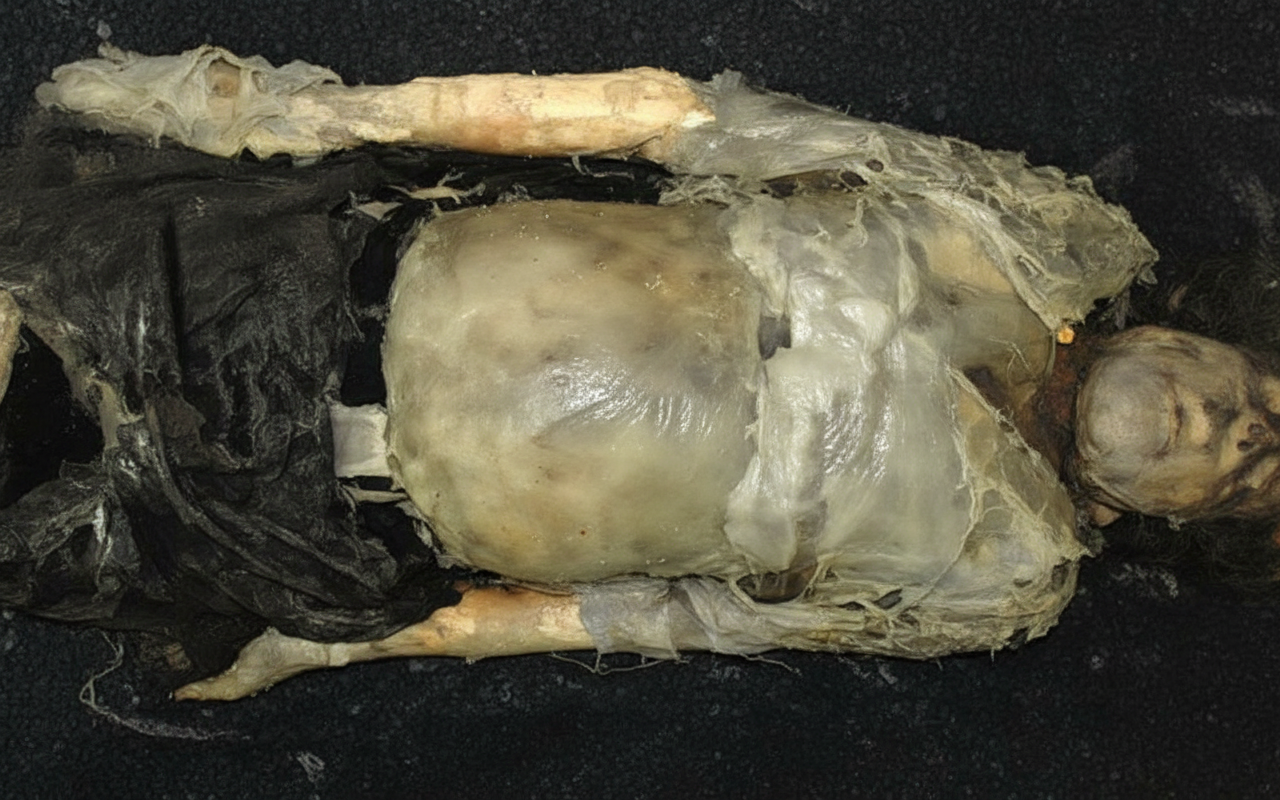
Spalding's sign is seen in which of the following conditions?
Soot in the trachea is a sign of?
All of the following are seen in ante-mortem burns except?
Postmortem caloricity is seen in which of the following conditions?
Maggots are typically observed on a corpse within what timeframe, especially in rainy conditions?
If a body is left undisturbed, for how long does postmortem staining persist?
What is the importance of studying postmortem interval (PMI) in cases of death due to burns or electrocution?
Adipocere formation is characterized by all of the following except:
Delayed rigor mortis occurs with:
All are features of somatic death, except?
Explanation: **Explanation:** **Spalding’s Sign** is a classic radiological indicator of **intrauterine fetal death (IUFD)**. It occurs during the process of **maceration**, which is the aseptic autolysis of a fetus in a sterile environment (the amniotic fluid). 1. **Why Maceration is correct:** When a fetus dies in utero, the brain tissues liquefy and the intracranial pressure drops. This causes the cranial vault to collapse, leading to the **overlapping of the fetal skull bones**. This overriding of bones is what constitutes Spalding’s sign. It typically appears 24 to 48 hours after fetal death. 2. **Why other options are incorrect:** * **Drowning:** Characterized by findings like washerwoman’s hands, froth at the mouth, and Paltauf’s hemorrhages, but not skull bone overlapping. * **Mummification:** A form of dry decomposition occurring in hot, dry, and airy conditions where the body shrivels and dries up. * **Adipocere (Saponification):** Occurs in warm, moist, and anaerobic environments where body fat turns into a yellowish-white, waxy substance. **High-Yield Clinical Pearls for NEET-PG:** * **Earliest sign of Maceration:** Skin slipping and the formation of large, fluid-filled bullae (usually within 12–24 hours). * **Robert’s Sign:** The presence of gas in the fetal heart and large vessels (earliest radiological sign of IUFD, appearing within 12 hours). * **Deuel’s Halo Sign:** Edema of the fetal scalp causing a "halo" appearance on X-ray. * **Maceration vs. Putrefaction:** Maceration is **aseptic** (no bacteria), whereas putrefaction is **septic** (bacterial action). If the membranes rupture and bacteria enter, maceration is replaced by putrefaction.
Explanation: ### Explanation **Correct Answer: A. Antemortem burn** The presence of **soot (carbon particles)** in the upper and lower respiratory tract (trachea and bronchi) is the most reliable sign that a person was alive at the time the fire started. **Underlying Medical Concept:** For soot to reach the trachea, the individual must have been actively breathing while surrounded by smoke. During inhalation, carbon particles are drawn deep into the airway and become trapped in the mucosal mucus. This indicates functional respiratory effort, which is only possible in an **antemortem** (before death) state. **Analysis of Incorrect Options:** * **B. Postmortem burn:** If a body is burned after death, there is no active respiration. While soot might settle on the face or inside the mouth, it will not be found deep within the trachea or bronchi. * **C. Asphyxia:** While smoke inhalation can lead to asphyxiation, "soot in the trachea" is a specific pathological finding used to differentiate the timing of burns, not a general sign of all types of asphyxia (like hanging or drowning). * **D. Carbon monoxide poisoning:** While CO poisoning often occurs alongside soot inhalation in fires, the presence of soot itself is a physical marker of inhalation, whereas CO poisoning is a chemical finding (detected via cherry-red discoloration of tissues and blood). **High-Yield Clinical Pearls for NEET-PG:** * **Gradenwitz’s Sign:** The presence of soot in the respiratory tract. * **Pugilistic Attitude:** A postmortem finding due to heat coagulation of proteins (flexion of limbs); it does *not* indicate the person was alive. * **Scalds vs. Burns:** Soot is never found in scalds (moist heat), only in dry burns involving smoke. * **Carboxyhemoglobin (COHb):** Levels >10% in a body found in a fire strongly suggest the victim was alive during the fire.
Explanation: **Explanation:** The distinction between ante-mortem (before death) and post-mortem (after death) burns is a high-yield forensic concept based on the presence of a **vital reaction**. **1. Why "Decreased enzymes" is the correct answer:** In ante-mortem burns, the body’s metabolic and cellular response to heat injury leads to an **increase** in enzymatic activity (such as alkaline phosphatase, aminopeptidases, and esterases) at the burn site as part of the inflammatory process. A decrease in enzymes is not a feature of live tissue reaction; rather, enzyme levels remain static or degrade globally in post-mortem burns. **2. Analysis of Incorrect Options:** * **Vesicles (Blisters):** Ante-mortem blisters contain fluid rich in albumin, chlorides, and polymorphonuclear cells. The base of the blister is red and congested. (Note: Post-mortem heat blisters contain only air or a thin fluid with little protein). * **Inflammatory Red Line:** Also known as the "Line of Redness" or "Line of Demarcation," this is a zone of capillary congestion and inflammation surrounding the burn. It is one of the most reliable signs of an ante-mortem burn. * **Carboxyhemoglobin (COHb) in blood:** If a person was alive during a fire, they would inhale smoke containing Carbon Monoxide. The presence of COHb (usually >10%) in the blood is definitive proof that the person was breathing at the time of the fire. **Clinical Pearls for NEET-PG:** * **Pugilistic Attitude:** A "fencing" posture caused by heat-induced coagulation of proteins and muscle contraction. It occurs in both ante-mortem and post-mortem burns (not a sign of life). * **Soot in Airways:** Presence of soot in the trachea and bronchi is a vital sign of ante-mortem inhalation. * **Rule of Nines:** Used to estimate the percentage of Total Body Surface Area (TBSA) involved in burns. * **Heat Hematoma:** Can mimic an extradural hemorrhage; it is distinguished by its chocolate-brown, friable consistency and high COHb levels.
Explanation: **Explanation:** **Postmortem Caloricity** refers to a paradoxical rise in body temperature for the first 1–2 hours after death, instead of the expected cooling (Algor mortis). This occurs when the rate of heat production in the body exceeds the rate of heat loss at the time of death. **Why "All of the Above" is Correct:** The underlying mechanism involves either excessive heat production or a failure of heat dissipation mechanisms: 1. **Heat Stroke (Option A):** The body’s thermoregulatory center (hypothalamus) fails, leading to an extremely high core temperature before death. Post-death, the body continues to retain this massive heat load. 2. **Tetanus (Option B):** Intense, continuous muscular contractions (spasms) generate significant metabolic heat through glycogen breakdown. This biochemical activity persists for a short duration even after somatic death. 3. **Cholera (Option C):** In certain fulminating infections like Cholera, Septicemia, or Typhoid, increased bacterial activity and the body's inflammatory response (fever/pyrexia) result in elevated postmortem temperatures. **High-Yield Clinical Pearls for NEET-PG:** * **Other Causes:** Postmortem caloricity is also seen in **Strychnine poisoning** (due to convulsions), **Pontine hemorrhage** (disturbs hyperthermic center), and **Septicemia**. * **Mechanism:** It is primarily due to continued glycogenolysis and bacterial activity in the early postmortem period. * **Algor Mortis:** Remember that postmortem caloricity is an *exception* to the rule of Algor mortis (the cooling of the body at a rate of roughly 0.4–0.7°C per hour). * **Site of Measurement:** For forensic purposes, the most accurate core temperature is measured via the **rectum** or by a sub-hepatic probe.
Explanation: ### Explanation **Correct Answer: C. 2-4 days** **Underlying Medical Concept:** Forensic Entomology is the study of insect life cycles to estimate the **Post-Mortem Interval (PMI)**. Blowflies (*Calliphoridae*) are usually the first to arrive at a corpse, often within minutes to hours. They deposit eggs in moist areas (eyes, mouth, wounds). Under average tropical conditions, these eggs hatch into **first-instar larvae (maggots)** in about 8–24 hours. However, the visible presence of crawling maggot masses across the body typically occurs between **2 to 4 days**. Rainy conditions or high humidity can accelerate the hatching process and prevent desiccation, making the 2-4 day window the most characteristic timeframe for significant maggot activity. **Analysis of Incorrect Options:** * **A. 6 hours:** This is too early. While flies may arrive and lay eggs within this window, the eggs require a minimum incubation period (usually 8+ hours) to hatch into larvae. * **B. 1-2 days:** While hatching begins during this period, the maggots are often small and confined to the initial site of oviposition. They are not yet the "typical" widespread feature of decomposition seen by the 2nd to 4th day. * **D. 5-6 days:** By this stage, the larvae have usually progressed to the third instar (larger size) and the body enters the "active decay" stage. Maggots appear much earlier than this. **High-Yield Clinical Pearls for NEET-PG:** * **Order of arrival:** Blowflies (first) → Flesh flies → Beetles → Mites. * **Casper’s Dictum:** Rate of putrefaction ratio is **1:2:8** (Air : Water : Earth/Buried). * **Temperature Effect:** Higher temperatures accelerate the life cycle; cold temperatures (below 10°C) can arrest it. * **Preservation:** Maggots collected for evidence should be killed in boiling water and preserved in **70% alcohol** to prevent shrinkage.
Explanation: **Explanation:** Postmortem staining (Livor Mortis) is a physical sign of death caused by the gravitational settling of blood into the dependent parts of the body due to the cessation of circulation. **Why the correct answer is right:** Postmortem staining is a permanent process once it becomes "fixed" (usually after 6–12 hours). Because the blood remains trapped within the capillaries or seeps into the surrounding tissues (extravasation), the staining does not simply disappear on its own. It remains visible until the body undergoes **putrefaction**. During decomposition, the breakdown of red blood cells and the production of hydrogen sulfide lead to the formation of sulfhaemoglobin, which creates a greenish discoloration. This chemical change eventually masks and merges with the original staining, rendering it indistinguishable. **Why incorrect options are wrong:** * **A & B (A few hours/days):** While staining *starts* within 1–3 hours and *fixes* within 8–12 hours, it does not vanish after this period. It remains as long as the soft tissues are intact. * **C (A few months):** In normal environmental conditions, putrefaction typically sets in within days (in summer) or weeks (in winter), destroying the visual characteristics of livor mortis long before months have passed. **High-Yield NEET-PG Pearls:** * **Fixation of Postmortem Staining:** Occurs when blood can no longer be displaced by pressure. This is a crucial indicator that the body has been dead for at least 8–12 hours. * **Color Variations:** * *Cherry Red:* Carbon Monoxide poisoning. * *Bright Red:* Cyanide poisoning or exposure to cold. * *Chocolate Brown:* Potassium Chlorate or Nitrites (Methaemoglobin). * **Contact Pallor:** Areas of the body pressed against a hard surface appear pale because capillaries are compressed, preventing blood from settling there.
Explanation: **Explanation:** The core concept behind this question is the **reliability of postmortem changes** in specific traumatic deaths. Postmortem Interval (PMI) is typically estimated using signs like Rigor Mortis, Algor Mortis (cooling), and Livor Mortis. However, in cases of burns or electrocution, these physiological markers are severely altered or obliterated. **Why "None of the above" is correct:** PMI estimation relies on the body cooling at a predictable rate and muscles undergoing chemical changes. In **burns**, the extreme heat causes "heat stiffening" (coagulation of muscle proteins), which mimics or masks rigor mortis. In **electrocution**, immediate violent muscular contractions or ventricular fibrillation can accelerate the onset of rigor. Because these external factors distort the natural decomposition process, PMI cannot reliably determine the exact time of the event, the location, or the manner of death (murder vs. accident). **Analysis of Incorrect Options:** * **Option A:** Burning and electrocution alter the body's temperature and muscle chemistry so significantly that standard PMI formulas become inaccurate for determining the specific time of the incident. * **Option B:** Location is determined by scene investigation and trace evidence (e.g., accelerants or wiring), not by the biological changes used to calculate PMI. * **Option C:** PMI only estimates *when* death occurred; it does not provide evidence of intent or the legal "manner" of death (homicide/suicide/accident). **High-Yield Pearls for NEET-PG:** * **Pugilistic Attitude:** Seen in high-degree burns due to heat coagulation of flexor muscles; it is a postmortem phenomenon and does not indicate a "defense" posture. * **Postmortem Caloricity:** A condition where the body temperature rises after death; commonly seen in septicaemia, tetanus, and **strychnine poisoning**, which further complicates PMI estimation. * **Rule of Nines:** Used to calculate the percentage of Total Body Surface Area (TBSA) involved in burns to assess prognosis.
Explanation: **Explanation:** Adipocere (Saponification) is a post-mortem change resulting from the conversion of body fat into a waxy, soap-like substance. **Why "Cheesy Odor" is the Correct Answer (The Exception):** Adipocere is characterized by a distinct, **sweetish, rancid, or ammoniacal smell**. A "cheesy odor" is characteristic of **Caseous Necrosis** (seen in Tuberculosis) or certain stages of normal putrefaction, but it is specifically listed as an incorrect descriptor for the smell of adipocere in standard forensic texts (like Reddy or Dikshit). While the substance looks like cheese, its odor is described as foul and pungent. **Analysis of Other Options:** * **Option A (Hydrolysis and hydrogenation):** This is the core biochemical process. Post-mortem, body fats (triglycerides) undergo hydrolysis into free fatty acids, followed by the hydrogenation of unsaturated fatty acids (like oleic acid) into saturated fatty acids (like palmitic or stearic acid). * **Option B (Foul smell):** During the transition phase of adipocere formation, the accompanying putrefactive changes produce a strong, foul, and offensive odor. * **Option D (Damp clay soil):** Adipocere requires moisture and an anaerobic environment. It typically develops in bodies submerged in water or buried in damp, clayey soil which prevents evaporation and promotes the action of *Clostridium welchii*. **Clinical Pearls for NEET-PG:** * **Key Enzyme:** Lecithinase (produced by *Clostridium perfringens/welchii*). * **Time Frame:** In India (tropical climate), it takes about **3 weeks** to appear; a full change takes **3–6 months**. * **Medicolegal Importance:** It helps in **identification** (preserves facial features), **cause of death** (preserves injury marks), and **estimation of time since death**. * **Mnemonic:** Adipocere = **M**oist, **A**naerobic, **W**axy (**MAW**).
Explanation: **Explanation:** Rigor mortis (cadaveric rigidity) is the post-mortem stiffening of muscles due to the depletion of Adenosine Triphosphate (ATP). The timing of its onset and disappearance depends heavily on the metabolic state of the body at the time of death and the surrounding temperature. **Why Septicemia is Correct:** In cases of **Septicemia** or wasting diseases (like Tuberculosis or Cancer), the body is in a state of extreme exhaustion with low metabolic activity. Because the body is "wasted," the breakdown of ATP occurs very slowly, and the onset of rigor mortis is significantly **delayed**. However, once it appears, it also passes off very quickly due to the rapid onset of putrefaction in infected bodies. **Analysis of Incorrect Options:** * **Strychnine:** This is a spinal poison that causes severe convulsions before death. Convulsions deplete ATP stores rapidly, leading to an **early onset** of rigor mortis (often appearing almost instantaneously, mimicking cadaveric spasm). * **Vegetable Poisons:** Most irritant vegetable poisons (like *Ricinus communis*) do not specifically delay rigor. However, those causing convulsions (like *Strychnos nux-vomica*) actually accelerate it. * **Opium:** Opium poisoning typically leads to a rapid onset of rigor mortis because it causes respiratory depression and hypoxia, which accelerates the depletion of muscle ATP. **NEET-PG High-Yield Pearls:** 1. **Rule of 12:** Rigor mortis typically takes 12 hours to develop, lasts for 12 hours, and takes 12 hours to pass off (in temperate climates). 2. **Order of Appearance:** It follows **Nysten’s Law**, appearing first in the eyelids, then the jaw, neck, upper limbs, trunk, and finally the lower limbs. 3. **Rapid Onset:** Occurs in conditions with high pre-mortem muscle activity: Convulsions (Strychnine, Tetanus), electrocution, and high fever (Heat stroke). 4. **Delayed Onset:** Occurs in cold climates, asphyxia, and wasting diseases/septicemia.
Explanation: **Explanation:** Death is medically categorized into two stages: **Somatic (Systemic) Death** and **Molecular (Cellular) Death**. **Why "Non-responding muscles" is the correct answer:** Muscular response to stimuli (electrical or mechanical) is a feature of **Molecular Death**, not Somatic Death. Somatic death refers to the irreversible cessation of the "Tripod of Life" (Brain, Heart, and Lungs). However, even after somatic death occurs, individual cells and tissues (like muscles and nerves) remain biochemically alive for a short period, known as the **Supravital Period**. During this window, muscles can still contract if stimulated. Therefore, "non-responding muscles" is not a feature of somatic death; it occurs later during molecular death. **Analysis of incorrect options:** * **Cessation of respiration & heart function:** These are the classic components of the "Tripod of Life." Their permanent stoppage defines somatic death (Bichat’s Tripod). * **No response to external stimuli:** This signifies the loss of cerebral cortical function and brainstem reflexes, which is a hallmark of somatic/brain death. **High-Yield Clinical Pearls for NEET-PG:** * **Molecular Death:** Occurs 1–2 hours after somatic death. It is the stage where individual cells die due to oxygen deprivation. * **Supravital Reactions:** These are vital for estimating the Time Since Death (TSD). * **Muscles:** Respond to electrical stimuli for up to 2 hours. * **Pupils:** Mydriatic/Miotic drugs can still affect the pupil for up to 4 hours. * **Spermatozoa:** Can remain motile for up to 24–36 hours post-mortem. * **Suspended Animation:** A state where metabolic rate is so low it mimics somatic death (e.g., hypothermia, electrocution, drowning).
Postmortem Changes
Practice Questions
Medicolegal Autopsy
Practice Questions
Death Cause, Mechanism and Manner
Practice Questions
Time Since Death Estimation
Practice Questions
Sudden and Unexpected Deaths
Practice Questions
Injuries and Wound Examination
Practice Questions
Blunt Force Injuries
Practice Questions
Sharp Force Injuries
Practice Questions
Firearm Injuries
Practice Questions
Internal Examination in Autopsy
Practice Questions
Histopathology in Forensic Practice
Practice Questions
Death Certification
Practice Questions
Get full access to all questions, explanations, and performance tracking.
Start For Free