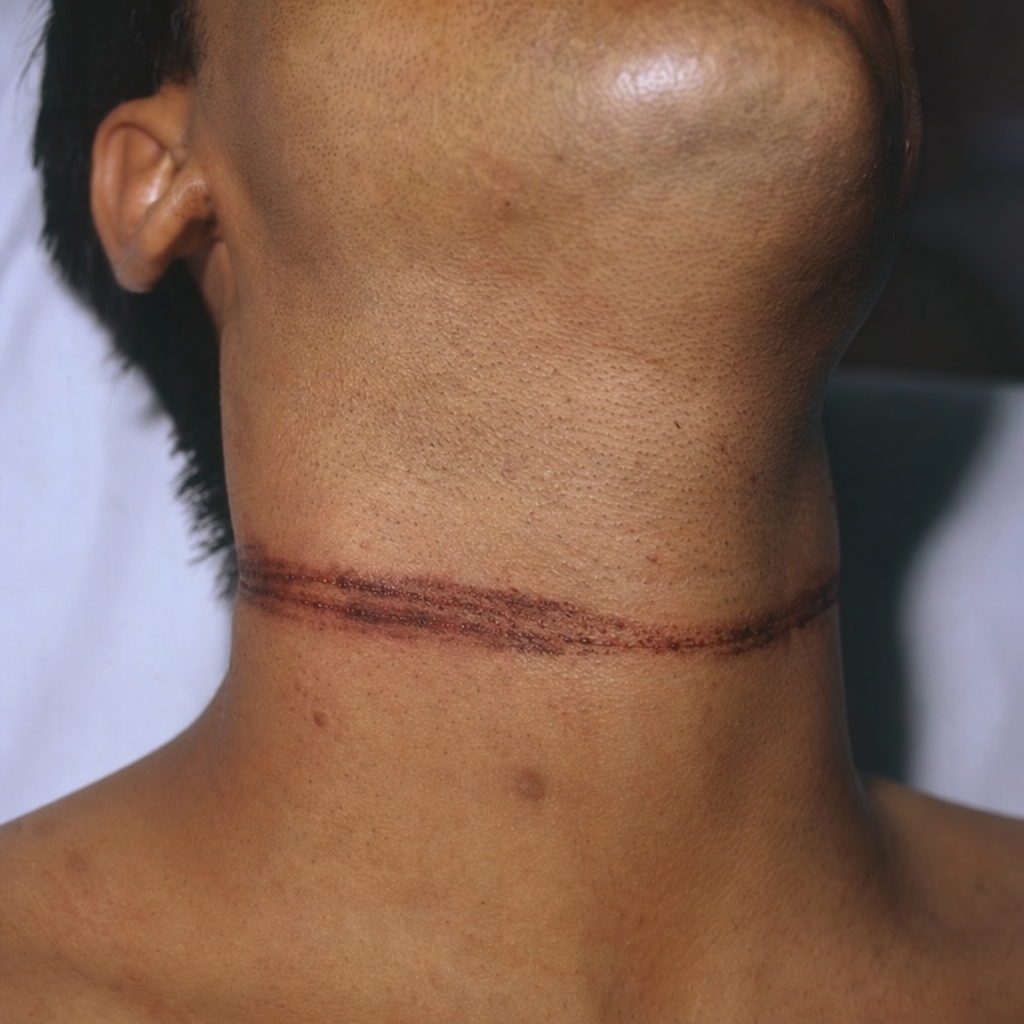
In an accident case, after the arrival of medical team, all should be done in early management except;
Disputed maternity can be solved by using the following tests, EXCEPT:
Doctor or nurse disclosing the identity of a rape victim is punishable under the following section of IPC?
Casper's Dictum is used for
Who orders the autopsy in the case of a Road Traffic Accident (RTA)?
A person dies 2 hours after head injury. Most reliable indicator of ante-mortem injury?
What is the best investigation for identifying malaria species?
Four weeks after assisting in several calf deliveries, a farmer develops fever, weakness, muscle aches, and sweats. The fever rises in the afternoon and falls during the night. A Brucella species is isolated. Which Brucella species is a possible bioterrorism agent and is best described by one of the following?
Which banding technique is most commonly used for karyotyping?
Following a major fire in a hotel, 50 severely charred bodies need identification. Initial assessment shows: Group A (20 bodies) - moderate charring with some fingerprint possibility; Group B (15 bodies) - severe charring, teeth intact; Group C (15 bodies) - extreme charring with fragmentation. Evaluate the most appropriate sequential identification strategy considering efficiency, cost, and identification success rate.
Explanation: ***Check BP*** - In the **immediate/early management** of trauma (primary survey), while circulation assessment is crucial, the **initial assessment of circulation** focuses on: - **Pulse rate and quality** (radial, carotid) - **Capillary refill time** - **Skin color and temperature** - **Active hemorrhage control** - **Formal blood pressure measurement** with a cuff, while important, is typically recorded during or after these rapid initial assessments, as it takes more time to obtain an accurate reading. - In the context of this question, among the four options listed, BP measurement is relatively less immediate compared to the other life-saving priorities (airway protection, breathing assessment, C-spine stabilization, and GCS). - **Note:** This is a nuanced distinction - BP is assessed during primary survey, but the other three options have more immediate life-threatening implications if not addressed. *Glasgow coma scale* - **GCS assessment** is part of the **"D" (Disability)** step in the ATLS primary survey. - It is performed early to assess neurological status and level of consciousness. - GCS <8 indicates need for **definitive airway protection** (intubation). - This is a critical early assessment that guides immediate management decisions. *Stabilization of cervical vertebrae* - **C-spine immobilization** is part of the **"A" (Airway)** step - "Airway with cervical spine protection." - It is performed **simultaneously** with airway assessment using a **rigid cervical collar**. - This is the **first priority** in trauma management to prevent secondary spinal cord injury. - All trauma patients should be assumed to have C-spine injury until proven otherwise. *Check Respiration* - **Respiratory assessment** is part of the **"B" (Breathing)** step in the ATLS primary survey. - This involves checking: - **Respiratory rate and pattern** - **Chest wall movement** - **Air entry bilaterally** - **Signs of tension pneumothorax or flail chest** - This is an immediate life-saving priority and must be assessed early.
Explanation: ***Precipitin test*** - The **precipitin test** is used to determine the origin of a **blood sample**, specifically whether it is **human or animal blood**, by detecting species-specific proteins. It is not used for assessing maternity. - This test is primarily employed in **forensic serology** to differentiate between blood from different animal species, making it irrelevant for paternity or maternity disputes. *Blood grouping* - **Blood grouping** (e.g., ABO and Rh systems) can be used to **exclude paternity or maternity** by comparing the blood types of the child, mother, and alleged father. - If the child's blood type is incompatible with the alleged parents based on Mendelian inheritance, one or both can be excluded. *HLA typing* - **HLA typing** (Human Leukocyte Antigen) is a more powerful genetic marker system than ABO/Rh for determining paternity or maternity. - It involves analyzing highly polymorphic genes on chromosome 6 that encode cell surface proteins, providing a more definitive means of **inclusion or exclusion**. *DNA fingerprinting* - **DNA fingerprinting** (also known as **DNA profiling**) is the **most accurate and widely accepted method** for resolving paternity and maternity disputes. - It analyzes highly variable regions of DNA unique to each individual, providing a statistically strong basis for **inclusion or exclusion** by comparing genetic profiles.
Explanation: ***Section 228A IPC*** - This section of the Indian Penal Code specifically deals with the **disclosure of the identity of a victim of rape and certain sexual offenses** (Sections 376, 376A, 376AB, 376B, 376C, 376D, 376DA, 376DB, 376E). - Making public the name or any matter that can reveal the identity of a rape victim by **any person, including doctors and nurses**, is a punishable offense. - **Punishment**: Imprisonment up to **2 years** and fine. - **Exception**: Disclosure is permitted only to authorized persons like police officers for investigation purposes. - **Important**: This is now covered under **Section 72 of Bharatiya Nyaya Sanhita (BNS) 2023**, which replaced the IPC. *Section 224A* - This is **not a valid or recognized provision** within the Indian Penal Code. - It does not relate to offenses concerning privacy or the identity of sexual assault victims. *Section 226A* - This is **not a valid or recognized provision** within the Indian Penal Code. - It does not pertain to the confidentiality of victims of sexual offenses. *Section 222A* - This is **not a valid or recognized provision** within the Indian Penal Code. - There is no such specific section addressing disclosure of victim identity in the IPC.
Explanation: ***Estimation of time since death*** - **Casper's Dictum** is a principle used in **forensic pathology** to estimate the time of death, particularly in cases involving different environments (air, water, earth). - It posits that a body decomposes at approximately **eight times slower in water** and **twice as slow in earth** compared to decomposition in air. *Identification of Body* - Body identification typically relies on methods like **fingerprints**, **dental records**, **DNA analysis**, or distinctive physical features. - Casper's Dictum focuses on the **rate of decomposition**, not on the unique characteristics required for identification. *Establishing cause of death* - The **cause of death** is the specific disease or injury that led to death, determined through autopsy findings, toxicology, and scene investigation. - Casper's Dictum aids in determining **when** death occurred, not **why** it occurred. *Establishing weapon of injury* - Determining the **weapon of injury** involves analyzing wounds, tool marks, and crime scene evidence. - Casper's Dictum's purpose is limited to **estimating the postmortem interval**, and it offers no information about the implement used to inflict injury.
Explanation: **B. Police** - In cases of Road Traffic Accidents (RTAs) and other **medico-legal deaths**, the **police** are typically responsible for ordering an autopsy. - This is because the death is suspicious and may involve criminal investigation, requiring formal authorization from law enforcement to establish the cause and manner of death. *A. Forensic expert* - A **forensic expert** performs the autopsy but does not have the authority to order it. - Their role is to conduct the examination and provide expert findings to the investigating authorities. *C. Lawyer* - A **lawyer** may be involved in the legal proceedings related to the RTA but does not have the authority to order an autopsy. - Their role is to represent clients and use the autopsy findings as evidence in court. *D. Forensic doctor* - A **forensic doctor** (or forensic pathologist) is the medical professional who conducts the autopsy. - They do not initiate the autopsy themselves but perform it upon the request of authorized parties, such as the police or a medical examiner/coroner.
Explanation: ***Histological examination*** - **Histological examination** of injured tissues provides direct evidence of a vital reaction, such as **inflammatory cell infiltration** and early signs of tissue repair, which can only occur in a living individual. - Changes like **hemorrhage with leukocyte infiltration** or early **fibroblast proliferation** are definitive markers of ante-mortem injury. *Serotonin level* - While **serotonin** levels can be affected by stress and injury, they are not a definitive or reliable indicator of **ante-mortem injury** compared to direct tissue evidence. - Levels can fluctuate due to various factors, including post-mortem changes, making interpretation challenging. *Cortisol level* - **Cortisol** levels reflect a stress response, but these can be elevated immediately before death or in the early post-mortem period, making them **less specific** for distinguishing ante-mortem from post-mortem injury. - The rapid post-mortem changes in hormone levels can also compromise the reliability of these measurements. *Histamine level* - **Histamine** release is part of the inflammatory response, but its increase is **not always specific** to ante-mortem injury as mast cells can degranulate post-mortem. - Unlike histological changes, histamine levels alone do not provide definitive evidence of a **vital reaction** occurring in a living organism.
Explanation: ***Thin smear with Giemsa*** - A **thin smear** allows for the visualization of **parasite morphology** within red blood cells, which is crucial for distinguishing between species of *Plasmodium*. - **Giemsa stain** provides optimal contrast for identifying characteristic features such as **merozoites**, **trophozoites**, **schizonts**, and **gametocytes** of different malaria species. *Thick smear* - A **thick smear** is primarily used for **detecting the presence of malaria parasites** and for quantifying parasite density due to its higher sensitivity. - However, because red blood cells are lysed, it **does not preserve parasite morphology** well, making species identification difficult. *QBC* - **Quantitative Buffy Coat (QBC) analysis** is a rapid method for detecting malaria parasites based on their fluorescence under UV light. - While sensitive for detection, it generally **does not allow for precise species identification** due to the lack of clear morphological detail. *Thin smear with acridine orange* - A **thin smear stained with acridine orange** is used for rapid detection of parasites by fluorescence microscopy. - Similar to QBC, it is **less effective for detailed morphological examination** and specific species identification compared to Giemsa-stained thin smears.
Explanation: ***Typically infects goats and sheep, grows well in CO2, and is not inhibited by thionine or basic fuchsin dyes*** - This description is characteristic of ***Brucella melitensis***, which is recognized as the most pathogenic **Brucella** species and a potential **bioterrorism agent** (CDC Category B) due to its high infectivity and severe disease course. - Its specific growth requirements (CO2 preference) and dye resistance patterns (not inhibited by **thionine** or **basic fuchsin**) are key laboratory identifiers that differentiate it from other **Brucella** species (*B. abortus* is inhibited by thionine; *B. suis* is inhibited by basic fuchsin). - Low infective dose (10-100 organisms) and aerosol transmission capability make it a significant bioterrorism threat. *Commonly inhabits the canine respiratory tract and is an occasional pathogen for humans; strongly urease-positive* - This describes ***Bordetella bronchiseptica***, not a **Brucella** species. It is a pathogen primarily associated with animals, especially dogs (kennel cough), and only rarely causes disease in immunocompromised humans. - While it can be urease-positive, it belongs to a different genus and does not fit the clinical or epidemiological context of brucellosis. *Gram-negative bipolar stained bacilli that cause diarrhea by means of a heat-stable enterotoxin, with abdominal pain that may be mistaken for appendicitis* - This description points to ***Yersinia enterocolitica***, not a **Brucella** species. It is a **Gram-negative bacterium** known for causing gastrointestinal infections with symptoms that can mimic **appendicitis** (pseudoappendicitis syndrome). - Its characteristic **bipolar staining** ("safety pin" appearance) and production of **heat-stable enterotoxin** are distinct from **Brucella** species. *Pits agar, grows both in carbon dioxide and under anaerobic conditions, and is part of the normal oral cavity flora* - This description is typical of ***Eikenella corrodens***, not a **Brucella** species. It is a **Gram-negative bacillus** found in the **normal oral flora** that can cause infections related to human bites or dental procedures. - Its ability to "pit" agar and specific atmospheric growth requirements (CO2 and anaerobic) are unique characteristics that differentiate it from **Brucella** species.
Explanation: ***G banding*** - This method is the **most widely used** technique for karyotyping, allowing clear visualization of chromosome bands under light microscopy [1][2]. - G banding helps in identifying **chromosomal abnormalities** and is routinely utilized in clinical genetics [2]. *C banding* - Primarily highlights the **centromeric regions** of chromosomes, but is less common than G banding for overall karyotyping. - Does not provide a full **karyotype view**, making it less suitable for routine analysis. *R banding* - Useful for providing **reverse staining**, which shows the bands in a different manner but is not as commonly employed in clinical settings. - Typically used to analyze specific **chromosomal translocations**, rather than routine karyotyping. *Q banding* - This technique involves **fluorescent microscopy** to visualize chromosomes but is not as prevalent for basic karyotyping. - Mainly used for detecting **specific chromosomal anomalies**, not the standard karyotype assessment. **References:** [1] Cross SS. Underwood's Pathology: A Clinical Approach. 6th ed. (Basic Pathology) introduces the student to key general principles of pathology, both as a medical science and as a clinical activity with a vital role in patient care. Part 2 (Disease Mechanisms) provides fundamental knowledge about the cellular and molecular processes involved in diseases, providing the rationale for their treatment. Part 3 (Systematic Pathology) deals in detail with specific diseases, with emphasis on the clinically important aspects., pp. 54-55. [2] Kumar V, Abbas AK, et al.. Robbins and Cotran Pathologic Basis of Disease. 9th ed. Genetic Disorders, pp. 167-168.
Explanation: ***Fingerprints on Group A, dental on Group B, DNA on Group C; then DNA on unidentified from A and B*** - This approach utilizes the **DVI (Disaster Victim Identification)** principle of using the least invasive and most cost-effective reliable methods first based on the state of remains. - **Fingerprinting** is the fastest for Group A, **Forensic Odontology** is highly resistant to heat for Group B, and **DNA analysis** is reserved for the fragmented remains in Group C or as a secondary backup. *Complete post-mortem data collection on all bodies, then prioritize identification based on ante-mortem data availability* - While thorough, this method is **time-inefficient** in a mass disaster scenario where rapid identification is required to manage logistics and family grieving. - It fails to triage the bodies based on their **physical condition**, leading to a bottleneck in processing fragmented remains alongside more intact ones. *Dental examination on all bodies first as teeth survive fire, then DNA on unidentified cases* - Although **dental pulp** and enamel are heat-resistant, performing dental exams on Group A is less efficient than **dactyloscopy** if fingerprints are still viable. - This strategy ignores the utility of **fingerprints**, which provide a faster match if ante-mortem records (like national IDs) are readily available. *Simultaneous DNA analysis on all bodies for uniformity, followed by dental and fingerprint verification* - This is the least **cost-effective** strategy, as **DNA extraction** and sequencing are expensive and labor-intensive compared to primary identifiers. - DNA should typically be used as a **confirmatory** tool or when primary methods (fingerprints/teeth) are not feasible due to extreme **charring or fragmentation**.
Get full access to all questions, explanations, and performance tracking.
Start For Free