
Anatomy and Physiology of Balance — MCQs

Which of the following nerves transmits impulses originating from the vestibular apparatus?
Bilateral inter nuclear ophthalmoplegia is pathognomonic of-
Which of the following statements is true regarding the function of the spinocerebellar tract?
Which of the following will occur in a girl who suddenly stops spinning after several seconds of spinning to the left?
In a patient with right vestibular neuronitis, what will be the finding on the head impulse test?
A fifty-year-old man, presents to his local physician complaining that he often feels as if the room is spinning when he gets up from a recumbent position or turns his head. He has not lost consciousness and has had no chest pain. He has no cardiac history and a recent treadmill test showed no abnormalities. On examination, the sensation can be produced by rapidly turning the head. It can be reproduced many times, but it eventually ceases. Nystagmus is elicited. Hearing is normal. Which of the following is the most likely mechanism for this patient's symptoms?
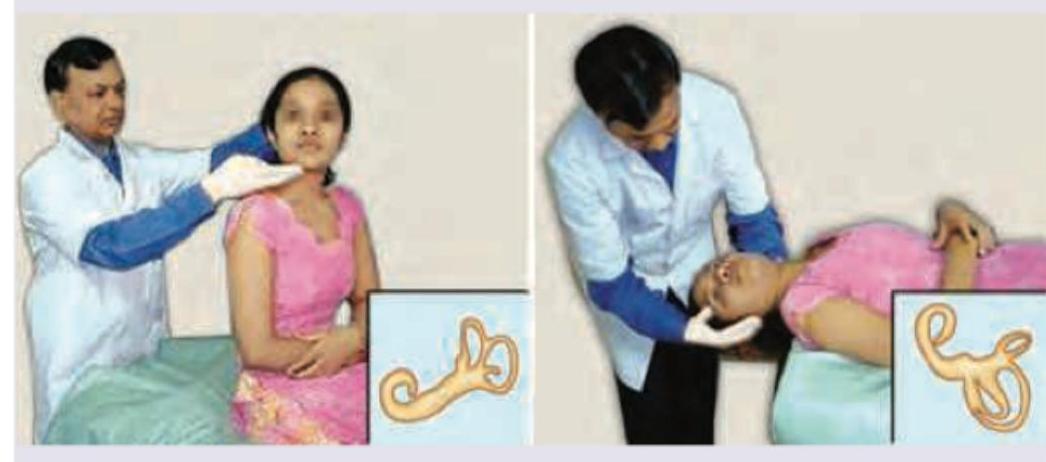
Hallpike maneuver is done for:
Third window effect is seen in
Which of the following test is being performed on the patient?
All are true about vestibular neuritis EXCEPT:
Want unlimited practice?
Get full access to all questions, explanations, and performance tracking.
Scan to download app