
Oral Appliances — MCQs

A 56-year-old woman with diabetes, hypertension, and hyperlipidemia is found to have an A1C of 11 despite her best attempts at diet and faithfully taking her metformin and glyburide. She reports severe fatigue and sleepiness in the daytime, which has limited her ability to exercise. On examination, she is obese, has a full appearing posterior pharynx, clear lungs, a normal heart examination, and trace bilateral edema. Her TSH is 2.0 m/L (normal). Before adding another oral agent or switching to insulin, what is the best next step?
Which of the following is true about NREM sleep?
A 42-year-old obese male presented with disturbed sleep and daytime somnolence. All of the following are correct except?
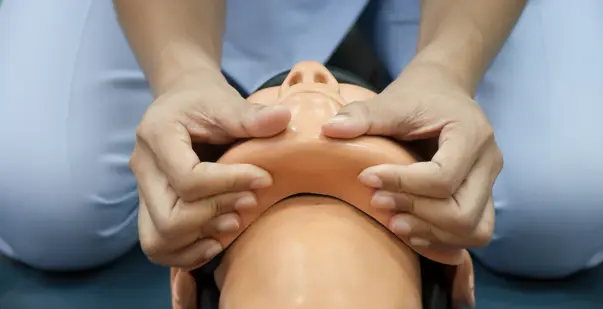
The procedure shown in the image is performed to maintain the airway. Which of the following techniques is being used?
Match the following drugs in Column A with their contraindications in Column B. | Column A | Column B | | :-- | :-- | | 1. Morphine | 1. QT prolongation | | 2. Amiodarone | 2. Thromboembolism | | 3. Vigabatrin | 3. Pregnancy | | 4. Estrogen preparations | 4. Head injury |
What is Muller's maneuver?
The Epworth Sleepiness Scale is used for assessing:
What is the minimum duration of apnea that defines Obstructive Sleep Apnea Syndrome (OSAS)?
Long-standing obstruction due to enlarged tonsils and adenoids can cause:
Which of the following conditions is treated by laser-assisted uvulopalatoplasty?
Want unlimited practice?
Get full access to all questions, explanations, and performance tracking.
Scan to download app