
Multidisciplinary Management of Sleep Disorders — MCQs

A 56-year-old woman with diabetes, hypertension, and hyperlipidemia is found to have an A1C of 11 despite her best attempts at diet and faithfully taking her metformin and glyburide. She reports severe fatigue and sleepiness in the daytime, which has limited her ability to exercise. On examination, she is obese, has a full appearing posterior pharynx, clear lungs, a normal heart examination, and trace bilateral edema. Her TSH is 2.0 m/L (normal). Before adding another oral agent or switching to insulin, what is the best next step?
A 32-year-old man comes to the physician complaining of excessive sleepiness for the past several months. He reports falling asleep while dealing with customers and had a near accident when he fell asleep while driving. The patient reports that he occasionally hears voices while falling asleep and finds himself "temporarily frozen" and unable to move upon awakening. Which of the following is the most appropriate treatment for this patient?
Which of the following is not typically performed during septoplasty?
Laser uvulopalatoplasty is indicated for which of the following conditions?
Which of the following statements about obstructive sleep apnea is false?
What is the minimum number of apnea episodes required for the diagnosis of obstructive sleep apnea?
A 47-year-old man comes to the physician for a follow-up examination. He feels well. He was diagnosed with hypertension 3 months ago. He has smoked one pack of cigarettes daily for 20 years but quit 4 years ago. He occasionally drinks alcohol on the weekends. He walks for 45 minutes daily and eats three meals per day. His current diet consists mostly of canned tuna and cured meats. He started eating whole-wheat bread after he was diagnosed with hypertension. He drinks 1 to 2 cups of coffee daily. His mother has a history of hyperthyroidism. Current medications include hydrochlorothiazide and a multivitamin pill every night before sleeping. His wife told him that he sometimes snores at night, but he reports that he usually sleeps well and feels refreshed in the mornings. His pulse is 80/min, respirations are 18/min, and blood pressure is 148/86 mm Hg. Physical examination shows no abnormalities. Which of the following is the most appropriate next step in the management of this patient?
All of the following are correct about the image shown except:
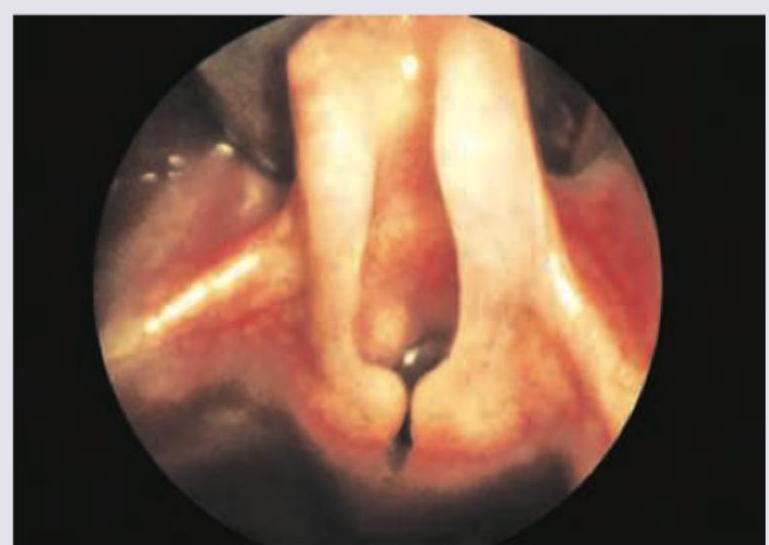
In which condition is Young's operation performed?
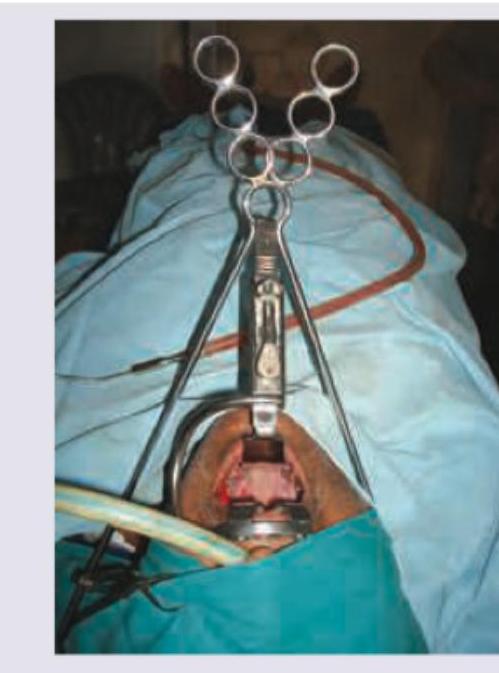
Which is incorrect about the instrument shown?
Want unlimited practice?
Get full access to all questions, explanations, and performance tracking.
Scan to download app