
Complications of Sleep Apnea — MCQs

A 42-year-old obese male presented with disturbed sleep and daytime somnolence. All of the following are correct except?
The sleep apnea syndrome is defined as -
Patient with obstructive sleep apnea-hypopnea syndrome is unlikely to have which of the following?
A 28-year-old man presents to the emergency department with a severe headache, palpitations, excessive sweating, chest pain, visual disturbances, dyspnea, paresthesias, constipation, and a sense of impending doom, which occur primarily at night, over a period of two weeks. His blood pressure is 130/80 mmHg while supine and 90/60 mmHg while standing, and his blood sugar is 240 mg/dL. Which of the following is the most likely diagnosis?
A 47-year-old man comes to the physician for a follow-up examination. He feels well. He was diagnosed with hypertension 3 months ago. He has smoked one pack of cigarettes daily for 20 years but quit 4 years ago. He occasionally drinks alcohol on the weekends. He walks for 45 minutes daily and eats three meals per day. His current diet consists mostly of canned tuna and cured meats. He started eating whole-wheat bread after he was diagnosed with hypertension. He drinks 1 to 2 cups of coffee daily. His mother has a history of hyperthyroidism. Current medications include hydrochlorothiazide and a multivitamin pill every night before sleeping. His wife told him that he sometimes snores at night, but he reports that he usually sleeps well and feels refreshed in the mornings. His pulse is 80/min, respirations are 18/min, and blood pressure is 148/86 mm Hg. Physical examination shows no abnormalities. Which of the following is the most appropriate next step in the management of this patient?
All are absolute indications of tonsillectomy except which of the following?
A 3-week-old infant presents with a cough and sore throat. The mother reports that the infant develops a paroxysm of cough followed by apnea. The total leucocyte count is >50,000 cells/μL. Based on these symptoms, which of the following drugs is the most appropriate treatment for this patient?
In pseudocholinesterase deficiency, which drug should be used cautiously?
What is the standard duration used to define apnea of prematurity?
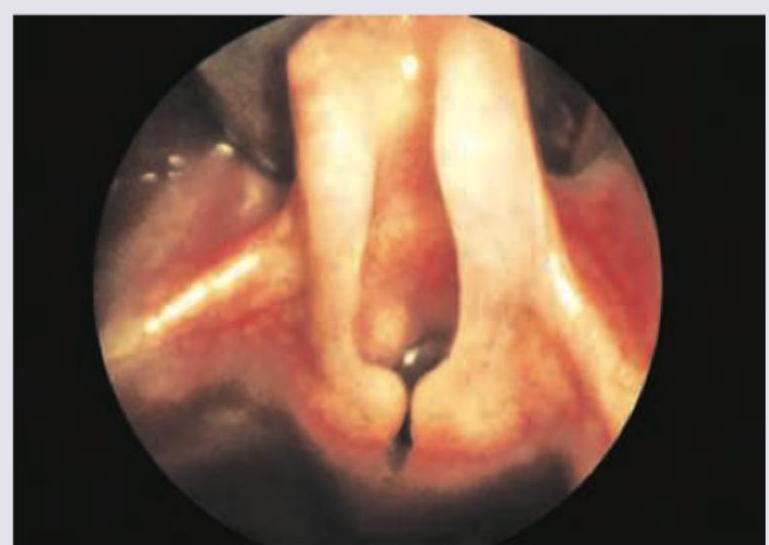
All of the following are correct about the image shown except:
Want unlimited practice?
Get full access to all questions, explanations, and performance tracking.
Scan to download app