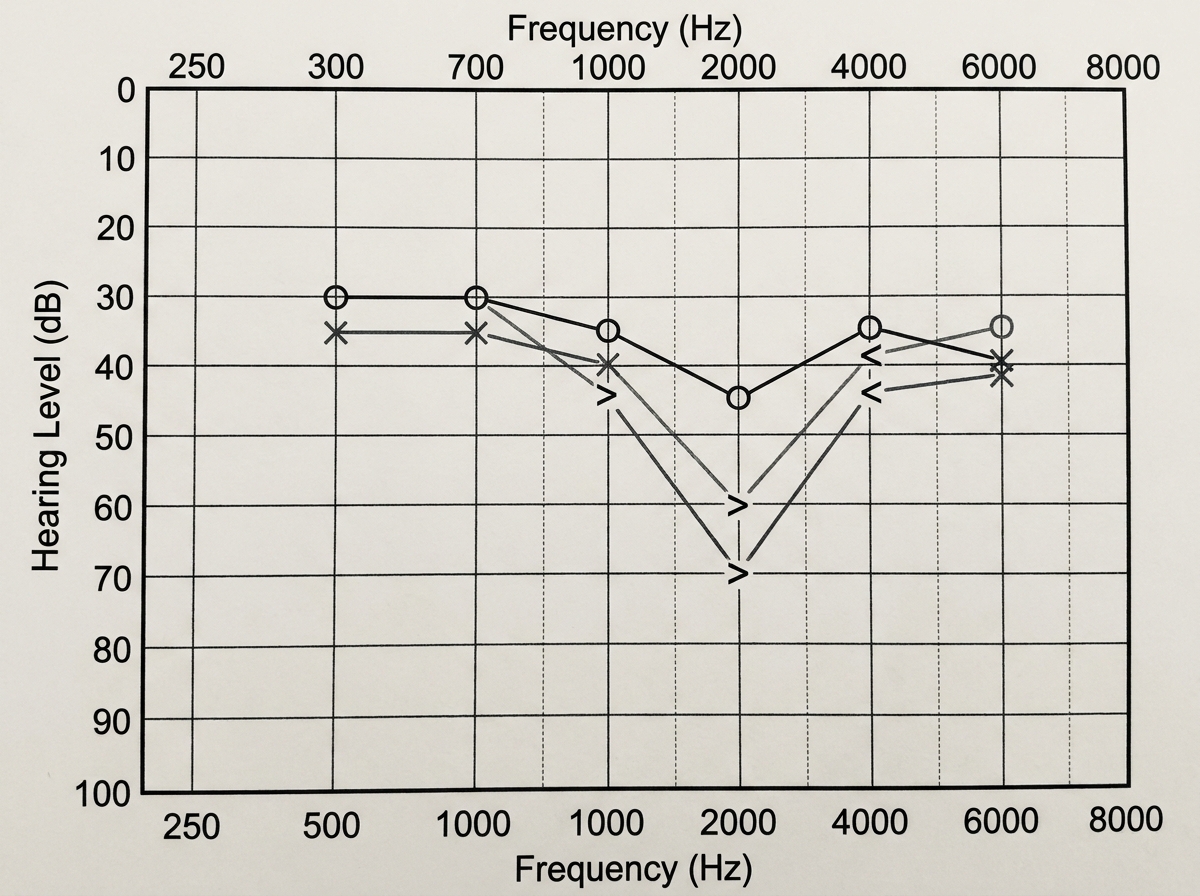
The otopathology in Alport syndrome is:
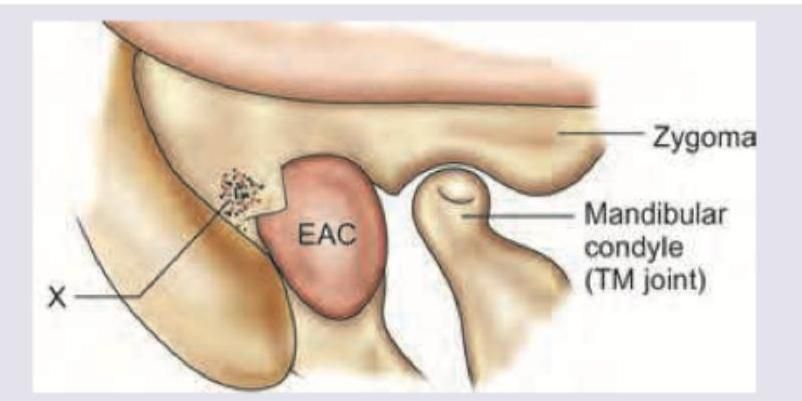
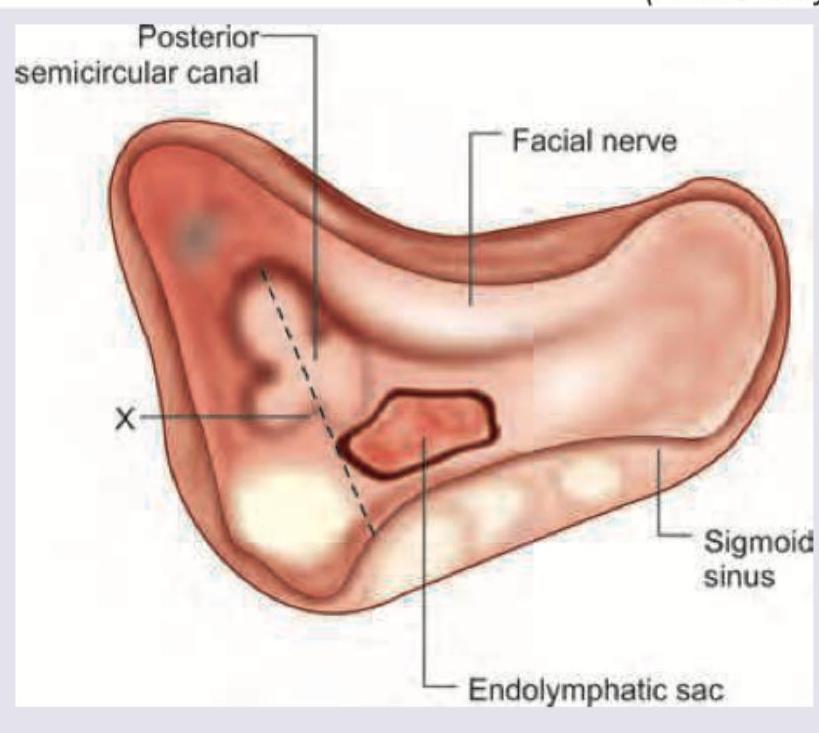
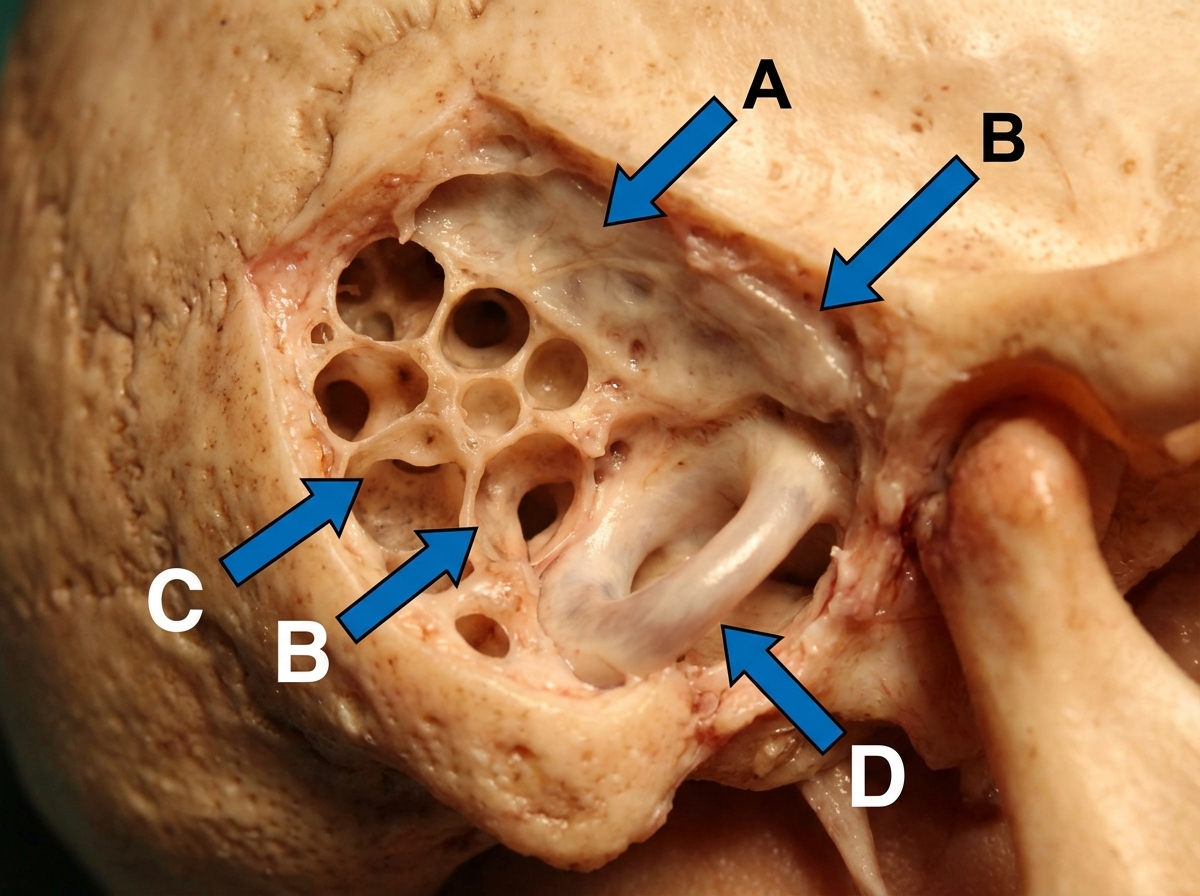
The facial recess or the posterior sinus is bounded by which of the following?
All of the following statements about sodium fluoride in otosclerosis are true, except:
In monaural diplacusis, where is the lesion located?
Which of the following is not resected in stapedotomy?
Glomus jugulare tumors are typically found in relation to which middle ear space?
The most common cause of cerebrospinal otorrhoea is?
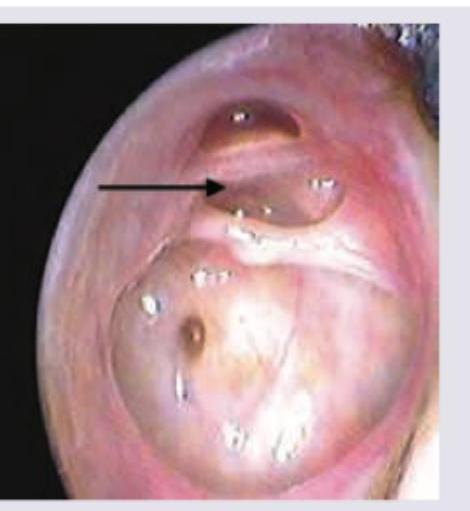
Areas of spontaneously healed tympanic membrane are called?
The Tobey-Ayer test is positive in which of the following conditions?
Selective low frequency sensorineural hearing loss occurs in which condition?
Explanation: ### Explanation **1. Why Option A is Correct:** Alport syndrome is a genetic disorder caused by mutations in the genes encoding the **alpha chains of Type IV collagen** (*COL4A3, COL4A4, and COL4A5*). Type IV collagen is a critical structural component of basement membranes throughout the body. In the inner ear, it is specifically located in the **basilar membrane** and the **stria vascularis** of the cochlea. The defect leads to progressive degeneration of these structures, resulting in sensorineural hearing loss (SNHL). **2. Why Other Options are Incorrect:** * **Option B (Defect in conduction):** Conductive hearing loss involves the external or middle ear (e.g., ossicular chain or tympanic membrane). Alport syndrome affects the inner ear (cochlea), making it a sensorineural, not a conductive, defect. * **Option C (Defect in the vestibulocochlear nerve):** The pathology in Alport syndrome is structural/biochemical within the cochlear basement membrane itself, not a primary neuropathy or retrocochlear lesion of the VIIIth cranial nerve. **3. High-Yield Clinical Pearls for NEET-PG:** * **Inheritance:** Most commonly **X-linked dominant** (85%), though autosomal recessive and dominant forms exist. * **Classic Triad:** 1. **Renal:** Progressive hematuria leading to End-Stage Renal Disease (ESRD). 2. **Ocular:** **Anterior Lenticonus** (pathognomonic) and "dot-and-fleck" retinopathy. 3. **Otologic:** Bilateral, progressive **Sensorineural Hearing Loss**, typically starting in late childhood/adolescence and initially affecting high frequencies. * **Electron Microscopy Finding:** "Basket-weave" appearance of the glomerular basement membrane (GBM).
Explanation: The **Facial Recess** (also known as the posterior sinus) is a critical surgical landmark in the posterior wall of the middle ear. It is a triangular depression that provides a safe surgical corridor to the middle ear without disturbing the ear canal or the ossicular chain. ### **Anatomical Boundaries** The facial recess is defined by the following boundaries: * **Medially:** The vertical (descending) segment of the **Facial Nerve (VII)**. * **Laterally:** The **Chorda Tympani** nerve (which branches off the facial nerve). * **Superiorly (Base):** The **Fossa Incudis**, which houses the short process of the incus. Since all three anatomical descriptions provided in the options correctly define the boundaries of this space, **Option D (All of the above)** is the correct answer. ### **Clinical Significance & High-Yield Facts** * **Posterior Tympanotomy:** This is the surgical procedure where the facial recess is opened. It is the standard approach used in **Cochlear Implant surgery** to reach the round window and for managing extensive cholesteatoma. * **The "Triangle":** The facial recess is often visualized as a triangle where the apex is the point where the chorda tympani nerve leaves the facial nerve (the chordofacial angle). * **Distinction:** Do not confuse the Facial Recess with the **Sinus Tympani**. The Sinus Tympani lies **medial** to the facial nerve, while the Facial Recess lies **lateral** to it. The Sinus Tympani is a common site for "hidden" cholesteatoma recurrence because it is difficult to visualize surgically.
Explanation: **Explanation:** Sodium fluoride (NaF) is used in the medical management of **active otosclerosis** (otospongiosis). Its primary goal is to stabilize the metabolic process and arrest the progression of the disease. **1. Why Option B is the correct answer (The False Statement):** Sodium fluoride does **not** inhibit osteoblastic activity. In fact, it promotes osteoblastic activity (bone formation) while **inhibiting osteoclastic activity** (bone resorption). By shifting the balance toward bone formation, it converts the active, vascular "spongy" bone into dense, inactive "sclerotic" bone, thereby halting the sensorineural deterioration. **2. Analysis of other options:** * **Option A:** NaF acts by inhibiting **proteolytic enzymes** (cytotoxic enzymes) released during the active phase of otosclerosis. These enzymes are responsible for damaging the hair cells in the cochlea, leading to sensorineural hearing loss (SNHL). * **Option C:** It is **contraindicated in chronic nephritis** (renal failure) because fluoride is primarily excreted by the kidneys. Accumulation can lead to systemic toxicity. It is also avoided in children (affects bone growth) and pregnant/lactating women. * **Option D:** It is indicated in patients with a **positive Schwartze sign** (a reddish hue behind the tympanic membrane), which signifies active, highly vascular otospongiosis. It is also used in cases of cochlear otosclerosis or rapidly progressive SNHL. **Clinical Pearls for NEET-PG:** * **Dosage:** Usually 20–40 mg daily, administered for 1–2 years. * **Side Effects:** Gastric irritation (most common) and skeletal fluorosis (long-term). * **Schwartze Sign:** Also known as the "Flamingo Flush" sign. * **Mechanism Summary:** Inhibits osteoclasts + Inhibits proteolytic enzymes + Promotes osteoblasts = Stabilization of the otosclerotic focus.
Explanation: **Explanation:** **Diplacusis** is a clinical phenomenon where a single sound is perceived as two different sounds. It is a hallmark of **sensorineural hearing loss**, specifically indicating a lesion in the **Cochlea**. 1. **Why the Cochlea is the correct answer:** Monaural diplacusis occurs when a single ear perceives one tone as two different pitches or qualities. This happens due to irregular damage to the hair cells or the basilar membrane within the cochlea. When the cochlear tuning mechanism is disrupted, a pure tone may stimulate multiple areas of the basilar membrane inconsistently, leading to a distorted perception of pitch. This "mismatch" in frequency processing is a classic sign of **cochlear pathology** (e.g., Meniere’s disease). 2. **Why other options are incorrect:** * **Auditory Nerve (B):** Lesions here (like Vestibular Schwannoma) typically cause "neural" deafness characterized by poor speech discrimination and tone decay, but not the pitch-matching errors seen in diplacusis. * **Brain stem (C) & Cerebrum (D):** Central auditory processing disorders affect sound localization, integration, or interpretation (auditory agnosia), but they do not cause the peripheral frequency distortion required for monaural diplacusis. **High-Yield Clinical Pearls for NEET-PG:** * **Diplacusis Binauralis:** The most common type; a sound is heard differently in each ear (one ear perceives the correct pitch, the other perceives it as higher/lower). * **Meniere’s Disease:** Diplacusis is a classic feature of Meniere’s due to endolymphatic hydrops affecting the mechanical properties of the cochlea. * **Recruitment:** Another key feature of cochlear lesions (not neural), where there is an abnormal growth in the perception of loudness.
Explanation: ### Explanation In **Stapedotomy**, the primary objective is to bypass the fixed stapes footplate (caused by otosclerosis) to restore the ossicular chain's mobility. The procedure involves creating a small hole (fenestra) in the footplate and placing a piston-like prosthesis. **Why the Lenticular Process of Incus is NOT resected:** The **Lenticular process of the incus** is a vital anatomical landmark and functional component. During stapedotomy, the prosthesis is hooked specifically onto the **long process of the incus**. The lenticular process remains intact to maintain the structural integrity of the incus and to ensure the blood supply to the distal end is not compromised. Resecting it would disrupt the ossicular chain's ability to transmit sound to the prosthesis. **Analysis of Incorrect Options:** * **Anterior and Posterior Crura (Options A & B):** To gain access to the footplate and remove the "bridge" of the fixed stapes, the crura must be fractured or divided (usually with a laser or micro-scissors) and removed. This is a standard step in both stapedectomy and stapedotomy. * **Stapedial Ligament/Tendon (Option C):** The stapedius tendon, which attaches to the neck of the stapes, is routinely divided to mobilize the ossicular chain and prevent the "tethering" effect during the procedure. **Clinical Pearls for NEET-PG:** * **Otosclerosis:** Characterized by conductive hearing loss, **Schwartze sign** (flamingo pink flush on TM), and **Carhart’s notch** (dip in bone conduction at 2 kHz). * **Stapedotomy vs. Stapedectomy:** Stapedotomy is preferred today as it has a lower risk of sensorineural hearing loss and better high-frequency sound preservation. * **Most common site of Otosclerosis:** Fissula ante fenestram (anterior to the oval window). * **Prosthesis length:** Usually measured from the medial surface of the incus to the footplate (average 4–4.5 mm).
Explanation: **Explanation:** **Glomus jugulare** (Paraganglioma jugulare) arises from the glomus bodies (chemoreceptors) located in the adventitia of the **dome of the jugular bulb**. Anatomically, the jugular bulb lies immediately beneath the floor of the middle ear. Therefore, as the tumor grows superiorly, it first enters the middle ear through the **hypotympanum** (the lowest portion of the middle ear cavity). **Analysis of Options:** * **A. Hypotympanum (Correct):** This is the primary site of entry for Glomus jugulare. On otoscopy, it often presents as a "rising sun" appearance—a red, vascular mass visible behind the inferior part of the tympanic membrane. * **B. Promontory:** This is the site of origin for **Glomus tympanicum**. These tumors arise from the glomus bodies along the tympanic branch of the glossopharyngeal nerve (Jacobson’s nerve) which runs over the promontory. * **C. Epitympanum:** This is the attic region containing the head of the malleus and body of the incus. It is typically involved in cholesteatoma, not as a primary site for glomus tumors. **High-Yield Clinical Pearls for NEET-PG:** * **Pulsatile Tinnitus:** The most common presenting symptom (synchronous with the pulse). * **Brown’s Sign:** Blanching of the vascular mass when ear canal pressure is increased with a Siegle’s speculum (positive in glomus tumors). * **Aquino’s Sign:** Pulsations of the tumor decrease or stop with carotid artery compression. * **Phelps’ Sign:** Loss of the bony plate between the jugular bulb and the external auditory canal (seen on CT). * **Investigation of Choice:** Contrast-enhanced MRI (shows "salt and pepper" appearance) and HRCT of the temporal bone. Gold standard for vascularity is Digital Subtraction Angiography (DSA).
Explanation: **Explanation:** **1. Why the Correct Answer is Right:** Cerebrospinal fluid (CSF) otorrhoea occurs when there is a communication between the subarachnoid space and the middle ear cleft, accompanied by a breach in the dura mater and the arachnoid membrane. The **petrous part of the temporal bone** houses the internal auditory canal and forms the floor of the middle cranial fossa and the anterior wall of the posterior cranial fossa. In head injuries, particularly longitudinal fractures of the temporal bone (which account for 80% of temporal fractures), the fracture line typically runs through the **petrous ridge**. This disruption frequently tears the closely adherent dura, allowing CSF to leak into the middle ear. If the tympanic membrane is ruptured, CSF leaks through the external auditory canal (otorrhoea); if the drum is intact, it drains via the Eustachian tube into the nasopharynx (CSF rhinorrhoea). **2. Why Other Options are Wrong:** * **Rupture of the tympanic membrane:** While often associated with CSF otorrhoea, a simple membrane rupture does not involve the meninges or the bony barrier to the brain; it cannot cause a CSF leak on its own. * **Fracture of the mastoid air cells:** While a fracture here can lead to a leak, it is usually a component of a larger petrous bone injury. The petrous ridge is the primary anatomical site where the dural breach occurs. * **Fracture of the parietal bone:** This may cause an intracranial hemorrhage or a CSF leak under the scalp (subgaleal), but it does not involve the temporal bone pathways required for fluid to exit through the ear. **3. Clinical Pearls for NEET-PG:** * **Most common type of temporal bone fracture:** Longitudinal fracture (80%). * **Most common fracture associated with CSF Otorrhoea:** Longitudinal fracture. * **Most common fracture associated with Facial Nerve Palsy:** Transverse fracture (50% incidence, though longitudinal is more common overall). * **Halo/Target Sign:** If CSF is mixed with blood, dropping it on a gauze creates a central red spot with a clear outer ring. * **Biochemical Marker:** **Beta-2 Transferrin** is the most specific gold-standard investigation for confirming CSF. * **Management:** Most cases (80%) resolve with conservative management (bed rest, head elevation, avoiding straining). Surgery is reserved for persistent leaks.
Explanation: ### Explanation **Correct Option: A. Dimeric** **Medical Concept:** The normal tympanic membrane (TM) consists of three distinct layers: 1. **Outer epithelial layer** (stratified squamous epithelium) 2. **Middle fibrous layer** (lamina propria, containing radial and circular fibers) 3. **Inner mucosal layer** (ciliated columnar epithelium) When a TM perforation heals spontaneously, the middle fibrous layer often fails to regenerate. As a result, the healed area consists of only two layers: the outer epithelial and the inner mucosal layers. This two-layered structure is called a **dimeric membrane**. Because it lacks the structural support of the fibrous layer, it appears thin, translucent, and hypermobile (often mimicking a fresh perforation on otoscopy). **Analysis of Incorrect Options:** * **B. Pontiac:** This is a distractor. In ENT/Medicine, "Pontiac" is associated with **Pontiac Fever**, a mild, flu-like illness caused by *Legionella pneumophila*, which does not involve the tympanic membrane. * **C & D:** These are incorrect as Option A is the specific anatomical term for this condition. **High-Yield Clinical Pearls for NEET-PG:** * **Monomeric vs. Dimeric:** While "dimeric" is the standard term, some texts refer to it as "monomeric" if only one layer is perceived, but for exam purposes, **Dimeric** is the preferred answer. * **Otoscopy Finding:** A dimeric membrane can be distinguished from a true perforation using **Pneumatic Otoscopy** or a **Siegle’s Speculum**; the dimeric area will move with pressure changes, whereas a perforation will not. * **Myringostapedopexy:** A dimeric membrane may sometimes collapse and adhere to the stapes head, creating a "natural" type 3 tympanoplasty.
Explanation: **Explanation:** The **Tobey-Ayer test** (also known as the Queckenstedt-Stookey test) is a clinical maneuver used to diagnose **Lateral (Sigmoid) Sinus Thrombosis (LST)**, a complication of chronic suppurative otitis media. **Mechanism:** Normally, manual compression of the internal jugular vein (IJV) leads to an immediate rise in intracranial pressure (ICP) because venous outflow from the brain is obstructed. This rise is measured via a spinal manometer during a lumbar puncture. * In a **positive test**, compression of the IJV on the **diseased side** produces no rise (or a negligible rise) in CSF pressure because the lateral sinus is already occluded by a thrombus. * Conversely, compression of the IJV on the **healthy side** results in a rapid, significant rise in CSF pressure as it handles the bulk of the venous drainage. **Analysis of Incorrect Options:** * **Petrositis:** Characterized by Gradenigo’s triad (otorrhea, retro-orbital pain, and 6th nerve palsy). It involves the petrous apex but does not obstruct venous outflow. * **Cerebral abscess:** Presents with focal neurological deficits and signs of raised ICP, but the venous sinuses remain patent. * **Subarachnoid hemorrhage:** Diagnosed by xanthochromia or blood in CSF; it does not involve mechanical venous sinus obstruction. **High-Yield Clinical Pearls for NEET-PG:** * **Crowe-Beck Test:** A similar clinical test where pressure on the IJV causes engorgement of retinal veins and conjunctival vessels (visible on ophthalmoscopy). * **Griesinger’s Sign:** Edema and tenderness over the mastoid process due to thrombosis of the mastoid emissary vein. * **Imaging Gold Standard:** MR Venogram (MRV) showing the "Delta sign" or "Empty Delta sign." * **Treatment:** Intravenous antibiotics, cortical mastoidectomy, and decompression of the sinus. Anticoagulants are controversial but used if the thrombus propagates.
Explanation: **Explanation:** **Meniere’s Disease (Endolymphatic Hydrops)** is characterized by an accumulation of endolymph within the inner ear. In the early stages, the increased pressure primarily affects the **apex of the cochlea**, where the basilar membrane is wider and more compliant. Since the apex is responsible for detecting low-frequency sounds, patients typically present with a **fluctuating, low-frequency sensorineural hearing loss (SNHL)**. This is a classic "rising" configuration on an audiogram. **Analysis of Incorrect Options:** * **BPPV:** This is a peripheral vestibular disorder caused by canalolithiasis (usually in the posterior semicircular canal). It causes episodic vertigo triggered by head movements but **does not involve hearing loss**. * **Glomus Tumour:** These are vascular tumors of the middle ear. They typically present with **pulsatile tinnitus** and **conductive hearing loss** (due to mass effect on the ossicles), rather than selective low-frequency SNHL. * **Schwannoma (Acoustic Neuroma):** This tumor of the 8th cranial nerve typically presents with **unilateral, high-frequency SNHL** and poor speech discrimination, as the tumor compresses the vestibular and cochlear nerve fibers. **High-Yield Clinical Pearls for NEET-PG:** * **Meniere’s Tetrad:** Episodic vertigo, fluctuating SNHL, tinnitus, and a sensation of aural fullness. * **Lermoyez Phenomenon:** A variant of Meniere’s where hearing *improves* during a vertigo attack. * **Burn-out Stage:** In late-stage Meniere’s, the hearing loss may become permanent and involve all frequencies (flat audiogram). * **Glycerol Test:** Used for diagnosis; it acts as an osmotic diuretic to temporarily reduce endolymphatic pressure and improve hearing.
Tympanic Membrane Perforation
Practice Questions
Cholesteatoma
Practice Questions
Tympanoplasty Techniques
Practice Questions
Ossicular Chain Reconstruction
Practice Questions
Mastoidectomy
Practice Questions
Stapedectomy
Practice Questions
Implantable Hearing Devices
Practice Questions
Congenital Aural Atresia
Practice Questions
Otologic Trauma
Practice Questions
Glomus Tumors
Practice Questions
Facial Nerve Decompression
Practice Questions
Rehabilitative Audiology
Practice Questions
Get full access to all questions, explanations, and performance tracking.
Start For Free