Communication between the middle ear and Eustachian tube is obliterated in which surgery?
A 3-year-old child presents with bilateral hearing loss and, on examination, has bluish tympanic membranes. What is the most likely diagnosis?
What is the characteristic temperature pattern seen in?
Modified radical mastoidectomy is indicated in all except?
In otosclerosis during stapedectomy surgery, what prosthesis is commonly used?
Which of the following describes the singular nerve?
Entry of bacteria through which space could lead to an infection in the mastoid air cells?
Which of the following is NOT a component of the epitympanum?
Meniere's disease is characterized by which of the following pathological findings?
Antrum of Highmore is:
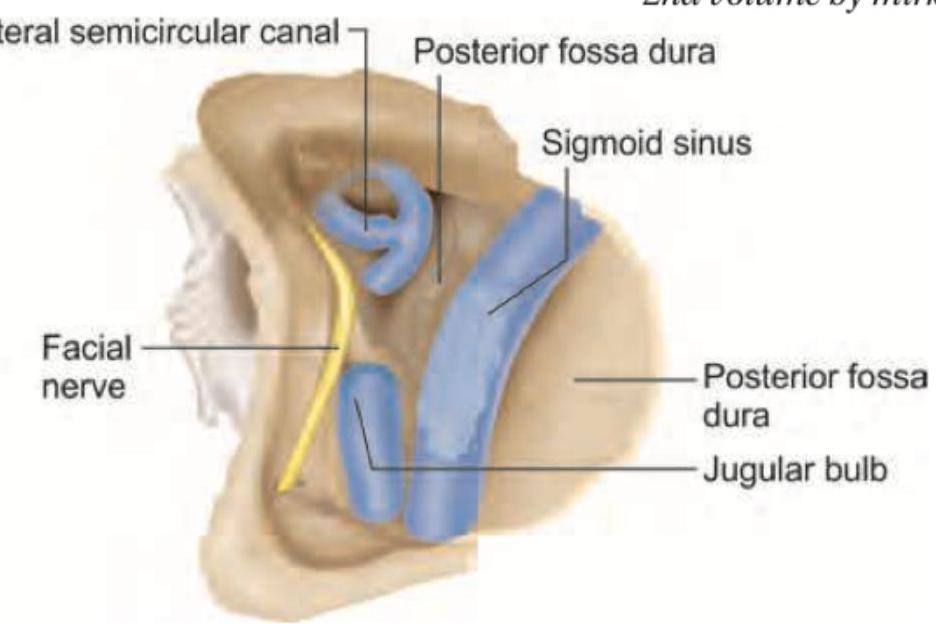
Explanation: **Explanation:** The primary objective of a **Radical Mastoidectomy** is to create a common, exteriorized cavity consisting of the external auditory canal, middle ear, and mastoid, usually in cases of extensive cholesteatoma or malignancy. To ensure this cavity remains dry and to prevent mucus discharge from the nasopharynx, the **Eustachian tube orifice must be obliterated** (usually with bone chips, cartilage, or muscle). This permanent closure separates the middle ear space from the respiratory tract. **Analysis of Options:** * **Radical Mastoidectomy (Correct):** Involves removal of the tympanic membrane, ossicles (except stapes footplate), and the mucoperiosteal lining. Obliteration of the Eustachian tube is a definitive step to prevent "wet cavity" issues. * **Modified Radical Mastoidectomy (MRM):** Unlike the radical procedure, MRM aims to **preserve hearing**. The middle ear space and the Eustachian tube function are maintained to allow for future reconstructive surgery (Tympanoplasty). * **Tympanoplasty:** This is a reconstructive procedure to restore the hearing mechanism. A patent and functional Eustachian tube is a **prerequisite** for a successful tympanoplasty. * **Schwartz Operation (Simple Mastoidectomy):** This is a cortical mastoidectomy where the posterior canal wall and the middle ear (including the drum and ossicles) are left intact. There is no interference with the Eustachian tube. **NEET-PG High-Yield Pearls:** * **Radical Mastoidectomy** converts the middle ear, mastoid, and EAM into a single cavity. * **Bondy’s Procedure** is a type of MRM used specifically for epitympanic cholesteatoma with an intact pars tensa and ossicular chain. * **Prerequisite for Tympanoplasty:** Good Eustachian tube function is the most critical factor for success.
Explanation: **Explanation:** The correct diagnosis is **Glue Ear**, also known as **Otitis Media with Effusion (OME)**. **1. Why "Glue Ear" is correct:** Glue ear is characterized by the accumulation of non-purulent, sterile, mucoid fluid in the middle ear. In children, this is most commonly due to Eustachian tube dysfunction (often associated with adenoid hypertrophy). The **bluish or dull grey discoloration** of the tympanic membrane occurs due to the presence of thick, tenacious fluid behind the drum and the altered light reflex. Bilateral hearing loss (conductive type) in a toddler is the classic clinical presentation for this condition. **2. Why other options are incorrect:** * **Acute Serous Otitis Media:** This typically follows an upper respiratory tract infection or barotrauma. The tympanic membrane is usually retracted or shows an amber/straw-colored fluid level/bubbles, rather than a thick blue appearance. * **Acute Necrotizing Otitis Media:** This is a severe form of otitis media (often seen in measles or scarlet fever) characterized by rapid destruction of the tympanic membrane and ossicles, leading to a large central perforation, not an intact blue drum. * **Chronic Serous Otitis Media:** While OME is chronic, the term "Glue Ear" specifically describes the thick, mucoid stage that produces the classic blue/grey appearance. In NEET-PG, "Glue Ear" is the preferred clinical term for this specific presentation in children. **High-Yield Clinical Pearls for NEET-PG:** * **Investigation of Choice:** Impedance Audiometry (Tympanometry), which shows a **Type B (Flat) curve**. * **Treatment of Choice:** Myringotomy with **Grommet insertion**. * **Most common cause:** Adenoid hypertrophy (always check the nasopharynx). * **Differential for Blue Drum:** Glomus tumor (rising sun appearance), high jugular bulb, or hemotympanum (trauma).
Explanation: **Explanation:** **Lateral Sinus Thrombosis (LST)**, a complication of chronic suppurative otitis media, is characterized by a classic temperature pattern known as the **"Picket-fence" appearance** (or Hectic chart). This occurs due to the periodic release of septic emboli and bacteria from the infected thrombus into the systemic circulation. The patient experiences spiking high-grade fever with chills and rigors, which then rapidly subsides with profuse sweating. **Analysis of Options:** * **Otic Hydrocephalus (Option A):** This refers to raised intracranial pressure following lateral sinus thrombosis. While it presents with headache and papilledema, it does not have a characteristic fever pattern; the focus is on neurological signs of intracranial hypertension. * **Extradural Abscess (Option B):** This is often "silent" or presents with a persistent low-grade headache and earache. Fever is usually absent or very mild unless associated with other complications. * **Meningitis (Option D):** Presents with a **continuous high-grade fever**, neck rigidity, and positive Kernig’s sign. It lacks the intermittent, spiking "picket-fence" nature seen in LST. **High-Yield Clinical Pearls for NEET-PG:** 1. **Griesinger’s Sign:** Edema over the mastoid process due to thrombosis of the mastoid emissary vein (pathognomonic for LST). 2. **Tobey-Ayer Test:** Used during manometry to detect LST; compression of the internal jugular vein on the affected side fails to raise CSF pressure. 3. **Crowe-Beck Test:** Engorgement of retinal veins upon compression of the healthy internal jugular vein. 4. **Delta Sign:** Seen on contrast-enhanced CT, representing a thrombus in the sigmoid sinus surrounded by enhanced dural walls.
Explanation: **Explanation:** The core objective of a **Modified Radical Mastoidectomy (MRM)** is to eradicate disease from the mastoid and middle ear while preserving hearing by maintaining the integrity of the tympanic membrane and ossicular remnants. **Why "Safe CSOM" is the correct answer:** Safe (Tubotympanic) CSOM is characterized by a central perforation and involves only the middle ear mucosa without bone-eroding pathology like cholesteatoma. The treatment of choice is **Myringoplasty or Tympanoplasty**. Mastoid surgery is generally not required unless there is persistent infection despite medical management, in which case a **Cortical (Simple) Mastoidectomy** may be performed to clear the air cell reservoir—not an MRM. **Analysis of Incorrect Options:** * **Unsafe CSOM (Atticoantral disease):** This is the **primary indication** for MRM. It involves cholesteatoma or granulation tissue. MRM removes the disease and the posterior canal wall to create a "common cavity" for exteriorization. * **Coalescent Mastoiditis:** While often treated with a Simple Mastoidectomy, if the disease is extensive or involves the posterior canal wall, an MRM may be indicated to ensure complete clearance. * **Limited Mastoid Pathology:** MRM is ideal for localized disease (e.g., cholesteatoma limited to the attic and antrum) where the middle ear function can still be salvaged. **High-Yield Clinical Pearls for NEET-PG:** * **Bondy’s Procedure:** A specific type of MRM indicated for cholesteatoma limited to the attic and antrum with an intact pars tensa and ossicular chain. * **Radical Mastoidectomy:** Unlike MRM, this procedure involves the removal of the tympanic membrane, ossicles (except stapes footplate), and closure of the Eustachian tube, resulting in significant hearing loss. * **Goal Priority in Mastoidectomy:** 1. Safety (remove disease), 2. Dry Ear, 3. Hearing Preservation.
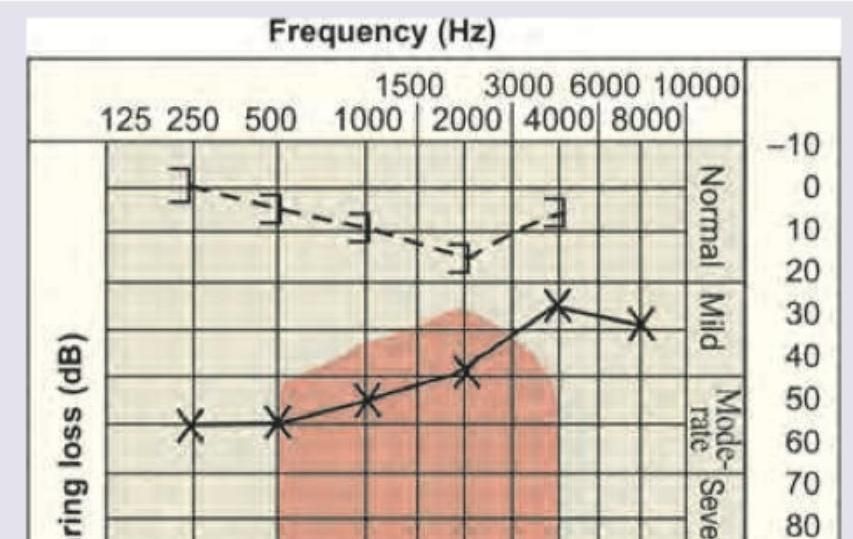
Explanation: **Explanation:** **Otosclerosis** is a primary metabolic bone disease of the otic capsule characterized by the replacement of normal bone with vascular spongy bone, leading to **stapes fixation** and conductive hearing loss. The surgical treatment of choice is **stapedectomy** (or stapedotomy), where the fixed stapes is bypassed. 1. **Why Option A is Correct:** The **Teflon piston** is the gold standard prosthesis used in stapedectomy. It is designed to replace the function of the stapes. One end is hooked over the long process of the incus, and the other end is inserted into the vestibule through a fenestra in the stapes footplate. Teflon is preferred because it is inert, biocompatible, and has a low coefficient of friction. 2. **Why Other Options are Incorrect:** * **Grommet (Option B):** This is a ventilation tube used in the treatment of **Otitis Media with Effusion (Glue Ear)** to equalize pressure across the tympanic membrane. It is not used for ossicular reconstruction. * **Total Ossicular Replacement Prosthesis (TORP) (Option C):** A TORP is used when the **entire ossicular chain** (malleus, incus, and stapes) is absent or damaged, typically in chronic suppurative otitis media (CSOM). In otosclerosis, only the stapes is fixed; the malleus and incus are usually mobile. **High-Yield Clinical Pearls for NEET-PG:** * **Schwartze Sign:** A flamingo-pink blush seen on the promontory through the TM, indicating active otosclerosis. * **Carhart’s Notch:** A characteristic dip in the bone conduction curve at **2000 Hz**. * **Gelle’s Test:** Negative in otosclerosis (indicates fixed ossicles). * **Stapedectomy Contraindication:** Only hearing ear, Meniere’s disease, or professional divers/pilots.
Explanation: ### Explanation The **singular nerve** (also known as the posterior ampullary nerve) is a specific branch of the vestibular nerve that carries sensory information from the **posterior semicircular canal**. #### Why Option B is Correct: The vestibulocochlear nerve (CN VIII) divides into the cochlear and vestibular branches. The vestibular nerve further divides into: 1. **Superior Vestibular Nerve:** Supplies the utricle, the anterior (superior) semicircular canal, and the lateral (horizontal) semicircular canal. 2. **Inferior Vestibular Nerve:** Supplies the saccule and the **posterior semicircular canal** via the **singular nerve**. The singular nerve travels through a distinct bony canal called the **foramen singulare** (located in the posterior wall of the internal auditory canal) to reach the ampulla of the posterior canal. #### Why Other Options are Incorrect: * **Options A & C:** The superior vestibular nerve does *not* supply the posterior canal; it supplies the anterior and lateral canals. * **Option D:** While the inferior vestibular nerve is the correct parent branch, it supplies the posterior canal, not the anterior canal. #### Clinical Pearls for NEET-PG: * **Surgical Landmark:** The singular nerve is a crucial landmark during a **Singular Neurectomy**, a surgical procedure performed for intractable Benign Paroxysmal Positional Vertigo (BPPV) to denervate the posterior semicircular canal. * **Mike’s Rule/Mnemonic:** Remember **"SAL"** for the Superior nerve (Superior canal, Utricle, Lateral canal). The Inferior nerve takes the rest (Saccule and Posterior canal via the Singular nerve). * **Internal Auditory Canal (IAC) Anatomy:** In the IAC, the vestibular nerves are separated from the facial nerve by **Bill’s Bar** (vertical bone) and from each other by the **falciform crest** (horizontal bone).
Explanation: ### Explanation **Correct Option: A. Nasopharyngeal tube (Eustachian Tube)** The **Eustachian tube** (also known as the pharyngotympanic or nasopharyngeal tube) provides a direct anatomical communication between the nasopharynx and the middle ear cleft. The middle ear cleft is a continuous system comprising the Eustachian tube, the tympanic cavity, the aditus ad antrum, and the **mastoid air cells**. In clinical practice, upper respiratory tract infections (URTIs) allow bacteria to ascend through the Eustachian tube into the middle ear. If the infection is not contained, it spreads posteriorly through the aditus into the mastoid antrum and air cells, leading to **acute mastoiditis**. This is the most common route of middle ear and mastoid infections. **Why other options are incorrect:** * **B. Cochlea:** This is part of the inner ear. While an infection can spread from the middle ear to the cochlea (causing labyrinthitis), it is not a primary portal for external bacteria to enter the mastoid. * **C. External acoustic meatus:** The intact tympanic membrane acts as a robust mechanical barrier. Bacteria from the external ear can only reach the mastoid if there is a pre-existing perforation (e.g., CSOM). * **D. Internal acoustic meatus:** This bony canal transmits the CN VII and VIII from the posterior cranial fossa to the inner ear. It is a route for intracranial spread of infection (meningitis) rather than a primary entry point for mastoid infection. **High-Yield Clinical Pearls for NEET-PG:** * **Anatomy:** The Eustachian tube in infants is shorter, wider, and more horizontal, explaining the higher incidence of Otitis Media and Mastoiditis in children. * **Mastoiditis:** The "Clouding of mastoid air cells" on an X-ray (Schuller’s view) is a classic radiological sign. * **Aditus ad Antrum:** This is the narrow "doorway" connecting the epitympanum to the mastoid antrum; its blockage is a key step in the pathogenesis of mastoiditis.
Explanation: The middle ear cleft is divided into three compartments based on their relationship to the tympanic membrane: the **Epitympanum** (attic), **Mesotympanum**, and **Hypotympanum**. ### **Why "Footplate of Stapes" is the Correct Answer** The **footplate of the stapes** is located in the **mesotympanum** (the middle compartment, medial to the pars tensa). It sits within the oval window on the medial wall of the middle ear. Since it is not located above the level of the superior bony annulus, it is not a component of the epitympanum. ### **Analysis of Incorrect Options** * **Head of Malleus & Body of Incus:** These are the primary contents of the epitympanum. They articulate at the incudomalleolar joint within the attic space. * **Chorda Tympani:** This nerve enters the middle ear through the posterior canaliculus and runs between the fibrous and mucosal layers of the tympanic membrane, passing medial to the neck of the malleus and lateral to the long process of the incus. Its superior trajectory places it within the boundaries of the epitympanic space/upper mesotympanum. ### **High-Yield Clinical Pearls for NEET-PG** * **Boundaries:** The epitympanum is bounded superiorly by the **Tegmen Tympani** (a thin plate of bone separating it from the middle cranial fossa). * **Prussak’s Space:** Located in the epitympanum, bounded laterally by Shrapnell’s membrane (pars flaccida). This is the most common site for the formation of **primary acquired cholesteatoma**. * **Aditus ad Antrum:** This is the opening in the posterior wall of the epitympanum that leads to the mastoid antrum. * **Cog:** A bony projection from the tegmen to the cochleariform process that divides the epitympanum into anterior and posterior compartments.
Explanation: **Explanation:** **Meniere’s Disease (Endolymphatic Hydrops)** is a disorder of the inner ear characterized by an abnormal accumulation of endolymph within the membranous labyrinth. 1. **Why Option B is Correct:** The hallmark pathology is **Endolymphatic Hydrops**. This occurs due to either increased production or, more commonly, decreased resorption of endolymph (via the endolymphatic sac). The resulting distension causes the Reissner’s membrane to bulge into the scala vestibuli and may lead to minute ruptures, allowing the mixing of potassium-rich endolymph with perilymph. This "potassium intoxication" of the hair cells results in the classic episodic symptoms. 2. **Why Other Options are Incorrect:** * **A. Perilymphatic hydrops:** This is not a recognized pathological entity in Meniere’s. The pathology specifically involves the endolymphatic compartment. * **C. Otospongiosis:** This is the pathological process underlying **Otosclerosis**, involving the replacement of normal bone with vascular spongy bone, typically at the stapes footplate. * **D. Coalescent mastoiditis:** This is a complication of **Acute Otitis Media (ASOM)** where the bony septa between mastoid air cells break down to form a single pus-filled cavity. **High-Yield Clinical Pearls for NEET-PG:** * **Classic Triad:** Episodic vertigo, fluctuating sensorineural hearing loss (SNHL), and tinnitus (often described as "roaring"). A fourth symptom, **aural fullness**, is frequently present. * **Audiometry:** Characteristically shows **Low-frequency SNHL** in early stages (rising curve). * **Lermoyez Phenomenon:** A variant where hearing improves during a vertigo attack. * **Tullio Phenomenon:** Vertigo induced by loud sounds (also seen in Superior Semicircular Canal Dehiscence). * **Glycerol Test:** Used for diagnosis; glycerol acts as an osmotic diuretic, temporarily reducing hydrops and improving hearing.
Explanation: **Explanation:** The **Antrum of Highmore** is the anatomical eponym for the **Maxillary Sinus**. It is the largest of the paranasal air sinuses and the first to develop (appearing around the 3rd month of fetal life). 1. **Why Maxillary is Correct:** The term "Antrum" refers to a natural chamber or cavity. Nathaniel Highmore, a British surgeon, described this sinus in detail in 1651. It is located within the body of the maxilla, shaped like a pyramid with its apex directed towards the zygomatic process and its base forming the lateral wall of the nose. 2. **Why other options are incorrect:** * **Ethmoid:** These are a collection of small air cells (anterior, middle, posterior) rather than a single large "antrum." * **Sphenoid:** Located in the body of the sphenoid bone, it is referred to as the sphenoid sinus, not an antrum. * **Frontal:** Located within the frontal bone, these are the last to develop and are not associated with the eponym Highmore. **High-Yield Clinical Pearls for NEET-PG:** * **Drainage:** The maxillary sinus drains into the **middle meatus** via the hiatus semilunaris. * **First to develop:** Maxillary sinus (at birth, it is a small slit). * **Last to develop:** Frontal sinus (clinically/radiologically visible around age 6-7). * **Surgical Note:** The **Caldwell-Luc operation** is a surgical procedure used to access the Antrum of Highmore through the canine fossa. * **Oro-antral Fistula:** Due to the close proximity of the maxillary molar roots to the floor of the sinus, dental extractions are the most common cause of infections or fistulae in this region.
Tympanic Membrane Perforation
Practice Questions
Cholesteatoma
Practice Questions
Tympanoplasty Techniques
Practice Questions
Ossicular Chain Reconstruction
Practice Questions
Mastoidectomy
Practice Questions
Stapedectomy
Practice Questions
Implantable Hearing Devices
Practice Questions
Congenital Aural Atresia
Practice Questions
Otologic Trauma
Practice Questions
Glomus Tumors
Practice Questions
Facial Nerve Decompression
Practice Questions
Rehabilitative Audiology
Practice Questions
Get full access to all questions, explanations, and performance tracking.
Start For Free