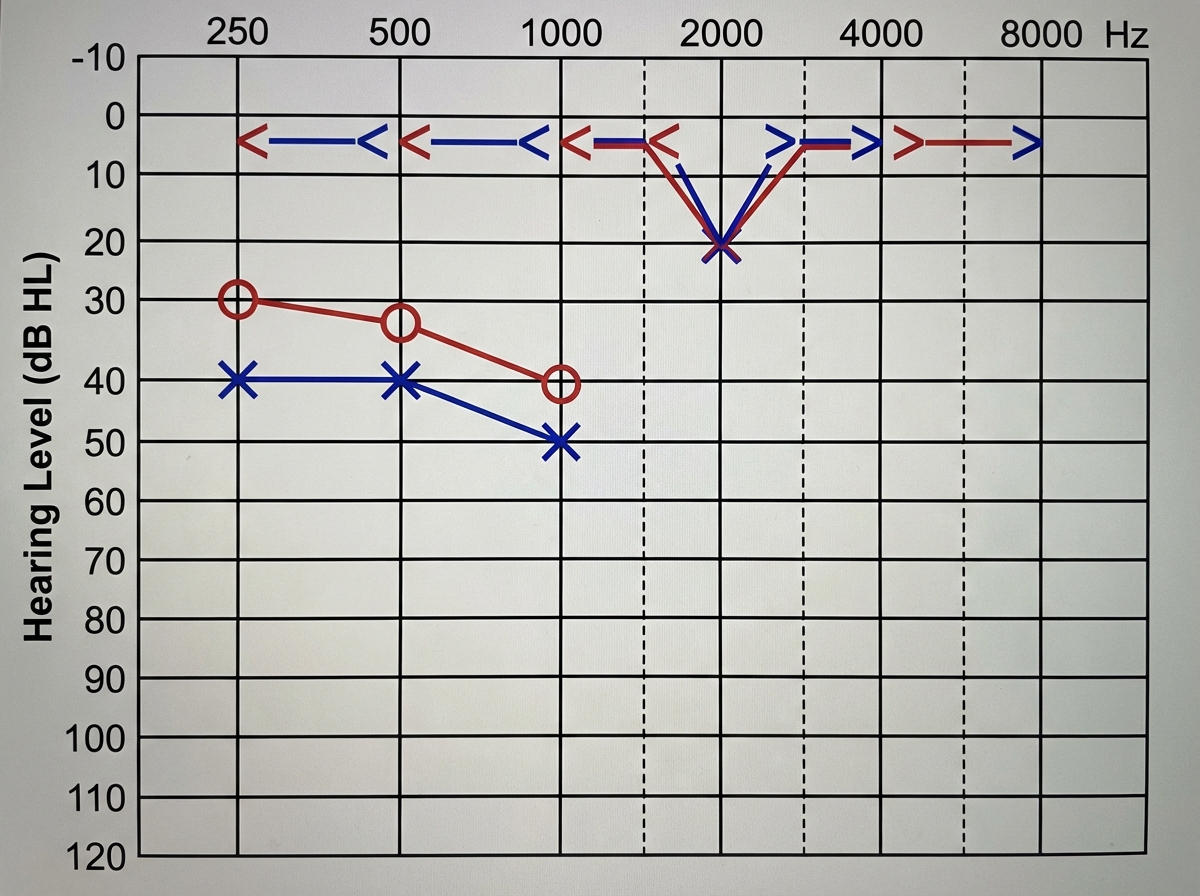
The cough response elicited while cleaning the external ear canal is mediated by stimulation of which nerve?
Which statement is not true regarding otosclerosis?
A 31-year-old female complains of bilateral impairment of hearing for 5 years. On examination, the tympanic membrane is normal, and an audiogram shows bilateral conductive deafness. Impedance audiometry shows an As type of curve, and acoustic reflexes are absent. All of the following are considered parts of the treatment for otosclerosis, except:
Schwartz sign is seen in which condition?
At what atmospheric pressure gradient does barotraumatic otitis media occur?
The stapes footplate covers which structure?
A child presents to the emergency department with signs of meningeal irritation, following a history of suppurative otitis media in the preceding week. Through which route can infection of the middle ear spread to the central nervous system?
Endolymphatic sac decompression is indicated for which condition?
What is the surface area of the tympanic membrane?
Which of the following is associated with objective tinnitus?
Explanation: This phenomenon is known as **Arnold’s Reflex** (or the Ear-Cough Reflex). It occurs due to the stimulation of the **Auricular branch of the Vagus Nerve (Arnold’s Nerve)**, which provides sensory innervation to the posterior and inferior walls of the external auditory canal (EAC). ### Why the Correct Answer is Right: When the EAC is stimulated (e.g., during syringing or cleaning with a cotton bud), sensory impulses are carried via the Vagus nerve (CN X) to the nucleus tractus solitarius in the brainstem. This triggers the efferent limb of the cough reflex, leading to an involuntary cough. This is a classic example of a referred reflex where stimulation of a peripheral nerve causes a response in a visceral organ system. ### Why Other Options are Incorrect: * **Option A (V cranial nerve):** The Auriculotemporal branch of the Mandibular nerve (V3) supplies the anterior and superior walls of the EAC. While it carries sensation, it does not mediate the cough reflex. * **Option B (C1 and C2):** The Greater Auricular nerve (C2, C3) supplies the skin over the mastoid and the lateral/lower part of the auricle, not the deep canal associated with this reflex. * **Option C (VII cranial nerve):** The Facial nerve provides minor sensory innervation to the concha and retroauricular area (often involved in Ramsay Hunt Syndrome), but it is not responsible for the cough reflex. ### High-Yield Clinical Pearls for NEET-PG: * **Arnold’s Nerve:** A branch of the Vagus (CN X). * **Vagal Reflexes in ENT:** Stimulation of the EAC can occasionally cause **bradycardia or fainting** (Vaso-vagal syncope) due to the same nerve. * **Hitchelberger’s Sign:** Reduced sensation in the area supplied by the facial nerve in the EAC, seen in Acoustic Neuroma. * **Nerve Supply of EAC (Summary):** 1. Anterior/Superior: V3 (Auriculotemporal). 2. Posterior/Inferior: X (Arnold’s). 3. Concha/Posterior wall: VII (Facial).
Explanation: ### Explanation **Otosclerosis** is a primary metabolic bone disease of the otic capsule characterized by the replacement of normal bone with vascular spongy bone, leading to stapes fixation and conductive hearing loss. **Why Option B is the Correct Answer (The False Statement):** The pathology of otosclerosis is strictly limited to the **bony labyrinth** of the inner ear and the **stapes footplate**. It does not involve the middle ear mucosa or the nasopharynx. Therefore, the **Eustachian tube function remains perfectly normal**. Any middle ear pathology involving Eustachian tube dysfunction (like Serous Otitis Media) would be a separate clinical entity. **Analysis of Other Options:** * **Option A:** This refers to **Paracusis Willisi**, where patients hear better in noisy surroundings because others speak louder to overcome background noise. While the option mentions *Carhart’s notch* (a dip in bone conduction at 2000 Hz), it is important to note that Paracusis Willisi is the clinical phenomenon, while Carhart's notch is the characteristic audiometric finding. * **Option C:** In most cases of otosclerosis, the **tympanic membrane is normal and mobile**. A rare exception is "Schwartze sign" (a flamingo-pink flush seen through the drum), but the membrane itself remains structurally normal. * **Option D:** Otosclerosis typically presents as **bilateral (80% of cases)**, progressive conductive hearing loss, usually starting in the second or third decade of life. **High-Yield Clinical Pearls for NEET-PG:** 1. **Gelle’s Test:** Negative (indicates stapes fixation). 2. **Tympanometry:** Typically shows an **As type** curve (stiffened ossicular chain). 3. **Schwartze Sign:** Indicates active otosclerosis (Otospongiosis). 4. **Treatment of Choice:** **Stapedotomy** (using a Teflon piston). 5. **Medical Management:** Sodium Fluoride (to inhibit osteoclastic activity and mature the focus).
Explanation: **Diagnosis: Otosclerosis** The clinical presentation of a young female with bilateral conductive hearing loss, a normal tympanic membrane, an **'As' type tympanogram** (stiffness-dominated), and **absent acoustic reflexes** is classic for Otosclerosis. This condition involves abnormal bone remodeling, leading to stapes fixation. ### **Why Gentamycin is the Correct Answer (The 'Except')** **Gentamycin** is an aminoglycoside antibiotic known for its **vestibulotoxicity**. In ENT, it is used for "chemical labyrinthectomy" to destroy vestibular hair cells in patients with intractable **Meniere’s disease**. It has no role in treating otosclerosis and can actually cause sensorineural hearing loss as a side effect. ### **Explanation of Other Options** * **Hearing Aid (Option A):** This is the safest non-surgical management for patients who are unfit for surgery or do not wish to undergo an operation. * **Stapedectomy/Stapedotomy (Option B):** This is the **surgical treatment of choice**. The fixed stapes is replaced with a prosthesis (e.g., Teflon piston) to restore the ossicular chain's mobility. * **Sodium Fluoride (Option C):** Used in the active phase (**Otospongiosis**). It inhibits osteoclastic activity and promotes calcification of the spongy bone, potentially arresting the progression of the disease. ### **High-Yield Clinical Pearls for NEET-PG** * **Schwartze Sign:** A flamingo-pink flush seen on the TM due to increased vascularity over the promontory (indicates active otospongiosis). * **Carhart’s Notch:** A characteristic dip in the bone conduction curve at **2000 Hz** on an audiogram. * **Gelle’s Test:** Negative in otosclerosis (indicates a fixed ossicular chain). * **Bezold’s Triad:** Includes (1) Negative Rinne test, (2) Raised lower limit of hearing (loss of low frequencies), and (3) Prolonged Bone Conduction (Schwabach test).
Explanation: **Explanation:** **Schwartz Sign** (also known as the Flamingo Flush sign) is a pathognomonic clinical finding in **Otosclerosis**, specifically during the active phase of the disease (Otospongiosis). * **Why it is correct:** In active otosclerosis, there is increased vascularity in the submucosa of the promontory due to rapid bone remodeling. When viewed through a translucent tympanic membrane, this hypervascularity appears as a **reddish/pinkish hue** behind the drum. It indicates that the disease is in a highly metabolic, "spongiotic" stage. * **Meniere’s Disease:** This is a disorder of the inner ear characterized by endolymphatic hydrops. The tympanic membrane appears completely normal on examination; there is no increased vascularity of the middle ear. * **ASOM:** While the tympanic membrane appears red in ASOM, it is due to acute inflammation and congestion of the drum itself (cartwheel appearance), not a localized flush on the promontory. * **CSOM:** This typically presents with a perforated tympanic membrane and discharge. While the middle ear mucosa may be polypoid or pale, it does not exhibit the specific localized vascular flush seen in Schwartz sign. **High-Yield Clinical Pearls for NEET-PG:** * **Treatment of Schwartz Sign:** If a patient presents with a positive Schwartz sign, medical management with **Sodium Fluoride** is often initiated to promote maturation of the focus (converting otospongiosis to otosclerosis) before considering surgery. * **Gelle’s Test:** Negative in otosclerosis (indicates ossicular fixation). * **Carhart’s Notch:** A characteristic dip in the bone conduction threshold at **2000 Hz** seen on Pure Tone Audiometry. * **Bezold’s Triad:** Includes (1) Raised bone conduction threshold, (2) Negative Rinne test, and (3) Prolonged Schwabach test.
Explanation: **Explanation:** **Barotraumatic Otitis Media** (also known as Otitic Barotrauma) occurs due to a failure of the Eustachian tube to equalize a rapid increase in ambient atmospheric pressure, most commonly during the descent of an aircraft or deep-sea diving. 1. **Why 90 mm Hg is correct:** Under normal conditions, the Eustachian tube opens periodically to equalize middle ear pressure. However, when the external atmospheric pressure exceeds the middle ear pressure by a gradient of **90 mm Hg**, the fibrocartilaginous portion of the Eustachian tube becomes forcefully "locked" or collapsed. At this critical pressure gradient, the tensor veli palatini muscle is no longer strong enough to open the tube, leading to severe negative pressure in the middle ear, mucosal edema, and potential hemorrhage or effusion. 2. **Analysis of Incorrect Options:** * **80 mm Hg:** While physiological stress begins at lower gradients, the "locking" phenomenon that defines clinical barotrauma typically occurs at the 90 mm Hg threshold. * **100 mm Hg & 120 mm Hg:** These pressures are well beyond the initial locking point. By the time the gradient reaches these levels, significant pathological changes (like tympanic membrane rupture or hemotympanum) are likely already occurring. **NEET-PG High-Yield Pearls:** * **The "Locking" Phenomenon:** Occurs at a pressure differential of **90 mm Hg**. * **Most Common Cause:** Rapid descent in an airplane (negative middle ear pressure). * **Clinical Presentation:** Severe ear pain (otalgia), hearing loss, and a retracted/congested tympanic membrane (Teed Scale is used for grading). * **Prevention:** Valsalva maneuver during descent, chewing gum, or using decongestants. * **Treatment:** Most cases are managed conservatively; however, if the tube remains locked, myringotomy may be required to equalize pressure.
Explanation: **Explanation:** The **stapes**, the smallest bone in the human body, consists of a head, neck, two crura, and a footplate. The **footplate (base)** of the stapes is held in the **oval window** (fenestra vestibuli) by the annular ligament. This connection is a critical component of the middle ear's impedance-matching mechanism, as it transmits mechanical vibrations from the ossicular chain directly to the perilymph of the inner ear (vestibule). **Analysis of Options:** * **Oval Window (Correct):** Located in the lateral wall of the vestibule, it is specifically occluded by the stapes footplate. * **Round Window (Incorrect):** Also known as the fenestra cochleae, it is located postero-inferior to the oval window and is covered by the **secondary tympanic membrane**. It serves as a pressure release valve for the fluid waves in the cochlea. * **Inferior Sinus Tympani (Incorrect):** This is a deep recess in the posterior wall of the middle ear, located medial to the pyramid and subiculum. It is a common site for the hidden spread of cholesteatoma. * **Pyramid (Incorrect):** A hollow conical projection on the posterior wall of the tympanum that houses the **stapedius muscle**. **High-Yield Clinical Pearls for NEET-PG:** * **Otosclerosis:** Characterized by pathological remodeling of bone, most commonly at the *fissula ante fenestram* (anterior to the oval window), leading to stapes fixation and conductive hearing loss. * **Schwartze Sign:** A flamingo-pink flush seen through the tympanic membrane in active otosclerosis due to increased vascularity over the promontory. * **Stapedial Reflex:** Mediated by the 7th cranial nerve; its absence is an early sign of facial nerve palsy or ossicular fixation.
Explanation: **Explanation:** The spread of infection from the middle ear to the central nervous system (CNS) occurs via three primary pathways: **preformed pathways**, **direct bone erosion**, and **retrograde thrombophlebitis**. **Why Cochlear Aqueduct is Correct:** The cochlear aqueduct is a **preformed anatomical pathway** that connects the perilymphatic space of the inner ear directly to the subarachnoid space of the posterior cranial fossa. In cases of suppurative otitis media, infection can spread to the inner ear (labyrinthitis) and subsequently reach the meninges via the cochlear aqueduct, leading to meningitis. This is a classic route for otogenic meningitis in children. **Analysis of Incorrect Options:** * **A. Venous plexus:** While retrograde thrombophlebitis through small veins (veins of Breschet) is a known route, it typically leads to brain abscesses or lateral sinus thrombosis rather than direct meningeal irritation via a preformed channel. * **C. Cochlear nerve sheath:** While the internal auditory canal (IAC) is a potential route, the cochlear aqueduct provides a more direct communication between the labyrinthine fluids and the cerebrospinal fluid (CSF). * **D. Bloodstream:** Hematogenous spread is more common for primary meningitis (e.g., *H. influenzae*). In the context of an active ear infection, local extension through preformed pathways is the more specific anatomical route tested. **High-Yield Clinical Pearls for NEET-PG:** * **Most common route** for intracranial complications in **acute** otitis media: Preformed pathways (e.g., dehiscent sutures, cochlear aqueduct). * **Most common route** in **chronic** otitis media (Cholesteatoma): Direct bone erosion (usually the tegmen tympani or tegmen antri). * **Hyrtl’s Fissure:** A transient fetal pathway (tympanomeningeal fissure) that can also act as a route for infection in very young children. * **Mondini Dysplasia:** Often associated with recurrent meningitis due to a congenital defect in the oval window or cochlear aqueduct.
Explanation: **Explanation:** **Meniere’s Disease (Correct Answer):** The underlying pathology of Meniere’s disease is **Endolymphatic Hydrops**, characterized by an overaccumulation of endolymph within the inner ear. When medical management (e.g., salt restriction, diuretics, betahistine) fails to control vertigo, surgical intervention is considered. **Endolymphatic Sac Decompression (ELSD)** or shunting aims to relieve the pressure within the endolymphatic system, potentially preserving hearing while reducing the frequency of vertigo attacks. It is considered a "conservative" surgical procedure as it does not destroy inner ear function. **Why other options are incorrect:** * **Otosclerosis:** This is a metabolic bone disease of the otic capsule causing stapes fixation. The treatment of choice is **Stapedotomy** or Stapedectomy. * **Otitis Media:** This refers to inflammation of the middle ear. Management involves antibiotics, myringotomy, or mastoidectomy (for chronic cases), not inner ear sac surgery. * **Vestibular Schwannoma:** This is a benign tumor of the 8th cranial nerve. Management involves observation, radiotherapy, or surgical excision (e.g., translabyrinthine or retrosigmoid approach). **High-Yield Clinical Pearls for NEET-PG:** * **Meniere’s Tetrad:** Episodic vertigo, fluctuating sensorineural hearing loss (SNHL), tinnitus, and aural fullness. * **Staging of Surgery:** ELSD is used for intractable vertigo with **serviceable hearing**. If hearing is lost, **Labyrinthectomy** is the definitive destructive procedure. * **Glycerol Test:** Used for diagnosis; it causes temporary improvement in hearing by dehydrating the endolymphatic space. * **Electrocochleography (ECochG):** Shows an increased **SP/AP ratio** (>0.30).
Explanation: **Explanation:** The tympanic membrane (TM) is a thin, semi-transparent, pearly-grey membrane that separates the external auditory canal from the middle ear. Understanding its dimensions is crucial for grasping the **"Hydraulic Action"** of the middle ear transformer mechanism. **1. Why 90 mm² is correct:** The total surface area of the adult tympanic membrane is approximately **90 mm²**. However, it is important to distinguish between total and effective area. While the total area is 90 mm², only about **55 mm²** (roughly two-thirds) is considered the **effective vibrating area** because the peripheral portion is fixed to the tympanic sulcus. **2. Analysis of Incorrect Options:** * **Option A (55 mm²):** This is a common distractor. It represents the **effective vibrating area** of the TM, not the total surface area. * **Option B (70 mm²) & Option C (80 mm²):** these values do not correspond to standard anatomical measurements of the human tympanic membrane. **3. Clinical Pearls & High-Yield Facts for NEET-PG:** * **Areal Ratio:** The ratio between the effective vibrating area of the TM (55 mm²) and the area of the stapes footplate (3.2 mm²) is approximately **17:1**. This is the most significant component of the middle ear impedance matching mechanism. * **Dimensions:** The TM measures roughly 9–10 mm in height and 8–9 mm in width. * **Thickness:** It is approximately 0.1 mm thick. * **Position:** It is set obliquely at an angle of 55° to the floor of the external auditory canal. * **Structure:** It consists of three layers: Outer epithelial (ectoderm), middle fibrous (mesoderm), and inner mucosal (endoderm). Note that the *Pars Flaccida* (Shrapnell’s membrane) lacks the organized middle fibrous layer, making it a common site for retraction pockets.
Explanation: **Explanation:** Tinnitus is classified into two types: **Subjective** (heard only by the patient) and **Objective** (audible to both the patient and the examiner). **Why Glomus Tumor is the Correct Answer:** A Glomus tumor (Paraganglioma) is a highly vascular neoplasm. Because of its extreme vascularity and proximity to the middle ear structures, it produces **pulsatile objective tinnitus**. The sound corresponds to the patient’s heartbeat and can often be heard by an examiner using a stethoscope or a Toynbee tube placed over the external auditory canal. This is a classic "vascular" cause of tinnitus. **Analysis of Incorrect Options:** * **Meniere’s Disease:** Characterized by low-pitched, roaring **subjective** tinnitus, usually accompanied by vertigo and sensorineural hearing loss. * **Acoustic Neuroma:** Typically presents with high-pitched, continuous **subjective** tinnitus due to compression of the cochlear nerve. * **Ear Wax (Cerumen):** Causes **subjective** tinnitus due to conductive interference or the physical sensation of the wax touching the tympanic membrane. **High-Yield Clinical Pearls for NEET-PG:** * **Pulsatile Tinnitus:** Always think of vascular etiologies like Glomus tumors, carotid artery stenosis, or benign intracranial hypertension. * **Brown’s Sign:** Pulsation of the tumor mass seen on otoscopy in Glomus jugulare/tympanicum, which blanches on positive pressure with a Siegle’s bulb. * **Aquino’s Sign:** Blanching of the tympanic mass upon carotid artery compression (specific to Glomus tumors). * **Objective Tinnitus (Non-vascular):** Can also be caused by palatal myoclonus or patulous Eustachian tube (clicking/rushing sounds).
Explanation: **Explanation:** **Carhart’s Notch** is a classic audiometric finding in **Otosclerosis**. It is characterized by a mechanical dip in the **bone conduction (BC)** threshold, most prominently at **2000 Hz**. **Why it occurs (The Medical Concept):** In a normal ear, the resonance frequency of the ossicular chain is approximately 2000 Hz. In otosclerosis, stapes fixation disrupts this natural resonance and impedes the normal inertial component of bone conduction. This results in a "false" sensory loss appearing on the audiogram. It is important to note that this is a **mechanical artifact** rather than true sensorineural hearing loss; this is proven by the fact that the notch typically disappears after a successful stapedotomy. **Analysis of Options:** * **Option D (Correct):** The notch specifically affects bone conduction at 2000 Hz. * **Option C:** While otosclerosis causes a significant gap in Air Conduction (AC), the specific "notch" described by Carhart refers to the paradoxical dip in the BC curve. * **Options A & B:** 1000 Hz is not the resonance frequency of the ossicular chain; therefore, the mechanical impedance caused by stapes fixation does not peak at this frequency. **High-Yield Clinical Pearls for NEET-PG:** * **Schwartze Sign:** A flamingo-pink flush seen through the TM due to increased vascularity over the promontory (indicates active otosclerosis). * **Gelle’s Test:** Negative in otosclerosis (tuning fork sound does not change with pressure changes in the EAC). * **Bezold’s Triad:** Includes (1) Negative Rinne, (2) Raised BC threshold (Carhart's notch), and (3) Prolonged Schwabach test. * **Tympanometry:** Typically shows an **As type** (Admittance stiffened) curve. * **Treatment of Choice:** Stapedotomy (using a Teflon piston).
Explanation: ### Explanation **Correct Answer: B. Bone anchored hearing aid (BAHA)** **Medical Concept:** Anotia is the complete absence of the pinna and is almost always associated with **aural atresia** (absence of the external auditory canal). In such cases, sound cannot be conducted through the ear canal to the tympanic membrane. A **Bone Anchored Hearing Aid (BAHA)** bypasses the external and middle ear by converting sound into vibrations. These vibrations are transmitted directly through the skull bone to the functioning cochlea (bone conduction). It is the gold standard for permanent conductive hearing loss where conventional air-conduction aids cannot be worn due to anatomical absence of the canal. **Analysis of Incorrect Options:** * **A. In-the-canal (ITC) hearing aid:** These require a patent external auditory canal to house the device. In anotia/atresia, there is no canal to hold the aid. * **C. Vestibular implant:** These are experimental devices designed to restore balance function in patients with bilateral vestibular loss, not to restore hearing. * **D. Transcutaneous hearing aid:** While some BAHA systems are transcutaneous (using magnets), the term is broad. In the context of anotia, the specific surgical "Bone Anchored" system is the definitive clinical choice. **High-Yield Clinical Pearls for NEET-PG:** * **Minimum Age for BAHA:** In children with congenital atresia, surgical BAHA is typically delayed until age **5 years** (when the skull bone is thick enough). Before age 5, a **BAHA headband** (softband) is used. * **Indications for BAHA:** 1. Congenital atresia/anotia (Treacher Collins, Goldenhar syndrome). 2. Chronic Suppurative Otitis Media (CSOM) where a discharging ear prevents the use of an earmold. 3. Single-sided deafness (SSD). * **Components:** BAHA consists of a titanium implant, an external abutment (or magnet), and a sound processor.
Explanation: **Explanation:** The clinical presentation of **conductive hearing loss (CHL)** following head trauma, in the presence of a **normal and mobile tympanic membrane (TM)**, is a classic indicator of **ossicular chain disruption**. 1. **Why "Distortion of ossicular chain" is correct:** Head injuries (especially longitudinal fractures of the temporal bone) can cause sudden displacement of the ossicles. The most common injury is **incudostapedial joint dislocation** because the incus is the most vulnerable ossicle (it lacks strong ligamentous attachments compared to the malleus and stapes). Since the TM remains intact and mobile, the conductive gap is purely due to the break in the mechanical transmission of sound through the ossicles. 2. **Why the other options are incorrect:** * **Haemotympanum:** While common after head trauma, it would result in a **blue/dark red bulging TM** with **restricted mobility** on pneumatic otoscopy. The question specifies the TM is normal and mobile. * **External auditory canal sclerosis:** This is a chronic process (often post-inflammatory) and would not occur acutely following a head injury. It would also be visible on otoscopy. * **Otosclerosis:** This is a genetic/metabolic condition causing stapes fixation. While it presents with CHL and a normal TM, it is a progressive, non-traumatic condition. **High-Yield Clinical Pearls for NEET-PG:** * **Most common ossicular dislocation:** Incudostapedial joint. * **Most common ossicle to be fractured:** Incus (specifically the long process). * **Audiometry finding:** A significant air-bone gap (often >40-50 dB) suggests ossicular discontinuity. * **Tympanometry:** Ossicular discontinuity typically shows an **Ad type** (High compliance) tympanogram due to the "flaccid" nature of the disconnected system. * **Management:** Surgical reconstruction (Ossiculoplasty).
Explanation: **Explanation:** **1. Why the Cochlea is Correct:** A cochlear implant is a prosthetic device designed to bypass damaged hair cells in the inner ear. The electrode array is surgically inserted into the **Scala Tympani of the Cochlea**. The primary goal is to place these electrodes in close proximity to the **Spiral Ganglion cells** (the first-order neurons of the auditory pathway). Once in place, the electrodes provide direct electrical stimulation to the auditory nerve fibers, which the brain interprets as sound. **2. Why the Other Options are Incorrect:** * **Oval Window:** This is the entry point for the stapes footplate to transmit mechanical vibrations. In cochlear surgery, it is avoided as it leads to the Scala Vestibuli. * **Round Window:** While the round window is the **most common surgical route/portal** used to insert the electrode array into the cochlea (via a "round window approach"), the electrodes do not remain *at* the window; they are advanced deep into the cochlear duct. * **Horizontal Semicircular Canal:** This is part of the vestibular system responsible for balance, not hearing. It is a landmark in mastoid surgery but not a site for electrode placement. **3. Clinical Pearls for NEET-PG:** * **Components:** A cochlear implant has an external part (microphone, speech processor, transmitter) and an internal part (receiver-stimulator and electrode array). * **Ideal Candidate:** Bilateral severe-to-profound sensorineural hearing loss (SNHL) who derive little to no benefit from hearing aids. * **Prerequisite:** A functional **Auditory Nerve (CN VIII)** must be present. If the nerve is absent, an Auditory Brainstem Implant (ABI) is indicated. * **Imaging:** HRCT of the temporal bone and MRI are essential to check for cochlear patency and the presence of the cochlear nerve.
Explanation: **Explanation** **Schwartz Sign (Flamingo Flush Sign)** is a classic clinical finding in **Otosclerosis**, specifically during the active phase of the disease (Otospongiosis). It is characterized by a reddish/pinkish hue seen through a translucent tympanic membrane, typically over the promontory area. 1. **Why Otosclerosis is correct:** In the active stage of otosclerosis, there is increased vascularity in the bony labyrinth (hypervascularization of the promontory). This increased blood flow is visible through the eardrum, creating the characteristic pink flush. It indicates that the disease is currently active and progressing. 2. **Why other options are incorrect:** * **Serous Otitis Media:** Characterized by a dull, retracted tympanic membrane with air-fluid levels or bubbles; the drum often appears amber or yellowish, not pink. * **CSOM:** Presents with a permanent perforation of the tympanic membrane and discharge. While the mucosa may be pale or granular, it does not present with the localized promontory flush of Schwartz sign. * **ASOM:** Involves generalized congestion and bulging of the tympanic membrane (cartwheel appearance) due to acute infection, rather than localized vascularity of the promontory. **High-Yield Clinical Pearls for NEET-PG:** * **Otosclerosis Triad:** Conductive hearing loss, normal tympanic membrane (usually), and absent stapedial reflex. * **Bezold’s Triad:** Includes Schwartz sign, low-frequency tinnitus, and paracusis willisii. * **Gelle’s Test:** Negative in otosclerosis (indicates stapes fixation). * **Carhart’s Notch:** A characteristic dip in the bone conduction threshold at **2000 Hz**. * **Treatment of Choice:** Stapedotomy (most common) or Stapedectomy. Medical management includes **Sodium Fluoride**, which helps mature active otospongiotic foci into inactive otosclerotic bone.
Explanation: **Explanation:** The correct answer is **Tuberculous Otitis Media (TOM)**. This is a chronic granulomatous infection of the middle ear caused by *Mycobacterium tuberculosis*. **Why Tuberculous Otitis Media is correct:** The classic clinical triad of TOM includes: 1. **Painless ear discharge:** Unlike pyogenic otitis media, the onset is insidious and painless. 2. **Multiple tympanic membrane perforations:** These occur due to the coalescence of multiple small tubercles on the drum. 3. **Profound hearing loss:** Often out of proportion to the clinical findings due to early inner ear involvement. Other features include pale granulations in the middle ear and early facial nerve paralysis. **Why the other options are incorrect:** * **Fungal Otitis Media (Otomycosis):** Characterized by intense itching, pain, and a "wet newspaper" or "velvety" appearance of the canal (due to *Aspergillus* or *Candida*). It does not typically cause multiple perforations. * **Serous Otitis Media (Otitis Media with Effusion):** Presents with an intact, retracted tympanic membrane and conductive hearing loss. There is no discharge or perforation. * **Viral Otitis Media:** Usually presents as Bullous Myringitis (painful vesicles on the drum) or as part of an upper respiratory infection. It does not cause chronic painless discharge or multiple perforations. **High-Yield Clinical Pearls for NEET-PG:** * **Gold Standard Diagnosis:** Culture of the discharge on Lowenstein-Jensen (LJ) medium or demonstration of Acid-Fast Bacilli (AFB) on smear. * **Pathognomonic sign:** Multiple perforations (though these may later coalesce into a single large central perforation). * **Treatment:** Standard Anti-Tubercular Therapy (ATT) for 6 months. Surgery is reserved for complications like mastoiditis or facial palsy.
Explanation: **Explanation:** **Glue Ear**, clinically known as **Otitis Media with Effusion (OME)**, is characterized by the accumulation of non-purulent, mucoid fluid in the middle ear cleft. 1. **Why Option B is correct:** The hallmark of OME is the absence of acute signs and symptoms of inflammation. Unlike acute otitis media, there is no suppuration or pressure from pus; hence, it is **painless**. The primary symptom is a painless, fluctuating hearing loss (conductive) and a feeling of "fullness" in the ear. 2. **Why Option A is incorrect:** Pain (otalgia) is a feature of Acute Otitis Media (AOM) or Otitis Externa. Glue ear is specifically defined by its silent, non-inflammatory nature. 3. **Why Option C is incorrect:** Radical mastoidectomy is reserved for complicated cases of chronic suppurative otitis media (CSOM) or cholesteatoma. The treatment of choice for glue ear is conservative (decongestants, Valsalva maneuver) or surgical intervention via **Myringotomy with Grommet insertion**. 4. **Why Option D is incorrect:** Sodium fluoride is used in the medical management of **Otosclerosis** to inhibit osteoclastic activity and stabilize the active phase (Otospongiosis). It has no role in treating middle ear effusions. **High-Yield Clinical Pearls for NEET-PG:** * **Most common cause** of hearing loss in children. * **Otoscopy findings:** Dull/opaque tympanic membrane, retracted drum, and "hairline" fluid levels or air bubbles. * **Tympanometry:** Shows a characteristic **Type B (flat) curve**. * **Etiology:** Often associated with Eustachian tube dysfunction, adenoid hypertrophy, or cleft palate. In adults with unilateral glue ear, always rule out **Nasopharyngeal Carcinoma**.
Explanation: **Tobey-Ayer Test** (also known as the Queckenstedt-Stookey Test) is a clinical maneuver used to diagnose **Lateral (Sigmoid) Sinus Thrombosis**, a serious complication of acute or chronic mastoiditis. ### **Explanation of the Correct Answer** The test is based on the dynamics of cerebrospinal fluid (CSF) pressure. In a healthy individual, manual compression of one or both internal jugular veins (IJV) causes a rapid rise in CSF pressure (measured via lumbar puncture) because venous outflow from the brain is obstructed. * **In Lateral Sinus Thrombosis:** If the affected side's IJV is compressed, there is **no rise** (or a negligible rise) in CSF pressure because the sinus is already occluded by a thrombus. * Conversely, compressing the healthy side causes a disproportionately **sharp and rapid rise** in pressure, as the entire venous drainage is forced through a single patent channel. ### **Analysis of Incorrect Options** * **B & C (Maxillary Cancer/Rhinosporidiosis):** These are pathologies of the paranasal sinuses and nasal mucosa. They do not involve the intracranial venous sinuses or affect CSF pressure dynamics. * **D (Jugular Vein Thrombosis):** While the test involves the jugular vein, it is specifically designed to identify the extension of the thrombus into the **lateral/sigmoid sinus** in the context of middle ear infections. Isolated jugular thrombosis is usually diagnosed via Doppler ultrasound or CT. ### **High-Yield Clinical Pearls for NEET-PG** * **Griesinger’s Sign:** Edema over the mastoid process due to thrombosis of the mastoid emissary vein (another classic sign of Lateral Sinus Thrombosis). * **Crowe-Beck Test:** Engorgement of retinal veins and conjunctiva upon compression of the healthy IJV (the ophthalmological equivalent of the Tobey-Ayer test). * **Delta Sign:** Seen on contrast-enhanced CT, representing a thrombus in the superior sagittal or sigmoid sinus. * **Treatment:** The standard approach is Mastoidectomy with decompression of the sinus and intravenous antibiotics. Anticoagulants are controversial but used if the thrombus propagates.
Explanation: ### Explanation **Concept:** Otitis media (whether acute or serous) causes **Conductive Hearing Loss (CHL)** due to fluid or pressure in the middle ear interfering with the ossicular conduction of sound. In **Weber’s test**, a vibrating tuning fork (512 Hz) is placed on the midline of the skull. In CHL, the sound is **lateralized to the poorer ear** (the ear with the conductive deficit). This occurs because the "masking effect" of ambient room noise is reduced in the affected ear, and there is an increase in bone conduction sensitivity (the Stenger phenomenon). Essentially, the cochlea in the diseased ear is normal but is better able to perceive bone-conducted sound because it isn't competing with external environmental noise. **Analysis of Options:** * **Option B (Correct):** In CHL (as seen in otitis media), Weber lateralizes to the diseased/poorer ear. * **Option C (Incorrect):** Lateralization to the **better ear** occurs in **Sensorineural Hearing Loss (SNHL)**. If a patient had permanent nerve damage in one ear, they would hear the vibration better in the healthy ear. * **Option A & D (Incorrect):** Weber is "not lateralized" (central) in individuals with normal hearing or symmetrical hearing loss. It is a highly sensitive test for identifying asymmetrical hearing loss. **NEET-PG High-Yield Pearls:** * **Rinne Test in Otitis Media:** Will be **Negative** (Bone Conduction > Air Conduction), which is the hallmark of CHL. * **ABC (Absolute Bone Conduction) Test:** In otitis media, ABC is **normal**, as the inner ear (cochlea) is unaffected. * **Gelle’s Test:** Used to check ossicular chain patency; it is **negative** in conditions like Otosclerosis or Otitis Media where the middle ear mechanism is stiffened. * **The "Rule of Thumb":** Weber to the bad ear = Conductive; Weber to the good ear = Sensorineural.
Explanation: ### Explanation **Correct Answer: C. Perilabyrinthine fistula** A **Perilabyrinthine (or Perilymph) fistula** is an abnormal communication between the fluid-filled inner ear (perilymphatic space) and the air-filled middle ear, most commonly occurring at the round or oval window. * **Mechanism:** The leakage of perilymph leads to sudden or episodic changes in inner ear pressure. This results in **fluctuating sensorineural hearing loss (SNHL)** and episodic vertigo. The hearing loss is "variable" because it can worsen with physical exertion, coughing, or sneezing (Valsalva maneuver), which increases intracranial or middle ear pressure. * **Clinical Sign:** A positive **Hennebert’s sign** (vertigo/nystagmus induced by pressure changes in the external ear canal) is a classic finding. **Why other options are incorrect:** * **A & B (Serous otitis media & Haemotympanum):** These conditions involve fluid or blood in the middle ear, which interferes with the ossicular chain's vibration. Therefore, they cause **Conductive Hearing Loss (CHL)**, not sensorineural deafness. * **D (Labyrinthine concussion):** This usually results from head trauma. While it causes SNHL, the hearing loss is typically **sudden and stable** (non-fluctuating) or may gradually improve; it does not present with recurring, variable fluctuations. **High-Yield Clinical Pearls for NEET-PG:** * **Meniere’s Disease** also presents with fluctuating SNHL, but it is characterized by the triad of vertigo, tinnitus, and aural fullness, often with low-frequency SNHL initially. * **Management of Fistula:** Initial management is strict bed rest with head elevation. If symptoms persist, surgical exploration and patching of the windows are required. * **Tullio Phenomenon:** Vertigo induced by loud sounds; often seen in perilymph fistula and Superior Semicircular Canal Dehiscence (SSCD).
Explanation: **Gradenigo’s Syndrome** is a classic clinical triad resulting from **Petrositis** (infection spreading to the petrous apex of the temporal bone), typically as a complication of chronic suppurative otitis media (CSOM). [1] ### Explanation of Options: * **Correct Answer: Flushing of skin over parotid (Option A)** This is the correct answer because it is **not** a feature of Gradenigo’s syndrome. Flushing and sweating over the parotid region during mastication is characteristic of **Frey’s Syndrome** (auriculotemporal nerve injury), usually following parotid surgery. It has no anatomical or pathological link to petrositis. * **Retro-orbital pain (Option B):** This is caused by irritation of the **Trigeminal nerve (Vth cranial nerve)**, specifically the Gasserian ganglion, which lies in Meckel’s cave near the petrous apex. [1] * **VI nerve palsy (Option C):** The **Abducens nerve** passes through **Dorello’s canal** beneath the petrosphenoid ligament. Inflammation at the petrous apex compresses the nerve, leading to lateral rectus palsy and diplopia. [2] * **Persistent ear discharge (Option D):** This represents the underlying **Otorrhoea** associated with the primary middle ear infection/mastoiditis that leads to petrositis. [1] ### Clinical Pearls for NEET-PG: 1. **The Triad:** 1. Abducens (VI) nerve palsy, 2. Retro-orbital pain (V nerve), 3. Otorrhoea. [2] 2. **Anatomy:** Dorello’s canal is the most vulnerable site for the VI nerve in this syndrome. 3. **Investigation:** **MRI** is the gold standard to visualize marrow changes in the petrous apex, though CT shows bone destruction. [1] 4. **Treatment:** Intensive IV antibiotics and surgical drainage (e.g., cortical or radical mastoidectomy with petrous apicectomy). [1]
Explanation: **Explanation:** The correct answer is **D (MRI has no role in pre-operative assessment)** because MRI is, in fact, a **mandatory** part of the pre-operative evaluation for a cochlear implant. While a High-Resolution CT (HRCT) of the temporal bone assesses the bony anatomy (e.g., cochlear patency, facial nerve course), an **MRI (3D-CISS/FIESTA sequence)** is essential to visualize the soft tissues. It confirms the presence of the vestibulocochlear nerve (CN VIII) and rules out cochlear nerve aplasia, labyrinthitis ossificans, or internal auditory canal stenosis, which would contraindicate the procedure. **Analysis of other options:** * **A. Minimum age is 1 year:** This is generally true for congenital deafness. Early implantation (12–24 months) takes advantage of maximum neuroplasticity during the critical period of language development. * **B. PTA of 70 dB or more:** Cochlear implants are indicated for individuals with **severe to profound sensorineural hearing loss (SNHL)** who derive minimal benefit from conventional hearing aids. A Pure Tone Average (PTA) of >70 dB (severe) or >90 dB (profound) is a standard criterion. * **C. Switch on is done after 3 weeks:** The external processor is typically "switched on" and mapped 3 to 4 weeks post-surgery. This delay allows for adequate wound healing and the subsidence of post-operative edema. **Clinical Pearls for NEET-PG:** * **Ideal Candidate:** A post-lingual deaf adult or a pre-lingual deaf child (best results if implanted before age 5). * **The Electrode:** It is placed in the **Scala Tympani** of the cochlea. * **Contraindications:** Absence of the cochlear nerve, complete cochlear agenesis (Michel deformity), and active middle ear infections. * **Meningitis Risk:** Patients must be vaccinated against *Streptococcus pneumoniae* prior to surgery due to the increased risk of meningitis.
Explanation: **Explanation:** The clinical presentation describes a case of **Acute Otitis Media (AOM)** that has failed medical management (ampicillin) and is showing signs of significant middle ear pressure (full and bulging tympanic membrane). **Why Myringotomy is the Correct Answer:** Myringotomy is the surgical incision of the tympanic membrane. In AOM, it is indicated when there is a **failure of medical therapy**, severe earache with a bulging drum, or an impending complication (like facial nerve palsy or mastoiditis). By creating an opening, it provides immediate pain relief by decompressing the middle ear and allows for the drainage of pus, which can be sent for culture and sensitivity to guide further antibiotic therapy. **Analysis of Incorrect Options:** * **Systemic Steroids (A):** These have no role in the primary management of AOM. They are occasionally used in Otitis Media with Effusion (OME) or certain complications, but not for an acute bulging drum. * **Ciprofloxacin (B):** While changing the antibiotic is a consideration, the immediate physical requirement for a "full and bulging" drum that failed initial treatment is drainage. Furthermore, fluoroquinolones are generally avoided as first-line systemic therapy in young children unless specifically indicated by cultures. * **Cortical Mastoidectomy (D):** This is a more invasive procedure reserved for cases of **Coalescent Mastoiditis**. While AOM can lead to mastoiditis, the first step for a bulging drum is simple drainage via myringotomy. **Clinical Pearls for NEET-PG:** * **Most common site for Myringotomy:** Postero-inferior quadrant (to avoid the ossicles and the chorda tympani nerve). * **Indications for Myringotomy in AOM:** Bulging drum with severe pain, persistent fever despite antibiotics, or presence of intracranial/extracranial complications. * **Most common organism in AOM:** *Streptococcus pneumoniae*, followed by *Haemophilus influenzae*.
Explanation: **Explanation:** Otosclerosis is a primary metabolic bone disease of the otic capsule characterized by abnormal bone resorption and deposition. **Why the Oval Window is Correct:** The most common site of involvement in otosclerosis is the **fissula ante fenestram**, which is a small area located just **anterior to the oval window**. When the otosclerotic focus involves this area, it leads to the fixation of the stapes footplate (stapedial otosclerosis), resulting in progressive conductive hearing loss. This is the hallmark clinical presentation of the disease. **Analysis of Incorrect Options:** * **Round Window:** While the round window is the second most common site for otosclerotic foci, it is significantly less frequent than the oval window. Involvement here can lead to "obliterative otosclerosis." * **Utricle:** The utricle is a membranous labyrinth structure involved in balance. Otosclerosis is a disease of the bony otic capsule, not the membranous labyrinth. * **Ossicles:** While the stapes footplate is involved, the term "ossicles" is too broad. The disease process originates in the bony labyrinth (otic capsule) and secondarily affects the stapes; it does not typically primary involve the malleus or incus. **High-Yield Clinical Pearls for NEET-PG:** * **Schwartze Sign:** A flamingo-pink flush seen through the tympanic membrane due to increased vascularity in active otosclerosis (Otospongiosis). * **Carhart’s Notch:** A characteristic dip in the bone conduction audiogram at **2000 Hz**. * **Gelle’s Test:** Negative (indicates stapes fixation). * **Treatment of Choice:** Stapedotomy or Stapedectomy. * **Medical Management:** Sodium fluoride (to mature active foci).
Explanation: ### Explanation **1. Why Option C is the Correct Answer (The False Statement)** The pinna does **not** develop from the first pharyngeal cleft alone. It develops from **six auricular hillocks (Hillocks of His)**, which are mesenchymal proliferations derived from both the **first pharyngeal arch (Mandibular arch)** and the **second pharyngeal arch (Hyoid arch)**. * Hillocks 1, 2, and 3 arise from the 1st arch. * Hillocks 4, 5, and 6 arise from the 2nd arch. The first pharyngeal cleft actually gives rise to the **External Auditory Canal (EAC)**. **2. Analysis of Other Options** * **Option A:** Treacher-Collins syndrome (Mandibulofacial dysostosis) is a first and second branchial arch syndrome. It frequently presents with microtia (malformed pinna), atresia of the EAC, and ossicular anomalies. * **Option B:** The framework of the pinna consists of a single piece of **yellow elastic cartilage**. Note that the lobule is the only part of the pinna that lacks cartilage (it contains fat and fibrous tissue). * **Option C:** The pinna acts as a funnel to collect sound waves and its complex ridges (concha, tragus) are essential for **vertical sound localization** and directing sound into the EAC. **3. High-Yield Clinical Pearls for NEET-PG** * **Tragus Development:** Derived from the **1st arch** (1st hillock). * **Pre-auricular Sinus:** Caused by incomplete fusion of the auricular hillocks. * **Nerve Supply:** The pinna has a complex nerve supply: Greater auricular (C2, C3), Lesser occipital (C2), Auriculotemporal (V3), and the Facial (VII) and Vagus (X) nerves (Arnold’s nerve). * **Bat Ear:** A deformity where the concha-scaphal angle is >90° (normal is ~30°).
Explanation: **Explanation:** **Acute Otitis Media (AOM)** is a common pediatric infection characterized by inflammation of the middle ear. The correct answer is **Streptococcus pneumoniae**, which remains the most frequent bacterial pathogen isolated from middle ear fluid in children worldwide. 1. **Streptococcus pneumoniae (Correct):** It accounts for approximately 30–50% of bacterial cases. While the introduction of the pneumococcal conjugate vaccine (PCV) has shifted the prevalence of specific serotypes, *S. pneumoniae* remains the leading cause overall. 2. **Haemophilus influenzae (Incorrect):** This is the second most common cause (non-typeable strains). Since the PCV vaccine reduced *S. pneumoniae* rates, the relative proportion of *H. influenzae* has increased, and it is frequently associated with concurrent conjunctivitis (Otitis-Conjunctivitis Syndrome). 3. **Staphylococcus aureus (Incorrect):** While it can cause middle ear infections, it is a rare cause of AOM. It is more commonly associated with chronic suppurative otitis media (CSOM) or furunculosis of the external ear. 4. **Pseudomonas (Incorrect):** *Pseudomonas aeruginosa* is the hallmark pathogen of **Chronic Suppurative Otitis Media (CSOM)** and **Otitis Externa** (including Malignant Otitis Externa), but it is not a primary cause of AOM. **High-Yield Clinical Pearls for NEET-PG:** * **Most common route of infection:** Eustachian tube (retrograde spread from the nasopharynx). * **Most common viral cause:** Respiratory Syncytial Virus (RSV) and Rhinovirus. * **Drug of Choice:** Amoxicillin (High dose) is the first-line treatment. * **Cartwheel Appearance:** Seen during the Stage of Suppuration (bulging TM with radiating vessels). * **Lighthouse Sign:** A pulsating light reflex seen on the tympanic membrane during the Stage of Resolution/Perforation.
Explanation: **Explanation:** **Radical Mastoidectomy** is a procedure performed for extensive cholesteatoma where the goal is to create a single, permanent common cavity consisting of the mastoid, antrum, and middle ear, which exteriorizes to the external auditory canal. **Why Option D is the correct answer:** The primary objective of a radical mastoidectomy is to achieve a "dry, safe ear" by eliminating all sources of infection and moisture. To ensure the middle ear cavity remains dry and does not undergo mucosal regeneration or discharge, the **Eustachian tube must be obliterated** (usually with bone chips, muscle, or fat). Maintaining its patency would allow nasopharyngeal secretions to enter the cavity, leading to chronic discharge. **Analysis of Incorrect Options:** * **A. Lowering of facial ridge:** This is a mandatory step to eliminate the "sump" and ensure the mastoid cavity is continuous with the external auditory canal for easy cleaning and aeration. * **B. Removal of middle ear mucosa and muscles:** All diseased or healthy mucosa, as well as the tensor tympani and stapedius muscles, are removed to prevent mucus production and ensure the cavity epithelializes with skin. * **C. Removal of all ossicles except stapes footplate:** In a radical procedure, the malleus, incus, and stapes suprastructure are removed. Only the stapes footplate is left to prevent opening the inner ear (vestibule). **NEET-PG High-Yield Pearls:** * **Modified Radical Mastoidectomy (MRM):** Unlike the radical procedure, MRM **preserves** the hearing mechanism (ossicular remnants and middle ear mucosa) and is the most common surgery for cholesteatoma today. * **Bondy’s Procedure:** A type of MRM used specifically for attic cholesteatoma where the middle ear and pars tensa are normal. * **The "6-9 o'clock" rule:** During the procedure, the facial nerve is most at risk at the second genu, located just posterior and superior to the oval window.
Explanation: The Eustachian tube (ET) is a dynamic osteocartilaginous canal connecting the middle ear to the nasopharynx. Understanding its developmental anatomy is crucial for NEET-PG. ### **Explanation of the Correct Option** **Option B is correct.** The cartilage of the Eustachian tube in adults contains a significantly **higher density of elastin** compared to infants. This increased elastin content provides the necessary structural rigidity and elastic recoil required for the tube to remain closed at rest and open effectively during swallowing or yawning. In infants, the lack of elastin contributes to "floppiness" of the tube, leading to functional obstruction or easy reflux. ### **Analysis of Incorrect Options** * **Option A:** While the adult length is indeed **36 mm** (24 mm cartilaginous, 12 mm bony), the length in infants is approximately **18 mm**, not 1.6–3 mm. * **Option C:** The ventilatory function is **poorer** in infants. Due to the shorter, wider, and more horizontal orientation, along with an immature *tensor veli palatini* muscle, infants are highly predisposed to Otitis Media with Effusion (OME). * **Option D:** The ET is **more horizontal** in infants (at an angle of ~10° to the horizontal). In adults, it becomes more **angulated/vertical** (~45°) as the facial skeleton grows. ### **High-Yield Clinical Pearls for NEET-PG** * **Muscles:** The **Tensor Veli Palatini** is the primary dilator (opener) of the ET. The Salpingopharyngeus also assists. * **Anatomy:** The narrowest part of the ET is the **isthmus**, located at the junction of the bony and cartilaginous portions. * **Ostmann’s Fat Pad:** Located in the lateral wall, it helps keep the tube closed; its loss (e.g., rapid weight loss) leads to a **Patulous Eustachian Tube**. * **Infection:** The horizontal and shorter ET in children is the primary reason why Upper Respiratory Tract Infections (URTI) frequently lead to Acute Otitis Media (AOM).
Explanation: **Explanation:** **Glue Ear (Otitis Media with Effusion - OME)** is characterized by the accumulation of non-purulent, sterile fluid in the middle ear cleft, leading to conductive hearing loss. **1. Why Option C is Correct:** The definitive surgical treatment for persistent or symptomatic glue ear is **Myringotomy with Ventilation Tube (Grommet) insertion**. The grommet serves two primary functions: it bypasses the dysfunctional Eustachian tube to provide continuous ventilation to the middle ear and allows for the drainage/aspiration of the thick "glue-like" secretions. This restores middle ear pressure and improves hearing immediately. **2. Why Other Options are Wrong:** * **Option A & B:** Myringotomy alone (whether by cold knife or laser) provides only temporary relief. Without a ventilation tube, the incision typically heals within 48–72 hours, leading to the re-accumulation of fluid if the underlying Eustachian tube dysfunction persists. * **Option D:** While conservative management (watchful waiting) is often the *initial* step for 3 months, the question asks for the "treatment of choice" for the established condition. Antibiotics are generally ineffective because the fluid in OME is typically sterile and not an active infection. **Clinical Pearls for NEET-PG:** * **Most common cause of hearing loss in children:** Otitis Media with Effusion. * **Tympanogram Finding:** Characteristically shows a **Type B (Flat) curve**. * **Most common site for Myringotomy:** Antero-inferior quadrant (to avoid injury to the ossicles and chorda tympani). * **Indication for Adenoidectomy:** Often performed alongside grommet insertion if the child has adenoid hypertrophy causing Eustachian tube obstruction.
Explanation: **Explanation:** The **fistula test** is a clinical procedure used to identify an abnormal communication (fistula) between the inner and middle ear. **Why the Lateral Semicircular Canal is Correct:** The test involves applying positive and negative pressure to the external auditory canal using a Siegle’s speculum. In the presence of a bony erosion (most commonly caused by **cholesteatoma**), this pressure is transmitted to the endolymph of the inner ear. The **Lateral Semicircular Canal (LSCC)** is the most common site for a fistula because of its anatomical proximity to the aditus and antrum, where cholesteatomas typically expand. The pressure change induces endolymph movement, stimulating the crista ampullaris and resulting in vertigo and nystagmus (Hennebert’s sign). **Why Other Options are Incorrect:** * **Posterior and Anterior Semicircular Canals:** While these are part of the vestibular system, they are located deeper within the petrous temporal bone and are rarely involved in chronic suppurative otitis media (CSOM) compared to the LSCC. * **Round Window:** Pressure changes at the round window are physiological (part of normal sound conduction). A "fistula" here usually refers to a perilymph fistula (often post-traumatic), but the classic "fistula test" in ENT exams specifically refers to LSCC erosion by cholesteatoma. **High-Yield Clinical Pearls for NEET-PG:** * **Hennebert’s Sign:** A "false positive" fistula test (nystagmus without a bony fistula). Seen in **Meniere’s disease** (fibrosis between stapes footplate and saccule) and **Congenital Syphilis**. * **False Negative Test:** May occur if the fistula is plugged by cholesteatoma/granulations or if the labyrinth is "dead" (non-functional). * **Management:** A positive fistula test is a surgical indication, usually requiring a Modified Radical Mastoidectomy.
Explanation: **Explanation:** The correct answer is **Mastoiditis**. **1. Why Mastoiditis is the correct answer:** Mastoiditis is an acute inflammatory process of the mastoid air cells, typically occurring as a complication of Acute Otitis Media (AOM). Its hallmark clinical features are **exudative ear discharge, post-auricular pain, tenderness, and swelling (mastoid flare)**. While a patient may experience a dull sense of hearing loss, **tinnitus is not a consistent or defining symptom** of this acute bacterial infection. The clinical focus is on systemic signs of infection and local abscess formation rather than auditory phantom sounds. **2. Analysis of incorrect options:** * **Meniere’s Disease:** Characterized by the classic triad of episodic vertigo, sensorineural hearing loss, and **low-pitched roaring tinnitus**. Tinnitus is a core diagnostic criterion. * **Otosclerosis:** This condition involves abnormal bone remodeling in the middle ear. It consistently presents with progressive conductive hearing loss and **tinnitus** (often described as a hissing or rushing sound) in about 75% of cases. * **CSOM:** Chronic inflammation of the middle ear and mastoid often presents with persistent ear discharge and hearing loss. **Tinnitus** is a very common secondary symptom due to the chronic irritation of the ossicular chain or inner ear (labyrinthitis). **High-Yield Clinical Pearls for NEET-PG:** * **Pulsatile Tinnitus:** Highly suggestive of vascular tumors like **Glomus Jugulare**. * **Clicking Tinnitus:** Often associated with **Palatal Myoclonus**. * **Schwartze Sign:** A flamingo-pink flush on the promontory seen in active Otosclerosis. * **Bezold’s Abscess:** A complication of mastoiditis where pus tracks down into the sternocleidomastoid muscle.
Explanation: **Explanation:** The middle ear cavity (tympanic cavity) is shaped like a biconcave disc, being narrowest at its center due to the inward bulging of the tympanic membrane (the umbo) and the outward bulging of the medial wall (the promontory). 1. **Why 2 mm is correct:** The distance between the tympanic membrane and the medial wall (promontory) varies across the cavity. At the **center (mesotympanum)**, the distance is at its minimum, measuring approximately **2 mm**. This is a high-yield anatomical fact often tested to emphasize the narrowness of the middle ear space. 2. **Why the other options are wrong:** * **6 mm:** This is the distance at the **roof (epitympanum)** of the middle ear. * **4 mm:** (Though not an option, it is a common distractor) This is the distance at the **floor (hypotympanum)**. * **5 mm and 7 mm:** These values do not correspond to the standard anatomical dimensions of the middle ear width. **Clinical Pearls & High-Yield Facts for NEET-PG:** * **The Promontory:** It is a rounded projection on the medial wall formed by the **basal turn of the cochlea**. * **Jacobson’s Nerve:** The tympanic branch of the Glossopharyngeal nerve (CN IX) lies in a groove on the surface of the promontory. * **Dimensions of Middle Ear:** Remember the "6-2-4" rule for the width of the tympanic cavity: 6 mm at the top, 2 mm at the center, and 4 mm at the bottom. * **Vertical and Anteroposterior diameters:** Both are approximately 15 mm. * **Clinical Significance:** The narrow 2 mm gap explains why even small middle ear effusions or masses (like a glomus tumor) can easily come into contact with the tympanic membrane.
Explanation: **Explanation:** **1. Why Coalescent Mastoiditis is the Correct Answer:** Coalescent mastoiditis is a complication of acute otitis media where the bony septa between mastoid air cells are destroyed, leading to a single pus-filled cavity (empyema). The primary surgical goal is to drain the pus and remove the diseased bone. While **Cortical Mastoiditis (Schwartze operation)** is the standard initial procedure for coalescent mastoiditis, in the context of this specific question and available options, a mastoidectomy (specifically to address the coalescence) is the definitive management. It is important to note that "Radical Mastoidectomy" in older textbooks was sometimes used as a broad term for mastoid clearance in acute complications, though modern practice favors cortical mastoidectomy for this condition. **2. Analysis of Incorrect Options:** * **A & D (Cholesteatoma / Pars Flaccida Perforation):** These represent "unsafe" CSOM. The standard treatment is **Modified Radical Mastoidectomy (MRM)**. A Radical Mastoidectomy is avoided here because it involves the removal of the tympanic membrane and ossicles, leading to significant permanent hearing loss. MRM preserves hearing by maintaining the middle ear assembly. * **C (CSOM with Brain Abscess):** This is a life-threatening complication. The priority is neurosurgical drainage of the abscess followed by a **Modified Radical Mastoidectomy** to clear the source of infection while attempting to preserve function. **3. High-Yield Clinical Pearls for NEET-PG:** * **Cortical Mastoiditis:** Indicated for Coalescent Mastoiditis and Masked Mastoiditis. * **Modified Radical Mastoidectomy (MRM):** The most common surgery for Cholesteatoma. It preserves the middle ear remnants. * **Radical Mastoidectomy:** Rarely performed today; indicated only when the Eustachian tube needs permanent closure or in rare cases of malignancy (e.g., SCC of the middle ear). * **Bondy’s Procedure:** A type of MRM used specifically for attic cholesteatomas with an intact ossicular chain and pars tensa.
Explanation: **Explanation:** **Atticoantral disease** is a type of Chronic Suppurative Otitis Media (CSOM) characterized by the presence of **cholesteatoma**. Because cholesteatoma is bone-eroding and can lead to life-threatening intracranial complications, the primary goal of treatment is surgical removal of the disease to create a "safe ear." 1. **Why Modified Radical Mastoidectomy (MRM) is correct:** MRM is the gold standard for atticoantral disease when the disease is extensive but the ossicular chain can be preserved or reconstructed. It involves removing the posterior canal wall and opening the mastoid antrum and attic to exteriorize the disease, while maintaining the integrity of the middle ear space. 2. **Why other options are incorrect:** * **Antibiotics:** While they may control secondary infection (making a "wet" ear "dry"), they cannot eradicate cholesteatoma, which is a structural/epithelial pathology. * **Grommet insertion:** This is the treatment of choice for Otitis Media with Effusion (OME) to ventilate the middle ear, not for bone-eroding CSOM. * **Syringing:** This is used for wax removal. In fact, syringing is strictly contraindicated in cases of suspected atticoantral disease with a perforated tympanic membrane, as it can introduce infection or cause vertigo. **High-Yield Clinical Pearls for NEET-PG:** * **Safe vs. Unsafe:** Tubotympanic disease is "Safe" (central perforation); Atticoantral is "Unsafe" (attic/marginal perforation + cholesteatoma). * **Surgery Goals:** The priority in MRM is: 1. Safety (removing disease), 2. A dry ear, 3. Hearing preservation/restoration. * **Canal Wall Down (CWD):** MRM is a CWD procedure, resulting in a common cavity consisting of the external auditory canal and the mastoid antrum.
Explanation: Ototoxicity typically presents as **bilateral, symmetrical, sensorineural hearing loss (SNHL)**. The hallmark of ototoxic damage is that it affects the **basal turn of the cochlea** first, which is responsible for processing **high-frequency sounds**. ### Explanation of Options: * **Option B (Correct Answer):** This is false because ototoxicity characteristically begins at high frequencies (8,000–20,000 Hz). Patients often do not notice early damage until it progresses to the lower frequencies involved in speech. * **Option A:** Ototoxicity is a systemic effect; therefore, it almost always causes bilateral and symmetrical hearing loss. * **Option C:** Aminoglycosides (e.g., Gentamicin, Amikacin) cause the death of outer hair cells in the Organ of Corti. Since these cells do not regenerate, the resulting hearing loss is permanent. * **Option D:** Prevention is the primary management strategy. Monitoring drug levels (TDM) and withdrawing or substituting the offending agent at the first sign of toxicity (tinnitus or high-frequency loss on serial audiometry) can prevent further progression. ### High-Yield Clinical Pearls for NEET-PG: * **Aminoglycoside Specificity:** Gentamicin and Streptomycin are more **vestibulotoxic** (causing vertigo/disequilibrium), while Amikacin, Neomycin, and Kanamycin are more **cochleotoxic** (causing hearing loss). * **Loop Diuretics:** (e.g., Furosemide) cause reversible hearing loss by affecting the *stria vascularis*. * **Salicylates:** Cause reversible SNHL and are classically associated with high-pitched tinnitus. * **Cisplatin:** A common chemotherapeutic agent that causes significant, permanent high-frequency SNHL. * **Monitoring:** High-frequency audiometry is the most sensitive tool for early detection.
Explanation: **Explanation:** The clinical presentation describes a classic case of **Malignant Otitis Externa (MOE)**, also known as Necrotizing Otitis Externa. This is a life-threatening, invasive infection of the external auditory canal that typically affects elderly patients with uncontrolled diabetes mellitus or immunocompromised states. **1. Why P. aeruginosa is correct:** *Pseudomonas aeruginosa* is the causative pathogen in more than **95% of cases** of Malignant Otitis Externa. It is an opportunistic gram-negative aerobe that thrives in moist environments. In diabetic patients, the microangiopathy and alkaline pH of the earwax facilitate the deep tissue invasion of this organism into the bony canal and skull base. **2. Why the other options are incorrect:** * **Staphylococcus aureus:** While a common cause of localized furunculosis (otitis externa), it is rarely the primary driver of the invasive necrotizing process seen in diabetic patients. * **Candida albicans:** Fungal infections (Otomycosis) typically present with intense itching and "wet newspaper" debris but do not cause the deep, excruciating pain or cranial nerve involvement characteristic of MOE. * **Haemophilus influenzae:** This is a common pathogen in **Otitis Media** (middle ear infection), particularly in children, rather than infections of the external ear canal. **Clinical Pearls for NEET-PG:** * **Pathognomonic Sign:** Presence of **granulation tissue** at the junction of the cartilaginous and bony part of the external auditory canal (isthmus). * **Key Symptom:** Severe, deep-seated ear pain (otalgia) that is out of proportion to clinical findings and worsens at night. * **Diagnosis:** **Technetium-99m** scan is the most sensitive for initial diagnosis (detects osteoblastic activity); **Gallium-67** scan is used to monitor treatment response. * **Complication:** Facial nerve (CN VII) palsy is the most common cranial nerve involvement as the infection spreads to the stylomastoid foramen.
Explanation: **Explanation:** **Glue ear**, medically known as **Otitis Media with Effusion (OME)**, is characterized by the accumulation of non-purulent, mucoid, or serous fluid in the middle ear cleft without signs of acute infection. 1. **Why Option B is correct:** Unlike Acute Otitis Media (AOM), glue ear is **typically painless**. The primary symptom is **conductive hearing loss** (the most common cause of hearing loss in children). Because there is no active bacterial suppuration or pressure from pus, patients do not experience otalgia or fever. 2. **Why the other options are incorrect:** * **Option A:** Pain is a hallmark of Acute Otitis Media or Otitis Externa, not OME. * **Option C:** Radical mastoidectomy is an aggressive surgery for cholesteatoma. The primary surgical treatment for glue ear is **Myringotomy with Grommet (ventilation tube) insertion**, often combined with an adenoidectomy if indicated. * **Option D:** Sodium fluoride is used to stabilize active bony resorption in **Otosclerosis** (Schwartze sign), not for middle ear effusions. **High-Yield Clinical Pearls for NEET-PG:** * **Etiology:** Often associated with **Eustachian tube dysfunction** or adenoid hypertrophy. * **Diagnosis:** The gold standard for diagnosis is **Tympanometry**, which typically shows a **Type B (flat) curve**. * **Otoscopy:** Findings include a dull, retracted tympanic membrane with restricted mobility (assessed via pneumatic otoscopy). An "amber-colored" drum or air-fluid bubbles may be seen. * **Management:** Initial management is usually observation (watchful waiting for 3 months) as many cases resolve spontaneously. If persistent, Myringotomy is performed in the **antero-inferior quadrant**.
Explanation: ### Explanation The clinical presentation described is a classic manifestation of **Apical Petrositis** (Gradenigo’s Syndrome). **Why Apical Petrositis is the Correct Answer:** Apical petrositis occurs when infection spreads from the middle ear/mastoid into the petrous apex of the temporal bone. The hallmark is **Gradenigo’s Triad**: 1. **Persistent Ear Discharge:** Otorrhea that continues despite a cortical or radical mastoidectomy (as the focus of infection is deeper in the petrous apex). 2. **Retro-orbital Pain:** Due to irritation of the **Trigeminal nerve (V)** in Meckel’s cave. In this question, "pain on ocular movements" points toward trigeminal/abducens irritation. 3. **Diplopia/Abducens Palsy:** Due to involvement of the **VIth Cranial Nerve** as it passes through Dorello’s canal. The presence of **vertigo and sensorineural hearing loss (SNHL)** indicates that the infection has involved the inner ear structures (labyrinthine involvement), which is a common associated finding in advanced petrositis. **Why the Other Options are Incorrect:** * **Suppurative Labyrinthitis:** While it causes severe vertigo and SNHL, it does not typically cause retro-orbital pain or persistent discharge after mastoidectomy unless petrositis is also present. * **Serous Labyrinthitis:** This is an inflammatory (non-purulent) reaction. While it causes vertigo and SNHL, the hearing loss is often reversible, and it lacks the deep-seated pain and persistent post-op discharge characteristic of petrositis. * **Lateral Sinus Thrombophlebitis:** Presents with "picket-fence" fever, headache, and signs of raised intracranial pressure (Griesinger's sign), but not typically with ocular movement pain or isolated SNHL/vertigo. **High-Yield Clinical Pearls for NEET-PG:** * **Gradenigo’s Triad:** Otorrhea + Abducens palsy + Trigeminal neuralgia (Retro-orbital pain). * **Dorello’s Canal:** The anatomical site where the VIth nerve is compressed in petrositis. * **Investigation of Choice:** **MRI with Gadolinium** is superior for visualizing the petrous apex, though CT shows bone destruction. * **Management:** Intensive IV antibiotics; if failing, surgical drainage via various "Petrosectomy" approaches.
Explanation: Temporal bone fractures are traditionally classified as **Longitudinal** (80%) or **Transverse** (20%) based on their relationship to the long axis of the petrous bone. ### **Why "Conductive Deafness" is the Correct Answer (The Exception)** Transverse fractures typically run perpendicular to the petrous ridge, crossing the bony labyrinth (cochlea and vestibule) and the internal auditory canal. This results in **Sensorineural Hearing Loss (SNHL)** and severe vertigo due to direct damage to the inner ear structures. **Conductive deafness** is a hallmark of *longitudinal* fractures, where the fracture line involves the middle ear, causing ossicular disruption or tympanic membrane rupture. ### **Analysis of Other Options** * **A. Facial nerve commonly involved:** True. Facial nerve paralysis occurs in approximately **50%** of transverse fractures (compared to only 15-20% in longitudinal) because the fracture line often crosses the fallopian canal or internal auditory meatus. * **B. Sensorineural deafness:** True. As the fracture line transects the cochlea or the 8th cranial nerve, permanent SNHL is the expected outcome. * **D. These fractures are less common:** True. Transverse fractures account for only about **20%** of all temporal bone fractures and usually result from severe frontal or occipital blows. ### **High-Yield Clinical Pearls for NEET-PG** | Feature | Longitudinal Fracture (80%) | Transverse Fracture (20%) | | :--- | :--- | :--- | | **Force Direction** | Lateral (Temporal/Parietal) | Frontal or Occipital | | **Hearing Loss** | **Conductive** (Common) | **Sensorineural** (Common) | | **Facial Nerve** | Less common (15-20%) | **More common (50%)** | | **Otics Capsule** | Spared | **Involved** | | **Bleeding** | Bleeding from ear (common) | Hemotympanum (intact TM) | | **CSF Otorrhea** | More common | Less common |
Explanation: **Explanation:** **Bezold abscess** is a rare complication of acute coalescent mastoiditis. It occurs when the infection erodes through the thin inner cortical bone of the **mastoid tip** (medial to the attachment of the sternocleidomastoid muscle). 1. **Why Option A is Correct:** The pus tracks downwards from the mastoid tip into the **sheath of the Sternocleidomastoid (SCM) muscle**. Because the mastoid tip bone is thinner on its medial aspect, the infection escapes the bone and presents as a deep neck swelling in the upper part of the neck, obscured by the SCM muscle. 2. **Why Other Options are Incorrect:** * **Sternohyoid muscle (B):** This is an infrahyoid "strap" muscle of the neck. It is located too anteriorly and medially to be involved in mastoid tip infections. * **Sartorius muscle (C):** This is the longest muscle in the human body, located in the **thigh**. It has no anatomical relation to the temporal bone. * **Semimembranosus muscle (D):** This is one of the hamstring muscles located in the **posterior compartment of the thigh**. **Clinical Pearls for NEET-PG:** * **Luc’s Abscess:** Pus tracks through the external auditory canal wall (subperiosteal abscess). * **Citelli’s Abscess:** Pus tracks into the posterior belly of the digastric muscle, presenting in the digastric triangle. * **Clinical Presentation:** Patients with Bezold abscess often present with neck pain, fever, and a "torticollis" (wry neck) due to irritation of the SCM. * **Diagnosis:** Contrast-enhanced CT (CECT) is the gold standard to visualize the mastoiditis and the extent of the neck abscess.
Explanation: **Explanation:** The **Phelps sign** (often referred to as the Phlep sign in some Indian medical texts) is a characteristic radiological finding seen in **Glomus Jugulare** tumors. It refers to the **erosion of the bony septum** (the carotico-jugular crest) that separates the jugular bulb from the carotid canal. This sign is best visualized on a high-resolution CT scan of the temporal bone and helps differentiate a glomus tumor from a high-placed jugular bulb. **Analysis of Options:** * **Glomus Tumor (Correct):** These are highly vascular paragangliomas. The Phelps sign indicates the destructive nature of the tumor as it expands from the jugular bulb toward the carotid artery. * **Otosclerosis:** Characterized by the **Schwartze sign** (flamingo flush) on otoscopy and the **Carhart’s notch** at 2 kHz on audiometry. It involves bony remodeling, not large-scale erosion of the jugular crest. * **Meniere’s Disease:** A clinical diagnosis of endolymphatic hydrops. It does not present with bony erosive signs on imaging. * **Lateral Sinus Thrombosis:** A complication of CSOM characterized by the **Griesinger sign** (edema over the mastoid) and the **Delta sign** (empty triangle) on contrast CT, representing a thrombus in the sinus. **NEET-PG High-Yield Pearls for Glomus Tumor:** 1. **Brown’s Sign:** Pulsation of the tympanic membrane seen on otoscopy, which ceases with positive pressure (Siegle’s bulb). 2. **Aquino’s Sign:** Blanching of the tympanic mass upon carotid artery compression. 3. **Clinical Presentation:** Pulsatile tinnitus (most common symptom) and a "rising sun" appearance behind the intact eardrum. 4. **Investigation of Choice:** Contrast-enhanced MRI (shows "salt and pepper" appearance).
Explanation: **Explanation:** **Carhart’s Notch** is a classic audiometric finding in **Otosclerosis**. It is characterized by a mechanical dip in the Bone Conduction (BC) threshold, most prominent at **2 KHz**. **Why 2 KHz is the correct answer:** Otosclerosis causes stapes fixation, which disrupts the normal resonance of the ossicular chain. The natural resonant frequency of the human ossicular chain is approximately 2 KHz. When the stapes becomes fixed, this mechanical resonance is lost, leading to a "pseudo-sensorineural" dip in bone conduction. It is important to note that this is a **mechanical artifact** and not true nerve deafness; the notch typically disappears after a successful stapedectomy. **Analysis of Incorrect Options:** * **0.5 KHz (Option A):** Low frequencies in otosclerosis typically show a conductive hearing loss (Air-Bone gap) due to increased stiffness of the system, but not a specific BC notch. * **4 KHz (Option C):** A dip at 4 KHz is characteristic of **Noise-Induced Hearing Loss (Acoustic Trauma)**, known as the "Boiler-maker’s notch." * **8 KHz (Option D):** This frequency is used to assess high-frequency hearing loss, often seen in presbycusis or ototoxicity, but is not associated with the mechanical changes of otosclerosis. **Clinical Pearls for NEET-PG:** * **Schwartze Sign:** A flamingo-pink flush seen on the promontory through the TM, indicating active otosclerosis (otospongiosis). * **Gelle’s Test:** Negative in otosclerosis (no change in hearing with increased ear canal pressure). * **Tympanometry:** Typically shows an **As type** curve (stiffened system). * **Stapedial Reflex:** Usually absent or shows an "on-off" effect in early stages.
Explanation: **Explanation:** The middle ear functions as an impedance-matching mechanism, transmitting sound vibrations from the air to the fluid-filled cochlea. The **stapes**, the smallest bone in the human body, consists of a head, neck, two crura, and a **footplate**. The footplate is held in the **Oval Window** (Fenestra vestibuli) by the annular ligament. When the stapes vibrates, it pushes the footplate into the oval window, creating pressure waves in the perilymph of the scala vestibuli. **Analysis of Options:** * **A. Round Window (Fenestra Cochleae):** This is located postero-inferior to the oval window and is covered by the **secondary tympanic membrane**. It serves as a pressure release valve; as the stapes pushes into the oval window, the round window membrane bulges outward. * **C. Sinus Tympani:** This is a deep recession on the posterior wall of the tympanic cavity, medial to the pyramid and facial nerve canal. It is a clinically significant site as it is a common hiding spot for **cholesteatoma**. * **D. Pyramid:** This is a hollow conical projection on the posterior wall that houses the **stapedius muscle**. The tendon of the stapedius emerges from its apex to attach to the neck of the stapes. **High-Yield Clinical Pearls for NEET-PG:** * **Otosclerosis:** A condition characterized by pathological bone remodeling that fixes the stapes footplate in the oval window, leading to conductive hearing loss. * **Schwartze Sign:** A flamingo-pink flush seen on the promontory through the TM, indicative of active otosclerosis. * **Stapedectomy:** The surgical treatment for otosclerosis where the fixed footplate is bypassed or removed and replaced with a prosthesis.
Explanation: **Explanation:** The core of this question lies in understanding the sensory innervation of the external ear and the tympanic membrane (TM). **1. Why Option C is Correct:** The external surface of the tympanic membrane is principally innervated by the **Auriculotemporal nerve** (a branch of the Mandibular division of the Trigeminal nerve, V3), with a smaller contribution from the Auricular branch of the Vagus (Arnold’s nerve). The Auriculotemporal nerve also provides sensory innervation to the **Temporomandibular Joint (TMJ)** and the skin of the temple. Therefore, if the nerve supplying the TM is injured, clinical testing for paresthesia or sensory loss over the TMJ region is the most logical step to assess its integrity. **2. Why Other Options are Incorrect:** * **Option A:** Taste in the anterior 2/3 of the tongue is carried by the **Chorda Tympani** (branch of CN VII). While it runs across the medial surface of the TM, it does not innervate the external surface of the drum. * **Option B:** Sensation to the pharynx and palate is primarily mediated by the **Glossopharyngeal (CN IX)** and **Vagus (CN X)** nerves. CN IX supplies the *inner* (medial) surface of the TM via the Jacobson’s nerve, not the external surface. * **Option D:** Sensation in the larynx is provided by the **Internal Laryngeal nerve** (branch of CN X). While the Vagus does have an auricular branch, testing the larynx is not a standard or practical way to assess localized trauma to the external ear canal. **Clinical Pearls for NEET-PG:** * **Innervation of TM:** External surface (V3 > X > VII); Internal surface (IX). * **Hilton’s Law:** A nerve supplying a joint also tends to supply the muscles moving the joint and the skin over the insertion of those muscles. This explains why V3 supplies both the TMJ and the adjacent ear structures. * **Reflex Cough:** Irritation of the external canal (Vagus nerve) can trigger a cough reflex (Arnold’s reflex).
Explanation: **Explanation:** **1. Why Tensor Tympani is Correct:** The **Tensor tympani** muscle is located in the middle ear and is supplied by the **Mandibular nerve (V3)**. Its primary function is to increase the tension of the tympanic membrane by pulling the handle of the malleus medially. This action stiffens the ossicular chain, reducing the vibration amplitude in response to loud noises (the attenuation reflex). Paralysis of this muscle leads to a loss of this tensioning effect, resulting in decreased sound conduction efficiency or abnormal sound perception, clinically manifesting as **hypoacusis** (reduced hearing) or occasionally hyperacusis. **2. Why Other Options are Incorrect:** * **Mylohyoid:** This muscle forms the floor of the mouth and is involved in deglutition and elevation of the hyoid bone. It has no role in the auditory mechanism. * **Tensor Veli Palatini:** While also supplied by V3, this muscle functions to open the **Eustachian tube** during swallowing. While its dysfunction can lead to middle ear effusion (causing hearing loss), the muscle itself does not directly control the tension of the tympanic membrane. * **Macula Densa:** This is a collection of specialized cells in the **distal convoluted tubule** of the kidney that sense sodium chloride concentration; it is entirely unrelated to the ear. **Clinical Pearls for NEET-PG:** * **Stapedius vs. Tensor Tympani:** The Stapedius (supplied by the **Facial nerve**) is the more clinically significant muscle. Its paralysis (e.g., in Bell’s Palsy) typically causes **Hyperacusis** (intolerance to loud sounds) because the dampening effect on the stapes is lost. * **Innervation Rule:** Remember that muscles with "Tensor" in their name (Tensor tympani, Tensor veli palatini) are generally supplied by the **Trigeminal nerve (V3)**. * **Reflex:** The acoustic reflex primarily involves the stapedius muscle in humans, but the tensor tympani responds to startle responses and non-acoustic stimuli (e.g., puff of air to the eye).
Explanation: ### Explanation **Greisinger’s sign** is a classic clinical finding in **Lateral Sinus Thrombosis (LST)**, which is a serious extracranial complication of chronic or acute coalescent mastoiditis. #### 1. Why Option A is Correct The sign refers to **pitting edema and tenderness over the mastoid process**, specifically over the area of the mastoid emissary vein. * **Pathophysiology:** When the lateral (sigmoid) sinus becomes thrombosed, the retrograde pressure causes thrombosis or congestion of the **mastoid emissary vein**. This leads to localized edema and inflammatory changes in the soft tissues behind the mastoid. * In the context of the NEET-PG, this is a high-yield association with "Hectic Pick-fence" fever and the Griesinger sign. #### 2. Why Other Options are Incorrect * **Option B:** Maxillary cancer spreading to the nasal cavity presents with cheek swelling, epistaxis, or infraorbital anesthesia, but does not involve mastoid edema. * **Option C:** Rhinosporidiosis is a granulomatous fungal-like infection (caused by *Rhinosporidium seeberi*) characterized by leafy, strawberry-like nasal masses; it has no relation to venous thrombosis. * **Option D:** While LST can lead to internal jugular vein (IJV) thrombosis, the specific sign for IJV involvement is a palpable "cord-like" swelling in the neck, not mastoid edema. #### 3. Clinical Pearls for NEET-PG * **Tobey-Ayer Test / Queckenstedt’s Test:** Used during lumbar puncture to diagnose LST. Compression of the IJV on the affected side fails to show a rise in CSF pressure. * **Crowe-Beck Test:** Engorgement of retinal veins and conjunctiva upon compressing the IJV on the healthy side. * **Delta Sign (Empty Triangle Sign):** Seen on contrast-enhanced CT, representing a clot in the sigmoid sinus surrounded by dural enhancement. * **Treatment:** High-dose antibiotics, mastoidectomy, and potentially anticoagulants.
Explanation: ### Explanation **1. Why Otosclerosis is the Correct Answer:** The clinical presentation is classic for **Otosclerosis**, a primary metabolic bone disease of the otic capsule. * **Epidemiology:** It typically affects young adults (20–30 years) and has a strong **autosomal dominant** inheritance with incomplete penetrance (family history). * **Pregnancy:** Hormonal changes during pregnancy are known to accelerate the progression of the disease. * **Audiometry:** The "apparent bone conduction loss at 2000 Hz" is the pathognomonic **Carhart’s Notch**. This is not a true sensorineural loss but a mechanical artifact caused by the loss of the stapes' resonance frequency (normally 2000 Hz) due to stapedial fixation. **2. Why Other Options are Incorrect:** * **Acoustic Neuroma:** This presents with unilateral sensorineural hearing loss and tinnitus, not bilateral conductive loss triggered by pregnancy. * **Otitis Media with Effusion (OME):** While it causes conductive hearing loss, it is usually associated with Eustachian tube dysfunction or URTI and would show a "B" type tympanogram, not Carhart’s notch. * **Sigmoid Sinus Thrombosis:** This is a complication of chronic suppurative otitis media (CSOM) presenting with "picket-fence" fever and headache, not progressive hearing loss. **3. High-Yield Clinical Pearls for NEET-PG:** * **Schwartz Sign:** A flamingo-pink flush seen on the promontory through the TM (indicates active disease/otospongiosis). * **Gelle’s Test:** Negative (indicates stapes fixation). * **Tympanometry:** Typically shows an **As type** curve (stiffened ossicular chain). * **Treatment of Choice:** **Stapedotomy** (with Teflon piston insertion). Sodium fluoride can be used to medically manage the active phase.
Explanation: **Explanation:** **Otomycosis** (also known as "Singapore Ear" or Tropical Ear) is a fungal infection of the external auditory canal. It is most commonly seen in hot, humid climates or in patients who frequently use topical antibiotic ear drops, which disrupt the normal bacterial flora. **Why Option C is Correct:** The etiology of Otomycosis is predominantly fungal, involving two main genera: 1. **Aspergillus:** This is the most common cause (80-90% of cases). Specifically, *Aspergillus niger* is classic for producing black, soot-like spores, while *Aspergillus fumigatus* produces pale blue or green spores. 2. **Candida:** *Candida albicans* is the second most frequent pathogen. It typically presents as a white, creamy, curd-like discharge. Since both organisms are primary causative agents, **Option C** is the most accurate choice. **Analysis of Incorrect Options:** * **Options A and B:** While both Candida and Aspergillus cause Otomycosis, selecting one over the other would be incomplete, as clinical studies show both are frequently isolated from infected ears. **High-Yield Clinical Pearls for NEET-PG:** * **Clinical Presentation:** Intense itching (pruritus), ear pain (otalgia), and a "wet newspaper" appearance of the debris in the canal. * **Characteristic Morphology:** On otoscopy, *A. niger* looks like a "conidial head" or a "wet piece of filter paper with black dots." * **Treatment:** The mainstay of treatment is **thorough aural toilet** (cleaning the debris) followed by topical antifungal agents like **Clotrimazole** (most common), Nystatin, or Povidone-iodine. * **Risk Factors:** Excessive moisture (swimming), immunocompromised states (Diabetes Mellitus), and prolonged use of topical steroids/antibiotics.
Explanation: **Explanation:** **Tympanoplasty** is defined as a surgical procedure performed to eradicate disease from the middle ear and to reconstruct the hearing mechanism, with or without grafting of the tympanic membrane (TM). According to Wullstein’s classification, it encompasses both the repair of the TM and the restoration of the ossicular chain to improve conductive hearing loss. * **Why Option A is correct:** The core objective of tympanoplasty is twofold: **clearance** (removing pathology like cholesteatoma or granulation tissue) and **reconstruction** (restoring the TM and/or ossicles). * **Why Option B is incorrect:** Surgery on the internal ear (cochlea/vestibule) involves procedures like labyrinthectomy or cochlear implantation, not tympanoplasty. * **Why Option C is incorrect:** Repair of the tympanic membrane *only* is specifically termed **Myringoplasty**. While myringoplasty is a type of tympanoplasty (Wullstein Type I), the term "Tympanoplasty" is broader. * **Why Option D is incorrect:** Repair of the ossicular chain *only* is termed **Ossiculoplasty**. **High-Yield Clinical Pearls for NEET-PG:** * **Wullstein Classification:** * **Type I:** Only TM repair (Myringoplasty). * **Type II:** TM repair + Malleus handle erosion (graft placed on incus). * **Type III (Myringostapedopexy):** Graft placed directly on the stapes head (columella effect). * **Type IV:** Graft placed on stapes footplate. * **Type V:** Fenestration of the lateral semicircular canal. * **Graft Materials:** Temporalis fascia is the most common (Gold Standard) due to its low metabolic rate and proximity to the incision. * **Prerequisite:** The Eustachian tube must be functional for a successful tympanoplasty outcome.
Explanation: **Explanation:** Referred otalgia occurs when pain is perceived in the ear due to a disease process in a remote area that shares the same sensory nerve supply. The ear has a complex nerve supply involving the **Trigeminal (V3), Facial (VII), Glossopharyngeal (IX), Vagus (X), and Cervical nerves (C2, C3).** * **Carcinoma of the Larynx (Option A):** The larynx is supplied by the **Vagus nerve** (Superior and Recurrent laryngeal nerves). Pain is referred to the ear via the **Arnold’s nerve** (Auricular branch of the Vagus), which supplies the external auditory canal. * **Carcinoma of the Oral Cavity (Option B):** The anterior two-thirds of the tongue and the floor of the mouth are supplied by the **Lingual nerve (V3)**. Pain is referred via the **Auriculotemporal nerve** (another branch of V3), which supplies the skin of the pinna and temple. * **Carcinoma of the Tongue (Option C):** The posterior one-third of the tongue and the base of the tongue are supplied by the **Glossopharyngeal nerve**. Pain is referred via the **Jacobson’s nerve** (Tympanic branch of IX), which supplies the middle ear mucosa. Since all three regions share nerve pathways with the ear, they all cause referred otalgia. Therefore, **Option D** is correct. **High-Yield Clinical Pearls for NEET-PG:** 1. **Jacobson’s Nerve (IX):** Most common cause of referred otalgia following **Tonsillectomy**. 2. **Arnold’s Nerve (X):** Responsible for the **Ear-Cough Reflex** (coughing during ear syringing). 3. **Rule of Thumb:** In an elderly patient with a normal ear examination complaining of earache, always perform a thorough endoscopic examination of the upper aerodigestive tract to rule out malignancy.
Explanation: **Explanation:** **Glue Ear**, clinically known as **Otitis Media with Effusion (OME)**, is characterized by the accumulation of non-purulent, sterile fluid in the middle ear cleft. The primary pathology is **Eustachian tube dysfunction**, leading to negative middle ear pressure and a conductive hearing loss. **Why Option C is Correct:** The definitive treatment of choice for persistent OME (lasting >3 months) or OME with significant hearing loss is **Myringotomy with Ventilation Tube (Grommet) insertion**. The grommet serves two functions: it bypasses the dysfunctional Eustachian tube to ventilate the middle ear and allows the fluid to drain/dry up, thereby restoring hearing and preventing structural changes like ossicular necrosis or cholesteatoma. **Why Other Options are Incorrect:** * **Option A & B:** Myringotomy alone (whether by cold knife or laser) provides only temporary relief. Without a ventilation tube, the incision typically heals within 48–72 hours, leading to the re-accumulation of fluid if the underlying Eustachian tube dysfunction persists. * **Option D:** While initial management is often watchful waiting (as many cases resolve spontaneously), antibiotics are generally **not indicated** because the fluid is sterile. Analgesics do not address the underlying effusion. **High-Yield Clinical Pearls for NEET-PG:** * **Most common site for Myringotomy:** Antero-inferior quadrant (safest area, away from ossicles and the round window). * **Most common complication of Grommet:** Otorrhea; long-term complication includes tympanosclerosis. * **Indications for Adenoidectomy:** Often performed alongside grommet insertion in children if there is nasal obstruction or recurrent OME, as adenoid hypertrophy is a major cause of Eustachian tube blockage. * **Diagnosis:** "B" type (Flat) Tympanogram is the hallmark of Glue Ear.
Explanation: **Explanation:** **1. Why Option A is Correct:** Cochlear malformations (such as Mondini dysplasia or incomplete partition) are **not** absolute contraindications for cochlear implants. While surgical placement may be more challenging due to anatomical variations or the risk of a "CSF gusher," successful implantation is possible as long as a patent cochlear nerve is present. The only absolute anatomical contraindications are **Michel aplasia** (complete absence of the inner ear) and **cochlear nerve aplasia**. **2. Why Other Options are Incorrect:** * **Option B:** Cochlear implants are not contraindicated in children under 5. In fact, the current FDA-approved age is as young as **9 months** for bilateral profound sensorineural hearing loss (SNHL). Early implantation is preferred to utilize the brain's neuroplasticity during the critical period of language development. * **Option C:** Cochlear implants are indicated for **severe to profound** bilateral SNHL that does not benefit from conventional hearing aids. Mild to moderate loss is typically managed with hearing aids or middle ear implants. * **Option D:** The electrode array is inserted into the **scala tympani** of the cochlea, usually via the **round window** or a separate **cochleostomy** (near the round window), not the oval window. **High-Yield Clinical Pearls for NEET-PG:** * **Components:** The external part consists of a microphone, speech processor, and transmitter; the internal part consists of a receiver-stimulator and electrode array. * **Prerequisite:** A functional **Auditory Nerve (CN VIII)** is mandatory. If the nerve is absent, an Auditory Brainstem Implant (ABI) is indicated. * **Imaging:** HRCT of the temporal bone and MRI (to visualize the cochlear nerve) are essential preoperative investigations. * **Vaccination:** Patients must be vaccinated against *Streptococcus pneumoniae* to prevent post-operative meningitis.
Explanation: **Explanation:** **Otosclerosis** is a primary metabolic bone disease of the otic capsule characterized by abnormal bone remodeling, where mature lamellar bone is replaced by vascular, irregular spongy bone. **Why Sodium Fluoride (NaF) is the treatment of choice:** Sodium fluoride is the mainstay of medical management, particularly in the **active phase (Otospongiosis)** or when surgery is contraindicated. It works through three primary mechanisms: 1. **Enzyme Inhibition:** It inhibits cytotoxic osteolytic enzymes that destroy the bone. 2. **Bone Maturation:** It promotes the conversion of active, vascular spongy bone into inactive, dense sclerotic bone. 3. **Hydroxyl Ion Replacement:** It replaces the hydroxyl radical in calcium phosphate to form **fluorapatite**, which is more resistant to resorption. *Clinical Note:* It is often prescribed with Calcium and Vitamin D to prevent secondary hyperparathyroidism. **Why other options are incorrect:** * **Antihistaminics:** These are used in conditions like Meniere’s disease or vestibular neuronitis to manage vertigo, but they have no role in altering bone remodeling in otosclerosis. * **Cinnarizine:** A calcium channel blocker used as a labyrinthine sedative for vertigo; it does not address the underlying pathology of otosclerosis. **High-Yield Clinical Pearls for NEET-PG:** * **Schwartze Sign (Flamingo Flush):** A reddish hue seen through the tympanic membrane indicating an active focus of otospongiosis (increased vascularity). Sodium fluoride is specifically indicated here. * **Carhart’s Notch:** A characteristic dip in the bone conduction curve at **2000 Hz**. * **Gelle’s Test:** Negative (indicates stapes fixation). * **Surgery:** Stapedotomy is the surgical treatment of choice for the stable/sclerotic phase. * **Contraindication for NaF:** Chronic nephritis and children (due to risk of skeletal fluorosis and effects on permanent teeth).
Explanation: **Explanation:** The middle ear cleft is an irregular, air-filled space within the temporal bone. To understand its dimensions, it is helpful to visualize it as a biconcave disc or a "squeezed" room. **1. Why Mesotympanum is the correct answer:** The **Mesotympanum** is the portion of the middle ear lying directly medial to the tympanic membrane (pars tensa). It is considered the narrowest part because of the inward bulging of the **promontory** (the basal turn of the cochlea) on the medial wall and the natural inward curvature of the **tympanic membrane** on the lateral wall. At its center, the distance between these two structures is only about **2 mm**, making it the tightest constriction in the entire middle ear cavity. **2. Analysis of Incorrect Options:** * **Hypotympanum (A):** This is the lower part of the middle ear, lying below the level of the tympanic membrane. It is wider than the mesotympanum, measuring approximately 4 mm in depth. * **Epitympanum / Attic (B & C):** These terms are synonymous. The attic is the space above the level of the tympanic membrane containing the head of the malleus and the body of the incus. It is significantly wider than the mesotympanum, with a transverse dimension of approximately 6 mm. **3. NEET-PG High-Yield Clinical Pearls:** * **Dimensions of the Middle Ear:** Remember the "2-4-6" rule for the vertical depth (lateral to medial): Mesotympanum (2 mm) < Hypotympanum (4 mm) < Epitympanum (6 mm). * **Vertical/Anteroposterior height:** The middle ear is roughly 15 mm in both height and length. * **Clinical Significance:** The narrowness of the mesotympanum explains why even small middle ear effusions or mucosal edema can significantly impact ossicular vibration and why the promontory is a landmark easily encountered during myringotomy.
Explanation: **Explanation:** **Radical Mastoidectomy** is a surgical procedure performed for extensive cholesteatoma where the goal is to create a common cavity encompassing the external auditory canal, middle ear, and mastoid antrum. **Why Option C is the correct answer:** The **Cochlea** is part of the inner ear (labyrinth). Radical mastoidectomy is a middle ear and mastoid procedure; it does not involve the removal of inner ear structures. Removing the cochlea would result in permanent sensorineural hearing loss and is only done in specific procedures like a Labyrinthectomy or Trans-labyrinthine acoustic neuroma surgery. **Analysis of other options:** * **Option A (Closure of the auditory tube):** This is a standard step in Radical Mastoidectomy. The Eustachian tube orifice is obliterated (usually with tensor tympani muscle or bone chips) to prevent mucus from the nasopharynx from entering the mastoid cavity and causing a "wet cavity." * **Option B (Ossicles removed):** In a radical procedure, all remnants of the tympanic membrane and ossicles (Malleus, Incus, and Stapes suprastructure) are removed, except for the **Stapes footplate**, which is left to protect the oval window. * **Option D (Exteriorisation of mastoid):** The primary objective is to convert the mastoid air cells, antrum, and middle ear into a single, exteriorized cavity that can be easily cleaned and monitored. **High-Yield Clinical Pearls for NEET-PG:** * **Modified Radical Mastoidectomy (MRM):** Unlike Radical Mastoidectomy, MRM **preserves** the hearing mechanism (ossicular remnants and tympanic membrane) and is the most common surgery for cholesteatoma today. * **Bondy’s Procedure:** A type of MRM used for attic cholesteatoma where the middle ear is uninvolved. * **The "Bird's Nest" Appearance:** Refers to the appearance of the radical mastoidectomy cavity during follow-up.
Explanation: **Explanation:** Tympanometry measures the compliance of the tympanic membrane (TM) under varying air pressure. In **Otitis Media with Effusion (OME)**, the middle ear is filled with fluid instead of air. This fluid prevents the TM from vibrating, resulting in a **Type B (Flat) tympanogram**. * **Why Type B is correct:** A Type B curve shows little to no change in compliance regardless of the pressure applied. This "flat" curve indicates restricted TM mobility, typically due to middle ear fluid (OME), gross thickening of the TM, or a patent grommet/perforation (differentiated by ear canal volume). **Analysis of Incorrect Options:** * **Type A:** Represents normal middle ear function. The peak compliance occurs at 0 daPa (atmospheric pressure), indicating an air-filled middle ear with a mobile TM. * **Type C:** Shows a peak shifted to significant negative pressure (beyond -150 daPa). This indicates **Eustachian tube dysfunction**, often a precursor to OME, where the middle ear is air-filled but under-ventilated. * **Type D (and E):** These are "notched" curves seen in conditions of hyper-mobility, such as **ossicular discontinuity** or a monomeric (scarred) TM. **High-Yield Clinical Pearls for NEET-PG:** * **Type As (S-Stiff):** Low peak; seen in **Otosclerosis** or tympanosclerosis. * **Type Ad (D-Deep/Discontinuity):** High peak; seen in **Ossicular Disconnection**. * **OME Management:** In children, the first-line treatment is often "watchful waiting" for 3 months. If persistent, myringotomy with grommet insertion is the surgical treatment of choice. * **Gold Standard for OME:** While tympanometry is the most objective screening tool, **pneumatic otoscopy** remains the clinical gold standard for diagnosis.
Explanation: **Explanation:** **MacEwen’s Triangle** (also known as the **Suprameatal Triangle**) is a vital surgical landmark on the outer surface of the mastoid bone. It serves as a guide for the surgeon to locate the **Mastoid Antrum**, which lies approximately 12–15 mm deep to this area. **Why Option C is the correct answer:** The **floor of the bony canal wall** does not contribute to the boundaries of MacEwen’s triangle. The triangle is located superior and posterior to the external auditory canal (EAC), whereas the floor is the most inferior part of the canal. **Analysis of the boundaries (Incorrect Options):** * **Superior Boundary:** Formed by the **Supramastoid crest** (the continuation of the **Temporal line**). (Option B) * **Anterior Boundary:** Formed by the **Posterosuperior margin/wall of the bony external auditory canal**. (Option A) * **Posterior Boundary:** Formed by a **tangent drawn to the posterior wall of the EAC**, perpendicular to the temporal line. (Option D) **Clinical Pearls for NEET-PG:** 1. **Surgical Significance:** MacEwen’s triangle is the primary landmark used during **Mastoidectomy** to safely enter the mastoid antrum. 2. **Henle’s Spine (Suprameatal Spine):** A small bony projection often found at the anteroinferior margin of the triangle; it is a key surgical landmark for the antrum. 3. **Depth:** In adults, the antrum is roughly 15 mm deep to the triangle. In infants, it is much more superficial (only about 2 mm deep). 4. **Content:** The mastoid antrum is the largest air cell and communicates with the middle ear via the *aditus ad antrum*.
Explanation: **Explanation:** **Cortical Mastoidectomy** (also known as Schwartze operation) is a **conservative** surgical procedure where all accessible mastoid air cells are exenterated, converting them into a single cavity without disturbing the posterior meatal wall or the contents of the middle ear. **Why Coalescent Mastoiditis is the Correct Answer:** Coalescent mastoiditis is a complication of Acute Otitis Media (AOM) where the bony septa between mastoid air cells break down due to pressure from pus, forming a single empyema cavity. The primary goal of treatment is to **drain the pus** and remove the infected air cells while preserving hearing. Since the ossicles and middle ear structures are usually intact, a cortical mastoidectomy is the procedure of choice. **Analysis of Incorrect Options:** * **A & D (Cholesteatoma / Pars Flaccida Perforation):** These represent "unsafe" Chronic Suppurative Otitis Media (CSOM). Cholesteatoma is bone-eroding and requires a **Modified Radical Mastoidectomy (MRM)** or Radical Mastoidectomy to ensure complete removal and exteriorization of the disease. * **C (CSOM with Brain Abscess):** This is a life-threatening complication of chronic disease. It requires a **Modified Radical Mastoidectomy** (to address the primary source) along with neurosurgical drainage of the abscess. **High-Yield Clinical Pearls for NEET-PG:** * **Indications for Cortical Mastoidectomy:** Coalescent mastoiditis, masked mastoiditis, as a preliminary step in Endolymphatic sac surgery or Cochlear Implantation, and persistent ASOM. * **Boundaries of MacEwen’s Triangle (Surgical Landmark):** Superiorly (Supramastoid crest), Anteriorly (Postero-superior margin of external auditory canal), Posteriorly (Tangent to the EAC). * **Key Concept:** Cortical mastoidectomy **preserves** the posterior canal wall; Radical mastoidectomy **removes** it.
Explanation: **Explanation:** The cochlear implant electrode array is surgically inserted into the **Scala tympani** of the cochlea. **Why Scala tympani is the correct choice:** The primary goal of a cochlear implant is to bypass damaged hair cells and directly stimulate the **spiral ganglion cells** (auditory nerve fibers). The Scala tympani is the preferred site because: 1. **Proximity:** It lies in close anatomical proximity to the spiral ganglion located in the modiolus. 2. **Surgical Access:** It is easily accessed via the **round window** or a formal cochleostomy (anteroinferior to the round window niche). 3. **Safety:** It is larger than the Scala vestibuli in the basal turn, reducing the risk of trauma to the delicate basilar membrane and osseous spiral lamina. **Analysis of Incorrect Options:** * **Scala vestibuli:** While it contains perilymph like the Scala tympani, it is technically more difficult to access and further away from the primary neural targets. * **Cochlear duct (Scala media):** This contains endolymph. Inserting an electrode here would rupture the Reissner’s or basilar membrane, mixing endolymph and perilymph (labyrinthine toxicity) and destroying any residual hearing. * **Endolymphatic duct:** This is a small channel connecting the endolymphatic sac to the saccule/utricle; it is not located within the bony cochlear coil and plays no role in sound transduction. **Clinical Pearls for NEET-PG:** * **Prerequisite:** A functioning **Auditory Nerve (CN VIII)** is mandatory for a cochlear implant. If the nerve is absent (e.g., Auditory Nerve Aplasia), an **Auditory Brainstem Implant (ABI)** is indicated. * **Ideal Age:** The earlier the better for congenital deafness, typically around **12 months** (to leverage neuroplasticity). * **Imaging:** HRCT of the temporal bone is essential to check for cochlear patency (ruling out *labyrinthitis ossificans*).
Explanation: **Explanation:** The question describes a case of **Attico-antral type (Unsafe)** Chronic Suppurative Otitis Media (CSOM). A perforation in the **pars flaccida** (attic) associated with **cholesteatoma** indicates an aggressive disease process with the potential for bone erosion and intracranial complications. **Why Modified Radical Mastoidectomy (MRM) is the Correct Answer:** The primary goal in treating unsafe CSOM is to create a "safe, dry ear" by removing all disease (cholesteatoma and granulated tissue) and exteriorizing the attic and mastoid antrum. **Modified Radical Mastoidectomy (Bondy’s procedure)** is the treatment of choice because it effectively removes the cholesteatoma while **preserving the remnants of the tympanic membrane and the ossicular chain** (if intact) to maintain or reconstruct hearing. **Analysis of Incorrect Options:** * **A. Myringoplasty:** This is the surgical repair of the tympanic membrane alone. It is indicated for central perforations (Safe/Tubotympanic CSOM) where there is no evidence of cholesteatoma or mastoid involvement. * **C. Antibiotics:** While topical or systemic antibiotics may help control secondary infection (making the ear "dry" before surgery), they cannot eradicate a cholesteatoma, which requires surgical excision. * **D. Radical Mastoidectomy:** This involves the removal of the tympanic membrane, ossicles (except stapes), and the eustachian tube orifice. It is reserved for cases where hearing reconstruction is impossible or in the presence of specific complications (e.g., labyrinthitis or certain neoplasms). **High-Yield Clinical Pearls for NEET-PG:** * **Pars Flaccida Perforation:** Pathognomonic for Attico-antral disease. * **Cholesteatoma:** Histologically characterized as "skin in the wrong place" (keratinizing squamous epithelium). * **Canal Wall Down (CWD) Surgery:** MRM is a CWD procedure, meaning the posterior canal wall is removed to create a common cavity between the external auditory canal and the mastoid. * **Primary Goal of Surgery:** Safety first (disease clearance), hearing preservation second.
Explanation: ### Explanation **Why Option C is the Correct Answer (The "Except" Statement):** In humans, the intratympanic muscles (stapedius and tensor tympani) are primarily involved in the **acoustic reflex**, which protects the inner ear from loud sounds and reduces physiological noise. Unlike bats or dolphins, humans do not possess the specialized neural or muscular adaptations required for **echolocation**. While some humans can learn basic echolocation through clicking sounds, it is a cognitive/auditory processing skill, not a function of "highly developed" ossicular muscles. **Analysis of Incorrect Options:** * **Option A:** True. The ossicles act as a **lever system** (primarily the difference in length between the long process of the incus and the handle of the malleus), providing a mechanical advantage of approximately **1.3:1**. * **Option B:** True. This is the fundamental physiological role of the ossicular chain—bridging the air-filled middle ear to the fluid-filled cochlea to prevent sound energy loss (impedance matching). * **Option C:** True. The **Stapedius** (innervated by CN VII) and **Tensor Tympani** (innervated by CN V3) contract in response to loud sounds (>70-90 dB), stiffening the chain to attenuate sound transmission. **High-Yield Clinical Pearls for NEET-PG:** * **Transformer Action of Middle Ear:** The total gain is roughly **22:1** (33 dB). This is achieved via the **Areal Ratio** (17:1) and the **Lever Ratio** (1.3:1). * **Muscle Nerve Supply:** Stapedius is supplied by the Nerve to Stapedius (Branch of Facial Nerve); Tensor Tympani is supplied by the Mandibular Nerve. * **Clinical Sign:** In **Otosclerosis**, the stapedial reflex is typically absent (earliest sign) due to fixation of the stapes footplate. * **Hyperacusis:** Paralysis of the stapedius muscle (e.g., in Bell’s Palsy) leads to an intolerance of loud sounds.
Explanation: The fundus of the **Internal Auditory Canal (IAC)** is divided into four quadrants by two bony ridges: the horizontal **Falciform crest** (Transverse crest) and the vertical **Bill’s bar**. ### 1. Why "Bill's Bar" is Correct **Bill’s bar** is the vertical crest of bone located in the superior part of the fundus. It is a crucial surgical landmark because it separates the **Facial nerve (CN VII)**, which lies anteriorly, from the **Superior vestibular nerve**, which lies posteriorly. It is named after the pioneering otologist William House ("Bill"). ### 2. Analysis of Incorrect Options * **Falciform crest (Transverse crest):** This is the horizontal ridge that divides the IAC into superior and inferior compartments. * **Cog:** This is a bony projection in the **attic (epitympanum)** of the middle ear [1], located anterior to the head of the malleus. It serves as a landmark for the supratubal recess. * **Ponticulus:** This is a ridge of bone in the middle ear extending from the pyramidal eminence [1] to the promontory [2], forming the superior boundary of the **sinus tympani**. ### 3. High-Yield Clinical Pearls for NEET-PG To remember the orientation of the IAC fundus (viewed from the medial side), use the mnemonic **"7-Up, Coke Down"**: * **Anterosuperior:** **7**th Nerve (Facial nerve) [2] * **Anteroinferior:** **Coch**lear nerve * **Posterosuperior:** Superior vestibular nerve * **Posteroinferior:** Inferior vestibular nerve **Key Landmark Summary:** * **Vertical separation:** Bill’s Bar * **Horizontal separation:** Falciform (Transverse) Crest
Explanation: ### Explanation **Correct Answer: A. Otosclerosis** The patient presents with progressive hearing loss over 10 years and **bone conduction deafness**, which is a clinical synonym for **Conductive Hearing Loss (CHL)**. In CHL, sound cannot reach the inner ear effectively, but the cochlear function (tested via bone conduction) remains relatively preserved or shows a characteristic pattern. **Otosclerosis** is a primary metabolic bone disease of the otic capsule characterized by the replacement of normal bone with vascular spongy bone. It most commonly affects the **stapes footplate** (stapedial otosclerosis), leading to its fixation. This results in a slowly progressive, usually bilateral (but often asymmetrical) conductive hearing loss in adults aged 20–50. A classic audiometric finding is **Carhart’s Notch** (a dip in bone conduction at 2000 Hz). **Why the other options are incorrect:** * **B. Cholesteatoma:** While it causes CHL, it is typically associated with chronic ear discharge (foul-smelling) and tympanic membrane perforation/retraction. It is an erosive process rather than a purely progressive bony fixation. * **C. Schwannoma (Acoustic Neuroma):** This involves the 8th cranial nerve and results in **Sensorineural Hearing Loss (SNHL)**, not conductive (bone conduction) deafness. It is also associated with poor speech discrimination and vertigo. * **D. Otitis Media:** Acute otitis media presents with pain and fever; Chronic Suppurative Otitis Media (CSOM) presents with long-term discharge. While they cause CHL, the clinical history of "progressive difficulty over 10 years" without mention of discharge or infection strongly points toward Otosclerosis. **High-Yield Clinical Pearls for NEET-PG:** * **Schwartz Sign:** A flamingo-pink flush seen through the TM due to increased vascularity over the promontory (indicates active otosclerosis). * **Gelle’s Test:** Negative in otosclerosis (indicates stapes fixation). * **Treatment of Choice:** Stapedotomy or Stapedectomy (with Teflon prosthesis). * **Bezold’s Triad:** 1. Negative Rinne test, 2. Raised bone conduction (relative), 3. Low-frequency hearing loss.
Explanation: ### Explanation The core concept behind this question is identifying the causes of **traumatic conductive hearing loss (CHL)** versus inflammatory/non-traumatic middle ear pathologies. **Why Secretory Otitis Media (SOM) is the correct answer:** Secretory Otitis Media (also known as Otitis Media with Effusion) is characterized by the accumulation of non-purulent fluid in the middle ear, typically due to **Eustachian tube dysfunction** or following an upper respiratory tract infection. It is a chronic or subacute inflammatory condition, not a direct sequela of acute head trauma. While trauma can cause bleeding (hemotympanum), it does not acutely cause the sterile, serous effusion seen in SOM. **Analysis of Incorrect Options (Causes of Traumatic CHL):** * **Dislocation of Incudostapedial (IS) Joint:** This is the **most common** ossicular chain disruption following head injury. The incus is the most vulnerable ossicle because it is suspended between the firmly attached malleus and the fixed stapes. * **Perforation of Tympanic Membrane:** Direct trauma (e.g., a slap or a foreign body) or indirect barotrauma from a head injury can rupture the membrane, leading to immediate CHL. * **Hemotympanum:** This refers to the presence of blood in the middle ear cavity, often seen in longitudinal fractures of the temporal bone. The blood acts as a physical barrier to sound conduction, causing temporary CHL. **NEET-PG High-Yield Pearls:** 1. **Most common ossicular lesion in trauma:** Incudostapedial joint dislocation. 2. **Most common ossicle to be fractured:** Incus (specifically the long process). 3. **Temporal Bone Fractures:** * **Longitudinal (80%):** More common; usually results in **Conductive Hearing Loss**. * **Transverse (20%):** Less common; usually results in **Sensorineural Hearing Loss** and Facial Nerve Palsy. 4. **Battle’s Sign:** Post-auricular ecchymosis indicating a fracture of the petrous temporal bone.
Explanation: **Explanation:** **Otospongiosis (Otosclerosis)** is a primary metabolic bone disease of the otic capsule characterized by the replacement of normal dense bone with vascular irregular spongy bone. **1. Why Autosomal Dominant is Correct:** Otosclerosis is inherited as an **Autosomal Dominant** trait with **incomplete penetrance** (approximately 40%) and **variable expressivity**. This means that while the gene is dominant, not everyone who inherits it will manifest the clinical disease. About 50% of cases have a positive family history. The condition is most commonly seen in young adults (20–30 years), with a female-to-male ratio of 2:1, and it often progresses during pregnancy. **2. Why Other Options are Incorrect:** * **Autosomal Recessive:** While some sporadic cases occur, the classic familial pattern follows a dominant inheritance. Recessive patterns are more typical of congenital non-syndromic deafness (e.g., GJB2 mutations). * **X-linked Inheritance (Dominant/Recessive):** Otosclerosis shows no sex-linked linkage. Although it is more common in females, this is due to hormonal influences rather than X-chromosome inheritance. **3. High-Yield Clinical Pearls for NEET-PG:** * **Most common site:** Fissula ante fenestram (leads to stapedial fixation). * **Clinical Sign:** **Schwartze sign** (Flamingo flush) – reddish hue seen through the TM due to increased vascularity of the promontory. * **Audiometry:** **Carhart’s Notch** (dip in bone conduction at 2000 Hz). * **Tympanometry:** **As type** (Stiffened system) curve. * **Treatment of choice:** Stapedotomy (preferred over stapedectomy). * **Medical management:** Sodium fluoride (to mature active foci).
Explanation: **Explanation:** Noise-Induced Hearing Loss (NIHL) is a sensorineural hearing loss resulting from exposure to high-intensity sound. The primary site of pathology in the inner ear is the **Organ of Corti** within the cochlea. **1. Why Outer Hair Cells (OHCs) are the correct answer:** The **Outer Hair Cells** are the most metabolically active and mechanically fragile structures in the cochlea. They function as "cochlear amplifiers." Exposure to excessive noise leads to overstimulation, causing oxidative stress, mitochondrial dysfunction, and eventually structural damage or apoptosis of the OHCs. Damage typically begins at the basal turn of the cochlea, corresponding to high-frequency sounds (classically **4000 Hz**). **2. Why other options are incorrect:** * **Inner Hair Cells (IHCs):** While IHCs can be damaged in severe or chronic cases, they are more resilient than OHCs. OHC damage always precedes IHC damage in NIHL. * **Macula:** This is the sensory epithelium of the vestibule (utricle and saccule) responsible for linear acceleration and static equilibrium. It is not involved in hearing. * **Cupula:** This is a gelatinous structure in the ampulla of the semicircular canals responsible for angular acceleration. It is part of the vestibular system, not the auditory system. **Clinical Pearls for NEET-PG:** * **Acoustic Dip:** NIHL characteristically shows a V-shaped notch at **4 kHz** (Boiler-maker's notch) on an audiogram. * **Temporary Threshold Shift (TTS):** Reversible hearing loss (auditory fatigue) following noise exposure. * **Permanent Threshold Shift (PTS):** Irreversible damage due to prolonged exposure or high-intensity impulse noise. * **Presbycusis vs. NIHL:** Both affect high frequencies, but NIHL specifically targets 4 kHz initially, whereas presbycusis is a sloping loss starting at the highest frequencies.
Explanation: **Explanation:** The patient presents with **attic cholesteatoma** (unsafe/squamosal type Chronic Suppurative Otitis Media) complicated by **lateral sinus thrombophlebitis**. In cases of cholesteatoma with intracranial or extracranial complications, the primary surgical goal is complete eradication of the disease and providing wide drainage to prevent further life-threatening progression. **Why Canal Wall Down (CWD) Mastoidectomy is correct:** CWD mastoidectomy (e.g., Modified Radical Mastoidectomy) involves the removal of the posterior canal wall, converting the external auditory canal and the mastoid antrum into a single, large, exteriorized cavity. This is the **treatment of choice** for attic cholesteatoma because it provides the best exposure to ensure all squamous epithelium is removed and allows for easy postoperative monitoring. In the presence of a complication like lateral sinus thrombophlebitis, a CWD procedure ensures adequate access to the sinus plate for decompression or needle aspiration if required. **Analysis of Incorrect Options:** * **A. Intact canal wall (ICW) mastoidectomy:** While it preserves the anatomy, it has a higher rate of residual/recurrent cholesteatoma. It is generally contraindicated in the presence of complications where "safety first" is the priority. * **C. Mastoidectomy with cavity obliteration:** Obliteration is usually a secondary step to reduce cavity problems. In the acute phase of a complication like thrombophlebitis, obliterating the cavity is risky as it may hide persistent infection. * **D. Simple mastoidectomy with tympanoplasty:** Simple mastoidectomy is used for "safe" ear disease (e.g., coalescent mastoiditis). It does not provide access to the attic or middle ear required to treat a cholesteatoma. **NEET-PG High-Yield Pearls:** * **Lateral Sinus Thrombophlebitis:** Characterized by "picket fence" fever and a positive **Griesinger’s sign** (edema over the mastoid due to thrombosis of the mastoid emissary vein). * **Investigation of Choice:** Contrast-enhanced MRI/MRV (shows the **Empty Delta Sign**). * **Management:** High-dose IV antibiotics + CWD Mastoidectomy. Internal Jugular Vein (IJV) ligation is rarely done today, reserved only for cases where septicemia persists despite surgery.
Explanation: ### Explanation The correct answer is **17:1**. This question tests your knowledge of the **Middle Ear Transformer Mechanism**, specifically the **Areal Ratio (Hydraulic Action)**. #### 1. Why 17:1 is Correct The middle ear acts as an impedance-matching device to compensate for the energy loss that occurs when sound waves travel from air to the fluid-filled cochlea. The most significant contributor to this is the **Areal Ratio**: * The total surface area of the tympanic membrane (TM) is approximately **90 mm²**. * However, the effective vibrating area of the TM is only about **55 mm²**. * The surface area of the stapes footplate (oval window) is approximately **3.2 mm²**. * The ratio of the effective area of the TM to the oval window is **55 : 3.2**, which equals **17:1**. This concentrates the sound pressure, increasing it by about 17 times. #### 2. Analysis of Incorrect Options * **B (22:1):** This is the **Total Transformer Ratio**. When you multiply the Areal Ratio (17:1) by the **Lever Ratio** of the ossicles (1.3:1), the result is approximately 22:1 (17 × 1.3 = 22.1). * **C & D (50:1 & 25:1):** These values do not correspond to standard physiological measurements of the human middle ear transformer system. #### 3. Clinical Pearls for NEET-PG * **Lever Ratio:** Created by the long process of the incus being shorter than the handle of the malleus (Ratio = **1.3:1**). * **Total Pressure Gain:** The combined effect of the Areal and Lever ratios provides a gain of about **22 times**, which translates to approximately **27–30 dB**. * **Catenary Lever:** This refers to the way the TM is fixed at its periphery, adding a small additional mechanical advantage (approx. 2:1). * **Clinical Correlation:** In cases of total TM perforation or ossicular discontinuity, this transformer mechanism is lost, leading to a conductive hearing loss of approximately **30 dB**.
Explanation: **Explanation:** A **flat tympanogram (Type B)** indicates a lack of compliance or mobility of the tympanic membrane-ossicular system. In **Otosclerosis**, the stapes footplate becomes fixed in the oval window. This increased stiffness of the ossicular chain significantly reduces the compliance of the middle ear system, resulting in a flat (Type B) or a shallow (Type As) tympanogram. While **Type As** (low peak) is the classic textbook description for early otosclerosis, advanced stapes fixation often results in a **Type B (flat)** curve due to the high impedance. **Analysis of Options:** * **Serous Otitis Media (SOM):** This also typically produces a **Type B** tympanogram due to fluid in the middle ear preventing membrane movement. However, in the context of this specific question (often a repeat from older medical exams), Otosclerosis is the prioritized answer when focusing on ossicular stiffness. * **Ossicular Chain Disruption:** This results in a **Type Ad** (deep/discontinuous) tympanogram. The lack of continuity leads to hyper-compliance (very high peak). * **Ankylosing Spondylitis:** While a systemic inflammatory condition, it is not a primary cause of middle ear pathology or specific tympanometric changes. **High-Yield Clinical Pearls for NEET-PG:** * **Type A:** Normal middle ear function. * **Type As (Stiffness):** Seen in Otosclerosis and Tympanosclerosis. * **Type Ad (Discontinuity):** Seen in Ossicular disconnection or thin, monomeric TMs. * **Type B (Flat):** Seen in Middle ear effusion (SOM), thick TM, or impacted wax. * **Type C (Negative Pressure):** Seen in Eustachian tube dysfunction (peak shifted to the left). * **Schwartz Sign:** Flamingo pink flush on the promontory (active otosclerosis). * **Carhart’s Notch:** Dip in bone conduction at 2000 Hz (classic audiometric finding in otosclerosis).
Explanation: **Explanation:** Meniere’s disease (Endolymphatic Hydrops) is a disorder of the inner ear characterized by an abnormal accumulation of endolymph within the membranous labyrinth. The classic clinical presentation is defined by a **triad** of symptoms: 1. **Sensorineural Hearing Loss (Deafness):** Typically fluctuating and low-frequency in the early stages. 2. **Vertigo:** Episodic, spontaneous, and rotational, usually lasting 20 minutes to several hours, often accompanied by nausea and vomiting. 3. **Tinnitus:** Often described as low-pitched or "roaring" in nature. *Note: A fourth component, **Aural Fullness** (a sensation of pressure in the ear), is often included, making it a "tetrad."* **Analysis of Incorrect Options:** * **Options A, B, and D:** These are incorrect because **Tremors** are neurological signs (often cerebellar or extrapyramidal) and are not associated with inner ear pathology. While **Nystagmus** occurs during an acute attack of Meniere’s, it is a clinical *sign* of vestibular dysfunction rather than a component of the diagnostic symptomatic triad. **High-Yield Clinical Pearls for NEET-PG:** * **Pathology:** Distension of the endolymphatic system (Reissner’s membrane bulges into the scala vestibuli). * **Audiometry:** Shows **Upsloping curve** in early stages (low-frequency loss) and becomes flat in later stages. * **Recruitment Phenomenon:** Characteristically **positive** in Meniere’s (indicates cochlear pathology). * **Glycerol Test:** Used for diagnosis; dehydration of the labyrinth leads to temporary improvement in hearing. * **Management:** Low-salt diet, diuretics (Acetazolamide), and Betahistine (for maintenance). Intratympanic Gentamicin is used for chemical labyrinthectomy in refractory cases.
Explanation: **Explanation:** **Melkersson-Rosenthal Syndrome (MRS)** is a rare neuro-mucocutaneous disorder classically defined by a diagnostic triad. The correct answer is **Option A** because **recurrent, alternating facial nerve palsy** is one of its hallmark features. The palsy is typically lower motor neuron in type and can be unilateral or bilateral. The classic triad includes: 1. **Recurrent facial paralysis:** Occurs in about 30–90% of cases. 2. **Orofacial edema:** Usually non-pitting, painless swelling of the lips (Granulomatous cheilitis or Miescher’s cheilitis). 3. **Lingua plicata:** Also known as a fissured or "scrotal" tongue (present in ~50% of cases). **Why other options are incorrect:** * **Simpson-Golabi-Behmel Syndrome:** An X-linked overgrowth disorder characterized by macrosomia, coarse facial features, and skeletal abnormalities, but not recurrent facial palsy. * **Down’s Syndrome (Trisomy 21):** While associated with a higher incidence of otitis media and narrow external auditory canals, it does not typically present with recurrent facial nerve palsy. * **Klinefelter’s Syndrome (47, XXY):** A chromosomal condition affecting males, primarily resulting in hypogonadism and infertility, with no neurological link to facial nerve paralysis. **High-Yield Clinical Pearls for NEET-PG:** * **Heerfordt’s Syndrome (Uveoparotid fever):** Another differential for facial palsy, characterized by parotid enlargement, uveitis, and fever (a manifestation of Sarcoidosis). * **Bell’s Palsy:** The most common cause of *isolated* facial palsy, but recurrence should always prompt a search for Melkersson-Rosenthal Syndrome. * **Treatment for MRS:** Primarily symptomatic; systemic corticosteroids are used to reduce the duration of paralysis and edema. Decompression of the facial nerve may be considered in frequent recurrences.
Explanation: **Explanation:** The correct answer is **Glomus jugulare**. Glomus tumors (paragangliomas) are the most common benign tumors of the middle ear. They are highly vascular, arising from the glomus bodies (chemoreceptors) located in the adventitia of the jugular bulb or along the tympanic branch of the glossopharyngeal nerve. Because of their **extreme vascularity**, any physical manipulation or probing of the mass typically results in profuse, "heavy" bleeding. **Analysis of Options:** * **Glomus jugulare:** Characterized by a "red flush" behind the tympanic membrane (Rising Sun appearance) and pulsatile tinnitus. The hallmark clinical sign is heavy bleeding on touch. * **Carcinoma of the mastoid:** While it can cause blood-stained discharge and a friable mass, the bleeding is usually not as profuse or characteristic as that of a glomus tumor. It is typically associated with deep-seated pain and cranial nerve palsies. * **Acoustic neuroma:** This is a tumor of the internal auditory canal (8th cranial nerve). It does not present as a visible mass in the external or middle ear and does not cause bleeding. * **Angiofibroma:** Although highly vascular and prone to heavy bleeding, juvenile nasopharyngeal angiofibroma (JNA) is a tumor of the **nasopharynx**, not the ear. **NEET-PG High-Yield Pearls:** * **Phelps Sign:** Loss of bony plate between the jugular bulb and the external auditory canal (seen on CT). * **Brown’s Sign:** Pulsation of the tumor seen on otoscopy, which ceases when the ear canal pressure is raised with a Siegel’s speculum. * **Aquino’s Sign:** Blanching of the mass upon carotid artery compression. * **Investigation of Choice:** Contrast-enhanced MRI (shows "salt and pepper" appearance) and Gold Standard is Digital Subtraction Angiography (DSA).
Explanation: **Explanation:** **Rinne’s Test** is a clinical tuning fork test used to compare **Air Conduction (AC)** with **Bone Conduction (BC)** in an individual ear. It is a fundamental tool for assessing **hearing** and differentiating between conductive and sensorineural hearing loss. * **Mechanism:** A vibrating tuning fork (ideally 512 Hz) is placed on the mastoid process (BC) until the sound fades, then held near the external auditory canal (AC). * **Rinne Positive (Normal/Sensorineural Loss):** AC is better than BC (AC > BC). * **Rinne Negative (Conductive Hearing Loss):** BC is better than AC (BC > AC). **Why other options are incorrect:** * **B. Vestibular function:** This is assessed using tests like the Romberg test, Unterberger test, or Caloric testing (COWS), which evaluate balance and the inner ear's vestibular apparatus. * **C. Cognitive function:** This is evaluated using the Mini-Mental State Examination (MMSE) or Montreal Cognitive Assessment (MoCA). * **D. Vision:** This is assessed using Snellen’s charts (acuity), Ishihara plates (color), and perimetry (visual fields). **High-Yield Clinical Pearls for NEET-PG:** * **Frequency:** The **512 Hz** tuning fork is preferred because it provides a good balance between bone conduction vibration and auditory perception, with minimal "overtone" interference. * **False Negative Rinne:** Occurs in **severe unilateral sensorineural hearing loss**. The patient perceives the sound in the non-test ear via bone conduction, leading to a misleading "BC > AC" result. * **Weber Test:** Always perform Rinne alongside the Weber test to confirm the type of hearing loss (Weber lateralizes to the poorer ear in conductive loss and the better ear in sensorineural loss).
Explanation: **Explanation:** The **Cone of Light** (also known as the light reflex) is a triangular reflection of light seen in the **anteroinferior quadrant** of a healthy tympanic membrane during otoscopy. **Why the Handle of Malleus is correct:** The tympanic membrane is not flat; it is cone-shaped, with the apex (the **Umbo**) pointing inwards. This shape is maintained by the attachment of the **handle of the malleus**, which pulls the center of the drum medially. When light from an otoscope hits this specific angulation created by the handle of the malleus and the sloping surface of the drum, it reflects perpendicularly, forming the "Cone of Light." Without the structural tension provided by the malleus, this reflection would not occur. **Analysis of Incorrect Options:** * **A. Malleolar folds:** These (anterior and posterior) represent the boundaries between the pars tensa and pars flaccida. They do not contribute to light reflection. * **C. Anterior inferior quadrant:** This is the **location** where the cone of light is seen, but it is not the **cause**. The question asks for the anatomical structure responsible for the reflection. * **D. Stapes:** The stapes is located in the middle ear medial to the incus and does not interact with the tympanic membrane to produce a light reflex. **High-Yield Clinical Pearls for NEET-PG:** * **Direction:** In a right ear, the cone of light points towards 5 o'clock; in a left ear, it points towards 7 o'clock. * **Clinical Significance:** The cone of light becomes **distorted or absent** in conditions like Otitis Media with Effusion (due to fluid) or Eustachian tube dysfunction (due to retraction). * **Umbo:** The most retracted part of the tympanic membrane where the tip of the malleus handle attaches; it forms the apex of the cone of light.
Explanation: **Explanation:** The clinical presentation describes **Unilateral Serous Otitis Media (SOM)** in an adult. The persistent fullness, fluid behind the tympanic membrane, and Type B (flat) tympanogram are classic indicators of Eustachian tube dysfunction leading to middle ear effusion. **1. Why Option B is correct:** In an adult, especially a male over 40, **unilateral** serous otitis media is considered **Nasopharyngeal Carcinoma (NPC) until proven otherwise**. The tumor can originate in the Fossa of Rosenmüller, obstructing the pharyngeal opening of the Eustachian tube. Therefore, the mandatory next step is a diagnostic nasal endoscopy (DNE) or fiberoptic nasopharyngoscopy to rule out a space-occupying lesion in the nasopharynx. **2. Why other options are incorrect:** * **Option A (Myringotomy):** While this treats the symptom (fluid), it is premature. One must diagnose the *cause* of the effusion before surgical intervention. * **Option C (Valsalva):** This may temporarily equalize pressure but is ineffective for chronic effusion and delays the diagnosis of a potential malignancy. * **Option D (Antihistamines):** These are used for Eustachian tube dysfunction related to allergies or URIs. In a 58-year-old with persistent unilateral symptoms, medical management without investigation is a clinical error. **High-Yield Clinical Pearls for NEET-PG:** * **Trotter’s Triad (for NPC):** 1. Conductive hearing loss (due to SOM), 2. Ipsilateral facial pain/numbness (CN V involvement), 3. Palatal paralysis (CN X involvement). * **Type B Tympanogram:** Indicates fluid (effusion), perforation, or patent grommet. * **Rule of Thumb:** Any adult with new-onset unilateral middle ear effusion must have their nasopharynx examined.
Explanation: **Explanation:** The **Stapedius muscle** is the smallest skeletal muscle in the human body, located within the pyramidal eminence of the middle ear. Its primary function is the **acoustic reflex**, where it contracts to pull the stapes bone away from the oval window, dampening loud sounds to protect the inner ear from noise-induced trauma. **Why the 7th Cranial Nerve is Correct:** The Stapedius muscle is embryologically derived from the **second branchial arch**. In anatomy, muscles are supplied by the nerve of the arch they originate from. The nerve of the second arch is the **Facial Nerve (CN VII)**. Specifically, the "Nerve to Stapedius" arises from the mastoid (vertical) segment of the facial nerve. **Analysis of Incorrect Options:** * **2nd Cranial Nerve (Optic):** This is a purely sensory nerve responsible for vision; it has no motor function or involvement in the ear. * **3rd Cranial Nerve (Oculomotor):** This nerve supplies most of the extraocular muscles and provides parasympathetic supply to the eye. * **5th Cranial Nerve (Trigeminal):** The mandibular branch (V3) supplies muscles derived from the **first branchial arch**, such as the **Tensor Tympani**. While both muscles act on the ossicles, they have different nerve supplies. **High-Yield Clinical Pearls for NEET-PG:** * **Hyperacusis:** Paralysis of the stapedius muscle (often seen in **Bell’s Palsy**) leads to an inability to dampen loud sounds, causing patients to perceive normal sounds as intolerably loud. * **Tensor Tympani vs. Stapedius:** Remember the "Rule of Arch": Tensor Tympani (1st Arch) = CN V; Stapedius (2nd Arch) = CN VII. * **Topodiagnostic Testing:** If the stapedial reflex is absent during impedance audiometry but the facial nerve is intact distally, it indicates a lesion of the facial nerve proximal to the pyramidal eminence.
Explanation: ### Explanation **Citelli’s Angle**, also known as the **Sinodural Angle**, is a critical surgical landmark in otology, specifically during a cortical mastoidectomy. **1. Why the correct answer is right:** The Sinodural angle is the junction formed between the **dural plate** (the bony covering of the middle cranial fossa) and the **sinus plate** (the bony covering of the sigmoid sinus). It represents the most posterosuperior limit of the mastoid antrum. Surgeons must identify and clear the cells in this angle to ensure complete exenteration of the mastoid air cell system. **2. Why the incorrect options are wrong:** * **Solid Angle:** This is the angle formed by the junction of the three semicircular canals (superior, posterior, and lateral). It consists of dense bone and is located medial to the antrum. * **CP Angle (Cerebellopontine Angle):** This is a clinical space in the posterior cranial fossa containing the CN VII and VIII. It is the site for acoustic neuromas, not a specific surgical landmark within the mastoid bone itself. * **Anteroposterior diameter of MacEwan’s triangle:** MacEwan’s triangle (Suprameatal triangle) is the surface landmark for the mastoid antrum. While Citelli’s angle is a deep landmark, it is not a measurement of this triangle. **3. Clinical Pearls for NEET-PG:** * **Boundaries of Citelli’s Angle:** Superiorly by the Tegmen plate and posteriorly by the Sigmoid sinus. * **Donaldson’s Line:** An imaginary line used to locate the endolymphatic sac; it passes through the horizontal semicircular canal, bisecting the posterior canal. * **Korner’s Septum:** A persistent petrosquamosal suture that can mislead surgeons into thinking they have reached the antrum when they are still in the superficial cells. * **MacEwan’s Triangle Boundaries:** Suprameatal crest (superior), posterosuperior margin of the external auditory canal (anterior), and a tangent drawn to the EAC (posterior).
Explanation: **Explanation:** The tympanic membrane (TM) is an oval, semi-transparent structure that serves as the partition between the external auditory canal and the middle ear. Understanding its dimensions is crucial for grasping the physiology of hearing. **Why Option D is Correct:** The total surface area of the adult tympanic membrane is approximately **90 mm²**. However, it is important to distinguish between the *total* area and the *effective* (vibratory) area. While the total area is 90 mm², only about **55 mm²** (two-thirds) of the membrane is free to vibrate effectively in response to sound. **Analysis of Incorrect Options:** * **Option A (55 mm²):** This is a common distractor. It represents the **effective vibratory area** of the TM, not the total surface area. * **Option B (70 mm²) & Option C (80 mm²):** These values do not correspond to standard anatomical measurements of the tympanic membrane and are incorrect. **Clinical Pearls & High-Yield Facts for NEET-PG:** * **Hydraulic Action (Areal Ratio):** The ratio between the effective vibratory area of the TM (55 mm²) and the area of the stapes footplate (3.2 mm²) is approximately **17:1**. This is the most significant component of the middle ear transformer mechanism, contributing to a pressure gain of about 25–30 dB. * **Dimensions:** The TM measures roughly 9–10 mm in height and 8–9 mm in width. * **Thickness:** It is approximately 0.1 mm thick. * **Position:** It is set obliquely at an angle of 55° to the floor of the external auditory canal. * **Structure:** It consists of three layers: outer epithelial (ectoderm), middle fibrous (mesoderm), and inner mucosal (endoderm). Note that the *Pars Flaccida* (Shrapnell’s membrane) lacks the organized middle fibrous layer.
Explanation: **Explanation:** The correct answer is **Subperiosteal abscess**. **Why it is correct:** Complications of Otitis Media are divided into intra-cranial and extra-cranial (intra-temporal). Among the extra-cranial complications of Acute Suppurative Otitis Media (ASOM), the most frequent is a **subperiosteal abscess**, specifically a **Post-auricular abscess**. This occurs when the infection spreads from the mastoid air cells through the lateral mastoid cortex, collecting between the bone and the periosteum. In children, this is particularly common due to the thinness of the mastoid cortex and open sutures. **Analysis of incorrect options:** * **A. Facial nerve paralysis:** While a common intra-temporal complication of *chronic* otitis media (cholesteatoma), it is less frequent than a subperiosteal abscess in the setting of *acute* infection. * **B. Lateral sinus thrombosis:** This is an **intra-cranial** vascular complication. While serious, it occurs less frequently than localized abscess formation. * **C. Brain abscess:** This is the most common **intra-cranial** complication of otitis media overall, but it is not an extra-cranial complication. **High-Yield Clinical Pearls for NEET-PG:** * **Most common extra-cranial complication (ASOM/CSOM):** Subperiosteal (Post-auricular) abscess. * **Most common intra-cranial complication:** Brain abscess (specifically in the temporal lobe or cerebellum). * **Most common route of spread:** Decalification (retrograde thrombophlebitis) in ASOM; Bone erosion in CSOM. * **Bezold’s Abscess:** A rare extra-cranial complication where pus tracks into the sternocleidomastoid muscle. * **Citelli’s Abscess:** Pus tracks into the posterior belly of the digastric muscle.
Explanation: **Explanation:** **Otosclerosis** is a primary metabolic bone disease of the **bony labyrinth** (otic capsule). It is characterized by pathological bone remodeling where normal dense endochondral bone is replaced by vascular, irregular spongy bone (otospongiosis), which later becomes sclerotic. **Why Bony Labyrinth is Correct:** The disease process is unique to the otic capsule because this bone normally undergoes very little remodeling after fetal development. In otosclerosis, this stability is lost. The most common site of involvement within the bony labyrinth is the **fissula ante fenestram** (just anterior to the oval window), leading to stapes fixation and conductive hearing loss. **Why Other Options are Incorrect:** * **External Auditory Canal (A):** This consists of cartilage (lateral 1/3) and bone (medial 2/3). It is not involved in the metabolic remodeling seen in otosclerosis; pathologies here are typically inflammatory (otitis externa) or neoplastic. * **Mastoid Process (C):** While the mastoid is part of the temporal bone, it consists of cancellous bone and air cells. Otosclerosis specifically targets the dense endochondral bone of the inner ear capsule, not the mastoid air cell system. **High-Yield Clinical Pearls for NEET-PG:** * **Genetics:** Often autosomal dominant with incomplete penetrance; most common in females (20–40 years). * **Schwartze Sign:** A flamingo-pink flush seen on the promontory due to increased vascularity in the active stage (otospongiosis). * **Carhart’s Notch:** A characteristic dip in the bone conduction threshold at **2000 Hz**. * **Gelle’s Test:** Negative (indicates stapes fixation). * **Treatment of Choice:** Stapedotomy (using a Teflon piston). Medical management includes Sodium Fluoride to arrest progression.
Explanation: **Explanation:** **Bezold’s Abscess** is a rare but classic complication of acute coalescent mastoiditis. It occurs when pus erodes through the thin medial wall of the mastoid notch (digastric groove) at the mastoid tip. 1. **Why Option A is Correct:** The mastoid tip serves as the origin for the **sternocleidomastoid (SCM)** and the posterior belly of the digastric muscle. When the cortex perforates medially to these attachments, the pus is funneled deep into the neck, tracking along the sheath of the **SCM muscle**. This results in a deep neck swelling that is often firm and poorly localized. 2. **Why Other Options are Incorrect:** * **Option B (Behind the mastoid):** This describes a **Luc’s abscess**, where pus tracks under the temporal muscle, or a **Citelli’s abscess**, which tracks posteriorly toward the occipital bone/digastric muscle (though Citelli's is often grouped with Bezold's, it is anatomically distinct). * **Option C (Submandibular region):** This is the site for **Ludwig’s Angina**, typically arising from odontogenic infections, not otogenic ones. * **Option D (Bony meatus):** A Sagging of the posterosuperior meatal wall is a sign of mastoiditis, but an abscess here (Post-auricular) is usually due to lateral cortex perforation. **High-Yield Clinical Pearls for NEET-PG:** * **Anatomical Landmark:** The pus tracks deep to the **investing layer of deep cervical fascia**. * **Clinical Presentation:** Patients present with "torticollis" (neck tilt) and a painful swelling in the upper neck. * **Diagnosis:** Contrast-enhanced CT (CECT) is the gold standard to visualize the mastoid erosion and neck extension. * **Management:** Requires cortical mastoidectomy to clear the source and incision/drainage of the neck abscess.
Explanation: **Explanation:** The **Attenuation Reflex** (also known as the Acoustic Reflex) is an involuntary muscle contraction in the middle ear in response to high-intensity sound stimuli (usually >70–90 dB). It primarily involves the **stapedius muscle**, which is innervated by the **Stapedial branch of the Facial Nerve (CN VII)**. When triggered, the stapedius muscle contracts, pulling the stapes bone away from the oval window, thereby increasing the stiffness of the ossicular chain and protecting the inner ear from noise-induced damage. **Why Option A is correct:** In **Stapedial palsy** (commonly seen in Bell’s palsy or lesions proximal to the stapedial branch of the facial nerve), the stapedius muscle fails to contract. This loss of the reflex leads to **hyperacusis** (abnormal sensitivity to loud sounds) because the damping mechanism of the middle ear is non-functional. **Why other options are incorrect:** * **B. Glomus tumor:** These are vascular tumors of the middle ear. While they may cause conductive hearing loss or pulsatile tinnitus, they do not specifically cause a loss of the reflex unless they physically destroy the ossicular chain or the facial nerve. * **C. Internal ear pathology:** The reflex arc requires an intact sensory limb (CN VIII), but "internal ear pathology" is too broad. Sensory-neural hearing loss only abolishes the reflex if the loss is profound (>60-80 dB). * **D. Malingerers:** The acoustic reflex is **involuntary**. It is actually used objectively to detect malingerers (those faking deafness), as the reflex will still be present despite the patient claiming they cannot hear. **High-Yield Clinical Pearls for NEET-PG:** 1. **Reflex Arc:** Afferent (CN VIII) → Cochlear Nucleus → Superior Olivary Complex → Efferent (CN VII) → Stapedius Muscle. 2. **Function:** It primarily attenuates **low-frequency** sounds and protects against chronic noise, but it is too slow to protect against sudden impulsive noises (like explosions). 3. **Metz Recruitment Test:** Used to differentiate cochlear from retrocochlear lesions; in cochlear lesions, the reflex is elicited at lower intensity levels (<60 dB above threshold).
Explanation: ### Explanation **Correct Answer: A. Impedance matching** The primary function of the middle ear is **impedance matching**. Sound waves travel through air (low impedance) but must enter the fluid-filled cochlea (high impedance). If sound were to hit the oval window directly, approximately 99.9% of the energy would be reflected. The middle ear acts as a mechanical transformer to overcome this resistance through three main mechanisms: 1. **Areal Ratio (Hydraulic Action):** The effective area of the tympanic membrane is much larger than the stapes footplate (ratio of 14:1 to 17:1). This is the most significant contributor to pressure gain. 2. **Lever Action of Ossicles:** The handle of the malleus is longer than the long process of the incus (ratio of 1.3:1). 3. **Catenary Leverage:** The curved shape of the tympanic membrane further concentrates force. Together, these mechanisms provide a theoretical gain of about **30 dB**, ensuring efficient energy transfer. **Why other options are incorrect:** * **B. Converting sound energy into electrical energy:** This is the function of the **Inner Ear** (specifically the Organ of Corti), where mechanical vibrations are transduced into action potentials. * **C. Increasing the intensity of sound:** While the middle ear increases *pressure* to overcome impedance, its primary biological "purpose" is matching, not merely amplification for the sake of volume. * **D. Assisting with equilibrium:** This is the function of the **Vestibular System** (Semicircular canals, Utricle, and Saccule). **High-Yield Clinical Pearls for NEET-PG:** * **Transformer Ratio:** The total gain of the middle ear transformer mechanism is approximately **22:1** (Areal ratio 17 × Lever ratio 1.3). * **Phase Difference:** For hearing to occur, sound must reach the round and oval windows at different times. A perforation in the TM or middle ear pathology can abolish this phase difference, leading to conductive hearing loss. * **Stapedial Reflex:** This reflex (mediated by the CN VII) protects the inner ear from loud sounds (>70-90 dB) by increasing the stiffness of the ossicular chain.
Explanation: **Explanation:** **Hennebert’s Sign** is defined as the occurrence of vertigo and nystagmus induced by pressure changes in the external auditory canal (using a Siegle’s speculum or tragal pressure) in the **absence** of a visible fistula on the bony labyrinth. **1. Why Congenital Syphilis is Correct:** In **Congenital Syphilis**, the underlying mechanism is **endolymphatic hydrops** or osteitis of the otic capsule. This leads to an abnormally mobile stapes footplate or fibrous adhesions between the stapes and the membranous labyrinth. When pressure is applied, it is transmitted directly to the vestibular receptors, triggering a positive sign. This is often associated with **Tullio’s phenomenon** (vertigo induced by loud sounds). **2. Analysis of Incorrect Options:** * **Fenestration Surgery:** While this creates a "fistula" for hearing, a positive pressure test here is typically referred to as a **Fistula Test**, not Hennebert’s sign (which specifically implies an intact bony canal wall). * **Cholesteatoma:** This is the most common cause of a **Fistula Sign** (usually in the lateral semicircular canal). It involves an actual erosion of the bone, whereas Hennebert’s sign occurs with an intact canal. * **Dead Labyrinth:** A fistula test or Hennebert’s sign will be **negative** in a dead labyrinth because the vestibular sense organ is no longer functional and cannot respond to pressure stimuli. **Clinical Pearls for NEET-PG:** * **Hennebert’s Sign** is classically seen in: 1. Congenital Syphilis (70% of cases), 2. Meniere’s Disease (due to adhesions between the footplate and saccule). * **Hennebert’s Symptom:** The subjective sensation of dizziness without objective nystagmus. * **False Negative Fistula Test:** Occurs in a dead labyrinth or when the cholesteatoma matrix completely plugs the fistula.
Explanation: **Explanation:** Cholesteatoma is a **misnomer**; it is neither a tumor nor does it necessarily contain cholesterol. It is histologically defined as a "skin in the wrong place," consisting of a trapped sac of keratinizing squamous epithelium in the middle ear or mastoid. **1. Why Option D is Correct:** The hallmark of cholesteatoma is its ability to **erode bone**. This occurs through two primary mechanisms: * **Enzymatic Activity:** The presence of osteoclasts and the release of cytokines (like TNF-α, IL-1) and proteolytic enzymes (collagenases) at the margins of the sac dissolve the bony structures. * **Pressure Necrosis:** As the keratin debris accumulates, the expanding sac exerts physical pressure on the surrounding bone, leading to resorption. This erosion typically affects the ossicles (incus is most common), the scutum, and the otic capsule. **2. Why Other Options are Incorrect:** * **Option A:** It is **not a tumor** (neoplasm). It is a cystic, non-neoplastic inflammatory lesion. While it can be locally aggressive, it does not follow the cellular kinetics of a true benign or malignant tumor. * **Option B:** It **does not metastasize**. Metastasis is a feature of malignancy. Cholesteatoma is locally invasive but remains confined to the temporal bone and adjacent intracranial structures. * **Option C:** It **does not contain cholesterol** as a primary component. It is composed of a matrix (keratinizing epithelium) and a central core of **keratin debris**. Cholesterol crystals are actually found in "Cholesterol Granuloma," which is a different clinical entity. **High-Yield Clinical Pearls for NEET-PG:** * **Earliest bone to be eroded:** Long process of the Incus. * **Characteristic Sign:** "Attic perforation" or "Marginal perforation" on otoscopy. * **Radiology:** CT Temporal Bone shows a soft tissue mass with smooth bony expansion/erosion. * **Treatment:** Always surgical (Mastoidectomy) to ensure a safe, dry ear.
Explanation: **Explanation:** The core principle of a **Cochlear Implant (CI)** is to bypass damaged or absent hair cells in the cochlea and provide direct electrical stimulation to the **Auditory Nerve (Cochlear Nerve)**. 1. **Why the Auditory Nerve is the Correct Answer:** For a cochlear implant to function, the "bridge" between the device and the brain must be intact. The electrode array placed in the scala tympani stimulates the **Spiral Ganglion cells**, which are the first-order neurons of the auditory pathway. These neurons coalesce to form the **Auditory Nerve**. If the auditory nerve is absent (aplasia) or severely damaged, the electrical signals from the implant cannot reach the brain, making the procedure futile. Therefore, an intact auditory nerve is the **absolute prerequisite** for CI. 2. **Why other options are incorrect:** * **Outer Hair Cells (OHC) & Inner Hair Cells (IHC):** Damage to these cells is the most common cause of sensorineural hearing loss. CI is specifically designed to **replace** their function. Thus, their absence is an indication *for* the surgery, not a requirement for the device to work. * **Spiral Ganglion Cells:** While these cells are the target of stimulation, they are part of the auditory nerve complex. In clinical practice and exam terminology, the integrity of the "Auditory Nerve" as a whole is the definitive anatomical requirement. **Clinical Pearls for NEET-PG:** * **Ideal Candidate:** Bilateral severe-to-profound sensorineural hearing loss (SNHL) who derive minimal benefit from hearing aids. * **Absolute Contraindications:** Bilateral Auditory Nerve Aplasia and Cochlear Aplasia (Michel deformity). * **Imaging:** HRCT Temporal Bone and MRI (Internal Auditory Canal) are mandatory to assess the patency of the cochlea and the presence of the auditory nerve. * **Brainstem Implant:** If the auditory nerve is absent, an **Auditory Brainstem Implant (ABI)** is indicated instead of a CI.
Explanation: **Explanation:** **Griesinger's sign** is a classic clinical finding in **Lateral (Sigmoid) Sinus Thrombosis (LSST)**. It refers to edema and tenderness over the mastoid process. * **Mechanism:** The sigmoid sinus drains into the internal jugular vein. It also communicates with the scalp veins via the **mastoid emissary vein**. When the sigmoid sinus is thrombosed, venous return through the mastoid emissary vein is obstructed, leading to localized congestion and edema over the posterior part of the mastoid. **Analysis of Incorrect Options:** * **A. Abducent nerve paralysis:** This is associated with **Gradenigo’s Syndrome** (triad of otorrhea, retro-orbital pain, and 6th nerve palsy), typically seen in apical petrositis. * **B. Otosclerosis:** This is a metabolic bone disease of the otic capsule characterized by conductive hearing loss and a normal-looking tympanic membrane (except for Schwartz sign). * **C. Petrositis:** While it involves the temporal bone, its hallmark is Gradenigo’s triad, not mastoid emissary vein congestion. **Clinical Pearls for NEET-PG:** * **Delta Sign:** Seen on contrast-enhanced CT; it is an empty triangular area in the dural sinus representing a thrombus. * **Tobey-Ayer Test:** A manometric test where compression of the internal jugular vein on the diseased side fails to raise CSF pressure (due to sinus obstruction). * **Crowe-Beck Test:** Engorgement of retinal veins and supraorbital veins upon compressing the healthy internal jugular vein. * **Greisinger's Sign** is often a late sign and indicates extensive thrombosis.
Explanation: **Explanation:** **Schwartz Sign** (also known as the Flamingo Flush sign) is a pathognomonic clinical finding in **Otosclerosis**. It is characterized by a reddish/pinkish hue visible through the tympanic membrane, specifically over the promontory area. 1. **Why Otosclerosis is correct:** This sign occurs during the **active phase** of otosclerosis (Otospongiosis). The pinkish glow is due to increased vascularity in the underlying decalcifying bone of the promontory. It indicates a rapidly progressing form of the disease. 2. **Why other options are incorrect:** * **Meniere’s Disease:** This is an inner ear disorder characterized by endolymphatic hydrops. The tympanic membrane appears normal on examination. * **Lateral Sinus Thrombosis:** This is a complication of chronic otitis media. Clinical signs include "Griesinger’s sign" (edema over the mastoid) and "picket-fence" fever, not a pinkish promontory. * **Cholesteatoma:** This typically presents with a marginal perforation or retraction pocket in the attic/posterosuperior quadrant, often with white, pearly debris. **High-Yield Clinical Pearls for NEET-PG:** * **Triad of Otosclerosis:** Conductive hearing loss, normal TM (except in Schwartz sign), and intact mobility. * **Gelle’s Test:** Negative (indicates stapes fixation). * **Carhart’s Notch:** A characteristic dip in the bone conduction threshold at **2000 Hz**. * **Treatment of Choice:** Stapedotomy (using a Teflon piston). * **Medical Management:** Sodium fluoride (used to mature the active focus and disappear the Schwartz sign).
Explanation: The internal ear consists of a complex system of cavities known as the **bony labyrinth**, which houses the membranous labyrinth. ### **Explanation of Options** * **Correct Answer (C):** The **vestibule** is indeed the central, ovoid chamber of the bony labyrinth. It serves as the "hub" connecting the three semicircular canals posteriorly and the cochlea anteriorly. It contains the saccule and utricle of the membranous labyrinth. * **Option A is Incorrect:** While there are three semicircular canals (Anterior, Posterior, and Lateral), they have only **five openings** into the vestibule. This is because the medial ends of the anterior and posterior canals fuse to form a single common channel called the **crus commune**. * **Option B is Incorrect:** The semicircular canals are oriented at right angles to each other. Therefore, the angle between the anterior and posterior canals (and all other pairs) is **90 degrees**, allowing for the detection of angular acceleration in three-dimensional space. * **Option D is Incorrect:** The spiral canal of the cochlea winds around a central bony pillar (the modiolus) for **2.5 to 2.75 turns** (not two). ### **NEET-PG High-Yield Pearls** * **Modiolus:** The central bony axis of the cochlea. The spiral ganglion is located within the canal of Rosenthal at the base of the modiolus. * **Helicotrema:** The point at the apex of the cochlea where the scala vestibuli and scala tympani communicate. * **Aqueduct of Cochlea:** Connects the scala tympani with the subarachnoid space; it is the route through which perilymph communicates with CSF. * **Endolymphatic Sac:** Located between two layers of the dura mater on the posterior surface of the petrous bone; it is responsible for the resorption of endolymph.
Explanation: **Explanation:** The **Labyrinthine segment** is the narrowest and shortest part of the fallopian canal, measuring approximately 3–5 mm in length. **Fisch’s physiological bottleneck** refers to the fact that in this segment, the facial nerve occupies about **83%** of the available space within the bony canal. Because there is very little "free space," any inflammatory edema (as seen in Bell’s palsy or Herpes Zoster Oticus) leads to rapid compression of the nerve and microvascular compromise, making this the most common site for nerve entrapment and ischemia. **Analysis of Options:** * **A. Labyrinthine segment (Correct):** It is the narrowest part (approx. 0.68 mm diameter) and the site of the physiological bottleneck. * **B. Geniculate Ganglion:** This is the site of the first sensory cell bodies and the "First Turn" of the nerve, but the canal here is wider than the labyrinthine segment. * **C. Horizontal (Tympanic) segment:** This segment is longer (8–11 mm) and lies above the oval window. While it is the most common site for **dehiscence**, it is not the narrowest. * **D. Mastoid (Vertical) segment:** This is the longest segment (10–14 mm). It has more connective tissue and space around the nerve compared to the labyrinthine portion. **High-Yield Clinical Pearls for NEET-PG:** * **Narrowest part of Facial Nerve:** Labyrinthine segment. * **Longest part of Facial Nerve:** Mastoid (Vertical) segment. * **Most common site of dehiscence:** Horizontal (Tympanic) segment. * **First branch of Facial Nerve:** Greater Superficial Petrosal Nerve (GSPN), arising at the geniculate ganglion. * **Schirmer’s Test:** Used to evaluate the nerve at/proximal to the geniculate ganglion.
Explanation: **Explanation:** The **Fistula Test** is a clinical procedure used to detect an abnormal communication (fistula) between the middle and inner ear. It is performed using a **Siegel’s speculum** or by pressing the tragus to increase air pressure in the external auditory canal. **Why Option B is Correct:** A positive test occurs when increased pressure is transmitted through a bony defect—most commonly caused by **cholesteatoma eroding the lateral semicircular canal (LSC)**. This pressure causes movement of the endolymph, stimulating the vestibular receptors and resulting in **vertigo and nystagmus** (Hennebert’s sign). This condition is termed **para-labyrinthitis** because the inflammation is adjacent to the labyrinth without yet destroying its function. **Analysis of Incorrect Options:** * **Option A (Ossicular discontinuity):** While this causes conductive hearing loss, it does not create a communication with the inner ear fluids; therefore, pressure changes won't trigger vertigo. * **Option C (CSF leak):** A CSF leak (Otorrhea) indicates a dural defect. While serious, the fistula test specifically assesses the integrity of the bony labyrinth, not the tegmen tympani or dura. * **Option D (Stapes fixation):** In Otosclerosis, the stapes is immobile. A fistula test would be **negative**. However, a "False Positive" fistula test can occur in post-stapedectomy patients if the prosthesis is too long. **High-Yield Clinical Pearls for NEET-PG:** * **Hennebert’s Sign:** A positive fistula test in the absence of a visible cholesteatoma; classically seen in **Congenital Syphilis** (due to a lax annular ligament) and **Meniere’s disease** (due to adhesions). * **False Negative Test:** Occurs if the fistula is plugged by cholesteatoma/granulations or if the labyrinth is "dead" (non-functional). * **Most Common Site:** The **Lateral Semicircular Canal** is the most common site for a fistula due to its proximity to the aditus ad antrum.
Explanation: ### Explanation The **Tympanic Membrane (TM)** is a thin, semi-transparent, trilaminar structure that separates the external auditory canal from the middle ear. **1. Why "Pearly White" is correct:** In a healthy state, the normal tympanic membrane is described as **pearly white or pearly gray** and is translucent. This characteristic appearance is due to the fibrous middle layer (lamina propria) and the reflection of light off its concave surface, which creates the "cone of light" in the antero-inferior quadrant. Its translucency allows a clinician to visualize middle ear structures like the long process of the incus and the manubrium of the malleus. **2. Why the other options are incorrect:** * **Gray:** While often used interchangeably with pearly white in some texts, "Pearly White" is the classic, standardized description used in ENT textbooks (like Dhingra) and competitive exams. A dull gray or opaque appearance often indicates thickening or scarring (tympanosclerosis). * **Yellow:** An amber or yellowish hue typically signifies **Serous Otitis Media** (Otitis Media with Effusion), where sterile fluid is trapped behind the drum. * **Red:** A reddish or "flamingo pink" flush is seen in **Otosclerosis** (Schwartze sign) due to increased vascularity over the promontory, or in the early stages of **Acute Otitis Media** (ASOM). **3. Clinical Pearls for NEET-PG:** * **Position:** The TM is set obliquely at an angle of 55° to the floor of the meatus. * **Layers:** It has three layers: Outer epithelial (skin), middle fibrous (absent in Pars Flaccida), and inner mucosal. * **Pars Flaccida (Shrapnell’s membrane):** This is the small, superior, triangular portion that lacks the organized fibrous layer, making it a common site for **cholesteatoma** retraction pockets. * **Blood Supply:** The inner surface is supplied by the anterior tympanic branch of the maxillary artery.
Explanation: **Explanation:** **Myringoplasty** is a specific surgical procedure defined as the operative repair of a perforation in the **tympanic membrane (TM)** without involving the ossicular chain. The term is derived from the Latin *myringa* (membrane) and the Greek *plassein* (to form). It is indicated for dry, central perforations of the TM to restore hearing and prevent recurrent middle ear infections. **Analysis of Options:** * **D. Tympanic membrane (Correct):** Myringoplasty focuses solely on the closure of the TM perforation, typically using a graft (most commonly **temporalis fascia**). * **A. Middle ear:** While the TM is the lateral boundary of the middle ear, repair of the middle ear structures (including ossicles) is termed **Tympanoplasty**. Myringoplasty is technically a "Type I Tympanoplasty" (Wullstein classification). * **B. Internal ear:** Surgery on the inner ear (cochlea/vestibule) involves procedures like labyrinthectomy or cochlear implantation, not myringoplasty. * **C. Eustachian tube:** Procedures on this structure include tuboplasty or dilatation, which are distinct from membrane repair. **High-Yield Clinical Pearls for NEET-PG:** * **Graft Materials:** Temporalis fascia is the "gold standard" due to its low metabolic rate and similar thickness to the TM. Other options include tragal perichondrium, vein, or fat (for small "fat graft" myringoplasty). * **Techniques:** The two primary approaches are **Underlay** (graft placed medial to the handle of the malleus) and **Overlay** (graft placed lateral to the fibrous layer). * **Prerequisite:** The ear must be "dry" (infection-free) and the Eustachian tube must be functioning well for a successful outcome.
Explanation: **Explanation:** The correct answer is **Vincristine**. Vincristine is a vinca alkaloid used in chemotherapy that is primarily known for its **neurotoxicity** (peripheral neuropathy), but it is **not ototoxic**. **1. Why Vincristine is the correct answer:** While many chemotherapeutic agents (like Cisplatin) are notoriously ototoxic, Vincristine does not typically damage the cochlea or vestibular system. Its toxicity profile is characterized by microtubule disruption leading to autonomic and peripheral sensory-motor neuropathy (e.g., foot drop, constipation). **2. Why the other options are incorrect:** * **Streptomycin & Gentamicin:** These are Aminoglycoside antibiotics. Aminoglycosides are classic ototoxins. * **Streptomycin** is primarily **vestibulotoxic** (affects balance). * **Gentamicin** is also primarily **vestibulotoxic**, though it can affect hearing. * **Isotretinoin:** This Vitamin A derivative (used for acne) is known to be ototoxic. It can cause hearing loss and tinnitus, and is also a potent teratogen that can cause external ear malformations (microtia/anotia) if taken during pregnancy. **Clinical Pearls for NEET-PG:** * **Aminoglycoside Rule:** "S" for Streptomycin = **S**emicircular canals (Vestibulotoxic). "K" for Kanamycin/Amikacin = **K**ochlea (Cochleotoxic). * **Cisplatin:** The most common chemotherapeutic cause of permanent, bilateral high-frequency sensorineural hearing loss (SNHL). * **Loop Diuretics:** Furosemide and Ethacrynic acid cause ototoxicity by affecting the *stria vascularis*. * **Salicylates (Aspirin):** Cause **reversible** SNHL and tinnitus.
Explanation: The bony labyrinth, which houses the delicate organs of hearing and balance, is located within the petrous part of the temporal bone. **Explanation of the Correct Option:** The correct answer is **Cailaginous bone** (often referred to as **Enchondral bone**). The bony labyrinth is unique because it develops through the ossification of a cartilaginous precursor (the otic capsule). Unlike most other bones in the body, the enchondral layer of the otic capsule undergoes very little remodeling throughout life. It remains dense, hard, and contains "interglobular spaces" (islands of calcified cartilage), which is a characteristic histological feature. **Analysis of Incorrect Options:** * **A. Strongest bone in the body:** While the petrous temporal bone is the *densest* bone in the body, the "strongest" bone is generally considered the femur (due to its weight-bearing capacity). * **B. Cancellous bone:** Cancellous (spongy) bone is porous and found in the ends of long bones or the marrow of flat bones. The bony labyrinth must be extremely dense to protect the inner ear and prevent sound energy dissipation. * **D. Membranous bone:** Membranous (intramembranous) ossification occurs in the flat bones of the skull (e.g., parietal bone). The inner ear does not develop directly from mesenchymal membranes. **High-Yield Clinical Pearls for NEET-PG:** * **Otic Capsule Layers:** The bony labyrinth consists of three layers: the outer periosteal, the middle **enchondral** (the one in question), and the inner endosteal layer. * **Otosclerosis:** This clinical condition involves the replacement of the dense enchondral bone of the otic capsule with vascular, spongy bone, often leading to stapes fixation. * **Fissula Ante Fenestram:** This is a small area of fibrocartilage located anterior to the oval window; it is the most common site for the origin of otosclerosis.
Explanation: **Explanation:** **Loudness Recruitment** is a physiological phenomenon where an abnormally rapid growth in the perception of loudness occurs once the hearing threshold is crossed. In simpler terms, a patient with hearing loss perceives a sound as being much louder than a person with normal hearing would at the same intensity level. **Why Cochlear Hearing Loss is correct:** Recruitment is pathognomonic of **Cochlear pathology** (specifically damage to the Outer Hair Cells). In a healthy ear, outer hair cells act as "cochlear amplifiers" for soft sounds. When these are damaged, soft sounds are not heard; however, as the intensity of the sound increases, the relatively healthy Inner Hair Cells are stimulated, and the brain perceives the sound at its full intensity. This sudden "jump" from silence to loud sound is recruitment. **Why other options are incorrect:** * **Retrocochlear hearing loss:** These lesions (e.g., Vestibular Schwannoma) typically exhibit **Decruitment** (loudness grows more slowly than normal) or abnormal adaptation (Tone Decay). * **Conductive hearing loss:** There is no damage to the sensory hair cells; the inner ear functions normally once the sound bypasses the conductive block. Therefore, recruitment is absent. * **Sensorineural hearing loss (SNHL):** While recruitment occurs in SNHL, this is a broad category. Since recruitment specifically distinguishes cochlear from retrocochlear causes, "Cochlear hearing loss" is the most specific and correct answer. **High-Yield Clinical Pearls for NEET-PG:** * **Tests for Recruitment:** Alternate Binaural Loudness Balance (ABLB) test and Short Increment Sensitivity Index (SISI) test (SISI score >70% indicates cochlear pathology). * **Clinical Sign:** Patients often say, *"I can't hear you, speak louder,"* followed by, *"Don't shout, you're hurting my ears!"* * **Hearing Aids:** Recruitment makes fitting hearing aids difficult because the dynamic range (the gap between hearing threshold and pain threshold) is severely narrowed.
Explanation: **Explanation:** Tympanoplasty is defined as a surgical procedure to eradicate disease in the middle ear and reconstruct the hearing mechanism, with or without grafting of the tympanic membrane. **Why Schwartz Operation is the Correct Answer:** The **Schwartz operation** (also known as **Cortical Mastoidectomy** or Simple Mastoidectomy) is a procedure where the mastoid air cells are exenterated without affecting the middle ear structures. It is primarily used for cases of acute coalescent mastoiditis. Since it does not involve the reconstruction of the tympanic membrane or the ossicular chain, it is not classified as a type of tympanoplasty. **Analysis of Other Options:** * **Myringoplasty (Type I Tympanoplasty):** This involves the repair of the tympanic membrane perforation without any ossicular reconstruction. * **Myringostapediopexy (Type III Tympanoplasty):** In this procedure, the tympanic membrane (or graft) is placed directly in contact with the head of the stapes. It is performed when the malleus and incus are absent but the stapes is mobile. * **Fenestration (Type V Tympanoplasty):** This is performed when the stapes footplate is fixed. A new window (fenestra) is created in the horizontal semicircular canal, and the graft is placed over it. **High-Yield Clinical Pearls for NEET-PG:** * **Wullstein’s Classification:** Remember the 5 types. Type II involves the graft resting on the incus; Type IV involves the graft resting on the mobile stapes footplate (shield effect). * **Wullstein vs. Paparella:** Wullstein classified tympanoplasty into 5 types, while Paparella added a 6th type (Type VI: Sono-inversion). * **Overlay vs. Underlay:** Underlay is the most common technique used for grafting (graft placed medial to the annulus). * **Schwartz Sign:** Do not confuse the Schwartz operation with the **Schwartz sign** (Flemingo flush), which is seen in active Otosclerosis.
Explanation: **Explanation:** Otitic barotrauma (Aerotitis media) occurs due to a failure of the Eustachian tube to equalize pressure between the middle ear and the atmosphere. **Why Option D is the correct answer (False statement):** Otitic barotrauma primarily occurs during **sudden descent** in an aircraft or during diving. During descent, atmospheric pressure increases rapidly, creating a relative negative pressure in the middle ear. If the Eustachian tube is blocked (e.g., due to URTI or allergy), it collapses, leading to a "vacuum effect" that causes pain and fluid accumulation. Conversely, during ascent, the middle ear pressure is higher than the atmosphere, and the Eustachian tube usually opens passively to vent air, making barotrauma rare during ascent. **Analysis of other options:** * **A. Conductive deafness:** The negative pressure causes fluid/blood effusion (haemotympanum) or retraction of the membrane, which hinders sound conduction. * **B. Retracted tympanic membrane:** This is a hallmark finding due to the negative intratympanic pressure pulling the membrane inward. * **C. Catheterization:** Eustachian tube catheterization or Politzerization can be used as a treatment modality to forcibly introduce air into the middle ear to equalize pressure once the acute phase of inflammation subsides. **High-Yield Clinical Pearls for NEET-PG:** * **Teed’s Classification:** Used to grade the severity of tympanic membrane changes in barotrauma (Grade 0 to 5). * **Prevention:** Advise patients to swallow, chew gum, or perform the **Valsalva maneuver** during descent. * **Diving:** In divers, it is known as "ear squeeze." * **Contraindication:** Patients with active URTI should avoid flying or diving to prevent barotrauma.
Explanation: **Explanation:** The correct answer is **Bezold abscess**. This condition occurs as a complication of acute coalescent mastoiditis. When the mastoid tip is thin-walled and well-pneumatized, pus can erode through the inner aspect of the mastoid tip (at the digastric notch). The pus then tracks deep to the **sternocleidomastoid (SCM)** muscle, presenting as a painful, fluctuant swelling in the upper neck. **Analysis of Options:** * **Luc abscess:** This is a subperiosteal abscess resulting from the tracking of pus through the external auditory canal wall. It presents as a swelling in the ear canal, unrelated to the SCM. * **Citelli abscess:** This occurs when pus tracks through the mastoid tip but follows the posterior belly of the digastric muscle to the **digastric fossa**. It presents as a swelling in the occipital region/posterior neck. * **Parapharyngeal abscess:** This involves the lateral pharyngeal space. While it presents with neck swelling and trismus, its origin is typically odontogenic or tonsillar, not the mastoid tip. **High-Yield Clinical Pearls for NEET-PG:** * **Bezold Abscess:** Pus is deep to the SCM; the swelling is often firm because it is covered by the thick muscle and fascia. * **Citelli Abscess:** Pus tracks along the digastric muscle. * **Mastoiditis Triad:** Reservoir sign (ear canal refills with pus after mopping), sagging of the posterosuperior canal wall, and mastoid tenderness. * **Imaging:** Contrast-enhanced CT (CECT) is the gold standard for diagnosing these complications.
Explanation: ### Explanation **Correct Option: C. Cholesteatoma invading the eustachian tube** The primary goal of a **Radical Mastoidectomy** is to create a common cavity involving the external auditory canal, middle ear, and mastoid, while permanently eliminating the middle ear space. It is indicated in cases where the disease is so extensive that middle ear reconstruction (tympanoplasty) is impossible or futile. When a **cholesteatoma invades the Eustachian tube**, the middle ear can no longer be aerated, making it impossible to maintain a functional middle ear cleft. In such cases, the surgeon removes the tympanic membrane, ossicles (except the stapes footplate), and the mucoperiosteal lining, and plugs the Eustachian tube to create a "safe," dry, exteriorized cavity. --- ### Why the other options are incorrect: * **A. Acute Suppurative Otitis Media (ASOM):** This is a medical emergency treated primarily with antibiotics. Surgical intervention (myringotomy) is only reserved for complications or severe pain. * **B. Chronic Suppurative Otitis Media (CSOM):** Most cases of CSOM (Attico-antral type) are treated with **Modified Radical Mastoidectomy (MRM)**. Unlike a radical mastoidectomy, MRM preserves the middle ear remnants and the tympanic membrane/graft to maintain hearing function. * **D. Acute Mastoiditis:** The surgical treatment of choice for coalescent mastoiditis (if medical therapy fails) is a **Cortical Mastoidectomy** (Schwartze operation), which drains the mastoid air cells while keeping the middle ear and canal wall intact. --- ### High-Yield Clinical Pearls for NEET-PG: * **Radical Mastoidectomy:** "Exteriorizes" the ear. The middle ear and mastoid become one cavity. Hearing is usually sacrificed (significant conductive loss). * **Modified Radical Mastoidectomy (Bondy’s):** The most common surgery for cholesteatoma; it preserves the middle ear space for hearing reconstruction. * **Cortical Mastoidectomy:** Only removes mastoid air cells; used in Coalescent Mastoiditis and as a preliminary step in Cochlear Implant surgery. * **Absolute Indications for Radical Mastoidectomy:** Cholesteatoma in the only hearing ear, unreachable disease in the Eustachian tube, or malignant tumors of the middle ear.
Explanation: ### Explanation The ideal site for myringotomy and grommet insertion is the **Anterior Inferior Quadrant** of the tympanic membrane. **1. Why Anterior Inferior is Correct:** * **Safety:** This quadrant is the farthest from vital middle ear structures. The ossicular chain (specifically the incudostapedial joint) and the round window are located posteriorly. Operating anteriorly minimizes the risk of accidental trauma to these structures. * **Eustachian Tube Alignment:** This site is closest to the Eustachian tube orifice, which facilitates better ventilation and drainage. * **Stability:** The grommet is less likely to be prematurely extruded by the migratory pattern of the tympanic membrane epithelium in this region compared to the posterior quadrants. **2. Why Other Options are Incorrect:** * **Posterior Superior (C):** This is the most dangerous site. The incudostapedial joint, stapes, and the chorda tympani nerve are located just medial to this area. Injury here can lead to conductive hearing loss or taste disturbances. * **Posterior Inferior (D):** While sometimes used for simple myringotomy (to drain fluid), it is avoided for grommet insertion because the round window is located medially, posing a risk of sensorineural hearing loss if instrumented. * **Anterior Superior (A):** This area is avoided due to its proximity to the Eustachian tube opening and the potential for technical difficulty in visualization and placement. **Clinical Pearls for NEET-PG:** * **Indication:** The most common indication for grommet insertion is **Otitis Media with Effusion (OME)** or "Glue Ear" that is refractory to medical management. * **Incision Type:** A **radial incision** is preferred for grommet insertion as it heals with minimal scarring, whereas a **circumferential incision** is often used for simple myringotomy to keep the hole open longer for drainage. * **Complication:** The most common long-term complication of grommet insertion is **tympanosclerosis** or persistent perforation.
Explanation: ### Explanation **Diagnosis: Acute Mastoiditis with Mastoid Abscess** The clinical presentation of postauricular pain, fever, and a bulging mastoid that displaces the pinna **forward and outward** (downward and outward in adults) is classic for a **Mastoid Abscess**. The "loss of bony trabeculae" on imaging confirms the coalescence of air cells (Coalescent Mastoiditis). The history of chronic persistent pus discharge suggests an underlying chronic ear pathology (likely CSOM) that has progressed to an acute complication. **1. Why Option D is Correct:** A mastoid abscess is a surgical emergency. The definitive treatment requires a three-pronged approach: * **Mastoidectomy:** To remove the source of infection (the diseased mastoid air cells and granulation tissue). * **Incision and Drainage (I&D):** To evacuate the subperiosteal pus (usually via a Wilde’s incision). * **Intravenous Antibiotics:** To control the systemic infection and prevent intracranial spread. **2. Why Other Options are Incorrect:** * **Option A & C:** Antibiotics alone (or with I&D) are insufficient because they do not address the "coalescence" or the underlying bone destruction. Without a mastoidectomy, the reservoir of infection remains, leading to recurrence or life-threatening intracranial complications (e.g., meningitis, sigmoid sinus thrombosis). * **Option B:** I&D alone only treats the superficial collection but fails to address the primary pathology within the mastoid bone. **3. High-Yield Clinical Pearls for NEET-PG:** * **Iron-out Sign:** In early mastoiditis, the skin over the mastoid becomes thick and velvety, obliterating the normal skin creases. * **Light-house Sign:** Pulsatile ear discharge seen in acute suppurative otitis media (ASOM), often preceding mastoiditis. * **Sagging of Posterosuperior Meatal Wall:** A pathognomonic sign of mastoiditis due to periosteitis. * **Most Common Organism:** *Streptococcus pneumoniae* (Acute); *Pseudomonas* or *Proteus* (Chronic).
Explanation: ### Explanation The clinical presentation is classic for **Otosclerosis**, a primary metabolic bone disease of the otic capsule characterized by abnormal bone remodeling. **Why Otosclerosis is the correct diagnosis:** 1. **Epidemiology & Genetics:** It typically affects young adults (20–40 years), is more common in females, and often follows an autosomal dominant inheritance with incomplete penetrance (family history). 2. **Pregnancy Trigger:** Hormonal changes during pregnancy are known to accelerate the progression of otosclerosis. 3. **Clinical Features:** Patients present with bilateral, slowly progressive conductive hearing loss (CHL) and tinnitus. 4. **Audiometric Hallmark:** The "apparent bone conduction hearing loss at 2000 Hz" is the **Carhart’s Notch**. This is a mechanical artifact, not a true sensorineural loss, caused by the loss of the ossicular chain's resonance frequency due to stapes fixation. **Why other options are incorrect:** * **Acoustic Neuroma:** Presents with unilateral sensorineural hearing loss (SNHL) and vestibular symptoms; it does not cause CHL or Carhart’s notch. * **Otitis Media with Effusion:** While it causes CHL, it is usually preceded by URTI or Eustachian tube dysfunction and lacks the specific genetic/pregnancy-related progression and Carhart’s notch. * **Sigmoid Sinus Thrombosis:** A complication of chronic suppurative otitis media (CSOM) presenting with "picket fence" fever, headache, and signs of raised intracranial pressure, not isolated progressive hearing loss. **High-Yield Clinical Pearls for NEET-PG:** * **Schwartze Sign:** A flamingo-pink flush seen on the promontory due to increased vascularity (active phase/Otospongiosis). * **Gelle’s Test:** Negative (indicates fixed ossicular chain). * **Tympanometry:** Typically shows an **As type** curve (stiffened system). * **Treatment of Choice:** Stapedotomy (replacement of stapes with a prosthesis). Sodium fluoride can be used to medicalize active disease.
Explanation: **Explanation:** The patient presents with **attic cholesteatoma** complicated by **lateral (sigmoid) sinus thrombosis**. This scenario represents a "complicated" chronic suppurative otitis media (CSOM) of the squamosal type. **Why Canal Wall Down (CWD) Mastoidectomy is correct:** In the presence of a cholesteatoma (especially attic type) associated with an intracranial or intratemporal complication like lateral sinus thrombosis, the primary surgical goal is **complete disease clearance** and **wide exteriorization**. A CWD mastoidectomy (e.g., Modified Radical Mastoidectomy) involves removing the posterior canal wall, converting the mastoid antrum, attic, and external auditory canal into a single common cavity. This provides the best exposure to manage the sinus plate, perform a needle aspiration or thrombectomy of the sigmoid sinus if needed, and ensures the ear is "safe" by preventing recurrent disease entrapment. **Analysis of Incorrect Options:** * **A & B (Intact Canal Wall/Simple Mastoidectomy):** These techniques preserve the posterior bony canal wall. While they offer better functional hearing outcomes, they have a higher rate of residual/recurrent cholesteatoma and provide inadequate exposure for managing major venous sinus complications. * **D (Mastoidectomy with cavity obliteration):** Obliterating the cavity is generally contraindicated in the presence of active intracranial complications, as it can mask persistent infection or recurrence. **NEET-PG High-Yield Pearls:** * **Surgery of Choice for Cholesteatoma:** Modified Radical Mastoidectomy (MRM) is the most common CWD procedure used. * **Lateral Sinus Thrombosis (LST):** Often presents with "Picket-fence" fever and Griesinger’s sign (edema over the mastoid). * **Radiology:** Contrast CT/MRI shows the **"Empty Delta Sign"** (dural enhancement around a non-enhancing clot). * **Management Priority:** Control infection with IV antibiotics + CWD Mastoidectomy to remove the source + management of the sinus (aspiration/incision).
Explanation: **Explanation:** The clinical presentation of a diabetic patient with severe otalgia, granulation tissue at the bony-cartilaginous junction of the external auditory canal (EAC), and cranial nerve involvement (facial palsy) is a classic description of **Malignant Otitis Externa (Necrotizing Otitis Externa).** 1. **Why Option A is Correct:** Malignant Otitis Externa is a life-threatening infection, typically caused by *Pseudomonas aeruginosa*, that occurs in elderly diabetics or immunocompromised individuals. The infection starts in the EAC and spreads to the skull base (osteomyelitis). The presence of **granulation tissue** is a hallmark sign. Facial nerve palsy indicates advanced disease and spread to the stylomastoid foramen. 2. **Why Other Options are Incorrect:** * **Option B (Herpes Zoster Oticus/Ramsay Hunt Syndrome):** While it presents with facial palsy and ear pain, it is characterized by **vesicular eruptions** in the concha and EAC, not granulation tissue. * **Option C (Otomycosis):** This is a fungal infection causing itching and debris (wet newspaper appearance). It does not cause bone destruction, granulation tissue, or cranial nerve palsies. **High-Yield Clinical Pearls for NEET-PG:** * **Organism:** *Pseudomonas aeruginosa* is the most common causative agent. * **Pathognomonic Sign:** Granulation tissue at the floor of the EAC (bony-cartilaginous junction). * **Investigation of Choice:** **CT scan** to assess bone destruction; **Technetium-99m scan** for early diagnosis (detects osteoblastic activity); **Gallium-67 scan** to monitor treatment response/resolution. * **Treatment:** Long-term intravenous anti-pseudomonal antibiotics (e.g., Ciprofloxacin, Ceftazidime) and strict glycemic control.
Explanation: **Explanation:** Siegle’s pneumatic speculum is a diagnostic and therapeutic instrument used in otology. It consists of a speculum with a convex lens (providing **2.5x magnification**) and a side port connected to a rubber bulb via a tube. **Why Option B is the Correct Answer:** Siegle’s speculum is **not used for the removal of foreign bodies**. Foreign body removal requires specialized instruments like Jobson-Horne probes, alligator forceps, or syringing. The airtight seal required for Siegle's speculum would be counterproductive and potentially dangerous when dealing with a foreign body, as the pressure changes could push the object deeper into the external auditory canal. **Analysis of Other Options:** * **Option A (Magnification):** The eyepiece contains a convex lens that provides a magnified view of the tympanic membrane, aiding in the identification of small perforations or attic cholesteatomas. * **Option C (As an applicator):** It can be used to drive powdered medications (like boric acid or antibiotic powder) into the middle ear through a perforation using the "powder puff" method (displacing air with the bulb). * **Option D (Assessment of TM movement):** This is the primary use. By squeezing the bulb, the clinician creates positive and negative pressure to check the mobility of the tympanic membrane (e.g., restricted in otitis media with effusion or ossicular fixation). **High-Yield Clinical Pearls for NEET-PG:** 1. **Fistula Test:** Siegle’s speculum is the instrument of choice to perform the Fistula test (positive in labyrinthine fistula, showing nystagmus and vertigo upon applying pressure). 2. **Gelle’s Test:** Used to differentiate between ossicular fixation (Otosclerosis) and sensorineural hearing loss. 3. **Airtight Seal:** To function correctly, the speculum must be larger than the ear canal to ensure a hermetic seal.
Explanation: **Explanation:** The preferred site for **Myringotomy** and **Grommet (Ventilation Tube) insertion** in Serous Otitis Media is the **Anteroinferior quadrant** of the tympanic membrane. **1. Why Anteroinferior is Correct:** * **Safety:** This quadrant is the farthest from vital middle ear structures. It avoids injury to the Ossicular chain (specifically the Incudostapedial joint) and the Chorda Tympani nerve. * **Eustachian Tube Alignment:** It lies directly opposite the opening of the Eustachian tube, facilitating better ventilation. * **Extrusion Rate:** Tubes placed anteriorly tend to stay in place longer than those placed posteriorly, as the migratory pattern of the tympanic membrane epithelium helps prevent premature extrusion. **2. Why Other Options are Incorrect:** * **Posterosuperior Quadrant:** This is the "Danger Zone." Incisions here risk damaging the **Incudostapedial joint**, the **Stapes**, and the **Chorda Tympani nerve**. * **Anterosuperior Quadrant:** This area is technically difficult to access due to the overhang of the anterior canal wall and is close to the Eustachian tube orifice, which may lead to early blockage of the tube by secretions. * **Posteroinferior Quadrant:** While sometimes used for simple myringotomy (to drain pus in ASOM), it is not preferred for Grommets because the proximity to the Round Window and the higher risk of early extrusion compared to the anterior quadrants. **Clinical Pearls for NEET-PG:** * **Indication:** Grommets are most commonly used for **Otitis Media with Effusion (Glue Ear)** non-responsive to medical management for 3 months. * **Myringotomy Technique:** In ASOM, a circumferential incision is made; in Serous Otitis Media, a radial incision is preferred to minimize scarring. * **Complication:** The most common long-term complication of Grommet insertion is **Tympanosclerosis** (chalky white patches on the TM).
Explanation: The **Facial Recess** (also known as the posterior sinus) is a critical surgical landmark in otology, particularly for performing a posterior tympanotomy. It is a triangular depression located on the posterior wall of the middle ear. ### **Anatomical Boundaries** The facial recess is defined by three specific boundaries, making "All of the above" the correct choice: * **Medially:** The **vertical (mastoid) segment of the Facial Nerve** (VII nerve). * **Laterally:** The **Chorda Tympani nerve** (which branches off the facial nerve). * **Superiorly:** The **Fossa Incudis**, which houses the short process of the incus. ### **Analysis of Options** * **Option A & B:** These two nerves (Facial and Chorda Tympani) converge inferiorly at the "apex" of the triangle, where the chorda tympani originates. This triangular space allows surgeons to access the middle ear from the mastoid cavity without disturbing the ear canal. * **Option C:** The fossa incudis forms the "base" of this inverted triangle. ### **Clinical Pearls for NEET-PG** 1. **Posterior Tympanotomy:** This is the surgical procedure of opening the facial recess. It is the standard route for **Cochlear Implant** electrode insertion and for clearing disease in chronic suppurative otitis media (CSOM). 2. **Sinus Tympani vs. Facial Recess:** Do not confuse the two. The **Sinus Tympani** lies **medial** to the facial nerve (between the nerve and the promontory), while the **Facial Recess** lies **lateral** to the facial nerve. 3. **The "Triangle":** The facial recess is often described as the "surgical triangle of the posterior wall." Knowledge of these boundaries is vital to avoid accidental injury to the facial nerve during mastoid surgery.
Explanation: ### Explanation **Underlying Medical Concept** Myringotomy is a surgical procedure where a small incision is made in the tympanic membrane (TM) to drain fluid or relieve pressure. The choice of quadrant is governed by **safety** (avoiding vital structures) and **function** (ventilation vs. drainage). The tympanic membrane is divided into four quadrants by a vertical line through the handle of the malleus and a horizontal line through the umbo. The **posterior-superior** quadrant is strictly avoided because it overlies the incudostapedial joint and the chorda tympani nerve. **Why Option C is Correct** The site of myringotomy depends on the clinical indication: * **Antero-inferior quadrant:** This is the preferred site for **Grommet (ventilation tube) insertion**. It is the safest area and has a lower rate of early tube extrusion. * **Postero-inferior quadrant:** This is the preferred site for **acute suppurative otitis media (ASOM)** to facilitate wide drainage of pus, as it overlies the most dependent part of the middle ear (the hypotympanum). Since both quadrants are standard sites depending on the specific goal of the surgery, Option C is the most comprehensive answer. **Why Other Options are Incorrect** * **Option A & B:** While both are used, selecting only one would be incomplete. Antero-inferior is specific to long-term ventilation, while postero-inferior is specific to acute drainage. **NEET-PG High-Yield Pearls** * **Shape of Incision:** In ASOM, a **curvilinear (j-shaped)** incision is made in the postero-inferior quadrant. In Serous Otitis Media (for grommet), a **radial** incision is often preferred as it heals better. * **Safe Quadrants:** Always remember: **"Inferior is Safe, Superior is Scary."** * **Most common complication:** Persistent perforation or tympanosclerosis at the site of the incision. * **Indication for Grommet:** Otitis Media with Effusion (Glue Ear) that is non-responsive to medical management for 3 months.
Explanation: **Explanation:** The **Auditory Brainstem Implant (ABI)** is a prosthetic device designed to bypass both the cochlea and the auditory nerve, directly stimulating the cochlear nuclei in the brainstem. **Why Mondini Deformity is the Correct Answer (in the context of this specific question):** While the question asks for indications, it is important to note a clinical distinction. In a two-year-old child with **Mondini Deformity** (a type of cochlear hypoplasia where only 1.5 turns of the cochlea are present), a Cochlear Implant (CI) is usually the first line of treatment. However, if the deformity is associated with **cochlear nerve aplasia** or if the bony anatomy is so distorted that a CI cannot be safely placed or fails to provide benefit, an ABI becomes the definitive indication. Among the options provided, Mondini represents a structural inner ear malformation where ABI is a recognized surgical alternative when CI is not feasible. **Analysis of Other Options:** * **Bilateral Neurofibromatosis (NF2):** This is the **most common indication for ABI in adults** due to bilateral vestibular schwannomas. However, NF2 rarely manifests with bilateral tumors requiring surgery in a two-year-old; it is primarily an adult indication. * **Absent Auditory Nerves (Cochlear Nerve Aplasia):** This is a primary indication for ABI in children. However, in the hierarchy of NEET-PG questions, structural malformations like Mondini (when severe) are often tested as the classic "pediatric" ABI scenario. * **Absent Cochlea (Cochlear Agenesis):** Similar to nerve aplasia, this is a valid indication, but Mondini is frequently used in exams to test the candidate's knowledge of inner ear malformations. **High-Yield Clinical Pearls for NEET-PG:** * **Primary Site of Stimulation:** Cochlear Nucleus (specifically the ventral cochlear nucleus). * **FDA Approval:** ABI is approved for children (starting at age 18 months) with congenital absence of the cochlea or auditory nerve. * **Surgical Landmark:** The **Foramen of Luschka** is used to locate the brainstem surface for electrode placement. * **Most common indication (Adults):** NF2. * **Most common indication (Children):** Cochlear nerve aplasia/hypoplasia or Cochlear Aplasia (Michel deformity).
Explanation: **Explanation:** Otitic barotrauma (Aerotitis media) occurs due to a failure of the **Eustachian tube (ET)** to equalize a rapid pressure difference between the middle ear and the external environment. **Why "Underwater Diving" is the correct answer:** Otitic barotrauma occurs when there is a **rapid increase in ambient pressure** (relative negative pressure in the middle ear). During **underwater diving** (descent) or **aircraft descent**, the external atmospheric pressure rises quickly. If the ET fails to open, the relative negative pressure in the middle ear causes the tympanic membrane to retract, followed by mucosal edema and transudation of fluid or blood (hemotympanum). **Why other options are incorrect:** * **Ascending in an aircraft / Decreasing ambient pressure:** During ascent, the ambient pressure decreases. This creates a relative **positive pressure** in the middle ear. The ET acts as a passive one-way valve, allowing air to escape easily from the middle ear to the nasopharynx. Therefore, barotrauma is rare during ascent; it is almost exclusively a disease of **descent**. **High-Yield Clinical Pearls for NEET-PG:** * **Teed Classification:** Used to grade the severity of tympanic membrane findings in barotrauma (Grade 0 to Grade 5). * **The "Locking" Phenomenon:** If the pressure differential exceeds **80-90 mmHg**, the nasopharyngeal opening of the ET is sucked shut, making it impossible for the tensor veli palatini muscle to open it. * **Prevention:** Instruct patients to perform the **Valsalva maneuver** or chew gum during descent. * **Contraindication:** Patients with Upper Respiratory Tract Infections (URTI) or nasal allergy should avoid flying/diving due to ET mucosal edema.
Explanation: **Explanation:** The **Glycerol Test** is the correct answer because it is used to diagnose **Meniere’s disease (Endolymphatic Hydrops)**, not to assess Eustachian tube (ET) function. Glycerol is an osmotic diuretic; when administered orally, it reduces endolymphatic pressure. A positive test is indicated by an improvement in speech discrimination scores or pure tone audiometry thresholds after 2-3 hours. **Evaluation of other options (ET Function Tests):** * **Valsalva Maneuver:** The patient expires forcefully against a closed nose and mouth, forcing air into the ET. Success is confirmed by seeing the tympanic membrane move outward on otoscopy. * **Frenzel Test:** A safer alternative to Valsalva, where the patient pinches the nose and uses the cheek muscles to push air into the nasopharynx. It is commonly used by divers to equalize pressure. * **Toynbee’s Test:** The patient swallows while the nose is pinched. This creates negative pressure in the nasopharynx, drawing air out of the middle ear and causing inward movement of the tympanic membrane. It is considered more physiological than the Valsalva maneuver. **High-Yield Clinical Pearls for NEET-PG:** * **Gold Standard for ET function:** Impedance Audiometry (Tympanometry). A **Type A** tympanogram indicates normal ET function, while **Type C** indicates ET dysfunction (negative pressure). * **Patulous ET:** A condition where the ET remains abnormally open; patients complain of **autophony** (hearing their own voice/breath). * **Other ET tests:** Politzerization, Catheterization, and the Siegel’s speculum test.
Explanation: ### Explanation **Otosclerosis** is a primary metabolic bone disease of the otic capsule characterized by the replacement of normal lamellar bone with irregular, vascular spongy bone. **1. Why the Oval Window is Correct:** The most common site of involvement in clinical otosclerosis is the **fissula ante fenestram**, which is located just **anterior to the oval window**. This area is a predilection site for the formation of otosclerotic plaques. As the disease progresses, the plaque involves the annular ligament and the footplate of the stapes, leading to **stapedial fixation** and subsequent conductive hearing loss. **2. Why the Other Options are Incorrect:** * **Round Window:** While otosclerosis can involve the round window (obliterative otosclerosis), it occurs much less frequently than oval window involvement. * **Tympanic Membrane:** This structure is not involved in the pathology of otosclerosis. In fact, a hallmark of otosclerosis is a **normal, mobile tympanic membrane** on otoscopy. * **Malleus:** The malleus is rarely involved. Otosclerosis specifically targets the otic capsule and the stapes footplate. **3. High-Yield Clinical Pearls for NEET-PG:** * **Schwartze Sign:** A reddish hue seen through the tympanic membrane due to increased vascularity of the promontory (active stage/otospongiosis). * **Carhart’s Notch:** A characteristic dip in the bone conduction threshold at **2000 Hz**. * **Gelle’s Test:** Negative (indicates fixed ossicular chain). * **Treatment of Choice:** Stapedotomy (most common) or Stapedectomy. * **Bezold’s Triad:** Includes (1) Raised bone conduction threshold, (2) Negative Rinne test, and (3) Prolonged Schwabach test.
Explanation: **Explanation:** **1. Why Meatoplasty is the Correct Answer:** Meatoplasty is a surgical procedure specifically designed to **widen the meatus and the cartilaginous portion** of the External Auditory Canal (EAC). It involves the removal of excess conchal cartilage and skin to create a larger opening. Clinically, it is most commonly performed as a final step in a **Modified Radical Mastoidectomy (MRM)** or a Radical Mastoidectomy. The goal is to ensure adequate aeration of the mastoid cavity, prevent moisture buildup, and allow for easy cleaning and inspection of the cavity during follow-up. **2. Analysis of Incorrect Options:** * **A. Myringoplasty:** This is the surgical repair of a perforation in the **tympanic membrane** (eardrum) only, without addressing the middle ear ossicles. * **C. Otoplasty:** This is a cosmetic procedure used to correct deformities of the **pinna** (auricle), such as "bat ear" or "prominent ear," rather than the ear canal itself. * **D. Tympanoplasty:** This is a broader procedure aimed at eradicating disease from the middle ear and **reconstructing the hearing mechanism** (tympanic membrane with or without ossiculoplasty). **3. NEET-PG High-Yield Pearls:** * **Indication:** A meatoplasty is "adequate" if it allows the surgeon to inspect the mastoid cavity with an otoscope or allows the patient to clean the cavity easily. * **Canalplasty vs. Meatoplasty:** While meatoplasty widens the *cartilaginous* part, **Canalplasty** is the procedure used to widen the *bony* part of the EAC (often done for exostoses or to improve visualization during surgery). * **Common Incisions:** Meatoplasty often utilizes incisions like the **Körner’s flap** or **Stacke’s incision** to relocate soft tissue and widen the lumen.
Explanation: ### Explanation **1. Why the Correct Answer is Right:** The clinical presentation of **foul-smelling discharge** and a **pars flaccida perforation** is a classic hallmark of **Attico-antral type** Chronic Suppurative Otitis Media (CSOM). This condition is frequently associated with **cholesteatoma**, an epithelial-lined sac that produces osteolytic enzymes, leading to bone destruction and potential intracranial complications. Because cholesteatoma is "unsafe" and cannot be cured by medication, the primary goal of management is to render the ear safe by surgically removing the disease. **Tympanomastoid exploration** (which includes procedures like Canal Wall Down or Canal Wall Up Mastoidectomy) is the definitive treatment to explore the attic and mastoid antrum, clear the cholesteatoma, and prevent further bone erosion. **2. Why the Other Options are Wrong:** * **A & B (Topical antibiotics/Aural toileting):** These are conservative measures used for "Safe" (Tubotympanic) CSOM or as temporary measures to dry the ear before surgery. They do not address the underlying bone-eroding cholesteatoma in Attico-antral disease. * **D (Type I Tympanoplasty):** This procedure involves repairing the tympanic membrane (myringoplasty) without mastoid exploration. It is indicated for central perforations (Safe CSOM) where the disease is limited to the mucosa. Using it here would fail to address the disease sequestered in the attic and mastoid. **3. Clinical Pearls for NEET-PG:** * **Pars Flaccida/Attic Perforation:** Pathognomonic for Attico-antral (Unsafe) CSOM. * **Foul smell:** Indicates bone destruction (osteitis) or anaerobic infection. * **Cholesteatoma:** Not a tumor, but "skin in the wrong place." It erodes bone via **osteoclast activation** and **acid phosphatase** enzymes. * **Surgery Goal:** The priority in Unsafe CSOM is **Safety first**, then a dry ear, and lastly, hearing preservation/restoration.
Explanation: ### Explanation **1. Why Postero-inferior is Correct:** The **postero-inferior quadrant** is the preferred site for myringotomy in Acute Otitis Media (AOM) for two primary reasons: * **Safety:** This quadrant is the "safest" because it is relatively devoid of vital middle ear structures. * **Drainage:** Being a dependent part of the tympanic membrane, it allows for effective gravitational drainage of pus or fluid. **2. Why Other Options are Incorrect:** * **Postero-superior (C):** This is the most dangerous quadrant. An incision here risks damaging the **incudostapedial joint** (ossicular chain) and the **chorda tympani nerve**. * **Antero-superior (B):** This area is avoided due to its proximity to the **Eustachian tube orifice** and the risk of injury to the **malleus handle**. * **Antero-inferior (A):** While safer than the superior quadrants, it is not the primary choice for AOM because the **Cone of Light** is located here, and it does not provide as direct an access for drainage as the postero-inferior quadrant. (Note: Antero-inferior is often preferred for long-term ventilation tube/Grommet insertion in Serous Otitis Media). **3. NEET-PG High-Yield Pearls:** * **Incision Type:** In AOM, a **curvilinear/circumferential incision** is made (to allow wide drainage). In Serous Otitis Media (OME), a **radial incision** is preferred (to minimize scarring and facilitate Grommet placement). * **Indication:** Myringotomy is indicated in AOM if there is a bulging drum with severe pain, persistent fever, or an impending complication like mastoiditis. * **Nerve Supply:** Remember that the nerve supply to the external surface of the TM involves the Auriculotemporal nerve (V3) and the Auricular branch of Vagus (X).
Explanation: **Explanation:** **Atticoantral disease** is a type of Chronic Suppurative Otitis Media (CSOM) characterized by the presence of **cholesteatoma**. Because cholesteatoma is locally invasive and bone-eroding, it carries a high risk of intracranial and extracranial complications. The primary goal of treatment is the surgical removal of the disease to create a "safe, dry ear." **1. Why Modified Radical Mastoidectomy (MRM) is correct:** MRM is the gold standard for atticoantral disease. It involves removing the disease (cholesteatoma) from the attic and antrum while preserving the middle ear remnants (like the tympanic membrane and ossicles) to maintain or reconstruct hearing. Unlike a Radical Mastoidectomy, MRM aims for functional preservation. **2. Why other options are incorrect:** * **Antibiotics:** While they can control secondary infection, they cannot eliminate cholesteatoma. Surgery is mandatory. * **Grommet insertion:** This is used for Otitis Media with Effusion (Glue Ear) to ventilate the middle ear, not for bone-eroding disease. * **Syringing:** This is a procedure to remove wax or foreign bodies; it is contraindicated in cases of suspected attic perforation as it can introduce infection or cause vertigo. **Clinical Pearls for NEET-PG:** * **Safe vs. Unsafe:** Tubotympanic disease is "Safe" (central perforation); Atticoantral is "Unsafe" (attic/marginal perforation + cholesteatoma). * **Canal Wall Down (CWD):** MRM is a CWD procedure where the posterior meatal wall is removed to create a common cavity. * **Hallmark Sign:** The presence of foul-smelling discharge and flakes of white epithelial debris (cholesteatoma).
Explanation: **Explanation:** **Meatoplasty** is a surgical procedure specifically designed to enlarge the opening of the external auditory meatus and widen the cartilaginous portion of the external auditory canal (EAC). It is most commonly performed as a final step in a **Modified Radical Mastoidectomy (MRM)** or Canal Wall Down (CWD) procedure. The primary goal is to ensure adequate aeration of the mastoid cavity, prevent moisture buildup, and allow for easy cleaning and inspection of the cavity during follow-up. **Analysis of Incorrect Options:** * **Otoplasty (A):** This is a cosmetic procedure performed to correct deformities of the pinna (auricle), such as "bat ears" or protruding ears. It focuses on the shape and position of the external ear rather than the canal. * **Myringoplasty (B):** This is the surgical repair of a perforation in the tympanic membrane (eardrum) without addressing the middle ear ossicles. * **Tympanoplasty (C):** This is a broader procedure involving the eradication of disease from the middle ear and the reconstruction of the hearing mechanism (tympanic membrane with or without ossicular chain reconstruction). **Clinical Pearls for NEET-PG:** * **Indications:** Meatoplasty is indicated in CWD mastoidectomy, congenital meatal stenosis, and chronic otitis externa causing canal narrowing. * **The "Rule of Thumb":** A successful meatoplasty should result in a meatus large enough to easily insert the tip of the surgeon’s thumb or a large speculum. * **Complication:** Inadequate meatoplasty is the most common cause of a "wet mastoid cavity" post-surgery due to poor ventilation.
Explanation: **Explanation:** In tympanoplasty, the goal is to reconstruct the tympanic membrane and/or the ossicular chain. The **Temporalis fascia** is the most commonly used grafting material (the "Gold Standard") because it has a low metabolic rate, similar thickness to the native eardrum, and an excellent "take" rate. **Muscle** (specifically the temporalis muscle) is frequently used alongside the fascia to fill the mastoid cavity (obliteration) or to provide bulk and support in specific reconstructive techniques. **Analysis of Options:** * **Option B (Correct):** Temporalis fascia is the primary graft for the membrane, while muscle is a standard autologous material used for cavity obliteration or structural support. * **Option A (Incorrect):** While cartilage (tragus or concha) is used for "Cartilage Tympanoplasty" (especially in retracted drums or total perforations), it is considered a specialized variant rather than the most common pairing in general descriptions of tympanoplasty materials. * **Option C (Incorrect):** Mucous membrane is not typically used as a graft material; instead, preserving the existing middle ear mucosa is vital for successful healing. * **Option D (Incorrect):** This excludes the temporalis fascia, which is the most essential and frequently used material in the procedure. **High-Yield Clinical Pearls for NEET-PG:** * **Gold Standard Graft:** Temporalis fascia (due to its low basal oxygen consumption). * **Wullstein Classification:** Remember the 5 types of tympanoplasty (Type I is Myringoplasty). * **Other Graft Sources:** Tragal perichondrium, vein grafts, and periosteum. * **Approach:** The most common approach for a posterior perforation is the **Post-aural (Wilde’s) incision**.
Explanation: **Explanation:** The **scutum** (also known as Leidy’s column) is a sharp, wedge-shaped bony spur located at the junction of the superior wall of the external auditory canal and the lateral wall of the attic (epitympanum). **1. Why Option A is Correct:** The scutum forms the **bony part of the outer attic wall**. It serves as the superior attachment point for the Pars Flaccida (Shrapnell’s membrane) of the tympanic membrane. In the early stages of an attic cholesteatoma, the pressure and enzymatic activity of the expanding sac cause erosion of this bony landmark. **2. Why the Other Options are Incorrect:** * **Options B & D (Inner Attic Wall):** The inner (medial) wall of the attic is formed by the bony prominence of the lateral semicircular canal and the prominence of the facial nerve canal, not the scutum. * **Options C & D (Cartilaginous):** The scutum is strictly a **bony** structure belonging to the squamous part of the temporal bone. The medial portion of the external auditory canal is entirely bony, while only the lateral one-third is cartilaginous. **Clinical Pearls for NEET-PG:** * **Radiological Significance:** On a CT scan of the temporal bone (Coronal view), the **blunting or erosion of the scutum** is the earliest radiological sign of an attic cholesteatoma. * **Anatomical Boundary:** It forms the lateral boundary of **Prussak’s space**, which is the most common site for the primary origin of a cholesteatoma. * **Surgical Landmark:** During a canal wall down mastoidectomy, the scutum is removed to gain access to the attic.
Explanation: **Explanation:** **Cauliflower ear** (also known as Boxer’s ear or Wrestler’s ear) is a permanent deformity of the auricle caused by an untreated or inadequately treated **Auricular Hematoma**. 1. **Why Hematoma is Correct:** The pinna's cartilage relies on the overlying perichondrium for its blood supply (as cartilage is avascular). Blunt trauma causes blood to accumulate in the subperichondrial space (hematoma), stripping the perichondrium away from the cartilage. This leads to **ischemic necrosis** of the cartilage. During the healing process, asymmetrical fibrocartilage forms and the area undergoes fibrosis and contracture, resulting in the characteristic shriveled, "cauliflower" appearance. 2. **Why Other Options are Incorrect:** * **Carcinoma:** Squamous cell carcinoma of the ear typically presents as a non-healing ulcer or an exophytic growth, not a diffuse cartilaginous deformity. * **Fungal Infection:** Otomycosis (fungal infection) affects the external auditory canal, causing itching and debris, but does not alter the structural anatomy of the pinna. * **Herpes:** Herpes Zoster Oticus (Ramsay Hunt Syndrome) presents with painful vesicles and facial nerve palsy, not cartilaginous fibrosis. **High-Yield Clinical Pearls for NEET-PG:** * **Management:** The treatment of choice for an acute auricular hematoma is **Incision and Drainage (I&D)** followed by a firm pressure dressing to prevent re-accumulation of blood. * **Complication:** If the hematoma becomes infected, it leads to **Perichondritis**, which can further accelerate cartilage destruction. * **Site:** Hematomas most commonly occur on the anterior/lateral surface of the pinna where the skin is tightly bound to the perichondrium.
Explanation: ### Explanation **Meniere’s Disease (Correct Answer)** Meniere’s disease is characterized by **endolymphatic hydrops**, which is the distension of the endolymphatic system due to an imbalance between the production and absorption of endolymph. **Endolymphatic Sac Decompression (ELSD)** is a conservative surgical procedure indicated for patients with Meniere’s disease who are refractory to medical management (e.g., salt restriction, diuretics) but still have serviceable hearing. The goal is to relieve the pressure within the vestibular system, thereby reducing the frequency and severity of vertigo attacks while preserving hearing and vestibular function. **Why the other options are incorrect:** * **Tinnitus:** While tinnitus is a symptom of Meniere’s, it is not a primary indication for decompression surgery. Tinnitus management usually involves masking, counseling, or treating the underlying cause. * **Acoustic Neuroma:** This is a benign tumor of the 8th cranial nerve. Management involves observation, radiotherapy (Gamma Knife), or surgical excision (translabyrinthine, retrosigmoid, or middle cranial fossa approaches), not endolymphatic decompression. * **Endolymphatic (Perilymphatic) Fistula:** This involves a leak of perilymph into the middle ear. Management focuses on bed rest or surgical patching of the oval or round window, not decompression of the endolymphatic sac. **High-Yield Clinical Pearls for NEET-PG:** * **Meniere’s Tetrad:** Episodic vertigo, fluctuating sensorineural hearing loss (SNHL), tinnitus, and aural fullness. * **Staging:** ELSD is typically considered for **Stage 2 or 3** Meniere’s. * **Glycerol Test:** Used for diagnosis; it causes temporary improvement in hearing by osmotically reducing hydrops. * **Lermoyez Syndrome:** A variant of Meniere’s where hearing *improves* during a vertigo attack. * **Surgical Hierarchy:** ELSD (Hearing-preserving) → Intratympanic Gentamicin (Chemical labyrinthectomy) → Vestibular Nerve Section → Labyrinthectomy (Ablative; for non-serviceable hearing).
Explanation: **Explanation:** The clinical presentation describes a classic case of **Malignant Otitis Externa (MOE)**, also known as Necrotizing Otitis Externa. This is a life-threatening, invasive infection of the external auditory canal that typically affects **elderly diabetic patients** or the immunocompromised. **1. Why Pseudomonas aeruginosa is correct:** * **Pathogen:** *Pseudomonas aeruginosa* is the causative organism in more than **95% of cases**. It is an opportunistic gram-negative aerobe that thrives in moist environments. * **Clinical Features:** The hallmark triad includes **excruciating ear pain** (out of proportion to clinical findings), **foul-smelling otorrhea**, and the presence of **granulation tissue** at the bony-cartilaginous junction of the ear canal. * **Pathophysiology:** The infection starts in the external canal and spreads to the skull base (osteomyelitis), potentially involving cranial nerves (CN VII is most common). **2. Why the other options are incorrect:** * **A. Escherichia coli & C. Proteus vulgaris:** While these gram-negative organisms can occasionally be found in chronic suppurative otitis media (CSOM), they are rarely the primary drivers of the invasive necrotizing process seen in MOE. * **B. Haemophilus influenzae:** This is a common cause of Acute Otitis Media (AOM) in children, typically presenting with fever and a bulging tympanic membrane, not invasive external canal infections in diabetics. **3. NEET-PG High-Yield Pearls:** * **Diagnosis:** The most sensitive initial imaging is a **Technetium-99m scan** (detects osteoblastic activity), while **Gallium-67 or Indium-111 scans** are used to monitor treatment response/resolution. * **Treatment:** Long-term intravenous or oral **Fluoroquinolones** (Ciprofloxacin) are the mainstay. * **Key Sign:** Granulation tissue at the floor of the external auditory canal is a "pathognomonic" physical finding in the context of a diabetic patient with otalgia.
Explanation: To understand the stapedial reflex, one must first master its **reflex arc**: * **Afferent limb:** VIII nerve (Vestibulocochlear nerve) – carries the sound stimulus from the cochlea. * **Center:** Superior Olivary Complex (Pons). * **Efferent limb:** VII nerve (Facial nerve) – carries the motor command to the stapedius muscle. ### Why VIII Nerve Lesion is Correct The stapedial reflex is an involuntary muscle contraction in response to high-intensity sound. If the **VIII nerve** is damaged (e.g., Acoustic Neuroma), the sound stimulus never reaches the brainstem. Since the afferent limb is broken, the reflex cannot be triggered, resulting in an **absent reflex**. ### Explanation of Incorrect Options * **A. Otosclerosis:** While the reflex is typically absent in clinical practice due to stapes fixation, it is a **mechanical** failure of the effector organ, not a neural arc failure. In early stages (Otospongiosis), a "diphasic on-off effect" may be seen. * **B. X nerve (Vagus):** The Vagus nerve has no role in the stapedial reflex arc. * **D. V nerve (Trigeminal):** The Trigeminal nerve supplies the **Tensor Tympani** muscle, which is involved in the startle reflex, but not the stapedial reflex. ### NEET-PG High-Yield Pearls 1. **Facial Nerve (VII):** Lesions proximal to the nerve to stapedius (e.g., Bell’s Palsy) result in an absent reflex and **hyperacusis** (painful sensitivity to loud sounds). 2. **Recruitment:** If the reflex is present at low sensation levels (less than 60 dB above hearing threshold), it indicates **Cochlear pathology** (e.g., Meniere’s disease). 3. **Reflex Decay:** If the reflex cannot be maintained for 10 seconds, it is highly suggestive of **Retrocochlear pathology** (VIII nerve tumor).
Explanation: **Explanation:** **Pulsatile tinnitus** is a rhythmic sound perceived in the ear that synchronizes with the patient’s heartbeat. It typically indicates a vascular abnormality or a highly vascularized tumor within or near the temporal bone. **Why Glomus Jugulare is correct:** Glomus jugulare (Paraganglioma) is the most common benign tumor of the middle ear. These tumors are **highly vascular**, arising from the glomus bodies in the adventitia of the jugular bulb. Because of their extreme vascularity and proximity to the cochlea, the turbulent blood flow within the tumor is heard by the patient as a "pulsing" sound. This is a classic hallmark of the condition, often accompanied by a "red flush" seen behind the tympanic membrane (Rising Sun appearance). **Why other options are incorrect:** * **Malignant Otitis Media:** This is a severe necrotizing infection of the external ear canal (usually caused by *Pseudomonas*) seen in diabetics. It presents with excruciating pain and granulation tissue, not typically pulsatile tinnitus. * **Osteoma:** This is a benign bony overgrowth of the external auditory canal. It may cause conductive hearing loss if it occludes the canal, but it is not a vascular lesion. * **Mastoiditis:** This is an acute inflammatory/infectious process of the mastoid air cells. While it causes pain, fever, and discharge, it does not typically present with rhythmic vascular sounds. **High-Yield Clinical Pearls for NEET-PG:** * **Brown’s Sign:** Pulsation of the tumor seen on otoscopy that ceases when the ear canal pressure is raised with a Siegle’s speculum (Pathognomonic for Glomus tumors). * **Aquino’s Sign:** Pulsations cease upon carotid artery compression. * **Phelps Sign:** Loss of the bony plate between the jugular bulb and the middle ear (seen on CT). * **Differential Diagnosis:** Other causes of pulsatile tinnitus include Carotid-cavernous fistula, Aberrant carotid artery, and Benign Intracranial Hypertension.
Explanation: **Explanation:** **1. Why Chorda Tympani is Correct:** The **chorda tympani** is a branch of the facial nerve (CN VII) that carries taste sensation from the anterior two-thirds of the tongue and parasympathetic fibers to the submandibular and sublingual glands. Anatomically, it enters the middle ear through the posterior canaliculus and runs across the medial surface of the **upper part of the tympanic membrane (pars tensa)**, passing between the handle of the malleus and the long process of the incus. Due to its superficial position directly medial to the eardrum, it is the nerve most vulnerable to injury during traumatic tympanic membrane perforations (like pencil injuries) or middle ear surgeries (like stapedectomy). **2. Why Other Options are Incorrect:** * **Auricular branch of the vagus (Arnold’s nerve):** This nerve supplies the skin of the external auditory canal and the lateral surface of the tympanic membrane. While it mediates the "ear-cough reflex," it does not run *across* the drum; it is sensory to the outer surface. * **Glossopharyngeal nerve (CN IX):** It contributes to the **tympanic plexus** located on the promontory (medial wall of the middle ear), which is deeper and less likely to be injured by a superficial penetration compared to the chorda tympani. * **Lesser petrosal nerve:** This is a continuation of the tympanic plexus carrying preganglionic parasympathetic fibers to the otic ganglion. It exits the middle ear through the tegmen tympani and is not in direct contact with the tympanic membrane. **Clinical Pearls for NEET-PG:** * **Clinical sign of injury:** Damage to the chorda tympani results in a **metallic taste** or loss of taste on the ipsilateral anterior 2/3rd of the tongue. * **Anatomical Landmark:** It passes through the **Iter chordae anterius** (canal of Huguier) to exit the middle ear. * **Trauma:** In cases of longitudinal temporal bone fractures, the chorda tympani is frequently involved.
Explanation: **Explanation:** **Gelle’s Test** is a clinical tuning fork test used to assess the **mobility of the ossicular chain**, specifically the stapes footplate. It is performed by placing a vibrating tuning fork on the mastoid while simultaneously increasing the air pressure in the external auditory canal using a Siegle’s speculum or a Politzer bag. 1. **Why Otosclerosis is Correct:** In a normal ear (or in cases of sensorineural hearing loss), increased air pressure pushes the tympanic membrane and ossicles inward, fixing the stapes footplate against the oval window. This reduces the perception of sound (Gelle’s positive). However, in **Otosclerosis**, the stapes is already fixed by bony overgrowth. Therefore, increasing the air pressure causes no further change in sound perception. This result is known as **Gelle’s Negative**, which is a classic finding in stapedial fixation. 2. **Why Other Options are Incorrect:** * **Juvenile Angiofibroma:** This is a benign but locally aggressive vascular tumor of the nasopharynx. Diagnosis is clinical and radiological (CT/MRI/Angiography), not via tuning fork tests. * **Nasal Polyp:** These are non-neoplastic masses of the nasal mucosa. They affect the airway and olfaction and have no direct clinical relevance to Gelle’s test. **High-Yield Clinical Pearls for NEET-PG:** * **Gelle’s Negative:** Seen in Otosclerosis and Ossicular Discontinuity. * **Schwartze Sign:** A flamingo-pink flush on the promontory seen in active Otosclerosis. * **Carhart’s Notch:** A characteristic dip in the bone conduction threshold at **2000 Hz** on an audiogram, pathognomonic for Otosclerosis. * **Treatment of Choice:** Stapedotomy is the surgical procedure of choice for Otosclerosis.
Explanation: **Explanation:** The tympanic membrane (TM) is a semi-transparent, cone-shaped structure that vibrates in response to sound waves. To understand its mobility, one must look at its anatomical attachment and shape. **Why Peripheral is Correct:** The tympanic membrane is attached to the tympanic sulcus via a fibrocartilaginous ring called the **annulus tympanicus**. However, the membrane is not a flat disc; it is cone-shaped, with the apex (umbo) directed medially. Physiologically, the peripheral part of the pars tensa is the most compliant and exhibits the maximum amplitude of excursion during sound conduction. This peripheral mobility is essential for the "transformer mechanism" of the middle ear, allowing the membrane to act like a flexible diaphragm. **Analysis of Incorrect Options:** * **Central:** The central portion of the TM is the **Umbo**. This is the most retracted part where the tip of the handle of the malleus is firmly attached. Because it is tethered to the ossicular chain, its mobility is more restricted compared to the free-moving peripheral areas. * **Both:** Mobility is not uniform across the membrane; there is a distinct gradient where the periphery moves more than the center. * **None of the above:** This is incorrect as the peripheral region is the established site of maximum mobility. **High-Yield Clinical Pearls for NEET-PG:** * **Pars Tensa vs. Pars Flaccida:** The Pars Tensa (lower part) is the main vibrating area and has three layers. The Pars Flaccida (Shrapnell’s membrane) lacks the organized fibrous middle layer, making it a common site for retraction pockets and cholesteatoma. * **Cone of Light:** Always radiates **antero-inferiorly** from the umbo in a healthy ear. * **Nerve Supply:** The outer surface is supplied by the Auriculotemporal nerve (CN V3) and the Auricular branch of the Vagus (Arnold’s nerve). The inner surface is supplied by the Glossopharyngeal nerve (CN IX) via the tympanic plexus.
Explanation: ### Explanation The clinical presentation describes **Otitis Media with Effusion (OME)**, also known as Serous Otitis Media or "Glue Ear." The presence of a **Type B (flat) tympanogram** indicates fluid in the middle ear, and the absence of fever or pain rules out acute infection. **1. Why "Wait and Watch" is correct:** In pediatric cases of OME, the standard of care is **watchful waiting for 3 months**. This is because approximately 75–90% of OME cases resolve spontaneously within this period. Since the child is only one year old and there are no signs of acute infection or structural damage, immediate surgical intervention is not indicated. **2. Why the other options are incorrect:** * **Grommet insertion (B):** This is indicated only if the effusion persists beyond 3 months (Chronic OME), if there is significant speech/language delay, or if there are structural changes to the tympanic membrane. * **Myringotomy and aspiration (C):** This provides temporary relief but has a high recurrence rate if done without a ventilation tube (grommet). It is not the first-line management for a fresh diagnosis. * **Canal wall down procedure (D):** This is a radical/modified radical mastoidectomy used for extensive Cholesteatoma or chronic suppurative otitis media (CSOM). It is entirely inappropriate for simple OME. **Clinical Pearls for NEET-PG:** * **Tympanometry Gold Standard:** Type B curve = Fluid (OME); Type C curve = Eustachian tube dysfunction (Negative pressure); Type As = Otosclerosis. * **First-line Medical Management:** There is no proven role for antibiotics, steroids, or antihistamines in OME; observation is the primary strategy. * **Hearing Loss:** OME is the most common cause of conductive hearing loss in children. * **Surgical Indications:** If OME persists >3 months AND is bilateral with hearing loss >20-30 dB, proceed to Myringotomy + Grommet insertion.
Explanation: **Explanation:** Otosclerosis is a primary metabolic bone disease of the otic capsule characterized by abnormal bone remodeling, where mature lamellar bone is replaced by vascular, irregular spongy bone. **Why Stapes is correct:** The disease most commonly involves the **stapes footplate**. Specifically, the most frequent site of origin is the **Fissula Ante Fenestram**, a small area of connective tissue located just anterior to the oval window. As the spongy bone spreads, it involves the annular ligament, leading to **stapedial fixation**. This prevents the stapes from vibrating effectively, resulting in progressive conductive hearing loss. **Why other options are incorrect:** * **Malleus & Incus:** While these ossicles can rarely be involved in advanced stages or in specific conditions like tympanosclerosis, they are not the primary or most common site for otosclerosis. * **Tympanic Membrane:** This is a soft tissue structure. Otosclerosis is a bony pathology of the otic capsule and does not primarily affect the tympanic membrane (though a "Schwartze sign" may be visible *through* it). **High-Yield Clinical Pearls for NEET-PG:** * **Schwartze Sign (Flamingo Flush):** A reddish hue seen through the tympanic membrane due to increased vascularity of the promontory in the active stage (Otospongiosis). * **Bezold’s Triad:** 1. Negative Rinne test, 2. Raised bone conduction threshold (Gelle’s test negative), 3. Low-frequency hearing loss. * **Carhart’s Notch:** A characteristic dip in the bone conduction audiogram at **2000 Hz**. * **Gelle’s Test:** Used to differentiate ossicular fixation from other causes; it is negative in otosclerosis. * **Treatment of Choice:** Stapedotomy (preferred over stapedectomy).
Explanation: **Explanation:** Radical Mastoidectomy is a surgical procedure performed for extensive cholesteatoma or neoplasms where the goal is to create a common cavity involving the external auditory canal, middle ear, and mastoid antrum. **Why "Cochlea removed" is the correct answer:** The primary objective of a radical mastoidectomy is to eliminate disease while **preserving the inner ear structures** (cochlea and labyrinth) to prevent total sensorineural deafness and vertigo. Removing the cochlea (Labyrinthine ablation) is not part of a standard mastoidectomy; it is only done in specific procedures like a Labyrinthectomy for intractable Meniere’s disease or during certain skull base surgeries. **Analysis of Incorrect Options:** * **Closure of the auditory tube (Eustachian tube):** In a radical mastoidectomy, the middle ear mucosa and the Eustachian tube orifice are obliterated to prevent persistent mucus discharge from the nasopharynx into the mastoid cavity. * **Ossicles removed:** All remnants of the tympanic membrane and ossicles (except the stapes footplate, which is left to protect the oval window) are removed to ensure all disease is cleared. * **Exteriorisation of mastoid:** This is the core principle of the procedure. The posterior meatal wall is removed (canal wall down), converting the mastoid air cells, antrum, and middle ear into a single, easily accessible exteriorized cavity. **Clinical Pearls for NEET-PG:** * **Structures Preserved:** Stapes footplate, Facial nerve canal, and the Inner ear (Cochlea/Labyrinth). * **Indication:** Usually reserved for cases where hearing reconstruction is impossible or in malignant tumors of the middle ear. * **Modified Radical Mastoidectomy (Bondy’s):** Unlike the radical version, this procedure aims to **preserve hearing** by leaving the tympanic membrane and ossicular remnants intact.
Explanation: **Explanation:** The presence of vertigo in a patient with **Cholesteatoma (Attico-antral CSOM)** is a clinical red flag indicating a complication, most commonly a **Labyrinthine Fistula** (usually involving the lateral semicircular canal). **1. Why "Immediate Mastoid Exploration" is correct:** Cholesteatoma is an osteolytic process. When it erodes the bony labyrinth, it exposes the underlying endosteum, leading to vertigo (especially with pressure changes). This is a surgical emergency because the fistula acts as a gateway for infection to spread from the middle ear to the inner ear (causing permanent sensorineural hearing loss) or intracranial structures (causing meningitis or brain abscess). The primary goal is to surgically remove the disease, exteriorize the fistula, and prevent life-threatening complications. **2. Why other options are incorrect:** * **Antibiotics and labyrinthine sedatives:** These are supportive measures. They may mask symptoms but do not address the underlying bone-eroding pathology. * **Myringoplasty:** This is a simple repair of the tympanic membrane, usually performed for mucosal (safe) CSOM. It is insufficient for cholesteatoma or its complications. * **Labyrinthectomy:** This is a destructive procedure that results in total loss of hearing and vestibular function. It is reserved for non-serviceable ears with intractable vertigo or dead labyrinths, not as a primary treatment for a fistula. **High-Yield Clinical Pearls for NEET-PG:** * **Fistula Test:** A clinical test where pressure is applied to the tragus or via a Siegle’s speculum. A positive test (nystagmus/vertigo) confirms a labyrinthine fistula. * **Most Common Site:** The **Lateral (Horizontal) Semicircular Canal** is the most common site for a fistula due to its proximity to the aditus and antrum. * **Management:** Modified Radical Mastoidectomy (MRM) is the standard procedure to ensure all cholesteatoma matrix is removed while preserving as much function as possible.
Explanation: **Explanation:** **Citelli’s Angle (Sinodural Angle)** is a critical surgical landmark in otology, specifically during a cortical mastoidectomy. It is the angle formed by the junction of the **dural plate** (roof of the mastoid/middle fossa dura) and the **sinus plate** (covering the sigmoid sinus). 1. **Why Option C is correct:** Citelli’s angle represents the most posterosuperior limit of the mastoid exenteration. Identifying this angle is essential for the complete removal of air cells in the sinodural area and for safely exposing the superior bulb of the sigmoid sinus and the posterior fossa dura. 2. **Why other options are incorrect:** * **Option A (Solid Angle):** This is the angle formed by the junction of the three semicircular canals. It consists of dense bone and is located medial to the antrum. * **Option B (CP Angle):** The Cerebellopontine (CP) angle is a space in the posterior cranial fossa containing the CN VII and VIII. It is a site for tumors like Vestibular Schwannomas, not a mastoid surgical landmark. * **Option D (MacEwen’s Triangle):** Also known as the suprameatal triangle, this is the external surface landmark on the temporal bone used to locate the mastoid antrum. Citelli's angle is an internal deep landmark. **Clinical Pearls for NEET-PG:** * **Donaldson’s Line:** An imaginary line used to locate the endolymphatic sac; it passes posteriorly from the horizontal semicircular canal. * **Trautmann’s Triangle:** Bound by the sigmoid sinus, bony labyrinth, and superior petrosal sinus/dura. It is a gateway to the posterior cranial fossa. * **Körner’s Septum:** A persistent petrosquamosal suture that can mislead a surgeon into thinking the antrum has been reached.
Explanation: **Gradenigo’s Syndrome** is a classic clinical triad resulting from **Petrositis** (infection of the petrous apex), usually occurring as a complication of chronic suppurative otitis media (CSOM). ### Why "Positive Griesinger sign" is the Correct Answer **Griesinger’s sign** refers to edema and tenderness over the mastoid process due to thrombosis of the **mastoid emissary vein**. It is a pathognomonic clinical feature of **Lateral (Sigmoid) Sinus Thrombosis**, not Gradenigo’s syndrome. Therefore, it is the "except" in this list. ### Explanation of the Triad (Incorrect Options) Gradenigo’s syndrome is defined by the following triad, making options A, B, and C incorrect as they are standard features: 1. **Retro-orbital pain (Option A):** Caused by irritation of the **Trigeminal nerve (CN V)**, specifically the gasserian ganglion located in Meckel’s cave near the petrous apex. 2. **Abducent nerve involvement (Option B):** The **6th Cranial Nerve** passes through **Dorello’s canal** (under the petrosphenoid ligament). Inflammation at the petrous apex compresses this nerve, leading to lateral rectus palsy and diplopia. 3. **Otorrhoea/Conductive Deafness (Option C):** Since the syndrome arises from middle ear infections (Otitis Media), persistent ear discharge and conductive hearing loss are inherent to the clinical presentation. ### High-Yield Clinical Pearls for NEET-PG * **Anatomy:** Dorello’s canal is the most vulnerable site for the 6th nerve in petrositis. * **Imaging:** Contrast-enhanced CT or MRI is the investigation of choice to visualize bone destruction or abscess at the petrous apex. * **Management:** Aggressive intravenous antibiotics and surgical drainage (e.g., cortical or radical mastoidectomy with petrous apicectomy). * **Differential:** Do not confuse Griesinger’s sign (Sigmoid Sinus) with **Bezold’s abscess** (pus in the sternocleidomastoid muscle).
Explanation: **Explanation:** Otosclerosis is a primary metabolic bone disease of the otic capsule characterized by abnormal bone remodeling, leading to fixation of the stapes footplate and resulting in conductive hearing loss. The surgical management aims to bypass this fixation to restore sound conduction to the inner ear. **Why Option C is Correct:** Historically and currently, three main surgical procedures have been used for otosclerosis: 1. **Fenestration:** The earliest successful procedure (pioneered by Lempert), where a new window was created in the lateral semicircular canal to bypass the fixed stapes. 2. **Stapedectomy:** Introduced by Shea, this involves the total or partial removal of the fixed stapes footplate and replacing it with a prosthesis. 3. **Stapedotomy:** The modern "gold standard," where a small hole is created in the footplate (using a drill or laser) to insert a piston. This is preferred over stapedectomy as it carries a lower risk of sensorineural hearing loss and vertigo. **Analysis of Other Options:** * **Options A and B** are incomplete as they omit one of the three established surgical modalities. * **Option D** is incorrect because **Sacculotomy** (Fick’s operation) is a procedure used for the management of **Meniere’s disease** (endolymphatic hydrops), not otosclerosis. **High-Yield Clinical Pearls for NEET-PG:** * **Schwartze Sign (Flamingo Flush):** Indicates active otosclerosis (otospongiosis) due to increased vascularity over the promontory. * **Carhart’s Notch:** A characteristic dip in the bone conduction threshold at **2000 Hz**, which disappears after successful stapes surgery. * **Gelle’s Test:** Negative in otosclerosis (no change in hearing with increased ear canal pressure). * **Contraindication:** Surgery should generally not be performed in the only hearing ear or in the presence of active infection.
Explanation: ### Explanation The correct answer is **C. Dislocation of the incudostapedial joint.** **1. Why it is correct:** In a patient with a history of **head trauma** presenting with **unilateral conductive hearing loss (CHL)** and a **normal, mobile tympanic membrane**, ossicular chain disruption is the most probable diagnosis. The **incudostapedial joint** is the most vulnerable part of the ossicular chain because the incus is suspended between the firmly attached malleus and the stapes (which is fixed in the oval window). A traumatic blow can easily cause inertia-driven displacement of the incus, leading to joint separation. **2. Why the other options are incorrect:** * **A. Collection of fluid (Serous Otitis Media):** While this causes CHL, the tympanic membrane would typically appear retracted, dull, or show an air-fluid level/bubbles. It is rarely a direct consequence of head trauma. * **B. Otosclerosis:** This is a progressive, usually bilateral, hereditary metabolic bone disease. While it presents with CHL and a normal TM, it is not associated with trauma. * **D. Acute Suppurative Otitis Media (ASOM):** This presents with ear pain, fever, and an inflamed, bulging, or perforated tympanic membrane, which contradicts the "normal and mobile" finding in the question. **Clinical Pearls for NEET-PG:** * **Most common ossicular injury:** Incudostapedial joint dislocation. * **Second most common:** Dislocation of the incus (total). * **Audiometry Finding:** Traumatic ossicular disruption typically shows a large "Air-Bone Gap" (often >40-50 dB). * **Tympanometry:** Usually shows an **$A_d$ type curve** (high compliance) due to the loss of stiffness in the ossicular chain. * **Management:** Surgical reconstruction (Ossiculoplasty).
Explanation: **Explanation:** **Gradenigo’s Syndrome** is a classic clinical triad resulting from **Petrositis** (inflammation/infection of the petrous apex of the temporal bone). It typically occurs as a complication of chronic or acute otitis media where the infection spreads medially into the air cells of the petrous part of the temporal bone. The syndrome is defined by the following triad: 1. **Otorrhea:** Persistent ear discharge. 2. **Retro-orbital pain:** Due to irritation of the **Trigeminal nerve (CN V)** ganglion (Gasserian ganglion) in Meckel’s cave. 3. **Diplopia (Abducens palsy):** Due to involvement of the **Sixth cranial nerve (CN VI)** as it passes through **Dorello’s canal**, which lies in close proximity to the petrous apex. **Why other options are incorrect:** * **Mastoiditis:** While it is a common complication of otitis media, it involves the mastoid air cells and presents with post-auricular pain and swelling, not cranial nerve palsies. * **Sigmoid sinus thrombophlebitis:** Presents with "picket-fence" fever and features of raised intracranial pressure, but not the specific Gradenigo triad. * **Labyrinthitis:** Characterized by vertigo, nystagmus, and sensorineural hearing loss, but does not involve the V or VI cranial nerves. **High-Yield Clinical Pearls for NEET-PG:** * **Dorello’s Canal:** The anatomical site where the VI nerve is compressed in Petrositis. * **Investigation of Choice:** Contrast-enhanced MRI is superior for visualizing petrous apex lesions, though CT shows bone destruction. * **Treatment:** Aggressive intravenous antibiotics and surgical drainage (e.g., cortical mastoidectomy with petrous apicectomy).
Explanation: ### Explanation The correct answer is **D. All of the above.** A **Grommet (Ventilation Tube)** is a tiny, hourglass-shaped tube inserted into the tympanic membrane via a myringotomy. Its primary function is to bypass a dysfunctional Eustachian tube, providing continuous ventilation to the middle ear and allowing for the drainage of accumulated fluids. **Why "All of the above" is correct:** The terms **Secretory Otitis Media (SOM)**, **Serous Otitis Media**, and **Mucoid Otitis Media** are often used interchangeably to describe **Otitis Media with Effusion (OME)**. While they represent a spectrum of the same disease process, they differ slightly in the consistency of the fluid: * **Serous:** Thin, watery, straw-colored fluid. * **Mucoid:** Thick, viscid, "glue-like" fluid (often called "Glue Ear"). * **Secretory:** A general term for any non-purulent fluid produced by the middle ear mucosa. Since a Grommet is the definitive surgical treatment for persistent OME regardless of the fluid's viscosity, it is indicated in all three conditions. **Clinical Pearls for NEET-PG:** * **Most common site for Myringotomy/Grommet:** Antero-inferior quadrant of the tympanic membrane (to avoid injury to the ossicular chain and the chorda tympani). * **Indications:** Persistent OME (>3 months), retracted tympanic membrane, or recurrent barotrauma. * **Complications:** The most common complication after grommet insertion is **post-operative otorrhea**. Long-term complications include tympanosclerosis or a persistent perforation. * **Mechanism:** It does not "drain" fluid by gravity; rather, it equalizes pressure, allowing the Eustachian tube to function and the middle ear mucosa to return to normal.
Explanation: **Explanation:** The **Superior Malleolar Ligament** is one of the three ligaments that suspend the malleus within the middle ear cavity. It is a delicate band of fibers that extends from the **head of the malleus** to the **roof of the epitympanic recess** (tegmen tympani). Its primary function is to provide vertical stability to the ossicular chain. **Analysis of Options:** * **Option B (Correct):** This accurately describes the anatomical attachments. The ligament anchors the superior aspect of the malleus head to the bony roof of the middle ear. * **Option A:** The connection between the malleus and incus is the **incudomalleolar joint**, which is a synovial diarthrodial (saddle) joint, not a ligamentous connection. * **Option C:** The **posterior ligament of the incus** connects the short process of the incus to the **fossa incudis** (located in the posteroinferior part of the epitympanic recess). * **Option D:** There is no direct ligamentous connection between the malleus and the fossa incudis; the fossa incudis is specifically associated with the incus. **High-Yield NEET-PG Pearls:** 1. **Anterior Malleolar Ligament:** Connects the neck of the malleus to the petrotympanic fissure; it is the strongest malleolar ligament. 2. **Lateral Malleolar Ligament:** Connects the neck of the malleus to the notch of Rivinus. 3. **Axis of Rotation:** The ossicular chain rotates around an axis passing through the anterior ligament of the malleus and the posterior ligament of the incus. 4. **Clinical Significance:** These ligaments are crucial in maintaining the "lever action" of the ossicles, which contributes to the impedance matching mechanism of the middle ear.
Explanation: **Explanation:** In the context of Chronic Suppurative Otitis Media (CSOM), a **"central safe perforation"** refers to the Tubotympanic type. The primary goal of management is to achieve a dry ear and restore hearing. **Why Conservative Management is the Correct Choice:** The initial treatment of choice for a central perforation is **conservative management**. This involves keeping the ear strictly dry and administering topical antibiotic ear drops (and systemic antibiotics if necessary) to control infection. A perforation is only considered for surgical repair once the ear has been **dry for at least 3–6 months**. Many small, acute, or traumatic central perforations may even heal spontaneously under conservative observation. **Analysis of Incorrect Options:** * **Myringoplasty:** This is the surgical repair of the tympanic membrane alone. While it is the definitive treatment for a persistent dry central perforation, it is not the *initial* treatment of choice. Surgery is only indicated after conservative measures fail to maintain a dry ear or if the perforation fails to heal. * **Tympanoplasty:** This involves repair of the tympanic membrane along with ossicular reconstruction. It is indicated if there is ossicular necrosis, but conservative management remains the prerequisite. * **Modified Radical Mastoidectomy:** This is the treatment of choice for **unsafe (Attico-antral)** CSOM involving cholesteatoma. It is not indicated for safe/central perforations unless there is evidence of mastoiditis. **Clinical Pearls for NEET-PG:** * **Safe CSOM:** Central perforation, no cholesteatoma, low risk of intracranial complications. * **Unsafe CSOM:** Attic or marginal perforation, presence of cholesteatoma, high risk of complications. * **Surgery Timing:** The "Golden Rule" for Myringoplasty is a dry ear for 3 months. * **Most common organism in CSOM:** *Pseudomonas aeruginosa*.
Explanation: **Explanation:** **Carhart’s Notch** is a classic audiometric finding characterized by a dip in the bone conduction threshold, most prominent at **2000 Hz**. This is a hallmark sign of **Otosclerosis**, a condition involving abnormal bone remodeling of the otic capsule, leading to stapes fixation. **Why Otosclerosis is correct:** In a normal ear, bone conduction (BC) results from both direct stimulation of the cochlea and the inertial vibration of the ossicular chain. When the stapes becomes fixed (as in otosclerosis), the normal resonance of the ossicular chain (which peaks around 2 kHz) is lost. This results in a "mechanical" drop in the BC threshold at 2000 Hz. Importantly, this is a **false sensorineural loss**; the notch often disappears after a successful stapedotomy. **Why other options are incorrect:** * **Chronic Suppurative Otitis Media (CSOM):** Typically presents with a conductive hearing loss (CHL) due to tympanic membrane perforation or ossicular necrosis, but it does not produce a specific notch at 2000 Hz. * **Meniere’s Disease:** Characterized by fluctuating sensorineural hearing loss (SNHL) that primarily affects **low frequencies** (rising audiogram) and is associated with vertigo and tinnitus. * **Acoustic Neuroma:** Presents with unilateral, high-frequency SNHL and poor speech discrimination scores. **NEET-PG High-Yield Pearls:** * **Schwartz Sign:** A "flamingo pink" flush on the promontory seen through the TM, indicating active otosclerosis (Otospongiosis). * **Gelle’s Test:** Negative in otosclerosis (indicates a fixed ossicular chain). * **Stapedial Reflex:** Typically absent or shows an "on-off" effect in early stages. * **Treatment of Choice:** Stapedotomy (using a Teflon piston). Sodium fluoride can be used to medically manage active otospongiosis.
Explanation: **Explanation:** The correct answer is **Lateral Sinus Thrombophlebitis (LSTP)**. The specific clinical sign described is known as **Griesinger’s Sign**. **1. Why Lateral Sinus Thrombophlebitis is correct:** LSTP is a complication of chronic or acute otitis media where infection spreads to the sigmoid (lateral) sinus. This leads to the formation of an infected thrombus. Griesinger’s sign occurs due to **thrombosis of the mastoid emissary vein**, which normally drains into the sigmoid sinus. When this vein is obstructed, it leads to edema and tenderness over the posterior part of the mastoid process. **2. Why the other options are incorrect:** * **Bell’s Palsy:** This is an idiopathic lower motor neuron facial nerve paralysis. It involves the facial nerve (CN VII) but does not cause mastoid edema or inflammatory changes. * **Chronic Suppurative Otitis Media (CSOM):** While CSOM is the most common *precursor* to LSTP, uncomplicated CSOM presents with ear discharge and hearing loss, not mastoid edema. * **Acute Suppurative Otitis Media (ASOM):** ASOM involves inflammation of the middle ear cleft. While it can lead to **Mastoiditis** (which causes edema over the mastoid due to subperiosteal abscess), the classic association for edema specifically linked to venous congestion in this region is LSTP. **Clinical Pearls for NEET-PG:** * **Griesinger’s Sign:** Edema over the mastoid due to mastoid emissary vein thrombosis (Pathognomonic for LSTP). * **Picket-fence fever:** The characteristic hectic temperature chart seen in LSTP. * **Tobey-Ayer Test / Queckenstedt’s Test:** Used during lumbar puncture to detect lateral sinus obstruction (pressure does not rise when the jugular vein on the affected side is compressed). * **Delta Sign:** Seen on contrast-enhanced CT, representing a thrombus in the sigmoid sinus.
Explanation: **Explanation:** **Pulsatile otorrhoea** (also known as the **"Lighthouse effect"**) is a classic clinical sign of **Acute Suppurative Otitis Media (ASOM)** in the stage of suppuration/perforation. 1. **Why ASOM is correct:** During the acute phase of infection, the middle ear mucosa becomes intensely congested and hyperemic. When the tympanic membrane perforates due to pressure, the pus is extruded through a small perforation. Because the underlying mucosa is so vascular, the pulsations of the dilated capillaries are transmitted to the fluid (pus), causing it to "ebb and flow" or pulsate visibly through the perforation. 2. **Why other options are incorrect:** * **Glomus Tumor:** While this condition is famous for **pulsatile tinnitus** (the patient hears their heartbeat) and a "rising sun" appearance behind an intact drum, it does not typically cause pulsatile *otorrhoea* unless there is a secondary infection and perforation, which is rare. * **CSF Otorrhoea:** This presents as a clear, watery discharge (halo sign). While it may pulsate in sync with intracranial pressure changes, it is not the "typical" or classic association taught for this clinical sign in exams. * **Fistula:** A labyrinthine fistula typically presents with vertigo and nystagmus triggered by pressure changes (Hennebert’s sign), not pulsatile discharge. **High-Yield Clinical Pearls for NEET-PG:** * **Lighthouse Sign:** Always associate this term with ASOM. * **Pulsatile Tinnitus vs. Otorrhoea:** If the patient *hears* the pulse, think Glomus Jugulare or Carotid Body Tumor. If the doctor *sees* the discharge pulsing, think ASOM. * **Management of ASOM:** The treatment of choice is systemic antibiotics. If the drum is bulging and painful (pre-perforation), a **myringotomy** is performed in the postero-inferior quadrant.
Explanation: **Explanation:** **Glomus tumors** (also known as paragangliomas) are the most common benign tumors of the middle ear. They arise from **glomus bodies** (chemoreceptor cells) located along the course of Jacobson’s nerve (tympanic branch of CN IX) or Arnold’s nerve (auricular branch of CN X). 1. **Why Hypotympanum is correct:** The majority of glomus bodies in the middle ear are located along the **tympanic canaliculus** and on the **promontory**, specifically concentrated in the **hypotympanum** (the floor of the middle ear). Glomus tympanicum specifically arises from the glomus bodies on the promontory, which is anatomically situated in the inferior-medial aspect of the middle ear space. 2. **Why other options are incorrect:** * **Epitympanum (Attic):** This area contains the head of the malleus and body of the incus. While tumors can spread here, it is not the primary site of origin. * **Mesotympanum:** While the promontory spans the mesotympanum, the highest density of glomus bodies is found inferiorly toward the hypotympanum. * **Over the malleus:** Glomus tumors arise from neural crest cells associated with nerves, not from the ossicles themselves. **High-Yield Clinical Pearls for NEET-PG:** * **Glomus Tympanicum:** Arises from Jacobson’s nerve on the promontory. * **Glomus Jugulare:** Arises from the dome of the jugular bulb (below the floor of the middle ear). * **Clinical Sign:** **Pulsatile tinnitus** (synchronous with pulse) and a **"Rising Sun" appearance** (reddish-blue mass behind an intact tympanic membrane). * **Brown’s Sign:** Pulsation of the tumor increases with positive pressure using a Siegle’s speculum. * **Aquino’s Sign:** Blanching of the mass on carotid artery compression. * **Investigation of Choice:** Contrast-enhanced CT (to see bone destruction) and MRI (Salt and Pepper appearance).
Explanation: **Explanation:** The **Cartwheel appearance** (or Cartwheel sign) is a classic otoscopic finding seen in the early stages of **Acute Suppurative Otitis Media (ASOM)**, specifically during the **Stage of Hyperemia**. **Why it occurs:** In the initial phase of ASOM, the inflammatory process leads to significant congestion and dilatation of the blood vessels of the tympanic membrane. These engorged vessels radiate from the periphery (annulus) toward the center (umbo) and along the handle of the malleus. This radial pattern of vascular congestion mimics the spokes of a wheel, hence the name "Cartwheel sign." **Analysis of Incorrect Options:** * **Glomus Tumor:** Characterized by a **"Rising Sun" appearance**, where a red/pink fleshy mass is visible behind an intact tympanic membrane. It may also show **Pulsatile Tinnitus** and a positive **Brown’s sign**. * **Otitis Media with Effusion (OME):** Typically presents with an amber-colored or dull tympanic membrane, retracted drum, and the presence of **air-fluid levels or bubbles**. * **Chronic Suppurative Otitis Media (CSOM):** Characterized by a permanent **perforation** of the tympanic membrane (central or marginal) and chronic ear discharge, rather than acute vascular congestion. **High-Yield Clinical Pearls for NEET-PG:** * **Stages of ASOM:** 1. **Stage of Tubal Occlusion:** Retracted drum. 2. **Stage of Hyperemia:** Cartwheel sign. 3. **Stage of Exudation:** Bulging drum (**Donut sign** or **Nipple sign**). 4. **Stage of Suppuration:** Perforation occurs. 5. **Stage of Resolution/Complication.** * **Light Reflex:** It is lost early in ASOM due to the change in the drum's contour and surface. * **Schwartze Sign:** A flamingo-pink flush seen over the promontory in **Otosclerosis**.
Explanation: **Explanation:** Otosclerosis is a primary metabolic bone disease of the otic capsule characterized by the replacement of normal dense bone with irregular, vascularized spongy bone. **Why Fissula Antefenestrum is correct:** The **fissula antefenestrum** is a small area of vestigial embryonic cartilage located just **anterior to the oval window**. It is the most common site of origin for otosclerosis (seen in approximately 80-90% of cases). When the disease starts here, it often spreads to the annular ligament and the stapes footplate, leading to "stapedial fixation" and subsequent conductive hearing loss. **Analysis of Incorrect Options:** * **Footplate of stapes:** While the footplate is frequently involved as the disease progresses, it is usually not the primary site of initiation. The disease typically spreads *to* the footplate from the fissula antefenestrum. * **Margins of stapes:** Similar to the footplate, the margins (annular ligament) are involved during the clinical phase of the disease, leading to ankylosis, but they are secondary sites. * **Fissula post fenestram:** This is located posterior to the oval window. While otosclerotic foci can occur here, it is significantly less common than the anterior site. **High-Yield Clinical Pearls for NEET-PG:** * **Schwartze Sign:** A flamingo-pink blush seen through the TM due to increased vascularity of the promontory (active phase). * **Carhart’s Notch:** A characteristic dip in the bone conduction threshold at **2000 Hz**. * **Gelle’s Test:** Negative (indicates fixed ossicular chain). * **Treatment of Choice:** Stapedotomy (using a Teflon piston). * **Bezold’s Triad:** Includes (1) Raised bone conduction threshold, (2) Negative Rinne test, and (3) Prolonged Schwabach test.
Explanation: **Explanation:** **Serous Otitis Media (SOM)**, also known as Otitis Media with Effusion (OME), is characterized by the accumulation of non-purulent fluid in the middle ear cleft, typically due to Eustachian tube dysfunction. 1. **Why Option C is Correct:** The primary goal of treating SOM is to restore middle ear ventilation. While medical management (decongestants, autoinflation) is tried first, persistent or recurrent cases require surgical intervention. **Myringotomy with the insertion of Tympanostomy (Grommet) tubes** is the definitive treatment. It bypasses the dysfunctional Eustachian tube, allowing continuous aeration of the middle ear and drainage of fluid. 2. **Why Other Options are Incorrect:** * **Option A:** SOM typically causes **Conductive Hearing Loss**, not sensorineural. While long-standing effusion can rarely lead to secondary SNHL due to toxins crossing the round window, it occurs in a negligible percentage, nowhere near 80%. * **Option B:** SOM is a **sterile/non-suppurative** condition. Unlike Acute Suppurative Otitis Media (ASOM) or Chronic Suppurative Otitis Media (CSOM), it does not involve pus formation or bone erosion, making intracranial complications extremely rare. * **Option D:** The fluid in SOM is traditionally considered **sterile**. While PCR studies may detect bacterial DNA, routine cultures are usually negative for active growth of pyogenic organisms. **High-Yield Clinical Pearls for NEET-PG:** * **Most common cause of hearing loss in children:** Serous Otitis Media. * **Otoscopy finding:** Dull, retracted TM with restricted mobility; "Hair-line" fluid level or air bubbles may be seen. * **Tympanometry:** Characterized by a **Type B (Flat) curve**. * **Red Flag:** Unilateral SOM in an adult is **Nasopharyngeal Carcinoma** until proven otherwise (due to blockage of the Eustachian tube orifice).
Explanation: **Explanation:** **Glomus Jugulare** (Paraganglioma) is a highly vascular, benign but locally invasive tumor arising from the glomus bodies in the jugular bulb. Because these tumors are composed of a dense network of thin-walled blood vessels (sinusoids), they are notorious for **profuse bleeding** upon even minor manipulation or biopsy. Clinically, they present with pulsatile tinnitus and a "rising sun" appearance behind the tympanic membrane. **Why other options are incorrect:** * **Carcinoma of the mastoid:** While squamous cell carcinoma can cause blood-stained discharge, it typically presents with deep-seated pain, foul-smelling otorrhea, and cranial nerve palsies. It is not characterized by the same degree of immediate, heavy hemorrhage on touch as a vascular glomus tumor. * **Acoustic neuroma:** This is a tumor of the vestibular nerve (CN VIII) located in the internal auditory canal or cerebellopontine angle. It does not present as a mass in the external or middle ear and does not bleed on touch. * **Angiofibroma:** Although this is a highly vascular tumor that bleeds profusely, it is a **nasopharyngeal** tumor (Juvenile Nasopharyngeal Angiofibroma) and is not primarily found as a mass in the ear. **High-Yield Clinical Pearls for NEET-PG:** * **Phelps Sign:** Loss of bony plate between the jugular bulb and middle ear (seen on CT). * **Brown’s Sign:** Pulsation of the tumor seen on otoscopy, which ceases when ear canal pressure is increased with a Siegle’s speculum. * **Aquino’s Sign:** Blanching of the tympanic mass upon carotid artery compression. * **Gold Standard Investigation:** Contrast-enhanced MRI and MRA; however, **Four-vessel Angiography** is essential for evaluating blood supply and preoperative embolization.
Explanation: **Explanation:** **Tumarkin’s Otolithic Crisis** (also known as "Drop Attacks") is a specific clinical variant of **Meniere’s Disease**. It is characterized by sudden, spontaneous falls without loss of consciousness. 1. **Why Meniere’s Disease is correct:** The underlying pathophysiology involves a sudden mechanical deformation of the otolithic organs (the utricle and saccule) due to endolymphatic pressure changes. This causes an abrupt activation of vestibulospinal reflexes, leading to a sudden loss of postural tone. Patients feel as if they are being "pushed to the ground" by an external force. Unlike typical Meniere’s vertigo, these episodes occur without warning and without autonomic symptoms like nausea or vomiting. 2. **Why other options are incorrect:** * **Glue Ear (Otitis Media with Effusion):** This involves fluid in the middle ear causing conductive hearing loss, not episodic vestibular crises. * **CSOM:** This is a chronic infection of the middle ear cleft. While it can cause vertigo if a labyrinthine fistula develops, it does not present as Tumarkin’s crisis. * **Otosclerosis:** This is a metabolic bone disease of the otic capsule causing stapes fixation and conductive hearing loss. While "vestibular otosclerosis" exists, it is rare and distinct from the drop attacks of Meniere’s. **NEET-PG High-Yield Pearls:** * **Lermoyez Syndrome:** Another Meniere’s variant where hearing *improves* during a vertigo attack (the "reverse" of typical Meniere’s). * **Meniere’s Triad:** Episodic vertigo, sensorineural hearing loss (fluctuating, low-frequency), and tinnitus/aural fullness. * **Pathology:** Endolymphatic Hydrops (distension of the endolymphatic system). * **Management of Crisis:** While Meniere's is usually managed medically (salt restriction, Betahistine), frequent Tumarkin’s crises may require surgical intervention (e.g., endolymphatic sac decompression or chemical labyrinthectomy) due to the risk of injury from falls.
Explanation: **Explanation:** **Brown Sign** is a classic clinical finding associated with **Glomus Jugulare** or **Glomus Tympanicum** (Paragangliomas). These are highly vascular, benign tumors arising from the chemoreceptor cells in the middle ear. **Why it occurs:** When positive pressure is applied to the external auditory canal using a pneumatic otoscope (Siegle’s speculum), the tumor—which appears as a "cherry-red" mass behind the tympanic membrane—blanches and stops pulsating. This happens because the increased pressure temporarily overcomes the intratumoral capillary pressure. **Analysis of Incorrect Options:** * **Meniere’s Disease:** Characterized by the triad of vertigo, tinnitus, and sensorineural hearing loss due to endolymphatic hydrops. It does not involve a vascular middle ear mass. * **Acoustic Neuroma:** A tumor of the 8th cranial nerve (vestibular schwannoma) located in the internal auditory canal or cerebellopontine angle. It presents with retrocochlear hearing loss, not middle ear signs. * **Otosclerosis:** Presents with conductive hearing loss due to stapes fixation. A relevant sign here is **Schwartz sign** (a flamingo-pink flush on the promontory), which represents active otosclerosis, not a vascular tumor. **High-Yield Clinical Pearls for NEET-PG:** * **Aquino’s Sign:** Pulsations of the glomus tumor decrease or disappear upon manual compression of the ipsilateral common carotid artery. * **Phelps’ Sign:** Loss of the bony plate between the jugular bulb and the middle ear (seen on CT). * **Rising Sun Appearance:** The red vascular mass seen behind an intact tympanic membrane. * **Pulsatile Tinnitus:** The most common presenting symptom of Glomus tumors.
Explanation: **Explanation:** **Temporalis fascia** is the most commonly used graft material for myringoplasty (Type 1 Tympanoplasty) due to several anatomical and physiological advantages. It is an **autograft**, meaning it is harvested from the patient’s own body (usually through the same incision used for the surgery), which eliminates the risk of rejection. **Why Temporalis Fascia is the Gold Standard:** 1. **Low Metabolic Rate:** It has a low oxygen requirement, allowing it to survive as a "free graft" until revascularization occurs. 2. **Anatomical Suitability:** Its thickness and consistency closely resemble the normal lamina propria of the tympanic membrane. 3. **Proximity:** It is easily accessible within the surgical field (overlying the temporalis muscle). 4. **High Success Rate:** It boasts a "take rate" of over 90%. **Analysis of Incorrect Options:** * **Iliac fascia:** This is harvested from the hip area. It is not used in otology due to donor site morbidity and the unnecessary distance from the primary surgical site. * **Iliotibial band (Fascia Lata):** While it was historically used for large perforations or total reconstructions, it is much thicker than the tympanic membrane and requires a separate incision in the thigh, making it a second-line choice compared to temporalis fascia. **NEET-PG High-Yield Pearls:** * **Other Graft Materials:** Tragal perichondrium (preferred for revision surgeries or atelectatic ears), cartilage (used for "shield grafts" in retracted drums), and vein grafts. * **Thickness:** Temporalis fascia is approximately 0.5 mm thick. * **Placement Techniques:** The two primary methods are **Underlay** (graft medial to the handle of malleus and fibrous layer) and **Overlay** (graft lateral to the fibrous layer). The underlay technique is more common as it avoids lateralization of the graft.
Explanation: **Explanation:** Glomus jugulare (Paraganglioma) is a highly vascular, slow-growing tumor arising from the paraganglionic cells (chemoreceptors) located in the adventitia of the jugular bulb. **Why Option C is the Correct Answer (The Exception):** Glomus jugulare is **not** a disease of infancy. It typically presents in the **4th to 6th decades of life** (middle age). It is extremely rare in children and infants. **Analysis of Other Options:** * **Option A (Common in females):** This is a true statement. Glomus tumors show a strong female predilection, with a female-to-male ratio of approximately **3:1 to 6:1**. * **Option B (Causes conductive deafness):** This is true. As the tumor grows from the jugular bulb into the middle ear cavity (hypotympanum), it restricts the movement of the ossicles or causes a mass effect, leading to **conductive hearing loss**. (Note: Sensorineural loss occurs only if it invades the inner ear). * **Option D (Invades labyrinth, petrous pyramid, and mastoid):** This is true. Glomus jugulare is locally invasive. It follows the paths of least resistance, spreading through the mastoid air cells, along the carotid canal, and into the petrous bone or labyrinth. **NEET-PG High-Yield Pearls:** * **Pulsatile Tinnitus:** The most common presenting symptom (often described as a "hammering" sound in the ear synchronous with the pulse). * **Brown’s Sign:** Blanching of the vascular mass behind the tympanic membrane on positive pressure with a Siegle’s speculum. * **Phelps’ Sign:** Loss of the bony plate between the jugular bulb and the external auditory canal on CT. * **Aqueduct Sign:** Enlargement of the jugular foramen. * **Treatment:** Surgery (for small tumors) or Radiotherapy (for large/unresectable tumors).
Explanation: **Explanation:** The clinical presentation of **Conductive Hearing Loss (CHL) with an intact tympanic membrane** is a classic diagnostic hallmark of **Otosclerosis**. **1. Why Otosclerosis is correct:** Otosclerosis is a localized disease of the otic capsule characterized by abnormal bone remodeling. The most common form is **stapedial otosclerosis**, where a focus of new bone (usually at the *fissula ante fenestram*) causes fixation of the stapes footplate in the oval window. This prevents the mechanical transmission of sound vibrations to the cochlea, resulting in CHL. Since the pathology is medial to the eardrum, the tympanic membrane remains normal and intact on otoscopy. **2. Why other options are incorrect:** * **Presbycusis (Option A):** This is age-related hearing loss. It is a **Sensorineural Hearing Loss (SNHL)** caused by the degeneration of hair cells in the cochlea or the auditory nerve, not a conduction issue. * **Meniere’s Disease (Option B):** This is an inner ear disorder characterized by endolymphatic hydrops. It presents with a triad of vertigo, tinnitus, and fluctuating **SNHL** (typically affecting low frequencies), not CHL. * *(Note: Option D is a duplicate of the correct answer).* **High-Yield Clinical Pearls for NEET-PG:** * **Schwartze Sign:** A reddish hue seen through the TM due to increased vascularity of the promontory (active stage/Otospongiosis). * **Gelle’s Test:** Negative in otosclerosis (indicates fixed ossicular chain). * **Carhart’s Notch:** A characteristic dip in the bone conduction threshold at **2000 Hz** on an audiogram. * **Bezold’s Triad:** Includes CHL, negative Rinne test, and increased Bone Conduction (BC) > Air Conduction (AC). * **Treatment of Choice:** Stapedotomy or Stapedectomy.
Explanation: **Explanation:** Otosclerosis is a primary metabolic bone disease of the otic capsule characterized by abnormal bone remodeling, where mature lamellar bone is replaced by vascular spongy bone (otospongiosis) and eventually dense sclerotic bone. **Why Option A is Correct:** The most common site of involvement in otosclerosis is the **fissula ante fenestram**, which is a small area of connective tissue located just **anterior to the oval window**. As the disease progresses, the otosclerotic focus involves the annular ligament, leading to stapedial fixation and subsequent conductive hearing loss. **Why the other options are incorrect:** * **B. Round window:** While the round window can be involved in advanced cases (obliterative otosclerosis), it is less common than the oval window. Involvement here can lead to sensorineural components. * **C. Tympanic membrane:** Otosclerosis is a disease of the bony labyrinth and ossicles; the tympanic membrane remains normal and mobile (though a "Schwartze sign" may be visible through it). * **D. Malleus:** While ossicular fixation can rarely involve the malleus head, the primary and hallmark site of pathology in otosclerosis is the stapes footplate at the oval window. **High-Yield Clinical Pearls for NEET-PG:** * **Clinical Triad:** Conductive hearing loss, a normal tympanic membrane, and a family history (Autosomal Dominant with incomplete penetrance). * **Schwartze Sign (Flamingo Flush):** Increased vascularity over the promontory seen in the active (otospongiotic) stage. * **Carhart’s Notch:** A characteristic dip in the bone conduction threshold at **2000 Hz**. * **Gelle’s Test:** Negative (indicates fixed ossicles). * **Treatment of Choice:** Stapedotomy or Stapedectomy.
Explanation: ### Explanation **Core Concept: Understanding Otic Barotrauma** Otic barotrauma occurs due to a pressure difference between the middle ear and the external environment, typically during rapid altitude changes (diving or flying). This results from **Eustachian tube dysfunction**. In the absence of middle ear inflammation, infection, or significant hemotympanum, the condition is usually self-limiting. **Why Supportive Care is Correct:** The primary goal in uncomplicated barotrauma is to restore middle ear pressure. **Supportive care** is the first-line management. This includes: * **Decongestants** (nasal or systemic) to reduce edema around the Eustachian tube orifice. * **Autoinflation maneuvers** (e.g., Valsalva maneuver) to force air into the middle ear. * **Analgesics** (NSAIDs) for pain relief. Most cases resolve spontaneously once the pressure equilibrates. **Why Other Options are Incorrect:** * **A. Antibiotics:** These are only indicated if there is secondary bacterial infection (Otitis Media). In this scenario, there is no inflammation or infection. * **B. Myringotomy:** This is a surgical procedure to release fluid or pressure. It is reserved for severe, refractory cases or when there is intense pain and significant middle ear effusion that fails medical therapy. * **C. Grommet Insertion:** This is a long-term solution for chronic Eustachian tube dysfunction or recurrent Serous Otitis Media. It is not indicated for an acute, uncomplicated episode of barotrauma. **High-Yield Clinical Pearls for NEET-PG:** * **Boyle’s Law** explains barotrauma: Volume of gas is inversely proportional to pressure. * **Teed Classification** is used to grade the severity of middle ear barotrauma (Grade 0-5). * **Prevention:** Advise patients to chew gum, swallow, or use the Valsalva maneuver during aircraft descent. * **Diving:** Barotrauma occurs most commonly during **descent** (negative middle ear pressure).
Explanation: The **Queckenstedt test** (also known as the jugular compression test) is a clinical maneuver used to assess the patency of the spinal subarachnoid space or to confirm the presence of a cerebrospinal fluid (CSF) leak. ### **Explanation of the Correct Answer** In the context of **CSF rhinorrhea**, the Queckenstedt test is used as a provocative maneuver. When the internal jugular veins are compressed, there is an acute increase in intracranial pressure (ICP). This rise in pressure forces CSF through any existing dural defect in the skull base (e.g., cribriform plate or sphenoid sinus), causing an increase in the rate of clear fluid dripping from the nose. This helps the clinician confirm that the nasal discharge is indeed CSF. ### **Why Other Options are Incorrect** * **Glomus Tumor:** These are vascular tumors. While the **Brown’s sign** (blanching of the mass on positive pressure) is relevant here, the Queckenstedt test has no diagnostic value for these tumors. * **Otosclerosis:** This is a bony remodeling disorder of the otic capsule. Diagnosis is primarily via clinical history, otoscopy (Schwartze sign), and pure tone audiometry (Carhart’s notch). * **Acoustic Neuroma:** This is a tumor of the 8th cranial nerve. Diagnosis relies on Gadolinium-enhanced MRI and Audiometry (retrocochlear pathology). ### **High-Yield Clinical Pearls for NEET-PG** * **Original Use:** Historically, the Queckenstedt test was used during lumbar puncture to rule out spinal canal obstruction (e.g., spinal cord tumor). If JVP compression fails to raise CSF pressure in the manometer, it indicates a block (Positive Queckenstedt). * **Differentiating CSF from Nasal Mucus:** * **Target/Halo Sign:** CSF forms a central blood spot with a clear outer ring on filter paper. * **Beta-2 Transferrin:** The most specific biochemical marker for CSF. * **Glucose content:** CSF has high glucose; mucus does not. * **Contraindication:** Never perform this test if increased intracranial pressure (e.g., intracranial mass) is suspected, as it can precipitate brain herniation.
Explanation: **Explanation:** **Vestibular Schwannoma** (incorrectly termed Acoustic Neuroma) is a benign tumor arising from the Schwann cells of the vestibular portion of the VIIIth cranial nerve. **1. Why Intracanalicular is correct:** The most common site of origin for a vestibular schwannoma is the **inferior vestibular nerve** within the **Internal Auditory Canal (IAC)**. Specifically, the tumor typically originates at the **Obersteiner-Redlich zone**, which is the transition point where the peripheral myelin (Schwann cells) meets the central myelin (oligodendrocytes). Since this transition zone is located within the IAC, the initial and most common site is **intracanalicular**. **2. Why other options are incorrect:** * **Intrapetrous:** While the IAC is located within the petrous part of the temporal bone, "intrapetrous" is a broad anatomical region and not the specific site of origin for these nerve tumors. * **Intraparotid:** This refers to the facial nerve (VII) as it passes through the parotid gland. Schwannomas here are rare and would present as a parotid mass, not vestibulocochlear symptoms. * **Cisternal:** This refers to the Cerebellopontine Angle (CPA) cistern. While tumors often grow out of the canal into this space (becoming "cisternal"), they do not typically *originate* here. **Clinical Pearls for NEET-PG:** * **Most common symptom:** Progressive unilateral sensorineural hearing loss (SNHL) and tinnitus. * **Gold Standard Investigation:** Gadolinium-enhanced MRI (shows "ice-cream cone" appearance). * **Bilateral Vestibular Schwannomas:** Pathognomonic for **Neurofibromatosis Type 2 (NF2)**. * **Early Sign:** Loss of corneal reflex (due to pressure on the Vth nerve as the tumor expands). * **Hitselberger’s Sign:** Hypesthesia of the posterior meatal wall (due to VIIth nerve compression).
Explanation: ### Explanation Sodium fluoride (NaF) is a medical management option for active otosclerosis, particularly the cochlear or "otospongiotic" phase. **1. Why Option B is the Correct Answer (The False Statement):** Sodium fluoride does **not** inhibit osteoblastic activity; rather, it **inhibits osteoclastic activity** and promotes osteoblastic bone formation. In otosclerosis, the normal bone is replaced by vascular, spongy bone due to the action of proteolytic enzymes and osteoclasts. NaF converts the active, more soluble hydroxyapatite into **fluorapatite**, which is more resistant to enzymatic degradation, thereby stabilizing the lesion and preventing further sensorineural hearing loss. **2. Analysis of Other Options:** * **Option A:** True. NaF inhibits the release of **proteolytic enzymes** (like trypsin and cathepsin) from the lysosomes of osteoclasts, which are responsible for bone resorption and cochlear hair cell damage. * **Option C:** True. NaF is primarily excreted by the kidneys. It is **contraindicated in chronic nephritis** (renal failure) because toxic levels can accumulate, leading to skeletal fluorosis. * **Option D:** True. A **Schwartze sign** (flamingo pink blush on the promontory) indicates an active, highly vascular otospongiotic phase. NaF is specifically indicated here to "mature" the focus and reduce vascularity. **Clinical Pearls for NEET-PG:** * **Indications:** Active otosclerosis (Schwartze sign), cochlear otosclerosis (SNHL), or pre-operatively to stabilize the focus. * **Contraindications:** Children (affects growing epiphyses), pregnancy/lactation, and chronic renal failure. * **Dosage:** Usually 20–40 mg daily, often given with Calcium and Vitamin D to prevent secondary hyperparathyroidism. * **Side Effects:** Gastric irritation (most common) and joint pains.
Explanation: **Explanation:** **1. Why Option C is correct:** Sodium Fluoride (NaF) is used in the treatment of **active otosclerosis** (Otospongiosis), particularly when a **Schwartze sign** (reddish hue behind the tympanic membrane) is present. In the active stage, there is intense osteoclastic activity and bone resorption. Sodium fluoride works through two primary mechanisms: * **Inhibition of enzymes:** It inhibits cytotoxic lysosomal enzymes that destroy bone and damage the cochlea. * **Promotion of maturation:** It converts the active, vascularized spongy bone (otospongiosis) into more stable, dense, and inactive bone (sclerotic stage). By reducing osteoclastic resorption and promoting osteoblastic activity, it "matures" the focus, potentially arresting the progression of sensorineural hearing loss. **2. Why other options are incorrect:** * **Options A & D:** These refer to ionic balance and cellular electrical potential. Sodium fluoride does not act on the stria vascularis or the endocochlear potential; its action is strictly on the **bone metabolism** of the otic capsule. * **Option B:** While NaF may protect the cochlea from enzymatic damage, it does not "hasten recovery" of an overstimulated cochlea (which usually refers to noise-induced trauma or metabolic fatigue). **3. High-Yield Clinical Pearls for NEET-PG:** * **Indication:** Primarily used for **Sensory Neural Hearing Loss (SNHL)** in otosclerosis, rapidly progressive disease, or pre-operatively to "cool down" an active focus. * **Dosage:** Usually 20–40 mg daily in divided doses. * **Schwartze Sign:** A positive sign indicates active otospongiosis and is a classic indication for NaF therapy. * **Contraindications:** Chronic nephritis (renal failure) and children (due to risk of skeletal fluorosis and effects on permanent teeth).
Explanation: **Explanation:** **Tobey-Ayer Test** (also known as the Queckenstedt test) is a clinical maneuver used to diagnose **Lateral (Sigmoid) Sinus Thrombosis (LST)**. **1. Why Lateral Sinus Thrombosis is correct:** The test is based on the dynamics of cerebrospinal fluid (CSF) pressure. Normally, compressing the internal jugular vein (IJV) on either side causes a rapid rise in CSF pressure (measured via lumbar puncture) because venous outflow from the brain is obstructed. * In **LST**, the affected sinus is already occluded by a thrombus. * **Positive Test:** Compressing the IJV on the **diseased side** results in **no rise** (or a negligible rise) in CSF pressure because the pathway is already blocked. * Conversely, compressing the healthy side causes a brisk, exaggerated rise in pressure. **2. Why other options are incorrect:** * **Petrositis:** This is an infection of the petrous apex (Gradenigo’s Syndrome). While it is a complication of otitis media, it involves bone suppuration rather than venous sinus occlusion. * **Cerebral Abscess:** This presents with features of raised intracranial pressure and focal neurological deficits, but it does not typically cause a mechanical obstruction of the major venous sinuses required for a positive Tobey-Ayer test. * **Subarachnoid Hemorrhage:** This is characterized by blood in the CSF space. While CSF pressure is elevated, the venous drainage system remains patent. **High-Yield Clinical Pearls for NEET-PG:** * **Griesinger’s Sign:** Edema over the mastoid process due to thrombosis of the mastoid emissary vein (another classic sign of LST). * **Delta Sign:** Seen on contrast-enhanced CT, representing a thrombus in the sigmoid sinus. * **Crowe-Beck Test:** Engorgement of retinal veins and conjunctiva upon compressing the IJV on the healthy side (clinical equivalent of Tobey-Ayer). * **Treatment of LST:** High-dose IV antibiotics and surgical drainage (Mastoidectomy) with exposure of the sinus. Anticoagulants are controversial but used if the thrombus propagates.
Explanation: **Explanation:** The **Fisch Classification** is the most widely used system for staging **Glomus tumors** (Paragangliomas) of the temporal bone. It is based on the anatomical extension of the tumor and its involvement of the skull base, which is crucial for determining the surgical approach. * **Class A:** Tumors limited to the middle ear cleft (Glomus tympanicum). * **Class B:** Tumors limited to the tympanomastoid area without bone destruction in the infralabyrinthine compartment. * **Class C:** Tumors extending into the infralabyrinthine and apical compartments with destruction of the infralabyrinthine bone. * **Class D:** Tumors with intracranial extension. **Analysis of Incorrect Options:** * **A, C, & D:** Paravertebral tumors, synovial sarcomas, and retroperitoneal tumors use different staging systems (such as TNM or Enneking classification). The Fisch classification is specific to the complex anatomy of the temporal bone and skull base. **High-Yield Clinical Pearls for NEET-PG:** 1. **Glomus Tumors:** These are highly vascular tumors arising from paraganglia. The most common symptom is **pulsatile tinnitus**, and the classic sign is a **"Rising Sun" appearance** behind the tympanic membrane. 2. **Brown’s Sign:** Blanching of the tumor on positive pressure with a Siegel’s speculum (seen in Glomus tumors). 3. **Phelps' Sign:** Loss of the bony plate between the carotid canal and the jugular bulb (seen on CT). 4. **Glasscock-Jackson Classification:** Another common staging system specifically for Glomus Tympanicum and Glomus Jugulare. 5. **Treatment of Choice:** Surgical excision (e.g., Tympanotomy for Class A, Infratemporal fossa approach for Class C). Pre-operative embolization is often used to reduce vascularity.
Explanation: **Explanation:** The **Columella Effect** is a fundamental principle in middle ear reconstructive surgery, specifically **Tympanoplasty**. In a normal ear, the surface area ratio between the tympanic membrane and the stapes footplate (17:1) creates a hydraulic pressure gain. When the ossicular chain is damaged but the stapes remains mobile, surgeons perform a **Type III Tympanoplasty**. In this procedure, the tympanic membrane (or a graft) is placed directly in contact with the head of the stapes. This creates a "columella" (a single bone link), similar to the anatomy found in birds. This direct transmission of sound from the drum to the stapes bypasses the malleus and incus, maintaining an effective, albeit reduced, sound conduction mechanism. **Analysis of Options:** * **A. Tympanoplasty (Correct):** As described, the columella effect is the physiological basis for Type III tympanoplasty, ensuring sound reaches the oval window directly via the stapes. * **B. Septoplasty:** This is a surgical procedure to straighten a deviated nasal septum. It involves the nasal airway and has no physiological connection to middle ear sound conduction. * **C. Tracheostomy:** This is an operative procedure to create an opening in the trachea to facilitate breathing. It does not involve the auditory apparatus. **High-Yield Clinical Pearls for NEET-PG:** * **Wullstein’s Classification:** Remember that Type III Tympanoplasty is specifically known as the **"Myringostapediopexy"** or the Columella technique. * **Acoustic Separation:** In cases where the ossicular chain is absent, the goal is to provide sound protection for the round window while sound is directed to the oval window (the "Shield Effect"). * **Prerequisite:** For the columella effect to be successful, the stapes footplate must be **mobile**. If it is fixed, a stapedectomy or fenestration is required.
Explanation: **Explanation:** Otoacoustic Emissions (OAEs) are low-intensity sounds generated within the cochlea that can be measured in the external auditory canal. The correct answer is **Outer Hair Cells (OHCs)** because they possess a unique property called **electromotility**. 1. **Why Outer Hair Cells (OHCs) are correct:** OHCs contain a specialized motor protein called **Prestin**. When stimulated by sound, these cells physically contract and elongate (the cochlear amplifier). This mechanical movement enhances the sensitivity and frequency selectivity of the cochlea. A byproduct of this mechanical energy travels backward through the middle ear and vibrates the tympanic membrane, creating the sound we record as OAEs. 2. **Why Inner Hair Cells (IHCs) are incorrect:** IHCs are the primary sensory receptors that convert mechanical vibrations into neural signals (via the auditory nerve). They do not possess electromotility and do not generate mechanical energy; therefore, they do not produce OAEs. 3. **Why "Both" or "Organ of Corti" are incorrect:** While OHCs are part of the Organ of Corti, the question asks for the specific structure responsible. Attributing OAEs to the entire Organ of Corti or IHCs is physiologically inaccurate. **High-Yield Clinical Pearls for NEET-PG:** * **Clinical Use:** OAEs are the gold standard for **Universal Newborn Hearing Screening (UNHS)** because they are non-invasive, objective, and quick. * **Prerequisite:** To record OAEs, the patient must have a **normal middle ear function**. * **Interpretation:** The presence of OAEs indicates a hearing threshold of **30 dB or better**. * **Auditory Neuropathy:** A classic exam scenario involves a patient with **Normal OAEs but absent/abnormal BERA** (indicating a lesion distal to the OHCs, such as the auditory nerve).
Explanation: **Explanation:** The core concept in this question is distinguishing between **Conductive Hearing Loss (CHL)**, which results from pathology in the external or middle ear, and **Sensorineural Hearing Loss (SNHL)**, which arises from disorders of the inner ear (cochlea) or the vestibulocochlear nerve (CN VIII). **Why Endolymphatic Hydrops is the correct answer:** Endolymphatic hydrops (the underlying pathology of **Meniere’s disease**) is a disorder of the inner ear characterized by increased pressure of the endolymph. Since it affects the cochlea, it produces a **Sensorineural Hearing Loss**, typically fluctuating and involving lower frequencies in the early stages. It does not interfere with the mechanical conduction of sound through the middle ear. **Analysis of incorrect options (Causes of CHL):** * **Otosclerosis:** A condition involving bony overgrowth of the stapes footplate, which prevents it from vibrating against the oval window, leading to CHL. * **Serous Otitis Media:** The presence of non-purulent fluid in the middle ear space creates a physical barrier to sound transmission, causing CHL. * **Suppurative Otitis Media (ASOM/CSOM):** Inflammation, pus accumulation, or tympanic membrane perforation in the middle ear disrupts the ossicular chain's efficiency, resulting in CHL. **Clinical Pearls for NEET-PG:** * **Meniere’s Disease Triad:** Vertigo, Tinnitus, and Fluctuating SNHL. * **Carhart’s Notch:** A characteristic dip in bone conduction at **2000 Hz** seen in Otosclerosis (a "pseudo-SNHL" finding in a CHL case). * **Gelle’s Test:** Used to differentiate Otosclerosis (Negative) from other causes of CHL. * **Schwartz Sign:** A flamingo-pink flush on the promontory seen in active otosclerosis.
Explanation: **Explanation:** The clinical presentation of a **pars flaccida perforation** associated with **cholesteatoma** indicates **Attico-antral type** of Chronic Suppurative Otitis Media (CSOM). This is considered the "unsafe" type because cholesteatoma is bone-eroding and can lead to life-threatening intracranial complications. 1. **Why Modified Radical Mastoidectomy (MRM) is correct:** The primary goal in treating Attico-antral disease is the complete removal of the cholesteatoma and the creation of a "safe" ear. **Modified Radical Mastoidectomy (Bondy’s procedure)** is the treatment of choice because it exteriorizes the disease by removing the posterior canal wall and opening the mastoid antrum, while specifically **preserving the remnants of the tympanic membrane and the ossicular chain** (if functional). This allows for both disease clearance and the possibility of hearing preservation/reconstruction. 2. **Why other options are incorrect:** * **Myringoplasty:** This is a simple repair of the tympanic membrane (Pars Tensa). It is contraindicated in the presence of cholesteatoma as it would "trap" the disease inside the middle ear. * **Antibiotics:** While topical or systemic antibiotics may control secondary infection (ear discharge), they cannot eliminate a cholesteatoma, which is a structural/epithelial pathology requiring surgical intervention. * **Radical Mastoidectomy:** This involves the removal of the tympanic membrane, ossicles (except stapes), and closure of the Eustachian tube. It is reserved for cases with extensive disease, complications, or where hearing preservation is impossible. MRM is preferred over Radical Mastoidectomy to maintain better functional outcomes. **High-Yield Clinical Pearls for NEET-PG:** * **Safe vs. Unsafe:** Pars tensa perforations (Tubotympanic) are "safe"; Pars flaccida/Marginal perforations (Attico-antral) are "unsafe." * **Cholesteatoma Hallmark:** Presence of keratin debris and bone erosion (via osteoclast activation). * **Surgery Goal:** The hierarchy of surgery is: 1. Safety (clearance), 2. Dry ear, 3. Hearing preservation.
Explanation: **Explanation:** **Mumps** is the most common viral cause of **sudden, profound, unilateral sensorineural hearing loss (SNHL)** in children and young adults. The virus causes endolymphatic labyrinthitis, leading to the destruction of the hair cells in the Organ of Corti and the stria vascularis. While the parotitis is usually bilateral, the associated hearing loss is characteristically unilateral and often permanent. **Analysis of Options:** * **Rubella (Option A):** Congenital Rubella Syndrome typically causes **bilateral**, severe to profound SNHL (often described as a "cookie-bite" audiogram). It is a classic cause of congenital deafness rather than acquired unilateral loss. * **Herpes Simplex (Option C):** While HSV is implicated in conditions like Bell’s Palsy or vestibular neuritis, it is not the primary viral association for isolated unilateral SNHL. * **Epstein-Barr Virus (Option D):** EBV can cause infectious mononucleosis and is associated with Nasopharyngeal Carcinoma, but it is a rare cause of sensorineural hearing loss. **Clinical Pearls for NEET-PG:** * **Mumps:** The hearing loss is typically sudden in onset and may occur even in the absence of clinical parotitis. * **Measles:** Usually causes **bilateral** SNHL. * **Labyrinthitis:** Viral labyrinthitis (often following a URI) is another common cause of sudden unilateral SNHL, but among specific named viruses, Mumps is the classic examiner favorite. * **Management:** Sudden SNHL is a medical emergency; the treatment of choice is systemic (and sometimes intratympanic) corticosteroids.
Explanation: ### Explanation The clinical presentation—a young female with bilateral progressive conductive hearing loss, normal tympanic membranes, an **'As' type tympanogram** (stiffness-dominated), and **absent acoustic reflexes**—is a classic description of **Otosclerosis**. #### Why Gentamicin is the Correct Answer **Gentamicin** is an aminoglycoside antibiotic known for its **vestibulotoxicity**. In ENT, it is used for "chemical labyrinthectomy" to destroy vestibular hair cells in patients with intractable **Meniere’s disease**. It has no role in the management of Otosclerosis and can actually cause permanent sensorineural hearing loss. #### Analysis of Other Options * **A. Hearing Aid:** This is the non-surgical management of choice for patients who are unfit for surgery or do not wish to undergo an operation. It provides excellent amplification for conductive hearing loss. * **B. Stapedectomy:** This is the **surgical treatment of choice**. It involves removing the fixed stapes footplate and replacing it with a prosthesis to restore ossicular mobility. * **C. Sodium Fluoride:** This is the **medical treatment** used in the active phase of the disease (Otospongiosis). It inhibits bone resorption and promotes the maturation of the spongy bone into dense bone, potentially slowing the progression of hearing loss. #### Clinical Pearls for NEET-PG * **Schwartze Sign:** A flamingo-pink flush seen on the TM due to increased vascularity in the promontory (indicates active otospongiosis). * **Carhart’s Notch:** A characteristic dip in the bone conduction threshold at **2000 Hz** on an audiogram. * **Gelle’s Test:** Negative in otosclerosis (indicates ossicular fixation). * **Paracusis Willisii:** A paradoxical phenomenon where the patient hears better in noisy environments.
Explanation: **Explanation:** Temporal bone fractures are classically categorized based on the relationship of the fracture line to the long axis of the petrous part of the temporal bone. **1. Why Longitudinal is Correct:** Longitudinal fractures are the most common type (80%) and typically result from **lateral blows** (e.g., a punch to the side of the head). * **Mechanism:** The fracture line runs parallel to the petrous apex, involving the squamous part of the temporal bone and the roof of the external auditory canal (EAC). * **Clinical Presentation:** This patient presents with **conductive hearing loss (CHL)**, which is characteristic of longitudinal fractures due to ossicular chain disruption or hemotympanum. Bleeding from the ear and tympanic membrane lacerations are also hallmark signs. **2. Why Incorrect Options are Wrong:** * **Transverse:** These result from **frontal or occipital blows**. The fracture line runs perpendicular to the petrous apex. They typically involve the inner ear (labyrinth), leading to **Sensorineural Hearing Loss (SNHL)** and severe vertigo. Facial nerve palsy is much more common (50%) and often permanent. * **Oblique/Mixed:** These involve elements of both types. While common in high-velocity trauma, the specific triad of lateral trauma, ear bleeding, and CHL points directly to a classic longitudinal fracture. **High-Yield Clinical Pearls for NEET-PG:** | Feature | Longitudinal (80%) | Transverse (20%) | | :--- | :--- | :--- | | **Force** | Lateral (Temporal/Parietal) | Frontal/Occipital | | **Hearing Loss** | **Conductive (CHL)** | **Sensorineural (SNHL)** | | **Facial Nerve** | Less common (20%), often delayed | More common (50%), often immediate | | **Ear Findings** | Bleeding, TM tear, Step-off in EAC | Hemotympanum (Intact TM) | | **CSF Otorrhea** | Common | Rare (CSF Rhinorrhea via Eustachian tube) | * **Battle's Sign:** Post-auricular ecchymosis indicating a fracture of the mastoid process (posterior cranial fossa). * **Investigation of Choice:** HRCT Temporal Bone.
Explanation: ### Explanation The **stapedial reflex** (acoustic reflex) is an involuntary muscle contraction in the middle ear in response to high-intensity sound stimuli. **1. Why the correct answer is right:** When a loud sound (typically >70–90 dB above threshold) enters the ear, the **stapedius muscle** contracts. This increases the stiffness of the ossicular chain, specifically pulling the stapes away from the oval window. This mechanism reduces the transmission of low-frequency sound energy to the cochlea, thereby **protecting the delicate hair cells from noise-induced damage** and preventing "masking" of high-frequency sounds by low-frequency background noise. **2. Why the other options are wrong:** * **Option A:** It is a **cranial reflex**, not a spinal reflex. The arc involves the Vestibulocochlear nerve (CN VIII) as the afferent limb and the Facial nerve (CN VII) as the efferent limb. * **Option B:** In **Meniere’s disease**, the reflex is typically present (often showing "recruitment"), but it is **not** the first manifestation. Early signs usually include episodic vertigo, fluctuating sensorineural hearing loss, and tinnitus. * **Option D:** It is a **polysynaptic reflex**, but the question asks for the "most true" functional description. While it involves multiple synapses in the brainstem (Ventral Cochlear Nucleus → Superior Olivary Complex → Facial Nerve Nucleus), its primary physiological *purpose* is protection. *Note: In some contexts, it is classified as a disynaptic or polysynaptic arc; however, "protection" is its defining clinical characteristic.* **Clinical Pearls for NEET-PG:** * **Reflex Arc:** CN VIII (Afferent) → Cochlear Nucleus → Superior Olivary Complex (Bilateral) → CN VII Nucleus → CN VII (Efferent) → Stapedius Muscle. * **Bilateral Response:** A sound in one ear causes contraction in both ears (ipsilateral and contralateral reflexes). * **Absence of Reflex:** Seen in Otosclerosis (stapes fixation), CN VII palsy (proximal to the nerve to stapedius), and profound SNHL. * **Metz Recruitment Test:** If the reflex is elicited at <60 dB above the hearing threshold, it indicates **cochlear pathology** (Recruitment).
Explanation: ### Explanation The clinical presentation of a young female with bilateral progressive conductive hearing loss, a normal tympanic membrane, and absent acoustic reflexes is a classic description of **Otosclerosis**. **Why Gentamicin is the Correct Answer (The "Except"):** Gentamicin is an **aminoglycoside antibiotic** known for its significant **vestibulotoxicity**. In ENT, it is used therapeutically for chemical labyrinthectomy in refractory cases of Meniere’s disease to destroy vestibular hair cells. It has no role in treating Otosclerosis; in fact, its ototoxic profile could potentially worsen hearing or cause vestibular dysfunction. **Analysis of Other Options:** * **A. Hearing Aid:** This is the safest non-surgical management option for patients who do not wish to undergo surgery or are unfit for it. * **B. Stapedectomy:** This is the **surgical treatment of choice**. It involves replacing the fixed stapes footplate with a prosthesis to restore the ossicular chain's mobility. * **C. Sodium Fluoride:** This is the **medical treatment** used in the active phase of the disease (Otospongiosis). It inhibits bone resorption and promotes the maturation of spongy bone into dense bone, potentially slowing the progression of sensorineural hearing loss. **Clinical Pearls for NEET-PG:** * **Schwartz Sign:** A flamingo-pink flush seen on the promontory through the TM, indicating active otospongiosis. * **Carhart’s Notch:** A characteristic dip in the bone conduction threshold at **2000 Hz** on an audiogram. * **Gelle’s Test:** Negative in otosclerosis (indicates stapes fixation). * **Stapedial Reflex:** The earliest sign of otosclerosis is the "on-off effect" (diphasic impedance change), followed by total absence of the reflex.
Explanation: **Explanation:** The correct answer is **A. Transverse sinus**. **1. Why Transverse Sinus is Correct:** The mastoid air cells are in close anatomical proximity to the **sigmoid sinus** and the **transverse sinus**. In cases of acute or chronic mastoiditis, the inflammatory process can easily spread through the thin bony plate (Trautmann’s triangle) or via retrograde thrombophlebitis of the small emissary veins. This often leads to **Lateral Sinus Thrombophlebitis (LSTP)**, a classic intracranial complication of mastoiditis. While the sigmoid sinus is the most immediate neighbor, it is a direct continuation of the transverse sinus, and both are frequently involved in the same pathological process. **2. Why Incorrect Options are Wrong:** * **B. Petrous part of the temporal bone:** While inflammation can spread here (causing Petrositis/Gradenigo’s Syndrome), it is less common than venous sinus involvement in standard mastoiditis cases. * **C. Middle ear:** The middle ear and mastoid are already connected via the *aditus ad antrum*. Mastoiditis is usually a *sequela* of middle ear infection, not a structure "affected by the spread" of mastoiditis in the context of a complication. * **D. Occipital sinus:** This sinus is located in the attached margin of the falx cerebelli and is anatomically distant from the mastoid air cells. **3. Clinical Pearls for NEET-PG:** * **Griesinger’s Sign:** Edema over the mastoid process due to thrombosis of the mastoid emissary vein (pathognomonic for Lateral Sinus Thrombosis). * **Delta Sign:** Seen on contrast-enhanced CT, indicating a thrombus in the dural sinus. * **Bezold’s Abscess:** Pus escaping the mastoid tip into the sternocleidomastoid muscle. * **Citelli’s Abscess:** Pus tracking into the posterior belly of the digastric muscle.
Explanation: **Explanation:** **Ramsay Hunt Syndrome (Herpes Zoster Oticus)** is caused by the reactivation of the **Varicella-Zoster Virus (VZV)** latent in the **Geniculate Ganglion** of the **7th cranial nerve (Facial nerve)**. 1. **Why Option A is correct:** The virus travels along the sensory fibers of the facial nerve to the skin of the ear canal and pinna. The classic clinical triad includes: * **Ipsilateral Facial Nerve Palsy** (Lower Motor Neuron type). * **Otalgia** (Severe ear pain). * **Vesicular eruptions** on the auricle, external auditory canal, and sometimes the tongue or soft palate. 2. **Why other options are incorrect:** * **5th Cranial Nerve (Trigeminal):** Involved in Herpes Zoster Ophthalmicus (Hutchinson’s sign), causing vesicles on the forehead and nose, but not the classic Ramsay Hunt triad. * **10th Cranial Nerve (Vagus) & 12th Cranial Nerve (Hypoglossal):** While Ramsay Hunt Syndrome can occasionally involve multiple cranial nerves (polyneuropathy) due to their proximity in the brainstem, the primary and diagnostic nerve involved is the 7th. **High-Yield Clinical Pearls for NEET-PG:** * **Vestibulocochlear involvement:** The 8th cranial nerve is the most common additional nerve involved, leading to sensorineural hearing loss, vertigo, and tinnitus. * **Prognosis:** Facial palsy in Ramsay Hunt Syndrome is generally more severe and has a poorer recovery rate compared to Bell’s Palsy. * **Treatment:** Combination of **Oral Acyclovir/Valacyclovir** and **Corticosteroids** (Prednisolone) started within 72 hours. * **Hitchelberger’s Sign:** Reduced sensation in the posterior-superior wall of the EAC (seen in Acoustic Neuroma, but relevant to 7th nerve sensory distribution).
Explanation: The correct answer is **A. Operative microscope**. ### **Explanation** Surgery on the eardrum (Tympanic Membrane) and the middle ear (e.g., Myringoplasty, Tympanoplasty) requires high precision due to the minute size of the structures and the narrow surgical field. The **operative microscope** is the gold standard because it provides: 1. **Magnification:** Essential for visualizing small perforations and ossicular chains. 2. **Illumination:** Coaxial lighting allows the surgeon to see deep into the narrow external auditory canal. 3. **Binocular Vision:** Provides critical depth perception (stereopsis) needed to manipulate delicate tissues without causing trauma. ### **Why other options are incorrect:** * **B. Laser:** While lasers (like CO2 or KTP) are used in specific ear surgeries (e.g., Stapedotomy for bloodless fenestration), they are *tools* used *under* a microscope or endoscope, not the primary method of visualization. * **C. Direct vision:** The external auditory canal is narrow and curved. Direct vision without magnification is insufficient for the precision required in microsurgery and leads to poor outcomes. * **D. Blindly:** This is surgically unacceptable and would lead to permanent hearing loss or damage to the facial nerve. ### **High-Yield Clinical Pearls for NEET-PG:** * **The Shift to Endoscopes:** While the microscope is the traditional answer, **Endoscopic Ear Surgery (EES)** is an emerging trend. Endoscopes provide a wide-angled view but lack the binocular depth perception of a microscope. * **Wullstein:** He is credited with introducing the operative microscope to ear surgery in the early 1950s. * **Tympanoplasty Classification:** Remember **Wullstein’s Classification** (Types I-V) for exams, where Type I is Myringoplasty (repair of the drum only).
Explanation: **Explanation:** Referred otalgia (ear pain in a normal-looking ear) occurs because the sensory nerve supply of the ear is shared with various structures in the head and neck. **Why Carcinoma of the Tongue is correct:** The posterior one-third of the tongue is supplied by the **Glossopharyngeal nerve (CN IX)**. This nerve also gives off the **Jacobson’s nerve** (tympanic branch), which provides sensory innervation to the middle ear. Malignancies involving the base of the tongue or the oropharynx cause irritation of CN IX, leading to pain referred to the ear via Jacobson’s nerve. **Analysis of Incorrect Options:** * **Maxillary Carcinoma:** The maxillary sinus is supplied by the maxillary division of the Trigeminal nerve (V2). While V3 (mandibular) causes referred otalgia via the auriculotemporal nerve, V2 involvement rarely refers pain to the ear. * **Nasopharyngeal Carcinoma:** While it can cause ear symptoms, it typically presents with **conductive hearing loss** due to Eustachian tube blockage (leading to Serous Otitis Media) rather than isolated referred otalgia. * **Malignant Otitis Externa:** This is a primary inflammatory/infectious condition of the external auditory canal itself. The pain is **local**, not referred. **High-Yield Clinical Pearls for NEET-PG:** 1. **Nerves responsible for Referred Otalgia:** * **CN V3 (Auriculotemporal n.):** Dental caries, TMJ arthritis, molar impaction. * **CN IX (Jacobson’s n.):** Tonsillitis, Post-tonsillectomy pain, Base of tongue CA. * **CN X (Arnold’s n.):** Laryngopharyngeal CA, GERD. * **C2, C3 (Greater Auricular n.):** Cervical spondylosis. 2. **Trotter’s Triad (Nasopharyngeal CA):** Conductive deafness, Palatal palsy, and Temporofacial neuralgia. 3. **Rule of Thumb:** In an elderly patient with earache and a normal otoscopy, always examine the upper aerodigestive tract to rule out occult malignancy.
Explanation: **Explanation:** In a **Radical Mastoidectomy**, the primary goal is to convert the mastoid antrum, attic, and middle ear into a single, common exteriorized cavity. This procedure is typically indicated for extensive cholesteatoma where hearing preservation is secondary to the complete eradication of disease. **Why Stapes is the Correct Answer:** The **Stapes footplate** (and usually the superstructure) is strictly preserved. Removing the stapes would open the oval window, leading to a perilymph leak and creating a direct pathway for infection into the labyrinth (labyrinthitis), which can cause permanent sensorineural hearing loss and vertigo. **Analysis of Incorrect Options:** * **Incus & Malleus (Option B):** These are routinely removed to ensure all cholesteatoma matrix is cleared from the attic and middle ear. Only the stapes remains to maintain the integrity of the inner ear. * **Posterior Meatal Wall (Option C):** This is a hallmark of "Canal Wall Down" procedures. The bony wall between the external auditory canal and the mastoid is drilled away to create the common cavity. * **Chorda Tympani (Option A):** As it traverses the middle ear space, it is almost always sacrificed during the removal of the disease and the bony partitions. **High-Yield Clinical Pearls for NEET-PG:** * **Structures preserved in Radical Mastoidectomy:** Stapes footplate, Tensor tympani muscle, Eustachian tube orifice, and the Promontory. * **Modified Radical Mastoidectomy (MRM):** Unlike the radical procedure, MRM preserves the **tympanic membrane remnants and functional ossicles** to maintain hearing. * **Bondy’s Procedure:** A specific type of MRM used for attic cholesteatoma where the middle ear space is normal.
Explanation: Facial nerve palsy is a common clinical presentation in Otology, and understanding its diverse etiology—ranging from infections and trauma to neurological disorders—is crucial for the NEET-PG exam. **Explanation of Options:** * **Cholesteatoma (Option A):** In Chronic Suppurative Otitis Media (CSOM) of the attico-antral type, cholesteatoma causes bone erosion. The facial nerve is most commonly involved at the **tympanic (horizontal) segment**, where the bony canal is naturally thin or dehiscent. Pressure necrosis or inflammatory toxins lead to nerve palsy. * **Multiple Sclerosis (Option B):** While less common than peripheral causes, MS is a central cause of facial nerve palsy. Demyelination within the brainstem (pons) can affect the facial nerve nucleus or its intramedullary fibers, often presenting as an Upper Motor Neuron (UMN) or Lower Motor Neuron (LMN) lesion depending on the site of the plaque. * **Mastoidectomy (Option C):** Iatrogenic injury is a recognized complication of ear surgery. The nerve is most vulnerable during a mastoidectomy at the **second genu** (near the aditus ad antrum) or within the mastoid segment. **Clinical Pearls for NEET-PG:** 1. **Most common site of injury in Mastoidectomy:** The horizontal semicircular canal is the landmark; the nerve is usually injured just below it at the second genu. 2. **Most common site of idiopathic palsy (Bell’s):** The **labyrinthine segment** (the narrowest part of the fallopian canal). 3. **Grading:** The **House-Brackmann scale** is used to grade the severity of facial nerve palsy (Grade I is normal, Grade VI is total paralysis). 4. **Topognostic tests:** Schirmer’s test (Greater superficial petrosal nerve), Stapedial reflex (Nerve to stapedius), and Taste/Electrogustometry (Chorda tympani) help localize the level of the lesion.
Explanation: The tympanic membrane is divided into four quadrants by a vertical line through the handle of the malleus and a horizontal line through the umbo. ### **Why Anterior Inferior (AI) is the Ideal Site** The **Anterior Inferior quadrant** is the preferred site for myringotomy and grommet insertion for two primary reasons: 1. **Safety:** This area is farthest from vital middle ear structures. It avoids injury to the ossicular chain (incudostapedial joint) and the chorda tympani nerve. 2. **Eustachian Tube Alignment:** This quadrant lies directly opposite the tympanic opening of the Eustachian tube, facilitating better ventilation and drainage of middle ear effusions. ### **Why Other Options are Incorrect** * **Posterior Superior (PS):** This is the most dangerous site. It contains the **incudostapedial joint**, the stapes, and the **chorda tympani nerve**. Incising here can lead to permanent conductive hearing loss or taste disturbances. * **Posterior Inferior (PI):** While safer than the PS quadrant, it is still close to the **round window** and the high jugular bulb (if dehiscent). It is sometimes used for simple myringotomy (e.g., for acute otitis media) but is not the primary choice for grommets. * **Anterior Superior (AS):** This area is technically difficult to access due to the overhang of the anterior canal wall and is close to the Eustachian tube orifice, which may lead to premature extrusion of the grommet. ### **High-Yield Clinical Pearls for NEET-PG** * **Indication:** The most common indication for grommet insertion is **Otitis Media with Effusion (Glue Ear)** unresponsive to medical management. * **Incision Type:** For a simple myringotomy (AOM), a **circumferential incision** is made. For grommet insertion, a **radial incision** is preferred as it heals better and minimizes scarring (myringosclerosis). * **Grommet Function:** It does not drain fluid by itself; it acts as a **ventilation tube** to equalize pressure, allowing the middle ear mucosa to return to normal.
Explanation: ### Explanation **Correct Answer: B. Cranial Nerve VII (Facial)** **Why it is correct:** The facial nerve (CN VII) has a long and complex course through the temporal bone, specifically within the bony **Fallopian canal**. In Chronic Suppurative Otitis Media (CSOM), particularly the **atticoantral (unsafe) type** involving cholesteatoma, the bony wall of this canal can be eroded by osteoclastic enzymes (e.g., collagenases) or pressure necrosis. The most common site of involvement is the **tympanic (horizontal) segment** of the nerve, which lies just above the oval window. If the canal is naturally dehiscent (a common anatomical variation), the nerve is even more susceptible to infection and inflammation, leading to facial palsy. **Why the other options are incorrect:** * **Cranial Nerve V (Trigeminal):** While the Gasserian ganglion sits near the petrous apex, it is typically only involved in **Gradenigo’s Syndrome** (petrositis), which presents with retro-orbital pain. It is not the most common nerve involved in general CSOM. * **Cranial Nerve IX (Glossopharyngeal):** This nerve exits via the jugular foramen. While it provides sensory innervation to the middle ear (Jacobson’s nerve), motor paralysis of CN IX is not a standard complication of CSOM. * **Cranial Nerve XI (Accessory):** This nerve also exits the jugular foramen and is distant from the middle ear cleft; it is not affected by middle ear suppuration. **Clinical Pearls for NEET-PG:** * **Most common site of dehiscence:** The horizontal segment of the Fallopian canal (above the oval window). * **Management:** If facial palsy occurs in acute otitis media, it is treated medically (myringotomy + antibiotics). If it occurs in **CSOM**, it is a surgical emergency requiring **Urgent Mastoidectomy** to decompress the nerve. * **Gradenigo’s Triad:** Otorrhea + Diplopia (CN VI palsy) + Retro-orbital pain (CN V involvement).
Explanation: **Explanation:** **Malignant Otitis Externa (MOE)**, also known as Necrotizing Otitis Externa, is a severe, life-threatening infection of the external auditory canal that spreads to the **skull base**, leading to **Skull Base Osteomyelitis**. 1. **Why the correct answer is right:** MOE is primarily caused by *Pseudomonas aeruginosa* and typically affects elderly diabetic or immunocompromised patients. The infection originates in the external ear canal and spreads through the **Fissures of Santorini** and the tympanomastoid suture to the temporal bone and skull base. This results in osteomyelitis, which can lead to multiple cranial nerve palsies (CN VII is most common, followed by IX, X, and XI). 2. **Why the incorrect options are wrong:** * **Otomycosis:** A superficial fungal infection of the external ear canal (usually *Aspergillus niger* or *Candida*). It does not involve the bone. * **Tumor of the Ear:** While tumors like Squamous Cell Carcinoma can invade the skull base, the term "Skull Base Osteomyelitis" specifically refers to an inflammatory/infectious process, not a neoplastic one. * **Chronic Serous Otitis Media:** This involves non-purulent fluid in the middle ear due to Eustachian tube dysfunction. It is a non-infectious condition and does not cause bone destruction. **High-Yield Clinical Pearls for NEET-PG:** * **Pathognomonic Sign:** Presence of **granulation tissue** at the junction of the cartilaginous and bony external auditory canal. * **Diagnosis:** **Technetium-99m scan** is the most sensitive for initial diagnosis (detects osteoblastic activity). **Gallium-67 scan** is used to monitor response to treatment (detects active infection). * **Treatment:** Long-term intravenous anti-pseudomonal antibiotics (e.g., Ciprofloxacin, Ceftazidime) and strict glycemic control.
Explanation: ### **Explanation** The correct answer is **A. 1.3 : 1**. This question pertains to the **impedance matching mechanism** of the middle ear, which ensures that sound energy is efficiently transferred from the air (low impedance) to the fluid of the inner ear (high impedance). Without this mechanism, approximately 99.9% of sound energy would be reflected. #### **The Underlying Concept: Lever Action of Ossicles** The ossicular ratio (also known as the **Lever Ratio**) is derived from the anatomical relationship between the **malleus** and the **incus**. * The handle of the malleus is approximately **1.3 times longer** than the long process of the incus. * Because the malleus acts as a longer lever arm rotating around a fulcrum, it increases the force exerted on the stapes. * **Calculation:** Length of Malleus handle / Length of Incus long process = **1.3 : 1**. #### **Analysis of Incorrect Options** * **Options B, C, and D:** These ratios are mathematically incorrect. A ratio of 1:1 (Option D) would imply no mechanical advantage, leading to significant hearing loss. #### **High-Yield Clinical Pearls for NEET-PG** To master middle ear transformer mechanics, remember these three components: 1. **Areal Ratio (Hydraulic Action):** The most significant factor. The effective area of the tympanic membrane (55 $mm^2$) is much larger than the stapes footplate (3.2 $mm^2$). Ratio = **17 : 1**. 2. **Lever Ratio:** As explained above, this is **1.3 : 1**. 3. **Total Transformer Ratio:** By multiplying the Areal Ratio (17) by the Lever Ratio (1.3), we get a total gain of approximately **22 : 1**. 4. **Decibel Gain:** This mechanical advantage results in a pressure increase of about **25–30 dB**, which compensates for the transition from air to cochlear fluids.
Explanation: **Explanation:** Ramsay Hunt Syndrome (Herpes Zoster Oticus) is caused by the reactivation of the **Varicella Zoster Virus (VZV)** in the **geniculate ganglion** of the facial nerve. **Why Option C is the correct answer (The "False" statement):** While the syndrome involves a vesicular rash, the characteristic vesicles are typically found on the **pinna (auricle), the external auditory canal, and the soft palate/fauces**, rather than the general facial skin. In NEET-PG, examiners often differentiate between "facial vesicles" (suggestive of Herpes Zoster Ophthalmicus or general shingles) and the specific "otic" distribution of Ramsay Hunt. **Analysis of other options:** * **Option A & B:** The virus resides in the geniculate ganglion of **Cranial Nerve VII**. Reactivation leads to inflammation and compression of the nerve, resulting in lower motor neuron **facial nerve palsy**, which manifests as paralysis of the **facial muscles** on the affected side. * **Option D:** **Herpes Zoster** (reactivated VZV) is indeed the etiologic agent. **High-Yield Clinical Pearls for NEET-PG:** * **Triad:** Ipsilateral facial paralysis, otalgia (ear pain), and vesicles in the auditory canal/auricle. * **Nerve Involvement:** CN VII is most common, but CN VIII is frequently involved, leading to sensorineural hearing loss and vertigo. * **Prognosis:** The facial paralysis in Ramsay Hunt is generally more severe and has a poorer recovery rate compared to Bell’s Palsy. * **Treatment:** Combination of oral Acyclovir/Valacyclovir and systemic corticosteroids.
Explanation: **Explanation:** **1. Why Option D is Correct:** Simple Mastoidectomy (Schwartze operation) is a **cortical mastoidectomy** where the mastoid air cells are exenterated without disturbing the posterior meatal wall or the contents of the middle ear. Its primary goal is to provide drainage and remove infected bone in cases of **Acute Mastoiditis** that fail to respond to conservative medical management (antibiotics). It converts the mastoid into a single large cavity, effectively draining the "empyema" of the mastoid. **2. Why Other Options are Incorrect:** * **Option A (Lateral Sinus Thrombophlebitis):** While a mastoidectomy is performed as part of the surgical approach, it usually requires a more extensive procedure to expose the sinus plate and potentially internal jugular vein ligation, rather than just a simple cortical mastoidectomy. * **Option B (Small Localized Cholesteatoma):** Cholesteatoma is a feature of Chronic Suppurative Otitis Media (Attico-antral type). It requires a **Modified Radical Mastoidectomy (MRM)** or Radical Mastoidectomy to ensure complete removal of the squamous epithelium and to create a "trouble-free" ear. Simple mastoidectomy is contraindicated in cholesteatoma as it does not address the middle ear pathology. * **Option C (ASOM):** Most cases of ASOM are managed medically with antibiotics and decongestants. Surgery (Myringotomy) is only indicated if the drum is bulging or if there is severe pain. Mastoidectomy is only considered if ASOM progresses to the complication of Acute Mastoiditis. **High-Yield Clinical Pearls for NEET-PG:** * **Indications for Simple Mastoidectomy:** Acute mastoiditis with reservoir sign, masked mastoiditis, and as a preliminary step in Endolymphatic sac surgery or Cochlear Implantation. * **Boundaries of MacEwen’s Triangle (Suprameatal Triangle):** The surgical landmark for the mastoid antrum. Boundaries: Supramastoid crest (superior), Postero-superior segment of external auditory canal (anterior), and Tangent to the canal (posterior). * **Key Landmark:** The **Henle’s spine** lies at the anteroinferior corner of the MacEwen’s triangle.
Explanation: **Explanation:** **Glue Ear**, clinically known as **Otitis Media with Effusion (OME)**, is characterized by the accumulation of non-purulent, sterile fluid in the middle ear cleft. It is most commonly seen in children due to Eustachian tube dysfunction. **Why Option B is correct:** The characteristic appearance of the tympanic membrane (TM) in OME is **dull and opaque**, often with a **yellowish or bluish discoloration** due to the presence of thick, tenacious fluid behind it. The presence of **air bubbles or a fluid level** is a pathognomonic sign, indicating that air is beginning to re-enter the middle ear space. The TM is typically **retracted**, leading to a loss of light reflex and restricted mobility on pneumatic otoscopy. **Why other options are incorrect:** * **A. Cartwheel appearance:** This is characteristic of the **early stage of Acute Otitis Media (AOM)**, specifically the stage of hyperemia, where blood vessels radiate from the handle of the malleus. * **C. Purulent discharge:** Glue ear is an "effusion" without infection; therefore, there is no discharge unless there is a secondary perforation (which is rare in OME). Purulent discharge suggests **Suppurative Otitis Media (ASOM/CSOM)**. * **D. Painful ear:** OME is typically **painless**. The primary symptom is **conductive hearing loss** (often fluctuating). Significant pain (Otalgia) is a hallmark of AOM or Otitis Externa. **High-Yield Clinical Pearls for NEET-PG:** * **Most common cause of hearing loss in children:** Glue Ear (OME). * **Investigation of choice:** Tympanometry, which shows a **Type B (flat) graph**. * **Treatment of choice:** Myringotomy with **Grommet insertion** (usually in the anteroinferior quadrant). * **Red Flag:** Unilateral Glue Ear in an adult is **Nasopharyngeal Carcinoma** until proven otherwise; always examine the Fossa of Rosenmüller.
Explanation: ### Explanation The clinical presentation of **foul-smelling discharge** and a **pars flaccida perforation** is a classic hallmark of **Atticoantral type** (Unsafe) Chronic Suppurative Otitis Media (CSOM). This condition is frequently associated with **cholesteatoma**, an epithelial-lined sac that can cause bone destruction and lead to life-threatening intracranial complications. **Why Option B is Correct:** The primary goal in managing unsafe CSOM is the complete eradication of the disease (cholesteatoma/granulations) to ensure a "permanent dry and safe ear." **Tympanomastoid exploration** (which may include a Modified Radical Mastoidectomy or Canal Wall Up/Down procedures) is the definitive treatment. Hearing reconstruction is secondary to the removal of the disease. **Why Other Options are Incorrect:** * **Option A:** Topical antibiotics may temporarily reduce discharge but cannot treat the underlying bone-eroding cholesteatoma. * **Option C:** Aural toileting is an adjunctive measure to clean the ear but is never a definitive treatment for atticoantral disease. * **Option D:** Type I Tympanoplasty (Myringoplasty) is used for repairing central perforations in "Safe" (Tubotympanic) CSOM where the disease is limited to the mucosa. It is contraindicated as a standalone procedure in the presence of cholesteatoma. **High-Yield Clinical Pearls for NEET-PG:** * **Pars Flaccida Perforation:** Pathognomonic for Atticoantral disease/Cholesteatoma. * **Foul Smell:** Due to bone erosion and saprophytic infection. * **Investigation of Choice:** HRCT Temporal Bone (to assess the extent of disease and status of the facial nerve/ossicles). * **Surgery Goal:** 1st Priority: Safety (Disease clearance); 2nd Priority: Dry ear; 3rd Priority: Hearing preservation.
Explanation: **Explanation:** The middle ear cleft is an integrated anatomical system consisting of the Eustachian tube, the tympanic cavity (middle ear proper), the mastoid antrum, and the mastoid air cell system. **1. Why 6 cc is correct:** The total volume of the entire middle ear cleft in a healthy adult is approximately **6 mL (or 6 cc)**. This volume is distributed as follows: * **Tympanic Cavity:** Approximately **1–2 cc**. * **Mastoid Air Cell System:** Approximately **4–5 cc**. Together, these components create a gas reservoir that helps maintain stable pressure within the middle ear, protecting it against rapid atmospheric changes. **2. Analysis of Incorrect Options:** * **Option A (1 cc):** This represents the volume of the **tympanic cavity alone**, excluding the mastoid air cells. It is a common distractor for students who confuse the middle ear proper with the entire cleft. * **Option C (12 cc) & Option D (15 cc):** These values are significantly higher than the physiological norm. Such volumes are not seen unless there is pathological hyper-pneumatization of the temporal bone, which is rare. **3. Clinical Pearls & High-Yield Facts for NEET-PG:** * **The "Aditus ad Antrum":** This is the narrow opening connecting the epitympanum to the mastoid antrum. Obstruction here (e.g., by cholesteatoma) isolates the mastoid air cells, leading to negative pressure and fluid accumulation. * **Pneumatization Types:** The mastoid can be **Sclerotic** (no cells), **Diploic** (marrow spaces), or **Pneumatic** (well-developed air cells). The 6 cc volume refers to a well-pneumatized ear. * **Prussak’s Space:** A tiny sub-compartment within the middle ear (lateral to the malleus neck) with a volume of only **0.01–0.02 cc**, yet it is the most common site for primary acquired cholesteatoma.
Explanation: ### Explanation **Otosclerosis** is a primary metabolic bone disease of the otic capsule characterized by abnormal bone remodeling, leading to the fixation of the stapes footplate. **1. Why Option D is the "Except" (Correct Answer):** While **Carhart’s notch** is a hallmark finding in otosclerosis, it is defined as a dip in the **bone conduction** threshold, typically maximal at **2000 Hz**. The question as phrased is tricky: in many standardized exams, if all options describe features of the disease, the "except" often points to a nuance in the clinical presentation. However, in the context of this specific question, Carhart's notch is a **reversible** finding. Following a successful stapedectomy, the notch disappears. More importantly, if the question implies that Carhart's notch is the *only* feature or a *false* feature, it is often used as a distractor. *Note: In many NEET-PG patterns, if "Irreversible loss" is listed, it is technically the most "false" statement because otosclerotic hearing loss is surgically correctable.* **2. Analysis of Other Options:** * **A. Increased incidence in females:** True. The female-to-male ratio is approximately 2:1. It is often exacerbated during pregnancy due to hormonal changes. * **B. Sensorineural deafness:** True. While primarily a conductive loss, "Cochlear Otosclerosis" can occur when the focus involves the inner ear, leading to SNHL. * **C. Irreversible loss of hearing:** False. This is a **conductive** hearing loss that is highly treatable via a **Stapedotomy/Stapedectomy** or hearing aids. **3. Clinical Pearls for NEET-PG:** * **Schwartz Sign:** A flamingo-pink flush seen through the TM (indicates active vascularization/otospongiosis). * **Gelle’s Test:** Negative (indicates stapes fixation). * **Bezold’s Triad:** 1. Negative Rinne, 2. Prolonged Schwabach, 3. Low-frequency hearing loss. * **Paracusis Willisii:** Patient hears better in noisy environments (classic symptom). * **Treatment of Choice:** Stapedotomy (using a Teflon piston). * **Medical Management:** Sodium Fluoride (inhibits osteoclastic activity).
Explanation: **Explanation:** **Tympanoplasty** is a surgical procedure performed to eradicate disease in the middle ear and reconstruct the hearing mechanism (tympanic membrane and/or ossicles). 1. **Why CSOM is Correct:** Chronic Suppurative Otitis Media (CSOM), specifically the **mucosal type (Tubotympanic)**, is characterized by a permanent perforation of the tympanic membrane. Tympanoplasty is the definitive treatment for these cases to close the perforation (Myringoplasty) and restore hearing by repairing the ossicular chain if damaged. It aims to create a dry, safe ear and improve conductive hearing loss. 2. **Why Other Options are Incorrect:** * **Otosclerosis:** This is a metabolic bone disease causing fixation of the stapes footplate. The surgery of choice is **Stapedotomy** or Stapedectomy, not tympanoplasty, as the pathology lies in bone remodeling rather than membrane perforation or middle ear infection. * **Acute Suppurative Otitis Media (ASOM):** This is an acute bacterial infection. The primary treatment is **medical** (antibiotics and decongestants). If the tympanic membrane is bulging and at risk of rupture, a **Myringotomy** (a simple incision) may be performed, but reconstruction (Tympanoplasty) is contraindicated during the acute inflammatory phase. **Clinical Pearls for NEET-PG:** * **Wullstein’s Classification:** Familiarize yourself with the 5 types of Tympanoplasty (Type I is Myringoplasty; Type III is Myringostapedopexy). * **Graft Materials:** The **Temporalis fascia** is the most commonly used graft material due to its low metabolic rate and proximity to the surgical site. * **Prerequisite:** For a successful tympanoplasty, the **Eustachian tube must be functional**, and the ear should ideally be dry for at least 4–6 weeks.
Explanation: **Explanation:** **Paracusis Willis** is a clinical phenomenon where a patient with hearing loss paradoxically hears better in a noisy environment than in a quiet one. **Why Otosclerosis is correct:** In **Otosclerosis**, there is conductive hearing loss (CHL) due to stapes fixation. In noisy environments, normal-hearing individuals naturally raise their voice volume (the Lombard effect) to be heard over the background noise. Because the patient with Otosclerosis has CHL, the background noise is filtered out (masked), but the increased intensity of the speaker’s voice reaches the inner ear clearly. This makes the speech seem more intelligible compared to a quiet room where the speaker talks softly. **Why other options are incorrect:** * **Otitis Media:** While this causes CHL, Paracusis Willis is classically associated with the specific stapes fixation found in Otosclerosis. * **Otitis Externa:** This is an inflammatory condition of the outer ear; while severe swelling can cause CHL, it does not typically present with this phenomenon. * **Meniere’s Disease:** This is a sensory-neural hearing loss (SNHL) condition. Patients with SNHL usually suffer from **recruitment** and find noisy environments distressing and difficult for speech discrimination. **High-Yield Clinical Pearls for NEET-PG:** * **Schwartz Sign:** A flamingo-pink flush on the promontory seen through the TM (indicates active otosclerosis). * **Carhart’s Notch:** A characteristic dip in the bone conduction threshold at **2000 Hz**. * **Gelle’s Test:** Negative in Otosclerosis (indicates a fixed ossicular chain). * **Treatment of Choice:** Stapedotomy (most common) or Stapedectomy.
Explanation: **Explanation:** **Otosclerosis (Otospongiosis)** is a primary metabolic bone disease of the otic capsule characterized by the replacement of normal dense bone with irregular, vascularized spongy bone. **1. Why Autosomal Dominant is Correct:** The inheritance pattern of Otosclerosis is **Autosomal Dominant with incomplete penetrance and variable expressivity**. * **Genetic Basis:** Approximately 40–50% of cases have a positive family history. Mutations in the *COL1A1* gene and various *OTSC* loci (OTSC1–OTSC10) have been implicated. * **Clinical vs. Histological:** While the inheritance is dominant, only about 40% of those with the genotype manifest the clinical disease (incomplete penetrance), explaining why it may appear to "skip" generations. **2. Why Other Options are Incorrect:** * **Autosomal Recessive:** This would require both parents to be carriers and typically results in a 25% recurrence risk without a vertical pedigree. Otosclerosis shows a clear vertical transmission pattern in familial cases. * **X-linked (Dominant/Recessive):** These patterns involve genes on the X chromosome, leading to significant differences in prevalence between genders based on the father’s status. Otosclerosis is not linked to sex chromosomes, although it is clinically more common in females (2:1 ratio), likely due to hormonal influences (e.g., pregnancy) rather than X-linked inheritance. **3. High-Yield Clinical Pearls for NEET-PG:** * **Most common site:** Fissula ante fenestram (Pre-stapedial). * **Clinical Sign:** Schwartz sign (Flamingo pink blush on the promontory) indicates active otospongiosis. * **Audiometry:** **Carhart’s Notch** (dip in bone conduction at 2000 Hz). * **Tympanometry:** As-type curve (Stiffened ossicular chain). * **Treatment of choice:** Stapedotomy (using Teflon piston). * **Medical management:** Sodium fluoride (to mature active foci).
Explanation: **Explanation:** The **Glomus tumor** (also known as Paraganglioma) is the most common benign tumor of the middle ear and the second most common tumor of the temporal bone (after acoustic neuroma). These are highly vascular, slow-growing tumors arising from the paraganglia. In the middle ear, they typically present as **Glomus Tympanicum** (arising from the promontory along Jacobson’s nerve) or **Glomus Jugulare** (arising from the jugular bulb and invading the floor of the middle ear). **Analysis of Options:** * **Adenoid cystic carcinoma (A):** This is a rare, slow-growing but highly invasive **malignant** tumor, more commonly associated with salivary glands or the external auditory canal, not the middle ear. * **Squamous cell carcinoma (B):** This is the most common **malignant** tumor of the middle ear, often associated with chronic suppurative otitis media (CSOM), but it is not benign. * **Acoustic neuroma (D):** Also known as Vestibular Schwannoma, this is the most common benign tumor of the **internal auditory canal/Cerebellopontine (CP) angle**, not the middle ear. **Clinical Pearls for NEET-PG:** * **Classic Presentation:** Pulsatile tinnitus (synchronous with pulse) and conductive hearing loss. * **Otoscopy:** A "Rising Sun" appearance (red/blue mass behind an intact tympanic membrane). * **Phelps Sign:** Loss of the bony plate between the jugular bulb and the middle ear (seen on CT). * **Brown’s Sign:** Pulsations of the tumor cease when the ear canal pressure is raised above systolic pressure using a Siegle’s speculum. * **Aquino’s Sign:** Blanching of the mass upon carotid artery compression.
Explanation: **Explanation:** **Otitic barotrauma** (Aerotitis media) occurs due to a failure of the Eustachian tube to equalize pressure between the middle ear and the external environment during rapid changes in atmospheric pressure. **Why "Descent in air" is correct:** During **descent** (e.g., a plane landing or diving), the atmospheric pressure increases rapidly. This creates a **relative negative pressure** in the middle ear compared to the environment. If the Eustachian tube is dysfunctional or fails to open, this negative pressure creates a vacuum effect, sucking the tympanic membrane inward. This leads to mucosal edema, transudation of fluid, and potentially hemotympanum (bleeding into the middle ear). **Why other options are incorrect:** * **Ascent in air:** During ascent, atmospheric pressure decreases. The middle ear pressure becomes relatively positive, which naturally forces the Eustachian tube open to vent air. This is a passive and much easier process than opening during descent. * **Linear/Sudden acceleration:** These relate to vestibular physiology (stimulation of the maculae and cristae) and motion sickness, not pressure-induced middle ear trauma. **High-Yield Clinical Pearls for NEET-PG:** * **Boyle’s Law:** This is the underlying physical principle (Volume is inversely proportional to Pressure). * **Critical Pressure Difference:** If the pressure gradient exceeds **90 mmHg**, the Eustachian tube becomes "locked" because the nasopharyngeal muscles cannot overcome the vacuum. * **Prevention:** Patients should perform the **Valsalva maneuver**, chew gum, or use decongestants during descent. * **Grading:** The **Teed Scale** is used to grade the severity of tympanic membrane findings in barotrauma (Grade 0–5).
Explanation: **Explanation:** **Otosclerosis** is a primary metabolic bone disease of the otic capsule characterized by the replacement of normal dense bone with irregular, vascularized spongy bone. **1. Why "Fistula Antefenestrum" is correct:** The **fistula antefenestrum** (also known as the *fissula ante fenestram*) is a small, slit-like area of embryonic cartilage located just **anterior to the oval window**. This is the most common site of origin for otosclerotic lesions (Stapedial Otosclerosis). As the lesion grows, it involves the annular ligament and the footplate of the stapes, leading to **stapes fixation** and subsequent conductive hearing loss. **2. Why other options are incorrect:** * **Scutum:** This is the sharp bony spur at the superior margin of the external auditory canal. It is a landmark for the attic and is typically eroded by **cholesteatoma**, not otosclerosis. * **Round window:** While otosclerosis can involve the round window (leading to "obliterative" forms or sensory hearing loss), it is the second most common site, not the primary site of origin. * **Tympanic membrane:** Otosclerosis is a disease of the bony labyrinth; the tympanic membrane remains normal and mobile (often showing a "Schwartze sign" or flamingo flush if the lesion is active and vascular). **3. High-Yield Clinical Pearls for NEET-PG:** * **Genetics:** Autosomal Dominant with incomplete penetrance. * **Clinical Presentation:** Progressive conductive hearing loss, **paracusis willisii** (hearing better in noisy environments), and a normal otoscopy. * **Audiometry:** Characterized by **Carhart’s Notch** (dip in bone conduction at 2000 Hz). * **Tympanometry:** Typically shows an **As type** (stiffened) curve. * **Treatment of Choice:** Stapedotomy or Stapedectomy.
Explanation: **Explanation:** Tympanometry measures the compliance of the middle ear system. The **Type $A_d$ curve** (where 'd' stands for deep or discontinued) is characterized by a normal peak pressure (near 0 daPa) but an **abnormally high compliance** (a very tall, peaked curve). **1. Why "After stapedectomy" is correct:** The Type $A_d$ curve occurs when the tympanic membrane is hypermobile or the ossicular chain is disrupted. In a post-stapedectomy patient, the natural rigid continuity of the ossicular chain is replaced by a prosthesis. If the prosthesis is loose or if there is **ossicular discontinuity**, the resistance to sound is significantly reduced, leading to high compliance. It is also classically seen in **ossicular dislocation** (e.g., trauma) and **flaccid/monomeric tympanic membranes**. **2. Why other options are incorrect:** * **Eustachian tube obstruction:** Leads to negative pressure in the middle ear, resulting in a **Type C curve** (peak shifted to the left). * **Secretory otitis media:** Fluid in the middle ear restricts all movement of the drum, resulting in a **Type B curve** (flat curve). * **Middle ear tumors:** Like Glomus jugulare, these increase the mass/stiffness of the system, typically leading to a **Type B curve** or a pulsatile tracing. **Clinical Pearls for NEET-PG:** * **Type A:** Normal middle ear function. * **Type $A_s$ (S = Stiff/Shallow):** Normal pressure but low compliance; seen in **Otosclerosis** and Tympanosclerosis. * **Type B:** Flat curve; seen in **Serous Otitis Media** (fluid), thick wax, or TM perforation (large canal volume). * **Type C:** Negative pressure; seen in **Eustachian tube dysfunction**.
Explanation: **Explanation:** The correct answer is **Ampicillin**. While not a common cause of ototoxicity compared to aminoglycosides, Ampicillin (and other penicillins) can occasionally cause ototoxicity, particularly when administered in high doses or in patients with renal impairment. The mechanism is thought to involve hypersensitivity reactions or direct neurotoxicity affecting the eighth cranial nerve or the cochlea. **Analysis of Options:** * **Ampicillin (Correct):** It is recognized in standard ENT textbooks (like Dhingra) as a potential, albeit rare, ototoxic agent. In the context of NEET-PG, it is often the "best fit" among options that are generally considered non-ototoxic. * **Tetracycline:** Generally not associated with ototoxicity. Its primary side effects include teeth discoloration in children and photosensitivity. * **Vincristine:** This is a chemotherapeutic agent known primarily for **peripheral neuropathy**. While some platinum-based chemo drugs (like Cisplatin) are highly ototoxic, Vincristine is not typically associated with hearing loss. * **Penicillin:** While Ampicillin belongs to this class, "Penicillin G" itself is rarely implicated in ototoxicity compared to its synthetic derivatives like Ampicillin in exam-based scenarios. **High-Yield Clinical Pearls for NEET-PG:** * **Aminoglycosides:** The most common ototoxic drugs. **Amikacin/Neomycin** are primarily vestibulotoxic, while **Kanamycin/Tobramycin** are primarily cochleotoxic. * **Diuretics:** Loop diuretics like **Furosemide** and Ethacrynic acid cause reversible ototoxicity by affecting the *stria vascularis*. * **Cytotoxic drugs:** **Cisplatin** causes permanent, bilateral high-frequency hearing loss. * **Antimalarials:** Quinine and Chloroquine cause tinnitus and reversible hearing loss. * **Salicylates:** High-dose Aspirin causes reversible tinnitus (often the first sign of toxicity).
Explanation: ### Explanation **Correct Option: A. Stria vascularis** The **stria vascularis** is a highly vascularized layer of stratified epithelium located on the lateral wall of the cochlear duct (scala media). It is primarily responsible for the **secretion of endolymph** and the maintenance of its unique ionic composition. Unlike most extracellular fluids, endolymph is rich in **Potassium (K+)** and low in Sodium (Na+), creating a positive endocochlear potential (+80 mV) essential for hair cell depolarization. **Analysis of Incorrect Options:** * **B. Basilar membrane:** This is a structural fibrous layer that separates the scala media from the scala tympani. It supports the Organ of Corti and vibrates in response to sound waves; it has no secretory function. * **C. Cochlear duct:** Also known as the scala media, this is the *space* containing the endolymph. While the stria vascularis is located within its walls, the duct itself is the anatomical compartment, not the specific secretory structure. * **D. Hensen cells:** These are tall supporting cells located lateral to the outer hair cells in the Organ of Corti. They provide structural support but do not secrete endolymph. **High-Yield Clinical Pearls for NEET-PG:** * **Endolymph vs. Perilymph:** Endolymph (high K+) resembles intracellular fluid and is produced by the stria vascularis. Perilymph (high Na+) resembles ECF/CSF and communicates with subarachnoid space via the cochlear aqueduct. * **Absorption:** Endolymph is absorbed by the **endolymphatic sac**. * **Meniere’s Disease:** Caused by the distension of the endolymphatic system due to a failure in absorption or overproduction (Endolymphatic Hydrops). * **Waardenburg Syndrome:** Often involves atrophy of the stria vascularis, leading to sensorineural hearing loss.
Explanation: **Explanation:** The primary objective of a **Radical Mastoidectomy** is to create a common, exteriorized cavity consisting of the external auditory canal, middle ear, and mastoid, usually in cases of extensive cholesteatoma or malignancy. To ensure this cavity remains dry and to prevent mucus discharge from the nasopharynx, the **Eustachian tube orifice must be obliterated** (usually with bone chips, cartilage, or muscle). This permanent closure separates the middle ear space from the respiratory tract. **Analysis of Options:** * **Radical Mastoidectomy (Correct):** Involves removal of the tympanic membrane, ossicles (except stapes footplate), and the mucoperiosteal lining. Obliteration of the Eustachian tube is a definitive step to prevent "wet cavity" issues. * **Modified Radical Mastoidectomy (MRM):** Unlike the radical procedure, MRM aims to **preserve hearing**. The middle ear space and the Eustachian tube function are maintained to allow for future reconstructive surgery (Tympanoplasty). * **Tympanoplasty:** This is a reconstructive procedure to restore the hearing mechanism. A patent and functional Eustachian tube is a **prerequisite** for a successful tympanoplasty. * **Schwartz Operation (Simple Mastoidectomy):** This is a cortical mastoidectomy where the posterior canal wall and the middle ear (including the drum and ossicles) are left intact. There is no interference with the Eustachian tube. **NEET-PG High-Yield Pearls:** * **Radical Mastoidectomy** converts the middle ear, mastoid, and EAM into a single cavity. * **Bondy’s Procedure** is a type of MRM used specifically for epitympanic cholesteatoma with an intact pars tensa and ossicular chain. * **Prerequisite for Tympanoplasty:** Good Eustachian tube function is the most critical factor for success.
Explanation: **Explanation:** The correct diagnosis is **Glue Ear**, also known as **Otitis Media with Effusion (OME)**. **1. Why "Glue Ear" is correct:** Glue ear is characterized by the accumulation of non-purulent, sterile, mucoid fluid in the middle ear. In children, this is most commonly due to Eustachian tube dysfunction (often associated with adenoid hypertrophy). The **bluish or dull grey discoloration** of the tympanic membrane occurs due to the presence of thick, tenacious fluid behind the drum and the altered light reflex. Bilateral hearing loss (conductive type) in a toddler is the classic clinical presentation for this condition. **2. Why other options are incorrect:** * **Acute Serous Otitis Media:** This typically follows an upper respiratory tract infection or barotrauma. The tympanic membrane is usually retracted or shows an amber/straw-colored fluid level/bubbles, rather than a thick blue appearance. * **Acute Necrotizing Otitis Media:** This is a severe form of otitis media (often seen in measles or scarlet fever) characterized by rapid destruction of the tympanic membrane and ossicles, leading to a large central perforation, not an intact blue drum. * **Chronic Serous Otitis Media:** While OME is chronic, the term "Glue Ear" specifically describes the thick, mucoid stage that produces the classic blue/grey appearance. In NEET-PG, "Glue Ear" is the preferred clinical term for this specific presentation in children. **High-Yield Clinical Pearls for NEET-PG:** * **Investigation of Choice:** Impedance Audiometry (Tympanometry), which shows a **Type B (Flat) curve**. * **Treatment of Choice:** Myringotomy with **Grommet insertion**. * **Most common cause:** Adenoid hypertrophy (always check the nasopharynx). * **Differential for Blue Drum:** Glomus tumor (rising sun appearance), high jugular bulb, or hemotympanum (trauma).
Explanation: **Explanation:** **Lateral Sinus Thrombosis (LST)**, a complication of chronic suppurative otitis media, is characterized by a classic temperature pattern known as the **"Picket-fence" appearance** (or Hectic chart). This occurs due to the periodic release of septic emboli and bacteria from the infected thrombus into the systemic circulation. The patient experiences spiking high-grade fever with chills and rigors, which then rapidly subsides with profuse sweating. **Analysis of Options:** * **Otic Hydrocephalus (Option A):** This refers to raised intracranial pressure following lateral sinus thrombosis. While it presents with headache and papilledema, it does not have a characteristic fever pattern; the focus is on neurological signs of intracranial hypertension. * **Extradural Abscess (Option B):** This is often "silent" or presents with a persistent low-grade headache and earache. Fever is usually absent or very mild unless associated with other complications. * **Meningitis (Option D):** Presents with a **continuous high-grade fever**, neck rigidity, and positive Kernig’s sign. It lacks the intermittent, spiking "picket-fence" nature seen in LST. **High-Yield Clinical Pearls for NEET-PG:** 1. **Griesinger’s Sign:** Edema over the mastoid process due to thrombosis of the mastoid emissary vein (pathognomonic for LST). 2. **Tobey-Ayer Test:** Used during manometry to detect LST; compression of the internal jugular vein on the affected side fails to raise CSF pressure. 3. **Crowe-Beck Test:** Engorgement of retinal veins upon compression of the healthy internal jugular vein. 4. **Delta Sign:** Seen on contrast-enhanced CT, representing a thrombus in the sigmoid sinus surrounded by enhanced dural walls.
Explanation: ### Explanation The clinical presentation of **foul-smelling discharge** and a **pars flaccida perforation** is a classic hallmark of **Attico-antral type** Chronic Suppurative Otitis Media (CSOM). This condition is frequently associated with **cholesteatoma**, an ingrowth of keratinizing squamous epithelium that can cause bone destruction and lead to life-threatening intracranial complications. **Why Option D is Correct:** In Attico-antral disease (unsafe CSOM), the primary goal of management is the complete eradication of the disease (cholesteatoma) to ensure a "safe ear." **Tympanomastoid exploration** (which may include a Canal Wall Up or Canal Wall Down Mastoidectomy) is the definitive treatment. It allows the surgeon to explore the attic, antrum, and middle ear to remove the cholesteatoma sac and assess the ossicular chain. **Why Other Options are Incorrect:** * **Options A & B:** Medical management (topical or IV antibiotics) may temporarily control secondary infection and reduce discharge, but it **cannot cure** a cholesteatoma. Since the underlying pathology is structural/epithelial, surgery is mandatory. * **Option C:** Tympanoplasty is a procedure to reconstruct the tympanic membrane and/or ossicles. While it may be part of the surgery, it is insufficient on its own for Attico-antral disease because it does not address the disease hidden in the mastoid air cells. **Clinical Pearls for NEET-PG:** * **Pars Flaccida Perforation:** Pathognomonic for Attico-antral (Unsafe) CSOM. * **Pars Tensa Perforation:** Usually associated with Tubo-tympanic (Safe) CSOM. * **Foul Smell:** Indicates bone erosion (osteitis) or the presence of anaerobic organisms within a cholesteatoma. * **Investigation of Choice:** HRCT Temporal Bone (to assess the extent of bone destruction). * **Treatment Goal Order:** 1. Safety (remove disease), 2. Dry ear, 3. Hearing preservation/restoration.
Explanation: **Explanation:** The core objective of a **Modified Radical Mastoidectomy (MRM)** is to eradicate disease from the mastoid and middle ear while preserving hearing by maintaining the integrity of the tympanic membrane and ossicular remnants. **Why "Safe CSOM" is the correct answer:** Safe (Tubotympanic) CSOM is characterized by a central perforation and involves only the middle ear mucosa without bone-eroding pathology like cholesteatoma. The treatment of choice is **Myringoplasty or Tympanoplasty**. Mastoid surgery is generally not required unless there is persistent infection despite medical management, in which case a **Cortical (Simple) Mastoidectomy** may be performed to clear the air cell reservoir—not an MRM. **Analysis of Incorrect Options:** * **Unsafe CSOM (Atticoantral disease):** This is the **primary indication** for MRM. It involves cholesteatoma or granulation tissue. MRM removes the disease and the posterior canal wall to create a "common cavity" for exteriorization. * **Coalescent Mastoiditis:** While often treated with a Simple Mastoidectomy, if the disease is extensive or involves the posterior canal wall, an MRM may be indicated to ensure complete clearance. * **Limited Mastoid Pathology:** MRM is ideal for localized disease (e.g., cholesteatoma limited to the attic and antrum) where the middle ear function can still be salvaged. **High-Yield Clinical Pearls for NEET-PG:** * **Bondy’s Procedure:** A specific type of MRM indicated for cholesteatoma limited to the attic and antrum with an intact pars tensa and ossicular chain. * **Radical Mastoidectomy:** Unlike MRM, this procedure involves the removal of the tympanic membrane, ossicles (except stapes footplate), and closure of the Eustachian tube, resulting in significant hearing loss. * **Goal Priority in Mastoidectomy:** 1. Safety (remove disease), 2. Dry Ear, 3. Hearing Preservation.
Explanation: **Explanation:** **Otosclerosis** is a primary metabolic bone disease of the otic capsule characterized by the replacement of normal bone with vascular spongy bone, leading to **stapes fixation** and conductive hearing loss. The surgical treatment of choice is **stapedectomy** (or stapedotomy), where the fixed stapes is bypassed. 1. **Why Option A is Correct:** The **Teflon piston** is the gold standard prosthesis used in stapedectomy. It is designed to replace the function of the stapes. One end is hooked over the long process of the incus, and the other end is inserted into the vestibule through a fenestra in the stapes footplate. Teflon is preferred because it is inert, biocompatible, and has a low coefficient of friction. 2. **Why Other Options are Incorrect:** * **Grommet (Option B):** This is a ventilation tube used in the treatment of **Otitis Media with Effusion (Glue Ear)** to equalize pressure across the tympanic membrane. It is not used for ossicular reconstruction. * **Total Ossicular Replacement Prosthesis (TORP) (Option C):** A TORP is used when the **entire ossicular chain** (malleus, incus, and stapes) is absent or damaged, typically in chronic suppurative otitis media (CSOM). In otosclerosis, only the stapes is fixed; the malleus and incus are usually mobile. **High-Yield Clinical Pearls for NEET-PG:** * **Schwartze Sign:** A flamingo-pink blush seen on the promontory through the TM, indicating active otosclerosis. * **Carhart’s Notch:** A characteristic dip in the bone conduction curve at **2000 Hz**. * **Gelle’s Test:** Negative in otosclerosis (indicates fixed ossicles). * **Stapedectomy Contraindication:** Only hearing ear, Meniere’s disease, or professional divers/pilots.
Explanation: ### Explanation The **singular nerve** (also known as the posterior ampullary nerve) is a specific branch of the vestibular nerve that carries sensory information from the **posterior semicircular canal**. #### Why Option B is Correct: The vestibulocochlear nerve (CN VIII) divides into the cochlear and vestibular branches. The vestibular nerve further divides into: 1. **Superior Vestibular Nerve:** Supplies the utricle, the anterior (superior) semicircular canal, and the lateral (horizontal) semicircular canal. 2. **Inferior Vestibular Nerve:** Supplies the saccule and the **posterior semicircular canal** via the **singular nerve**. The singular nerve travels through a distinct bony canal called the **foramen singulare** (located in the posterior wall of the internal auditory canal) to reach the ampulla of the posterior canal. #### Why Other Options are Incorrect: * **Options A & C:** The superior vestibular nerve does *not* supply the posterior canal; it supplies the anterior and lateral canals. * **Option D:** While the inferior vestibular nerve is the correct parent branch, it supplies the posterior canal, not the anterior canal. #### Clinical Pearls for NEET-PG: * **Surgical Landmark:** The singular nerve is a crucial landmark during a **Singular Neurectomy**, a surgical procedure performed for intractable Benign Paroxysmal Positional Vertigo (BPPV) to denervate the posterior semicircular canal. * **Mike’s Rule/Mnemonic:** Remember **"SAL"** for the Superior nerve (Superior canal, Utricle, Lateral canal). The Inferior nerve takes the rest (Saccule and Posterior canal via the Singular nerve). * **Internal Auditory Canal (IAC) Anatomy:** In the IAC, the vestibular nerves are separated from the facial nerve by **Bill’s Bar** (vertical bone) and from each other by the **falciform crest** (horizontal bone).
Explanation: ### Explanation **Correct Option: A. Nasopharyngeal tube (Eustachian Tube)** The **Eustachian tube** (also known as the pharyngotympanic or nasopharyngeal tube) provides a direct anatomical communication between the nasopharynx and the middle ear cleft. The middle ear cleft is a continuous system comprising the Eustachian tube, the tympanic cavity, the aditus ad antrum, and the **mastoid air cells**. In clinical practice, upper respiratory tract infections (URTIs) allow bacteria to ascend through the Eustachian tube into the middle ear. If the infection is not contained, it spreads posteriorly through the aditus into the mastoid antrum and air cells, leading to **acute mastoiditis**. This is the most common route of middle ear and mastoid infections. **Why other options are incorrect:** * **B. Cochlea:** This is part of the inner ear. While an infection can spread from the middle ear to the cochlea (causing labyrinthitis), it is not a primary portal for external bacteria to enter the mastoid. * **C. External acoustic meatus:** The intact tympanic membrane acts as a robust mechanical barrier. Bacteria from the external ear can only reach the mastoid if there is a pre-existing perforation (e.g., CSOM). * **D. Internal acoustic meatus:** This bony canal transmits the CN VII and VIII from the posterior cranial fossa to the inner ear. It is a route for intracranial spread of infection (meningitis) rather than a primary entry point for mastoid infection. **High-Yield Clinical Pearls for NEET-PG:** * **Anatomy:** The Eustachian tube in infants is shorter, wider, and more horizontal, explaining the higher incidence of Otitis Media and Mastoiditis in children. * **Mastoiditis:** The "Clouding of mastoid air cells" on an X-ray (Schuller’s view) is a classic radiological sign. * **Aditus ad Antrum:** This is the narrow "doorway" connecting the epitympanum to the mastoid antrum; its blockage is a key step in the pathogenesis of mastoiditis.
Explanation: The middle ear cleft is divided into three compartments based on their relationship to the tympanic membrane: the **Epitympanum** (attic), **Mesotympanum**, and **Hypotympanum**. ### **Why "Footplate of Stapes" is the Correct Answer** The **footplate of the stapes** is located in the **mesotympanum** (the middle compartment, medial to the pars tensa). It sits within the oval window on the medial wall of the middle ear. Since it is not located above the level of the superior bony annulus, it is not a component of the epitympanum. ### **Analysis of Incorrect Options** * **Head of Malleus & Body of Incus:** These are the primary contents of the epitympanum. They articulate at the incudomalleolar joint within the attic space. * **Chorda Tympani:** This nerve enters the middle ear through the posterior canaliculus and runs between the fibrous and mucosal layers of the tympanic membrane, passing medial to the neck of the malleus and lateral to the long process of the incus. Its superior trajectory places it within the boundaries of the epitympanic space/upper mesotympanum. ### **High-Yield Clinical Pearls for NEET-PG** * **Boundaries:** The epitympanum is bounded superiorly by the **Tegmen Tympani** (a thin plate of bone separating it from the middle cranial fossa). * **Prussak’s Space:** Located in the epitympanum, bounded laterally by Shrapnell’s membrane (pars flaccida). This is the most common site for the formation of **primary acquired cholesteatoma**. * **Aditus ad Antrum:** This is the opening in the posterior wall of the epitympanum that leads to the mastoid antrum. * **Cog:** A bony projection from the tegmen to the cochleariform process that divides the epitympanum into anterior and posterior compartments.
Explanation: **Explanation:** **Meniere’s Disease (Endolymphatic Hydrops)** is a disorder of the inner ear characterized by an abnormal accumulation of endolymph within the membranous labyrinth. 1. **Why Option B is Correct:** The hallmark pathology is **Endolymphatic Hydrops**. This occurs due to either increased production or, more commonly, decreased resorption of endolymph (via the endolymphatic sac). The resulting distension causes the Reissner’s membrane to bulge into the scala vestibuli and may lead to minute ruptures, allowing the mixing of potassium-rich endolymph with perilymph. This "potassium intoxication" of the hair cells results in the classic episodic symptoms. 2. **Why Other Options are Incorrect:** * **A. Perilymphatic hydrops:** This is not a recognized pathological entity in Meniere’s. The pathology specifically involves the endolymphatic compartment. * **C. Otospongiosis:** This is the pathological process underlying **Otosclerosis**, involving the replacement of normal bone with vascular spongy bone, typically at the stapes footplate. * **D. Coalescent mastoiditis:** This is a complication of **Acute Otitis Media (ASOM)** where the bony septa between mastoid air cells break down to form a single pus-filled cavity. **High-Yield Clinical Pearls for NEET-PG:** * **Classic Triad:** Episodic vertigo, fluctuating sensorineural hearing loss (SNHL), and tinnitus (often described as "roaring"). A fourth symptom, **aural fullness**, is frequently present. * **Audiometry:** Characteristically shows **Low-frequency SNHL** in early stages (rising curve). * **Lermoyez Phenomenon:** A variant where hearing improves during a vertigo attack. * **Tullio Phenomenon:** Vertigo induced by loud sounds (also seen in Superior Semicircular Canal Dehiscence). * **Glycerol Test:** Used for diagnosis; glycerol acts as an osmotic diuretic, temporarily reducing hydrops and improving hearing.
Explanation: **Explanation:** The **Antrum of Highmore** is the anatomical eponym for the **Maxillary Sinus**. It is the largest of the paranasal air sinuses and the first to develop (appearing around the 3rd month of fetal life). 1. **Why Maxillary is Correct:** The term "Antrum" refers to a natural chamber or cavity. Nathaniel Highmore, a British surgeon, described this sinus in detail in 1651. It is located within the body of the maxilla, shaped like a pyramid with its apex directed towards the zygomatic process and its base forming the lateral wall of the nose. 2. **Why other options are incorrect:** * **Ethmoid:** These are a collection of small air cells (anterior, middle, posterior) rather than a single large "antrum." * **Sphenoid:** Located in the body of the sphenoid bone, it is referred to as the sphenoid sinus, not an antrum. * **Frontal:** Located within the frontal bone, these are the last to develop and are not associated with the eponym Highmore. **High-Yield Clinical Pearls for NEET-PG:** * **Drainage:** The maxillary sinus drains into the **middle meatus** via the hiatus semilunaris. * **First to develop:** Maxillary sinus (at birth, it is a small slit). * **Last to develop:** Frontal sinus (clinically/radiologically visible around age 6-7). * **Surgical Note:** The **Caldwell-Luc operation** is a surgical procedure used to access the Antrum of Highmore through the canine fossa. * **Oro-antral Fistula:** Due to the close proximity of the maxillary molar roots to the floor of the sinus, dental extractions are the most common cause of infections or fistulae in this region.
Explanation: ### Explanation **1. Why Option A is Correct:** Alport syndrome is a genetic disorder caused by mutations in the genes encoding the **alpha chains of Type IV collagen** (*COL4A3, COL4A4, and COL4A5*). Type IV collagen is a critical structural component of basement membranes throughout the body. In the inner ear, it is specifically located in the **basilar membrane** and the **stria vascularis** of the cochlea. The defect leads to progressive degeneration of these structures, resulting in sensorineural hearing loss (SNHL). **2. Why Other Options are Incorrect:** * **Option B (Defect in conduction):** Conductive hearing loss involves the external or middle ear (e.g., ossicular chain or tympanic membrane). Alport syndrome affects the inner ear (cochlea), making it a sensorineural, not a conductive, defect. * **Option C (Defect in the vestibulocochlear nerve):** The pathology in Alport syndrome is structural/biochemical within the cochlear basement membrane itself, not a primary neuropathy or retrocochlear lesion of the VIIIth cranial nerve. **3. High-Yield Clinical Pearls for NEET-PG:** * **Inheritance:** Most commonly **X-linked dominant** (85%), though autosomal recessive and dominant forms exist. * **Classic Triad:** 1. **Renal:** Progressive hematuria leading to End-Stage Renal Disease (ESRD). 2. **Ocular:** **Anterior Lenticonus** (pathognomonic) and "dot-and-fleck" retinopathy. 3. **Otologic:** Bilateral, progressive **Sensorineural Hearing Loss**, typically starting in late childhood/adolescence and initially affecting high frequencies. * **Electron Microscopy Finding:** "Basket-weave" appearance of the glomerular basement membrane (GBM).
Explanation: The **Facial Recess** (also known as the posterior sinus) is a critical surgical landmark in the posterior wall of the middle ear. It is a triangular depression that provides a safe surgical corridor to the middle ear without disturbing the ear canal or the ossicular chain. ### **Anatomical Boundaries** The facial recess is defined by the following boundaries: * **Medially:** The vertical (descending) segment of the **Facial Nerve (VII)**. * **Laterally:** The **Chorda Tympani** nerve (which branches off the facial nerve). * **Superiorly (Base):** The **Fossa Incudis**, which houses the short process of the incus. Since all three anatomical descriptions provided in the options correctly define the boundaries of this space, **Option D (All of the above)** is the correct answer. ### **Clinical Significance & High-Yield Facts** * **Posterior Tympanotomy:** This is the surgical procedure where the facial recess is opened. It is the standard approach used in **Cochlear Implant surgery** to reach the round window and for managing extensive cholesteatoma. * **The "Triangle":** The facial recess is often visualized as a triangle where the apex is the point where the chorda tympani nerve leaves the facial nerve (the chordofacial angle). * **Distinction:** Do not confuse the Facial Recess with the **Sinus Tympani**. The Sinus Tympani lies **medial** to the facial nerve, while the Facial Recess lies **lateral** to it. The Sinus Tympani is a common site for "hidden" cholesteatoma recurrence because it is difficult to visualize surgically.
Explanation: **Explanation:** Sodium fluoride (NaF) is used in the medical management of **active otosclerosis** (otospongiosis). Its primary goal is to stabilize the metabolic process and arrest the progression of the disease. **1. Why Option B is the correct answer (The False Statement):** Sodium fluoride does **not** inhibit osteoblastic activity. In fact, it promotes osteoblastic activity (bone formation) while **inhibiting osteoclastic activity** (bone resorption). By shifting the balance toward bone formation, it converts the active, vascular "spongy" bone into dense, inactive "sclerotic" bone, thereby halting the sensorineural deterioration. **2. Analysis of other options:** * **Option A:** NaF acts by inhibiting **proteolytic enzymes** (cytotoxic enzymes) released during the active phase of otosclerosis. These enzymes are responsible for damaging the hair cells in the cochlea, leading to sensorineural hearing loss (SNHL). * **Option C:** It is **contraindicated in chronic nephritis** (renal failure) because fluoride is primarily excreted by the kidneys. Accumulation can lead to systemic toxicity. It is also avoided in children (affects bone growth) and pregnant/lactating women. * **Option D:** It is indicated in patients with a **positive Schwartze sign** (a reddish hue behind the tympanic membrane), which signifies active, highly vascular otospongiosis. It is also used in cases of cochlear otosclerosis or rapidly progressive SNHL. **Clinical Pearls for NEET-PG:** * **Dosage:** Usually 20–40 mg daily, administered for 1–2 years. * **Side Effects:** Gastric irritation (most common) and skeletal fluorosis (long-term). * **Schwartze Sign:** Also known as the "Flamingo Flush" sign. * **Mechanism Summary:** Inhibits osteoclasts + Inhibits proteolytic enzymes + Promotes osteoblasts = Stabilization of the otosclerotic focus.
Explanation: **Explanation:** **Diplacusis** is a clinical phenomenon where a single sound is perceived as two different sounds. It is a hallmark of **sensorineural hearing loss**, specifically indicating a lesion in the **Cochlea**. 1. **Why the Cochlea is the correct answer:** Monaural diplacusis occurs when a single ear perceives one tone as two different pitches or qualities. This happens due to irregular damage to the hair cells or the basilar membrane within the cochlea. When the cochlear tuning mechanism is disrupted, a pure tone may stimulate multiple areas of the basilar membrane inconsistently, leading to a distorted perception of pitch. This "mismatch" in frequency processing is a classic sign of **cochlear pathology** (e.g., Meniere’s disease). 2. **Why other options are incorrect:** * **Auditory Nerve (B):** Lesions here (like Vestibular Schwannoma) typically cause "neural" deafness characterized by poor speech discrimination and tone decay, but not the pitch-matching errors seen in diplacusis. * **Brain stem (C) & Cerebrum (D):** Central auditory processing disorders affect sound localization, integration, or interpretation (auditory agnosia), but they do not cause the peripheral frequency distortion required for monaural diplacusis. **High-Yield Clinical Pearls for NEET-PG:** * **Diplacusis Binauralis:** The most common type; a sound is heard differently in each ear (one ear perceives the correct pitch, the other perceives it as higher/lower). * **Meniere’s Disease:** Diplacusis is a classic feature of Meniere’s due to endolymphatic hydrops affecting the mechanical properties of the cochlea. * **Recruitment:** Another key feature of cochlear lesions (not neural), where there is an abnormal growth in the perception of loudness.
Explanation: ### Explanation In **Stapedotomy**, the primary objective is to bypass the fixed stapes footplate (caused by otosclerosis) to restore the ossicular chain's mobility. The procedure involves creating a small hole (fenestra) in the footplate and placing a piston-like prosthesis. **Why the Lenticular Process of Incus is NOT resected:** The **Lenticular process of the incus** is a vital anatomical landmark and functional component. During stapedotomy, the prosthesis is hooked specifically onto the **long process of the incus**. The lenticular process remains intact to maintain the structural integrity of the incus and to ensure the blood supply to the distal end is not compromised. Resecting it would disrupt the ossicular chain's ability to transmit sound to the prosthesis. **Analysis of Incorrect Options:** * **Anterior and Posterior Crura (Options A & B):** To gain access to the footplate and remove the "bridge" of the fixed stapes, the crura must be fractured or divided (usually with a laser or micro-scissors) and removed. This is a standard step in both stapedectomy and stapedotomy. * **Stapedial Ligament/Tendon (Option C):** The stapedius tendon, which attaches to the neck of the stapes, is routinely divided to mobilize the ossicular chain and prevent the "tethering" effect during the procedure. **Clinical Pearls for NEET-PG:** * **Otosclerosis:** Characterized by conductive hearing loss, **Schwartze sign** (flamingo pink flush on TM), and **Carhart’s notch** (dip in bone conduction at 2 kHz). * **Stapedotomy vs. Stapedectomy:** Stapedotomy is preferred today as it has a lower risk of sensorineural hearing loss and better high-frequency sound preservation. * **Most common site of Otosclerosis:** Fissula ante fenestram (anterior to the oval window). * **Prosthesis length:** Usually measured from the medial surface of the incus to the footplate (average 4–4.5 mm).
Explanation: **Explanation:** **Glomus jugulare** (Paraganglioma jugulare) arises from the glomus bodies (chemoreceptors) located in the adventitia of the **dome of the jugular bulb**. Anatomically, the jugular bulb lies immediately beneath the floor of the middle ear. Therefore, as the tumor grows superiorly, it first enters the middle ear through the **hypotympanum** (the lowest portion of the middle ear cavity). **Analysis of Options:** * **A. Hypotympanum (Correct):** This is the primary site of entry for Glomus jugulare. On otoscopy, it often presents as a "rising sun" appearance—a red, vascular mass visible behind the inferior part of the tympanic membrane. * **B. Promontory:** This is the site of origin for **Glomus tympanicum**. These tumors arise from the glomus bodies along the tympanic branch of the glossopharyngeal nerve (Jacobson’s nerve) which runs over the promontory. * **C. Epitympanum:** This is the attic region containing the head of the malleus and body of the incus. It is typically involved in cholesteatoma, not as a primary site for glomus tumors. **High-Yield Clinical Pearls for NEET-PG:** * **Pulsatile Tinnitus:** The most common presenting symptom (synchronous with the pulse). * **Brown’s Sign:** Blanching of the vascular mass when ear canal pressure is increased with a Siegle’s speculum (positive in glomus tumors). * **Aquino’s Sign:** Pulsations of the tumor decrease or stop with carotid artery compression. * **Phelps’ Sign:** Loss of the bony plate between the jugular bulb and the external auditory canal (seen on CT). * **Investigation of Choice:** Contrast-enhanced MRI (shows "salt and pepper" appearance) and HRCT of the temporal bone. Gold standard for vascularity is Digital Subtraction Angiography (DSA).
Explanation: **Explanation:** **1. Why the Correct Answer is Right:** Cerebrospinal fluid (CSF) otorrhoea occurs when there is a communication between the subarachnoid space and the middle ear cleft, accompanied by a breach in the dura mater and the arachnoid membrane. The **petrous part of the temporal bone** houses the internal auditory canal and forms the floor of the middle cranial fossa and the anterior wall of the posterior cranial fossa. In head injuries, particularly longitudinal fractures of the temporal bone (which account for 80% of temporal fractures), the fracture line typically runs through the **petrous ridge**. This disruption frequently tears the closely adherent dura, allowing CSF to leak into the middle ear. If the tympanic membrane is ruptured, CSF leaks through the external auditory canal (otorrhoea); if the drum is intact, it drains via the Eustachian tube into the nasopharynx (CSF rhinorrhoea). **2. Why Other Options are Wrong:** * **Rupture of the tympanic membrane:** While often associated with CSF otorrhoea, a simple membrane rupture does not involve the meninges or the bony barrier to the brain; it cannot cause a CSF leak on its own. * **Fracture of the mastoid air cells:** While a fracture here can lead to a leak, it is usually a component of a larger petrous bone injury. The petrous ridge is the primary anatomical site where the dural breach occurs. * **Fracture of the parietal bone:** This may cause an intracranial hemorrhage or a CSF leak under the scalp (subgaleal), but it does not involve the temporal bone pathways required for fluid to exit through the ear. **3. Clinical Pearls for NEET-PG:** * **Most common type of temporal bone fracture:** Longitudinal fracture (80%). * **Most common fracture associated with CSF Otorrhoea:** Longitudinal fracture. * **Most common fracture associated with Facial Nerve Palsy:** Transverse fracture (50% incidence, though longitudinal is more common overall). * **Halo/Target Sign:** If CSF is mixed with blood, dropping it on a gauze creates a central red spot with a clear outer ring. * **Biochemical Marker:** **Beta-2 Transferrin** is the most specific gold-standard investigation for confirming CSF. * **Management:** Most cases (80%) resolve with conservative management (bed rest, head elevation, avoiding straining). Surgery is reserved for persistent leaks.
Explanation: ### Explanation The correct answer is **B. Cochlear aqueduct**. #### 1. Why Cochlear Aqueduct is Correct The **cochlear aqueduct** (also known as the ductus perilymphaticus) is a narrow bony canal that connects the **subarachnoid space** (containing cerebrospinal fluid - CSF) of the posterior cranial fossa to the **scala tympani** of the cochlea (containing perilymph). Because the perilymph and CSF are chemically similar and physically continuous through this duct, it serves as the primary anatomical pathway for the spread of infection (meningitis) from the CNS to the inner ear, often resulting in **labyrinthitis ossificans** and permanent sensorineural hearing loss. #### 2. Why Other Options are Incorrect * **A. Vestibular aqueduct:** This bony canal transmits the endolymphatic duct. It does not provide a direct communication between the CSF and the inner ear fluids. * **C. Endolymphatic sac:** This is a blind pouch located between the layers of the dura mater. While it is involved in endolymph resorption, it is not a patent route for the spread of infection from the subarachnoid space. * **D. Hyrtle’s fissure:** Also known as the *tympanomeningeal fissure*, this is a transient fetal channel connecting the middle ear to the subarachnoid space. It usually obliterates before birth; if persistent, it can cause CSF otorrhea, but it is not the standard route for CNS-to-inner ear spread. #### 3. Clinical Pearls for NEET-PG * **Direction of Spread:** The cochlear aqueduct is the route for **meningogenic labyrinthitis** (CNS → Inner Ear). Conversely, the internal auditory canal or pre-existing fractures are common routes for **tympanogenic meningitis** (Ear → CNS). * **Labyrinthitis Ossificans:** Post-meningitic hearing loss is often followed by ossification of the cochlea. If a cochlear implant is needed, it must be done urgently before the cochlea completely ossifies. * **Modiolus:** In cases of congenital malformations (like Mondini dysplasia), the porous modiolus can also act as a route for infection or CSF leaks.
Explanation: ### Explanation **Correct Option: A. Dimeric** **Medical Concept:** The normal tympanic membrane (TM) consists of three distinct layers: 1. **Outer epithelial layer** (stratified squamous epithelium) 2. **Middle fibrous layer** (lamina propria, containing radial and circular fibers) 3. **Inner mucosal layer** (ciliated columnar epithelium) When a TM perforation heals spontaneously, the middle fibrous layer often fails to regenerate. As a result, the healed area consists of only two layers: the outer epithelial and the inner mucosal layers. This two-layered structure is called a **dimeric membrane**. Because it lacks the structural support of the fibrous layer, it appears thin, translucent, and hypermobile (often mimicking a fresh perforation on otoscopy). **Analysis of Incorrect Options:** * **B. Pontiac:** This is a distractor. In ENT/Medicine, "Pontiac" is associated with **Pontiac Fever**, a mild, flu-like illness caused by *Legionella pneumophila*, which does not involve the tympanic membrane. * **C & D:** These are incorrect as Option A is the specific anatomical term for this condition. **High-Yield Clinical Pearls for NEET-PG:** * **Monomeric vs. Dimeric:** While "dimeric" is the standard term, some texts refer to it as "monomeric" if only one layer is perceived, but for exam purposes, **Dimeric** is the preferred answer. * **Otoscopy Finding:** A dimeric membrane can be distinguished from a true perforation using **Pneumatic Otoscopy** or a **Siegle’s Speculum**; the dimeric area will move with pressure changes, whereas a perforation will not. * **Myringostapedopexy:** A dimeric membrane may sometimes collapse and adhere to the stapes head, creating a "natural" type 3 tympanoplasty.
Explanation: **Explanation:** The **Tobey-Ayer test** (also known as the Queckenstedt-Stookey test) is a clinical maneuver used to diagnose **Lateral (Sigmoid) Sinus Thrombosis (LST)**, a complication of chronic suppurative otitis media. **Mechanism:** Normally, manual compression of the internal jugular vein (IJV) leads to an immediate rise in intracranial pressure (ICP) because venous outflow from the brain is obstructed. This rise is measured via a spinal manometer during a lumbar puncture. * In a **positive test**, compression of the IJV on the **diseased side** produces no rise (or a negligible rise) in CSF pressure because the lateral sinus is already occluded by a thrombus. * Conversely, compression of the IJV on the **healthy side** results in a rapid, significant rise in CSF pressure as it handles the bulk of the venous drainage. **Analysis of Incorrect Options:** * **Petrositis:** Characterized by Gradenigo’s triad (otorrhea, retro-orbital pain, and 6th nerve palsy). It involves the petrous apex but does not obstruct venous outflow. * **Cerebral abscess:** Presents with focal neurological deficits and signs of raised ICP, but the venous sinuses remain patent. * **Subarachnoid hemorrhage:** Diagnosed by xanthochromia or blood in CSF; it does not involve mechanical venous sinus obstruction. **High-Yield Clinical Pearls for NEET-PG:** * **Crowe-Beck Test:** A similar clinical test where pressure on the IJV causes engorgement of retinal veins and conjunctival vessels (visible on ophthalmoscopy). * **Griesinger’s Sign:** Edema and tenderness over the mastoid process due to thrombosis of the mastoid emissary vein. * **Imaging Gold Standard:** MR Venogram (MRV) showing the "Delta sign" or "Empty Delta sign." * **Treatment:** Intravenous antibiotics, cortical mastoidectomy, and decompression of the sinus. Anticoagulants are controversial but used if the thrombus propagates.
Explanation: **Explanation:** **Meniere’s Disease (Endolymphatic Hydrops)** is characterized by an accumulation of endolymph within the inner ear. In the early stages, the increased pressure primarily affects the **apex of the cochlea**, where the basilar membrane is wider and more compliant. Since the apex is responsible for detecting low-frequency sounds, patients typically present with a **fluctuating, low-frequency sensorineural hearing loss (SNHL)**. This is a classic "rising" configuration on an audiogram. **Analysis of Incorrect Options:** * **BPPV:** This is a peripheral vestibular disorder caused by canalolithiasis (usually in the posterior semicircular canal). It causes episodic vertigo triggered by head movements but **does not involve hearing loss**. * **Glomus Tumour:** These are vascular tumors of the middle ear. They typically present with **pulsatile tinnitus** and **conductive hearing loss** (due to mass effect on the ossicles), rather than selective low-frequency SNHL. * **Schwannoma (Acoustic Neuroma):** This tumor of the 8th cranial nerve typically presents with **unilateral, high-frequency SNHL** and poor speech discrimination, as the tumor compresses the vestibular and cochlear nerve fibers. **High-Yield Clinical Pearls for NEET-PG:** * **Meniere’s Tetrad:** Episodic vertigo, fluctuating SNHL, tinnitus, and a sensation of aural fullness. * **Lermoyez Phenomenon:** A variant of Meniere’s where hearing *improves* during a vertigo attack. * **Burn-out Stage:** In late-stage Meniere’s, the hearing loss may become permanent and involve all frequencies (flat audiogram). * **Glycerol Test:** Used for diagnosis; it acts as an osmotic diuretic to temporarily reduce endolymphatic pressure and improve hearing.
Explanation: **Explanation:** **Otosclerosis** is a localized primary osteodystrophy of the otic capsule characterized by the replacement of normal bone with irregular, vascularized spongy bone. **Why Option A is Correct:** The most common site of involvement in otosclerosis is the **fissula ante fenestram**, which is located just **anterior to the oval window**. As the disease progresses, the otosclerotic focus involves the annular ligament, leading to **stapedial fixation**. This prevents the stapes footplate from vibrating, resulting in progressive conductive hearing loss. **Why Other Options are Incorrect:** * **Option B (Round Window):** While otosclerosis can involve the round window (leading to "round window niche obliteration"), it is significantly less common than oval window involvement. * **Option C (Tympanic Membrane):** The tympanic membrane is typically normal in otosclerosis. A classic finding on examination is **Schwartze’s sign** (a flamingo-pink flush seen through the drum), which indicates active vascularization of the promontory, not pathology of the membrane itself. * **Option D (Malleus):** The malleus is rarely involved. The pathology specifically targets the otic capsule and the stapes footplate. **High-Yield Clinical Pearls for NEET-PG:** * **Triad of Otosclerosis:** Conductive hearing loss, normal tympanic membrane, and absent stapedial reflex. * **Paracusis Willisii:** The patient hears better in noisy surroundings (a classic symptom). * **Carhart’s Notch:** A characteristic dip in the bone conduction threshold at **2000 Hz**. * **Gelle’s Test:** Negative (indicates fixed ossicular chain). * **Treatment of Choice:** Stapedotomy (preferred over stapedectomy).
Explanation: ### Explanation The **stapedial reflex** (also known as the acoustic reflex) is an involuntary muscle contraction of the stapedius muscle in response to high-intensity sound stimuli. **1. Why Option C is Correct:** The stapedial reflex typically occurs when the ear is exposed to sounds ranging from **70 to 100 dB above the hearing threshold (SL)**. When a loud sound enters the ear, the reflex arc (CN VIII → Cochlear Nucleus → Superior Olivary Complex → CN VII nucleus → CN VII) triggers the stapedius muscle to contract. This pulls the stapes bone away from the oval window, increasing the stiffness of the ossicular chain and protecting the inner ear from potential noise trauma. **2. Why Other Options are Incorrect:** * **Options A & B (30-60 dB):** These intensities represent normal conversational speech or moderate background noise. If the reflex were triggered at these levels, it would interfere with normal hearing and speech perception by unnecessarily attenuating sound. * **Option D (90-120 dB):** While the reflex is active at these levels, the *threshold* for elicitation begins much lower (at 70 dB). 120 dB is approaching the threshold of pain and is significantly higher than the standard clinical range for reflex testing. **3. Clinical Pearls for NEET-PG:** * **Afferent Limb:** Cochlear nerve (CN VIII). * **Efferent Limb:** Facial nerve (CN VII). * **Metz Recruitment Test:** In cochlear hearing loss (e.g., Meniere’s), the reflex may be elicited at lower intensities (less than 60 dB above threshold), indicating **recruitment**. * **Absent Reflex:** Seen in Otosclerosis (due to stapes fixation), Bell’s Palsy (if the lesion is proximal to the nerve to stapedius), and profound sensorineural hearing loss. * **Reflex Decay:** If the reflex cannot be maintained for 10 seconds, it suggests **Retrocochlear pathology** (e.g., Vestibular Schwannoma).
Explanation: **Explanation:** **Schwartze operation**, also known as **Simple Mastoiditis** or **Cortical Mastoidectomy**, is the surgical procedure of choice for **Acute Mastoiditis** that fails to respond to conservative medical management. 1. **Why Acute Mastoiditis is correct:** The primary objective of a Schwartze operation is to exenterate all accessible mastoid air cells and drain the mastoid antrum without disturbing the middle ear structures. In acute mastoiditis, pus collects under pressure within the mastoid air cell system (empyema). This surgery provides drainage, prevents intracranial complications, and preserves hearing by leaving the ossicular chain and tympanic membrane intact. 2. **Why other options are incorrect:** * **Chronic Suppurative Otitis Media (CSOM):** For the safe type (mucosal), a cortical mastoidectomy may be combined with tympanoplasty, but for the unsafe type (squamosal/cholesteatoma), a **Radical or Modified Radical Mastoidectomy** is required to remove the disease. * **Serous Otitis Media:** This is managed via **Myringotomy** with or without Grommet insertion to drain fluid from the middle ear. * **Otosclerosis:** This is a disease of the stapes footplate causing conductive hearing loss. The surgery of choice is **Stapedotomy** or Stapedectomy. **Clinical Pearls for NEET-PG:** * **Indications for Schwartze:** Acute mastoiditis with bone destruction (coalescent mastoiditis), masked mastoiditis, or as a preliminary step in endolymphatic sac surgery/cochlear implantation. * **Boundaries of Macewen’s Triangle (Suprameatal Triangle):** This is the surgical landmark for the mastoid antrum. Boundaries: Suprameatal crest (superior), Postero-superior wall of external auditory canal (anterior), and a tangent drawn to the EAC (posterior). * **Schwartze Sign:** Do not confuse the operation with the "Schwartze Sign" (Flamingo flush), which is a reddish hue seen through the TM in active **Otosclerosis**.
Explanation: **Explanation:** The spread of infection from the Central Nervous System (CNS) to the inner ear occurs primarily via the **Cochlear Aqueduct**. **1. Why Cochlear Aqueduct is Correct:** The cochlear aqueduct is a bony channel that connects the **subarachnoid space** (containing Cerebrospinal Fluid - CSF) of the posterior cranial fossa to the **scala tympani** of the cochlea (containing perilymph). Because the perilymph is chemically similar to and continuous with CSF through this duct, bacteria from meningitis (e.g., *S. pneumoniae*) can easily migrate into the inner ear, leading to **labyrinthitis** and subsequent permanent sensorineural hearing loss or labyrinthitis ossificans. **2. Analysis of Incorrect Options:** * **Endolymphatic Sac:** This is a blind pouch located between layers of the dura on the posterior surface of the petrous bone. It functions in the resorption of endolymph, not as a conduit for CSF. * **Vestibular Aqueduct:** This bony canal houses the **endolymphatic duct**. Unlike the cochlear aqueduct, it does not communicate with the subarachnoid space; therefore, it is not a pathway for CNS infections. * **Hyle’s Fissure:** Also known as the *fissula ante fenestram*, this is a small area of connective tissue near the oval window. While it is a common site for the focus of **otosclerosis**, it is not a route for meningitis spread. **Clinical Pearls for NEET-PG:** * **Meningitis** is the most common cause of acquired postnatal sensorineural hearing loss in children. * **Labyrinthitis Ossificans:** Following meningitis, the inflammatory process in the cochlea can lead to new bone formation. This makes cochlear implantation difficult, requiring urgent evaluation if hearing loss is detected. * **Modiolus:** In some cases, infection can also spread via the internal auditory canal through the porous bone of the modiolus.
Explanation: **Explanation:** Otosclerosis is a primary metabolic bone disease of the otic capsule characterized by abnormal bone remodeling, where mature lamellar bone is replaced by vascular spongy bone (otospongiosis) and later by dense sclerotic bone. **Why the Oval Window is Correct:** The most common site of involvement in otosclerosis is the **fissula ante fenestram**, which is a small area of connective tissue located just **anterior to the oval window**. As the lesion expands, it involves the annular ligament and the footplate of the stapes, leading to stapedial fixation and conductive hearing loss. This specific site is involved in approximately 80-90% of clinical cases. **Analysis of Incorrect Options:** * **Round Window:** While the round window niche is the second most common site for otosclerotic foci (seen in about 30-50% of cases), it is significantly less frequent than the oval window. Involvement here can lead to "obliterative" otosclerosis. * **Utricle:** The utricle is a vestibular sensory organ. Otosclerosis is a disease of the bony labyrinth (otic capsule), not the membranous labyrinth. * **Ossicles:** While the stapes footplate is involved, the other ossicles (malleus and incus) are rarely the primary site of the pathology. The disease process primarily targets the bone surrounding the inner ear. **High-Yield Clinical Pearls for NEET-PG:** * **Schwartze Sign (Flamingo Flush):** Reddish hue seen through the TM due to increased vascularity of the promontory in active otospongiosis. * **Carhart’s Notch:** A characteristic dip in the bone conduction threshold at **2000 Hz**. * **Gelle’s Test:** Negative (indicates stapes fixation). * **Treatment of Choice:** Stapedotomy (most common) or Stapedectomy. * **Medical Management:** Sodium Fluoride (inhibits osteoclastic activity and promotes maturation of bone).
Explanation: **Explanation:** Otosclerosis is a primary metabolic bone disease of the otic capsule characterized by the replacement of normal bone with vascular spongy bone, eventually leading to dense mineralized bone. This process most commonly results in **stapes fixation** at the oval window. **Why the Correct Answer is Right:** In otosclerosis, the pathology is localized to the ossicular chain (specifically the stapes footplate). The **tympanic membrane (tympanum) remains normal** in appearance and mobility because the middle ear mucosa and the drum itself are not involved in the disease process. On otoscopy, the drum is typically pearly white and healthy. **Analysis of Incorrect Options:** * **Option A:** While **Paracusis Willisii** (hearing better in noisy environments) is a classic feature of otosclerosis, it is a *symptom* described by the patient, not an objective clinical *feature* of the ear itself. However, in many contexts, it is considered a hallmark; but compared to a "normal tympanum," the latter is a more definitive anatomical finding. * **Option C:** Otosclerosis shows a strong female preponderance, with a **Female:Male ratio of 2:1**. It often worsens during pregnancy or puberty due to hormonal changes. * **Option D:** The **stapes** (specifically the anterior part of the footplate) is the most commonly affected ossicle, not the malleus. **High-Yield Clinical Pearls for NEET-PG:** * **Schwartz Sign:** A flamingo-pink flush seen through the tympanic membrane due to increased vascularity of the promontory (indicates active disease). * **Carhart’s Notch:** A characteristic dip in the bone conduction audiogram at **2000 Hz**. * **Gelle’s Test:** Negative (indicates ossicular fixation). * **Tympanometry:** Typically shows an **As type** curve (reduced compliance due to stiffness). * **Treatment of Choice:** Stapedotomy or Stapedectomy.
Explanation: **Explanation:** The **Cochlear Implant (CI)** is a surgically implanted electronic device designed to provide a sense of sound to individuals with severe-to-profound sensorineural hearing loss. **1. Why Cochlea is Correct:** The primary goal of a cochlear implant is to bypass damaged hair cells in the Organ of Corti and directly stimulate the remaining **spiral ganglion cells** (auditory nerve endings). To achieve this, the electrode array must be inserted into the **Scala Tympani** of the **Cochlea**. This placement allows the electrodes to lie in close proximity to the modiolus, where the auditory nerve fibers are located, enabling tonotopic stimulation of the auditory pathway. **2. Why Other Options are Incorrect:** * **Oval Window:** This is the site where the stapes footplate transmits mechanical vibrations. While it is an entry point for some middle ear surgeries (like stapedotomy), it is not the standard site for CI electrode insertion. * **Round Window:** This is the **portal of entry** (the "doorway") used to reach the cochlea. While the surgeon often performs a "round window insertion" to place the device, the electrodes do not stay *in* the window; they are advanced *through* it into the cochlea. * **Horizontal Semicircular Canal:** This is part of the vestibular system responsible for balance, not hearing. Placing electrodes here would not restore audition and could cause severe vertigo. **Clinical Pearls for NEET-PG:** * **Components:** A CI has an external part (microphone, speech processor, transmitter) and an internal part (receiver-stimulator and electrode array). * **Prerequisite:** A functional **Auditory Nerve (CN VIII)** is mandatory for a CI to work. If the nerve is absent, an Auditory Brainstem Implant (ABI) is indicated. * **Ideal Age:** For congenital deafness, the best results are seen when implantation occurs before age 2 (plasticity of the auditory cortex). * **Imaging:** HRCT of the temporal bone is essential pre-operatively to check for cochlear patency (e.g., to rule out labyrinthitis ossificans).
Explanation: **Explanation:** The correct answer is **Otitis media with effusion (OME)**, also known as "Glue ear." **1. Why it is the correct answer:** Conductive hearing loss (CHL) occurs when sound cannot be efficiently conducted through the outer or middle ear. In OME, the middle ear space is filled with non-purulent fluid instead of air. This fluid increases the impedance of the ossicular chain, leading to CHL. Crucially, in OME, the **tympanic membrane remains intact**, though it may appear dull, retracted, or show an air-fluid level/bubbles. It is the most common cause of CHL in children and a frequent cause in adults following upper respiratory infections. **2. Why the other options are incorrect:** * **Presbycusis (A):** This is age-related hearing loss. It is a **Sensorineural Hearing Loss (SNHL)**, not conductive, caused by the degeneration of hair cells in the cochlea. * **Meniere's disease (B):** This is an inner ear disorder characterized by endolymphatic hydrops. It presents with a triad of vertigo, tinnitus, and fluctuating **SNHL** (typically low-frequency). * **Acoustic neuroma (D):** Also known as vestibular schwannoma, this is a benign tumor of the 8th cranial nerve. It causes retrocochlear **SNHL**, not conductive loss. **3. Clinical Pearls for NEET-PG:** * **Otosclerosis:** Another common cause of CHL with an intact TM (especially in young adults). It is characterized by a "flamingo flush" (Schwartz sign) and **Carhart’s notch** at 2000 Hz on audiometry. * **Tympanometry:** In OME, the tympanogram shows a **Type B (flat) curve**, whereas Otosclerosis shows a **Type As (shallow)** curve. * **Management of OME:** Most cases resolve spontaneously; if persistent, myringotomy with grommet insertion is the treatment of choice.
Explanation: In Eustachian tube (ET) dysfunction, the primary pathology is the failure of the tube to equalize middle ear pressure, leading to **negative intratympanic pressure**. This results in **retraction of the tympanic membrane (TM)**. ### Why Option A is the Correct (Wrong Statement) In a healthy ear, the "Cone of Light" is seen in the antero-inferior quadrant. When the TM retracts due to ET dysfunction, the membrane becomes concave. This change in surface geometry causes the light reflex to become **distorted, fragmented, or completely absent**. Therefore, an "undistorted" light image is inconsistent with ET dysfunction. ### Analysis of Other Options * **B. No movement on Siegel’s method:** Retraction and negative pressure create a vacuum-like effect, pulling the TM tightly against middle ear structures. This increased tension reduces or abolishes the mobility of the TM when tested with a Siegel’s speculum. * **C. Malleus is easily visible:** As the TM retracts, it drapes over the ossicles. The handle of the malleus appears more horizontal (foreshortened), and the lateral process becomes prominent ("chalky white"), making the bone appear more distinct than usual. * **D. Lusterless tympanic membrane:** Chronic ET dysfunction leads to thickening of the fibrous layer or fluid accumulation (Otitis Media with Effusion), causing the TM to lose its normal pearly-grey translucency and appear dull or lusterless. ### NEET-PG High-Yield Pearls * **Earliest sign of ET dysfunction:** Retraction of the Pars Flaccida (Shrapnell's membrane). * **Toynbee Test:** Swallowing with nostrils pinched; used to assess ET patency. * **Tympanometry:** ET dysfunction typically shows a **Type C tympanogram** (negative peak pressure). * **Clinical Presentation:** Patients often complain of ear fullness, autophony (hearing one's own voice), and conductive hearing loss.
Explanation: ### **Explanation** **1. Why the Attic region is correct:** Cholesteatoma is a non-neoplastic, keratinizing squamous epithelium-lined sac found in the middle ear. The most common site of origin for an acquired cholesteatoma is the **Attic (Pars Flaccida)** or the **Posterosuperior quadrant** of the Pars Tensa. * **Mechanism:** According to the **Retraction Pocket Theory (Wittmaack’s Theory)**, negative middle ear pressure causes the weak Pars Flaccida (Attic) to be sucked inward. As the pocket deepens, keratin debris accumulates, forming a cholesteatoma. This is why "Attic perforation" or "Attic retraction" is a hallmark of unsafe (Attico-antral) Chronic Suppurative Otitis Media (CSOM). **2. Why the other options are incorrect:** * **Anteroinferior & Posteroinferior quadrants:** These areas are part of the Pars Tensa. While a retraction pocket can occur in the posterosuperior quadrant, the inferior quadrants are more commonly associated with **Safe-type (Tubotympanic) CSOM**, which typically presents with a central perforation and no cholesteatoma. * **Central part of the tympanic membrane:** A central perforation involves the Pars Tensa and is the defining feature of **Tubotympanic CSOM**. By definition, a simple central perforation does not involve the bony annulus and is rarely associated with cholesteatoma. **3. Clinical Pearls for NEET-PG:** * **Prussak’s Space:** The most common specific site for the start of a primary acquired cholesteatoma (located between Shrapnell's membrane and the neck of the malleus). * **Hallmark Symptom:** Scanty, foul-smelling (due to bone erosion) ear discharge. * **Complication:** Cholesteatoma produces **Osteoclasts** and **Cytokines (IL-1, TNF-α)**, leading to bone destruction (e.g., erosion of the ossicles, especially the long process of the incus). * **Surgery of Choice:** Modified Radical Mastoidectomy (MRM) or Canal Wall Down Mastoidectomy.
Explanation: **Explanation:** The **Eustachian tube (Pharyngotympanic tube)** is a channel connecting the middle ear cavity to the nasopharynx. In an average adult, its total length is approximately **36 mm** (ranging between 31 mm to 38 mm). **Why 36 mm is correct:** The tube is divided into two distinct parts with a specific ratio: 1. **Cartilaginous part:** Comprises the medial **2/3rd (24 mm)**, located towards the nasopharyngeal end. 2. **Bony part:** Comprises the lateral **1/3rd (12 mm)**, located towards the middle ear. The junction between these two parts is the narrowest point of the tube, known as the **isthmus**. **Analysis of Incorrect Options:** * **A (16 mm):** This is too short for an adult tube; however, in infants, the tube is significantly shorter (about 18 mm). * **B (24 mm):** This represents only the length of the cartilaginous portion, not the entire tube. * **D (40 mm):** While there is individual variation, 36 mm is the standard anatomical average cited in major textbooks like Scott-Brown and Gray’s Anatomy. **High-Yield Clinical Pearls for NEET-PG:** * **Direction:** In adults, the tube runs downwards, forwards, and medially at an angle of **45°** to the horizontal plane. * **Pediatric Anatomy:** In infants, the tube is **shorter, wider, and more horizontal** (approx. 10° angle), which explains the higher incidence of ascending middle ear infections (Otitis Media) in children. * **Muscles:** The **Tensor Veli Palatini** is the primary muscle responsible for opening the tube (the "dilator tubae"). * **Ostmann’s Fat Pad:** Located in the lateral wall of the tube; its loss (e.g., rapid weight loss) can lead to a **Patulous Eustachian Tube**.
Explanation: **Explanation:** The correct answer is **A. Operative microscope**. **Why the Operative Microscope is Correct:** The tympanic membrane (eardrum) is a thin, delicate structure measuring approximately 8x10 mm. Surgery on the eardrum (e.g., Myringoplasty or Tympanoplasty) requires high-precision visualization to identify middle ear anatomy and handle microscopic grafts. The operative microscope provides **magnification** (typically 6x to 40x), **coaxial illumination** (light travels in the same path as the vision, eliminating shadows), and **binocular stereoscopic vision** (depth perception), which are essential for microsurgery in the narrow ear canal. **Why Other Options are Incorrect:** * **B. Laser:** While lasers (like CO2 or KTP) are *tools* used during ear surgery for bloodless stapedotomy or removing cholesteatoma, they are not the primary visualization method for performing the surgery itself. * **C. Direct Vision:** The ear canal is narrow, tortuous, and dark. Attempting surgery with the naked eye (direct vision) lacks the magnification and light depth required to safely manipulate middle ear structures. * **D. Blindly:** This is surgically unacceptable and would lead to certain injury of the ossicles, facial nerve, or inner ear. **High-Yield Clinical Pearls for NEET-PG:** * **Standard Focal Length:** The objective lens used in most otologic microscopes has a focal length of **200 mm** (f=200). * **Endoscopic Ear Surgery (EES):** Modern otology also utilizes **rigid endoscopes** (0°, 30°, 45°), which provide a wider field of view than the microscope but lack stereoscopic (3D) depth perception. * **Tympanoplasty:** The most common surgery on the eardrum; the **temporalis fascia** is the most frequently used graft material.
Explanation: The stapedial reflex (acoustic reflex) is an involuntary muscle contraction that occurs in the middle ear in response to high-intensity sound stimuli. It serves a protective function by stiffening the ossicular chain and decreasing the energy transmitted to the cochlea. ### **Explanation of the Correct Answer** The reflex arc involves two primary cranial nerves: 1. **Afferent Limb (Sensory):** The **8th Cranial Nerve (Vestibulocochlear)** carries the sound impulse from the cochlea to the ventral cochlear nucleus in the brainstem. 2. **Efferent Limb (Motor):** The **7th Cranial Nerve (Facial)** carries the motor command from the superior olivary complex and facial nerve nucleus to the **stapedius muscle**, causing it to contract. ### **Analysis of Incorrect Options** * **Options B, C, and D:** These are incorrect because the 6th (Abducens) and 9th (Glossopharyngeal) nerves are not involved in the middle ear's acoustic reflex. The 9th nerve provides sensory innervation to the middle ear (Jacobson’s nerve), but it does not mediate the stapedial motor response. ### **Clinical Pearls for NEET-PG** * **Reflex Pathway:** Sound → Cochlea → 8th Nerve → Cochlear Nucleus → Superior Olivary Complex → 7th Nerve Nucleus → 7th Nerve → Stapedius Muscle. * **Bilateral Response:** A loud sound in one ear causes a bilateral stapedial reflex (both ipsilateral and contralateral contraction). * **Clinical Utility:** The reflex is absent in **Otosclerosis** (due to stapes fixation) and in **Bell’s Palsy** (if the lesion is proximal to the nerve to stapedius). * **Hyperacusis:** If the stapedial reflex is lost (e.g., facial nerve injury), patients experience hyperacusis, where normal sounds feel painfully loud.
Explanation: **Explanation:** The degree of hearing loss in middle ear pathology depends on how much the **differential pressure** between the oval and round windows is compromised. **1. Why Option A is correct:** In **ossicular disruption with an intact tympanic membrane**, the hearing loss is maximal (approximately **54–60 dB**). This occurs because the intact drum acts as a barrier, preventing sound waves from reaching the round window (retaining the phase protection), but the broken chain fails to transmit sound to the oval window. Furthermore, the intact drum adds a "loading effect" or mass to the system without providing any mechanical advantage, resulting in the maximum possible conductive hearing loss. **2. Analysis of Incorrect Options:** * **Option B:** When the ossicular chain is disrupted **and** the tympanic membrane is perforated, the hearing loss is less (approx. **38–50 dB**). This is because sound can now reach both windows directly; while the transformer mechanism is lost, the "shielding" effect of the drum is also gone, slightly reducing the loss compared to an intact drum. * **Option C:** Ankylosis (Stapes fixation/Otosclerosis) typically results in a loss of **25–40 dB** as some sound still vibrates the fixed footplate or reaches the oval window. * **Option D:** Otitis media with effusion (Serous Otitis Media) usually causes a mild to moderate loss of **20–40 dB** due to fluid dampening the vibration. **Clinical Pearls for NEET-PG:** * **Normal Hearing:** 0–25 dB. * **Maximum Conductive Hearing Loss:** 60 dB (seen in complete ossicular disconnection with an intact TM). * **Phase Difference:** The primary goal of the middle ear is to maintain a pressure/phase difference between the oval and round windows. * **Transformer Ratio:** The middle ear provides a gain of about 27–30 dB (Areal ratio 17:1 + Lever ratio 1.3:1).
Explanation: **Explanation:** **1. Why Option C is the correct (False) statement:** Myringotomy is not indicated for a "slight bulge." In cases of Acute Otitis Media (AOM), the primary management is medical (antibiotics and decongestants). Myringotomy is a surgical intervention reserved for specific indications: **severe** bulging of the tympanic membrane (impending rupture), excruciating pain, high-grade fever, or complications like facial nerve palsy or mastitis. A slight bulge usually resolves with medical therapy alone. **2. Analysis of other options:** * **Option A:** This is the definition of myringotomy—a deliberate incision made in the tympanic membrane to drain pus or fluid from the middle ear. * **Option B:** The **postero-inferior quadrant** is the preferred site for incision. This area provides the easiest access to the middle ear space while avoiding vital structures like the ossicles (incus and stapes) and the chorda tympani nerve, which are located in the superior quadrants. * **Option D:** When performed with a sharp, clean incision, the tympanic membrane has remarkable regenerative powers and typically heals rapidly without leaving a visible scar or permanent perforation. **Clinical Pearls for NEET-PG:** * **Incision Shape:** A 'J' or 'U' shaped incision is often used for AOM (to facilitate drainage), while a radial incision is preferred for Serous Otitis Media (to insert a ventilation tube/Grommet). * **Grommet Insertion:** The most common site for Grommet insertion is the **antero-inferior quadrant**. * **Main Indication:** The most common indication for myringotomy today is Otitis Media with Effusion (Glue Ear) resistant to medical treatment.
Explanation: **Explanation:** **Otospongiosis (Otosclerosis)** is a primary metabolic bone disease of the otic capsule characterized by the replacement of normal dense bone with vascular spongy bone. 1. **Why the correct answer is right:** The most common site of involvement is the **fissula ante fenestram** (just in front of the oval window). As the spongy bone matures into sclerotic bone, it causes **stapedial fixation**, preventing the stapes footplate from vibrating. This mechanical blockage prevents sound conduction to the cochlea, resulting in **Conductive Hearing Loss (CHL)**. Crucially, otosclerosis is a genetically mediated condition (Autosomal Dominant with incomplete penetrance) that typically manifests as **bilateral** (80% of cases) and progressive deafness, usually starting in the second to fourth decades of life. 2. **Why the incorrect options are wrong:** * **Options A & C (Unilateral):** While it may start in one ear, it is classically a bilateral disease. Unilateral presentation is less common (approx. 20%). * **Options C & D (Sensorineural):** Although "Cochlear Otosclerosis" can cause SNHL due to the release of toxic enzymes into the inner ear, the hallmark and most common presentation of the disease is Conductive Hearing Loss due to stapes fixation. **High-Yield Clinical Pearls for NEET-PG:** * **Schwartze Sign:** A flamingo-pink flush seen through the TM due to increased vascularity of the promontory (active stage). * **Carhart’s Notch:** A characteristic dip in the bone conduction threshold at **2000 Hz**. * **Gelle’s Test:** Negative (indicates fixed ossicles). * **Tympanometry:** Typically shows an **As type** curve (stiffened system). * **Treatment of Choice:** Stapedotomy (or Stapedectomy).
Explanation: **Explanation:** **Otospongiosis (Otosclerosis)** is a primary metabolic bone disease of the otic capsule characterized by abnormal bone resorption and deposition. The inheritance pattern is **Autosomal Dominant** with **incomplete penetrance** (approximately 40%) and **variable expressivity**. This means that while the gene is dominant, not every individual who inherits the gene will manifest the clinical disease. * **Why Autosomal Dominant is correct:** Genetic studies have identified several loci (OTSC1–OTSC10) associated with the condition. Clinically, a positive family history is found in over 50% of cases, following a vertical transmission pattern typical of dominant inheritance. * **Why other options are incorrect:** * **Autosomal Recessive:** This would require two copies of the mutated gene and often presents in a single generation (horizontal transmission), which does not match the familial clustering seen in otosclerosis. * **X-linked (Dominant/Recessive):** These patterns involve genes on the X chromosome, leading to significant gender disparities in transmission (e.g., no father-to-son transmission). Otosclerosis affects both sexes, though it is clinically more common in females (2:1 ratio) due to hormonal influences rather than X-linked inheritance. **Clinical Pearls for NEET-PG:** * **Most common site:** Fissula ante fenestram (Pre-stapedial). * **Clinical Sign:** Schwartz sign (Flamingo flush) – indicates active spongiosis. * **Audiometry:** Carhart’s notch (dip at 2000 Hz in bone conduction). * **Tympanometry:** As-type curve (Stiffened ossicular chain). * **Treatment of choice:** Stapedotomy (Teflon piston). * **Medical management:** Sodium fluoride (to mature active foci).
Explanation: **Explanation:** **Otosclerosis** is a primary metabolic bone disease of the otic capsule characterized by abnormal bone remodeling, where mature lamellar bone is replaced by vascular, irregular spongy bone. **Why Fissula ante-fenestrum is correct:** The **fissula ante-fenestrum** is the most common site of origin for otosclerosis (seen in approximately 80-90% of cases). It is a small area of vestigial embryonic cartilage located just **anterior to the oval window**. Because this area contains persistent unstable cartilaginous rests, it is highly susceptible to the remodeling process that initiates the disease. When the lesion occurs here, it is termed "Stapedial Otosclerosis." **Analysis of Incorrect Options:** * **Footplate and Margins of stapes (Options A & B):** While these structures are eventually involved as the disease progresses from the fissula ante-fenestrum—leading to stapes fixation and conductive hearing loss—they are not the primary *site of initiation*. * **Fissula post-fenestrum (Option D):** This is located posterior to the oval window. While otosclerotic foci can occur here, it is much less common than the anterior site. **High-Yield Clinical Pearls for NEET-PG:** * **Schwartze Sign:** A reddish hue seen through the TM (flamingo flush) indicating active, vascular otosclerosis (Otospongiosis). * **Carhart’s Notch:** A characteristic dip in the bone conduction threshold at **2000 Hz**. * **Gelle’s Test:** Negative (indicates fixed ossicular chain). * **Treatment of Choice:** Stapedotomy (most common) or Stapedectomy. * **Most common symptom:** Progressive, painless Conductive Hearing Loss (CHL) with a normal TM.
Explanation: **Explanation:** **Schwartz Operation**, also known as **Simple Mastoiditis** or **Cortical Mastoiditis**, is the surgical procedure of choice for **Acute Mastoiditis** that fails to respond to medical management. 1. **Why it is correct:** The goal of the Schwartz operation is to exenterate all accessible mastoid air cells and remove infected bone/pus while preserving the anatomy of the external auditory canal and the middle ear (ossicles and tympanic membrane). It converts the mastoid into a single cavity to ensure drainage, which is the definitive treatment for coalescent mastoiditis. 2. **Why other options are incorrect:** * **CSOM:** This usually requires a **Radical or Modified Radical Mastoiditis** (MRM) to address cholesteatoma or permanent middle ear damage. * **Serous Otitis Media:** This is managed by **Myringotomy** with or without **Grommet insertion** to ventilate the middle ear. * **Otosclerosis:** The surgical treatment is **Stapedotomy** or Stapedectomy to restore ossicular mobility. (Note: Do not confuse *Schwartz operation* with *Schwartz sign*, which is the flamingo-pink flush seen on the promontory in active otosclerosis). **High-Yield Clinical Pearls for NEET-PG:** * **Indications:** Coalescent mastoiditis, masked mastoiditis, or as a preliminary step in Endolymphatic sac surgery or Cochlear implantation. * **Boundaries of MacEwen’s Triangle (Suprameatal Triangle):** This is the surgical landmark for the mastoid antrum. It is bounded by the Suprameatal crest (superiorly), Posterosuperior segment of the external bony meatus (anteriorly), and a tangent drawn to the meatus (posteriorly). * **Key Landmark:** The **Henle’s spine** is a critical bony landmark located at the anterosuperior margin of the triangle.
Explanation: ### Explanation **1. Understanding the Correct Answer (D: 55 degrees)** The tympanic membrane (TM) is not positioned vertically within the ear canal. Instead, it is set obliquely at an angle of approximately **55 degrees** with the floor of the external auditory meatus (EAM). This anatomical tilt is significant because it increases the surface area of the membrane available for sound collection compared to a strictly vertical orientation. Because of this obliquity, the anterior and inferior walls of the EAM are longer than the posterior and superior walls. **2. Analysis of Incorrect Options** * **A, B, and C:** These values are significantly lower than the anatomical standard. While the angle may vary slightly between individuals or in different developmental stages (it is much more horizontal in neonates), 55 degrees is the established textbook value for the adult human ear. An angle of 45 degrees is a common distractor, but it underestimates the actual tilt. **3. Clinical Pearls & High-Yield Facts for NEET-PG** * **Neonatal Anatomy:** In newborns, the tympanic membrane is almost horizontal. This is a high-yield distinction; as the bony canal develops, the membrane assumes its more vertical (55°) adult position. * **The Cone of Light:** Due to the obliquity of the TM and its concavity (at the umbo), light from an otoscope is reflected antero-inferiorly. * **Anterior Recess:** The acute angle formed between the TM and the floor of the EAM creates a "recess" where small foreign bodies or debris can become lodged, making them difficult to visualize or remove. * **Dimensions:** The TM is roughly oval, measuring about 9–10 mm tall and 8–9 mm wide, with a thickness of approximately 0.1 mm.
Explanation: ### Explanation **1. Why "Reduced corneal reflex" is correct:** Acoustic neuroma (Vestibular Schwannoma) typically arises from the vestibular portion of the **VIIIth cranial nerve** within the internal auditory canal. As the tumor expands into the cerebellopontine (CP) angle, it first encounters the **Vth cranial nerve (Trigeminal)**. The Trigeminal nerve is highly sensitive to pressure. Loss or reduction of the corneal reflex (mediated by the ophthalmic division of CN V) is clinically recognized as the **earliest objective clinical sign** of acoustic neuroma, often occurring before the patient notices significant sensory loss on the face. **2. Why other options are incorrect:** * **Facial weakness (CN VII):** Although the VIIth nerve is anatomically adjacent to the VIIIth nerve, it is remarkably resistant to pressure. Facial weakness is usually a **late sign**, occurring only when the tumor is very large. * **Unilateral deafness:** While progressive sensorineural hearing loss is often the **earliest symptom** reported by the patient, "Reduced corneal reflex" is considered the earliest **sign** (objective finding on examination) as the tumor exits the internal meatus. * **Cerebellar signs:** These (e.g., ataxia, dysmetria) occur much later in the disease progression once the tumor is large enough to compress the cerebellum or brainstem. **3. Clinical Pearls for NEET-PG:** * **Earliest Symptom:** Progressive, unilateral sensorineural hearing loss (SNHL) and high-pitched tinnitus. * **Earliest Sign:** Reduced corneal reflex. * **Gold Standard Investigation:** Gadolinium-enhanced MRI (shows "ice-cream cone" appearance). * **Hitselberger’s Sign:** Hypesthesia of the posterior meatal wall (due to CN VII sensory fiber compression); also an early sign. * **Audiometry:** Characterized by "Roll-over phenomenon" and poor speech discrimination scores out of proportion to pure tone loss.
Explanation: **Explanation:** **Auricular Hematoma** (also known as Othematoma) is a collection of blood between the perichondrium and the auricular cartilage, typically resulting from blunt trauma. **Why Option C is the correct answer (What is NOT true):** Auricular hematomas **do not resolve spontaneously**. Because the cartilage depends on the overlying perichondrium for its blood supply, an untreated hematoma creates a barrier that leads to ischemic necrosis of the cartilage. If left alone, the hematoma undergoes organization and fibrosis, resulting in the permanent deformity known as **"Cauliflower Ear."** Therefore, active surgical intervention (aspiration or incision and drainage) is mandatory. **Analysis of other options:** * **Option A (True):** Antibiotics are routinely prescribed to prevent **Perichondritis**, a serious complication that can lead to further cartilage destruction. * **Option B (True):** It is an occupational hazard for athletes involved in contact sports like **rugby, wrestling, and boxing** due to repeated shearing trauma to the pinna. **High-Yield Clinical Pearls for NEET-PG:** 1. **Management:** Small hematomas can be aspirated with a wide-bore needle; large or recurrent ones require **Incision and Drainage (I&D)** followed by a pressure dressing (to prevent re-accumulation). 2. **Complication:** The most common late complication of an untreated hematoma is **Cauliflower Ear** (Boxer’s ear). 3. **Site:** It most commonly occurs on the anterior (lateral) surface of the pinna where the skin is tightly bound to the perichondrium.
Explanation: **Explanation:** The **Columella effect** refers to a specific mechanism of sound conduction in the middle ear where sound is transmitted directly from the tympanic membrane (or a graft) to the stapes footplate, bypassing the malleus and incus. **1. Why Tympanoplasty is correct:** In **Type III Tympanoplasty**, the malleus and incus are absent or diseased, but the stapes is intact and mobile. The tympanic membrane (or graft) is placed directly in contact with the head of the stapes [1]. This arrangement mimics the anatomy of a bird’s ear, where a single bone called the "columella" connects the eardrum to the inner ear. This direct transmission is known as the Columella effect. It allows for effective sound conduction despite the loss of the larger ossicular chain [1]. **2. Why other options are incorrect:** * **Septoplasty:** This is a surgical procedure to straighten a deviated nasal septum. It involves the nasal cavity and does not affect the middle ear mechanics or sound conduction. * **Tracheostomy:** This is an operative procedure that creates an opening in the trachea to facilitate breathing. It is related to the airway and has no connection to the ossicular chain or the columella effect. **High-Yield Clinical Pearls for NEET-PG:** * **Wullstein’s Classification:** Remember that Type III Tympanoplasty is specifically associated with the "Myringostapediopexy" or Columella effect [1]. * **Acoustic Ratio:** In a normal ear, the transformer action (lever + areal ratio) provides a gain of about 27–30 dB. In the Columella effect, the lever action is lost, but significant hearing is still preserved. * **Cartilage Shield:** Often, a cartilage graft is used to reinforce the connection between the graft and the stapes to prevent lateralization.
Explanation: **Gradenigo’s Syndrome** (also known as Gradenigo-Lannois syndrome) is a classic clinical triad resulting from **Petrositis**—the extension of infection from the middle ear/mastoid into the air cells of the petrous apex. ### **Explanation of the Correct Answer** * **C. VII nerve palsy:** This is the correct answer because the facial nerve (CN VII) is **not** part of the classic Gradenigo’s triad. While facial nerve palsy can occur in chronic suppurative otitis media (CSOM) or malignant otitis externa, it is not a defining feature of petrositis. The syndrome specifically involves structures near the **petrous apex** (Dorello’s canal and the trigeminal ganglion). ### **Analysis of Incorrect Options (The Triad)** * **A. Retroorbital pain:** Caused by irritation of the **Trigeminal nerve (CN V)**, specifically the ophthalmic division, as it sits in Meckel’s cave near the petrous apex. * **B. Profuse discharge from the ear:** Persistent **otorrhea** is a hallmark of the underlying suppurative clinically active ear infection (mastoiditis/petrositis). * **D. Diplopia:** This occurs due to **Abducens nerve (CN VI) palsy**. The 6th nerve is vulnerable as it passes through **Dorello’s canal**, a narrow space beneath the petrosphenoid ligament. This leads to paralysis of the lateral rectus muscle and subsequent horizontal diplopia. ### **High-Yield Clinical Pearls for NEET-PG** * **The Triad:** 1. Otorrhea, 2. Retroorbital pain (CN V), 3. Diplopia (CN VI). * **Anatomy:** The abducens nerve is the most commonly affected cranial nerve in petrositis due to its long intracranial course and confinement in Dorello’s canal. * **Imaging:** Contrast-enhanced CT or MRI of the temporal bone is the gold standard to visualize opacification or bone destruction of the petrous apex. * **Management:** Intensive IV antibiotics and surgical drainage (e.g., cortical mastoidectomy with petrous apicectomy).
Explanation: ### Explanation The ideal site for myringotomy and grommet insertion is the **Anterior Inferior Quadrant** of the tympanic membrane. #### Why the Anterior Inferior Quadrant? 1. **Safety:** This quadrant is the farthest from vital middle ear structures. The ossicular chain (incus and stapes) and the round window are located posteriorly. Placing a tube here minimizes the risk of accidental trauma to these structures. 2. **Eustachian Tube Alignment:** This site is closest to the opening of the Eustachian tube, facilitating better ventilation and drainage. 3. **Stability:** The grommet is less likely to be prematurely extruded by the migratory patterns of the tympanic membrane epithelium in this region compared to the posterior quadrants. #### Analysis of Incorrect Options: * **Posterior Superior Quadrant:** This is the most dangerous site. The incudostapedial joint and the stapes are located directly medial to this area. Injury here can cause ossicular dislocation or sensorineural hearing loss. * **Posterior Inferior Quadrant:** While sometimes used for simple myringotomy (e.g., for acute otitis media to allow drainage), it is avoided for grommet insertion because it lies over the round window niche. * **Anterior Superior Quadrant:** This area is technically difficult to access due to the overhang of the anterior meatal wall and is in close proximity to the Eustachian tube orifice, which may lead to earlier blockage of the tube. #### NEET-PG High-Yield Pearls: * **Indication:** The most common indication for grommet insertion is **Otitis Media with Effusion (Glue Ear)** that is non-responsive to medical management for 3 months. * **Incision Type:** A **radial incision** is preferred for grommet insertion (less bleeding, heals better), while a **circumferential (curved) incision** is traditionally used for simple myringotomy to allow wide drainage. * **Complication:** The most common long-term complication of grommet insertion is **tympanosclerosis** or a persistent perforation.
Explanation: **Explanation:** The clinical presentation of a long-standing ear discharge (6 years) and granulations in the ear canal suggests **Chronic Suppurative Otitis Media (CSOM)**, likely of the squamosal type. The development of fever, torticollis, and a tender swelling below the mastoid process indicates an extracranial complication. **Why Bezold Abscess is correct:** A Bezold abscess occurs when mastoiditis leads to pus eroding through the thin inner table of the **mastoid tip** at the notch of the digastric muscle. The pus tracks down into the **sternocleidomastoid (SCM) sheath**. This causes a deep neck swelling behind the angle of the mandible and triggers irritation of the SCM muscle, leading to **torticollis** (wry neck). **Why the other options are incorrect:** * **Acute lymphadenitis:** While it causes neck swelling, it would not typically present with a 6-year history of ear discharge and granulations, which point toward a deeper mastoid complication. * **Masked mastoiditis:** This refers to a latent infection of the mastoid air cells where symptoms are suppressed (often by inadequate antibiotics), but the tympanic membrane remains relatively normal. It does not typically present with a neck mass and torticollis. * **Parotitis:** This involves swelling of the parotid gland (anterior to the ear/mandible) and would not be caused by chronic middle ear pathology or result in torticollis. **NEET-PG High-Yield Pearls:** * **Bezold Abscess:** Pus tracks into the SCM sheath. * **Citelli’s Abscess:** Pus tracks into the posterior belly of the digastric muscle (swelling in the digastric triangle). * **Luc’s Abscess:** Subperiosteal abscess related to the external auditory canal wall. * **Gruber’s Test:** Used to differentiate between a Bezold abscess and other neck swellings (pressure on the abscess may cause ear discharge).
Explanation: **Explanation:** Otosclerosis is a localized disease of the otic capsule characterized by abnormal bone remodeling, most commonly leading to fixation of the stapes footplate and resulting in progressive conductive hearing loss. The primary goal of surgery is to bypass this fixation to restore sound conduction to the inner ear. **Why "All of the above" is correct:** Historically and currently, several procedures have been developed to address stapes fixation: * **Fenestration:** This was the historical procedure (pioneered by Lempert) where a new window was created in the lateral semicircular canal to bypass the fixed stapes. While largely obsolete today due to the cavity problems it created, it remains a surgically valid procedure for otosclerosis in specific anatomical variations. * **Stapedectomy:** Introduced by Shea, this involves the total or partial removal of the fixed stapes footplate and replacing it with a prosthesis. * **Stapedotomy:** The modern "gold standard." It involves creating a small hole (fenestra) in the footplate using a drill or laser and placing a piston-style prosthesis. It is preferred over stapedectomy as it carries a lower risk of inner ear trauma and better high-frequency sound preservation. **Clinical Pearls for NEET-PG:** * **Schwartze Sign (Flamingo Flush):** An active focus of otosclerosis seen as a reddish hue over the promontory. * **Carhart’s Notch:** A characteristic dip in the bone conduction threshold at **2000 Hz**, which disappears after successful surgery. * **Gelle’s Test:** Negative in otosclerosis (indicates fixed ossicular chain). * **Contraindication:** Surgery should not be performed if there is an active infection, in the only hearing ear, or during active Schwartze sign (relative contraindication).
Explanation: **Explanation:** The clinical presentation of long-standing ear discharge, dull pain, an **intact tympanic membrane (TM)**, and a **mass on the posterior canal wall** in an older patient is classic for **Keratosis Obturans**. **Why Keratosis Obturans is correct:** Keratosis obturans is caused by the accumulation of desquamated keratin scales in the external auditory canal (EAC). Unlike Cholesteatoma, it typically presents with an intact TM. The "mass" described is the keratin plug. Over time, the pressure from this accumulation causes **ballooning of the bony canal** and pressure necrosis, leading to a dull, deep-seated ache and chronic discharge. **Why the other options are incorrect:** * **CSOM:** This diagnosis requires a **perforated tympanic membrane**. The question explicitly states the TM is intact, ruling out CSOM. * **External Otitis:** This is usually an acute, painful inflammatory condition. While it causes discharge, it does not typically present as a localized mass on the posterior wall or persist for 7 years without acute exacerbations. * **Carcinoma of the EAC:** While it can present with pain and discharge in older patients, it usually presents as a friable, bleeding mass or ulcer rather than a keratinous plug, and is often associated with rapid progression and cranial nerve palsies. **High-Yield Clinical Pearls for NEET-PG:** * **Keratosis Obturans vs. Canal Cholesteatoma:** Keratosis obturans involves **circumferential** keratin accumulation and canal widening, often associated with bronchiectasis or sinusitis. Canal Cholesteatoma involves **localized** bone erosion (usually the floor) with a sequestration of bone. * **Triad of Keratosis Obturans:** Severe pain, conductive hearing loss, and a widened bony EAC. * **Management:** Repeated syringing or manual removal of the keratin plug under microscopy.
Explanation: **Explanation:** **Crowe-Beck Test** is a clinical bedside test used to assess the patency of the internal jugular vein (IJV) and the lateral (sigmoid) sinus. It is based on the physiological principle of intracranial pressure and venous drainage. **Why the correct answer is right:** In **Lateral Sinus Thrombophlebitis (LSTP)**, the affected sinus is obstructed by a thrombus. Under normal conditions, compressing one IJV causes a mild rise in intracranial venous pressure, which is easily compensated by the opposite side. In the Crowe-Beck test, the examiner compresses the IJV on the **healthy side**. Because the opposite (diseased) side is already obstructed by a clot, the venous return from the brain is severely hampered. This leads to a sudden engorgement of retinal veins and supraorbital veins, which is considered a **positive test**. **Analysis of Incorrect Options:** * **A & B (Brain Abscess):** While brain abscesses are complications of otitis media, they do not primarily obstruct the major venous outflow tracts. Diagnosis relies on imaging (CT/MRI) and focal neurological deficits rather than venous pressure tests. * **D (Otitic Hydrocephalus):** This condition involves increased intracranial pressure following lateral sinus thrombosis, but the Crowe-Beck test specifically identifies the *obstruction* of the sinus itself rather than the resulting hypertensive state. **High-Yield Clinical Pearls for NEET-PG:** * **Griesinger’s Sign:** Edema over the mastoid process due to thrombosis of the mastoid emissary vein (also seen in LSTP). * **Tobey-Ayer Test:** A similar principle to Crowe-Beck but performed during a lumbar puncture; compressing the healthy IJV causes a rapid rise in CSF pressure, whereas compressing the diseased side shows no rise. * **Delta Sign:** Seen on contrast-enhanced CT, representing a thrombus in the sigmoid sinus. * **Treatment of Choice for LSTP:** Intravenous antibiotics and Modified Radical Mastoidectomy with decompression of the sinus.
Explanation: **Explanation:** In cochlear implant surgery, the electrode array is most commonly inserted into the **Scala tympani**. This is the preferred route because it provides the most direct access to the auditory nerve fibers (spiral ganglion cells) while minimizing trauma to the delicate intracochlear structures. **Why Scala tympani is correct:** The Scala tympani is accessed either through the **round window** (via a round window membrane incision) or a **cochleostomy** (placed anteroinferior to the round window). It is anatomically ideal because it is larger than the scala vestibuli at the basal turn and allows the electrode to sit in close proximity to the modiolus, where the primary auditory neurons are located. **Why other options are incorrect:** * **Scala media:** This contains endolymph and the delicate Organ of Corti. Entering this space would cause significant permanent damage to any residual hearing and is not the target for electrode placement. * **Scala vestibuli:** While it is possible to place electrodes here, it is technically more difficult to access and carries a higher risk of damaging the vestibular system or the Reissner’s membrane. It is usually only used as a backup if the scala tympani is obliterated (e.g., due to labyrinthitis ossificans). * **Middle Ear:** The middle ear is the *surgical route* (via a posterior tympanotomy), but it is not the functional destination. The implant must enter the inner ear to stimulate the nerve. **Clinical Pearls for NEET-PG:** * **Surgical Landmark:** The **Facial Recess** (bounded by the incudal fossa, chorda tympani, and facial nerve) is opened to gain access to the middle ear for implantation. * **Meningitis Risk:** Patients undergoing cochlear implants are at a higher risk of pneumococcal meningitis; hence, preoperative vaccination is mandatory. * **Ideal Candidate:** A patient with bilateral profound sensorineural hearing loss who derives no benefit from hearing aids.
Explanation: **Explanation:** **Idiopathic Sudden Sensorineural Hearing Loss (ISSNHL)** is defined as a sensorineural hearing loss of at least **30 dB** over at least **three contiguous frequencies** occurring within a period of **72 hours or less**. 1. **Why Option C is correct:** While the standard clinical definition allows up to 72 hours, the classic presentation of "sudden" hearing loss often occurs instantaneously or over a very short window, typically cited in many textbooks and competitive exams as occurring within **24 hours**. In the context of this specific question, 24 hours represents the most acute and characteristic timeframe for the "sudden" onset. 2. **Why the other options are incorrect:** * **Option A:** Vertigo is present in only about 30-40% of cases. Its presence is actually a **poor prognostic factor** for hearing recovery, but it is by no means "always" present. * **Option B:** Carbogen therapy (5% $CO_2$ and 95% $O_2$) was historically used to induce vasodilation and increase cochlear oxygenation. However, modern clinical practice guidelines (AAO-HNS) no longer recommend it due to a lack of proven efficacy compared to steroids. * **Option D:** While 72 hours is the upper limit of the formal definition, in a single-choice format where 24 hours is an option, the latter is often preferred to emphasize the "apoplectic" nature of the event. **High-Yield Clinical Pearls for NEET-PG:** * **Most common cause:** Viral infection (e.g., Herpes Simplex) or vascular compromise. * **Treatment of Choice:** Systemic **Corticosteroids** (e.g., Prednisolone 1mg/kg/day). Intratympanic steroid injections are used as salvage therapy. * **Prognosis:** 65% of patients recover spontaneously. Poor prognostic factors include: profound hearing loss, presence of vertigo, and advanced age. * **Investigation:** **MRI Brain/IAC** is mandatory to rule out Vestibular Schwannoma (Acoustic Neuroma), which presents as sudden loss in 10% of cases.
Explanation: ### Explanation **Correct Answer: A. Otosclerosis** The clinical presentation is classic for **Otosclerosis**. This condition is characterized by the replacement of normal bone in the otic capsule with vascular spongy bone, most commonly involving the stapes footplate. 1. **Why it is correct:** * **Demographics:** It typically affects young adults (20–40 years) and is more common in females. * **Genetics:** It follows an autosomal dominant inheritance with incomplete penetrance; hence, a positive family history (maternal side) is a significant clue. * **Clinical Feature:** Bilateral, slowly progressive conductive hearing loss. * **Pathognomonic Sign:** The "apparent bone conduction hearing loss at 2000 Hz" refers to **Carhart’s Notch**. This is a mechanical artifact, not a true sensorineural loss, caused by the loss of the stapes' resonance frequency. It is a high-yield diagnostic marker for Otosclerosis. 2. **Why incorrect options are wrong:** * **B. Acoustic Neuroma:** Presents with unilateral sensorineural hearing loss and vestibular symptoms; it does not show Carhart’s notch. * **C. Otitis Media with Effusion:** While it causes conductive loss, it is usually associated with URI symptoms or Eustachian tube dysfunction and would show a "B" type tympanogram, not Carhart's notch. * **D. Sigmoid Sinus Thrombosis:** A complication of chronic otitis media presenting with systemic signs like "picket-fence" fever and headache, not isolated progressive hearing loss. ### NEET-PG High-Yield Pearls: * **Schwartze Sign:** A flamingo-pink flush seen on the promontory due to increased vascularity (active phase/Otospongiosis). * **Gelle’s Test:** Negative (indicates stapes fixation). * **Tympanometry:** Usually shows an **As type** curve (stiffened ossicular chain). * **Treatment of Choice:** Stapedotomy or Stapedectomy with prosthesis insertion. * **Sodium Fluoride:** Used to medically manage active otospongiosis by maturing the bone.
Explanation: ### Explanation The **stapedial reflex** (acoustic reflex) is an involuntary muscle contraction of the stapedius muscle in response to high-intensity sound stimuli. To understand why it is absent in certain lesions, one must know the components of the **reflex arc**: 1. **Afferent Limb:** **VIIIth Cranial Nerve** (Vestibulocochlear nerve) – carries the sound impulse from the cochlea to the brainstem. 2. **Center:** Ventral Cochlear Nucleus and Superior Olivary Complex (Pons). 3. **Efferent Limb:** **VIIth Cranial Nerve** (Facial nerve) – carries the motor command to the stapedius muscle. **Why VIIIth Nerve Lesion is Correct:** Since the VIIIth nerve forms the **afferent limb** of the reflex arc, any lesion here (e.g., Vestibular Schwannoma) prevents the sound stimulus from reaching the brainstem. Consequently, the reflex cannot be triggered, leading to its absence. **Analysis of Incorrect Options:** * **A. VIth Nerve (Abducens):** Involved in lateral eye movement; it has no role in the auditory pathway. * **B. Xth Nerve (Vagus):** Involved in parasympathetic control and laryngeal functions; not part of this arc. * **D. Vth Nerve (Trigeminal):** While the Vth nerve supplies the *tensor tympani* muscle (which also contracts to loud sounds in some animals), the clinical "stapedial reflex" measured via impedance audiometry specifically tests the VIIth nerve-stapedius pathway. **High-Yield Clinical Pearls for NEET-PG:** * **Facial Nerve Lesion:** The reflex is absent if the lesion is proximal to the nerve to stapedius. This is used topographically to localize VIIth nerve palsy. * **Hyperacusis:** Loss of the stapedial reflex (as seen in Bell’s Palsy) leads to hyperacusis (normal sounds appearing painfully loud). * **Reflex Decay:** If the reflex is present but fades quickly, it is a hallmark of **retrocochlear pathology** (e.g., Acoustic Neuroma). * **Otosclerosis:** The reflex is typically absent because the stapes footplate is fixed and cannot move, despite the nerve pathways being intact.
Explanation: ### Explanation **Concept of Rinne’s Test** Rinne’s test compares Air Conduction (AC) and Bone Conduction (BC). * **Rinne Positive (Normal/Sensorineural):** AC > BC. This is seen in healthy ears or in Sensorineural Hearing Loss (SNHL). * **Rinne Negative (Conductive):** BC > AC. This occurs when there is a pathology in the external or middle ear that impedes sound conduction. **Why Option B is Correct** **Chronic Suppurative Otitis Media (CSOM)** involves a perforated tympanic membrane and/or ossicular chain damage. This creates a **Conductive Hearing Loss (CHL)**. In CHL, the air conduction pathway is blocked, but the cochlea (tested via bone conduction) remains functional. Therefore, BC becomes louder than AC, resulting in a **Negative Rinne’s test**. **Why Other Options are Incorrect** * **A. Presbycusis:** This is age-related **SNHL**. In SNHL, both AC and BC are reduced, but the relative relationship (AC > BC) is maintained. Thus, Rinne is positive. * **C. Labyrinthitis:** This is an inflammatory condition of the inner ear causing **SNHL**. Rinne remains positive. * **D. Meniere’s Disease:** This involves endolymphatic hydrops affecting the inner ear, leading to **SNHL**. Rinne remains positive. **High-Yield Clinical Pearls for NEET-PG** 1. **The 256 Hz Rule:** A negative Rinne test usually indicates a conductive air-bone gap of at least **15–20 dB**. 2. **False Negative Rinne:** Occurs in severe **unilateral SNHL**. The patient appears to hear the tuning fork better via BC on the affected side because the sound travels through the skull to the *opposite* healthy ear. 3. **Tuning Fork of Choice:** The **512 Hz** fork is preferred for Rinne’s test as it provides the best balance between bone-conduction vibration and decay time.
Explanation: ### Explanation The **stria vascularis** is a highly vascularized layer of stratified epithelium located on the lateral wall of the cochlear duct (scala media). It is often referred to as the "battery of the cochlea." **Why Option C is Correct:** The primary function of the stria vascularis is to maintain the unique ionic composition and the **endocochlear potential (EP)** of the endolymph. It actively pumps Potassium ($K^+$) ions into the scala media, creating a high concentration of $K^+$ and a positive electrical potential of approximately **+80 mV**. This steep electrochemical gradient is essential for the transduction of sound, as it allows $K^+$ to flow into the hair cells during stimulation. **Analysis of Incorrect Options:** * **Options A & B:** Perilymph is primarily formed as an ultrafiltrate of blood plasma or from cerebrospinal fluid (via the cochlear aqueduct). It is absorbed into the venous plexus of the modiolus. The stria vascularis is specifically associated with **endolymph**, not perilymph. * **Option D:** The electrical milieu of perilymph is relatively neutral (0 mV) and resembles extracellular fluid (high $Na^+$, low $K^+$). The stria vascularis does not regulate this space; the perilymphatic space is maintained by the blood-perilymph barrier. **High-Yield Clinical Pearls for NEET-PG:** * **Composition of Endolymph:** High $K^+$ (150 mEq/L) and low $Na^+$ (2 mEq/L). It is the only extracellular fluid in the body that resembles intracellular fluid. * **Waardenburg Syndrome:** Often involves stria vascularis defects, leading to sensorineural hearing loss due to the absence of melanocytes (which are essential for stria function). * **Ototoxicity:** Loop diuretics (e.g., Furosemide) act on the stria vascularis by inhibiting the $Na^+-K^+-2Cl^-$ cotransporter, leading to a temporary or permanent loss of endocochlear potential.
Explanation: **Explanation:** **Teunissen and Cremers Classification** is the standard system used to categorize **congenital middle ear malformations** in patients with an intact tympanic membrane and no external ear canal atresia. The classification is divided into four main classes based on the surgical findings and the specific ossicular chain pathology: * **Class 1:** Isolated stapes ankylosis (congenital stapes fixation). * **Class 2:** Stapes ankylosis combined with other ossicular chain malformations (e.g., incudostapedial joint discontinuity). * **Class 3:** Ossicular chain malformations with a mobile stapes footplate. * **Class 4:** Congenital aplasia or severe dysplasia of the oval or round window. **Why other options are incorrect:** * **Larynx:** Congenital anomalies of the larynx (e.g., Laryngomalacia, Laryngeal webs) are typically classified using systems like the **Benjamin-Inglis classification** (for webs). * **Trachea:** Tracheal anomalies (e.g., Tracheomalacia, Stenosis) use classifications based on the length and site of the segment involved, such as the **Lobeck classification**. * **Pharynx:** Pharyngeal anomalies (e.g., Branchial cleft cysts) are classified based on their embryological origin (1st, 2nd, or 3rd branchial arches). **High-Yield Clinical Pearls for NEET-PG:** 1. **Jahrsdoerfer Scale:** Used to assess candidacy for surgery in patients with **Congenital Aural Atresia** (External Ear). A score of $\geq$ 6 is generally required for surgery. 2. **Most common ossicular anomaly:** The most common isolated ossicular deformity is the **fixation of the stapes footplate**. 3. **Clinical Presentation:** These patients typically present with non-progressive, congenital conductive hearing loss and a normal-looking tympanic membrane.
Explanation: **Explanation:** A **perilymph fistula (PLF)** is an abnormal communication between the fluid-filled perilymphatic space of the inner ear and the air-filled middle ear cavity. This leakage of perilymph results in sudden or fluctuating sensorineural hearing loss and vertigo. **Why the Oval Window is correct:** The **oval window** is the most common site for a perilymph fistula. Anatomically, it is more vulnerable to barotrauma (sudden pressure changes) or physical trauma because the stapes footplate sits within it, held only by the annular ligament. Rupture typically occurs at this ligamentous interface. Common triggers include heavy lifting, straining (Valsalva maneuver), or sudden atmospheric pressure changes (diving/flying). **Analysis of Incorrect Options:** * **Round Window:** While the second most common site, the round window membrane is generally more resilient than the annular ligament of the oval window. * **Otic Capsule:** This is the dense bone surrounding the inner ear. While fractures of the otic capsule (e.g., temporal bone fractures) can cause perilymph leaks, they are less common than spontaneous or barotrauma-induced leaks at the windows. * **Attic:** The attic (epitympanum) is a part of the middle ear containing the head of the malleus and body of the incus. It is not a site of perilymph containment; therefore, a fistula cannot originate here. **Clinical Pearls for NEET-PG:** * **Hennebert’s Sign:** Vertigo/nystagmus induced by applying pressure to the external auditory canal (positive in PLF and Meniere’s). * **Tullio Phenomenon:** Vertigo induced by loud sounds (seen in PLF and Superior Semicircular Canal Dehiscence). * **Management:** Initial treatment is strict bed rest with head elevation. If symptoms persist, surgical exploration and patching of the windows are indicated.
Explanation: In otosclerosis, the primary pathology is the replacement of normal dense lamellar bone with irregular, vascular spongy bone in the otic capsule, most commonly at the **fissula ante fenestram**. This leads to stapes fixation and conductive hearing loss. **Explanation of Options:** * **A. Normal (Correct):** In the vast majority of patients (approx. 90%), the tympanic membrane appears completely normal on otoscopy. This is because otosclerosis is a disease of the bony labyrinth and ossicles, not the middle ear mucosa or the drum itself. * **B. Flamingo pink:** This refers to **Schwartz’s sign** (or Fleischer's sign). It represents the hypervascularity of the promontory seen through a transparent drum during the active phase of the disease (otospongiosis). While pathognomonic for otosclerosis, it is only seen in about **10% of cases**, making "Normal" the more typical finding. * **C. Blue:** A blue tympanic membrane is characteristic of **Hemotympanum** (blood in the middle ear) or a **High Jugular Bulb/Glomus tumor**. * **D. Yellow:** A yellowish or amber-colored drum is typically seen in **Otitis Media with Effusion (Serous Otitis Media)** due to the presence of sterile fluid. **High-Yield Clinical Pearls for NEET-PG:** 1. **Gelle’s Test:** Negative (indicates stapes fixation). 2. **Carhart’s Notch:** A characteristic dip in the bone conduction threshold at **2000 Hz**. 3. **Bezold’s Triad:** Includes (a) Raised bone conduction threshold, (b) Negative Rinne, and (c) Prolonged Schwabach test. 4. **Treatment of Choice:** Stapedotomy (using a Teflon piston). 5. **Paracusis Willisi:** A clinical feature where the patient hears better in noisy surroundings.
Explanation: **Explanation:** The correct answer is **B. Secreted by the stria vascularis.** **1. Why the correct answer is right:** Endolymph is the unique fluid found within the membranous labyrinth (scala media). It is actively secreted by the **stria vascularis**, a highly vascularized layer of stratified epithelium located on the lateral wall of the cochlear duct. The stria vascularis acts as a "battery," maintaining the high potassium ($K^+$) concentration and the positive endocochlear potential (+80 mV) necessary for hair cell depolarization. **2. Why the incorrect options are wrong:** * **A. A filtrate of blood serum:** This describes **Perilymph**, which is chemically similar to extracellular fluid or CSF (high $Na^+$, low $K^+$). Perilymph is formed partly as an ultrafiltrate of blood and partly from CSF via the cochlear aqueduct. * **C. Secreted by the basilar membrane:** The basilar membrane is a structural fibrous layer that supports the Organ of Corti; it has no secretory function. * **D. Secreted by hair cells:** Hair cells are sensory receptors that *utilize* the ionic gradient of endolymph to generate nerve impulses; they do not produce the fluid itself. **3. NEET-PG High-Yield Pearls:** * **Composition:** Endolymph is the only extracellular fluid in the body that resembles intracellular fluid (High $K^+$, Low $Na^+$). * **Absorption:** Endolymph is drained via the endolymphatic duct and absorbed by the **endolymphatic sac**. * **Clinical Correlation:** **Meniere’s Disease** (Endolymphatic Hydrops) is caused by either the overproduction or under-absorption of endolymph, leading to the classic triad of vertigo, tinnitus, and sensorineural hearing loss. * **Helicotrema:** The point where the scala vestibuli and scala tympani communicate, allowing perilymph to flow between them.
Explanation: ### Explanation In Otology, tympanic membrane perforations are classified into **Safe (Tubotympanic)** and **Unsafe (Atticoantral)** types based on their risk of developing life-threatening complications. **Why Marginal is the Correct Answer:** A **Marginal perforation** is one that reaches the **annulus fibrosus** (the fibrous rim of the eardrum). It is considered "unsafe" because the absence of a mucosal or fibrous rim at the periphery allows the keratinizing squamous epithelium of the external auditory canal to migrate into the middle ear. This migration leads to the formation of **cholesteatoma**, an osteolytic sac that can erode vital structures (ossicles, facial nerve, labyrinth, or tegmen plate), leading to intracranial and extracranial complications. **Analysis of Incorrect Options:** * **A. Central:** A perforation is "central" if there is a rim of tympanic membrane (annulus) preserved all around it. These are typically associated with **Safe CSOM** (Tubotympanic type) and carry a low risk of cholesteatoma. * **C. Paracentral:** This is a subtype of central perforation located away from the umbo. Like other central perforations, it is considered safe. * **D. Multiple central:** Often seen in **Tuberculous Otitis Media**. While clinically significant, they are still "central" in nature and do not inherently carry the "unsafe" epithelial migration risk associated with marginal or attic perforations. **High-Yield Clinical Pearls for NEET-PG:** 1. **Unsafe CSOM** is characterized by either a **Marginal** perforation or an **Attic** perforation. 2. **Safe CSOM** (Tubotympanic) usually presents with profuse, mucoid, non-foul-smelling discharge. 3. **Unsafe CSOM** (Atticoantral) presents with scanty, purulent, **foul-smelling** (due to bone erosion) discharge and may show granulations or aural polyps. 4. **Management:** Safe CSOM is often managed medically or via Myringoplasty; Unsafe CSOM almost always requires surgical intervention (**Mastoidectomy**) to remove the cholesteatoma.
Explanation: **Explanation:** The correct answer is **D. Delivering drugs to the round window membrane.** **Underlying Concept:** The MicroWick and Microcatheter are specialized **intratympanic drug delivery systems** designed for "Transtympanic Micropumps." These devices facilitate the sustained release of medications (most commonly steroids like dexamethasone or aminoglycosides like gentamicin) directly to the **round window membrane (RWM)**. From the RWM, the drug diffuses into the perilymph of the inner ear. This method is preferred in conditions like **Meniere’s disease** and **Sudden Sensorineural Hearing Loss (SSNHL)** because it achieves high local concentrations in the cochlea while avoiding the systemic side effects of oral steroids. **Analysis of Incorrect Options:** * **A & B (Drooling and Frey’s Syndrome):** These conditions are related to salivary gland pathology. Drooling is often managed with glycopyrrolate or Botox injections into the salivary glands. Frey’s syndrome (gustatory sweating) is managed with topical antiperspirants or Botox; it is not treated via middle ear delivery systems. * **C (Epistaxis):** Epistaxis is managed via nasal packing (anterior/posterior), cauterization, or arterial ligation/embolization. These ear-specific micro-devices have no role in nasal hemostasis. **High-Yield Clinical Pearls for NEET-PG:** * **MicroWick:** A small polyvinyl acetate sponge inserted through a tympanostomy tube that rests against the round window. The patient self-administers ear drops onto the wick. * **Silverstein MicroWick:** Often associated with the treatment of intractable vertigo in Meniere’s. * **Round Window Membrane:** The primary portal for non-invasive entry of medications into the inner ear. * **Intratympanic Gentamicin:** Used for chemical labyrinthectomy in Meniere's to control vertigo while attempting to preserve hearing.
Explanation: **Explanation:** The inner ear consists of the bony and membranous labyrinth, housing the sensory organs for both hearing and equilibrium. The vestibular system, responsible for balance, is divided into the **semicircular canals** and the **otolith organs** (utricle and saccule). 1. **Why Crista is Correct:** Each of the three semicircular canals has a dilated end called the **ampulla**. Inside this ampulla lies the **Crista Ampullaris**, the sensory neuroepithelium responsible for detecting **angular acceleration** (rotational movements of the head). It consists of hair cells embedded in a gelatinous mass called the cupula. 2. **Why the other options are incorrect:** * **Organ of Corti:** This is the sensory organ for **hearing**, located within the scala media of the **cochlea**, not the vestibular system. * **Macula:** This is the sensory epithelium found in the **utricle and saccule**. It detects **linear acceleration** and gravitational forces (static equilibrium). * **Otolith:** These are calcium carbonate crystals (statoconia) located on top of the otolithic membrane in the **macula**. They are components of the sensory organ, not the organ itself, and are not found in the ampulla. **High-Yield Clinical Pearls for NEET-PG:** * **Crista:** Detects **Angular** acceleration (Mnemonic: **A**mpulla = **A**ngular). * **Macula:** Detects **Linear** acceleration (Mnemonic: **M**acula = **L**inear). * The **Utricle** responds to horizontal linear acceleration, while the **Saccule** responds to vertical linear acceleration. * **BPPV (Benign Paroxysmal Positional Vertigo):** Occurs when otoliths (canaliths) from the macula displace into the semicircular canals, most commonly the posterior canal.
Explanation: ### Explanation The Eustachian tube (ET) is essential for middle ear ventilation, protection, and drainage. Prolonged blockade leads to a sequence of pathological changes known as **Eustachian Tube Dysfunction (ETD)**. **1. Why "All of the above" is correct:** The underlying mechanism is the development of **negative middle ear pressure**. According to Boyle’s Law, when the ET fails to open, oxygen in the middle ear is absorbed by the mucosal vessels, creating a vacuum. * **Atelectatic Ear:** The negative pressure causes the tympanic membrane (TM) to be sucked inward (retraction). Over time, the fibrous layer of the TM weakens, leading to a collapsed or "atelectatic" ear. * **Cholesteatoma:** Prolonged retraction (especially in the pars flaccida) creates a **retraction pocket**. As keratin debris accumulates within this pocket and cannot be cleared, it forms a primary acquired cholesteatoma. * **Perforation:** Chronic negative pressure and recurrent inflammation (Otitis Media with Effusion) can lead to atrophy of the TM. This thinned membrane is highly susceptible to spontaneous rupture or necrosis, resulting in a permanent perforation. **2. Clinical Pearls for NEET-PG:** * **Toynbee Phenomenon:** Swallowing when the nose is obstructed leads to negative middle ear pressure. * **Earliest Sign of ETD:** Retraction of the tympanic membrane (short process of malleus becomes prominent). * **Management:** Valsalva maneuver, decongestants, or surgical intervention like Myringotomy with Grommet insertion to equalize pressure. **Conclusion:** Prolonged ET blockade is the "starting point" for a spectrum of chronic ear diseases, ranging from simple retraction to bone-eroding cholesteatoma and permanent perforation.
Explanation: ### Explanation The correct answer is **Cholesteatoma (Option B)**. **1. Why Cholesteatoma is Correct:** Cholesteatoma is a hallmark of **Attico-antral type** (unsafe) Chronic Suppurative Otitis Media (CSOM). The discharge is characteristically **scanty, foul-smelling, and painless**. * **Scanty:** Because the discharge arises from bone erosion and desquamated keratin rather than active mucosal secretion. * **Foul-smelling:** Due to the presence of anaerobic organisms and the osteitic (bone-eroding) nature of the disease. * **Painless:** Chronic ear disease is typically painless unless complications like mastoiditis or intracranial abscess occur. **2. Why the Other Options are Incorrect:** * **A. ASOM:** Presents with **severe earache** (otalgia) and fever. If the drum ruptures, the discharge is typically **profuse and blood-stained** initially, followed by mucopurulent discharge. * **C. Central Perforation:** This is seen in **Tubotympanic type** (safe) CSOM. The discharge is typically **profuse, mucoid/mucopurulent, and odorless**. It is not associated with bone erosion. * **D. Otitis Externa:** Usually presents with **severe pain** (especially on moving the pinna or tragus) and itching. The discharge is watery or serous, not typically "scanty and foul-smelling" in a chronic sense. **3. High-Yield Clinical Pearls for NEET-PG:** * **Safe vs. Unsafe CSOM:** Safe (Tubotympanic) involves the pars tensa and has mucoid discharge; Unsafe (Attico-antral) involves the pars flaccida/posterosuperior quadrant and has purulent, foul discharge. * **Bone Erosion:** Cholesteatoma produces enzymes like **collagenases and acid phosphatases** that destroy bone. * **The "Painless" Rule:** In ENT, a painless, foul-smelling ear discharge should always raise suspicion of Cholesteatoma or Malignancy. * **Microscopy:** The presence of "flakes of white" (keratin) in the discharge is pathognomonic for Cholesteatoma.
Explanation: ### Explanation **1. Why "Closure of the Oval Window" is correct:** In a patient who has undergone stapedectomy, the reappearance of a significant conductive hearing loss (CHL) suggests a mechanical failure in the sound conduction mechanism. A **60 dB conductive hearing loss** is the maximum possible CHL (representing a complete loss of ossicular continuity or total blockage). In the context of post-stapedectomy, "closure of the oval window" refers to **re-obliterative otosclerosis** or the formation of thick fibrous tissue/bone over the oval window. This effectively seals the window, preventing the piston from transmitting vibrations to the perilymph, leading to a maximal air-bone gap. **2. Analysis of Incorrect Options:** * **Implant failure (Piston displacement):** While a common cause of post-operative CHL, displacement usually results in a moderate hearing loss (30-40 dB). A 60 dB loss specifically points toward a total lack of oval window mobility. * **Fistula (Perilymph fistula):** This typically presents with **sensorineural hearing loss (SNHL)**, vertigo, and a positive fistula sign, rather than a pure 60 dB conductive loss. * **Tympanic membrane perforation:** While this causes CHL, a simple perforation rarely causes a 60 dB loss unless accompanied by total ossicular disconnection. It is also a less common late complication compared to oval window issues in stapedectomy patients. **3. Clinical Pearls for NEET-PG:** * **Maximal CHL:** Always remember that a **60 dB Air-Bone Gap** indicates complete ossicular discontinuity or total oval window fixation. * **Carhart’s Notch:** A characteristic dip in the bone conduction curve at **2000 Hz** seen in otosclerosis, which disappears after successful stapedectomy. * **Schwartz Sign:** A flamingo-pink hue seen through the TM indicating active otosclerosis (vascularization of the promontory). * **Gelle’s Test:** Negative in otosclerosis (indicates a fixed ossicular chain).
Explanation: **Explanation:** Siegel’s speculum is a specialized pneumatic speculum used in clinical otology to create an airtight seal in the external auditory canal, allowing for the observation of the tympanic membrane (TM) under pressure changes. **Why Option C is the correct answer:** Siegel’s speculum is a diagnostic and therapeutic tool, but it is **not** used for the removal of foreign bodies. Foreign body removal requires specialized instruments like Hartmann’s forceps, a Jobson-Horne probe, or syringing. The closed system of the Siegel’s speculum would actually obstruct the mechanical access needed to extract a foreign body. **Analysis of other options:** * **A. Magnification:** The eyepiece of the Siegel’s speculum contains a convex lens (usually +2.5 to +3 diopters), which provides a magnified view of the TM. * **B. Assessment of TM movement:** By squeezing the attached rubber bulb, the clinician changes the air pressure in the canal. This is the gold standard clinical method to assess TM mobility (e.g., restricted in Otitis Media with Effusion or fixed in tympanosclerosis). * **D. Applicator for powdered antibiotics:** In a technique known as "powder insufflation," the speculum can be used to blow antibiotic powder into the middle ear or mastoid cavity through a perforation. **Clinical Pearls for NEET-PG:** * **Fistula Test:** Siegel’s speculum is used to perform the Fistula test. Positive pressure induces vertigo and nystagmus if a labyrinthine fistula (usually in the lateral semicircular canal) is present. * **Gelle’s Test:** Used to differentiate between ossicular fixation (Otosclerosis) and sensorineural hearing loss. * **Differentiation:** It helps distinguish a **safe (mucosal)** perforation from an **unsafe (squamosal)** one by providing a clearer, magnified view of the attic and posterior-superior quadrant.
Explanation: The middle ear acts as an **impedance matching transformer** to bridge the gap between the low impedance of air and the high impedance of cochlear fluids. This is achieved through three primary mechanisms: the Area Ratio, the Lever Ratio, and the Catenary Effect. ### 1. The Correct Answer: 1.3:1 The **Lever Ratio** is derived from the anatomical relationship between the ossicles. The handle of the malleus is approximately **1.3 times longer** than the long process of the incus. According to the laws of physics, this creates a mechanical advantage where the force exerted at the incus is increased by a factor of 1.3. This contributes significantly to the overall pressure gain required for hearing. ### 2. Analysis of Incorrect Options * **A & D (1.4:1 and 1.5:1):** These are common distractors. While minor anatomical variations exist, the standard physiological value taught in textbooks (like Dhingra) and tested in NEET-PG is 1.3:1. * **C (18.2:1):** This represents the **Hydraulic Ratio (Area Ratio)**. The effective vibrating area of the tympanic membrane (55 $mm^2$) is about 17–18 times larger than the area of the stapes footplate (3.2 $mm^2$). ### 3. High-Yield Clinical Pearls for NEET-PG * **Total Transformer Ratio:** The product of the Area Ratio (17:1) and the Lever Ratio (1.3:1) equals approximately **22:1**. * **Decibel Gain:** This transformer mechanism provides a pressure gain of about **25–30 dB**. * **Catenary Effect:** The curved shape of the tympanic membrane provides an additional mechanical advantage (factor of 2), though it is often grouped within the area ratio calculations in simplified models. * **Natural Resonance:** The external auditory canal resonates at **3000 Hz**, while the middle ear resonates at **800–1000 Hz**.
Explanation: In **Stapedotomy**, the primary objective is to bypass the fixed stapes footplate to restore sound conduction. The surgical procedure involves several critical steps that necessitate the removal of specific structures to gain access and facilitate the placement of a prosthesis. ### Why the Lenticular Process of Incus is the Correct Answer To disconnect the incudostapedial joint and create space for the piston, the **lenticular process of the incus** is often functionally bypassed or partially removed during the separation process. In the context of this specific question (which frequently appears in PG entrance exams), it refers to the separation and management of the incudostapedial joint. However, it is important to note that in a standard stapedotomy, the **stapedius tendon** and the **posterior crus** are routinely divided/removed, while the **anterior crus** is fractured. *Note: There is often debate in ENT literature regarding this specific question. In clinical practice, the posterior crus and tendon are always removed, but "Lenticular process" is sometimes cited in specific question banks referring to the joint separation.* ### Explanation of Other Options * **Stapedius Tendon:** This is always divided during the procedure to mobilize the ossicular chain. * **Posterior Crus:** This is routinely removed (crural arch is broken) to provide a clear view of the footplate for the fenestration. * **Anterior Crus:** This is typically fractured or snapped, but not necessarily "removed" from the middle ear cavity in the same way the posterior crus is. ### High-Yield Clinical Pearls for NEET-PG * **Indication:** Otosclerosis (conductive hearing loss with a normal TM and intact mobility). * **Schwartz Sign:** Reddish hue on the promontory (active otosclerosis). * **Carhart’s Notch:** Dip in bone conduction at **2000 Hz**, which disappears after successful surgery. * **Prosthesis:** Usually made of Teflon or Stainless Steel. It connects the **long process of the incus** to the oval window. * **Most common complication:** Vertigo (post-operative) or Chorda tympani nerve injury (taste disturbance).
Explanation: ### Explanation **Alport Syndrome** is a hereditary disorder caused by mutations in the genes encoding **Type IV collagen** (specifically the $\alpha3$, $\alpha4$, and $\alpha5$ chains). Since Type IV collagen is a structural component of basement membranes in the kidney (glomerulus), eye, and cochlea, the clinical manifestations are multisystemic. #### Why Option C is Correct: The auditory involvement in Alport syndrome is a **progressive sensorineural hearing loss (SNHL)**. Crucially, the hearing loss never occurs in isolation; it is **always accompanied by renal manifestations**, such as hematuria or proteinuria, which typically precede the deafness. The defect lies in the stria vascularis of the cochlea, which shares similar basement membrane characteristics with the renal glomerulus. #### Why Other Options are Incorrect: * **Option A:** The deafness is **Sensorineural**, not conductive. It typically affects high frequencies (2000–8000 Hz) initially. * **Option B:** It is **not congenital**. Hearing is usually normal at birth; the deficit typically manifests during late childhood or adolescence (usually before age 20). * **Option C:** The progression is generally **gradual**, not "fast progressing," though it can lead to significant impairment by early adulthood. #### NEET-PG High-Yield Pearls: * **Inheritance:** Most common is **X-linked Dominant** (COL4A5 mutation). * **Classic Triad:** 1. **Renal:** Progressive hematuria leading to End-Stage Renal Disease (ESRD). 2. **Ocular:** **Anterior Lenticonus** (pathognomonic) and "dot-and-fleck" retinopathy. 3. **Auditory:** Bilateral high-frequency SNHL. * **Diagnosis:** Electron microscopy of renal biopsy shows a characteristic **"Basket-weave" appearance** of the Glomerular Basement Membrane (GBM).
Explanation: ### Explanation **Correct Answer: D. Coalescent mastoiditis** **Understanding the Concept:** The **Mastoid Reservoir Phenomenon** (also known as the "Lighthouse Effect" or "Pulsatile Otorrhea") is a classic clinical sign of **Coalescent Mastoiditis**. In this condition, the thin bony septa between mastoid air cells are destroyed, turning the mastoid into a single large "reservoir" of pus. When the ear is mopped dry, the pus rapidly refills the external auditory canal from the mastoid antrum through the aditus. This occurs because the large volume of accumulated pus in the mastoid cavity is under pressure and is forced out through the middle ear and the tympanic membrane perforation. **Analysis of Options:** * **A. CSOM (Chronic Suppurative Otitis Media):** While discharge is present, there is no large, pressurized bony reservoir of pus. Discharge is usually less voluminous and does not refill immediately upon mopping. * **B. Petrositis:** This involves the infection of the petrous apex (Gradenigo’s triad: otorrhea, retro-orbital pain, and 6th nerve palsy). It is a complication of mastoiditis but does not specifically present with the reservoir sign. * **C. Coalescent otitis media:** This is a misnomer; coalescence refers specifically to the destruction of mastoid air cell septa (Mastoiditis), not the middle ear itself. **Clinical Pearls for NEET-PG:** * **Sagging of the posterosuperior meatal wall:** Another hallmark of coalescent mastoiditis due to periosteitis of the wall shared by the antrum and the canal. * **Ironing out of the skin:** The skin over the mastoid becomes smooth and shiny due to underlying edema. * **Treatment of choice:** Cortical Mastoidectomy (Schwartze operation) to drain the reservoir and remove the diseased air cells. * **Reservoir vs. Pulsatile:** While both involve rapid refilling, "pulsatile" discharge specifically suggests acute inflammation where the discharge reflects the heartbeat.
Explanation: **Explanation:** **Carhart’s Notch** is a classic audiometric finding pathognomonic for **Otosclerosis**. It is characterized by a dip in the bone conduction threshold, most prominent at **2000 Hz (2 kHz)**. **Why Otosclerosis is correct:** In Otosclerosis, stapes fixation occurs due to bony overgrowth at the oval window. This fixation disrupts the normal mechanical resonance of the ossicular chain. Since bone conduction thresholds partially depend on the inertial movement of the ossicles, this mechanical impairment results in a "false" sensorineural deficit. Importantly, this notch is **reversible**; following a successful stapedectomy, the bone conduction thresholds typically improve (the notch disappears). **Why other options are incorrect:** * **ASOM:** This is an acute bacterial infection of the middle ear. It presents with a bulging tympanic membrane and conductive hearing loss, but not a specific notch at 2 kHz. * **CSOM:** This involves chronic inflammation and perforation. While it causes conductive hearing loss, the bone conduction remains stable unless there is labyrinthine involvement (causing a general SNHL). * **Cholesteatoma:** This is a destructive keratinizing squamous epithelium. It causes ossicular erosion leading to conductive hearing loss, but it does not produce the specific mechanical resonance shift seen in stapes fixation. **High-Yield Clinical Pearls for NEET-PG:** * **Frequency:** Carhart’s notch is maximum at **2000 Hz**. * **Schwartz Sign:** A flamingo-pink flush seen on the promontory through the TM (indicates active otosclerosis/otospongiosis). * **Gelle’s Test:** Negative in Otosclerosis (indicates fixed ossicles). * **Tympanometry:** Typically shows an **As type** curve (stiffened system). * **Treatment of Choice:** Stapedotomy/Stapedectomy.
Explanation: **Explanation:** **Otosclerosis** is the most common cause of progressive conductive hearing loss (CHL) in young adults with a normal tympanic membrane. It is a primary metabolic bone disease of the otic capsule characterized by the replacement of normal bone with vascular spongy bone, most commonly at the **fissula ante fenestram**. This leads to stapedial fixation. It typically presents in the 2nd to 4th decades of life, shows a female preponderance (2:1), and is bilateral in 70-80% of cases. **Analysis of Options:** * **Tympanosclerosis (A):** While it causes CHL, it is usually a sequel to chronic otitis media and presents with characteristic "chalky white" patches on the tympanic membrane. * **Meniere’s Disease (C):** This is an inner ear disorder (endolymphatic hydrops) characterized by a triad of vertigo, tinnitus, and **sensorineural** hearing loss (SNHL), not conductive. * **Bilateral Otitis Media (D):** While common, it usually presents with acute symptoms (pain/fever) or chronic discharge. It is less likely than Otosclerosis to present as isolated, slowly progressive deafness in a 30-year-old with an intact drum. **High-Yield Clinical Pearls for NEET-PG:** * **Schwartz Sign:** A "flamingo pink" flush on the tympanic membrane due to increased vascularity (active phase). * **Carhart’s Notch:** A characteristic dip in the bone conduction curve at **2000 Hz**. * **Gelle’s Test:** Negative (indicates fixed ossicles). * **Treatment of Choice:** Stapedotomy (using a Teflon piston). * **Hormonal Influence:** Hearing loss often rapidly progresses during pregnancy.
Explanation: **Explanation:** Otosclerosis is a primary metabolic bone disease of the otic capsule characterized by the replacement of normal bone with vascular spongy bone, eventually leading to stapedial fixation and conductive hearing loss. **Why Endolymphatic Hydrops is the correct answer:** Endolymphatic hydrops is the pathological hallmark of **Meniere’s disease**, not otosclerosis. It involves the distension of the endolymphatic system due to an imbalance in the production and resorption of endolymph. While advanced cochlear otosclerosis can rarely cause secondary hydrops, it is not a classic feature of the disease. **Analysis of other options:** * **Schwartze sign (Flamingo flush):** A clinical sign seen during active otosclerosis (otospongiosis). It is a reddish hue seen through the tympanic membrane due to increased vascularity over the promontory. * **Dip in audiogram (Carhart’s Notch):** A characteristic finding in otosclerosis where there is a mechanical dip in the bone conduction threshold, most prominent at **2000 Hz**. * **Willis' paracusis:** A phenomenon where a patient with conductive hearing loss (like otosclerosis) hears better in noisy environments because people speak louder, and the background noise is filtered out by the patient's conductive barrier. **High-Yield Clinical Pearls for NEET-PG:** * **Inheritance:** Autosomal Dominant with incomplete penetrance. * **Demographics:** Most common in young females; often worsens during pregnancy. * **Gelle’s Test:** Negative (indicates fixed ossicular chain). * **Tympanometry:** Typically shows an **As type** curve (stiffened system). * **Surgery of choice:** Stapedotomy (most common) or Stapedectomy. * **Medical management:** Sodium fluoride (to mature active otospongiotic foci).
Explanation: **Explanation:** The middle ear is ventilated via the **Eustachian tube (ET)**. In children, adenoid hypertrophy is a common cause of ET dysfunction, leading to negative middle ear pressure and **Otitis Media with Effusion (OME)**. When a child develops persistent middle ear effusion despite an adenoidectomy, it indicates that the ET function has not fully recovered or that the effusion is thick ("glue ear") and unlikely to resolve spontaneously. **Why Option A is correct:** **Grommet insertion (Myringotomy with ventilation tube)** is the gold standard for persistent OME. The grommet bypasses the dysfunctional Eustachian tube, providing continuous ventilation to the middle ear, equalizing pressure, and allowing the drainage of fluid. This restores hearing and prevents complications like ossicular necrosis or cholesteatoma. **Why other options are incorrect:** * **B. Mastoidectomy:** This is indicated for chronic suppurative otitis media (CSOM) with cholesteatoma or mastoiditis. It is too invasive for simple middle ear effusion. * **C. Tympanoplasty:** This is a reconstructive surgery to repair a perforated tympanic membrane or ossicular chain. In OME, the drum is intact but retracted; creating a permanent graft is not indicated. **High-Yield Clinical Pearls for NEET-PG:** * **Most common site for Grommet:** Antero-inferior quadrant of the tympanic membrane (to avoid injury to the incudostapedial joint). * **Indications for Adenoidectomy in OME:** Recurrent OME, nasal obstruction, or if the effusion persists after a previous myringotomy. * **Hearing Loss type:** OME typically causes a **Conductive Hearing Loss** of 25–40 dB. * **Bilateral OME in an adult:** Always rule out **Nasopharyngeal Carcinoma** (NPC) obstructing the ET opening.
Explanation: **Explanation:** **Ramsay Hunt Syndrome (Herpes Zoster Oticus)** is caused by the reactivation of the **Varicella-Zoster Virus (VZV)** dormant in the **Geniculate Ganglion** of the **Facial Nerve (CN VII)**. 1. **Why Facial Nerve is Correct:** The virus travels along the sensory fibers of the facial nerve, leading to the classic clinical triad: **ipsilateral facial nerve palsy** (Lower Motor Neuron type), **otalgia** (ear pain), and **vesicular eruptions** in the external auditory canal, concha, or pinna. It may also involve the vestibulocochlear nerve (CN VIII), causing vertigo or hearing loss. 2. **Why Incorrect Options are Wrong:** * **Trigeminal (CN V):** While VZV can affect the Gasserian ganglion (causing Herpes Zoster Ophthalmicus), it is not the primary nerve involved in Ramsay Hunt Syndrome. * **Glossopharyngeal (CN IX):** This nerve provides sensation to the posterior third of the tongue and oropharynx; its involvement is rare and does not define this syndrome. * **Oculomotor (CN III):** This is a motor nerve for eye movements; it is not associated with the cutaneous vesicular patterns of VZV reactivation in the ear. **High-Yield Clinical Pearls for NEET-PG:** * **Diagnosis:** Primarily clinical; Tzanck smear shows multinucleated giant cells. * **Prognosis:** The facial palsy in Ramsay Hunt is generally **more severe** and has a **poorer recovery rate** compared to Bell’s Palsy. * **Treatment:** Combination of oral **Acyclovir/Valacyclovir** and **Corticosteroids**. * **Hitches’ Rule:** Vesicles may also appear on the anterior 2/3rd of the tongue or soft palate (via the chorda tympani and greater petrosal branches).
Explanation: The Eustachian tube (ET) is a dynamic osteocartilaginous canal connecting the middle ear to the nasopharynx, essential for pressure equalization and protection. ### **Analysis of Statements** * **(a) Length is approximately 36 mm:** This is **True**. In adults, the ET measures about 36 mm, divided into a lateral bony part (1/3rd, 12 mm) and a medial cartilaginous part (2/3rd, 24 mm). * **(b) It is shorter and more vertical in adults:** This is **False**. In infants, the tube is shorter (18 mm), wider, and more **horizontal** (10° angle). In adults, it is longer and more **vertical** (45° angle), which provides better protection against reflux. * **(c) Tensor veli palatini is the main dilator:** This is **True**. Often called the "dilator tubae," this muscle (supplied by the Mandibular nerve, V3) is the primary muscle responsible for opening the tube during swallowing or yawning. * **(d) It opens into the oropharynx:** This is **False**. The ET opens into the lateral wall of the **nasopharynx**, just posterior to the inferior turbinate. * **(e) It is lined by ciliated columnar epithelium:** This is **True**. The lining is continuous with the respiratory mucosa of the nasopharynx, facilitating the mucociliary clearance of middle ear secretions. ### **Why Option C is Correct** Option C correctly identifies that statements **a, c, and e** are anatomically and physiologically accurate. Statements **b** and **d** contain factual errors regarding the orientation and anatomical termination of the tube. ### **High-Yield Clinical Pearls for NEET-PG** * **Isthmus:** The narrowest part of the ET, located at the junction of the bony and cartilaginous portions. * **Ostmann’s Fat Pad:** Located laterally to the cartilaginous tube; its loss (e.g., rapid weight loss) leads to a **Patulous Eustachian Tube**. * **Toynbee Maneuver:** Swallowing with nostrils pinched shut (tests ET patency). * **Pediatric Predisposition:** The horizontal and short nature of the ET in children is the primary reason for the higher incidence of **Otitis Media** in this age group.
Explanation: ### Explanation The **promontory** is a distinct rounded bulge found on the **medial (labyrinthine) wall** of the middle ear. It is formed by the outward projection of the **basal turn of the cochlea**. #### Why the Correct Answer is Right: * **Anatomy:** The cochlea is a snail-shaped structure. Its first and widest turn (the basal turn) lies directly medial to the tympanic cavity. Because the cochlea is larger than the space available, it pushes the medial wall laterally, creating the "promontory." * **Innervation:** Overlying the promontory is the **tympanic plexus**, primarily formed by the tympanic branch of the Glossopharyngeal nerve (Jacobson’s nerve). #### Why Other Options are Wrong: * **A. Jugular bulge:** This is located on the **floor (inferior wall)** of the middle ear. A "high dehiscent jugular bulb" can mimic a vascular mass behind the eardrum but does not form the promontory. * **C. Semicircular canal:** The lateral semicircular canal produces a prominence on the **medial wall**, but it is located superior and posterior to the promontory and the facial nerve canal. * **D. Head of incus:** This is an ossicle located in the **epitympanum (attic)**, forming part of the lateral wall/roof area, not the medial wall. #### NEET-PG High-Yield Pearls: * **Jacobson’s Nerve:** It provides sensory supply to the middle ear mucosa and carries preganglionic parasympathetic fibers to the parotid gland. * **Clinical Sign:** In **Otosclerosis**, a reddish hue seen over the promontory due to increased vascularity is known as **Schwartze sign** (Flamingo pink flush). * **Glomus Tympanicum:** This tumor typically arises from the glomus bodies located on the promontory along the course of Jacobson’s nerve.
Explanation: **Explanation:** Otosclerosis is a primary metabolic bone disease of the otic capsule characterized by abnormal bone remodeling, where mature lamellar bone is replaced by vascular spongy bone. **1. Why the Oval Window is Correct:** The **oval window** is the most frequent site of involvement. Specifically, the lesion typically begins at the **fissula ante fenestram**, a small area of embryonic cartilage located just anterior to the oval window. As the disease progresses, it involves the annular ligament and the footplate of the stapes, leading to **stapedial fixation** and subsequent conductive hearing loss. **2. Analysis of Incorrect Options:** * **Round Window (Option A):** While the round window is the second most common site (involved in approximately 30-50% of cases), it is not the *most* common. Involvement here can lead to "obliterative otosclerosis." * **Utricle (Option B):** The utricle is a membranous labyrinth structure involved in balance. Otosclerosis primarily affects the bony otic capsule, not the membranous structures directly. * **Ossicles (Option C):** While the stapes footplate is involved, the term "ossicles" is too broad. The primary pathology starts in the bony labyrinth (otic capsule) rather than the ossicular chain itself (malleus or incus). **Clinical Pearls for NEET-PG:** * **Schwartze Sign:** A reddish hue seen through the TM (due to increased vascularity of the promontory), indicating active disease (otospongiosis). * **Carhart’s Notch:** A characteristic dip in the bone conduction audiogram at **2000 Hz**. * **Gelle’s Test:** Negative (indicates fixed ossicles). * **Treatment of Choice:** Stapedotomy (most common) or Stapedectomy.
Explanation: **Explanation:** **1. Why Glomus Jugulare is correct:** Glomus jugulare (a type of Paraganglioma) is a highly vascular, slow-growing tumor arising from the glomus bodies in the adventitia of the jugular bulb. Because these tumors are composed of a dense network of thin-walled capillaries and sinusoids, they are extremely friable. On clinical examination, they often present as a **"red, fleshy mass"** behind the tympanic membrane (Rising Sun appearance) or in the external auditory canal. A hallmark clinical feature is that the mass **bleeds profusely upon touch or manipulation** (biopsy is generally contraindicated in an office setting). **2. Why the other options are incorrect:** * **Carcinoma of the mastoid:** While squamous cell carcinoma of the ear can cause bloody discharge and a mass, it is primarily characterized by deep-seated pain, foul-smelling otorrhea, and early facial nerve palsy rather than profuse contact bleeding. * **Acoustic neuroma:** This is a tumor of the 8th cranial nerve located in the internal auditory canal or cerebellopontine angle. It does not present as a mass in the external or middle ear and does not cause bleeding. * **Angiofibroma:** Although this is a highly vascular tumor that bleeds heavily, it is a **nasopharyngeal** tumor (Juvenile Nasopharyngeal Angiofibroma) typically seen in adolescent males. It presents with epistaxis and nasal obstruction, not as a primary ear mass. **Clinical Pearls for NEET-PG:** * **Pulsatile Tinnitus:** The most common early symptom of Glomus tumors. * **Brown’s Sign:** Positive when the mass blanches on applying pressure with a Siegel’s speculum. * **Aquino’s Sign:** Pulsations of the mass decrease with carotid artery compression. * **Investigation of Choice:** Contrast-enhanced MRI (to see the "Salt and Pepper" appearance) and CT (to see "moth-eaten" bone destruction). * **Gold Standard:** Digital Subtraction Angiography (DSA) to assess vascular supply.
Explanation: **Explanation:** The primary objective of a **Radical Mastoidectomy** is to convert the mastoid antrum, tympanum, and external auditory canal into a single, common, exteriorized cavity that is "safe" and dry. This procedure is typically reserved for extensive cholesteatoma or malignancy where hearing preservation is not the priority. **Why Option D is correct:** In a radical mastoidectomy, the goal is to eliminate the middle ear as a functioning air-filled space. Therefore, the **Eustachian tube is intentionally obliterated** (using muscle, cartilage, or bone chips) to prevent nasopharyngeal secretions from entering the mastoid cavity, which would otherwise cause chronic discharge. Maintaining patency is a goal of *tympanoplasty* or *modified* radical mastoidectomy, not radical mastoidectomy. **Analysis of incorrect options:** * **A. Lowering of the facial ridge:** This is a hallmark of the procedure. The posterior meatal wall is removed down to the level of the vertical segment of the facial nerve to ensure the cavity is saucerized and easily inspectable. * **B. Removal of mucosa and middle ear muscles:** To ensure a dry cavity, all secreting mucosa and the tensor tympani/stapedius muscles are removed to prevent granulation tissue formation. * **C. Removal of all ossicles except stapes footplate:** All remnants of the malleus, incus, and the stapes suprastructure are removed. Only the stapes footplate is left to protect the oval window and prevent a labyrinthine fistula. **High-Yield Clinical Pearls for NEET-PG:** * **Bondy’s Procedure:** A modified radical mastoidectomy used specifically for attic cholesteatoma where the pars tensa and ossicular chain are intact. * **The "Bridge":** The portion of the horizontal limbus of the notch of Rivinus that is removed during radical mastoidectomy. * **Goal:** Radical mastoidectomy aims for a **"Safe Ear"** (removing disease) rather than a "Hearing Ear."
Explanation: **Explanation:** Otosclerosis is a primary metabolic bone disease of the otic capsule characterized by abnormal bone resorption and deposition. The correct option (A) accurately reflects the classic epidemiological profile of the disease. 1. **Why Option A is Correct:** * **Genetics:** Approximately **50% of cases** show a positive family history, typically following an autosomal dominant pattern with incomplete penetrance. * **Age of Onset:** Clinical deafness usually manifests between **20–30 years**. It is rare in children (juvenile otosclerosis) and uncommon to start after age 40. * **Hormonal Influence:** Pregnancy is a well-known trigger that can **accelerate or aggravate** the progression of hearing loss due to hormonal changes affecting bone remodeling. 2. **Why Other Options are Incorrect:** * **Gender Predominance (Options B & C):** These are incorrect because otosclerosis is **twice as common in females** than in males (Ratio 2:1). Options B and C incorrectly state that males are affected more often. * **Incompleteness (Option D):** While the facts in Option D are true, it omits the high-yield fact regarding the influence of pregnancy, making Option A the most comprehensive and correct choice. **High-Yield NEET-PG Pearls:** * **Schwartze Sign (Flamingo Flush):** A reddish hue seen through the TM due to increased vascularity of the promontory (active phase). * **Gelle’s Test:** Negative (indicates stapes fixation). * **Bezold’s Triad:** 1. Negative Rinne, 2. Raised bone conduction threshold (false), 3. Low-frequency hearing loss. * **Carhart’s Notch:** A characteristic dip in the bone conduction curve at **2000 Hz**. * **Treatment of Choice:** Stapedotomy (using a Teflon piston). * **Medical Management:** Sodium Fluoride (inhibits osteoclastic activity).
Explanation: ### Explanation To solve this question, one must understand the **topographic anatomy** of the facial nerve and the sequence in which its branches exit. The symptoms provided indicate the level of the lesion based on the functions lost: 1. **Loss of Lacrimation:** This indicates involvement of the **Greater Superficial Petrosal Nerve (GSPN)**, which arises from the **Geniculate Ganglion**. 2. **Hyperacusis:** This indicates involvement of the **Nerve to Stapedius**, which arises from the **Vertical (Mastoid) segment**. 3. **Loss of Taste (Anterior 2/3rd of tongue):** This indicates involvement of the **Chorda Tympani**, which also arises from the **Vertical segment**. **Why Option D is Correct:** For a patient to lose lacrimation, the lesion must be at or **proximal to the geniculate ganglion**. If the lesion were distal to this ganglion, the GSPN would be spared, and lacrimation would remain intact. Since all three functions (lacrimation, stapedial reflex, and taste) are affected, the inflammation must be at the most proximal point among these branches. **Why Other Options are Incorrect:** * **Options A, B, and C:** These refer to the **Vertical part** of the nerve. The vertical segment begins *after* the horizontal segment and the geniculate ganglion. A lesion in the vertical part would cause loss of taste and hyperacusis but would **spare lacrimation**, as the GSPN has already branched off proximally. ### Clinical Pearls for NEET-PG: * **Schirmer’s Test:** Used to evaluate the GSPN (lacrimation). * **Stapedial Reflex:** Evaluates the Nerve to Stapedius; its absence causes hyperacusis (normal sounds appearing painfully loud). * **Electrogustatometry:** Evaluates the Chorda Tympani (taste). * **Bell’s Palsy:** The most common cause of lower motor neuron facial palsy; localization is key to determining prognosis and surgical decompression sites. * **Order of branching (Proximal to Distal):** GSPN (at Geniculate Ganglion) → Nerve to Stapedius (Vertical part) → Chorda Tympani (Vertical part).
Explanation: **Explanation:** The **Schwarz operation** is a historical and eponymous name for a **Cortical Mastoidectomy** (also known as Simple Mastoidectomy). 1. **Why Option A is correct:** Cortical mastoidectomy involves the exenteration of all accessible mastoid air cells and converting them into a single cavity without disturbing the posterior meatal wall or the contents of the middle ear. It is primarily indicated for **Acute Coalescent Mastoiditis** that does not respond to medical management. It is called the Schwarz operation after the German otologist Hermann Schwartze, who popularized the procedure. 2. **Why the other options are incorrect:** * **Radical Mastoidectomy:** This involves the removal of the posterior canal wall, tympanic membrane, and ossicles (except stapes), merging the middle ear and mastoid into one cavity. It is used for extensive cholesteatoma. * **Modified Radical Mastoidectomy (Bondy’s):** Similar to radical mastoidectomy, but the middle ear space and remnants of the tympanic membrane/ossicles are preserved to maintain hearing. * **Myringotomy:** This is a simple incision in the tympanic membrane to drain fluid or pus from the middle ear (e.g., in ASOM or Serous Otitis Media). **High-Yield Clinical Pearls for NEET-PG:** * **Boundaries of MacEwen’s Triangle (Suprameatal Triangle):** This is the surgical landmark for the mastoid antrum. Boundaries include the Supramastoid crest (superior), Posterosuperior margin of the external auditory canal (anterior), and a Tangent drawn to the EAC (posterior). * **Indication:** The most common indication for Cortical Mastoidectomy today is as a preliminary step in **Cochlear Implant surgery** or for **masked mastoiditis**. * **Key Landmark:** The **Short process of the Incus** is the most reliable landmark for the horizontal semicircular canal during this surgery.
Explanation: **Explanation:** **Serous Otitis Media (SOM)**, also known as Otitis Media with Effusion (OME), is characterized by the presence of non-purulent fluid in the middle ear cleft without signs of acute infection. **Why Option C is Correct:** The primary pathophysiology of SOM is **Eustachian tube dysfunction**, leading to negative middle ear pressure and fluid accumulation. While many cases resolve spontaneously or with medical management (decongestants/nasal steroids), persistent or recurrent SOM requires surgical intervention. **Tympanostomy (Myringotomy) with Grommet (Ventilation Tube) insertion** is the gold standard treatment. It bypasses the dysfunctional Eustachian tube, provides continuous ventilation to the middle ear, and allows the mucosa to return to normal. **Analysis of Incorrect Options:** * **Option A:** SOM typically causes **Conductive Hearing Loss (CHL)**, not sensorineural. While long-standing effusion can rarely lead to secondary SNHL due to toxic products crossing the round window, it occurs in a negligible percentage, far below 80%. * **Option B:** SOM is a **non-suppurative** condition. Unlike Acute Otitis Media (AOM) or Chronic Suppurative Otitis Media (CSOM), it does not typically lead to intracranial complications like meningitis or brain abscess. * **Option C:** By definition, the fluid in SOM is **sterile** or contains low-virulence biofilm bacteria. Routine cultures are usually negative for active growth of pyogenic Gram-positive organisms (unlike AOM). **NEET-PG High-Yield Pearls:** * **Most common cause of CHL in children:** Serous Otitis Media. * **Otoscopy finding:** Dull, opaque tympanic membrane with "amber-colored" fluid or air bubbles; restricted mobility on pneumatic otoscopy. * **Tympanometry:** Shows a **Type B (Flat) curve**. * **Red Flag:** Unilateral SOM in an adult is **Nasopharyngeal Carcinoma** until proven otherwise (due to obstruction of the Eustachian tube opening in the Fossa of Rosenmüller).
Explanation: **Explanation:** **Why Option B is the correct answer (False statement):** Magnetic Resonance Imaging (MRI) is generally **contraindicated** or requires extreme caution with cochlear implants due to the powerful internal magnet. An MRI can cause displacement of the internal magnet, demagnetization, or induce electrical currents that may damage the device or the cochlea. While newer "MRI-conditional" implants exist (allowing scans up to 1.5T or 3T with specific protocols), MRI is **not** the standard tool for detecting displacement or malfunction. Instead, **Plain X-ray (Stenver’s view)** or **CT scans** are used to check electrode positioning, and **Neural Response Telemetry (NRT)** is used to assess electronic integrity. **Analysis of other options:** * **Option A:** This is a nuanced point. While a functioning auditory nerve is traditionally required for a Cochlear Implant (CI), a total "loss of function" (e.g., bilateral vestibular schwannoma or nerve aplasia) is a contraindication for CI; these patients require an **Auditory Brainstem Implant (ABI)**. In the context of this question, it serves as a distractor highlighting that CI bypasses hair cells but relies on the nerve. * **Option C:** CI is indicated for **Bilateral** severe-to-profound sensorineural hearing loss (SNHL) that does not benefit from conventional hearing aids. * **Option D:** The electrode array is surgically inserted into the **Scala Tympani** of the cochlea to be in close proximity to the spiral ganglion cells (auditory nerve endings). **High-Yield Clinical Pearls for NEET-PG:** * **Ideal Age for CI:** Congenital deafness should ideally be implanted by **12–24 months** (period of maximum neuroplasticity). * **Surgery:** The standard approach is via **Posterior Tympanotomy** (Facial Recess approach). * **Components:** The **Microphone/Processor** is external; the **Receiver/Stimulator** and **Electrode array** are internal. * **Prerequisite:** A patent cochlea and a functioning 8th cranial nerve are essential. If the cochlea is ossified (e.g., post-meningitis), CI becomes difficult.
Explanation: ### Explanation The clinical presentation described—vesicles in the external auditory canal (EAC) associated with ipsilateral Lower Motor Neuron (LMN) facial nerve palsy—is the classic triad of **Ramsay Hunt Syndrome** (also known as Herpes Zoster Oticus). **1. Why Herpes Zoster is correct:** Ramsay Hunt Syndrome is caused by the **reactivation of the Varicella-Zoster Virus (VZV)** latent in the **geniculate ganglion** of the facial nerve. When the virus reactivates, it travels along the sensory fibers of the facial nerve (Nervus Intermedius), leading to: * **Vesicular eruptions:** Typically found on the concha, EAC, and behind the pinna (Hutchinson’s area of the ear). * **Facial Nerve Palsy:** Inflammation and edema of the nerve within the bony fallopian canal lead to LMN-type paralysis. * **Vestibulocochlear symptoms:** It may also involve CN VIII, causing sensorineural hearing loss and vertigo. **2. Why other options are incorrect:** * **Herpes Simplex Virus-I (HSV-1):** While HSV-1 is the most common cause of *Bell’s Palsy* (isolated facial palsy), it typically does **not** present with vesicles in the ear. * **Varicella:** This refers to the primary infection (Chickenpox). While caused by the same virus, the localized reactivation in a specific ganglion is termed "Zoster." **3. High-Yield Clinical Pearls for NEET-PG:** * **Prognosis:** The facial palsy in Ramsay Hunt Syndrome is generally **more severe** and has a **poorer recovery rate** compared to Bell’s Palsy. * **Treatment:** Combination of oral **Acyclovir/Valacyclovir** and **Corticosteroids** (Prednisolone). * **Nerve Involved:** Geniculate ganglion of the 7th Cranial Nerve. * **Differential:** If vesicles are absent but the patient has facial palsy, it is Bell's Palsy. If vesicles are present without palsy, it is simply Herpes Zoster Oticus.
Explanation: **Explanation** Ramsay Hunt Syndrome (Herpes Zoster Oticus) is caused by the reactivation of the **Varicella Zoster Virus (VZV)** latent in the **Geniculate Ganglion** of the facial nerve (CN VII). **Why Option D is the correct answer (The False Statement):** Facial nerve paralysis in Ramsay Hunt Syndrome is a **Lower Motor Neuron (LMN)** type of palsy. In LMN lesions, the paralysis occurs on the **ipsilateral** (same) side of the lesion, not the contralateral side. The patient presents with drooping of the mouth, inability to close the eye, and loss of forehead wrinkling on the affected side. **Analysis of other options:** * **Option A:** The virus remains dormant in the **Geniculate Ganglion**. Its reactivation leads to inflammation and compression of the facial nerve within the bony canal. * **Option B:** The sensory distribution of the facial nerve (via the Nervus Intermedius) includes the **concha, external auditory canal, tympanic membrane**, and sometimes the **anterior 2/3rd of the tongue**. Vesicles typically appear in these areas. * **Option C:** It is indeed caused by the **Herpes Zoster** virus (reactivation of VZV). **High-Yield Clinical Pearls for NEET-PG:** * **Clinical Triad:** Ipsilateral facial palsy, otalgia (ear pain), and vesicular eruptions in the ear/mouth. * **Associated Symptoms:** Involvement of CN VIII can lead to sensorineural hearing loss and vertigo. * **Prognosis:** The facial paralysis in Ramsay Hunt is generally **more severe** and has a **poorer recovery rate** compared to Bell’s Palsy. * **Treatment:** Combination of oral **Acyclovir/Valacyclovir** and **Corticosteroids**.
Explanation: ### Explanation **Concept Overview:** Otosclerosis is a primary metabolic bone disease of the otic capsule characterized by the replacement of normal dense bone with irregular, vascularized spongy bone. The disease typically affects the stapes, leading to conductive hearing loss. **Why "Fissula ante fenestram" is correct:** The **fissula ante fenestram** is a small area of vestigial embryonic cartilage located just **anterior to the oval window**. It is the most common site for the initiation of otosclerotic lesions (occurring in approximately 80–90% of cases). When the lesion occurs here, it is termed **"Stapedial Otosclerosis,"** which eventually spreads to involve the annular ligament and the footplate, leading to stapes fixation. **Analysis of Incorrect Options:** * **Footplate and Margins of stapes (A & B):** While these areas are frequently involved as the disease progresses, they are usually sites of secondary involvement. The pathology typically *starts* in the otic capsule (fissula) and then spreads to the footplate. * **Fissula post fenestram (D):** This is located posterior to the oval window. While otosclerosis can occur here, it is much less common than the anterior site. **Clinical Pearls for NEET-PG:** * **Schwartze Sign (Flamingo Flush):** A reddish hue seen through the tympanic membrane due to increased vascularity in active otosclerosis (promontory). * **Gelle’s Test:** Negative (indicates stapes fixation). * **Carhart’s Notch:** A characteristic dip in the bone conduction threshold at **2000 Hz**. * **Bezold’s Triad:** 1. Negative Rinne test, 2. Raised bone conduction (relative), 3. Low-frequency hearing loss. * **Treatment of Choice:** Stapedotomy (most common) or Stapedectomy.
Explanation: ### Explanation The core concept behind this question is **Acoustic Admittance (Compliance)**, which measures how easily energy flows through the middle ear system. Compliance is the inverse of stiffness. **Why Option D is Correct:** **Otosclerosis** involves the fixation of the stapes footplate in the oval window due to bony overgrowth. This increases the **stiffness** of the ossicular chain. Since stiffness and compliance are inversely related, the increased stiffness leads to **reduced compliance**. On tympanometry, this typically presents as a **Type As** (S for Shallow/Stiff) curve. **Analysis of Incorrect Options:** * **Option A:** **Tympanosclerosis** (hyaline deposits/calcification) makes the membrane thicker and stiffer, which **decreases** compliance (Type As). * **Option B:** In **Ossicular Disruption** (with an intact drum), the middle ear system loses its structural rigidity. This results in a "floppy" system with **pathologically increased compliance**, characterized by a **Type Ad** (D for Disarticulation/Deep) curve. * **Option C:** **Fluid in the middle ear** (Serous Otitis Media) adds mass and prevents the membrane from vibrating. This significantly **reduces** compliance, resulting in a flat **Type B** curve. **High-Yield Clinical Pearls for NEET-PG:** * **Type A:** Normal middle ear function. * **Type As (Stiff):** Seen in Otosclerosis and Malleus fixation. * **Type Ad (Disarticulation):** Seen in Ossicular discontinuity or a thin, monomeric tympanic membrane. * **Type B (Flat):** Seen in Middle ear effusion (fluid), thick wax, or TM perforation (differentiated by ear canal volume). * **Type C (Negative Pressure):** Seen in Eustachian tube dysfunction.
Explanation: **Explanation:** **Otosclerosis** is a primary metabolic bone disease of the otic capsule characterized by bony resorption and subsequent formation of mature lamellar bone, leading to fixation of the stapes footplate and conductive hearing loss. **Why Stapedotomy is the Correct Answer:** Currently, **Small-hole Stapedotomy** is the gold standard surgical treatment. Unlike a stapedectomy, where the entire footplate is removed, a stapedotomy involves creating a tiny opening (fenestra) in the footplate (usually using a micro-drill or laser) and placing a piston-style prosthesis. * **Advantages:** It offers better high-frequency hearing results, carries a lower risk of post-operative vertigo, and significantly reduces the risk of "dead ear" (sensorineural hearing loss) by minimizing trauma to the inner ear. **Analysis of Incorrect Options:** * **A. Stapedectomy:** This involves total or partial removal of the stapes footplate. While effective, it is more invasive and associated with a higher incidence of inner ear complications compared to stapedotomy. * **B. Fenestration:** An obsolete procedure (Lempert’s) where a new window was created in the lateral semicircular canal. It is no longer preferred as it requires a mastoidectomy and does not restore the natural ossicular chain mechanism. * **C. Sacculotomy:** This is a surgical procedure (Fick’s operation) used in the management of **Meniere’s disease** to decompress the endolymphatic sac; it has no role in otosclerosis. **High-Yield Clinical Pearls for NEET-PG:** * **Schwartze Sign:** A flamingo-pink flush on the promontory seen during otoscopy (indicates active otosclerosis). * **Carhart’s Notch:** A characteristic dip in the bone conduction threshold at **2000 Hz**. * **Gelle’s Test:** Negative (indicates fixed ossicles). * **Treatment of Choice (Medical):** Sodium Fluoride (used to mature active foci). * **Most common site:** Fissula ante fenestram.
Explanation: **Explanation:** The correct technique for ear syringing (ear toileting) involves directing the stream of water along the **posterosuperior wall** of the external auditory canal (EAC). **Why Posterosuperior?** The primary objective of ear syringing is to create a pressure gradient behind the wax or debris to flush it out. When water is directed towards the posterosuperior wall, it follows the curvature of the canal, travels behind the wax bolus, and hits the tympanic membrane. The water then reflects back, pushing the wax out from behind. This specific direction is chosen because the posterosuperior wall is relatively less sensitive and provides the most direct path to the "space" behind the obstruction. **Analysis of Incorrect Options:** * **Anterosuperior/Anteroinferior walls:** Directing water anteriorly is less effective because the EAC has an anterior recess (a dip near the tympanic membrane). Water directed here tends to get trapped or push the wax deeper into the recess, making removal more difficult. * **Posteroinferior wall:** While posterior, the inferior aspect is more likely to cause the water to strike the wax head-on rather than getting behind it, potentially impacting the wax further against the eardrum. **Clinical Pearls for NEET-PG:** * **Temperature:** Water must be at body temperature (**37°C**). If it is too cold or too hot, it induces the **caloric reflex**, leading to vertigo, nystagmus, and vomiting. * **Direction of Pull:** To straighten the EAC during the procedure, pull the pinna **upwards and backwards** in adults (downwards and backwards in infants). * **Contraindications:** Never perform syringing if there is a history of **tympanic membrane perforation**, previous ear surgery, or if the patient has an active infection (Otitis Externa). * **Complications:** The most common complication is trauma to the canal wall or iatrogenic perforation of the tympanic membrane.
Explanation: **Explanation:** Cholesteatoma is a non-neoplastic, keratinizing squamous epithelium-lined sac found within the middle ear or mastoid. Despite being histologically "benign," it is clinically aggressive due to its ability to cause extensive **bone erosion**. **Why Option B is Correct:** The hallmark of cholesteatoma is bone destruction. This occurs via two primary mechanisms: 1. **Pressure Necrosis:** The expanding sac exerts physical pressure on the surrounding bony walls. 2. **Enzymatic Activity:** The presence of osteoclasts and enzymes like **Acid Phosphatase, Collagenase, and Acid Hydrolase** at the margins of the sac actively resorbs bone. This leads to complications like ossicular destruction, facial nerve palsy, and intracranial spread. **Analysis of Incorrect Options:** * **A. Benign tumor:** Cholesteatoma is a **pseudotumor** or a "skin in the wrong place." It lacks the cellular features of a true neoplasm (tumor). * **C. Most common cause of conductive deafness:** While it causes hearing loss, the most common cause of conductive deafness overall is **Otitis Media with Effusion (OME)** or **Impacted Wax**. * **D. Found in the apex of the petrous bone commonly:** Cholesteatoma most commonly originates in the **Attic (Prussak’s space)** or the posterosuperior quadrant of the middle ear. Petrous apex involvement is rare and usually associated with congenital types or advanced secondary spread. **High-Yield Clinical Pearls for NEET-PG:** * **Earliest bone to be eroded:** The **Incus** (specifically the long process) is the most common ossicle destroyed. * **Characteristic Sign:** "Attic perforation" or a retraction pocket. * **Theories of Origin:** Wittmaack’s (Negative pressure), Habermann’s (Migration), and Bezold’s (Metaplasia). * **Treatment:** Always surgical (**Mastoidectomy**) to ensure a safe, dry ear. Medical management has no role in curing cholesteatoma.
Explanation: ### Explanation Tympanoplasty is a surgical procedure performed to reconstruct the hearing mechanism and close a tympanic membrane perforation. To understand the contraindications, one must distinguish between conditions that make surgery impossible or dangerous (absolute) versus those that merely reduce the success rate (relative). **Why "Poor Eustachian Tube Function" is the Correct Answer:** Eustachian tube (ET) dysfunction was historically considered an absolute contraindication; however, modern otology treats it as a **relative contraindication**. While a functioning ET is crucial for middle ear aeration and graft take, many surgeons proceed with tympanoplasty in patients with partial dysfunction, often combining it with adjuvant measures (like cartilage grafts or pressure equalization tubes). It is not a reason to deny surgery if the goal is to create a dry, safe ear. **Analysis of Incorrect Options (Absolute Contraindications):** * **Malignant Otitis Externa:** This is a life-threatening skull base osteomyelitis. Surgery on the tympanic membrane is contraindicated until the infection is fully resolved with systemic antibiotics. * **Tumor of the Middle Ear:** Conditions like Glomus jugulare or carcinomas require primary management of the neoplasm. Reconstructive surgery (tympanoplasty) is contraindicated in the presence of active malignancy. * **Active Ear Discharge:** While some surgeons perform "wet" tympanoplasty, **uncontrolled, foul-smelling discharge** (suggesting cholesteatoma or acute infection) is generally an absolute contraindication until the ear is dry or the underlying pathology is addressed. **Clinical Pearls for NEET-PG:** * **Most common graft material:** Temporalis fascia (due to its low metabolic rate and proximity). * **Wullstein’s Classification:** Type I is a simple tympanoplasty (myringoplasty); Type III involves grafting onto the stapes suprastructure (myringostapediopexy). * **Prerequisite for success:** A dry ear for at least 4–6 weeks is traditionally preferred for the highest graft success rate.
Explanation: ### Explanation **1. Why Option A is Correct:** The auricle (pinna) develops from the **six auricular hillocks of His**, which are derived from the first and second branchial arches. A preauricular sinus is a congenital malformation caused by the **incomplete fusion or entrapment of these ectodermal tubercles** during the 6th week of gestation. It is most commonly located at the anterior margin of the ascending limb of the helix. **2. Why Other Options are Incorrect:** * **Option B:** A persistent opening of the first branchial arch (or cleft) typically results in a **First Branchial Cleft Cyst or Fistula**. These are distinct from preauricular sinuses; they often involve the external auditory canal or the angle of the mandible and may have a tract related to the facial nerve. * **Option C:** While many cases are sporadic, familial cases of preauricular sinus follow an **Autosomal Dominant** pattern with incomplete penetrance, not autosomal recessive. * **Option D:** Since B and C are incorrect, "All of the above" is invalid. **3. Clinical Pearls for NEET-PG:** * **Location:** Usually found **anterior to the tragus** or the ascending limb of the helix. * **Clinical Presentation:** Most are asymptomatic. However, if infected, they present with pain, swelling, and discharge. * **Management:** Asymptomatic sinuses require no treatment. For recurrent infections, **surgical excision (the Supra-auricular approach)** is the treatment of choice. * **Associated Syndrome:** If a preauricular sinus is seen with hearing loss and branchial fistulae/cysts, suspect **Branchio-Oto-Renal (BOR) Syndrome**. Always check for renal anomalies in such cases.
Explanation: ### Explanation The clinical presentation describes a case of **Chronic Suppurative Otitis Media (CSOM)** or an acute exacerbation of chronic ear discharge. The key to solving this question lies in the **Gram stain** findings provided: the organism is a **Gram-positive coccus**. **Why Haemophilus influenzae is the correct (least likely) answer:** * *Haemophilus influenzae* is a **Gram-negative coccobacillus**. * Since the question explicitly states the cultured organism is a Gram-positive coccus, *H. influenzae* is morphologically inconsistent with the laboratory findings, making it the least likely cause among the choices. **Analysis of Incorrect Options:** * **Staphylococcus (Option C):** This is a **Gram-positive coccus** (occurring in clusters). It is one of the most common organisms isolated in CSOM and fits the description perfectly. * **Streptococcus pneumoniae (Option B):** This is a **Gram-positive coccus** (occurring in pairs/chains). While more common in Acute Otitis Media (AOM), it can be found in ear discharges and matches the Gram stain description. * **Pseudomonas (Option A):** While *Pseudomonas aeruginosa* is a Gram-negative rod (and the most common cause of CSOM), the question asks for the least likely cause *given the Gram-positive cocci finding*. Between a Gram-negative rod (Pseudomonas) and a Gram-negative coccobacillus (Haemophilus), *H. influenzae* is traditionally associated more with AOM than chronic discharge, but the primary discriminator here is the **morphology**. **NEET-PG High-Yield Pearls:** 1. **Most common organism in CSOM:** *Pseudomonas aeruginosa*, followed by *Staphylococcus aureus*. 2. **Most common organism in AOM:** *Streptococcus pneumoniae*, followed by *Haemophilus influenzae*. 3. **Gram Stain Quick-Ref:** * *Staph/Strep:* Gram-positive cocci. * *Pseudomonas:* Gram-negative bacilli. * *Haemophilus:* Gram-negative coccobacilli. 4. **Clinical Note:** Severe earache in a case of chronic discharge should raise suspicion of a complication (like mastoiditis) or an infected cholesteatoma.
Explanation: Aminoglycosides are the most common cause of drug-induced ototoxicity, but they exhibit selective toxicity toward different parts of the inner ear. **Explanation of the Correct Answer:** **Streptomycin** and **Gentamicin** are primarily **vestibulotoxic**. They selectively damage the type I sensory hair cells of the vestibular end organs (semicircular canals and otolith organs). Because of this specific vestibulotoxicity, Streptomycin was historically used (and Gentamicin is currently used) in the chemical ablation of the labyrinth for treating Meniere’s disease. **Explanation of Incorrect Options:** * **Cisplatin:** This is a potent chemotherapeutic agent that is primarily **cochleotoxic**. It causes permanent, bilateral, high-frequency sensorineural hearing loss (SNHL) by damaging the outer hair cells of the organ of Corti. * **Dihydrostreptomycin:** Unlike its parent drug Streptomycin, this derivative is highly **cochleotoxic** and is notorious for causing severe, unpredictable hearing loss. It is rarely used clinically today for this reason. * **Quinine:** This antimalarial drug causes **reversible** ototoxicity. It typically presents with tinnitus, hearing loss, and dizziness (Cinchonism), but the symptoms usually subside once the drug is discontinued. **NEET-PG High-Yield Pearls:** 1. **Vestibulotoxic Aminoglycosides:** Streptomycin, Gentamicin. 2. **Cochleotoxic Aminoglycosides:** Amikacin, Neomycin, Kanamycin, Dihydrostreptomycin. 3. **Loop Diuretics (e.g., Furosemide):** Cause ototoxicity by affecting the *stria vascularis*; toxicity is usually reversible but can be permanent in renal failure. 4. **Topical Ototoxicity:** Neomycin and Polymyxin B should be avoided if the tympanic membrane is perforated. 5. **Monitoring:** High-frequency audiometry is the earliest indicator of cochleotoxicity.
Explanation: **Explanation:** The primary function of the ear ossicles (Malleus, Incus, and Stapes) is **Impedance Matching**. Sound waves travel through the low-resistance medium of air in the external auditory canal but must be transmitted to the high-resistance fluid (perilymph) within the cochlea. If sound waves hit the fluid directly, approximately 99.9% of the energy would be reflected away. The ossicular chain acts as a mechanical transformer to overcome this resistance (impedance) through two main mechanisms: 1. **The Pressure Ratio (Areal Ratio):** The large surface area of the tympanic membrane compared to the small footplate of the stapes (ratio of 17:1). 2. **The Lever Ratio:** The handle of the malleus is longer than the long process of the incus (ratio of 1.3:1). Together, these create a transformer ratio of about **22:1**, ensuring efficient energy transfer. **Analysis of Incorrect Options:** * **B. Amplification:** While the ossicles do amplify sound pressure (by about 27-30 dB), amplification is the *result* or the *method* used to achieve the primary goal, which is impedance matching. In NEET-PG, "Impedance Matching" is the more specific and preferred physiological term. * **C. Equilibrium:** This is the function of the vestibular apparatus (semicircular canals, utricle, and saccule), not the ossicles. **High-Yield Clinical Pearls for NEET-PG:** * **Total Gain:** The middle ear provides a total gain of approximately **30 dB**. * **Stapedial Reflex:** This reflex (mediated by the CN VII) protects the inner ear from loud sounds by stiffening the ossicular chain. * **Otosclerosis:** A common exam topic where new bone formation fixes the stapes footplate, disrupting impedance matching and causing conductive hearing loss. * **Phase Difference:** The middle ear also ensures sound reaches the round window and oval window at different times, preventing sound cancellation.
Explanation: **Explanation:** The classification of tympanoplasty was originally proposed by **Wullstein** to describe various methods of reconstructing the middle ear sound-conduction mechanism. **Why Type 3 is Correct:** In **Type 3 Tympanoplasty (Myringostapediopexy)**, the malleus and incus are absent or diseased, but the **stapes is intact and mobile**. The graft (neotympanum) is placed directly onto the head of the stapes. This creates a shallow middle ear cleft, and sound is transmitted directly from the tympanic membrane to the stapes head. **Analysis of Incorrect Options:** * **Type 1:** Also known as **Myringoplasty**. It involves repair of the tympanic membrane alone when the ossicular chain is completely intact and mobile. * **Type 2:** Used when the malleus is partially eroded. The graft is placed onto the **incus** or the remains of the malleus. * **Type 4:** Used when the stapes suprastructure is absent, but the **footplate is mobile**. The graft is placed directly onto the mobile footplate. The round window is shielded to create a phase differential (baffle effect). **High-Yield Clinical Pearls for NEET-PG:** * **Type 5:** Involves fenestration of the horizontal semicircular canal (used when the stapes footplate is fixed). * **Wullstein Classification** is based on the status of the ossicles and where the graft is placed. * **Type 3** is the most common type performed during Modified Radical Mastoidectomy (MRM) when the incus is necrosed (the most common ossicle to undergo necrosis). * **Columella Effect:** Type 3 tympanoplasty mimics the avian hearing mechanism where a single bone (columella) connects the drum to the oval window.
Explanation: **Explanation:** Temporal bone fractures are traditionally classified based on the relationship of the fracture line to the long axis of the petrous part of the temporal bone. **1. Why Longitudinal is Correct:** Longitudinal fractures are the most common type (80%) and typically result from **lateral blows** (temporoparietal trauma), such as a punch to the side of the head. * **Hearing Loss:** They characteristically cause **Conductive Hearing Loss (CHL)** due to ossicular chain disruption (most commonly incudostapedial joint dislocation) or hemotympanum. * **Clinical Signs:** They are associated with **bleeding from the ear** (due to laceration of the external auditory canal skin and tympanic membrane rupture). Facial nerve palsy is less common (20%) and usually delayed in onset. **2. Why Incorrect Options are Wrong:** * **Transverse:** These result from frontal or occipital trauma. They typically cause **Sensorineural Hearing Loss (SNHL)** and severe vertigo due to involvement of the bony labyrinth. Facial nerve palsy is very common (50%) and often immediate. Bleeding from the ear is usually absent as the tympanic membrane remains intact (hemotympanum may be present). * **Oblique/Mixed:** While many fractures are technically "mixed" in clinical practice, for exam purposes, the classic distinction between longitudinal (CHL + Bleeding) and transverse (SNHL + Vertigo) is the primary focus. **High-Yield Clinical Pearls for NEET-PG:** * **Most common ossicular injury:** Incudostapedial joint dislocation. * **Battle’s Sign:** Post-auricular ecchymosis indicating a mastoid fracture (base of skull). * **CSF Otorrhea:** More common in longitudinal fractures; **CSF Rhinorrhea** (via Eustachian tube) can occur if the TM is intact. * **Management:** Most facial nerve palsies in longitudinal fractures are managed conservatively (steroids) as they are often due to edema (delayed onset). Immediate palsy usually requires surgical exploration.
Explanation: **Explanation:** The middle ear is lined by respiratory epithelium, but chronic irritation (often due to chronic suppurative otitis media) can lead to squamous metaplasia. This makes **Squamous Cell Carcinoma (SCC)** the most common primary malignancy of the middle ear and external auditory canal. While technically arising from the epithelial lining, it is classified as the primary "bony" tumor in clinical contexts because it rapidly invades the temporal bone, leading to bone destruction, cranial nerve palsies (most commonly CN VII), and severe otalgia. **Analysis of Options:** * **Adenocarcinoma (Option A):** These are rare in the middle ear. They typically arise from the mucosal glands or as a primary middle ear adenoma, but they occur far less frequently than SCC. * **Glomus Tumor (Option C):** Also known as Paraganglioma, this is the most common **benign** tumor of the middle ear. While highly vascular and locally invasive, it is not a primary bony malignancy. * **Acoustic Neuroma (Option D):** This is a benign tumor of the 8th cranial nerve (vestibular schwannoma) located in the internal auditory canal or cerebellopontine angle, not a primary tumor of the middle ear. **High-Yield Clinical Pearls for NEET-PG:** * **Risk Factor:** The most significant risk factor for middle ear SCC is long-standing **chronic suppurative otitis media (CSOM)**. * **Clinical Presentation:** Suspect malignancy in a patient with chronic ear discharge that becomes **blood-stained**, accompanied by deep-seated pain and new-onset **facial nerve palsy**. * **Gold Standard Diagnosis:** Deep biopsy of the lesion and CT/MRI to assess temporal bone invasion.
Explanation: **Explanation:** **Carhart’s Notch** is a classic audiometric finding pathognomonic for **Otosclerosis**. It is characterized by a dip in the bone conduction (BC) threshold, most prominent at **2 KHz**. **Why 2 KHz is the correct answer:** The notch is not a result of true sensorineural hearing loss but rather a **mechanical artifact**. In a normal ear, the resonance frequency of the ossicular chain is approximately 2 KHz. In otosclerosis, stapes fixation disrupts this natural resonance and impedes the normal contribution of ossicular inertia to bone conduction. This results in a pseudo-sensorineural dip specifically at 2 KHz. Notably, this notch often disappears after a successful stapedotomy, as the mechanical continuity is restored. **Analysis of Incorrect Options:** * **0.5 KHz & 1 KHz:** While otosclerosis causes a conductive hearing loss that often affects lower frequencies first (stiffness tilt), the specific mechanical "notch" in bone conduction does not occur here. * **4 KHz:** A dip at 4 KHz is characteristic of **Noise-Induced Hearing Loss (Acoustic Trauma)**, known as the "Boiler-maker's notch." It is a true sensorineural deficit, unlike Carhart’s notch. **High-Yield Clinical Pearls for NEET-PG:** * **Schwartze Sign:** A flamingo-pink flush seen on the promontory through the TM, indicating active otosclerosis (otospongiosis). * **Gelle’s Test:** Negative in otosclerosis (no change in hearing with increased ear canal pressure). * **Stapedial Reflex:** Usually absent or shows an "on-off" effect in early stages. * **Treatment of Choice:** Stapedotomy (using a Teflon piston).
Explanation: **Explanation:** The color of the tympanic membrane (TM) is a vital diagnostic clue in otology. A **bluish tympanic membrane** is a classic finding in **Otitis Media with Effusion (OME)**, also known as "Glue Ear." This occurs because the middle ear is filled with thick, mucoid fluid instead of air. The combination of the fluid's amber/yellow hue and the underlying dark shadows of the middle ear cleft, viewed through a retracted TM, creates a characteristic blue or "gunmetal grey" appearance. **Analysis of Options:** * **A. Early ASOM:** In the early stages (Stage of Hyperemia), the TM appears **fiery red** due to the engorgement of blood vessels (cartwheel appearance). * **C. Cholesteatoma:** This typically presents as a **pearly white** mass or flake, often associated with a marginal perforation or a retraction pocket in the attic (pars flaccida). * **D. Cholesterol Granuloma:** While this *can* cause a blue TM (often called an "Idiopathic Blue Drum"), it is a rare complication of chronic middle ear negative pressure. In the context of standard NEET-PG questions, OME is the most common and "typical" cause for a bluish/amber drum. **High-Yield Clinical Pearls for NEET-PG:** * **Red TM:** ASOM, Glomus Tumor (Rising sun appearance). * **Pearly White TM:** Normal TM or Cholesteatoma. * **Chalky White Patches:** Tympanosclerosis (hyaline deposits). * **Flamingo Pink Flush:** Otosclerosis (Schwartze sign due to increased vascularity over the promontory). * **B-Type Tympanogram:** Characteristic of OME (flat curve). * **Treatment of Choice for OME:** Myringotomy with Grommet insertion.
Explanation: **Explanation:** The tympanic membrane (TM) is not positioned vertically within the external auditory canal. Instead, it is set obliquely, forming an acute angle with the floor of the canal. **1. Why 45 degrees is correct:** In an adult, the tympanic membrane is tilted such that its posterosuperior part is more lateral (closer to the outside) than its anteroinferior part. It forms an angle of approximately **45 to 55 degrees** with the horizontal plane (the floor of the external auditory canal). This oblique orientation increases the surface area of the membrane compared to a vertical placement, enhancing its efficiency in capturing sound waves. **2. Analysis of Incorrect Options:** * **A & B (15 and 25 degrees):** These angles are too acute. While the TM is more horizontal in **neonates and infants**, it still maintains a more significant tilt than 15-25 degrees. * **D (55 degrees):** While some textbooks mention a range of 45-55 degrees, **45 degrees** is the standard "textbook" value most frequently cited in standard ENT literature (like Dhingra) and preferred in competitive exams like NEET-PG. **3. Clinical Pearls & High-Yield Facts:** * **Infant Anatomy:** In newborns, the tympanic membrane is almost **horizontal**. This is a high-yield distinction; as the external auditory canal develops and the tympanic bone grows, the membrane gradually assumes its adult oblique position. * **Cone of Light:** Due to this obliquity and the inward concavity of the TM (at the umbo), light reflected from an otoscope forms a "cone of light" in the **anteroinferior quadrant**. * **Surface Area:** The total area of the TM is about 90 $mm^2$, but the effective vibrating area is only about **55 $mm^2$** (important for the transformer action of the middle ear). * **Pars Tensa vs. Flaccida:** The majority of the TM is the Pars Tensa (thick), while the superior portion is the Pars Flaccida (Shrapnell’s membrane), which lacks the fibrous middle layer.
Explanation: ### Explanation **Otosclerosis** is a primary metabolic bone disease of the otic capsule characterized by abnormal bone remodeling. Sodium Fluoride (NaF) is the mainstay of medical management, used primarily to stabilize active, "soft" lesions. **1. Why Option B is the Correct Answer (The Exception):** Sodium fluoride does **not** inhibit osteoblastic activity; rather, it **promotes osteoblastic activity** while **inhibiting osteoclastic activity**. It converts the active, vascular, spongy bone (otospongiosis) into more stable, dense, acellular bone (otosclerosis). By shifting the balance toward bone formation and reducing resorption, it halts the progression of the disease. **2. Analysis of Other Options:** * **Option A:** NaF acts by inhibiting **proteolytic enzymes** (like trypsin and cathepsin) that are toxic to the hair cells in the cochlea. This helps prevent sensorineural hearing loss. * **Option C:** It is **contraindicated in chronic nephritis** because fluoride is primarily excreted by the kidneys. Impaired renal function can lead to toxic accumulation. Other contraindications include children (risk of skeletal fluorosis/mottling of teeth) and pregnancy. * **Option D:** A **positive Schwartz sign** (a reddish hue behind the tympanic membrane) indicates active, highly vascular otospongiosis. NaF is specifically indicated here to "mature" the focus before surgery. **Clinical Pearls for NEET-PG:** * **Indication:** Best for patients with sensory-neural hearing loss, vestibular symptoms, or a positive Schwartz sign. * **Dosage:** Usually 20–40 mg daily (divided doses) for 6–24 months. * **Side Effects:** Gastric irritation (most common) and joint pains. * **Surgery vs. Medicine:** Surgery (Stapedotomy) treats the conductive hearing loss, while NaF treats the metabolic progression and sensorineural component.
Explanation: **Explanation:** **Otomycosis** is a superficial fungal infection of the external auditory canal, most commonly seen in hot, humid climates or in individuals with poor ear hygiene, prolonged use of topical antibiotics, or immunocompromised states. **Why Candida is correct:** * **Candida albicans** is one of the two most frequent pathogens causing otomycosis. It typically presents with a **white, curd-like discharge** or "wet newspaper" appearance in the ear canal. While *Aspergillus* is statistically more common in many studies, *Candida* remains a primary causative agent and is the correct choice among the provided options for fungal etiology. **Analysis of Incorrect Options:** * **Aspergillus:** While *Aspergillus niger* (black spores) and *Aspergillus fumigatus* (greenish-grey spores) are the most common causes of otomycosis worldwide, the question asks for "common causes." In many MCQ formats, if both are not available as a combined option, *Candida* is a classic high-yield answer. (Note: In clinical practice, *Aspergillus* is more frequent, but *Candida* is a definitive fungal cause). * **Thermophilus:** This is a thermophilic bacterium (e.g., *Streptococcus thermophilus*) used in the food industry (yogurt production) and is not a human otologic pathogen. * **Staphylococcus:** This is a **Gram-positive bacterium**. While *Staphylococcus aureus* is the most common cause of bacterial infections like **furunculosis** (localized otitis externa), it does not cause otomycosis, which is strictly a fungal infection. **High-Yield Clinical Pearls for NEET-PG:** 1. **Classic Presentation:** Intense itching (pruritus), ear pain, and a "musty" odor. 2. **Visual Cues:** * *Aspergillus niger:* Black "wet-sooty" appearance (conidiophores). * *Aspergillus fumigatus:* Pale blue or green appearance. * *Candida:* White/creamy deposits. 3. **Treatment:** Thorough ear toileting (suctioning) followed by topical antifungals like **Clotrimazole** or Nystatin. Avoid topical antibiotics as they predispose to fungal overgrowth.
Explanation: **Explanation:** The question addresses the microbiology of middle ear infections. **Streptococcus pneumoniae** is the most common bacterial pathogen isolated in **Acute Suppurative Otitis Media (ASOM)** across all age groups. While **Chronic Suppurative Otitis Media (CSOM)** is traditionally associated with Gram-negative rods like *Pseudomonas*, it is crucial to distinguish between the "active" stage and the "initial" causative insult. In the context of competitive exams like NEET-PG, when a single organism is asked for both conditions, *S. pneumoniae* is the preferred answer as it is the primary trigger for the acute infections that often lead to chronic states. **Analysis of Options:** * **Streptococcus pneumoniae (Correct):** It remains the #1 cause of ASOM. Its polysaccharide capsule allows it to evade phagocytosis, leading to rapid suppuration. * **Staphylococcus aureus:** While it is a common cause of the **tubotympanic** type of CSOM (often as a secondary invader), it is significantly less common than *S. pneumoniae* in acute presentations. * **Haemophilus influenzae:** This is the second most common cause of ASOM (nontypable strains). It is frequently associated with "Otitis-Eye Syndrome" (concomitant conjunctivitis). * **Moraxella catarrhalis:** The third most common cause of ASOM, often seen in children, but less virulent than the others. **High-Yield Clinical Pearls for NEET-PG:** * **ASOM Hierarchy:** *S. pneumoniae* > *H. influenzae* > *M. catarrhalis*. * **CSOM (Overall):** *Pseudomonas aeruginosa* is the most common organism isolated from chronic discharging ears. * **ASOM in Neonates:** Consider *E. coli* and *Klebsiella*. * **Treatment of Choice:** Amoxicillin remains the first-line drug for ASOM. If resistant (Beta-lactamase producing *H. influenzae*), use Amoxicillin-Clavulanate.
Explanation: ### Explanation **Citelli’s angle**, also known as the **Sinodural angle**, is a critical surgical landmark in otology, specifically during a cortical mastoidectomy. #### 1. Why the Correct Answer is Right The Sinodural angle is the junction formed between the **sigmoid sinus** (posteriorly) and the **middle fossa dural plate** (superiorly). It represents the deepest point of the mastoid antrum. Identifying this angle is essential for surgeons to safely skeletonize the mastoid cavity without injuring the underlying venous sinus or the temporal lobe dura. #### 2. Analysis of Incorrect Options * **A. Soldier’s angle:** This is a distractor. While "Soldier's" terminology exists in other medical contexts, it is not a recognized anatomical term in temporal bone surgery. * **B. Costophrenic angle:** This is a radiological term used in chest X-rays to describe the junction between the ribs and the diaphragm. It has no relation to ENT. * **D. Posterior aspect of Mazzoni's triangle:** Mazzoni’s triangle is an anatomical space in the internal auditory canal (IAC) containing the loop of the AICA. While it is an otological landmark, it is distinct from Citelli's angle. #### 3. Clinical Pearls for NEET-PG * **Macewen’s Triangle (Suprameatal Triangle):** The surface landmark for the mastoid antrum. Its boundaries are the supramastoid crest, the posterosuperior margin of the external auditory canal, and a tangent to the canal. * **Körner’s Septum:** A persistent petrosquamosal suture that can mislead a surgeon into thinking the antrum has been reached. * **Donaldson’s Line:** An imaginary line used to locate the endolymphatic sac; it passes through the horizontal semicircular canal. * **Solid Angle:** The dense bone formed by the junction of the three semicircular canals. Citelli's angle lies superior and posterior to this.
Explanation: **Explanation:** **Otospongiosis (Otosclerosis)** is a primary metabolic bone disease of the otic capsule characterized by the replacement of normal dense bone with vascular spongy bone. **Why Option D is Correct:** 1. **Bilateral Involvement:** In approximately 70–85% of cases, otosclerosis is a **bilateral** and symmetrical condition. 2. **Mixed Deafness:** * **Conductive component:** Most commonly, the disease affects the *fissula ante fenestram*, leading to stapes fixation (stapedial otosclerosis), which prevents sound conduction. * **Sensorineural component:** In **Cochlear Otosclerosis**, enzymes released into the inner ear fluids or vascular shunts between the focus and the cochlea cause hair cell damage, leading to SNHL. * When both stapedial fixation and cochlear involvement occur, it results in **mixed hearing loss**. **Why Other Options are Incorrect:** * **Options A & C:** While otosclerosis can rarely be unilateral (15%), it is classically a bilateral disease. NEET-PG questions prioritize the most common clinical presentation. * **Option B:** While conductive hearing loss is the hallmark, "only" makes this incorrect. Advanced stages or cochlear variants frequently involve a sensorineural component, making "mixed" a more comprehensive answer. **High-Yield Clinical Pearls for NEET-PG:** * **Schwartze Sign (Flamingo Flush):** Reddish hue seen through the TM due to increased vascularity of the promontory (active stage). * **Carhart’s Notch:** A characteristic dip in the bone conduction threshold at **2000 Hz**. * **Gelle’s Test:** Negative (indicates stapes fixation). * **Tympanometry:** Typically shows an **As type** curve (stiffened ossicular chain). * **Treatment of Choice:** Stapedotomy (using a Teflon piston). Medical management involves **Sodium Fluoride** to mature active foci.
Explanation: ### Explanation **Correct Answer: C. Canal wall down mastoidectomy** The presence of **attic cholesteatoma** (unsafe/squamosal type chronic otitis media) complicated by **lateral sinus thrombophlebitis** (an intracranial complication) necessitates aggressive surgical management. 1. **Why it is correct:** The primary goal in treating cholesteatoma with complications is the complete eradication of disease and the creation of a "safe" ear. A **Canal Wall Down (CWD) mastoidectomy** (e.g., Modified Radical Mastoidectomy) involves removing the posterior canal wall, converting the mastoid, attic, and external auditory canal into a single, exteriorized cavity. This provides the best surgical exposure to access the sinus plate and dural plate, ensures thorough removal of the cholesteatoma matrix, and allows for easy postoperative monitoring. 2. **Why other options are incorrect:** * **Intact Canal Wall (ICW) Mastoidectomy:** While it preserves the anatomy, it has a higher rate of residual/recurrent disease. In the presence of life-threatening complications like sinus thrombophlebitis, safety takes precedence over function; hence, ICW is generally avoided. * **Simple Mastoidectomy with Tympanoplasty:** Simple mastoidectomy is used for cortical disease (e.g., acute mastoiditis) and does not address the attic/middle ear disease seen in cholesteatoma. * **Mastoidectomy with Cavity Obliteration:** Obliterating the cavity is contraindicated in the presence of active intracranial complications, as it can "seal in" infection and prevent adequate drainage or observation. **High-Yield Clinical Pearls for NEET-PG:** * **Griesinger’s Sign:** Edema over the mastoid due to thrombosis of the mastoid emissary vein (pathognomonic for lateral sinus thrombophlebitis). * **Greisinger’s Test:** Used to assess the patency of the lateral sinus during surgery. * **Tobey-Ayer Test:** A clinical test during lumbar puncture where compression of the internal jugular vein on the affected side fails to show a rise in CSF pressure. * **Treatment Sequence:** High-dose IV antibiotics + CWD Mastoidectomy + Management of the thrombus (if needed). Anticoagulants are controversial and usually reserved for propagating thrombi.
Explanation: **Explanation:** **Otosclerosis** is a primary metabolic bone disease of the otic capsule characterized by abnormal bone remodeling. In **Cochlear Otosclerosis**, the otosclerotic focus involves the endosteum of the cochlea, leading to sensorineural hearing loss (SNHL) due to the release of cytotoxic enzymes into the inner ear fluids. **Why Fluorides are correct:** Sodium fluoride (NaF) is the mainstay of medical management for active cochlear otosclerosis. It works through three primary mechanisms: 1. **Enzyme Inhibition:** It inhibits the cytotoxic osteolytic enzymes that damage the cochlea. 2. **Bone Maturation:** It promotes the conversion of active, vascular "spongiotic" bone (Otospongiosis) into more stable, mature "sclerotic" bone. 3. **Apatite Formation:** It replaces the hydroxyl group in bone crystals to form **Fluorapatite**, which is more resistant to resorption. **Why other options are incorrect:** * **Steroids:** While used for sudden SNHL or autoimmune inner ear disease, they have no role in altering the bone remodeling process of otosclerosis. * **Antibiotics:** Otosclerosis is a non-infectious metabolic condition; antibiotics provide no therapeutic benefit. * **Vitamins:** There is no clinical evidence that vitamin supplementation prevents the progression of otosclerotic foci. **High-Yield Clinical Pearls for NEET-PG:** * **Schwartze Sign:** A flamingo-pink hue seen through the TM, indicating active otospongiosis (highly vascular). Sodium fluoride is indicated when this sign is present. * **Dosage:** Usually 20–40 mg of Sodium Fluoride daily. * **Contraindications:** Chronic nephritis and children (due to risk of skeletal fluorosis and effects on permanent teeth). * **Bisphosphonates:** Recent studies suggest Etidronate or Risedronate as alternatives for patients who cannot tolerate fluorides.
Explanation: **Explanation:** The **Scala tympani** is the preferred site for cochlear implant electrode insertion because it offers the most direct and safest access to the spiral ganglion cells. 1. **Why Scala tympani is correct:** The electrode array is designed to stimulate the auditory nerve fibers (spiral ganglion) located in the modiolus. The Scala tympani is anatomically larger than the Scala vestibuli, especially at the basal turn, making it easier to navigate. Crucially, it is situated closer to the spiral ganglion cells, allowing for lower electrical thresholds and more precise stimulation. Access is typically gained via the **round window** or a cochleostomy just anterior to it. 2. **Why other options are incorrect:** * **Scala vestibuli:** While it contains perilymph like the Scala tympani, it is smaller and more difficult to access surgically without risking damage to the delicate Reissner’s membrane and the organ of Corti. * **Cochlear duct (Scala media):** This space contains **endolymph** (high potassium). Inserting an electrode here would rupture the membranes, causing "ionic mixing" of endolymph and perilymph, which is toxic to the remaining hair cells and nerve fibers. * **Endolymphatic duct:** This is a narrow channel connecting the endolymphatic sac to the vestibular system; it is not involved in sound transduction or electrode placement. **High-Yield Pearls for NEET-PG:** * **Fluid in Scala Tympani:** Perilymph (rich in Na+, low in K+). * **Surgical Landmark:** The **Round Window** is the primary portal for insertion. * **Ideal Candidate:** Bilateral severe-to-profound sensorineural hearing loss (SNHL) who derive minimal benefit from hearing aids. * **Prerequisite:** A functional **Auditory Nerve (CN VIII)** must be present. If the nerve is absent, an Auditory Brainstem Implant (ABI) is indicated instead.
Explanation: **Explanation:** **Myringotomy** (also known as tympanotomy) is a surgical procedure where a small incision is made in the **tympanic membrane (eardrum)**. The primary objective is to relieve pressure caused by the excessive buildup of fluid (effusion) or pus, or to provide a route for the insertion of a pressure equalization (PE) tube (Grommet). * **Why Option B is Correct:** The term is derived from *"myringa"* (Latin for eardrum) and *"-tomy"* (to cut). In clinical practice, the incision is most commonly made in the **antero-inferior quadrant** of the pars tensa to avoid injury to the ossicles (incus and stapes) and the chorda tympani nerve. * **Why Option A is Incorrect:** A surgical opening in the Eustachian tube is not a standard procedure. Issues with the Eustachian tube are typically managed via balloon tuboplasty or by addressing the pathology at its ends (e.g., adenoidectomy). * **Why Option C is Incorrect:** A surgical opening in the semicircular canal is known as a **fenestration** or is part of a **labyrinthectomy**. **NEET-PG High-Yield Pearls:** 1. **Indications:** Acute Otitis Media (AOM) with bulging drum and severe pain, Serous Otitis Media (Glue Ear), and Barotrauma. 2. **Incision Types:** * **Curvilinear/J-shaped:** Used for Serous Otitis Media (allows for longer drainage). * **Radial:** Used for Acute Otitis Media (heals faster). 3. **Grommet Insertion:** Most commonly used for chronic Otitis Media with Effusion (OME). It stays in place for 6–12 months before being extruded spontaneously. 4. **Complication:** Permanent perforation, though rare, is the most significant risk.
Explanation: **Explanation:** The vestibular system consists of three semicircular canals (SCCs) oriented at right angles to each other, functioning as angular acceleration sensors. The **Horizontal Semicircular Canal** is also known as the **Lateral Semicircular Canal**. In the anatomical position, it is tilted backwards at an angle of **30 degrees** to the horizontal plane. To bring this canal into a truly horizontal position (e.g., during caloric testing), the patient’s head must be flexed 60 degrees forward; conversely, to make it vertical for the same test in a supine position, the head is elevated 30 degrees. **Analysis of Options:** * **Lateral (Correct):** This is the synonymous anatomical term for the horizontal canal. It lies in the lateral aspect of the vestibular labyrinth and is the most common site for the "fistula sign" in cases of cholesteatoma. * **Anterior (Incorrect):** This refers to the **Superior Semicircular Canal**. It is oriented vertically and perpendicular to the axis of the petrous temporal bone. * **Superior (Incorrect):** This is another name for the Anterior canal. * **Posterior (Incorrect):** This canal is also oriented vertically but lies parallel to the posterior surface of the petrous bone. It is the canal most commonly involved in **Benign Paroxysmal Positional Vertigo (BPPV)**. **High-Yield Clinical Pearls for NEET-PG:** 1. **Caloric Test Position:** To stimulate the horizontal canal maximally, the head is tilted **30° upwards** in the supine position. 2. **Fistula Test:** The lateral (horizontal) canal is the most common site for a labyrinthine fistula due to its proximity to the middle ear and antrum. 3. **Ampulla:** Each canal has a dilated end called the ampulla containing the **crista ampullaris** (sensory organ for balance).
Explanation: **Explanation:** **Carhart’s Notch** is a classic audiometric finding in **Otosclerosis**. It is a "false" depression in the bone conduction (BC) threshold, typically maximal at **2000 Hz**. **Why it occurs:** In a normal ear, bone conduction is enhanced by the resonance of the ossicular chain. In otosclerosis, stapes fixation disrupts this natural resonance and the inertial component of bone conduction. This results in a mechanical artifact on the audiogram rather than true sensorineural loss. Notably, this notch often disappears after a successful stapedotomy, as the mechanical mobility of the ossicular chain is restored. **Analysis of Incorrect Options:** * **Meniere’s Disease:** Characterized by low-frequency sensorineural hearing loss (SNHL), episodic vertigo, and tinnitus. It does not typically show a specific BC notch at 2000 Hz. * **Acoustic Neuroma:** Presents with unilateral high-frequency SNHL and poor speech discrimination scores due to retrocochlear pathology. * **Glomus Tumor:** Usually presents with pulsatile tinnitus and conductive hearing loss due to a mass in the middle ear, but lacks the specific 2000 Hz BC dip. **High-Yield Clinical Pearls for NEET-PG:** * **Schwartz Sign:** A reddish hue seen through the tympanic membrane (due to increased vascularity of the promontory) indicating active otosclerosis (Otospongiosis). * **Gelle’s Test:** Negative in otosclerosis (no change in hearing with increased ear canal pressure). * **Bezold’s Triad:** Includes (1) Negative Rinne test, (2) Raised bone conduction threshold (Carhart’s notch), and (3) Prolonged Schwabach test. * **Tympanometry:** Typically shows an **As type** (Admittance stiffened) curve.
Explanation: **Explanation:** **Carhart’s Notch** is a classic audiometric finding pathognomonic for **Otosclerosis**. It is characterized by a dip in the bone conduction (BC) threshold, most prominent at **2000 Hz**. **Why it occurs:** In Otosclerosis, stapes fixation interferes with the normal resonance of the ossicular chain. Bone conduction normally relies on both the vibration of the skull and the inertial movement of the ossicles. When the stapes is fixed, the inertial component is lost, resulting in a "mechanical" artifactual depression in bone conduction. Importantly, this is not a true sensorineural loss; the notch typically disappears after a successful stapedotomy. **Analysis of Incorrect Options:** * **Meniere’s Disease:** Characterized by low-frequency sensorineural hearing loss (SNHL), episodic vertigo, and tinnitus. It does not show a specific BC notch at 2000 Hz. * **Acoustic Neuroma:** Presents with retrocochlear pathology leading to unilateral high-frequency SNHL and poor speech discrimination. * **Glomus Tumor:** Typically presents with pulsatile tinnitus and conductive hearing loss due to a mass in the middle ear, but lacks the specific 2000 Hz BC dip. **High-Yield Clinical Pearls for NEET-PG:** * **Schwartze Sign:** A flamingo-pink flush on the promontory seen during otoscopy (indicates active otosclerosis/otospongiosis). * **Gelle’s Test:** Negative in otosclerosis (indicates a fixed ossicular chain). * **Stapedial Reflex:** Usually absent or shows an "on-off" effect in early stages. * **Treatment of Choice:** Stapedotomy (using a Teflon piston). * **Medical Management:** Sodium fluoride (to mature active foci).
Explanation: ### Explanation Cochlear implants (CI) are electronic devices designed to provide a sense of sound to individuals with severe-to-profound sensorineural hearing loss by bypassing damaged hair cells and directly stimulating the auditory nerve. **Why Option D is the Correct Answer (The "Except" Statement):** Contrary to the statement, cochlear implants typically **suppress or reduce tinnitus** rather than enhance it. In approximately 70-90% of patients who experience tinnitus prior to surgery, the electrical stimulation provided by the CI masks the tinnitus or leads to neural habituation, significantly reducing the perception of ringing. While a very small percentage of patients may report new or worsened tinnitus, "tinnitus enhancement" is not a standard or expected outcome. **Analysis of Incorrect Options:** * **Option A (Improved speech/sound perception):** This is the primary goal of CI. By converting sound into electrical signals, it allows the brain to perceive various frequencies, significantly improving speech recognition. * **Option B (Normal/near-normal verbal skills):** If implantation is performed early (ideally before age 3-5 in pre-lingual children), the brain’s neuroplasticity allows the child to develop language skills comparable to their hearing peers. * **Option C (Improved localization and discrimination):** While localization is best achieved with **bilateral** cochlear implants, even unilateral implants improve the ability to discriminate between different sounds and speech patterns in noisy environments. **Clinical Pearls for NEET-PG:** * **Ideal Candidate:** Severe to profound bilateral SNHL (Sensorineural Hearing Loss) with minimal benefit from hearing aids. * **Prerequisite:** A functional **Auditory Nerve (CN VIII)** must be present (confirmed via MRI/CT). * **The "Golden Period":** For pre-lingual children, the best results occur when implanted before age 2. * **Surgical Landmark:** The electrode is most commonly inserted into the **Scala Tympani** via the round window or a cochleostomy. * **Contraindication:** Michel aplasia (complete absence of the cochlea) and small internal auditory canal (nerve aplasia).
Explanation: **Explanation:** **Why Mastoiditis is the correct answer:** Chronic Suppurative Otitis Media (CSOM) involves a permanent abnormality of the pars tensa or pars flaccida. The middle ear cleft is continuous with the mastoid air cell system via the aditus ad antrum. In almost all cases of CSOM, there is some degree of inflammation or infection involving the mastoid bone. Therefore, **Mastoiditis** (specifically chronic mastoiditis) is considered the most common complication. It is often the precursor to more severe extracranial and intracranial spread. **Analysis of Incorrect Options:** * **A. Subperiosteal abscess:** This is a common *extracranial* complication (e.g., Post-auricular abscess), but it occurs secondary to mastoiditis when the infection breaches the mastoid cortex. * **C. Brain abscess:** This is the most common **intracranial** complication of CSOM, but it is far less frequent than mastoiditis. The most common site is the temporal lobe, followed by the cerebellum. * **D. Meningitis:** This is the most common intracranial complication of **Acute** Otitis Media (AOM), but it ranks behind brain abscesses in the context of chronic disease. **High-Yield Clinical Pearls for NEET-PG:** * **Most common complication overall:** Mastoiditis. * **Most common intracranial complication:** Brain Abscess (Temporal lobe > Cerebellum). * **Most common extracranial complication:** Subperiosteal (Post-auricular) abscess. * **Most common cause of facial nerve palsy in ENT:** Bell’s Palsy; however, CSOM is a significant surgical cause. * **Pathways of spread:** Infection spreads via preformed pathways, anatomical dehiscence, or retrograde thrombophlebitis.
Explanation: **Explanation:** Tuberculous Otitis Media (TOM) is a chronic granulomatous infection of the middle ear, typically secondary to pulmonary tuberculosis. **Why Option B is Correct:** The hallmark of TOM is the formation of multiple tubercles in the submucosa of the pars tensa. These tubercles eventually caseate and break down, leading to **multiple small perforations** in the tympanic membrane. Over time, these small perforations may coalesce into a single, large, irregular perforation. **Analysis of Incorrect Options:** * **Option A (Marginal perforation):** These are typically associated with **cholesteatoma** (Attico-antral type of Chronic Suppurative Otitis Media - CSOM). They involve the annulus of the tympanic membrane. * **Option C (Large central perforation):** While a large perforation can occur in the late stages of TOM, it is more characteristic of **Tubotympanic CSOM** (Safe type). The "multiple" nature is the specific diagnostic clue for TB. * **Option D (Attic perforation):** These occur in the pars flaccida and are highly suggestive of **cholesteatoma** or primary attic retraction pockets. **Clinical Pearls for NEET-PG:** * **Classic Triad of TOM:** 1. Painless otorrhoea (scanty and foul-smelling), 2. Multiple perforations, 3. Profound hearing loss (disproportionate to the clinical findings). * **Facial Nerve Palsy:** TOM is a known cause of early-onset facial nerve paralysis due to the osteomyelitic nature of the infection. * **Appearance:** The middle ear mucosa often appears pale and "apple-jelly" like due to exuberant granulations. * **Diagnosis:** Confirmed by identifying *Mycobacterium tuberculosis* on Ziehl-Neelsen stain or culture of the ear discharge/granulation tissue.
Explanation: ### Explanation **1. Why Left Petrositis is Correct:** The patient presents with **diplopia on looking towards the left side**, which indicates a **left-sided Abducens nerve (CN VI) palsy**. The lateral rectus muscle, supplied by CN VI, is responsible for abduction of the eye. In the context of Chronic Suppurative Otitis Media (CSOM), infection can spread to the apex of the petrous temporal bone, a condition known as **Petrositis**. The petrous apex is anatomically related to two vital structures located in **Dorello’s Canal** (under the petrosphenoidal ligament): * **Abducens Nerve (CN VI):** Compression leads to lateral rectus palsy and horizontal diplopia. * **Trigeminal Ganglion (CN V):** Irritation leads to retro-orbital pain. When these symptoms occur alongside ear discharge, it is known as **Gradenigo’s Triad**: 1. Persistent ear discharge (Otorrhea) 2. Retro-orbital pain (Trigeminal neuralgia) 3. Diplopia/Abducens palsy (CN VI palsy) **2. Why Incorrect Options are Wrong:** * **Right Petrositis:** This would cause diplopia when looking towards the *right* side (Right CN VI palsy). * **Lateral Sinus Thrombophlebitis (Right or Left):** This typically presents with "picket-fence" fever, headache, and signs of raised intracranial pressure (Griesinger's sign). While it can cause generalized CN VI palsy due to increased ICP (false localizing sign), it does not typically present as an isolated focal palsy related to the side of the ear infection in the same specific manner as Gradenigo’s Triad. **3. High-Yield Clinical Pearls for NEET-PG:** * **Gradenigo’s Triad:** Otorrhea + CN V pain + CN VI palsy. * **Dorello’s Canal:** The specific anatomical site where CN VI is compressed in petrositis. * **Investigation of Choice:** HRCT Temporal Bone (shows clouding/erosion of petrous apex) or MRI (Gadolinium enhancement). * **Treatment:** Intensive IV antibiotics and cortical/radical mastoidectomy with drainage of the apex.
Explanation: **Explanation:** **Otic Barotrauma** (Aerotitis Media) occurs due to a failure of the Eustachian tube to equalize pressure between the middle ear and the external environment. **1. Why "Descent in Air" is correct:** During descent (e.g., an airplane landing or deep-sea diving), the atmospheric pressure increases rapidly. This creates a **relative negative pressure** in the middle ear compared to the outside environment. This negative pressure causes the tympanic membrane to be sucked inward and leads to the collapse of the cartilaginous portion of the Eustachian tube (the "locking" phenomenon). If the pressure differential exceeds 90 mmHg, the Eustachian tube cannot be opened by the tensor veli palatini muscle, leading to mucosal edema, hemotympanum, or even tympanic membrane rupture. **2. Why other options are incorrect:** * **Ascent in air:** During ascent, atmospheric pressure decreases. The middle ear pressure becomes relatively positive, which naturally forces the Eustachian tube open to vent air into the nasopharynx. This is a passive and much easier process than opening during descent. * **Linear/Sudden acceleration:** These are physiological stimuli for the **otolith organs** (utricle and saccule) and the **semicircular canals**, respectively. They relate to vestibular function and balance, not middle ear pressure regulation. **Clinical Pearls for NEET-PG:** * **The "Locking" Effect:** Occurs when the pressure difference is >90 mmHg; at this point, Valsalva or swallowing cannot open the tube. * **Prevention:** Frequent swallowing, chewing gum, or performing the **Valsalva maneuver** during descent helps maintain patency. * **Teed’s Classification:** Used to grade the severity of middle ear barotrauma based on otoscopic findings (ranging from Grade 0: symptoms but no findings, to Grade 5: free blood in the middle ear). * **Contraindication:** Patients with active Upper Respiratory Tract Infections (URTI) should avoid flying as mucosal edema prevents pressure equalization.
Explanation: **Explanation:** Otosclerosis is a primary metabolic bone disease of the otic capsule characterized by the replacement of normal bone with vascular spongy bone, most commonly involving the footplate of the stapes. **Why Option B is the correct answer (False statement):** Otosclerosis is a disease of the **middle ear ossicles and the otic capsule**, not the middle ear cleft or the nasopharynx. The **Eustachian tube function remains perfectly normal** in patients with otosclerosis. Abnormal Eustachian tube function is typically associated with conditions like Otitis Media with Effusion (OME) or Chronic Suppurative Otitis Media (CSOM). **Analysis of other options:** * **Option A (Paracusis Willisii):** This is a classic clinical feature where patients hear better in noisy surroundings. This occurs because background noise causes normal-hearing people to speak louder, and the patient’s conductive loss filters out the low-frequency background noise. * **Option C (Normal Tympanic Membrane):** In most cases, the TM is normal and mobile. Occasionally, a reddish hue (**Schwartze sign**) may be seen over the promontory, indicating active congestion (otospongiosis). * **Option D (Bilateral Progressive Conductive Deafness):** Otosclerosis typically presents as a painless, progressive conductive hearing loss. It is bilateral in about 70-80% of cases. **High-Yield Clinical Pearls for NEET-PG:** * **Carhart’s Notch:** A characteristic dip in the bone conduction threshold at **2000 Hz**. * **Gelle’s Test:** Negative (indicates stapes fixation). * **Tympanometry:** Typically shows an **As type** curve (reduced compliance due to stiffness). * **Treatment of choice:** Stapedotomy (most common) or Stapedectomy. * **Medical management:** Sodium fluoride (used to mature active foci).
Explanation: **Explanation:** Otosclerosis is a primary metabolic bone disease of the otic capsule characterized by abnormal bone resorption and deposition. The **footplate of the stapes** is the most common site of involvement because the disease typically begins at the **fissula ante fenestram**, a small area of vestigial cartilage located just anterior to the oval window. As the lesion progresses, it involves the annular ligament and the stapes footplate, leading to stapedial fixation and subsequent conductive hearing loss. **Analysis of Options:** * **A. Footplate of the stapes (Correct):** Specifically, the anterior part of the footplate is the most frequent site (Anterior Focussing). * **B & C. Malleus head and Incus:** While otosclerosis can rarely involve the ossicular chain (malleus fixation), these are secondary or atypical sites. The primary pathology is localized to the otic capsule and stapes. * **D. Tympanic membrane:** This is a soft tissue structure. Otosclerosis is a bony pathology; the tympanic membrane in these patients is typically normal and mobile (though a "Schwartze sign" or flamingo flush may be seen through it). **High-Yield Clinical Pearls for NEET-PG:** * **Most common site:** Fissula ante fenestram (Anterior to oval window). * **Clinical Presentation:** Progressive, bilateral conductive hearing loss with a normal tympanic membrane in a young adult (more common in females). * **Carhart’s Notch:** A characteristic dip in the bone conduction threshold at **2000 Hz** on an audiogram. * **Gelle’s Test:** Negative (indicates fixed ossicles). * **Treatment of choice:** Stapedotomy (replacement of the stapes with a prosthesis). * **Medical Management:** Sodium fluoride (to stabilize active/immature lesions).
Explanation: **Explanation:** The treatment of choice for a central perforation depends on its etiology and clinical status. In the context of a **dry, central perforation** (often traumatic or a quiescent stage of CSOM), the initial management is always **conservative**. 1. **Why Conservative Management is correct:** Most traumatic central perforations heal spontaneously within 3–6 months if kept dry and free of infection. In cases of Chronic Suppurative Otitis Media (CSOM) - Mucosal type, the first step is to achieve a "dry ear" through aural toilet and topical antibiotics. Surgery is only contemplated once the ear has been dry for a minimum of 6–12 weeks. 2. **Myringoplasty vs. Tympanoplasty:** While these are surgical treatments for central perforation, they are not the *initial* treatment of choice. **Myringoplasty** (Option C) is the surgical repair of the tympanic membrane alone, while **Tympanoplasty** (Option B) involves repair of the membrane plus ossicular reconstruction. These are indicated only if the perforation fails to heal spontaneously or if there is a persistent conductive hearing loss. 3. **Modified Radical Mastoidectomy (Option A):** This is indicated for **Attico-antral disease** (unsafe CSOM with cholesteatoma) to exteriorize disease, not for simple central perforations (safe CSOM). **High-Yield Clinical Pearls for NEET-PG:** * **Central Perforation:** Defined as a perforation where there is a rim of residual tympanic membrane present circumferentially (associated with "Safe" or Mucosal CSOM). * **Traumatic Perforation:** 90% heal spontaneously. Avoid ear drops and water entry. * **Prerequisite for Surgery:** The ear must be dry for at least 6 weeks before performing a Myringoplasty to ensure a higher graft take-up rate. * **Graft of Choice:** Temporalis fascia (due to its low metabolic rate and proximity to the incision).
Explanation: **Explanation:** In a cochlear implant surgery, the primary goal is to bypass damaged hair cells and directly stimulate the auditory nerve fibers within the cochlea. To achieve this, an electrode array must be inserted into the **Scala Tympani**. **Why the Round Window is correct:** The **Round Window (Fenestra Cochleae)** is the most common and preferred anatomical portal for electrode insertion (Cochleostomy). It provides direct access to the Scala Tympani of the basal turn of the cochlea. Surgeons either perform a "Round Window insertion" by incising the membrane or a "Bony Cochleostomy" just anterior and inferior to the round window niche. **Analysis of Incorrect Options:** * **Oval Window:** This is where the footplate of the stapes sits. It opens into the Scala Vestibuli. It is not used for cochlear implants because the Scala Tympani (accessed via the round window) offers a more direct, less traumatic path for the electrode array to wrap around the modiolus. * **Horizontal Semicircular Canal:** This is a landmark for identifying the antrum and facial nerve during mastoidectomy. It is part of the vestibular system, not the auditory system, and does not lead to the cochlear nerve. * **Cochlea:** While the electrodes are ultimately housed *inside* the cochlea, the question asks for the specific site of placement/entry. "Cochlea" is too broad; the Round Window is the specific anatomical entry point. **High-Yield Clinical Pearls for NEET-PG:** * **Prerequisite:** A functioning **Auditory Nerve (CN VIII)** is mandatory for a cochlear implant. If the nerve is absent (e.g., Cochlear Nerve Aplasia), an **Auditory Brainstem Implant (ABI)** is indicated. * **Surgery Approach:** The standard approach is a **Posterior Tympanotomy** (via the Facial Recess). * **Components:** The external part consists of a microphone and speech processor; the internal part consists of the receiver-stimulator and the electrode array. * **Ideal Candidate:** Bilateral severe-to-profound sensorineural hearing loss (SNHL) who derive little benefit from hearing aids.
Explanation: **Explanation:** The primary objective of ear syringing is to remove wax or a foreign body using the **"piston effect"** of water pressure. **Why Posterosuperior is Correct:** The external auditory canal (EAC) is not a straight tube; it has a natural curvature. By directing the water jet toward the **posterosuperior wall** of the canal, the water travels along the roof, reaches the tympanic membrane, and reflects back behind the wax bolus. This builds up pressure behind the obstruction, pushing it outward (the "piston effect"). This direction also follows the natural anatomy of the canal when the pinna is pulled upwards and backwards (in adults), minimizing the risk of direct trauma to the tympanic membrane. **Why Other Options are Incorrect:** * **Anteroinferior/Anterosuperior:** The anterior part of the canal has a "recess" (the anterior sulcus) near the drum. Directing water here can trap the wax further or cause the water to strike the drum directly, increasing the risk of perforation or pain. * **Posteroinferior:** This direction is less efficient at creating the necessary back-pressure and may simply push the wax deeper into the bony portion of the canal. **High-Yield Clinical Pearls for NEET-PG:** * **Temperature:** Water must be at **body temperature (37°C)**. If it is too cold or too hot, it induces the **caloric reflex**, leading to vertigo and nystagmus. * **Contraindications:** Never syringe if there is a history of **tympanic membrane perforation**, previous ear surgery, or an organic foreign body (like a seed) that might swell. * **Complications:** The most common complication is **injury to the EAC skin**, followed by tympanic membrane perforation and otitis externa.
Explanation: **Explanation:** Aminoglycosides (e.g., Gentamicin, Amikacin, Neomycin) are notorious for their vestibulocochlear toxicity. The primary mechanism of ototoxicity involves the generation of reactive oxygen species (ROS) within the inner ear, leading to permanent damage to the sensory epithelium. **Why Option B is correct:** Aminoglycosides selectively target the **Outer Hair Cells (OHCs)** before affecting the Inner Hair Cells (IHCs). Furthermore, these drugs follow a specific anatomical gradient: they damage the **basal turn** of the cochlea first. Because the basal turn is responsible for perceiving high-frequency sounds, aminoglycoside-induced hearing loss typically begins as high-frequency sensorineural hearing loss (SNHL). **Why other options are incorrect:** * **Options A & C:** Inner hair cells are generally more resilient than outer hair cells. While IHCs can be damaged in severe or prolonged toxicity, they are not the primary or initial site of injury. * **Option D:** The apical turn of the cochlea processes low-frequency sounds. In aminoglycoside toxicity, the apex is affected only after significant damage has already occurred at the base. **High-Yield Clinical Pearls for NEET-PG:** * **Mnemonic:** "A" for Aminoglycosides = "A" for **A**ttacks the **B**ase (High frequency). * **Specific Toxicities:** * **Kanamycin, Amikacin, Neomycin:** Primarily **Cochleotoxic** (Hearing loss). * **Gentamicin, Streptomycin:** Primarily **Vestibulotoxic** (Vertigo/Ataxia). * **Genetic Predisposition:** Mutations in the mitochondrial **12S rRNA gene (m.1555A>G)** make individuals hypersensitive to aminoglycoside-induced deafness, even with a single dose. * **Monitoring:** High-frequency audiometry is the earliest clinical tool to detect damage.
Explanation: **Explanation:** The correct answer is **Cranial Nerve IX (Glossopharyngeal nerve)**. **1. Why it is correct:** Referred otalgia occurs because the ear shares a common sensory nerve supply with various structures in the head and neck. The **Glossopharyngeal nerve (CN IX)** provides sensory innervation to the **base of the tongue, oropharynx, palatine tonsils, and the nasopharynx**. It also supplies the middle ear via its tympanic branch (**Jacobson’s nerve**). Due to this shared pathway, pathologies in the oropharynx (e.g., tonsillitis, peritonsillar abscess, or post-tonsillectomy pain) are perceived as pain in the ear. **2. Why other options are incorrect:** * **Cranial Nerve V (Trigeminal):** Specifically the mandibular branch (V3), carries referred pain from the **teeth, temporomandibular joint (TMJ), and anterior 2/3 of the tongue** via the auriculotemporal nerve. * **Cranial Nerve VII (Facial):** Supplies a small portion of the external auditory canal and concha. It is rarely a source of referred pain but is involved in primary otalgia (e.g., Herpes Zoster Oticus). * **Cranial Nerve X (Vagus):** Its auricular branch (**Arnold’s nerve**) carries referred pain from the **larynx, hypopharynx, and esophagus**. **3. High-Yield Clinical Pearls for NEET-PG:** * **Trotter’s Triad:** Associated with Nasopharyngeal Carcinoma; includes conductive hearing loss, palatal palsy, and ipsilateral neuralgia (CN V). * **Eagle’s Syndrome:** Elongated styloid process irritating CN IX, causing referred otalgia and throat pain. * **Rule of Thumb:** In an elderly patient with a normal ear examination but persistent otalgia, always rule out malignancy of the upper aerodigestive tract (Base of tongue/Larynx).
Explanation: **Explanation:** Glomus jugulare tumors (now more accurately termed **Paragangliomas**) are slow-growing, highly vascular tumors arising from the paraganglia located in the adventitia of the dome of the jugular bulb. **Why Option C is the correct answer:** Glomus jugulare is **not** a disease of infancy. It typically presents in the **4th to 6th decades of life** (middle age). Finding such a tumor in an infant would be extremely rare and atypical. **Analysis of other options:** * **Option A (Common in females):** This is a true statement. There is a significant female predilection, with a female-to-male ratio of approximately **3:1 to 6:1**. * **Option B (Can cause sensorineural deafness):** While conductive hearing loss is more common (due to middle ear involvement), sensorineural hearing loss (SNHL) occurs if the tumor invades the **inner ear (labyrinth)** or compresses the **8th cranial nerve**. * **Option D (Can invade labyrinth, petrous pyramid, and mastoid):** These tumors are locally invasive. They follow the path of least resistance but can erode bone, spreading into the mastoid air cells, the petrous apex, and the bony labyrinth. **NEET-PG High-Yield Pearls:** * **Pulsatile Tinnitus:** The most common presenting symptom (often described as a "heartbeat in the ear"). * **Brown’s Sign:** Pulsation of the tumor seen on otoscopy that ceases when the ear canal pressure is raised above systolic pressure using a Siegle’s speculum. * **Aquino’s Sign:** Blanching of the tympanic mass upon carotid artery compression. * **Phelps’ Sign:** Loss of the bony plate between the jugular bulb and the carotid canal (seen on CT). * **Salt and Pepper Appearance:** Classic MRI finding (T2 weighted) due to high vascularity and flow voids. * **Treatment:** Surgery (for small tumors) or Radiotherapy (for large/inoperable tumors). Pre-operative embolization is often used to reduce bleeding.
Explanation: ### Explanation **1. Why Option B is the Correct Answer (The Exception):** Vegetative foreign bodies (e.g., seeds, beans, peas) are **hygroscopic** in nature. If syringing is attempted, these objects absorb water, swell in size, and become more tightly impacted within the external auditory canal. This leads to increased pain, potential infection, and makes subsequent removal significantly more difficult. Therefore, syringing is strictly **contraindicated** for vegetative foreign bodies. **2. Analysis of Other Options:** * **Option A:** The **isthmus** is the narrowest part of the external auditory canal (at the junction of the cartilaginous and bony parts). Objects pushed medial to the isthmus become trapped in the wider bony canal, making instrumentation difficult and increasing the risk of tympanic membrane injury. * **Option C:** Syringing should ideally be performed with water at **body temperature (37°C)**. Using water that is too cold or too hot can induce the **caloric reflex**, leading to vertigo, nystagmus, and nausea. While "room temperature" is technically incorrect in a strict clinical sense, in the context of this MCQ, Option B is the "most" incorrect/absolute contraindication. * **Option D:** For smooth, rounded objects (like beads), forceps should be avoided as they may slip and push the object deeper. A **blunt hook** or Jobson-Horne probe is passed behind the object to pull it forward. **3. Clinical Pearls for NEET-PG:** * **Living Foreign Bodies:** Always kill insects before removal using **oil (olive/coconut), spirit, or lignocaine** to prevent trauma from movement. * **Button Batteries:** These are surgical emergencies. Do **not** use any liquid (syringing/drops) as it causes leakage of electrolytes and severe liquefactive necrosis. * **Syringing Technique:** The water jet should be directed towards the **posterosuperior wall** of the canal, not directly at the object or the drum.
Explanation: **Explanation:** **Temporalis fascia** is the gold standard and most commonly used graft material for myringoplasty (Type 1 Tympanoplasty). Its popularity stems from several anatomical and physiological advantages: 1. **Anatomical Proximity:** It is available within the same surgical field (post-aural or endaural incision). 2. **Low Metabolic Rate:** It has a low oxygen requirement, ensuring a high "take" rate (over 90%). 3. **Structural Similarity:** Its thickness and elastic properties closely mimic the middle fibrous layer of the tympanic membrane. 4. **Ease of Handling:** It is easy to harvest, thin, and can be easily manipulated to fit the perforation. **Analysis of Incorrect Options:** * **Iliacus fascia & Colles fascia:** These are not used in otological surgery. They are located in the pelvic and perineal regions, respectively, making them surgically inaccessible and functionally unsuitable for middle ear reconstruction. * **Iliotibial band (Fascia Lata):** While it was used historically for large perforations or total reconstructions, it is much thicker than temporalis fascia. It requires a separate donor site incision (thigh), increasing morbidity. **High-Yield Clinical Pearls for NEET-PG:** * **Other common grafts:** Tragal perichondrium (preferred for revision cases or attic retractions), cartilage (used for "shield grafts" in atelectatic ears), and fat (used for small, central "plug" myringoplasties). * **Wullstein’s Classification:** Myringoplasty is technically a **Type 1 Tympanoplasty**, where the repair is limited to the tympanic membrane with a normal ossicular chain. * **Positioning:** Temporalis fascia is most commonly placed using the **underlay technique** (medial to the handle of the malleus and the fibrous annulus).
Explanation: ### Explanation **Otosclerosis** is a primary metabolic bone disease of the otic capsule characterized by the replacement of normal bone with vascular spongy bone. It most commonly involves the **stapes footplate**, leading to its fixation. **Why "Positive Rinne's test" is the correct answer:** A **Positive Rinne’s test** (Air Conduction > Bone Conduction) is a feature of normal hearing or sensorineural hearing loss. Since otosclerosis causes stapes fixation, it results in **Conductive Hearing Loss (CHL)**. In CHL, the Rinne’s test becomes **Negative** (Bone Conduction > Air Conduction). Therefore, a positive Rinne is not a characteristic of this condition. **Analysis of other options:** * **Conductive deafness:** This is the hallmark of otosclerosis. The fixation of the stapes footplate prevents the efficient transmission of sound vibrations from the ossicular chain to the oval window. * **Paracusis Willisii:** This is a classic clinical feature where a patient with conductive hearing loss hears better in noisy surroundings. This occurs because background noise causes normal-hearing people to speak louder, which the patient perceives clearly above the filtered-out low-frequency noise. * **Mobile ear drum:** In otosclerosis, the pathology is limited to the ossicles (specifically the stapes). The tympanic membrane remains normal, healthy, and fully mobile on pneumatic otoscopy. **High-Yield Clinical Pearls for NEET-PG:** * **Schwartze Sign (Flamingo Flush):** A reddish hue seen through the TM due to increased vascularity over the promontory (active phase). * **Carhart’s Notch:** A characteristic dip in the bone conduction threshold at **2000 Hz**. * **Gelle’s Test:** Negative (indicates stapes fixation). * **Tympanometry:** Typically shows an **As type** curve (stiffened system). * **Treatment of choice:** Stapedotomy or Stapedectomy.
Explanation: **Explanation:** The **Politzer bag maneuver** (Politzerization) is a clinical procedure used to assess and improve the patency of the **Eustachian tube**. It involves the physician compressing a rubber bulb (Politzer bag) into one nostril while the patient swallows or says "K-K-K" (to elevate the soft palate and seal the nasopharynx). This action forces air into the nasopharynx and through the Eustachian tube into the middle ear, equalizing pressure. * **Why Eustachian Tube is correct:** The primary function of the Eustachian tube is to ventilate the middle ear and equalize atmospheric pressure. If the tube is blocked (e.g., in Eustachian tube dysfunction or serous otitis media), the Politzer maneuver helps re-establish patency and clear middle ear effusions. * **Why other options are incorrect:** * **Larynx:** Evaluated via laryngoscopy; the Politzer bag does not deliver air to the glottis. * **Esophagus:** Evaluated via endoscopy or barium swallow; it is a digestive tract structure. * **Nasal cavity:** While the bag is placed in the nostril, the *test* is designed to evaluate the pressure transmission to the ear, not the nasal anatomy itself. **High-Yield NEET-PG Pearls:** * **Valsalva Maneuver:** Forced expiration against a closed glottis (patient-led) to test Eustachian tube patency. * **Toynbee Maneuver:** Swallowing with the nose pinched (more physiological than Valsalva). * **Siegle’s Speculum:** Used for pneumatic otoscopy to check tympanic membrane mobility. * **Clinical Indication:** Politzerization is often used in children with **Otitis Media with Effusion (OME)** who cannot perform the Valsalva maneuver.
Explanation: **Explanation:** In **Acute Suppurative Otitis Media (ASOM)**, the accumulation of inflammatory exudate (pus) within the middle ear cavity leads to increased pressure against the tympanic membrane (TM). This pressure causes ischemia and subsequent necrosis of the membrane, leading to a spontaneous perforation. **Why the Anterior Inferior Quadrant is correct:** The **Anterior Inferior (AI) quadrant** is the most common site for perforation in ASOM because it is the most dependent part of the tympanic membrane when a patient is in an upright or semi-recumbent position. Additionally, this area has a relatively poorer blood supply compared to the posterior quadrants, making it more susceptible to pressure-induced necrosis. **Analysis of Incorrect Options:** * **Anterior Superior (AS) Quadrant:** This area is closer to the Eustachian tube orifice but is not the primary site for pressure-induced necrosis in ASOM. * **Posterior Superior (PS) Quadrant:** This is a dangerous site for perforations. Perforations here are more commonly associated with **cholesteatoma** or retraction pockets (Attico-antral disease) rather than acute infections. * **Posterior Inferior (PI) Quadrant:** While perforations can occur here, it is statistically less common than the AI quadrant. However, the PI quadrant is the **preferred site for Myringotomy** because it is away from the ossicles and the Eustachian tube. **Clinical Pearls for NEET-PG:** * **Myringotomy Site:** Always performed in the **Postero-inferior quadrant** to avoid injury to the incudostapedial joint (PS) and the Eustachian tube (Anterior). * **Light Reflex:** Normally seen in the **Antero-inferior quadrant**. * **ASOM Stages:** Perforation occurs during the **Stage of Suppuration**, leading to the **Stage of Resolution** (pulsatile "Ferris wheel" discharge).
Explanation: The tympanic membrane (pars tensa) is a trilaminar structure, meaning it consists of three distinct layers. Understanding these layers is fundamental for NEET-PG Otology: 1. **Outer Layer (Cuticular layer):** This layer is continuous with the skin of the external auditory canal. It is composed of **stratified squamous epithelium**. 2. **Middle Layer (Fibrous layer):** Contains outer radial and inner circular fibers that provide structural integrity. 3. **Inner Layer (Mucosal layer):** Continuous with the lining of the middle ear cleft. ### Why the other options are incorrect: * **Simple cuboidal/Ciliated columnar epithelium (Options A & B):** These represent the respiratory-type lining found in the **inner mucosal layer** of the tympanic membrane and the middle ear cavity, not the outer layer. * **Keratinized squamous epithelium (Option D):** While the outer layer is stratified squamous, it is generally considered non-keratinized or minimally keratinized under normal physiological conditions. However, the presence of keratin in the middle ear is a hallmark of **Cholesteatoma**. ### High-Yield Clinical Pearls for NEET-PG: * **Pars Tensa vs. Pars Flaccida:** The Pars Flaccida (Shrapnell’s membrane) lacks the organized fibrous middle layer (specifically the annulus), making it more prone to retraction. * **Nerve Supply:** The outer surface is supplied by the Auriculotemporal nerve (CN V3) and the Auricular branch of the Vagus (Arnold’s nerve). The inner surface is supplied by the Tympanic branch of the Glossopharyngeal nerve (Jacobson’s nerve). * **Cone of Light:** Always points towards the **anterior-inferior** quadrant in a healthy ear.
Explanation: **Explanation:** **Mastoid Reservoir Phenomenon** is a classic clinical sign of **Coalescent Mastoiditis**. It occurs when the mastoid air cells break down (coalescence) and form a large, pus-filled cavity. When the ear is mopped dry, the external auditory canal rapidly refills with pus from the mastoid reservoir through a perforation in the tympanic membrane. This happens because the volume of pus in the mastoid cavity is significantly larger than what the middle ear can hold. **Analysis of Options:** * **Coalescent Mastoiditis (Correct):** The destruction of bony septa creates a large "reservoir" of pus. The rapid re-accumulation of discharge after cleaning is pathognomonic for this condition. * **CSOM (Incorrect):** While CSOM presents with ear discharge, the discharge is usually persistent or intermittent but does not typically exhibit the rapid "refilling" characteristic of a large bony reservoir unless complicated by mastoiditis. * **Petrositis (Incorrect):** This involves the petrous apex. While it presents with Gradenigo’s triad (otorrhea, retro-orbital pain, and 6th nerve palsy), it does not specifically produce the reservoir sign. * **Coalescent Otitis Media (Incorrect):** This is a distractor term. "Coalescence" specifically refers to the breakdown of bony trabeculae in the mastoid, not the middle ear itself. **High-Yield Clinical Pearls for NEET-PG:** * **Sagging of the posterosuperior meatal wall:** Another hallmark sign of coalescent mastoiditis due to periostitis. * **Ironed-out appearance:** Loss of the retroauricular sulcus due to edema over the mastoid. * **Radiology:** X-ray Schuller’s view or CT Temporal bone shows "clouding" of air cells and loss of bony septa (coalescence). * **Treatment:** Intravenous antibiotics; if failing, **Cortical Mastoidectomy** (Schwartze operation) is the surgery of choice.
Explanation: **Explanation:** Glomus jugulare (Paraganglioma) is a benign but locally aggressive tumor arising from the paraganglia located in the adventitia of the jugular bulb. **1. Why Option C is Correct:** While Glomus tumors are generally considered benign, they are "locally invasive." Approximately **2–5% of cases** can exhibit malignancy. The hallmark of malignancy in paragangliomas is not cellular atypia, but rather the presence of **lymph node metastasis** or distant spread (most commonly to the lungs or liver). **2. Analysis of Incorrect Options:** * **Option A:** Glomus tumors are significantly **more common in females** (ratio approx. 4:1 to 6:1), typically presenting in the 4th–6th decades of life. * **Option B:** They arise from **non-chromaffin cells** (paraganglion cells) derived from the neural crest. These cells do not stain with chromium salts, unlike the chromaffin cells of the adrenal medulla. * **Option D:** While **multicentricity** can occur (especially in familial cases associated with SDH mutations), it is seen in only about **10% of sporadic cases**. In contrast, lymph node metastasis is a definitive pathological characteristic used to define malignancy in these tumors. **High-Yield Clinical Pearls for NEET-PG:** * **Pulsatile Tinnitus:** The most common presenting symptom (bruit heard by the patient). * **Brown’s Sign:** Pulsation seen on otoscopy that ceases with positive pressure using a Siegle’s speculum. * **Aquino’s Sign:** Blanching of the mass on carotid artery compression. * **Phelps’ Sign:** Loss of the bony crest between the carotid canal and jugular foramen on CT. * **Salt and Pepper Appearance:** Classic MRI finding (T2 sequence) due to high vascularity (flow voids). * **Treatment of Choice:** Surgical excision; preoperative embolization is often used to reduce vascularity.
Explanation: **Explanation:** **Sigmoid Sinus Thrombosis (SST)** is a common intracranial complication of Chronic Suppurative Otitis Media (CSOM), particularly the squamosal type. The characteristic clinical feature is **"Picket Fence Fever"** (also known as Hectic Tremor). This occurs due to the periodic release of septic emboli into the systemic circulation from the infected thrombus within the sigmoid sinus. The fever is characterized by high-grade spikes (often with chills and rigors) followed by a rapid return to normal or subnormal levels, resembling the sharp peaks of a picket fence. **Analysis of Incorrect Options:** * **Meningitis:** Presents with high-grade continuous fever, neck rigidity, and positive Kernig’s/Brudzinski’s signs. It does not show the "hectic" spikes seen in SST. * **Brain Abscess:** Typically presents with features of raised intracranial pressure (headache, vomiting, papilledema) and focal neurological deficits. The fever is often low-grade or even absent in the latent stage. * **Extradural Abscess:** Often clinically silent and discovered per-operatively. If symptomatic, it presents with persistent earache and pulsatile discharge, but not systemic septic fever. **High-Yield Clinical Pearls for NEET-PG:** * **Griesinger’s Sign:** Edema over the mastoid process due to thrombosis of the mastoid emissary vein (Pathognomonic for SST). * **Tobey-Ayer Test:** Used to detect SST during manometry; compression of the internal jugular vein on the affected side shows no rise in CSF pressure. * **Crowe-Beck Test:** Engorgement of retinal veins on compressing the jugular vein of the healthy side. * **Investigation of Choice:** Contrast-enhanced MRI (MR Venogram) showing the **"Empty Delta Sign."**
Explanation: **Explanation:** The **Columella Effect** is a fundamental principle in reconstructive middle ear surgery, specifically **Tympanoplasty Type II and III**. In a normal ear, the ossicular chain acts as a lever system to amplify sound. When the incus is necrosed (a common finding in chronic otitis media), a graft or prosthesis is placed to connect the tympanic membrane directly to the stapes head. This transformation turns the middle ear into a "columella" system, similar to the single-bone conduction mechanism found in birds and reptiles. This direct transmission of sound from the drum to the stapes bypasses the lever action of the ossicles but still provides effective hearing restoration. **Analysis of Options:** * **Option A (Tympanoplasty):** Correct. This procedure involves the reconstruction of the hearing mechanism. Wullstein’s classification of tympanoplasty describes various ways to achieve the columella effect (e.g., Type III involves the "Myringostapediopexy"). * **Option B (Septoplasty):** Incorrect. This is a functional surgery to straighten a deviated nasal septum and does not involve the auditory conduction system. * **Option C (Tracheostomy):** Incorrect. This is a life-saving procedure to create an opening in the trachea for airway management and has no relation to otology. **High-Yield Clinical Pearls for NEET-PG:** * **Wullstein Type III Tympanoplasty:** Specifically refers to the "Columella Technique" where the graft rests on the stapes head. * **Acoustic Ratio:** The columella effect relies on the **Areal Ratio** (the difference between the area of the tympanic membrane and the stapes footplate), which is the most significant contributor to the middle ear transformer mechanism (approx. 17:1). * **Prerequisite:** For a successful columella effect, the stapes must be mobile. If the stapes is fixed, a fenestration procedure or stapedotomy is required instead.
Explanation: **Explanation:** **1. Why the Correct Answer is Right:** Perforations in the **pars flaccida** (Shrapnell’s membrane) are the hallmark of **Attico-antral type** of Chronic Suppurative Otitis Media (CSOM). Unlike the pars tensa, the pars flaccida lacks a robust fibrous middle layer, making it prone to invagination when there is negative middle ear pressure (Eustachian tube dysfunction). This invagination forms a retraction pocket that traps desquamated keratin, leading to the formation of a **cholesteatoma**. Therefore, a pars flaccida perforation is almost synonymous with an underlying bone-eroding cholesteatoma, often referred to as "unsafe" or "dangerous" ear disease. **2. Why Other Options are Wrong:** * **Option A:** Chronic suppurative otitis media is actually the **most common** cause of pars flaccida perforations, specifically the squamous/attico-antral variety. * **Option C:** Traumatic perforations (due to a slap, water sports, or instrumentation) almost exclusively involve the **pars tensa**, as it constitutes the largest surface area of the tympanic membrane. Pars flaccida is protected by its anatomical position and is rarely affected by direct trauma. **High-Yield Clinical Pearls for NEET-PG:** * **Safe vs. Unsafe:** Pars tensa perforations (Central) are "Safe" (Tubotympanic); Pars flaccida/Marginal perforations are "Unsafe" (Attico-antral). * **Cholesteatoma Theory:** The most accepted theory for attic cholesteatoma is the **Wittmaack’s Theory** (Retraction pocket theory). * **Management:** The definitive treatment for pars flaccida perforations with cholesteatoma is surgical (e.g., **Modified Radical Mastoidectomy**), as medical management cannot eliminate the keratin-filled sac. * **Hearing Loss:** Usually presents as conductive hearing loss, but can lead to sensorineural loss if the disease erodes into the labyrinth (Fistula).
Explanation: **Explanation:** Perforations of the tympanic membrane are clinically divided based on their location: **Pars Tensa** (associated with mucosal disease) and **Pars Flaccida** (associated with squamosal disease). **1. Why Option B is Correct:** The pars flaccida (Shrapnell’s membrane) lacks a robust fibrous middle layer (the *annulus tympanicus* is absent here). This makes it more prone to retraction when there is negative middle ear pressure. A retraction pocket in the pars flaccida is the most common site for the development of **Primary Acquired Cholesteatoma**. As keratin debris accumulates within this pocket, it forms a cholesteatoma, which can erode the scutum and the ossicles (specifically the head of the malleus and body of the incus). **2. Why other options are incorrect:** * **Option A:** Chronic Suppurative Otitis Media (CSOM) is actually the **primary cause** of pars flaccida perforations. Specifically, the "Attico-antral" or "Unsafe" type of CSOM is characterized by disease in the attic/pars flaccida region. * **Option C:** Traumatic perforations (due to a slap, water sports, or instrumentation) almost exclusively involve the **pars tensa**, as it constitutes the largest surface area of the drum. Pars flaccida perforations are nearly always pathological (inflammatory/cholesteatomatous) rather than traumatic. **Clinical Pearls for NEET-PG:** * **Safe vs. Unsafe:** Pars tensa perforations (Central) are "Safe" (low risk of bone erosion); Pars flaccida/Marginal perforations are "Unsafe" (high risk of cholesteatoma). * **Prussak’s Space:** This is the most common initial site for cholesteatoma formation, located lateral to the neck of the malleus and medial to the pars flaccida. * **Management:** Unlike central perforations which may be managed medically, pars flaccida disease usually requires surgical intervention (Mastoidectomy).
Explanation: ***Type 3 tympanoplasty*** - This procedure, also known as **myringostapediopexy**, involves placing a graft directly onto the head of the stapes, as depicted in the image. - It is indicated when both the **malleus** and **incus** are eroded or absent, but the stapes is intact and mobile, allowing for sound transmission directly to the stapes. *Type 1 Tympanoplasty* - This is a simple repair of a tympanic membrane perforation, also called **myringoplasty**, where the graft is placed to close the hole. - This procedure is only suitable when the **ossicular chain** is completely intact and mobile, which is not the case shown. *Type 2 tympanoplasty* - This is performed when the **malleus** is eroded, and the graft is placed onto the **incus** or the remaining part of the malleus. - The image shows that the incus is also absent, as the graft is placed directly on the stapes, making this option incorrect. *Type 4 tympanoplasty* - This procedure is indicated when only the **stapes footplate** remains and is mobile; the graft is placed directly on the footplate. - This creates a very shallow middle ear space, essentially shielding only the round window and Eustachian tube opening, a more extensive reconstruction than shown.
Explanation: ***Glomus tumour (Correct Answer)*** - **Pulsatile tinnitus** combined with **conductive hearing loss** and a **reddish retrotympanic mass** forms the classic diagnostic triad for glomus tympanicum (a paraganglioma arising from glomus bodies). - The **reddish vascular mass** behind the tympanic membrane is pathognomonic, sometimes called the **'rising sun sign'** or demonstrating **Brown's sign** (blanching with pneumatic otoscopy). - This slow-growing, highly vascular tumor characteristically presents with these features in middle-aged adults. *Acute otitis media (Incorrect)* - This acute bacterial infection presents with rapid onset of **otalgia** (ear pain), **fever**, and a bulging, intensely red tympanic membrane. - While it causes temporary conductive hearing loss due to **purulent fluid** accumulation, it lacks the chronic presentation and **pulsatile tinnitus** characteristic of vascular masses. - The clinical course is acute (days), not chronic like glomus tumors. *Chronic otitis media (Incorrect)* - Defined by chronic inflammation typically resulting in **tympanic membrane perforation**, recurrent **otorrhea** (ear discharge), and possible **cholesteatoma** formation. - While it causes conductive hearing loss, it does **not** produce **pulsatile tinnitus** or a **reddish, vascular retrotympanic mass**. - The tympanic membrane shows perforation or scarring, not an intact membrane with a vascular mass behind it. *Serous otitis media (Incorrect)* - Also known as **otitis media with effusion**, involves sterile, non-purulent fluid in the middle ear from **eustachian tube dysfunction**. - The tympanic membrane appears dull, retracted, or shows **air-fluid levels** and bubbles, but does not show a vascular mass. - This condition does **not** cause **pulsatile tinnitus** and the fluid is serous, not vascular tissue.
Explanation: ***Myringoplasty*** - This procedure involves the surgical repair of the **tympanic membrane (TM)** perforation (a central perforation in this case) and is the definitive treatment for chronic otitis media, tubotympanic type (safe CSOM). - Repairing the TM perforation eliminates the source of chronic drainage and optimally helps in resolving the **conductive hearing loss** by restoring the vibrating surface. *Modified radical mastoidectomy* - This procedure is primarily reserved for **unsafe chronic otitis media** (Atticoantral disease), typically involving **cholesteatoma** or extensive irreversible mucosal disease in the mastoid. - Since the patient has a **central perforation** (safe type) without mention of retraction pockets or cholesteatoma, this extensive surgery is overmanagement and not indicated. *Exploratory tympanostomy* - This term generally refers to making an incision in the TM (myringotomy) or placing a **ventilation tube (grommet)**, typically done for otitis media with effusion (serous otitis media). - It does not address the underlying **chronic irreversible perforation** of the TM causing the current symptoms; surgical repair is required. *Immediate commencement of broad-spectrum oral antibiotics* - Antibiotics are useful for managing acute exacerbations of CSOM (controlling active discharge or infection) but are not the **definitive treatment** for the underlying structural pathology (chronic perforation). - They cannot **repair the tympanic membrane** or permanently restore hearing; the structural defect requires surgical intervention (myringoplasty).
Explanation: ***Left conductive hearing loss*** - A conductive hearing loss is defined on PTA by the presence of a significant **air-bone gap** (AC threshold worse than BC threshold) with **normal bone conduction** thresholds. - The otoscopic finding of a **central perforation of the tympanic membrane** indicates a pathology in the middle ear/conducting mechanism, which is the classical cause of a conductive loss. *Left sensorineural hearing loss* - This type of loss occurs when both **air conduction** and **bone conduction** thresholds are equally reduced (no air-bone gap) and are outside the normal limits. - It indicates a problem with the **cochlea** or the **auditory nerve**, which contradicts the normal bone conduction found in the left ear. *Right conductive hearing loss* - The PTA results for the right ear showed **air and bone conduction thresholds** within normal limits, confirming **normal hearing** in the right ear. - Therefore, a hearing loss of any type in the right ear is ruled out by the objective audiometric data. *Right sensorineural hearing loss* - This would require both air and bone conduction thresholds in the right ear to be significantly elevated (impaired), which is inconsistent with the **normal audiometry findings** reported for the right ear.
Explanation: ***Lateral SCC*** - The image provided clearly labels the "Lateral semicircular canal" with a line pointing to the structure in question, confirming its identity. - The **semicircular canals** are part of the bony labyrinth of the inner ear, crucial for maintaining **balance**. *Facial nerve* - The **facial nerve** is also labeled in the diagram but points to a thin, yellow structure separate from the blue curved structure. - The facial nerve's primary role is controlling **facial expressions** and taste sensation. *Sino-dural angle* - The **sino-dural angle** refers to the junction of the sigmoid sinus and the posterior fossa dura, which is not specifically highlighted or pointed to as the structure in question. - This anatomical landmark is important in **otologic surgery** as a reference point. *Sigmoid sinus* - The **sigmoid sinus** is a venous channel labeled on the right side of the diagram, appearing as a larger blue structure. - It collects blood from the brain and drains into the **internal jugular vein**.
Explanation: ***Wave I originates from proximal part of Cranial nerve VIII*** - **Wave I** of the ABR actually originates from the **distal portion of cranial nerve VIII**, specifically near the cochlea. - The more proximal parts of the auditory nerve and brainstem generate subsequent waves (II-VII). *Noninvasive* - Auditory brainstem response (**ABR**) testing is indeed a **noninvasive** procedure. - It involves placing electrodes on the scalp to record electrical activity in response to auditory stimuli. *Test integrity of central auditory pathways* - ABR measures electrical activity as sound travels from the cochlea through the **auditory nerve** and into the **brainstem**. - This makes it an excellent tool for assessing the **integrity of the central auditory pathways**, identifying neurological issues. *Measures hearing in range of 1000-4000 Hz* - ABR testing primarily evaluates hearing sensitivity in the **higher frequency range**, typically 1000-4000 Hz. - This range is crucial for speech understanding and is often the first to be affected in certain types of hearing loss.
Explanation: ***Glomus tumor*** - A **glomus tumor** as a contraindication because it is a highly vascular tumor in the middle ear, and performing a myringotomy (as depicted by the incisions 'C' and 'R' on the tympanic membrane) could lead to **severe hemorrhage**. - Identification of this tumor, often presenting as a **pulsatile red mass** behind the tympanic membrane, mandates further evaluation and planned surgical excision rather than a simple myringotomy. *Osteosclerosis* - **Osteosclerosis** refers to increased bone density and is not directly related to the tympanic membrane itself. - It would not typically contraindicate a myringotomy, which is a procedure involving an incision in the eardrum. *Myringosclerosis* - **Myringosclerosis** involves **calcified plaques** on the tympanic membrane, which indicates a thickened, scarred, and often less mobile eardrum. - While it may make the membrane slightly more rigid, it does not contraindicate a myringotomy when indicated for conditions like otitis media with effusion. *Thick tympanic membrane* - A **thick tympanic membrane** is often a result of chronic inflammation or past infections. - While it might require a sharper or stronger incision, it is not a direct contraindication to myringotomy, as the procedure is still feasible and can be necessary for drainage or ventilation.
Explanation: ***Middle ear fluid*** - The tympanogram shown is a **Type B** tympanogram, which is characteristic of **middle ear fluid**. - A Type B tympanogram indicates **severely reduced or no compliance** of the tympanic membrane, suggesting the middle ear is filled with fluid and cannot vibrate normally. *Otosclerosis* - Otosclerosis typically causes a **Type As** tympanogram, characterized by **reduced compliance but normal middle ear pressure**. - This is due to the **stiffening of the ossicular chain**, primarily the stapes footplate. *Ossicular disruption* - Ossicular disruption typically results in a **Type Ad** tympanogram, showing **excessively high compliance** (a deep, exaggerated peak). - This occurs because the ossicular chain is discontinuous, leading to reduced impedance and increased movement of the tympanic membrane. *Eustachian tube dysfunction* - Eustachian tube dysfunction often presents as a **Type C** tympanogram, characterized by a **negative middle ear pressure** with normal or near-normal compliance. - This negative pressure results from the Eustachian tube's inability to ventilate the middle ear, leading to absorption of air and retraction of the eardrum.
Explanation: ***Weber test*** - The image depicts a **tuning fork placed on the patient's central incisors**, which is a technique used to perform the Weber test. - The Weber test assesses **bone conduction** and helps differentiate between conductive and sensorineural hearing loss by determining if the sound lateralizes to one ear. *Rinne test* - The Rinne test compares **air conduction to bone conduction** in the same ear. - It involves placing a vibrating tuning fork on the **mastoid process** and then holding it in front of the ear canal. *Schwabach test* - The Schwabach test compares the patient's **bone conduction** with that of the examiner, assuming the examiner has normal hearing. - It involves placing a vibrating tuning fork on the **mastoid process** of both the patient and examiner. *Absolute bone conduction test* - This test is a variant of the Schwabach test where the **external auditory canal is occluded** to eliminate air conduction. - It aims to assess bone conduction exclusively, but the method shown in the image (tuning fork on incisors for lateralization) is characteristic of the Weber test.
Explanation: ***Donaldson line*** - The image illustrates the posterior aspect of the petrous temporal bone, showing the relationship between the **facial nerve**, **posterior semicircular canal**, and the **endolymphatic sac**. - The dashed line directly passes superomedial to the **endolymphatic sac** and inferolateral to the **posterior semicircular canal**, which is characteristic of Donaldson's line, used as a surgical landmark. *Ohngren's line* - Ohngren's line is a radiological landmark used in the context of **maxillary sinus tumors**. - It runs from the **medial canthus of the eye** to the **angle of the mandible**, dividing the maxillary sinus. *Weber Ferguson line* - The Weber-Ferguson incision is a **facial incision** used for access to the **maxillary sinuses and midface**. - It is a surgical approach, not an anatomical line delineating internal structures. *Frankfurt line* - The Frankfurt horizontal plane, or Frankfurt line, is an **anthropometric landmark** used in craniometry and orthodontics. - It is defined by the superior border of the **external auditory meatus** and the inferior orbital rim.
Explanation: ***Mixed otosclerosis*** - **Otosclerosis** is a bone remodeling disease primarily affecting the **ossicles** and **otic capsule**. - **Mixed otosclerosis** involves both **stapes fixation (conductive component)** and **cochlear involvement (sensorineural component)**. - Among the given options, this is the **only condition that produces sensorineural hearing loss**, although it presents as a mixed hearing loss with both conductive and sensorineural components. - The **cochlear otosclerosis** component causes the sensorineural deafness through involvement of the **otic capsule** and **cochlear structures**. *Atelectatic middle ear* - This condition involves the collapse of the **tympanic membrane** onto the ossicles due to **negative middle ear pressure**. - It causes **pure conductive hearing loss** by impairing sound transmission through the middle ear, with no sensorineural component. *Eustachian tube blockage* - Blockage of the **Eustachian tube** leads to **negative pressure** in the middle ear space. - This results in **pure conductive hearing loss** due to impaired movement of the tympanic membrane and ossicles, with no sensorineural component. *Tympanic membrane rupture* - A rupture in the **tympanic membrane** creates a direct opening between the external ear canal and the middle ear. - This condition causes **pure conductive hearing loss** by disrupting the normal sound conduction mechanism, with no sensorineural component.
Explanation: ***Schwartz sign*** - A **Carhart's notch** (bone conduction dip at 2000 Hz) is a characteristic finding in **otosclerosis**, a condition where the stapes bone becomes fixed. - The **Schwartz sign** (reddish/pinkish hue behind the tympanic membrane) indicates **active otosclerosis** with increased vascularity in the promontory. - This is a **specific clinical sign** directly associated with otosclerosis and would be the expected finding on otoscopy. *Hitselberger sign* - The **Hitselberger sign** refers to **hypesthesia** (numbness or decreased sensation) in the **posterior external auditory canal wall**. - It is associated with **acoustic neuromas** (vestibular schwannomas) due to compression of the facial nerve, not otosclerosis. *Hennebert sign* - The **Hennebert sign** involves **nystagmus or vertigo** induced by changes in external ear canal pressure (fistula test). - It is typically seen in conditions causing a **perilymphatic fistula**, such as **Meniere's disease** or **syphilitic labyrinthitis**, not otosclerosis. *Rinne test negative (conductive hearing loss)* - While otosclerosis does cause **conductive hearing loss** with a negative Rinne test (bone conduction > air conduction), this is a **general audiometric finding**, not a specific clinical sign. - A negative Rinne test can occur in **any cause of conductive hearing loss** (chronic otitis media, ossicular discontinuity, cholesteatoma, etc.). - The question asks for a **specific clinical sign**, making the **Schwartz sign** the most appropriate answer as it specifically indicates otosclerosis.
Explanation: ***Glomus Jugulare*** - The symptoms of **conductive hearing loss**, **pulsatile tinnitus**, and a **positive Phelps sign** (destruction of the bone separating the carotid artery from the jugular bulb on CT) are classic for a glomus jugulare tumor. - The CT scan image, showing a destructive lesion in the **jugular foramen** region, further supports this diagnosis, as these tumors originate from the paraganglia of the jugular bulb. *Glomus Tympanicum* - While it can cause conductive hearing loss and pulsatile tinnitus, a glomus tympanicum tumor is typically **confined to the middle ear cavity** and does not involve bone erosion of the jugular foramen as indicated by a positive Phelps sign. - The CT findings would show a mass in the middle ear, often behind an intact tympanic membrane, rather than extensive bone destruction in the jugular region. *Acoustic Neuroma* - This tumor, also known as a **vestibular schwannoma**, primarily causes **sensorineural hearing loss**, **tinnitus** (often non-pulsatile), and **balance issues**, not conductive hearing loss or pulsatile tinnitus. - An acoustic neuroma is located in the **cerebellopontine angle** and internal auditory canal, and the CT scan would show a mass in this specific location, not necessarily bone erosion of the jugular foramen. *Cholesteatoma* - A cholesteatoma is a **destructive, expanding growth of keratinizing squamous epithelium** in the middle ear or mastoid, typically presenting with **conductive hearing loss**, **otorrhea**, and sometimes headaches. - It does not typically cause pulsatile tinnitus unless it's very large and vascularized, nor does it present with the characteristic destruction of the jugular foramen seen with a positive Phelps sign.
Explanation: ***Otosclerosis*** - **Gelle's test** is primarily used to diagnose **otosclerosis**, a condition causing **conductive hearing loss** due to abnormal bone growth in the middle ear. - The test assesses changes in **bone conduction hearing** in response to alterations in external ear canal pressure, which is characteristic of a fixed stapes footplate in otosclerosis. *Traumatic deafness* - **Traumatic deafness** can result from direct injury to the ear, but **Gelle's test** is not a primary diagnostic tool for this type of hearing loss. - Diagnosis typically involves evaluating the **nature and extent of the trauma** and other audiometric tests. *Senile deafness* - Also known as **presbycusis**, **senile deafness** is a **sensorineural hearing loss** associated with aging. - **Gelle's test** assesses changes in bone conduction with pressure, making it less relevant for diagnosing age-related nerve damage. *Serous otitis media* - **Serous otitis media** involves fluid accumulation in the middle ear, leading to **conductive hearing loss**. - While it causes conductive hearing loss, **Gelle's test** is not the definitive diagnostic test; **tympanometry** and **audiometry** are more commonly used.
Explanation: ***Presbycusis*** - A **positive Rinne test** indicates that **air conduction is better than bone conduction (AC > BC)**, which is normal. - In presbycusis, which is a **sensorineural hearing loss**, the inner ear is affected. While hearing is impaired, the *relationship between air and bone conduction remains normal*, thus a positive Rinne test is maintained. *Wax impacted ear* - This causes a **conductive hearing loss** by obstructing the ear canal. - In conductive hearing loss, **bone conduction is better than air conduction (BC > AC)**, resulting in a **negative Rinne test**. *CSOM* - **Chronic Suppurative Otitis Media (CSOM)** involves infection and perforation of the tympanic membrane and/or damage to ossicles. - This leads to **conductive hearing loss**, where **bone conduction is better than air conduction**, resulting in a **negative Rinne test**. *Otosclerosis* - This condition involves **abnormal bone growth** in the middle ear, particularly around the stapes footplate, leading to fixation. - It causes a **conductive hearing loss**, characterized by **bone conduction being better than air conduction**, meaning a **negative Rinne test**.
Explanation: **Posterior facial ridge** - The **posterior facial ridge** forms a critical anatomical barrier, often **obscuring the sinus tympani** and making cholesteatoma removal difficult due to limited access and visibility. - Its presence necessitates careful surgical technique to avoid **facial nerve injury** while ensuring complete eradication of disease. *Anterior facial ridge* - The **anterior facial ridge** is less directly involved in defining the access to the sinus tympani, thus not posing as significant a surgical challenge for cholesteatoma removal in this specific area. - Its anatomical position typically allows for better visualization and maneuverability compared to the posterior ridge. *Epitympanum* - The **epitympanum**, while a common site for cholesteatoma, is generally more accessible surgically than the sinus tympani because of its location superior to the tympanic membrane. - Its removal often involves mastoidectomy or atticotomy, which provides direct views. *Hypotympanum* - The **hypotympanum** is located inferior to the tympanic membrane and is typically more open and accessible, allowing for easier visualization and removal of cholesteatoma. - It does not present the same deep, narrow, and obstructed surgical field as the sinus tympani, especially in relation to the facial nerve.
Explanation: ***Type IV*** - **Columellar tympanoplasty** is characterized by the placement of the graft directly onto the **stapes footplate**, creating a **columella effect** to transmit sound. - This type of tympanoplasty is performed when the entire **ossicular chain** is missing, except for a mobile stapes footplate, effectively bypassing the malleoincudal complex. *Type III* - Involves placing the graft directly onto the **head of the stapes**, requiring a mobile stapes with an intact superstructure. - This method is used when the **malleus and incus are missing**, but the stapes is functional. *Type I* - Also known as **myringoplasty**, this type involves repairing a **perforated tympanic membrane** when the ossicular chain is intact and functional. - The goal is to restore the integrity of the eardrum to improve hearing by closing the perforation. *Type II* - This involves repairing a perforated tympanic membrane while also addressing minor **ossicular chain defects**. - The graft is placed on the **incus** (or malleus) after reconstructing a portion of the ossicular chain, often due to erosion of the incus.
Explanation: ***Cutting drill over the bleeding area*** - A **cutting drill** is designed to remove bone rapidly and would *exacerbate bleeding* from bone by causing further trauma to blood vessels, not control it. - Its sharp flutes create a cutting action that is unsuitable for managing hemorrhage, unlike instruments designed for coagulation or surface abrasion. *Diamond drill over the bleeding area* - A **diamond drill** is effective for controlling superficial bone bleeding because its abrasive action polishes and **occludes small vascular channels**, creating less trauma than a cutting drill. - The friction generated by the diamond burr can also contribute to **thermal coagulation** of small vessels. *Bipolar cautery over the bleeding area* - **Bipolar cautery** uses electrical current to **coagulate bleeding vessels** directly in the bone, effectively sealing them. - It is a common and effective method for controlling bone bleeding, especially for larger vascular channels exposed during drilling. *Bone wax* - **Bone wax** (e.g., paraffin wax or beeswax) is a sterile mixture used to mechanically **occlude bleeding capillaries and small vessels** within the cut edges of bone. - It acts as a **physical barrier** to bleeding, providing immediate hemostasis when pressed onto the bleeding bone surface.
Explanation: ***Lateral sinus thrombophlebitis*** - **Picket fence fever**, characterized by high spiking fevers followed by abrupt drops to normal or subnormal temperature, is a classic symptom of **lateral sinus thrombophlebitis** due to septic emboli. - This condition is a serious complication of otitis media or mastoiditis, where infection from the middle ear or mastoid spreads to the **dural venous sinuses**. *Acute mastoiditis* - Acute mastoiditis typically presents with **postauricular pain**, swelling, and erythema, often accompanied by ear discharge and fever, but not specifically picket fence fever. - While mastoiditis can lead to lateral sinus thrombophlebitis, it is the underlying infection, not the defining feature of the fever pattern. *Atticoantral CSOM* - **Atticoantral chronic suppurative otitis media (CSOM)**, also known as cholesteatoma, is characterized by chronic ear discharge, hearing loss, and often cholesteatoma formation. - While it can lead to complications, significant systemic fever patterns like picket fence fever are not typical for uncomplicated atticoantral CSOM itself. *Bell's Palsy* - **Bell's Palsy** is an acute peripheral facial nerve paralysis of unknown cause, presenting with unilateral facial weakness or paralysis. - It is not associated with fever, particularly not the cyclical spiking pattern described as picket fence fever, as it is a neurological condition.
Explanation: ***Mastoidectomy*** - **Mastoidectomy** involves extensive bone removal around the **facial nerve's mastoid segment**, making it the most vulnerable during this procedure due to its complex anatomical course. - The surgery's depth and proximity to the fallopian canal increase the risk of accidental nerve injury from drilling or instrumentation. *Ossiculoplasty* - **Ossiculoplasty** primarily involves repairing or replacing the **ossicles** in the middle ear, generally not requiring manipulation close to the facial nerve. - While the nerve is in the vicinity, direct trauma is rare compared to extensive bone work. *Myringoplasty* - **Myringoplasty** is a relatively superficial procedure involving the repair of the **tympanic membrane**, far from the main course of the facial nerve. - The surgical field is typically limited to the external auditory canal and middle ear cavity, posing minimal risk to the nerve. *Stapedectomy* - **Stapedectomy** involves operating on the **stapes bone** in the oval window, which is near the horizontal segment of the facial nerve, but less frequently injured compared to mastoid surgery. - Although the nerve is identified and protected, the extent of bone removal and proximity is less than in a full mastoidectomy.
Explanation: ***Temporalis fascia*** - The **temporalis fascia** is the most commonly used graft material in myringoplasty due to its **reliability**, good handling characteristics, and excellent cosmetic outcome. - It is readily available adjacent to the surgical field and provides a strong, durable graft for tympanic membrane repair. *Fascia lata* - **Fascia lata** can be used as a graft material but is typically reserved for cases where other tissues are unavailable or for larger defects, due to its **thicker nature** and less favorable cosmetic outcome. - Its harvest requires a separate incision in the thigh, which may increase surgical time and potential for donor site morbidity. *Peritoneum* - **Peritoneum** is not a standard graft material for myringoplasty. Its thin, fragile nature and the need for an abdominal incision make it an impractical choice for tympanic membrane repair. - It lacks the structural integrity and handling characteristics desired for successful myringoplasty. *Palmar fascia* - **Palmar fascia** is not typically used for myringoplasty. Its location in the hand and the potential for donor site complications make it unsuitable for ear surgery. - Furthermore, its characteristics do not offer advantages over more commonly accepted graft materials.
Explanation: ***Cortical mastoidectomy*** - **Schwartze's operation** is synonymous with **cortical mastoidectomy**, which involves removing diseased mastoid air cells while preserving the ear canal and ossicular chain. - This procedure is typically performed for acute **coalescent mastoiditis**. *Modified radical mastoidectomy* - This involves removing the mastoid air cells and the posterior wall of the external auditory canal while preserving the **tympanic membrane** and ossicles (or a portion of them). - It is often performed for **cholesteatoma** with good hearing. *Radical mastoidectomy* - This is the most extensive mastoidectomy procedure, involving complete removal of mastoid air cells, middle ear structures, and the posterior canal wall to create a common cavity. - It is performed for extensive **cholesteatoma** or chronic ear disease when hearing preservation is not possible. *Fenestration operation* - This is a surgical procedure to create a new opening (fenestra) in the **horizontal semicircular canal** to improve hearing in cases of otosclerosis. - This procedure is not a mastoidectomy and addresses a different etiology of hearing loss.
Explanation: ***Invades epitympanum*** - Glomus jugulare tumors typically arise from the **jugular bulb** and primarily affect the **hypotympanum and mesotympanum**, causing bone erosion of the **jugular foramen** and temporal bone. - Epitympanum invasion is more characteristic of **glomus tympanicum** tumors (which arise from the promontory or tympanic plexus), NOT glomus jugulare. - While glomus jugulare can extend superiorly with growth, the **epitympanum is not the primary or characteristic site of invasion** for this tumor type. *Involves 9th and 10th cranial nerve* - **Glomus jugulare tumors** are often associated with cranial nerve palsies due to their proximity to the **jugular foramen**, which transmits the **glossopharyngeal (IX)** and **vagus (X)** nerves. - Compression or invasion of these nerves can lead to symptoms like **dysphagia**, **hoarseness**, or **vocal cord paralysis**. *Rising sun sign is seen* - The **"rising sun" sign** refers to the reddish-blue hue observed behind the tympanic membrane in a patient with a **glomus tumor**, caused by the highly vascularized mass in the middle ear. - This sign is a classic clinical finding indicating the presence of a **middle ear mass**, often a glomus tumor. *Pulsatile tinnitus is seen* - **Pulsatile tinnitus** is a very common symptom of **glomus jugulare tumors**, due to their highly vascular nature and blood flow creating a sound synchronous with the patient's heartbeat. - The patient often describes hearing a **"whooshing"** or **"thumping"** sound in the ear.
Explanation: ***Fistula test*** - The **fistula test** (Positive pressure test or Hennebert's test) directly assesses for a communication between the middle ear and the labyrinth by applying positive or negative pressure to the external auditory canal. - A positive result, indicated by **nystagmus** or **vertigo** induced by pressure changes, is the **most specific sign** for a **labyrinthine fistula** in the context of **cholesteatoma**. - The lateral semicircular canal is the most commonly affected site in cholesteatoma-related fistulae. *Hennebert's sign* - **Hennebert's sign** refers to **nystagmus** or **vertigo** induced by pressure changes in the external auditory canal **in the absence of an actual fistula**. - It represents a **false positive fistula test** and is classically associated with **congenital syphilis**, **Meniere's disease**, or other conditions causing increased labyrinthine membrane mobility. - In this case with a **confirmed fistula**, the positive pressure test would be called a **positive fistula test**, not Hennebert's sign. *Head thrust test* - The **head thrust test** evaluates the function of the **vestibulo-ocular reflex (VOR)** and is used to detect **peripheral vestibular hypofunction**. - While cholesteatoma can affect vestibular function, this test is **not specific** for identifying a **labyrinthine fistula**. *Dix-Hallpike test* - The **Dix-Hallpike test** is used to diagnose **Benign Paroxysmal Positional Vertigo (BPPV)** by identifying nystagmus and vertigo triggered by specific head positions. - This test detects **otoconia displacement** in the semicircular canals and is **not relevant** for identifying a **labyrinthine fistula**.
Explanation: ***3000-6000*** - **Noise-induced hearing loss (NIHL)**, common in factory workers, typically affects the **higher frequencies** first, particularly the 3000-6000 Hz range. - This specific range includes a characteristic "notch" at **4000 Hz** often seen in audiograms of individuals with NIHL. *8000-10000* - While high frequencies can be affected, the **initial and most pronounced damage** in NIHL often occurs at slightly lower frequencies (3000-6000 Hz). - Hearing loss at over **8000 Hz** is usually associated with presbycusis (age-related hearing loss) or ototoxic medications rather than primarily NIHL. *500-1000* - Hearing loss in the **lower frequencies** (500-1000 Hz) is less common for early manifestations of noise-induced hearing loss. - Loss in this range is more indicative of **conductive hearing loss** or other types of sensorineural hearing loss, but not typically NIHL. *1000-2000* - While important for speech comprehension, this range is generally affected **later** in the progression of noise-induced hearing loss. - Initial pure tone audiogram changes due to NIHL are rarely seen initially at these frequencies, with the **4000 Hz notch** being a hallmark.
Explanation: ***Both Assertion and Reason are true, but Reason is not the correct explanation for Assertion.*** - The Assertion is true: In late stages of otosclerosis, the **sensorineural component** of hearing loss can develop due to the spread of otosclerotic foci to the inner ear, affecting the **cochlea** (cochlear otosclerosis). - The Reason is also true: **Otosclerosis** primarily involves abnormal **bone remodeling** around the **stapes footplate**, which initially causes **conductive hearing loss** due to the stapes' fixation and impaired sound transmission. - However, the Reason explains the **initial mechanism** of conductive hearing loss, NOT the **late-stage sensorineural component** mentioned in the Assertion. - The **sensorineural hearing loss** in otosclerosis results from the release of **toxic enzymes or metabolites** from active otosclerotic foci into the inner ear fluid, or direct involvement of the **cochlea** by the otosclerotic process. *Incorrect: Both Assertion and Reason are true, and Reason is the correct explanation for Assertion.* - While both statements are true, the Reason describes the **early conductive phase** (stapes fixation), not the mechanism behind **late-stage sensorineural loss** mentioned in the Assertion. - These are two different phases and mechanisms of the same disease process. *Incorrect: Both Assertion and Reason are false.* - Both statements are medically accurate descriptions of **otosclerosis**. - **Otosclerosis** is a well-established condition characterized by abnormal bone remodeling that initially causes conductive hearing loss, with potential progression to mixed or sensorineural hearing loss in advanced stages. *Incorrect: Assertion is true, but Reason is false.* - The Reason accurately describes the **pathophysiology** of early otosclerosis: abnormal **bone growth** around the **stapes footplate** leading to fixation and **conductive hearing loss**. - This is the hallmark presentation of the condition.
Explanation: ***Confirms functional auditory nerve*** - A positive **auditory brainstem response (ABR)** indicates that the **auditory nerve** is intact and capable of transmitting signals, a prerequisite for successful cochlear implantation. - While cochlear implants bypass damaged hair cells, a **functional auditory nerve** is essential for relaying electrical signals to the brain. *Not necessary as CI can function without nerve input.* - **Cochlear implants** directly stimulate the **auditory nerve**, so **nerve integrity** is crucial for the device to effectively transmit sound information to the brain. - Without a functional nerve, the electrical signals generated by the implant cannot be processed, rendering the device ineffective. *Only relevant in cases of mixed hearing loss.* - **Preoperative ABR** is critical for all profound **sensorineural hearing loss** cases being considered for cochlear implantation to assess the status of the **auditory nerve**. - Its utility is not limited to **mixed hearing loss**, as the primary concern for CI candidacy is the integrity of the **neuronal pathway**. *Only for patients with suspected neural loss.* - **ABR testing** is a standard component of evaluation for **cochlear implant candidates**, regardless of whether **neural loss** is specifically "suspected" based on other findings. - It provides objective data on the **auditory nerve's function**, which is distinct from the **cochlear (sensory) component** of hearing.
Explanation: ***Scala tympani*** - The electrode array of a **cochlear implant** is carefully threaded into the **scala tympani** of the cochlea. - This placement allows direct electrical stimulation of the **auditory nerve fibers**, bypassing damaged hair cells. *Round window* - The **round window** serves as an entry point for the cochlear implant electrode, but the electrode itself is advanced beyond this opening. - It is a membrane-covered opening that allows pressure equalization in the cochlea, not the final resting place of the electrode array. *Eustachian tube* - The **Eustachian tube** connects the middle ear to the nasopharynx and is primarily involved in **pressure equalization** and drainage, not hearing. - It is anatomically distinct from the cochlea and has no role in cochlear implantation. *Oval window* - The **oval window** is where the stapes footplate transmits vibrations into the **scala vestibuli** of the cochlea, initiating the hearing process. - While an entry point to the inner ear, it is less commonly used for electrode insertion compared to the round window approach to the scala tympani, and the electrode's final position is not in the oval window itself.
Explanation: ***Presence of functioning auditory nerve*** - A cochlear implant works by **bypassing damaged hair cells** in the cochlea and directly stimulating the auditory nerve. If the **auditory nerve is not functioning**, the implant will not be able to transmit sound signals to the brain. - This is a critical prerequisite because the implant relies entirely on the nerve's ability to translate electrical signals into perceived sound. *Condition of the tympanic membrane and its impact on overall ear health* - While a healthy tympanic membrane is important for overall ear health and some types of hearing loss, it is **not directly relevant** to the function of a cochlear implant for profound sensorineural hearing loss. - Cochlear implants **bypass the middle ear structures**, including the tympanic membrane, to directly stimulate the cochlea. *Status of the middle ear and its relevance to hearing loss* - The middle ear structures are involved in **conducting sound to the inner ear**, but in **profound sensorineural hearing loss**, the problem lies in the inner ear or auditory nerve, not typically the middle ear. - A cochlear implant does not rely on the integrity of the middle ear ossicles or function to restore hearing. *History of otitis media and its potential effects on hearing* - Otitis media (middle ear infection) can cause **conductive hearing loss** or contribute to mixed hearing loss, but it is not the primary cause of profound **sensorineural hearing loss**. - While a history of otitis media might necessitate surgical considerations regarding infection risk, it is **not the critical factor** for the implant's functional success in the way a functioning auditory nerve is.
Explanation: ***Chronic suppurative otitis media*** - This condition is characterized by **persistent ear discharge** (otorrhea) and **hearing loss** for more than 6-12 weeks, with a **permanent perforation of the tympanic membrane**. - The presence of a **perforation in the pars tensa** (the larger portion of the tympanic membrane) is the hallmark finding in CSOM, allowing ongoing infection and drainage. - Represents the most common cause of chronic ear discharge with conductive hearing loss in adults. *Acute otitis media* - This is an **acute infection** of the middle ear, typically resolving within a few weeks and often accompanied by **severe otalgia and fever**. - While perforation can occur, the discharge is **acute and self-limiting**, not persistent, and typically heals spontaneously. - The chronic, persistent nature of symptoms in this case rules out acute otitis media. *Otosclerosis* - Otosclerosis is a disease of the **otic capsule** causing **progressive conductive hearing loss** due to **stapes fixation**. - Presents with hearing loss **without ear discharge or tympanic membrane perforation**. - The tympanic membrane appears **normal** on otoscopy, which clearly differs from this presentation. *Serous otitis media* - Also called **otitis media with effusion**, characterized by **sterile fluid in the middle ear without signs of acute infection**. - Typically presents with a **retracted, amber-colored tympanic membrane** and **absence of discharge or perforation**. - No ear discharge is present, making this diagnosis inconsistent with the clinical picture.
Explanation: ***Inner ear*** - Conditions affecting the **inner ear**, such as **Ménière's disease** (which involves fluid imbalance in the labyrinth) or **vestibular schwannoma** (a tumor on the vestibulocochlear nerve), commonly present with both **unilateral hearing loss** and **tinnitus**. - The inner ear houses the **cochlea** (responsible for hearing) and the **vestibular system** (responsible for balance); damage here can directly lead to hearing deficits and the perception of sound when none is present. *External auditory canal* - Problems in the **external auditory canal**, such as **cerumen impaction** or **otitis externa**, might cause **unilateral hearing loss** but are less likely to cause tinnitus. - Hearing loss from external canal issues is typically **conductive** and rarely associated with tinnitus unless pressure changes or secondary inflammation affect other structures. *Middle ear* - **Middle ear** pathologies like **otitis media** or **otosclerosis** often lead to **conductive hearing loss** and can sometimes cause tinnitus due to altered sound transmission. - However, the combination of significant unilateral tinnitus and hearing loss is more characteristic of **sensorineural** pathology originating in the inner ear or auditory nerve. *Eustachian tube* - **Eustachian tube dysfunction** can lead to a sensation of **fullness**, **muffled hearing**, and sometimes **tinnitus** due to pressure changes. - While it can cause unilateral symptoms, the primary disturbance is often related to sound transmission rather than direct damage to the auditory sensory cells that generate tinnitus and significant sensorineural hearing loss.
Explanation: ***Suggests a poor prognosis for cochlear implant performance*** - A **narrow cochlear nerve canal** often indicates **hypoplasia** or **aplasia** of the **cochlear nerve**, meaning there are fewer or no functional nerve fibers to stimulate. - The effectiveness of a cochlear implant relies on the presence of an adequate number of **spiral ganglion cells** and **cochlear nerve fibers** to transmit electrical signals to the brain. *Indicates a potential for surgical complications due to anatomical constraints* - While a narrow canal can present **surgical challenges** (e.g., difficulty inserting the electrode array), it primarily impacts the **functional outcome** rather than severely increasing direct surgical complications. - The main concern regarding a narrow cochlear nerve canal is the **underlying neural deficit**, which affects implant performance, not necessarily the surgical maneuver itself. *Implies that alternative surgical approaches may be considered* - An alternative surgical approach might be considered for conditions like **ossification of the cochlea** or unusual cochlear anatomy, but a narrow cochlear nerve canal points to a **neural rather than mechanical issue**, making surgical approach changes less relevant to the core problem. - The type of surgical approach (e.g., **transmastoid**, **scala tympani insertion**) primarily addresses access to the cochlea, not the **neural integrity** of the cochlear nerve. *Requires further auditory brainstem response testing* - **Auditory Brainstem Response (ABR) testing** is typically performed **earlier in the diagnostic process** to confirm the type and severity of hearing loss and assess nerve function, often before detailed imaging. - While ABR can provide information about the **neural pathway**, the imaging finding of a **narrow canal** already directly suggests **neural hypoplasia** or aplasia, making additional ABR testing redundant for this specific *implication* of a narrow canal.
Explanation: ***Severity of tympanic membrane retraction*** - The **SADE classification** (also known as the **Sade classification**) is a system used in otology to categorize the degree and extent of **tympanic membrane retraction** pockets. - It helps clinicians determine the prognosis and guide treatment strategies for patients with **otitis media with effusion** or chronic otitis media. - The classification ranges from **Grade I** (mild retraction) to **Grade IV** (severe retraction with adhesion to promontory or ossicles). *Type of Glomus tumor* - The classification of **Glomus tumors** (e.g., in the ear or neck) typically involves systems like the **Glasscock-Jackson classification** or the **Fisch classification**, which assess tumor size, location, and extension. - The **SADE classification** is not used for classifying Glomus tumors. *Staging of cholesteatoma* - **Cholesteatoma staging** uses different classification systems such as the **STAM classification** (Stage, Type, Activity, Mastoid) or surgical classification systems based on extent and complications. - The **SADE classification** specifically addresses tympanic membrane retraction, which may predispose to cholesteatoma, but does not stage cholesteatoma itself. *Extent of CSF rhinorrhea* - **CSF rhinorrhea**, the leakage of cerebrospinal fluid through the nose, is evaluated based on its cause, location of the leak, and volume of fluid, often using imaging studies like cisternography. - There is no direct application of the **SADE classification** to assess the extent of CSF rhinorrhea.
Explanation: ***Coalescent mastoiditis*** - **Simple mastoidectomy** is the definitive surgical treatment for **coalescent mastoiditis**, which is acute mastoiditis with destruction of the bony septa between mastoid air cells. - This occurs when acute mastoiditis does not respond to intravenous antibiotics and progresses to bone destruction and coalescence of air cells. - The procedure involves **complete exenteration of all diseased mastoid air cells** while preserving the posterior canal wall and middle ear structures. - Key indications: persistent fever despite antibiotics, subperiosteal abscess formation, or impending intracranial complications. *Acute mastoiditis* - **Uncomplicated acute mastoiditis** is primarily managed with **intravenous antibiotics** and myringotomy if needed. - Simple mastoidectomy is reserved for cases that progress to **coalescent mastoiditis** or develop complications like abscess formation. - Most cases resolve with medical management alone within 48-72 hours. *Cholesteatoma* - **Cholesteatoma** requires more extensive surgical procedures such as **canal wall-down mastoidectomy** or **modified radical mastoidectomy**. - These procedures ensure complete removal of the cholesteatoma matrix and prevention of recurrence. - Simple mastoidectomy is **insufficient** for cholesteatoma management as it does not adequately address the disease. *Localized chronic otitis media and cholesteatoma* - **Chronic otitis media** (mucosal or squamous type) requires **intact canal wall** or **canal wall-down mastoidectomy** depending on disease extent, not simple mastoidectomy. - The presence of cholesteatoma mandates more radical surgical approaches to ensure complete eradication. - Simple mastoidectomy does not provide adequate exposure or disease clearance for these conditions.
Explanation: ***Carotid artery aneurysm*** - An **aneurysm** of the **carotid artery** can cause pulsatile tinnitus that is audible to others (objective) due to turbulent blood flow. - The sounds originate from vascular structures within or near the ear, making them detectable by a clinician. *Impacted Wax* - **Impacted cerumen** is a common cause of **subjective tinnitus**, where the sound is heard only by the patient. - It can muffle external sounds and alter the perception of internal body sounds, but it does not produce a sound audible to others. *Meniere's disease* - **Meniere's disease** is characterized by **subjective tinnitus**, along with vertigo, hearing loss, and aural fullness. - The tinnitus in Meniere's is typically a low-pitched roaring or buzzing sound, audible only to the affected individual. *Ototoxic drugs* - **Ototoxic drugs** (e.g., aspirin, aminoglycosides) commonly induce **subjective tinnitus** as a side effect. - These medications primarily damage inner ear structures, leading to perceived sounds that are not externally measurable.
Explanation: ***Stapedectomy*** - **Rosen's incision** is a **curved incision in the posterior ear canal** specifically used for **stapedectomy** surgery. - This incision provides excellent exposure of the **middle ear** and particularly the **stapes footplate** for otosclerosis surgery. - The incision extends from approximately **6 o'clock to 12 o'clock** position in the posterior canal, allowing the tympanomeatal flap to be elevated. *Tympanoplasty* - **Tympanoplasty** (repair of perforated tympanic membrane) can use various incisions including **permeatal**, **endaural**, or **postauricular** approaches. - While transmeatal approaches are used, they are not specifically termed "Rosen's incision," which is reserved for stapes surgery. *Septoplasty* - **Septoplasty** is a nasal procedure for correcting a deviated septum using incisions like **hemitransfixion** or **Killian's incision**. - This procedure involves the **nasal septum**, not the ear canal. *Tonsillectomy* - **Tonsillectomy** is performed entirely through an **oral approach** for removal of palatine tonsils. - No external or ear canal incisions are involved.
Explanation: ***Glomus tumor*** - The **Fisch classification** is a widely used staging system specifically designed for **glomus tumors** (paragangliomas) of the temporal bone, aiding in surgical planning and prognosis. - It categorizes these tumors based on their extent of involvement, from the middle ear (Type A) to intracranial extension (Type D). - **Note:** While glomus tumors are a type of paraganglioma, the Fisch classification specifically uses the term "glomus tumor" and refers to temporal bone paragangliomas (glomus tympanicum and glomus jugulare). *Paraganglioma* - This is **technically correct** as glomus tumors ARE paragangliomas, but this answer is **too broad**. - Paragangliomas encompass a wider range of neuroendocrine tumors occurring throughout the body (carotid body tumors, vagal paragangliomas, etc.). - The Fisch classification is **specifically** for temporal bone paragangliomas, which are traditionally called "glomus tumors" in ENT literature. - In exam context, "glomus tumor" is the more specific and expected answer. *Juvenile nasopharyngeal angiofibroma* - These are benign, highly vascular tumors typically found in adolescent males. - They are staged using systems like the **Radkowski staging system**, **Sessions staging**, or the **Fisch system for infratemporal fossa approach** (different from the Fisch classification for glomus tumors). - While Fisch contributed to angiofibroma surgery classification, the "Fisch classification" without qualification refers to glomus tumors. *Vestibular schwannoma* - Vestibular schwannomas are benign tumors arising from the Schwann cells of the vestibular nerve. - They are staged using the **Koos grading system** or **Samii classification** based on size and extension into the cerebellopontine angle and internal auditory canal, not the Fisch classification.
Explanation: ***Scala tympani*** - The electrode array of a **cochlear implant** is carefully inserted into the **scala tympani** of the cochlea. - This placement allows the electrodes to directly stimulate the **spiral ganglion neurons**, bypassing damaged hair cells and transmitting electrical signals to the auditory nerve. *Horizontal semicircular canal* - The **horizontal semicircular canal** is part of the **vestibular system**, responsible for sensing angular head movements, not hearing. - Placing an electrode here would cause **vestibular dysfunction** and would not restore hearing. *Scala media* - The **scala media** (cochlear duct) contains the **organ of Corti** and **endolymph**, which has a high potassium concentration. - Inserting an electrode here would damage the delicate structures essential for natural sound transduction and could lead to electric potential imbalances. *Scala vestibuli* - The **scala vestibuli** is filled with **perilymph** and receives sound vibrations from the stapes. - While it's adjacent to the scala tympani, the **scala tympani** offers a safer and more direct path for optimal electrode insertion with less trauma to the sensory structures.
Explanation: ***512 Hz*** - The **512 Hz tuning fork** is the most commonly recommended and used for auditory tests like **Rinne** and **Weber** because its vibratory decay is slow enough to allow adequate testing, and it falls within the **speech frequency range**. - Its frequency is optimal for assessing both **bone conduction** and **air conduction** without introducing confusing overtones or being too low to be felt as a vibration rather than heard as a tone. *128 Hz* - A **128 Hz tuning fork** produces a strong vibratory sensation and is primarily used for **neurological examinations** to test **vibration sense**, not typically for ear examinations. - Its low frequency can be easily perceived as a **tactile vibration** through bone, making it less ideal for purely auditory assessment. *256 Hz* - While it falls within the audible range, a **256 Hz tuning fork** is less commonly used than 512 Hz for standard hearing tests. - Its vibratory tone may have a faster decay and might not provide as clear a distinction for **bone conduction** as the 512 Hz fork. *1024 Hz* - A **1024 Hz tuning fork** is a higher frequency tone, which may decay too quickly for accurate **Rinne and Weber tests**, especially when assessing subtle differences in hearing. - While audible, its higher pitch can be less representative of the critical **speech frequencies** typically evaluated in basic hearing screenings.
Explanation: ***Presbycusis*** - **Presbycusis**, or age-related hearing loss, is characterized by a gradual, symmetrical, **sensorineural hearing loss** primarily affecting high frequencies. - Importantly, **speech discrimination** is typically preserved in the early and moderate stages of presbycusis, which aligns with the normal speech discrimination in a 65-year-old. *Noise induced hearing loss* - **Noise-induced hearing loss** is caused by exposure to loud noise and often presents with a characteristic **4 kHz notch** in the audiogram. - While it can cause sensorineural hearing loss, it's not exclusively defined by the age-related onset and might involve more significant **speech discrimination difficulties** depending on the severity and frequency range affected. *Ototoxic drug* - Hearing loss due to **ototoxic drugs** (e.g., aminoglycosides, cisplatin) typically manifests as a **bilateral, high-frequency sensorineural hearing loss** that can progress rapidly. - The history of **drug exposure** would be a key differentiating factor, and while speech discrimination can be affected, the lack of other specific details makes this less likely without further information. *NOHL* - **NOHL** is not a standard, recognized medical acronym for a specific type of hearing loss. - This option is likely a distractor and does not represent a known diagnosis fitting the described clinical picture.
Explanation: ***Type-5*** - **Fenestration operation** is classified as **Type V tympanoplasty** in Wullstein's classification. - This procedure creates a **new fenestra (window) in the lateral semicircular canal** to bypass a fixed oval window/stapes in cases of **otosclerosis**. - Sound waves are directed to this new window, bypassing the immobile stapes footplate. - Historically important procedure before **stapedectomy** became the standard treatment for otosclerosis. *Type-2* - **Type II tympanoplasty** involves repair with a **partially eroded malleus** where the graft is placed onto the **incus or remaining malleus**. - Requires an intact and mobile stapes, unlike fenestration which bypasses a fixed stapes. - Used for tympanic membrane perforations with minor ossicular damage. *Type-3* - **Type III tympanoplasty** involves placing the graft directly onto the **stapes head** (columella effect). - Performed when malleus and incus are eroded but stapes is intact and mobile. - This is **myringostapediopexy**, not fenestration. *Type-4* - **Type IV tympanoplasty** involves creating a **small middle ear cavity** with the graft placed over the **round window**. - Used when the stapes arch is absent but the footplate is mobile. - Different from fenestration as it utilizes the round window, not a semicircular canal fenestra.
Explanation: ***Otosclerosis*** - **This is the correct answer** as otosclerosis is **NOT typically associated with hyperacusis** in the classical presentation. - **Otosclerosis** primarily causes **progressive conductive hearing loss** due to abnormal bone growth leading to stapes fixation. - While **stapedial reflex absence** (due to stapes fixation) theoretically could contribute to sound sensitivity, **hyperacusis is not a characteristic clinical feature** of otosclerosis in standard teaching. - The conductive hearing loss itself tends to **reduce sound perception** rather than increase sensitivity to environmental sounds. *Exposure to loud sounds* - **Noise-induced hearing loss** and acoustic trauma are **well-documented causes of hyperacusis**. - Damage to outer hair cells and central auditory processing changes following noise exposure can lead to **increased gain** in the auditory system, resulting in hyperacusis. - This is part of the spectrum of conditions affecting the inner ear following acoustic trauma. *Acoustic neuroma* - An **acoustic neuroma** (vestibular schwannoma) is a tumor on the vestibulocochlear nerve that can cause **hyperacusis**. - The tumor's pressure on the auditory nerve pathways or involvement of the facial nerve (affecting stapedius function) can disrupt normal sound processing. - Hyperacusis is a **recognized symptom** in acoustic neuroma patients. *Meniere's disease* - Patients with **Meniere's disease** frequently experience **hyperacusis** along with the classic triad of fluctuating hearing loss, vertigo, and tinnitus. - The **endolymphatic hydrops** and inner ear fluid imbalance characteristic of Meniere's can alter auditory perception, making sounds abnormally loud or uncomfortable. - Hyperacusis in Meniere's often fluctuates with disease activity.
Explanation: ***Correct Option: Otosclerosis*** - **Schwartze sign** is observed during otoscopy as a **reddish blush** on the promontory of the middle ear visible through the tympanic membrane. - This sign indicates **active otospongiosis**, where new vascularized spongy bone formation is occurring around the stapes footplate, leading to conductive hearing loss due to stapes fixation. - The reddish appearance is due to increased vascularity in the active phase of otosclerosis. *Incorrect Option: Glomus Jugulare* - This is a **highly vascular tumor** that can cause **pulsatile tinnitus** and a red mass behind the eardrum. - While it can appear reddish, the characteristic **Schwartze sign blush** is not associated with this condition; rather, a glomus tumor would show a direct, often pulsatile, vascular mass with a **rising sun sign**. *Incorrect Option: Meniere's disease* - Characterized by **vertigo**, **tinnitus**, **aural fullness**, and fluctuating **sensorineural hearing loss**. - It does not present with any specific otoscopic findings like the Schwartze sign, which is related to bone remodeling in the middle ear. *Incorrect Option: Acoustic neuroma* - This is a **benign tumor** of the **vestibulocochlear nerve (CN VIII)**, typically presenting with **unilateral progressive sensorineural hearing loss**, tinnitus, and imbalance. - Otoscopic examination is usually normal, and there are no specific middle ear signs like the Schwartze sign associated with this condition.
Explanation: ***Glomus jugulare*** - **Phelps sign** (also known as the **“J” sign** or **jugular foramen sign**) on imaging is characteristic of **glomus jugulare tumors**, indicating erosion of the jugular foramen. - This sign refers to the destruction of the **jugular spine**, which is the bony ridge separating the jugular foramen from the carotid canal. *Vestibular Schwannoma* - **Vestibular schwannomas** typically arise from the **vestibulocochlear nerve** within the internal auditory canal and cerebellopontine angle, not the jugular foramen. - While they can cause hearing loss and balance issues, their characteristic imaging findings are **enhancement within the internal auditory canal** and expansion of the canal itself. *Meniere's disease* - **Meniere's disease** is an inner ear disorder characterized by episodes of vertigo, fluctuating hearing loss, tinnitus, and aural fullness. - It is diagnosed clinically and does not present with specific imaging signs like Phelps sign, as it is related to **endolymphatic hydrops**. *Neurofibromatosis* - **Neurofibromatosis** is a genetic disorder associated with the growth of tumors on nerves throughout the body. While it can involve the head and neck (e.g., bilateral vestibular schwannomas in NF2), Phelps sign is not a characteristic imaging finding. - Imaging in neurofibromatosis would show **multiple neurofibromas** or specific nerve sheath tumors depending on the type (NF1 or NF2).
Explanation: ***Modified radical mastoidectomy*** - This procedure is the treatment of choice for **atticoantral type of chronic suppurative otitis media (CSOM)** due to the presence of **cholesteatoma**, which requires complete surgical removal. - It involves removing the posterior and superior canal wall, exenterating the mastoid air cells, and exteriorizing the **aditus and antrum** into the external auditory canal to create a common cavity. - Unlike radical mastoidectomy, it **attempts to preserve the tympanic membrane and ossicular chain when disease extent permits**, thereby maintaining the middle ear transformer mechanism and optimizing hearing outcomes. *Antibiotics* - While antibiotics may be used to manage acute exacerbations or infections, they cannot eradicate the inherent **cholesteatoma** found in atticoantral CSOM. - They primarily target bacteria and have no effect on the **pathological skin growth** that characterizes cholesteatoma. *Tympanoplasty* - **Tympanoplasty** is a reconstructive procedure primarily used for repairing a **perforated tympanic membrane** or ossicular chain defects, typically in the tubotympanic type of CSOM. - It does not address the fundamental problem of **cholesteatoma** and its destructive potential in atticoantral disease. *None of the options* - This is incorrect because **modified radical mastoidectomy** is a well-established and effective treatment for atticoantral CSOM. - Omitting treatment would lead to progressive destruction of middle ear structures and potentially life-threatening complications.
Explanation: ***Teflon piston*** - A **Teflon piston** is a common and effective prosthesis for replacing the **stapes** in **otosclerosis** surgery. - It connects the **incus** to the **oval window**, restoring sound conduction. - Other materials like **titanium** are also commonly used for stapes prostheses. *Ventilation tube* - A **ventilation tube** (grommet) is typically used for **middle ear effusions** or **eustachian tube dysfunction**, not for ossicular chain reconstruction in otosclerosis. - It creates an opening in the **tympanic membrane** to equalize pressure, which is unrelated to the stapes' function. *Total ossicular replacement prosthesis (TORP)* - A **TORP** is used when the entire **ossicular chain** (malleus, incus, and stapes) is significantly damaged or missing, not specifically for isolated stapes fixation from otosclerosis. - It bypasses the intact portions of the ossicular chain and connects directly to the **tympanic membrane** and **oval window**. *Partial ossicular replacement prosthesis (PORP)* - A **PORP** is used when the **stapes superstructure is intact** but the incus is damaged or absent. - In otosclerosis, the stapes **footplate is fixed**, requiring removal and replacement with a piston prosthesis, not a PORP. - PORP connects the tympanic membrane (or malleus) to the stapes head, which is different from stapes surgery.
Tympanic Membrane Perforation
Practice Questions
Cholesteatoma
Practice Questions
Tympanoplasty Techniques
Practice Questions
Ossicular Chain Reconstruction
Practice Questions
Mastoidectomy
Practice Questions
Stapedectomy
Practice Questions
Implantable Hearing Devices
Practice Questions
Congenital Aural Atresia
Practice Questions
Otologic Trauma
Practice Questions
Glomus Tumors
Practice Questions
Facial Nerve Decompression
Practice Questions
Rehabilitative Audiology
Practice Questions
Get full access to all questions, explanations, and performance tracking.
Start For Free