
Surgical Principles in Otolaryngology — MCQs

During preanaesthetic evaluation, an anaesthetist wrote a Mallampati grade 3. What does this signify?
Which document has highest medicolegal significance in suspected medical negligence?
Incision used in the endomeatal approach to the ear?
Heat-labile instruments for use in surgical procedures can be best sterilized by what method?
Treatment of resectable T4N0M0 stage of head and neck carcinoma is?
A patient scheduled for elective inguinal hernia surgery has a history of myocardial infarction (MI) and underwent coronary artery bypass grafting (CABG). What should be included in the preoperative assessment?
On the 4th postoperative day of laparotomy a patient presents with bleeding & oozing from the wound. Management is :
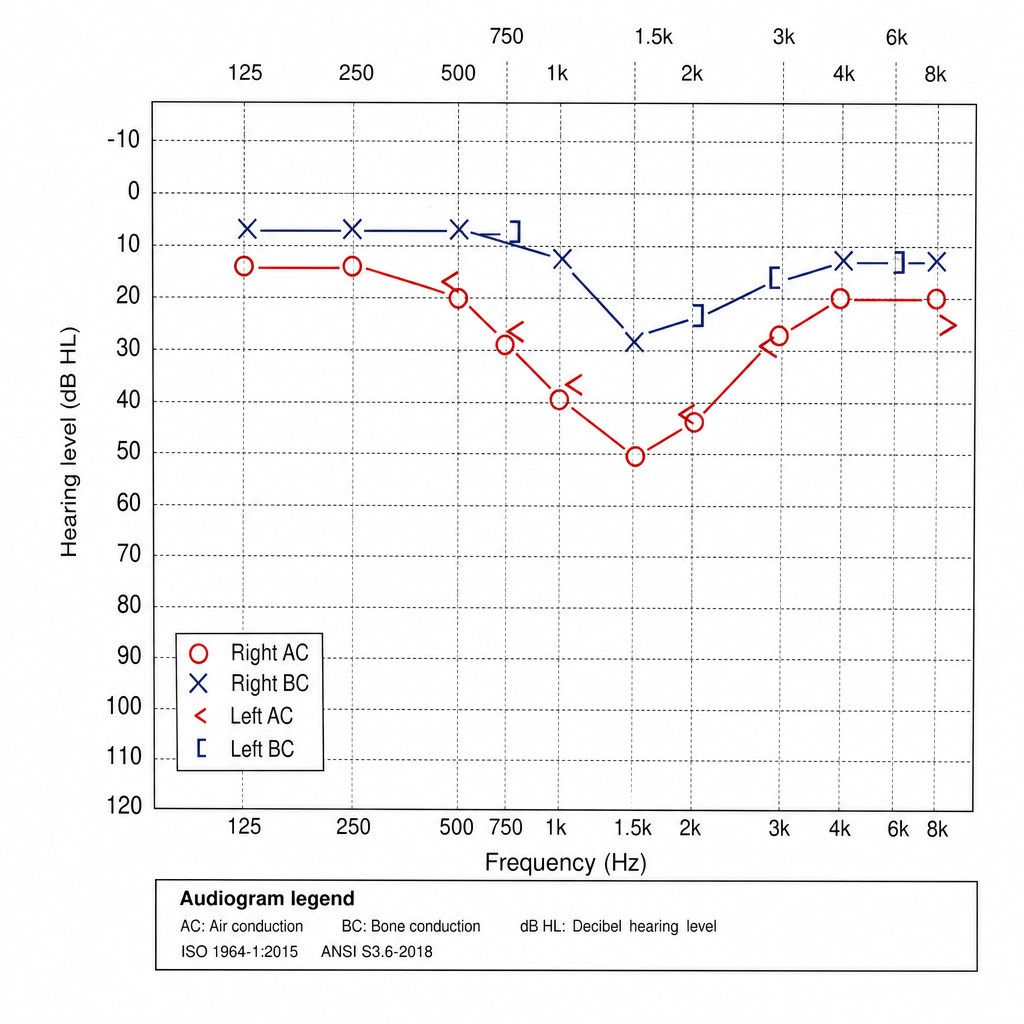
A 52-year-old woman presents with bilateral hearing loss noticed over the past 3 years. She denies tinnitus or vertigo. Otoscopic examination is normal bilaterally with intact, healthy tympanic membranes. Tympanometry shows bilateral type As (shallow) curves. The audiogram is shown in Image 1. She is medically fit for surgery but strongly wishes to avoid an operation at this time. Which of the following is the most appropriate next step in management?
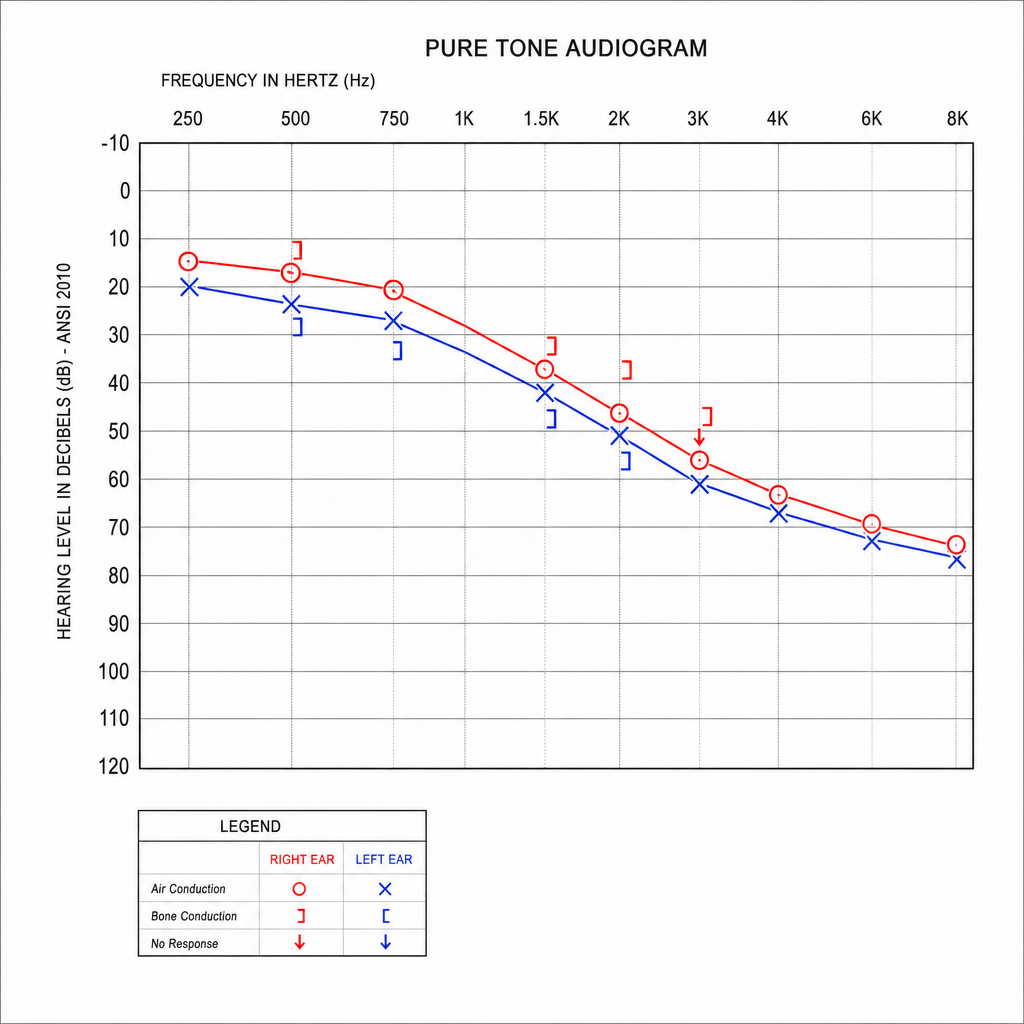
A 32-year-old woman presents with progressive bilateral hearing loss over 3 years, worse during pregnancy. She reports a family history of hearing impairment. Otoscopy reveals normal tympanic membranes bilaterally. Tympanometry shows As (shallow) curves. Her audiogram is shown (Image 1). Which of the following best explains the bone conduction dip seen on this audiogram?
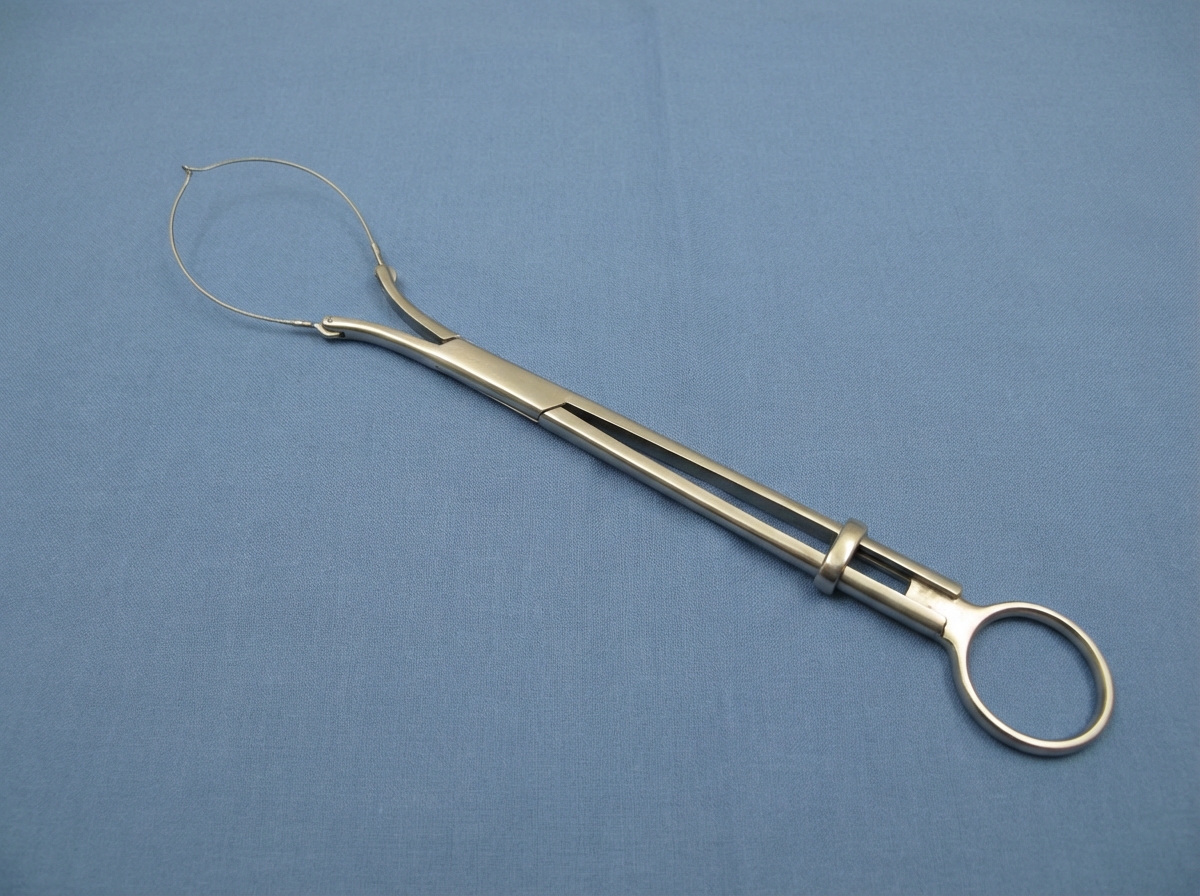
Identify the instrument used in ENT surgery.
Want unlimited practice?
Get full access to all questions, explanations, and performance tracking.
Scan to download app