
Physiology of Balance — MCQs

A 60-year-old man presents to his primary care physician complaining that he often feels as if the room is spinning when he gets up from a recumbent position or turns his head. He has not lost consciousness and has had no chest pain. He has no cardiac history, and a recent treadmill test showed no abnormalities. On examination, the sensation can be produced by rapidly turning the head. It can be reproduced many times, but it eventually ceases. Nystagmus is elicited. Hearing is normal. Which of the following is the MOST likely mechanism for this patient's symptoms?
What is the function of the tip of the hair cell in utricle?
What is the primary function of the otolith organs?
A 27-year-old patient with a chief complaint of mild vertigo of 3-month duration is seen by a neurologist. Examination reveals a positional (horizontal and vertical) nystagmus that is bidirectional, and the patient reports the absence of tinnitus. Which of the following is the most likely etiology of the vertigo?
Voluntary movement of eye ball is controlled by
In a patient with right vestibular neuronitis, what will be the finding on the head impulse test?
Epley's maneuver is used in the treatment of:
Following are the laboratory tests for the diagnosis of vestibular dysfunction except -
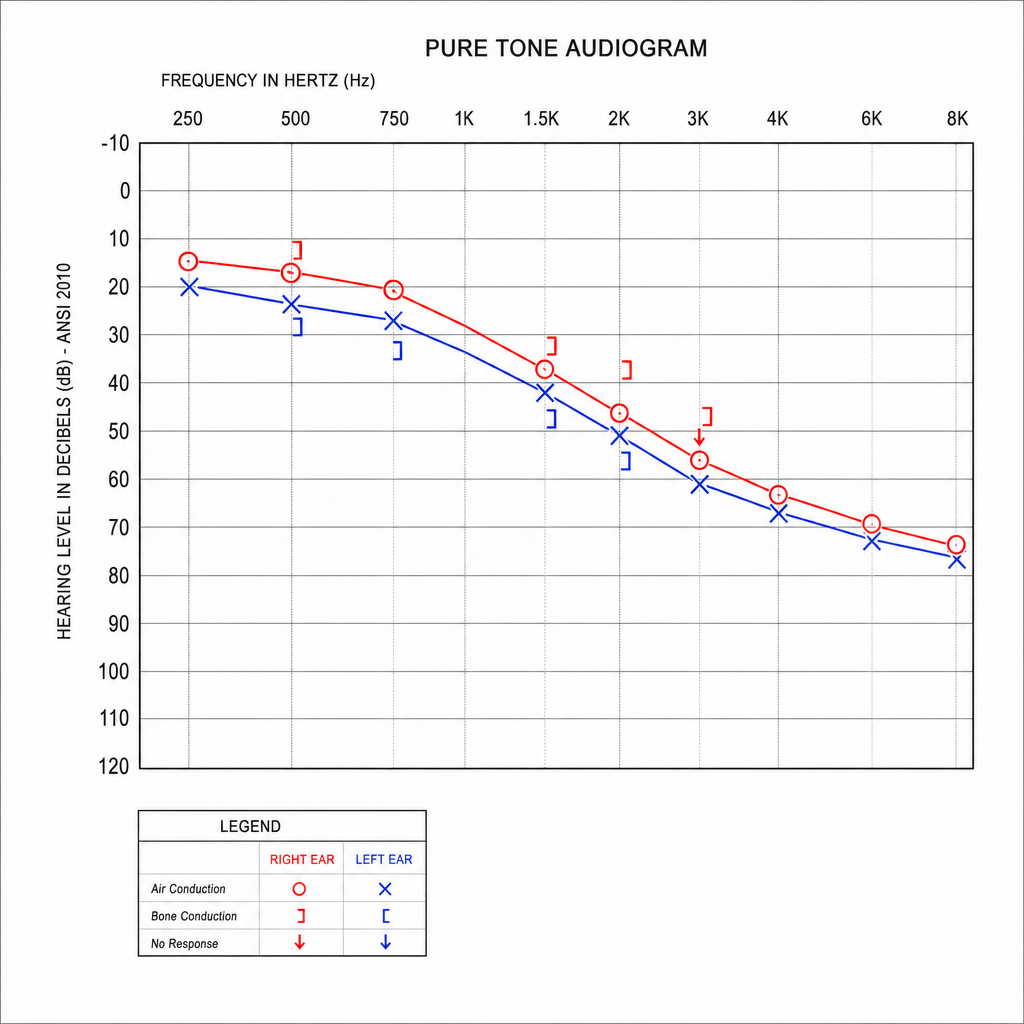
A 52-year-old woman presents with bilateral hearing loss noticed over the past 3 years. She denies tinnitus or vertigo. Otoscopic examination is normal bilaterally with intact, healthy tympanic membranes. Tympanometry shows bilateral type As (shallow) curves. The audiogram is shown in Image 1. She is medically fit for surgery but strongly wishes to avoid an operation at this time. Which of the following is the most appropriate next step in management?
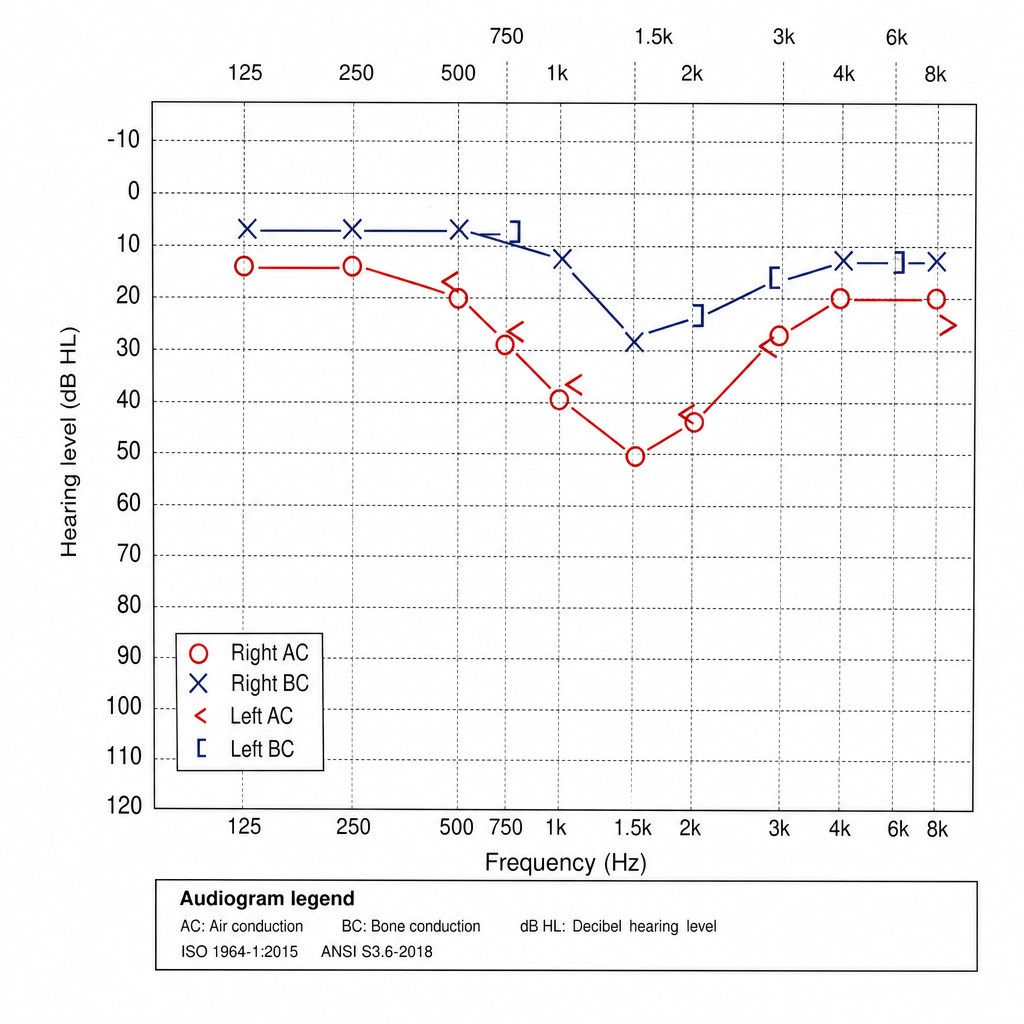
A 32-year-old woman presents with progressive bilateral hearing loss over 3 years, worse during pregnancy. She reports a family history of hearing impairment. Otoscopy reveals normal tympanic membranes bilaterally. Tympanometry shows As (shallow) curves. Her audiogram is shown (Image 1). Which of the following best explains the bone conduction dip seen on this audiogram?
Want unlimited practice?
Get full access to all questions, explanations, and performance tracking.
Scan to download app