
Anatomy of the Larynx — MCQs

A patient presents with hoarseness and laryngoscopy reveals a warty, cauliflower-like growth on the vocal cord. Identify the most likely lesion.
Reinke's layer is seen in:
Which of the following changes in voice is not produced as a result of external laryngeal nerve injury post thyroidectomy?
Elastic cartilage is present in
A singer presents with difficulty singing at a high pitch. On examination, bowing of the vocal cord is observed on the right side. Which of the following muscles has likely been compromised?
Which of the following muscles is not affected by paralysis of the recurrent laryngeal nerve?
Which part of the larynx is most commonly involved in tuberculosis (TB)?
Which of the following statements about laryngomalacia is true?
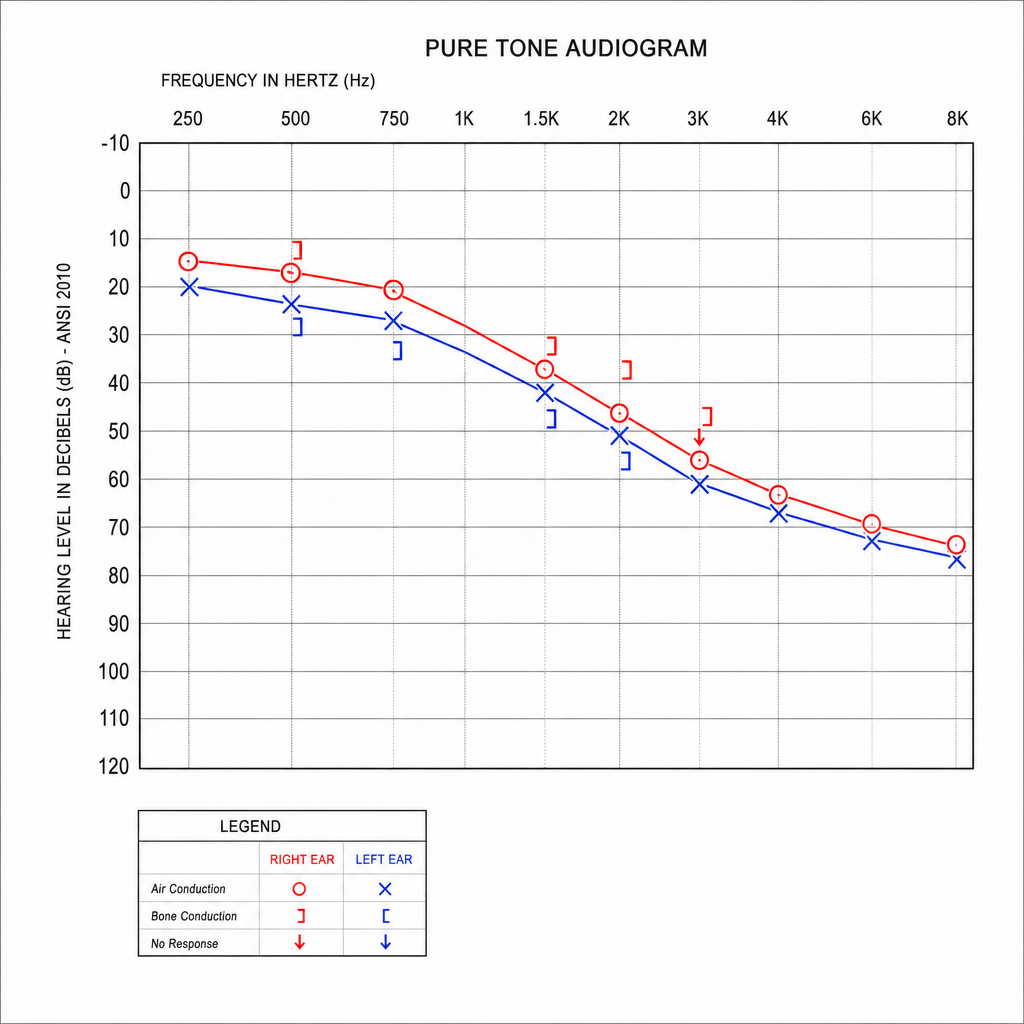
A 52-year-old woman presents with bilateral hearing loss noticed over the past 3 years. She denies tinnitus or vertigo. Otoscopic examination is normal bilaterally with intact, healthy tympanic membranes. Tympanometry shows bilateral type As (shallow) curves. The audiogram is shown in Image 1. She is medically fit for surgery but strongly wishes to avoid an operation at this time. Which of the following is the most appropriate next step in management?
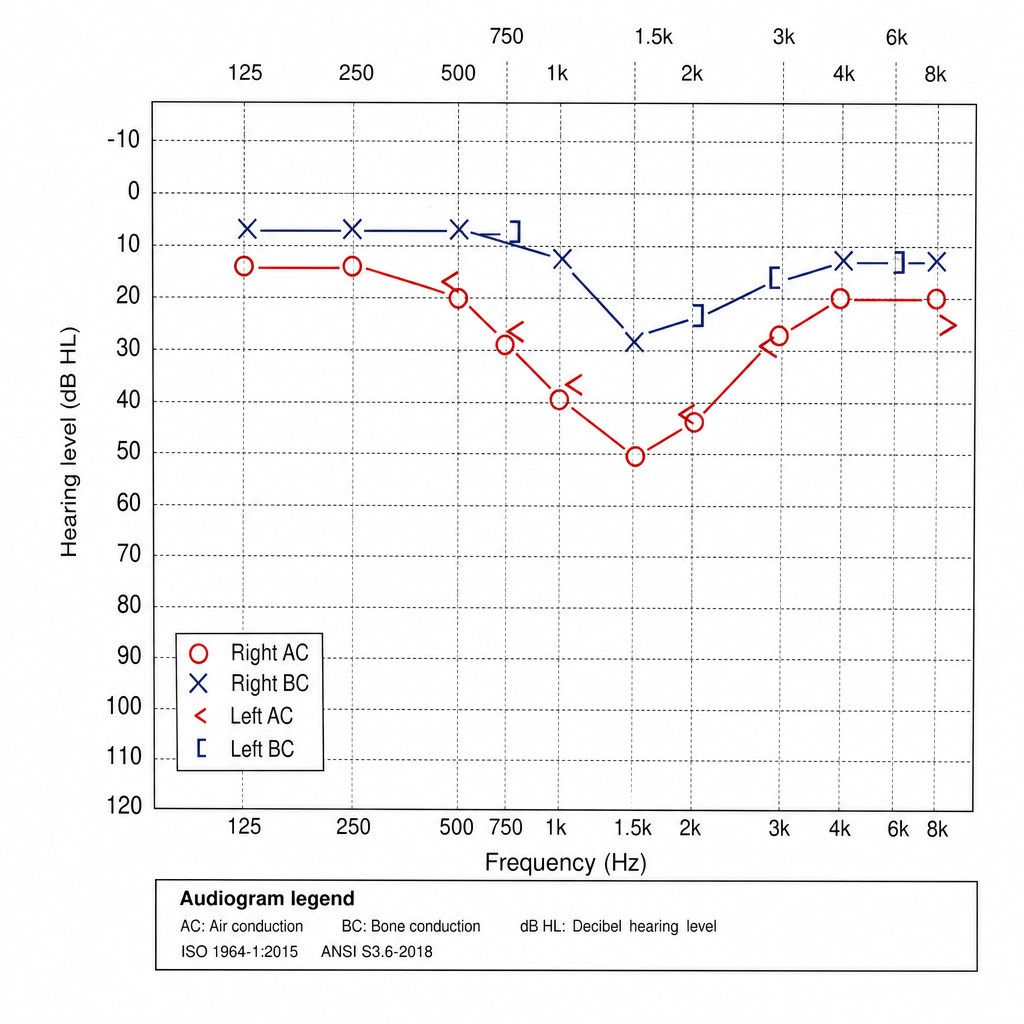
A 32-year-old woman presents with progressive bilateral hearing loss over 3 years, worse during pregnancy. She reports a family history of hearing impairment. Otoscopy reveals normal tympanic membranes bilaterally. Tympanometry shows As (shallow) curves. Her audiogram is shown (Image 1). Which of the following best explains the bone conduction dip seen on this audiogram?
Want unlimited practice?
Get full access to all questions, explanations, and performance tracking.
Scan to download app