
Adenoid Hypertrophy — MCQs

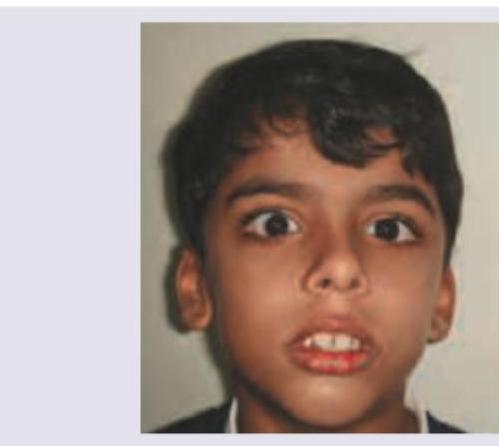
The facial features shown in the image are characteristic of:
Young's operation is done for:
A 72-year-old man presents to his primary care physician with progressively worsening hearing loss. He states that his trouble with hearing began approximately 7-8 years ago. He is able to hear when someone is speaking to him; however, he has difficulty with understanding what is being said, especially when there is background noise. In addition to his current symptoms, he reports a steady ringing in both ears, and at times experiences dizziness. Medical history is significant for three prior episodes of acute otitis media. Family history is notable for his father being diagnosed with cholesteatoma. His temperature is 98.6°F (37°C), blood pressure is 138/88 mmHg, pulse is 74/min, and respirations are 13/min. On physical exam, when a tuning fork is placed in the middle of the patient's forehead, sound is appreciated equally on both ears. When a tuning fork is placed by the external auditory canal and subsequently on the mastoid process, air conduction is greater than bone conduction. Which of the following is most likely the cause of this patient's symptoms?
A patient presents with an ulcer on the posterior pharyngeal wall, as shown in the image. This lesion most likely originates from which structure?
A child presents with a history of accidental coin ingestion. The X -ray is as shown in the image. The coin is most likely lodged in which site?
A patient presents with difficulty swallowing and regurgitation of undigested food with foul- smelling breath. The lateral neck X-ray is as shown. The diverticulum occurs due to herniation between which muscles?
Lingual tonsils arise from which of the following processes?
Which of the following structures does not form the hypopharynx?
Dohlman's operation is related to which of the following conditions?
A 10-year-old boy presents with nasal obstruction and intermittent profuse epistaxis. He has a firm pinkish mass in the nasopharynx. Which of the following investigations is NOT indicated in this case?
Want unlimited practice?
Get full access to all questions, explanations, and performance tracking.
Scan to download app