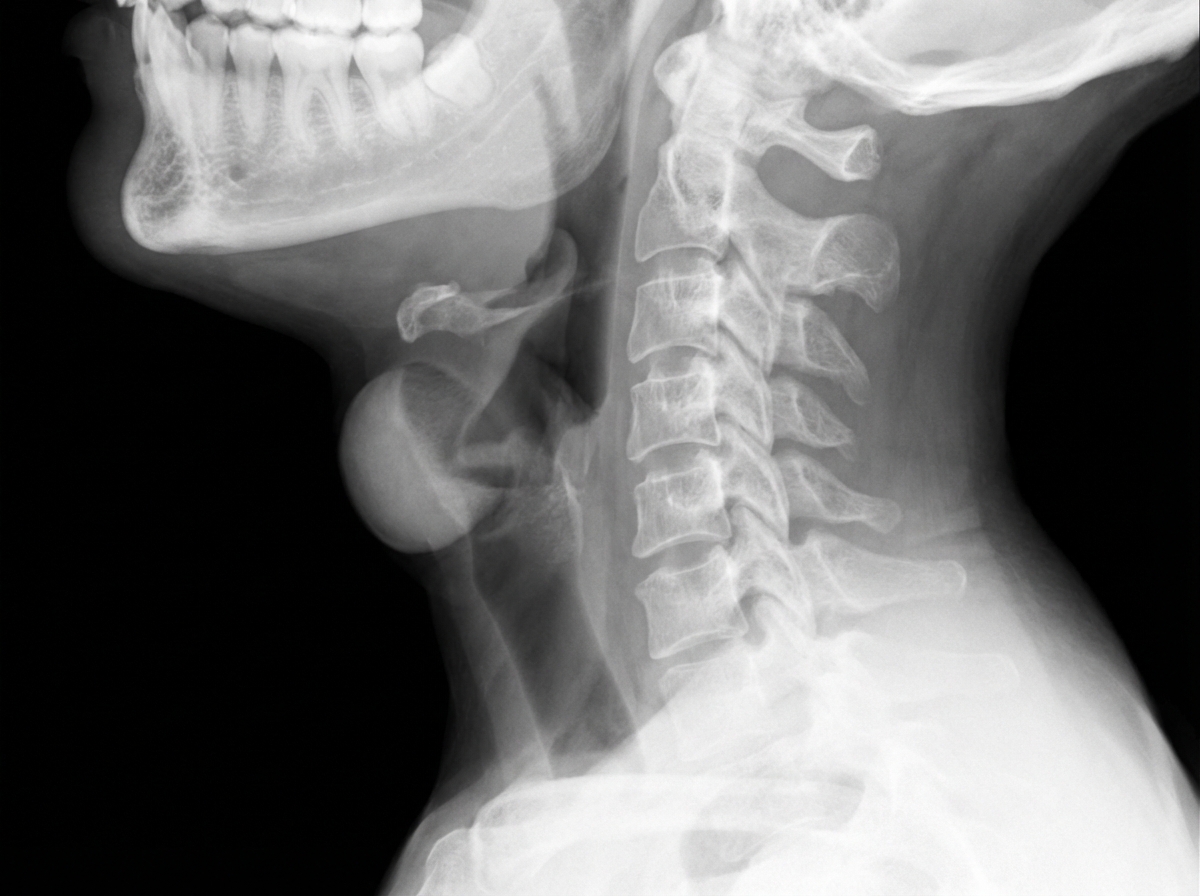
Kashima's operation is indicated for all the following conditions except:
Which of the following muscles are the primary vocal cord abductors?
Tubercular laryngitis primarily affects which part of the larynx?
What is the most common cause of vocal cord palsy?
Which muscle is the primary abductor of the vocal cords?
In a supine individual, which lung segment is most commonly involved in foreign body aspiration?
What are the methods of speech communication after laryngectomy?
According to the European Laryngeal Society, subligamentous cordectomy is classified as which type?
All of the following are true about laryngeal carcinoma except?
Which of the following statements regarding scleroma of the larynx is false?
Explanation: **Explanation:** **Kashima’s operation**, also known as **Posterior Laser Cordotomy**, is a surgical procedure primarily used to widen the glottic airway. It involves the laser excision of a wedge-shaped portion from the posterior part of one or both vocal cords (including the vocal process of the arytenoid). 1. **Why Nasopharyngeal Carcinoma (NPC) is the correct answer:** NPC is a malignancy of the nasopharynx, which is part of the upper pharynx, not the larynx. Its management primarily involves radiotherapy and chemotherapy. Kashima’s operation is a laryngeal procedure and has no role in the treatment of NPC. 2. **Analysis of incorrect options:** * **Bilateral Abductor Palsy:** This is the **classic indication** for Kashima’s operation. In this condition, the vocal cords remain in the midline, causing airway obstruction (stridor). Cordotomy creates a posterior glottic gap to improve breathing while preserving voice quality. * **Vocal Cord Dysplasia & Carcinoma of the Larynx:** While Kashima’s is most famous for palsy, CO2 lasers (used in the Kashima technique) are frequently employed for **endoscopic resection** of precancerous lesions (dysplasia) and early-stage laryngeal cancers (T1a glottic SCC) to achieve clear margins while preserving laryngeal function. **NEET-PG High-Yield Pearls:** * **Woodman’s Operation:** An alternative for bilateral abductor palsy involving an external approach (arytenoidectomy). * **Key Advantage of Kashima’s:** It is endoscopic, bloodless, and avoids a permanent tracheostomy. * **Complication:** The main risk is a breathy voice or aspiration if the excision is too large.
Explanation: **Explanation:** The intrinsic muscles of the larynx are categorized based on their action on the vocal cords (glottis). Understanding their specific functions is high-yield for NEET-PG. **1. Why Posterior Cricoarytenoid (PCA) is Correct:** The **Posterior Cricoarytenoid** is the **only abductor** of the vocal cords. It originates from the posterior surface of the cricoid lamina and inserts into the muscular process of the arytenoid cartilage. When it contracts, it rotates the arytenoid cartilages laterally, pulling the vocal processes apart and opening the rima glottidis. It is often referred to as the **"Safety Muscle of the Larynx"** because its failure (as in bilateral vocal cord paralysis) leads to airway obstruction. **2. Analysis of Incorrect Options:** * **Lateral Cricoarytenoid (LCA):** This is the primary **adductor** of the vocal cords. It rotates the arytenoids medially to close the glottis. * **Cricothyroid:** This muscle **tenses and elongates** the vocal cords, thereby increasing the pitch of the voice. It is the only intrinsic muscle supplied by the **External Laryngeal Nerve** (all others are supplied by the Recurrent Laryngeal Nerve). * **Thyroarytenoid:** This muscle **relaxes** the vocal cords. Its medial fibers are known as the *Vocalis* muscle, which fine-tunes vocal tension. **Clinical Pearls for NEET-PG:** * **Nerve Supply:** All intrinsic muscles are supplied by the **Recurrent Laryngeal Nerve (RLN)**, except the Cricothyroid. * **Semon’s Law:** In progressive RLN lesions, abductor fibers (PCA) are more susceptible and paralyzed earlier than adductor fibers. * **Safety Muscle:** If the PCA is paralyzed bilaterally, the patient presents with inspiratory stridor, necessitating an emergency tracheostomy.
Explanation: ### Explanation **Correct Option: B. Posterior commissure of larynx** Laryngeal tuberculosis is almost always secondary to pulmonary tuberculosis. The infection reaches the larynx via **bronchogenic spread** (infected sputum). When a patient is in a recumbent or supine position, the infected sputum pools in the most dependent part of the larynx, which is the **posterior commissure** (interarytenoid area). The bacilli invade the mucosa, leading to the classic "mammillated" (pachydermia-like) appearance. The posterior part of the larynx is also highly vascular and has a high density of mucous glands, making it more susceptible to the inflammatory process of TB. **Analysis of Incorrect Options:** * **A. Anterior commissure:** This area is typically spared in tuberculosis but is a common site for the spread of laryngeal carcinoma and the formation of laryngeal webs. * **C. Anywhere within the larynx:** While TB can involve other structures (like the epiglottis or vocal cords), it has a distinct predilection for the posterior glottis. It is not a random distribution. * **D. Superior surface of larynx:** This is not a standard anatomical term used to describe the primary site of TB infection. The epiglottis (part of the superior larynx) is involved in the "lupoid" variety of TB, but the posterior commissure remains the most common site overall. **Clinical Pearls for NEET-PG:** * **Classic Appearance:** "Mouse-nibbled" ulcers on the vocal cords and a "Turban-shaped" epiglottis (due to edema). * **Symptoms:** Painful swallowing (**Odynophagia**) is a hallmark, often referred to the ear via the vagus nerve. * **Diagnosis:** Sputum for AFB is the most important initial test; Chest X-ray usually shows active pulmonary cavitation. * **Treatment:** Standard Anti-Tubercular Therapy (ATT). The laryngeal lesions usually heal rapidly once systemic treatment begins.
Explanation: ### Explanation **Correct Answer: A. Total thyroidectomy** In clinical practice, **surgical trauma** is the most common cause of vocal cord palsy, with **thyroidectomy** (specifically total thyroidectomy) being the leading culprit. The recurrent laryngeal nerve (RLN) is anatomically vulnerable during this procedure due to its close proximity to the inferior thyroid artery and the ligament of Berry. Damage to the RLN results in paralysis of all intrinsic muscles of the larynx except the cricothyroid. **Analysis of Incorrect Options:** * **B. Bronchogenic Carcinoma:** This is the most common **malignant** cause of left-sided vocal cord palsy. The left RLN has a longer intrathoracic course, looping around the arch of the aorta, making it susceptible to compression by hilar tumors or mediastinal lymphadenopathy. * **C. Aneurysm of the Aorta:** This is a classic cause of **Ortner’s Syndrome** (cardiovocal syndrome), where an enlarged left atrium or aortic aneurysm compresses the left RLN. While high-yield for exams, it is statistically less common than surgical trauma. * **D. Tubercular Lymph Nodes:** Inflammatory causes like tuberculosis can cause palsy via apical lung scarring or mediastinal lymphadenitis, but these are now less frequent than surgical or neoplastic etiologies. **NEET-PG High-Yield Pearls:** * **Most common cause overall:** Surgical trauma (Thyroidectomy). * **Most common non-surgical cause:** Malignancy (Bronchogenic carcinoma). * **Left vs. Right:** Left vocal cord palsy is more common than right because the left RLN is longer and has an extensive intrathoracic course. * **Semon’s Law:** In progressive lesions, the abductor fibers (posterior cricoarytenoid) are more susceptible and paralyzed before the adductor fibers. * **Position of Cord:** In RLN palsy, the vocal cord typically assumes a **paramedian position**.
Explanation: **Explanation:** The intrinsic muscles of the larynx are responsible for controlling the position and tension of the vocal cords. The **Posterior Cricoarytenoid (PCA)** is the **only abductor** of the vocal cords. It originates from the posterior surface of the cricoid lamina and inserts into the muscular process of the arytenoid cartilage. Upon contraction, it rotates the arytenoids laterally, opening the rima glottidis. Because it is the sole muscle responsible for opening the airway, it is often referred to as the **"Safety Muscle of the Larynx."** **Analysis of Incorrect Options:** * **Thyroarytenoid:** This muscle forms the bulk of the vocal fold. Its medial fibers (Vocalis) help in fine-tuning tension, but its primary action is to **shorten and relax** the vocal cords. * **Lateral Cricoarytenoid:** This is the primary **adductor** of the vocal cords. It rotates the arytenoids medially to close the glottis (the opposite action of the PCA). * **Cricothyroid:** This is the only intrinsic muscle supplied by the **External Laryngeal Nerve** (all others are supplied by the Recurrent Laryngeal Nerve). Its primary function is to **tensor** the vocal cords by tilting the thyroid cartilage forward. **High-Yield Clinical Pearls for NEET-PG:** * **Nerve Supply:** All intrinsic muscles are supplied by the **Recurrent Laryngeal Nerve (RLN)**, except the Cricothyroid. * **Semon’s Law:** In progressive RLN injury, the abductor fibers (PCA) are more susceptible and paralyzed first compared to the adductor fibers. * **Unilateral RLN Palsy:** The vocal cord assumes a paramedian position. * **Bilateral RLN Palsy:** This is a surgical emergency because both PCAs are paralyzed, leading to a closed airway and inspiratory stridor.
Explanation: **Explanation:** The localization of an aspirated foreign body is determined by the anatomy of the tracheobronchial tree and the patient's posture at the time of the event. **Why Right Lower Lobe is Correct:** The **Right Main Bronchus** is the most common site for foreign bodies because it is wider, shorter, and more vertical (forming a 25° angle with the trachea) compared to the left. In a **supine (lying down) individual**, gravity directs the object toward the most dependent segments. The **superior segment of the Right Lower Lobe** is the most posterior and dependent part of the lung in the supine position, making it the most frequent site for aspiration. **Analysis of Incorrect Options:** * **Right Upper Lobe:** While the right side is preferred, the upper lobe bronchi are directed superiorly. Aspiration here typically only occurs if the patient is in a head-down (Trendelenburg) position. * **Right Middle Lobe:** This is less common because the middle lobe bronchus arises from the anterior aspect of the intermediate bronchus, making it less accessible to gravity-driven objects in a supine patient. * **Left Upper Lobe:** The Left Main Bronchus is narrower and more horizontal (45° angle) due to the displacement by the heart, making foreign body entry less likely than on the right. **High-Yield Clinical Pearls for NEET-PG:** * **Most common site overall:** Right Main Bronchus. * **Most common segment (Supine):** Superior segment of the Right Lower Lobe. * **Most common segment (Standing):** Posterior basal segment of the Right Lower Lobe. * **Radiology:** Most foreign bodies are **radiolucent** (e.g., peanuts); the most common X-ray finding is **obstructive emphysema** (air trapping) rather than a visible object. * **Gold Standard Management:** Rigid Bronchoscopy.
Explanation: After a total laryngectomy, the natural sound source (the larynx) is removed, and the airway is separated from the food pipe. To restore communication, patients must utilize alternative methods to produce sound. **Explanation of the Correct Answer:** The correct answer is **D (All of the above)** because all three methods are established clinical techniques for post-laryngectomy voice rehabilitation: 1. **Electrolarynx (A):** An external battery-operated device held against the neck or placed in the mouth. It provides a mechanical vibration that the patient articulates into speech using the tongue, lips, and teeth. It is easy to learn but produces a "robotic" tone. 2. **Esophageal Speech (B):** The patient swallows air into the upper esophagus and then expels it in a controlled manner. This vibrates the **cricopharyngeal sphincter** (the "neoglottis"), creating sound. It requires no equipment but is difficult to master. 3. **Tracheoesophageal (TE) Speech (C):** Currently the **gold standard**. A prosthesis (e.g., Blom-Singer valve) is placed in a surgically created fistula between the trachea and esophagus. When the stoma is occluded, air is diverted from the lungs into the esophagus to produce sound. **Clinical Pearls for NEET-PG:** * **Gold Standard:** Tracheoesophageal Puncture (TEP) is preferred because it offers the most natural, fluent, and loudest voice. * **The Neoglottis:** In both esophageal and TE speech, the primary vibratory source is the **cricopharyngeus muscle**. * **Primary vs. Secondary TEP:** TEP can be performed during the initial laryngectomy (Primary) or as a separate procedure later (Secondary). * **Prerequisite for TEP:** Before performing a secondary TEP, an **Esophageal Manometry** or **Taub’s Air Charge Test** is often done to ensure the pharyngeal muscles aren't too spastic to allow speech.
Explanation: ### Explanation The **European Laryngeal Society (ELS)** classification of endoscopic cordectomies is a standardized system used to describe the depth and extent of tissue resection in laryngeal surgery, primarily for early glottic cancer (T1a). **Why Type II is Correct:** * **Type II (Subligamentous Cordectomy):** This procedure involves the resection of the vocal fold epithelium, Reinke’s space, and the **vocal ligament**. The resection stops at the surface of the vocalis muscle, which is preserved. It is indicated when a lesion involves the vocal ligament but does not deeply infiltrate the muscle. **Analysis of Incorrect Options:** * **Type I (Subepithelial Cordectomy):** This is the most superficial resection, involving only the epithelium. The vocal ligament is preserved. It is typically used for benign lesions or dysplasia. * **Type III (Transmuscular Cordectomy):** This involves the resection of the epithelium, ligament, and a **portion of the vocalis muscle**. * **Type IV (Total Cordectomy):** This involves the complete resection of the vocal fold, extending from the anterior commissure to the vocal process and deep into the internal perichondrium of the thyroid cartilage. **High-Yield NEET-PG Clinical Pearls:** * **Type V (Extended Cordectomy):** This includes resections that extend beyond the vocal fold to the contralateral cord (Va), supra-arytenoid region (Vb), ventricular fold (Vc), or subglottis (Vd). * **Type VI:** Specifically refers to a cordectomy for lesions involving the **anterior commissure**. * **Key Landmark:** The depth of the resection determines the functional outcome (voice quality) and oncological safety. Type II is the "middle ground" where the ligament is removed but the muscle remains.
Explanation: **Explanation:** Laryngeal carcinoma is primarily a disease of older males with a strong association with smoking and alcohol consumption. **1. Why Option C is the "Except" (Correct Answer):** While esophageal voice is a recognized method of rehabilitation after total laryngectomy, it is **not** a characteristic or clinical feature of the disease itself. Furthermore, in modern practice, it is no longer the primary choice. Tracheoesophageal Puncture (TEP) with a prosthesis is now the "gold standard" because esophageal voice is difficult to learn, has a low success rate (approx. 25-30%), and produces a low-pitched, phrased voice. **2. Analysis of Other Options:** * **A. More common in females:** This statement is technically **False** (it is significantly more common in males, ratio ~10:1). However, in the context of many traditional NEET-PG recall questions, if Option C is marked as the "key," it implies the examiner is focusing on the rehabilitation aspect or that the question was framed to identify the most "clinically relevant" false statement. *Note: In a strictly factual exam, both A and D could be contested depending on the staging.* * **B. Common in patients over 40 years:** **True.** The peak incidence is in the 5th to 7th decades of life. * **D. Poor prognosis:** **True/Variable.** While early glottic cancer has an excellent prognosis, most laryngeal cancers (especially supraglottic) present late, leading to an overall poor 5-year survival rate in advanced stages. **High-Yield Clinical Pearls for NEET-PG:** * **Most common site:** Glottis (vocal cords). * **Best prognosis:** Glottic cancer (early symptoms of hoarseness, few lymphatics). * **Worst prognosis:** Subglottic cancer (silent growth, rich lymphatics). * **Most common pathology:** Squamous Cell Carcinoma (95%). * **Voice Rehabilitation:** TEP (Blom-Singer valve) is the most preferred method today.
Explanation: **Explanation:** **Scleroma (Rhinoscleroma)** is a **chronic granulomatous infection** caused by the Gram-negative bacillus *Klebsiella rhinoscleromatis* (Frisch bacillus). 1. **Why Option A is the Correct Answer (False Statement):** Scleroma is **not an acute** condition. It is a chronic, progressive inflammatory disease characterized by three distinct stages: Catarrhal (atrophic), Granulomatous (proliferative), and Cicatricial (fibrotic). The disease process evolves over months or years, making it a chronic infection. 2. **Analysis of Other Options:** * **Option B (Caused by Klebsiella):** This is true. The causative agent is *Klebsiella rhinoscleromatis*, often identified by its characteristic large, vacuolated macrophages called **Mikulicz cells** and eosinophilic inclusion bodies known as **Russell bodies**. * **Option C (Subglottic stenosis):** This is true. While it primarily affects the nose (Rhinoscleroma), it can descend to the larynx. The subglottic region is the most common site of laryngeal involvement, where the cicatricial stage leads to dense scarring and stenosis. * **Option D (Treatment includes steroids):** This is true. Management involves long-term antibiotics (Streptomycin and Tetracycline are traditional; Ciprofloxacin is now preferred). Steroids are often added to reduce edema and limit the formation of fibrous tissue/stenosis. **NEET-PG High-Yield Pearls:** * **Pathognomonic Cells:** Mikulicz cells (foamy macrophages containing bacilli) and Russell bodies (degenerated plasma cells). * **Most Common Site:** The nose (specifically the anterior nares and septum). * **Laryngeal Site:** Subglottis is most common. * **Biopsy:** Essential for diagnosis to differentiate from malignancy or other granulomatous diseases like TB or Sarcoidosis.
Acute Laryngitis
Practice Questions
Chronic Laryngitis
Practice Questions
Vocal Cord Nodules and Polyps
Practice Questions
Reinke's Edema
Practice Questions
Laryngeal Papillomatosis
Practice Questions
Vocal Cord Paralysis
Practice Questions
Laryngeal Trauma
Practice Questions
Laryngeal Stenosis
Practice Questions
Laryngeal Cancer
Practice Questions
Laryngomalacia
Practice Questions
Epiglottitis
Practice Questions
Voice Disorders
Practice Questions
Get full access to all questions, explanations, and performance tracking.
Start For Free