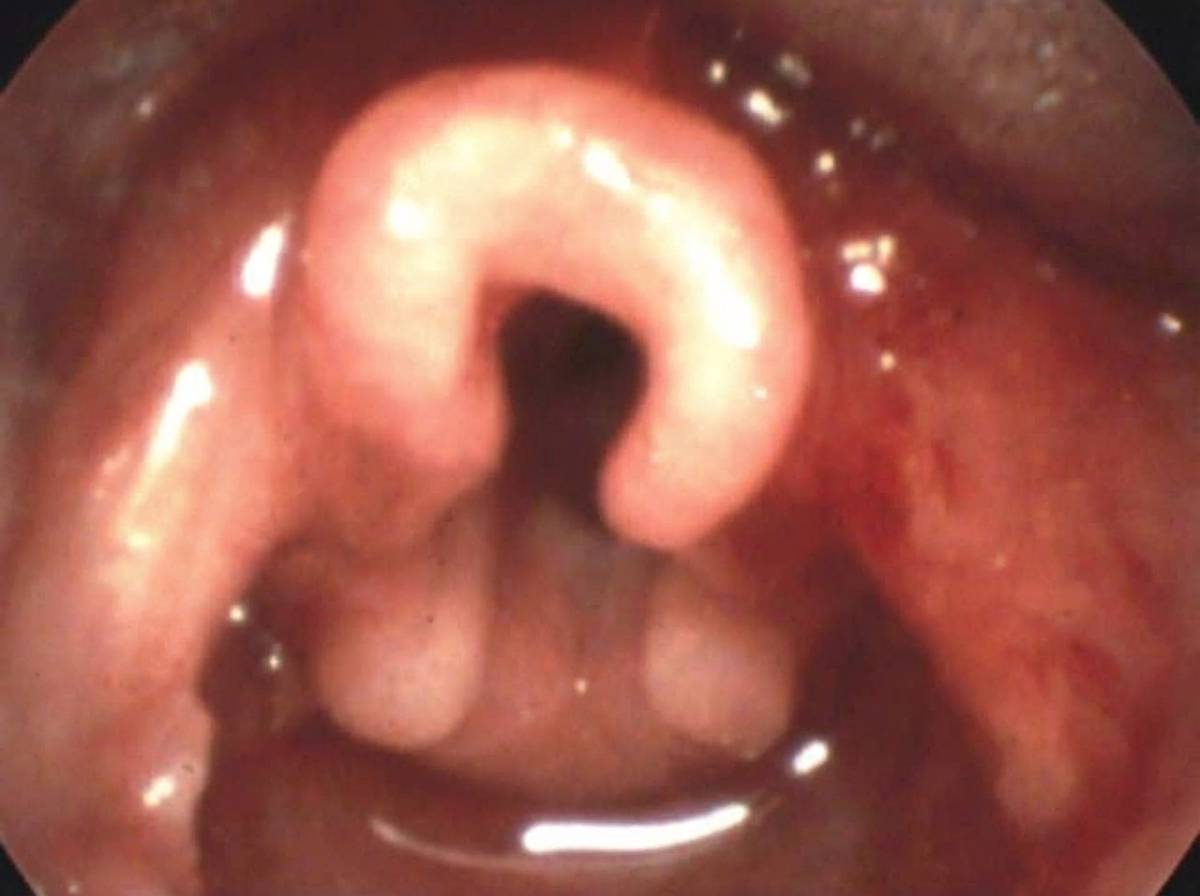
A 10-year-old girl complains of hoarseness and stridor. Ambulatory pH monitoring is normal. Laryngoscopy image shows:

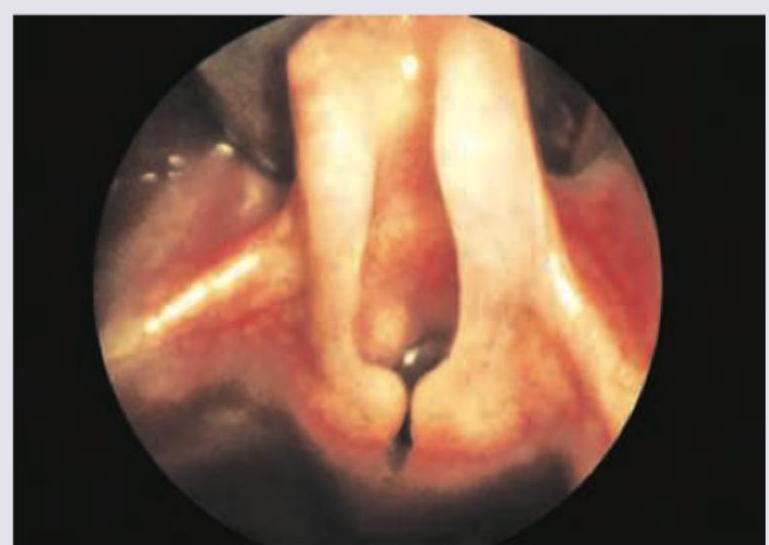
A 30-year-old vegetable vendor complains of repeated episodes of hoarseness and pain in the neck on speaking. The laryngoscopy image of the patient shows:

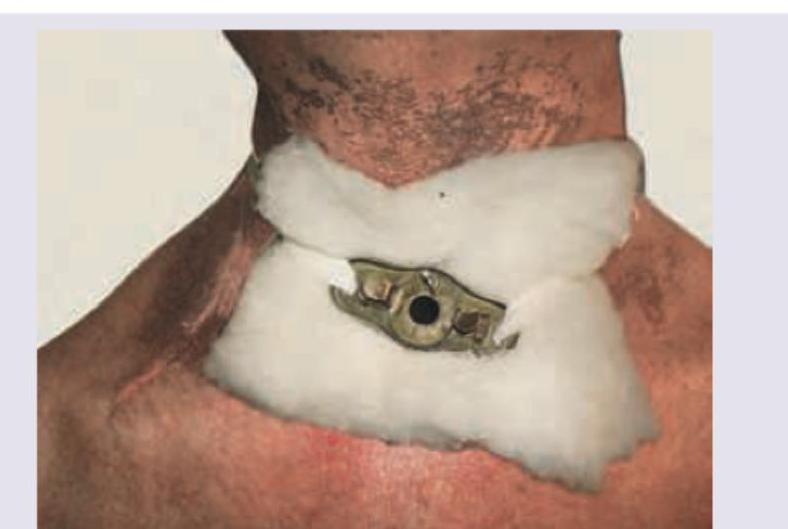
The following image shows:

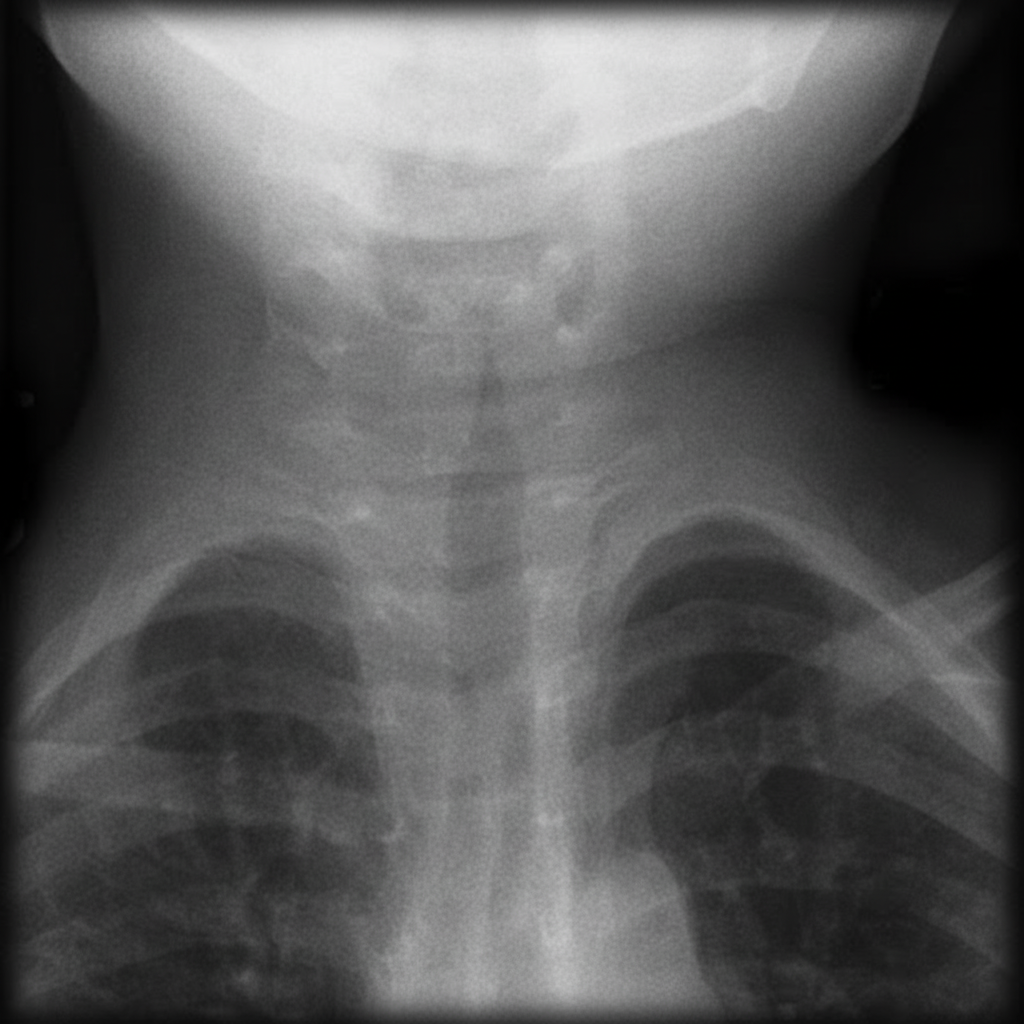
Wagner's classification is related to:
Most common benign lesion of vocal cord in pediatric age group is
Inspiratory stridor is due to lesions of:
A 45-year-old patient presents with persistent hoarseness for 3 months. Which finding on indirect laryngoscopy is most concerning for malignancy?
A 50-year-old smoker presents with hoarseness, dysphagia, and weight loss. Flexible laryngoscopy shows a mass on the vocal cords. What is the next best step?
A 35-year-old female undergoes laryngoscopy for the evaluation of hoarseness. What is the primary purpose of this procedure?
Which of the following conditions is characterized by progressive hoarseness and a mass in the thyroid cartilage in an elderly patient?
Explanation: ***Recurrent respiratory papillomatosis*** - The image shows a **wart-like lesion** on the vocal cord, which is characteristic of **recurrent respiratory papillomatosis (RRP)**, especially in a child with hoarseness and stridor. - RRP is caused by the **human papillomavirus (HPV)** and can affect the airway, leading to vocal changes and breathing difficulties. - This is the most common benign laryngeal tumor in children and typically presents with progressive hoarseness and stridor. *Vocal cord polyp* - A vocal cord polyp is typically a **stalked, unilateral lesion**, often associated with vocal trauma or heavy voice use, and usually appears as a fluid-filled sac. - While it can cause hoarseness, the appearance in the image with multiple, nodular growths in the glottic area is less consistent with a single polyp. - Polyps are more common in adults than children. *Vocal cord nodules* - Vocal cord nodules are typically **bilateral, symmetrical lesions** located at the junction of the anterior and middle third of the vocal cords, resembling calluses. - They are usually caused by **voice abuse** (e.g., screaming, prolonged singing) and are less likely to present with the cauliflower-like appearance shown. - Nodules appear smooth and do not have the exophytic, warty appearance of papillomas. *Intubation granuloma* - An intubation granuloma is a **benign lesion** that forms at the posterior true vocal cord or arytenoid cartilage due to **mucosal trauma** from endotracheal intubation. - This patient's history does not suggest recent intubation, and the appearance in the image is more consistent with papilloma than a granuloma. - Granulomas typically appear as smooth, pedunculated masses at the posterior glottis.
Explanation: ***Vocal nodules*** - The image shows **bilateral, symmetrical lesions** on the vocal cords, characteristic of vocal nodules, commonly known as "singer's nodes" or "screamer's nodes." - The patient's profession as a **vegetable vendor**, involving frequent and loud speaking, is a classic risk factor for vocal misuse leading to nodule formation. *Vocal polyp* - A vocal polyp is typically a **unilateral lesion**, often larger and more reddish than nodules. - While it can also cause hoarseness, the **bilateral and symmetrical nature** seen in the image points away from a polyp. *Reinke's edema* - Reinke's edema involves diffuse **swelling and fluid accumulation** in Reinke's space (superficial lamina propria) of both vocal cords, often associated with smoking. - The image does not show the characteristic **"sac-like" or "baggy" appearance** of generalized edema. *Intubation granuloma* - An intubation granuloma results from **trauma during endotracheal intubation** and is typically located on the posterior aspect of the vocal cords (arytenoid area). - The patient's history does not mention intubation, and the **location and appearance** in the image are not typical for a granuloma.
Explanation: ***Respiratory papillomatosis*** - The image displays multiple **wart-like growths** on the vocal cords, characteristic of **respiratory papillomatosis**, which is caused by the **human papillomavirus (HPV)**. - These lesions often have an **irregular, cauliflower-like appearance** and can recur even after removal, making it a challenging condition to manage. *Vocal nodule* - Vocal nodules are typically **bilateral, symmetrical lesions** located at the junction of the anterior and middle thirds of the vocal cords. - They are usually **smooth, small, and whitish**, resulting from chronic vocal abuse, unlike the irregular and multiple growths seen in the image. *Vocal polyp* - Vocal polyps are typically **unilateral lesions** that can appear as sessile or pedunculated masses on a vocal cord. - They are often **larger than nodules** and may have a reddish or gelatinous appearance, but they usually occur singly, not as multiple diffuse growths like those pictured. *TB of vocal cords* - Tuberculosis of the vocal cords often presents with **ulcerative lesions**, granulomas, or diffuse inflammation, and may be accompanied by other signs of pulmonary TB. - The lesions caused by TB are generally **not papillomatous** or wart-like in nature, differentiating them from the appearance in the image.
Explanation: ***Vocal cord palsy*** - **Wagner's classification** is a system used to grade the severity and prognosis of **vocal fold paralysis**. - It assesses the position, mobility, and clinical impact of **vocal cord dysfunction**. *Palatal palsy* - **Palatal palsy** involves the muscles of the soft palate and is not directly assessed by Wagner's classification. - This condition affects **swallowing and speech resonance**, which are distinct from vocal cord paralysis. *Facial palsy* - **Facial palsy**, such as **Bell's palsy**, affects the facial muscles and is classified using systems like the **House-Brackmann scale**. - It is unrelated to voice or vocal cord function. *Hypoglossal palsy* - **Hypoglossal palsy** impacts the **tongue muscles**, leading to deviation or atrophy, which affects articulation and swallowing. - It does not involve the vocal cords or larynx, thus unrelated to Wagner's classification.
Explanation: ***Juvenile papillomatosis*** - This condition, caused by the **human papillomavirus (HPV)**, is the most common benign laryngeal tumor in children. - It presents with **recurrent wart-like lesions** on the vocal cords, leading to hoarseness and airway obstruction. *Chondroma* - This is a rare, **benign cartilaginous tumor** that can affect the larynx, but it is exceedingly uncommon in children. - It is more commonly seen in adults and typically arises from the **cricoid cartilage**. *Granular cell tumor* - This is a rare, usually benign tumor originating from **Schwann cells**, which can occur in various locations including the larynx. - It is much more common in **adults** and is distinctly rare in the pediatric age group. *Solitary papilloma* - While papillomas can affect the vocal cords, the term "solitary papilloma" more commonly refers to the **adult form of papillomatosis** (often single lesions) rather than the multiple, recurrent lesions seen in children. - In children, the lesions are typically **multiple and recurrent**, hence "juvenile" and "papillomatosis" (multiple papillomas).
Explanation: ***Subglottis*** - **Inspiratory stridor** is classically associated with **subglottic lesions**, such as **croup (laryngotracheobronchitis)** and **subglottic stenosis**. - The **subglottis** is the **narrowest part of the pediatric airway**, making it particularly susceptible to significant obstruction from inflammation or narrowing. - During inspiration, the negative intrathoracic pressure causes **dynamic collapse** of the subglottic region when narrowed, producing characteristic **high-pitched inspiratory stridor**. - Common causes: **Croup**, subglottic stenosis, subglottic hemangioma. *Supraglottis* - Supraglottic lesions (epiglottis, aryepiglottic folds) can also cause **inspiratory stridor**, particularly in **acute epiglottitis**. - However, supraglottic pathology more commonly presents with **muffled voice** (hot potato voice), **dysphagia**, **drooling**, and **tripod positioning**. - The stridor from supraglottic lesions tends to be **lower-pitched** and is often accompanied by more prominent systemic symptoms. *Trachea* - Tracheal lesions typically produce **biphasic stridor** (both inspiratory and expiratory phases) due to fixed obstruction in the main conducting airway. - The trachea is a more rigid structure; obstruction produces a **harsh, lower-pitched** sound heard in both respiratory phases. - Examples: tracheal stenosis, tracheomalacia, tracheal tumors. *Bronchi* - Bronchial lesions cause **expiratory wheezing** rather than stridor, due to dynamic collapse of small airways during exhalation. - Bronchial obstruction affects the lower airways and presents as **polyphonic wheeze** rather than the monophonic sound of stridor.
Explanation: ***Unilateral cord paralysis*** - **Unilateral cord paralysis** can be an indicator of an underlying malignancy impinging on the **recurrent laryngeal nerve**, which innervates the vocal cords. - The **persistent hoarseness** for 3 months, combined with paralysis, raises significant concern for a malignant process in the head, neck, or chest. *Reinke's edema* - **Reinke's edema** is typically associated with **chronic irritation** like smoking and presents as a swollen, gelatinous fluid collection in the superficial lamina propria. - While it causes hoarseness, it is a **benign condition** and not directly indicative of malignancy. *Bilateral polyps* - **Vocal cord polyps** are typically **benign lesions** often caused by vocal trauma or abuse, and while they can cause hoarseness, they are not usually a direct sign of malignancy, especially when bilateral. - While requiring management, polyps themselves do **not raise immediate concern for cancer** compared to paralysis. *Vocal cord nodules* - **Vocal cord nodules** (singer's nodules) are benign, bilateral lesions caused by **vocal abuse** and are a common cause of hoarseness. - They are a benign condition and do not suggest an underlying malignancy at their core.
Explanation: ***Direct laryngoscopy with biopsy*** - A definitive diagnosis of a vocal cord mass requires **histological examination** to rule out malignancy, especially given the patient's risk factors (age, smoking) and symptoms (hoarseness, dysphagia, weight loss). - **Direct laryngoscopy** allows for a thorough, magnified view of the mass and precise biopsy collection, which is superior to flexible laryngoscopy alone for definitive diagnosis and staging. *MRI of neck* - While MRI can provide excellent soft tissue detail for **staging** a known malignancy, it cannot provide a **histological diagnosis**. - It would typically be performed after a biopsy confirms malignancy to assess the extent of the tumor and potential spread. *CT scan of neck* - A CT scan is useful for evaluating **bony involvement**, lymph node status, and tumor extension for **staging purposes**, but it is not a diagnostic tool for identifying the specific type of tissue or cell pathology. - Like MRI, a CT scan would generally follow a biopsy confirming malignancy. *Radiotherapy* - **Radiotherapy** is a treatment modality for laryngeal cancer, not a diagnostic step. - Initiating treatment without a definitive histological diagnosis of malignancy would be inappropriate and potentially harmful.
Explanation: ***Visualize the vocal cords and larynx*** - **Laryngoscopy** is a medical procedure used to directly examine the **larynx** (voice box) and, specifically, the **vocal cords**. - Its primary purpose in the context of hoarseness is to identify any anatomical or functional abnormalities of the vocal cords that may be causing the voice change. *Examine the nasal cavity* - The **nasal cavity** is typically examined using a **rhinoscope** or during a general head and neck examination, not a laryngoscopy. - Laryngoscopy focuses on structures lower in the aerodigestive tract. *Evaluate the pharynx* - While the **pharynx** is part of the pathway to the larynx, its primary and comprehensive evaluation is usually done through methods like **pharyngoscopy** or during a broader endoscopic assessment. - Laryngoscopy's main target is the larynx itself. *Assess the inner ear* - The **inner ear** is responsible for hearing and balance and is assessed through **audiometry**, **otoscopy**, and other specialized exams, not laryngoscopy. - Laryngoscopy is focused on throat structures.
Explanation: ***Laryngeal carcinoma*** [1] - Progressive **hoarseness** and a **mass in the thyroid cartilage** are hallmark features of laryngeal carcinoma, especially in elderly patients [1,2]. - Typically presents with obstructive symptoms, which can compromise the airway and lead to swallowing difficulties. *Vocal cord paralysis* - Can lead to **hoarseness**, but is not typically associated with a visible **mass** in the thyroid cartilage. - Often results from **neurological disorders** or trauma rather than being a primary pathologic process. *Thyroid carcinoma* - While it can cause neck masses, it is more commonly associated with **lumps** in the thyroid gland rather than hoarseness and cartilage involvement. - Symptoms might include **thyroid enlargement** but typically do not localize to the larynx. *Thyroiditis* - Characterized by **inflammation** of the thyroid gland, which can cause tenderness and swelling, but not typically a mass in the **thyroid cartilage**. - Hoarseness can occur but is less common and not a defining feature of the condition. **References:** [1] Kumar V, Abbas AK, et al.. Robbins and Cotran Pathologic Basis of Disease. 9th ed. Head and Neck, pp. 745-747. [2] Cross SS. Underwood's Pathology: A Clinical Approach. 6th ed. Common Clinical Problems From Respiratory Tract Disease, pp. 314-315.
Acute Laryngitis
Practice Questions
Chronic Laryngitis
Practice Questions
Vocal Cord Nodules and Polyps
Practice Questions
Reinke's Edema
Practice Questions
Laryngeal Papillomatosis
Practice Questions
Vocal Cord Paralysis
Practice Questions
Laryngeal Trauma
Practice Questions
Laryngeal Stenosis
Practice Questions
Laryngeal Cancer
Practice Questions
Laryngomalacia
Practice Questions
Epiglottitis
Practice Questions
Voice Disorders
Practice Questions
Get full access to all questions, explanations, and performance tracking.
Start For Free