
Benign Paroxysmal Positional Vertigo — MCQs

A 60-year-old man presents to his primary care physician complaining that he often feels as if the room is spinning when he gets up from a recumbent position or turns his head. He has not lost consciousness and has had no chest pain. He has no cardiac history, and a recent treadmill test showed no abnormalities. On examination, the sensation can be produced by rapidly turning the head. It can be reproduced many times, but it eventually ceases. Nystagmus is elicited. Hearing is normal. Which of the following is the MOST likely mechanism for this patient's symptoms?
Which of the following is not used in the management of post-dural headache?
A 25-year-old woman presents with episodes of dizziness, tinnitus, and hearing loss in the right ear. What is the most likely diagnosis?
Epley's maneuver is used in the treatment of:
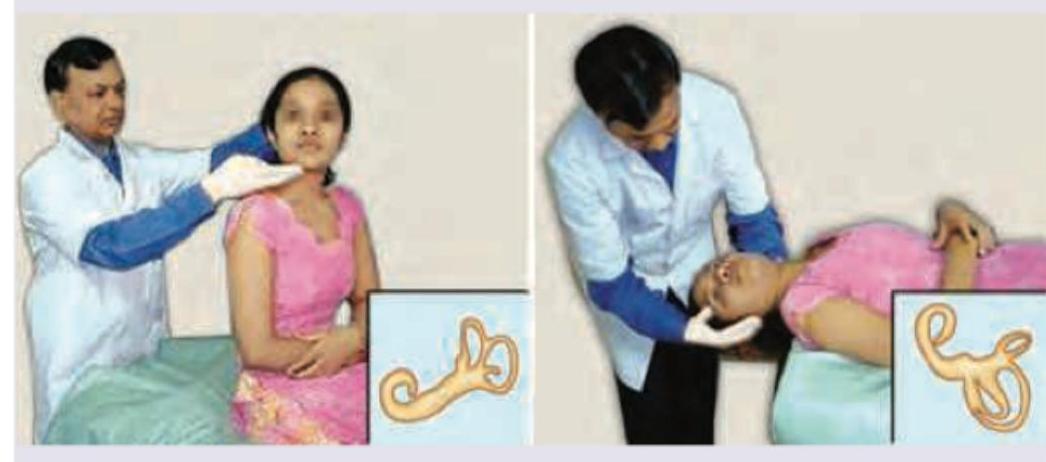
Which of the following test is being performed on the patient?
Best surgery to relieve intractable vertigo in a Meniere's disease patient with profound hearing loss is?
A patient with cholesteatoma has lateral semicircular canal fistula. The most specific sign is:
Recruitment phenomenon is seen in:
A person presenting to the outpatient department with complaints of rotational vertigo and nausea in the morning, which worsens with changes in head position. What is your diagnosis?
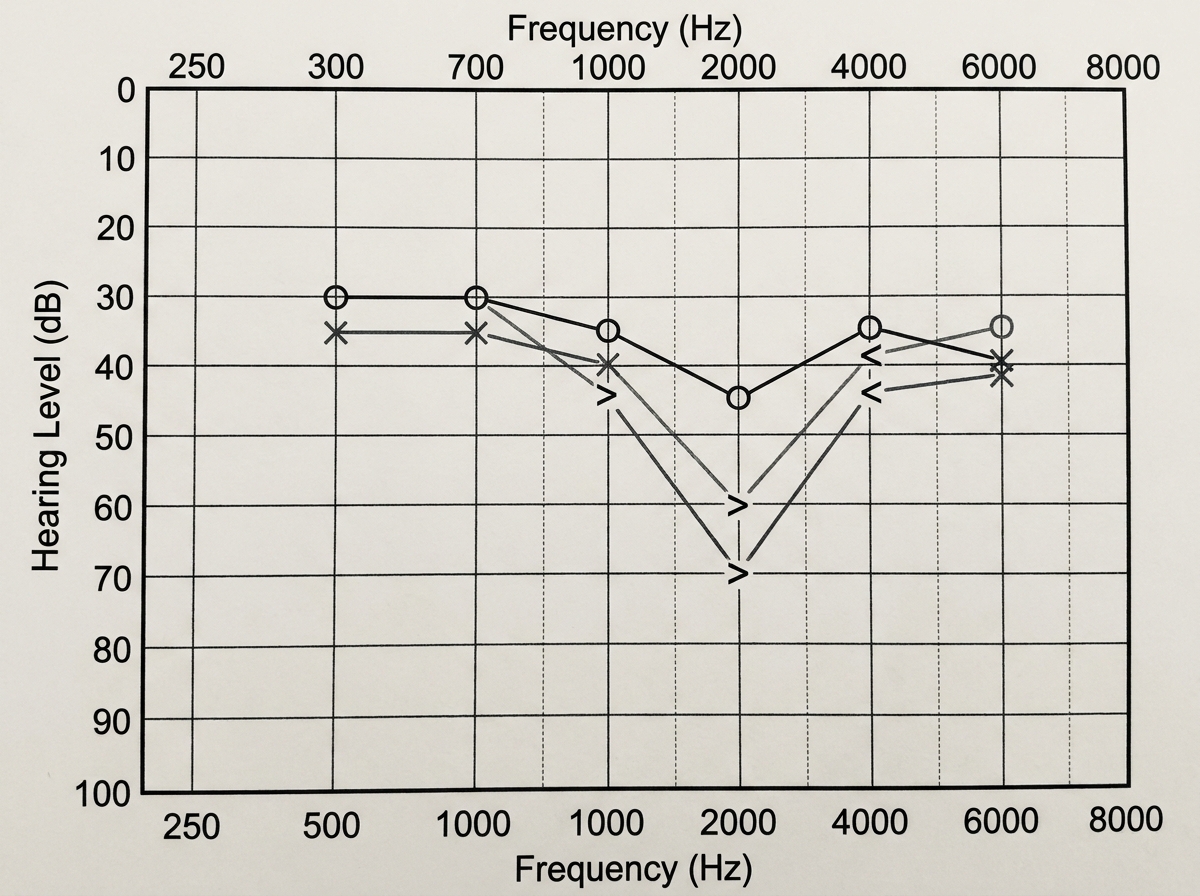
A female patient presents with mild conductive hearing loss (CHL) and tinnitus. Based on the pure tone audiometry (PTA) shown in the image, what is the most likely diagnosis?
Want unlimited practice?
Get full access to all questions, explanations, and performance tracking.
Scan to download app