What is the primary condition for which calcitriol is used as a treatment?
Which one of these should not be used in severe widespread psoriasis?
PUVA therapy is used in all except:
A 45 year old female presents with the complaint of pain in the metacarpophalangeal, proximal interphalangeal and metatarsophalangeal joints of both right and left hands. Serology showed positive anti-CCP antibodies. She was placed on infliximab for control. Which of the following need to tested before starting treatment?
In which of the following conditions are Anti-TNF agents contraindicated?
A 40-year-old male presents with fever and abdominal pain and is diagnosed with HIV and TB. What is the most appropriate sequence of treatment?
Treatment of choice for Pustular psoriasis is:
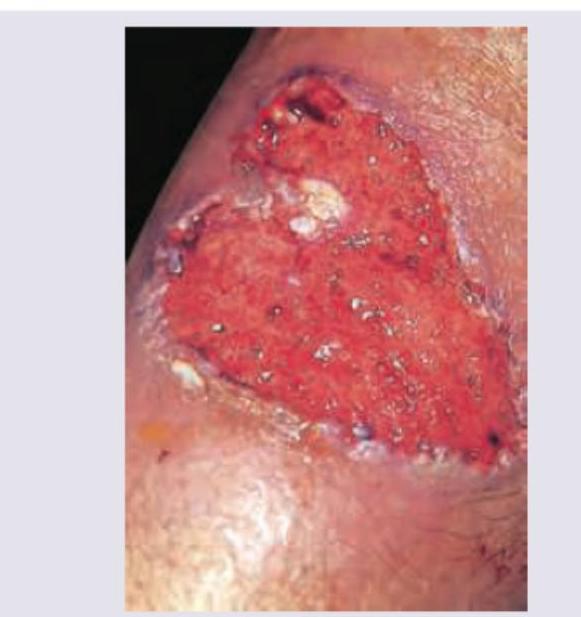
The following lesion appears on the leg of a patient of ulcerative colitis. All are useful in management except:
An 8-year-old girl has extreme photosensitivity since birth. She has recently been diagnosed with skin cancer. What is the diagnosis?
A 16-year-old boy presented with asymptomatic, multiple erythematous annular lesions with a collarette of scales at the periphery of the lesions present on the trunk. What is the most likely diagnosis?
Explanation: Secondary hyperparathyroidism - Calcitriol is the active form of vitamin D (1,25-dihydroxyvitamin D₃), and it is crucial for regulating calcium and phosphate levels in the body [1]. - In secondary hyperparathyroidism, often seen in chronic kidney disease (CKD), the kidneys cannot convert vitamin D to its active form, leading to hypocalcemia and increased PTH secretion [1], [2]. - Calcitriol supplementation helps to increase calcium absorption from the gut and suppress the release of parathyroid hormone (PTH), thereby treating the underlying cause of secondary hyperparathyroidism [1], [2]. - This is the primary therapeutic indication for calcitriol in clinical practice. Lichen planus - This is a chronic inflammatory condition affecting the skin, hair, nails, and mucous membranes - Typically treated with corticosteroids or other immunosuppressants - Calcitriol has no primary role in the treatment of lichen planus; its therapeutic applications are predominantly related to calcium and bone metabolism Pemphigus - Pemphigus is a group of rare autoimmune blistering diseases that affect the skin and mucous membranes - Primary treatment involves immunosuppressants like corticosteroids, often in high doses - Calcitriol is not indicated for the treatment of pemphigus, as its mechanism of action is unrelated to the autoimmune processes characteristic of this disease Leprosy - Leprosy is a chronic infectious disease caused by the bacterium Mycobacterium leprae - Treated with multi-drug therapy (MDT), which includes antibiotics like rifampicin, dapsone, and clofazimine - Calcitriol is not an antibiotic and therefore has no role in treating the bacterial infection responsible for leprosy
Explanation: ***Oral glucocorticoids*** - While they may provide temporary relief, **oral glucocorticoids** can exacerbate psoriasis upon withdrawal, leading to a severe flare-up or **pustular psoriasis**. - Their long-term use is associated with numerous side effects, making them unsuitable for widespread, chronic conditions like severe psoriasis. *Methotrexate* - **Methotrexate** is a systemic agent commonly used for severe psoriasis due to its immune-modulating and anti-proliferative effects. - It is effective in reducing inflammation and slowing down epidermal cell turnover. *Oral retinoids* - **Oral retinoids** like acitretin are effective systemic treatments for severe widespread psoriasis, especially **pustular** and **erythrodermic** forms. - They work by normalizing keratinocyte proliferation and differentiation. *Cyclosporin* - **Cyclosporin** is a potent immunosuppressant widely used for severe psoriasis, particularly when rapid disease control is needed. - It works by inhibiting T-cell activation and is highly effective in clearing psoriatic lesions.
Explanation: ***Melasma*** - **PUVA (Psoralen plus UVA) therapy** is contraindicated in melasma due to its potential to worsen hyperpigmentation and cause paradoxical darkening. - Melasma is best managed with topical agents like **hydroquinone**, **tretinoin**, and chemical peels, along with strict **sun protection**. *Psoriasis* - **PUVA therapy** is a well-established and effective treatment for moderate to severe psoriasis, especially for patients with widespread plaques. - It works by inhibiting DNA synthesis and cell proliferation in rapidly dividing keratinocytes, leading to a reduction in psoriatic lesions. *Vitiligo* - **PUVA therapy** is a common treatment for vitiligo, stimulating melanocyte activity and promoting repigmentation in affected areas. - Psoralen sensitizes melanocytes to UVA light, which then encourages melanin production. *Mycosis fungoides* - In its early stages, **mycosis fungoides**, a cutaneous T-cell lymphoma, can be effectively treated with **PUVA therapy**. - PUVA induces apoptosis of malignant T-cells in the skin, leading to remission of skin lesions.
Explanation: ***PPD skin test*** - **Infliximab** is a **TNF-alpha inhibitor**, which can **reactivate latent tuberculosis** (TB) by suppressing the immune response critical for containing the infection. [1] - A **PPD skin test** (or interferon-gamma release assay like Quantiferon) is essential to screen for latent TB before initiating treatment with biologics like infliximab to prevent severe active infection. [1] *G6PD* - **Glucose-6-phosphate dehydrogenase (G6PD) deficiency** is primarily relevant when prescribing drugs that can cause **hemolysis**, such as certain antimalarials or sulfonamides. - It does not have a direct interaction or contraindication with infliximab, and screening is not standard practice before starting TNF-alpha inhibitors. *Uric acid* - **Uric acid levels** are primarily monitored in conditions like **gout** or when using medications that affect uric acid metabolism. - They are not a standard pre-treatment screening test for patients starting infliximab for rheumatoid arthritis. *Complete blood count* - A **complete blood count (CBC)** is generally part of routine workup for many conditions and can help assess baseline blood cell counts before starting any significant medication. [1] - While useful for monitoring during treatment, it is not the critical specific test required to prevent a severe infectious complication, like a PPD test, before starting infliximab. [1]
Explanation: ***RA with Hepatitis B*** - **Anti-TNF agents** can cause reactivation of **latent Hepatitis B virus (HBV)** infection, leading to severe hepatitis and liver failure [1]. Therefore, screening for HBV is crucial before initiating these medications [1]. - Patients with active or chronic HBV infection often require **antiviral therapy** before or concurrently with anti-TNF treatment to prevent reactivation. *RA with HIV* - While caution is advised, **anti-TNF agents** can be used in patients with **well-controlled HIV infection** on antiretroviral therapy, often with close monitoring for infections. - The risk of opportunistic infections is carefully balanced against the benefits of controlling rheumatoid arthritis and preventing joint damage [1]. *RA with HCV* - **Anti-TNF agents** are generally considered safe for patients with **Hepatitis C virus (HCV)** infection, especially if the HCV is stable or being treated. - There is no strong evidence to suggest that anti-TNF therapy commonly causes HCV reactivation or worsening of liver disease. *RA with pulmonary fibrosis* - The use of **anti-TNF agents** in patients with established **pulmonary fibrosis** is generally not contraindicated, though careful monitoring for worsening respiratory symptoms is important. - Some anti-TNF agents have been associated with **interstitial lung disease**, but this is typically a new onset condition rather than exacerbation of pre-existing fibrosis.
Explanation: ***ATT followed by ART within 2-8 weeks*** - This sequence is crucial for patients with co-infection of **HIV and TB**. Initiating **anti-tuberculous treatment (ATT)** first is vital to control the active TB infection, which can be rapidly fatal [2]. - Subsequently, starting **antiretroviral therapy (ART)** within 2-8 weeks (typically 2-4 weeks after ATT in patients without CNS TB) helps to restore the immune system and prevent other opportunistic infections, but delaying it slightly reduces the risk of **IRIS (Immune Reconstitution Inflammatory Syndrome)** [1]. *First ATT and then ART* - While starting ATT first is correct, this option is too vague regarding the timing of ART initiation. - The specific window of 2-8 weeks (or 2-4 weeks without CNS TB) is important to balance TB treatment efficacy and mitigate **IRIS risk** [1]. *ATT only* - This approach is incorrect as it fails to address the underlying HIV infection, which would lead to continued immune decline and increased morbidity and mortality. - ART is essential for improving prognosis and reducing viral load in HIV-infected individuals. *First ART and then ATT* - Initiating ART before ATT in co-infected patients with active TB can worsen the TB condition due to **IRIS**, which can be severe and life-threatening [1]. - ART can cause a rapid immune reconstitution and paradoxical worsening of symptoms or presentation of subclinical TB [1].
Explanation: ***Methotrexate*** - **Methotrexate** is a systemic immunosuppressant often considered the first-line treatment for severe forms of **pustular psoriasis** due to its efficacy in reducing inflammation and hyperproliferation of skin cells. - It works by inhibiting **dihydrofolate reductase**, thereby interfering with DNA synthesis and cell division, which is crucial in rapidly dividing cells like those found in psoriasis. *Psoralen - UV therapy* - **Psoralen and ultraviolet A (PUVA)** therapy can be used for chronic plaque psoriasis, but it is generally **contraindicated or used with extreme caution** in pustular psoriasis due to the risk of exacerbating the disease or causing irritation. - **UV light therapy** can sometimes trigger or worsen pustular flares, especially in acute generalized pustular psoriasis. *Systemic steroid* - While systemic steroids can provide temporary relief by addressing inflammation, their use in pustular psoriasis is generally **not recommended for long-term management** due to the high risk of severe rebound flares upon withdrawal. - Withdrawal of **systemic corticosteroids** can precipitate or worsen generalized pustular psoriasis, making them a less desirable long-term treatment option. *Estrogen* - **Estrogen** has no direct role in the treatment of psoriasis. Psoriasis is an inflammatory skin condition, and its pathophysiology is not directly influenced by estrogen levels. - Hormonal therapies are not indicated for the management of psoriasis, including its pustular forms.
Explanation: ***Sulfapyridine*** - The image shows **pyoderma gangrenosum**, a painful ulcerative skin condition often associated with inflammatory bowel disease like ulcerative colitis. Among the given options, **sulfapyridine** has the **least established role** in pyoderma gangrenosum management. - **Sulfapyridine** is an inactive component of **sulfasalazine** and primarily acts as an **antibacterial agent**. While sulfasalazine has been reported in some PG cases, sulfapyridine alone is not a recognized treatment for the inflammatory, non-infectious nature of pyoderma gangrenosum. - Unlike the other options which have well-established roles, sulfapyridine lacks strong evidence for efficacy in PG. *Steroids* - **Corticosteroids** (oral or topical) are the **first-line treatment** for pyoderma gangrenosum due to their potent anti-inflammatory and immunosuppressive effects. - They help to reduce the inflammation and promote healing of the painful ulcers. *Procto-colectomy* - In cases of severe, refractory pyoderma gangrenosum associated with ulcerative colitis, **colectomy** can be a **definitive treatment** as it removes the underlying inflammatory trigger. - This surgical intervention is considered when medical therapies are unsuccessful or when the colonic disease itself necessitates surgery. *Infliximab* - **Infliximab**, a **TNF-alpha inhibitor**, is a biologic agent effective in treating both ulcerative colitis and pyoderma gangrenosum. - It is used in cases that are refractory to steroids or when patients cannot tolerate steroid therapy.
Explanation: ***Xeroderma Pigmentosum*** - This condition is characterized by an extreme sensitivity to **ultraviolet (UV) light** from birth due to defects in **DNA repair mechanisms**, leading to severe sunburns, pigmentary changes (freckles, hypopigmented macules), and a high risk of developing **skin cancers** at a young age. - The history of extreme photosensitivity since birth and the diagnosis of skin cancer in an 8-year-old girl is highly indicative of Xeroderma Pigmentosum. *Bloom syndrome* - Bloom syndrome is an inherited disorder characterized by **stunted growth**, a **photosensitive facial rash (telangiectatic erythema)**, and a predisposition to **various cancers**, including leukemia and lymphomas. - While photosensitivity and cancer risk are present, the extreme skin damage and early onset of specific skin cancers (as opposed to leukemias/lymphomas often seen in Bloom) make Xeroderma Pigmentosum a more fitting diagnosis. *Griscelli syndrome* - Griscelli syndrome is a rare autosomal recessive disorder characterized by **partial albinism**, immunodeficiency, and neurological impairment. - While it involves pigmentary abnormalities, it does not typically present with the extreme photosensitivity or the very early skin cancer development described in the patient. *Chediak Higashi syndrome* - Chediak-Higashi syndrome is an autosomal recessive disorder characterized by **partial albinism**, recurrent pyogenic infections, and neurological abnormalities, due to defective lysosomal trafficking. - This syndrome is not primarily associated with extreme photosensitivity leading to early skin cancers but rather with immunodeficiency and neurological issues.
Explanation: ### Explanation The clinical presentation of multiple erythematous annular lesions with a characteristic **collarette of scales** at the periphery on the trunk is a classic description of **Pityriasis Rosea (PR)**. **Why Pityriasis Rosea is correct:** PR is an acute, self-limiting inflammatory dermatosis, often associated with Human Herpesvirus 6 or 7 (HHV-6/7). It typically begins with a single, large **"Herald Patch"** followed by a generalized eruption of smaller oval lesions. The scales in PR are unique; they are attached at the periphery and free in the center, forming a **"collarette"** appearance. On the back, these lesions follow the lines of cleavage, creating a **"Christmas Tree"** or "Fir Tree" distribution. **Why the other options are incorrect:** * **Pityriasis versicolor:** Presents as hypo- or hyperpigmented macules with fine, branny (furfuraceous) scaling. It is caused by *Malassezia* and does not typically show a peripheral collarette of scales. * **Pityriasis alba:** Commonly seen in children with atopy, presenting as ill-defined hypopigmented patches with fine scaling, usually on the face. It lacks the annular, erythematous nature of PR. * **Pityriasis rubra pilaris (PRP):** Characterized by follicular papules on an erythematous base, "islands of sparing," and orange-red palmoplantar keratoderma. It does not present with a collarette of scales. **High-Yield Clinical Pearls for NEET-PG:** * **Herald Patch:** The initial lesion (seen in 80% of cases), usually larger and more scaly than subsequent lesions. * **Hanging Curtain Sign:** When the skin is stretched across the long axis of the lesion, the scales tend to fold inwards (characteristic of PR). * **Treatment:** Usually conservative (reassurance); antihistamines for pruritus. * **Differential Diagnosis:** Secondary syphilis (always rule this out if lesions involve palms and soles; PR typically spares them).
Get full access to all questions, explanations, and performance tracking.
Start For Free