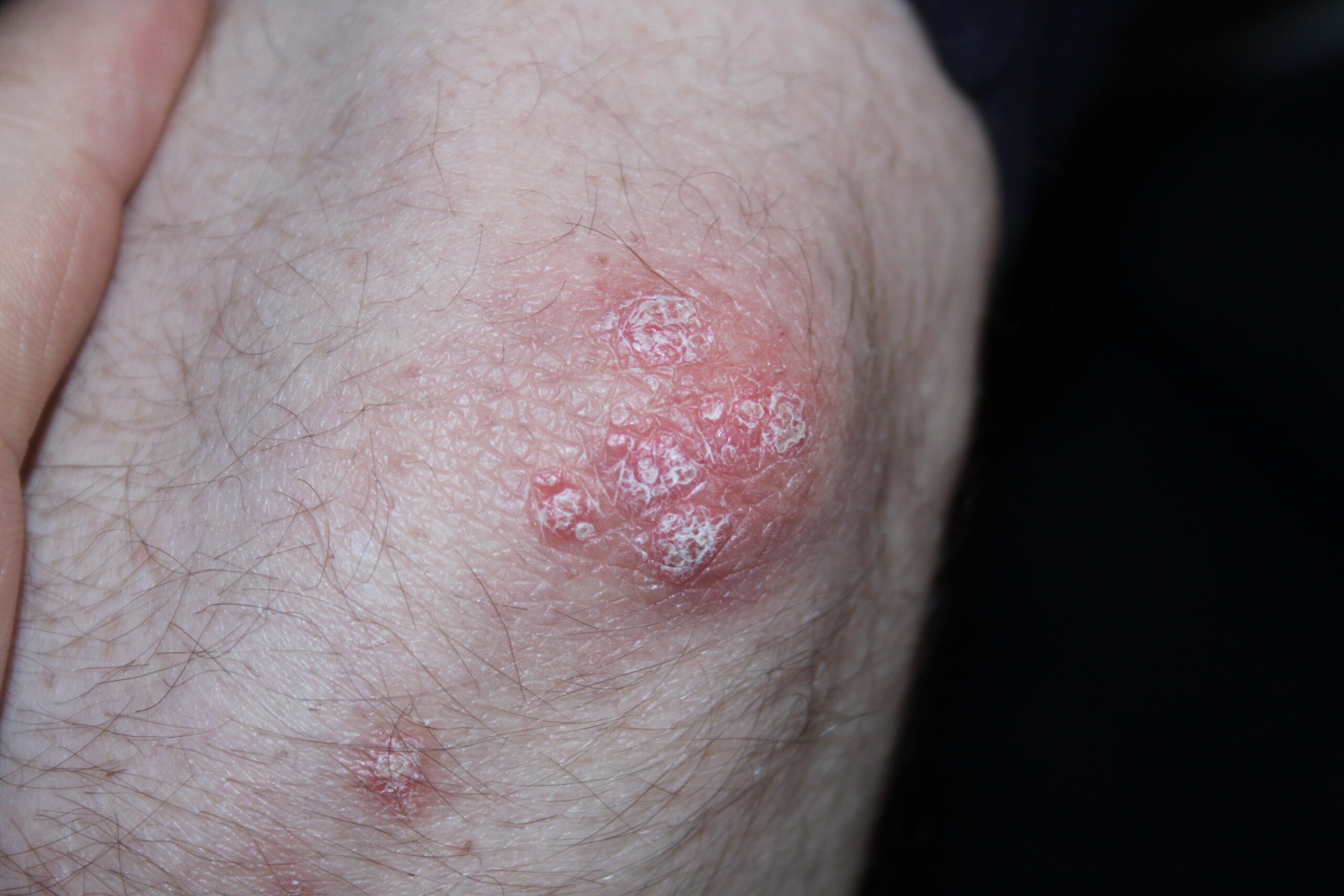
Which of the following is the drug of choice in the treatment of erythrodermic psoriasis?
Which of the following is the most serious type of psoriasis?
A topical retinoid recently introduced for the treatment of psoriasis is:
Which skin condition is characterized by lesions with plaques covered in silvery scales over the back?
Nails are involved in which of the following conditions?
Which type of psoriasis is associated with streptococcal throat infection?
Tildrakizumab was approved by the FDA in 2018 for which condition?
Test tube-shaped rete pegs is a feature of which condition?
What is the treatment of choice (TOC) in psoriatic arthropathy?
Berkeley membrane is seen in which condition?
Explanation: **Explanation:** **Erythrodermic Psoriasis** is a severe, life-threatening form of psoriasis characterized by generalized erythema and scaling involving >90% of the body surface area. It requires prompt systemic intervention. **1. Why Methotrexate is the Correct Answer:** Methotrexate is considered the **first-line systemic treatment (Drug of Choice)** for stable erythrodermic psoriasis. It acts as a folic acid antagonist, inhibiting dihydrofolate reductase, which leads to decreased DNA synthesis and potent immunosuppression. It effectively halts the rapid epidermal cell turnover characteristic of this condition. Other first-line options include Cyclosporine (preferred if rapid onset is needed) and Acitretin. **2. Why the Other Options are Incorrect:** * **Psoralen (Option A):** Psoralen combined with UVA (PUVA) is contraindicated in the acute phase of erythrodermic psoriasis. Phototherapy can trigger further irritation and worsen the erythroderma. * **Systemic Steroids (Option B):** These are generally **avoided** in psoriasis. While they may provide temporary relief, their withdrawal often triggers a severe rebound flare or precipitates **von Zumbusch pustular psoriasis**. * **Estrogen (Option C):** Estrogen has no established role in the treatment of psoriasis. **Clinical Pearls for NEET-PG:** * **Most common trigger:** Sudden withdrawal of systemic steroids. * **Complications:** High-output heart failure, hypothermia, and protein loss (hypoalbuminemia) due to excessive scaling. * **Treatment Hierarchy:** * **Methotrexate:** Standard DOC. * **Cyclosporine:** Fastest acting; used in unstable/severe cases. * **Infliximab:** Highly effective biological agent for rapid control. * **Auspitz Sign:** Usually absent in erythrodermic and pustular psoriasis.
Explanation: **Explanation:** **Generalized Pustular Psoriasis (Von Zumbusch Psoriasis)** is considered the most serious and life-threatening form of the disease. Unlike chronic plaque psoriasis, it is characterized by the sudden onset of widespread sterile pustules on an erythematous base. The severity arises from systemic involvement; patients often present with high-grade fever, malaise, leukocytosis, and electrolyte imbalances. If left untreated, it can lead to fatal complications such as secondary sepsis, acute respiratory distress syndrome (ARDS), and high-output heart failure. **Analysis of Incorrect Options:** * **Chronic Plaque Psoriasis:** This is the most *common* type (affecting ~90% of patients) but is typically stable and localized to extensor surfaces, posing no immediate threat to life. * **Guttate Psoriasis:** Characterized by small, "drop-like" lesions often triggered by a Streptococcal sore throat. It is usually self-limiting or responds well to phototherapy. * **Flexural (Inverse) Psoriasis:** Occurs in skin folds (axilla, groin). While uncomfortable due to maceration and secondary fungal infections, it lacks systemic toxicity. **High-Yield Clinical Pearls for NEET-PG:** * **Erythrodermic Psoriasis** is the other "dermatological emergency" in the psoriasis spectrum, involving >90% of body surface area. * **Trigger:** Sudden withdrawal of systemic steroids is a classic trigger for Generalized Pustular Psoriasis. * **Histology:** Look for **Kogoj’s spongiform pustules** (neutrophils in the stratum spinosum) and **Munro’s microabscesses** (neutrophils in the stratum corneum). * **Treatment of Choice:** Oral Retinoids (Acitretin) are generally preferred for the pustular variant.
Explanation: **Explanation:** **Tazarotene** is a third-generation topical retinoid specifically approved for the treatment of plaque psoriasis. It works by selectively binding to **retinoic acid receptors (RAR-β and RAR-γ)**. In psoriasis, it normalizes keratinocyte differentiation, inhibits hyperproliferation, and decreases inflammatory markers. It is often used in combination with topical corticosteroids to enhance efficacy and reduce the localized irritation (burning/stinging) commonly associated with its use. **Analysis of Incorrect Options:** * **Adapalene (A):** A third-generation retinoid primarily used for **Acne Vulgaris**. While it has anti-inflammatory properties, it is not a standard or FDA-approved treatment for psoriasis. * **Alitretinoin (C):** A 9-cis-retinoic acid derivative. Its topical form is used for **Kaposi Sarcoma** lesions, and its oral form is highly effective for chronic refractory **hand eczema**. * **Bexarotene (D):** A selective **RXR (Retinoid X Receptor)** ligand. It is specifically used (topically and systemically) for the treatment of **Cutaneous T-cell Lymphoma (CTCL)**, such as Mycosis Fungoides. **High-Yield Clinical Pearls for NEET-PG:** * **Tazarotene** is pregnancy category X (contraindicated) and should not be applied to more than 20% of the body surface area. * **First-line topical therapy** for localized psoriasis remains the combination of a potent corticosteroid and a Vitamin D3 analogue (e.g., **Calcipotriol**). * **Oral Retinoid for Psoriasis:** **Acitretin** is the systemic retinoid of choice, particularly for pustular and erythrodermic variants. Remember: Acitretin requires a 3-year washout period before pregnancy.
Explanation: **Explanation:** The correct answer is **Psoriasis**. This is a chronic, immune-mediated inflammatory dermatosis characterized by well-demarcated, erythematous (red) plaques covered with characteristic **silvery-white, micaceous scales**. These lesions typically appear on extensor surfaces such as the elbows, knees, and the lower back (lumbosacral region). The scaling occurs due to hyperkeratosis and parakeratosis resulting from an accelerated epidermal cell turnover (shortened from 28 days to about 4 days). **Why other options are incorrect:** * **Lichen Planus:** Characterized by the "6 Ps": Planar (flat-topped), Purple, Polygonal, Pruritic, Papules, and Plaques. It features **Wickham striae** (whitish reticular lines) rather than silvery scales. * **Pemphigus:** An autoimmune blistering disease. It presents with fragile, flaccid bullae and painful erosions on the skin and mucous membranes, not scaly plaques. * **Leprosy:** Tuberculoid leprosy may present with hypopigmented or erythematous plaques, but these are typically associated with **loss of sensation** and absence of hair/sweat, rather than thick silvery scaling. **High-Yield Clinical Pearls for NEET-PG:** * **Auspitz Sign:** Pinpoint bleeding occurs when scales are forcibly removed (due to thinning of the suprapapillary epidermis). * **Koebner Phenomenon:** Development of new lesions at sites of trauma (also seen in Lichen Planus and Vitiligo). * **Histology:** Look for **Munro’s microabscesses** (neutrophils in the stratum corneum) and **Kogoj’s pustules**. * **Nail changes:** Pitting (most common), Oil spots, and Onycholysis.
Explanation: **Explanation:** **Psoriasis** is a chronic inflammatory dermatosis where nail involvement is highly characteristic, occurring in approximately 50% of patients with cutaneous lesions and up to 80% of those with psoriatic arthritis. The clinical presentation depends on the site of involvement: * **Nail Matrix involvement:** Results in **pitting** (the most common finding), leukonychia, and crumbling of the nail plate. * **Nail Bed involvement:** Results in **"Oil spots" (salmon patches)**, subungual hyperkeratosis, and distal onycholysis. **Why the other options are incorrect:** * **Pemphigus & Pemphigoid:** These are autoimmune bullous disorders primarily affecting the skin and mucous membranes. While severe paronychia or nail shedding (onychomadesis) can rarely occur in Pemphigus Vulgaris due to periungual blistering, it is not a classic or diagnostic feature compared to Psoriasis. * **Dermatitis Herpetiformis (DH):** This is an IgA-mediated immunobullous disease associated with gluten-sensitive enteropathy. It typically presents with intensely pruritic vesicles on extensor surfaces; nail involvement is not a feature of DH. **High-Yield Clinical Pearls for NEET-PG:** * **Pitting in Psoriasis:** Deep, irregular, and randomly distributed (unlike the shallow, regular pits seen in Alopecia Areata). * **Oil Spot Sign:** Pathognomonic for psoriasis; represents focal exocytosis of neutrophils under the nail plate. * **Association:** Nail changes are a strong predictor of future development of **Psoriatic Arthritis** (specifically involving the Distal Interphalangeal joints). * **Differential Diagnosis:** Psoriasis must be differentiated from **Onychomycosis** (fungal infection) using KOH mount or fungal culture.
Explanation: **Explanation:** **Guttate Psoriasis** is the correct answer because it is classically triggered by an upper respiratory tract infection, most commonly **Group A Beta-hemolytic Streptococcal (GABHS)** pharyngitis. The term "guttate" is derived from the Latin word *gutta* (drop), reflecting its clinical presentation: sudden onset of small, salmon-pink, drop-like papules with fine scales, primarily on the trunk and proximal extremities. This occurs due to molecular mimicry or a superantigen-mediated immune response following the infection. **Analysis of Incorrect Options:** * **Pustular Psoriasis:** Characterized by sterile pustules on an erythematous base. It is typically triggered by the withdrawal of systemic steroids, pregnancy (Impetigo Herpetiformis), or infections, but it lacks the specific, strong association with Streptococcal throat infections seen in the guttate variety. * **Flexural (Inverse) Psoriasis:** Involves skin folds (axilla, groin, sub-mammary). It presents as smooth, erythematous plaques without scaling. It is not typically associated with an acute post-streptococcal trigger. * **Scalp Psoriasis:** A common site for chronic plaque psoriasis. While it can coexist with other forms, it is not the specific subtype defined by a preceding sore throat. **High-Yield Clinical Pearls for NEET-PG:** * **Latency:** The skin eruption typically appears **1–3 weeks** after the throat infection. * **Diagnosis:** Often shows elevated **ASO (Antistreptolysin O) titers** and positive throat cultures. * **Prognosis:** It has a good prognosis and may resolve spontaneously, though it can progress to chronic plaque psoriasis in about 30-40% of cases. * **Treatment:** Management includes treating the underlying infection (Antibiotics), phototherapy (NB-UVB), and topical steroids.
Explanation: **Explanation:** **Tildrakizumab** is a high-affinity, humanized IgG1 kappa monoclonal antibody that specifically targets the **p19 subunit of Interleukin-23 (IL-23)**. In the pathogenesis of psoriasis, the IL-23/Th17 axis plays a central role; by inhibiting IL-23, Tildrakizumab prevents the release of downstream pro-inflammatory cytokines like IL-17 and IL-22, thereby reducing keratinocyte hyperproliferation and plaque formation. It was FDA-approved in 2018 for the treatment of moderate-to-severe plaque psoriasis in adults who are candidates for systemic therapy or phototherapy. **Analysis of Incorrect Options:** * **Cystic Fibrosis:** Treated with CFTR modulators (e.g., Ivacaftor) and antibiotics, not monoclonal antibodies targeting IL-23. * **Migraine:** Managed with CGRP antagonists (e.g., Erenumab) or triptans. * **Hypertension:** Managed with ACE inhibitors, ARBs, or calcium channel blockers; biologics currently have no role in standard hypertension management. **NEET-PG High-Yield Pearls:** * **Mechanism:** IL-23 inhibitor (p19 subunit). Other drugs in this class include **Guselkumab** and **Risankizumab**. * **Ustekinumab vs. Tildrakizumab:** Ustekinumab targets the **p40 subunit** (shared by IL-12 and IL-23), whereas Tildrakizumab is selective for the **p19 subunit** (specific to IL-23). * **Dosing:** It is administered subcutaneously at weeks 0, 4, and then every 12 weeks, making it a convenient long-term maintenance option. * **Screening:** Always screen for **Latent Tuberculosis (TB)** before initiating any biological therapy for psoriasis.
Explanation: **Explanation:** The correct answer is **Psoriasis**. This question focuses on the classic histopathological features of Psoriasis vulgaris, which are high-yield for NEET-PG. **1. Why Psoriasis is Correct:** In Psoriasis, there is a marked increase in the proliferation of keratinocytes (increased mitotic activity). This leads to **regular elongation of the rete ridges** (the downward projections of the epidermis into the dermis). These elongated ridges appear uniform, thin, and rounded at the base, resembling **"test tubes in a rack."** Other hallmark histopathological features include: * **Parakeratosis:** Retention of nuclei in the stratum corneum. * **Munro’s microabscesses:** Neutrophils within the parakeratotic stratum corneum. * **Kogoj’s spongiform pustules:** Neutrophils in the stratum spinosum. * **Auspitz sign:** Pinpoint bleeding when scales are removed due to thinning of the suprapapillary plate and dilated capillaries. **2. Why other options are incorrect:** * **Reiter’s Syndrome (Reactive Arthritis):** While it can show "psoriasiform" changes (like Munro’s microabscesses), the classic "test tube" description is specifically associated with Psoriasis. * **Geographic Tongue (Benign Migratory Glossitis):** This is considered an oral form of psoriasis and shows similar features, but the question asks for the primary condition where this sign is the diagnostic hallmark. * **OSMF (Oral Submucous Fibrosis):** This is characterized by juxta-epithelial hyalinization and **atrophy** of the epithelium with **flattening** of rete pegs, the exact opposite of the elongation seen in psoriasis. **Clinical Pearls for NEET-PG:** * **Grattage Test:** Scraping the lesion increases the silvery-white scale (candle grease sign). * **Woronoff’s Ring:** A pale halo around a healing psoriatic plaque. * **Koebner’s Phenomenon:** Development of new lesions at sites of trauma (also seen in Vitiligo and Lichen Planus).
Explanation: **Explanation:** **Methotrexate (MTX)** is considered the traditional **Treatment of Choice (TOC)** and the first-line Disease-Modifying Anti-Rheumatic Drug (DMARD) for psoriatic arthropathy. It is a folate antagonist that inhibits dihydrofolate reductase, effectively suppressing both the cutaneous hyperproliferation and the systemic inflammation responsible for joint destruction. It is particularly favored because it treats both the skin lesions and the arthritis simultaneously. **Analysis of Incorrect Options:** * **5-Fluorouracil:** This is a pyrimidine analog used primarily as a topical treatment for actinic keratosis or superficial basal cell carcinomas, and systemically for visceral malignancies. It has no role in managing psoriatic arthritis. * **PUVA:** While highly effective for extensive plaque psoriasis (skin), UV radiation cannot penetrate deep enough to treat joint inflammation. Furthermore, PUVA is now largely replaced by Narrowband UVB (NBUVB) due to safety profiles. * **Steroids:** Systemic steroids are generally **avoided** in psoriasis. While they may provide temporary joint relief, their withdrawal often triggers a severe, life-threatening rebound flare of skin symptoms, such as **Pustular Psoriasis**. **High-Yield Clinical Pearls for NEET-PG:** * **Gold Standard (Modern):** While MTX is the traditional TOC, **TNF-alpha inhibitors** (e.g., Etanercept, Adalimumab) are now considered the most effective for preventing radiological progression of joint damage. * **Radiology:** Look for the "Pencil-in-cup" deformity on X-rays. * **Nail Changes:** Pitting and onycholysis are strong clinical predictors of joint involvement (Distal Interphalangeal joints). * **Drug Side Effect:** Always supplement MTX with **Folic acid** to reduce GI toxicity and bone marrow suppression.
Explanation: **Explanation:** **Berkeley Membrane** (also known as the **Bulkley membrane**) is a classic clinical sign of **Psoriasis**. It refers to the thin, moist, transparent layer of epidermis (the suprabasal layer) that is exposed after the silvery-white scales are completely scraped off. 1. **Why Psoriasis is correct:** In psoriasis, there is marked parakeratosis (retention of nuclei in the stratum corneum) and thinning of the suprapapillary plate. When scales are removed (Grattage test), this thin membrane is revealed. Further scraping of this membrane ruptures the dilated capillaries in the dermal papillae, leading to pinpoint bleeding, known as the **Auspitz sign**. 2. **Why other options are incorrect:** * **Pemphigus:** Characterized by intraepidermal blistering due to acantholysis. Key signs include the **Nikolsky sign** and **Asboe-Hansen sign**, not membrane exposure. * **Tinea capitis:** A fungal infection of the scalp presenting with hair loss and scaling. Diagnosis is via KOH mount or Wood’s lamp; it does not exhibit the Berkeley membrane. * **Pityriasis rubra pilaris (PRP):** While it involves hyperkeratosis, it is distinguished by "islands of sparing," follicular papules, and orange-red plaques. It is Auspitz sign negative. **Clinical Pearls for NEET-PG:** * **Grattage Test:** The process of scraping psoriasiform scales to elicit the Berkeley membrane and Auspitz sign. * **Woronoff’s Ring:** A pale halo of hypopigmentation surrounding a healing psoriatic plaque. * **Koebner Phenomenon:** Development of psoriatic lesions at sites of trauma (also seen in Vitiligo and Lichen Planus). * **Munro’s Microabscess:** Accumulation of neutrophils in the stratum corneum (histopathology).
Pathophysiology of Psoriasis
Practice Questions
Psoriasis Vulgaris
Practice Questions
Guttate Psoriasis
Practice Questions
Erythrodermic Psoriasis
Practice Questions
Pustular Psoriasis
Practice Questions
Palmoplantar Psoriasis
Practice Questions
Nail Psoriasis
Practice Questions
Scalp Psoriasis
Practice Questions
Psoriatic Arthritis
Practice Questions
Topical Therapy for Psoriasis
Practice Questions
Systemic Therapy for Psoriasis
Practice Questions
Phototherapy and Biologics for Psoriasis
Practice Questions
Get full access to all questions, explanations, and performance tracking.
Start For Free