All of the following result in endogenous pigmentation of teeth except?
An adolescent boy complains of a splotchy red rash on the nape of his neck, discovered when he had his head shaved for football season. The rash seems to become more prominent with exercise or emotion. His mother notes that he has had the rash since infancy, but that it became invisible as hair grew. He had a similar rash on his eyelids that resolved in the newborn period. What is the most likely diagnosis?
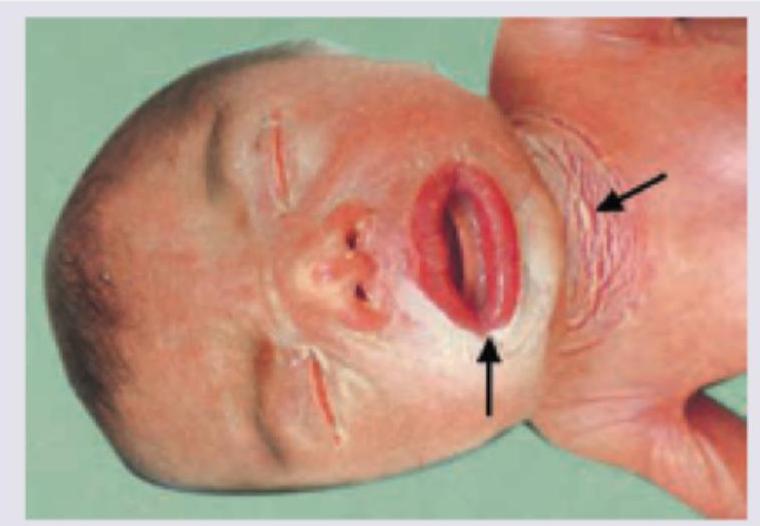
Acrodermatitis enteropathica is inherited in which pattern?
What is true about Acrodermatitis enteropathica?
A child scratches their hand with a pen, resulting in a red wheal that persists for 30 minutes. What is the most likely diagnosis?
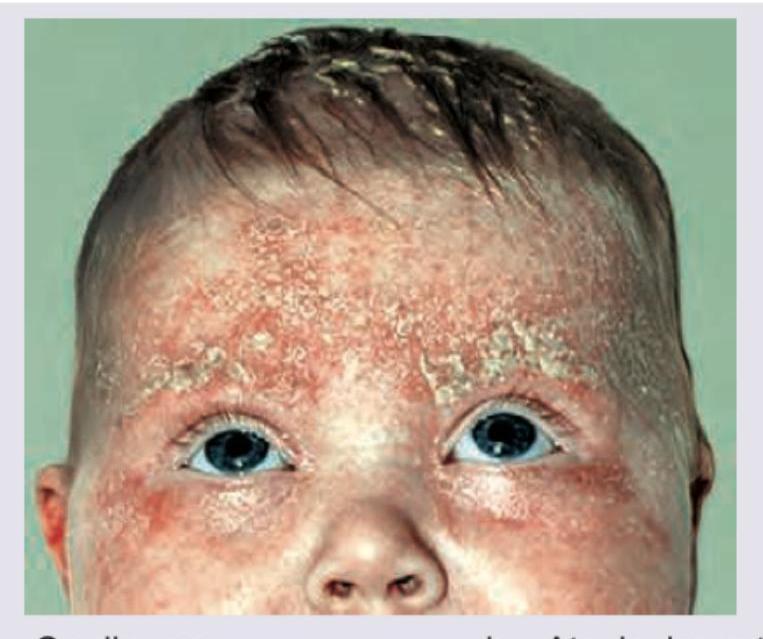
A child presents with a vesiculobullous, pustular rash around the mouth and on the extremities, along with alopecia and diarrhea. What is the most likely nutritional deficiency?
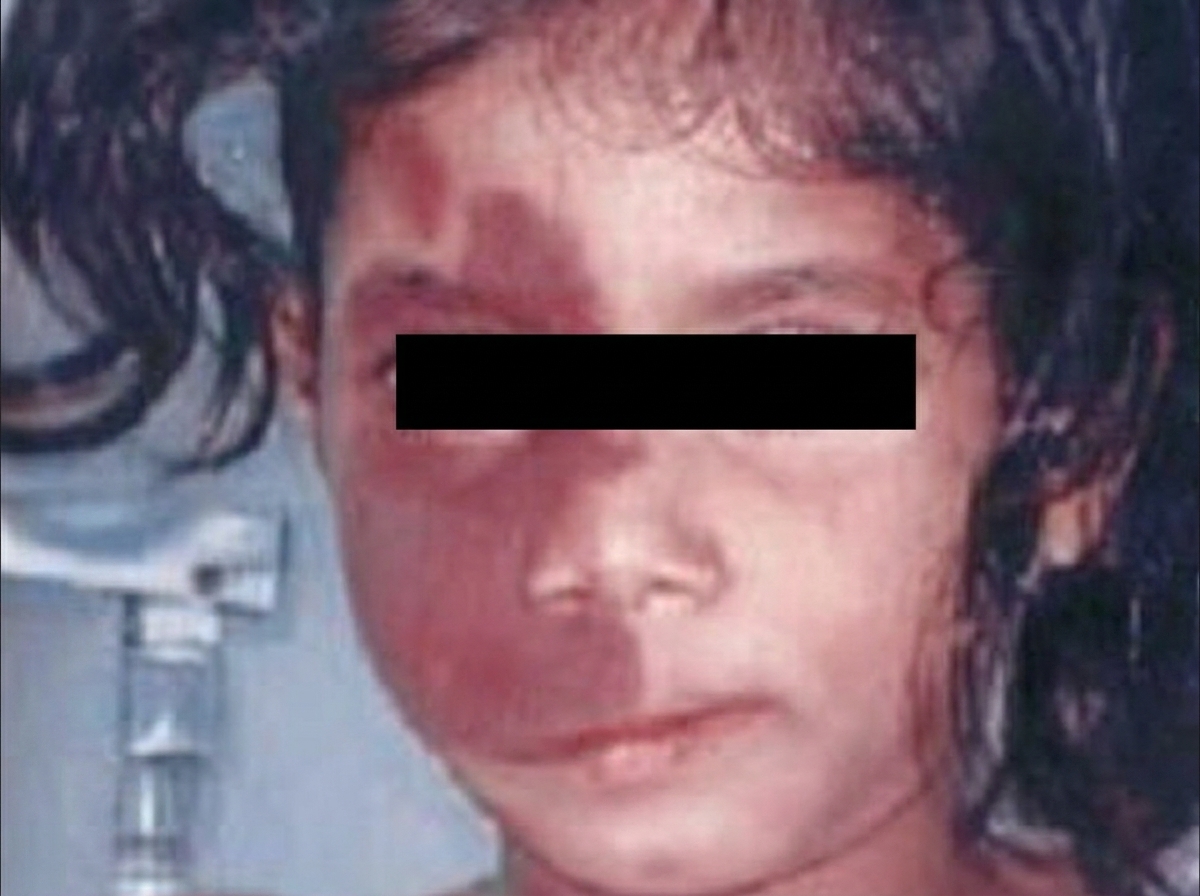
A neonate presents with a growing skin lesion, as shown in the image provided. The mother reports that the lesion has been increasing in size daily. What is the appropriate management?
A 6-month-old baby presents with a bright red, raised, soft nodule measuring 2 cm in diameter on the forehead. The lesion has well-defined borders, appeared 2 weeks after birth as a small red spot, and has been growing rapidly over the past few months. The surface has a characteristic strawberry-like appearance with a lobulated texture. What is the most likely diagnosis?
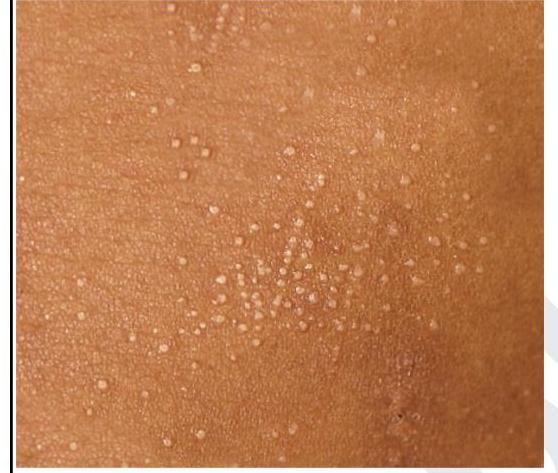
A neonate presents with blotchy rash on the abdomen as shown in the image. What is the diagnosis?

A 6-year-old child born to consanguinity has pallor and intolerance to sunlight. His urine was exposed to Wood's light. Probable diagnosis is:
Explanation: **Explanation:** Endogenous (intrinsic) pigmentation of teeth occurs when chromogenic materials are deposited within the enamel or dentin during tooth development. **Why Vitamin B deficiency is the correct answer:** Vitamin B deficiency (specifically B12 or Folate) is associated with oral manifestations like glossitis, angular cheilitis, and **hyperpigmentation of the oral mucosa** (especially in dark-skinned individuals). However, it does **not** cause endogenous staining of the teeth. Tooth discoloration is typically linked to metabolic disorders, hematological conditions, or drug ingestion during odontogenesis. **Analysis of Incorrect Options:** * **Tetracycline:** This is the most classic cause of intrinsic staining. The drug binds to calcium phosphate and is deposited in the teeth during mineralization, causing a **yellow-brown to gray** discoloration that fluoresces under UV light. * **Fetal Jaundice & Erythroblastosis Fetalis:** Both conditions lead to hyperbilirubinemia. High levels of circulating bilirubin during the period of tooth calcification result in the deposition of bile pigments in the dental matrix. This typically manifests as **greenish (Chlorodontia)** or yellowish-brown discoloration of the primary teeth. **High-Yield Clinical Pearls for NEET-PG:** * **Porphyria (Congenital Erythropoietic Porphyria):** Causes a characteristic **reddish-brown** discoloration (Erythrodontia) that shows red fluorescence under Wood’s lamp. * **Fluorosis:** Causes "mottled enamel" with chalky white spots or brown pitting due to excessive fluoride intake (>1.5 ppm) during tooth development. * **Alkaptonuria:** May result in a brownish-black discoloration of teeth. * **Timing:** For endogenous staining to occur, the systemic insult must happen while the tooth crowns are forming (in utero for primary teeth; up to age 8 for permanent teeth).
Explanation: **Explanation:** The clinical presentation is classic for a **Salmon patch** (also known as *Nevus simplex*). These are the most common vascular lesions of infancy, representing persistent fetal dermal capillaries. **Why Salmon Patch is correct:** * **Location:** They typically occur on the midline, specifically the nape of the neck (often called a **"Stork bite"**) or the eyelids/glabella (often called an **"Angel kiss"**). * **Evolution:** While facial lesions (eyelids) usually fade within 1–2 years, nuchal lesions (nape of the neck) often persist into adulthood, becoming "hidden" by hair. * **Dynamic Nature:** The rash characteristically becomes more erythematous and prominent during periods of increased blood flow, such as exercise, crying, or emotional stress. **Why other options are incorrect:** * **Sebaceous nevus:** A congenital hamartoma that appears as a yellowish-orange, hairless plaque, usually on the scalp. It becomes verrucous (warty) during puberty due to hormonal influence, not red/splotchy with exercise. * **Neonatal acne:** Presents as inflammatory papules and pustules on the face around 2–3 weeks of age; it does not persist from infancy to adolescence as a flat red patch. * **Pustular melanosis (Transient Neonatal Pustular Melanosis):** Characterized by fragile pustules that rupture to leave a collarette of scale and hyperpigmented macules. It resolves within weeks to months of birth. **Clinical Pearls for NEET-PG:** * **Salmon Patch vs. Port-Wine Stain:** Salmon patches are midline, blanchable, and often fade (except nuchal ones). Port-wine stains (*Nevus flammeus*) are usually lateral, do not fade, and grow proportionately with the child. * **Nuchal persistence:** Approximately 50% of nuchal salmon patches persist indefinitely. * **Management:** Reassurance is the mainstay as they are benign and asymptomatic.
Explanation: **Explanation:** **Acrodermatitis enteropathica (AE)** is a rare genetic disorder characterized by severe zinc deficiency. The correct answer is **Autosomal recessive** because the condition is caused by a mutation in the **SLC39A4 gene** located on chromosome 8q24.3. This gene encodes the **Zip4 transporter**, which is essential for the active transport of zinc across the apical membrane of enterocytes in the duodenum and jejunum. Since it is a loss-of-function mutation in a metabolic transporter, two copies of the defective gene are required for clinical expression. **Analysis of Incorrect Options:** * **Autosomal dominant:** This is incorrect as AE does not manifest in heterozygotes; both alleles must be mutated to significantly impair zinc absorption. * **X-linked recessive:** This is incorrect as the SLC39A4 gene is located on an autosome (Chromosome 8), not a sex chromosome. The disease affects males and females equally. **Clinical Pearls for NEET-PG:** * **Classic Triad:** Periorificial and acral dermatitis, Alopecia, and Diarrhea (seen in only ~20% of patients). * **Timing:** Symptoms typically appear shortly after **weaning** from breast milk to cow's milk or formula (breast milk contains a zinc-binding ligand that aids absorption, which is absent in cow's milk). * **Diagnosis:** Low serum zinc levels and low **alkaline phosphatase** (a zinc-dependent enzyme). * **Treatment:** Lifelong oral zinc supplementation (elemental zinc 3 mg/kg/day). Response is usually dramatic within days.
Explanation: **Acrodermatitis Enteropathica (AE)** is a rare genetic disorder characterized by a severe deficiency of zinc. ### **Explanation of Options** * **Correct Option (A):** AE is caused by a mutation in the **SLC39A4 gene**, which encodes the **ZIP4 transporter** responsible for zinc uptake in the enterocytes of the duodenum and jejunum. Since the genetic defect in the transporter is permanent, patients cannot absorb dietary zinc effectively. Therefore, **lifelong oral zinc supplementation** (usually 3–5 mg/kg/day of elemental zinc) is mandatory to prevent relapse. * **Option B:** It is an **Autosomal Recessive** disorder, not dominant. * **Option C:** Zinc is a vital cofactor for DNA polymerase and alkaline phosphatase. Deficiency leads to **impaired wound healing** and increased susceptibility to secondary infections (especially *Candida albicans* and *Staph. aureus*). * **Option D:** Zinc absorption is **severely impaired** due to the defective ZIP4 transporter. ### **Clinical Pearls for NEET-PG** 1. **The Classic Triad:** Periorificial and acral dermatitis, Alopecia, and Diarrhea (seen in only 20% of cases). 2. **Timing of Presentation:** Symptoms typically appear **after weaning** from breast milk. Breast milk contains a zinc-binding ligand (citric acid) that aids absorption, which is absent in cow's milk. 3. **Dermatological Findings:** Symmetrical, erythematous, vesiculobullous, and eczematous plaques around the mouth, anus, and distal extremities. 4. **Diagnosis:** Low serum zinc levels (<50 µg/dL) and **low serum alkaline phosphatase** (a zinc-dependent enzyme). 5. **Acquired Form:** Can occur in adults due to chronic alcoholism, malabsorption, or prolonged parenteral nutrition without zinc supplementation.
Explanation: **Explanation:** The clinical scenario describes **Dermographism** (also known as "skin writing"), which is the most common form of **physical urticaria**. It is characterized by the development of a linear wheal and flare response within minutes of applying firm pressure or stroking the skin (in this case, scratching with a pen). **Why Dermographism is correct:** The underlying mechanism involves the release of histamine from mast cells in response to mechanical shear forces. The classic "triple response of Lewis" occurs: initial erythema (capillary dilatation), followed by a flare (arteriolar dilatation), and finally a wheal (transudation of fluid). These lesions typically appear within 2–5 minutes and resolve within 30–60 minutes. **Why other options are incorrect:** * **Contact urticaria:** This is a wheal-and-flare reaction occurring after skin contact with external substances (e.g., latex, chemicals, or plants), not simple mechanical friction. * **Pressure urticaria:** Unlike dermographism, this is a **delayed** reaction. Swelling typically appears 4–8 hours after sustained pressure (e.g., tight waistbands or sitting for long periods) and can last up to 24 hours. * **Atopy:** While atopic individuals may have sensitive skin, "atopy" refers to a genetic predisposition to IgE-mediated diseases (asthma, eczema, rhinitis). Notably, atopic patients often exhibit **white dermographism** (vasoconstriction) rather than the red wheal seen here. **High-Yield Pearls for NEET-PG:** * **Darier’s Sign:** Pathognomonic for **Mastocytosis**. It involves whealing and erythema specifically when a pigmented macule/lesion is stroked. * **White Dermographism:** A characteristic feature of **Atopic Dermatitis** where stroking the skin results in a white line due to paradoxical vasoconstriction. * **Treatment:** The mainstay of treatment for symptomatic dermographism is **H1 antihistamines** (e.g., Cetirizine).
Explanation: ***Zinc Deficiency*** - This clinical presentation represents a classic case of **acrodermatitis enteropathica**, a condition caused by zinc deficiency, characterized by a vesiculobullous, pustular, and eczematous rash in a **periorificial** (around the mouth) and **acral** distribution. - Other key features of zinc deficiency include **alopecia** (hair loss), chronic **diarrhea**, **impaired growth**, and **immunodeficiency**, leading to recurrent infections. *Vitamin C Deficiency* - Known as **scurvy**, this deficiency leads to impaired collagen synthesis, resulting in manifestations like **petechiae**, **ecchymoses**, perifollicular hemorrhage, **bleeding gums**, and **corkscrew hairs**. - In infants, it can present with **subperiosteal hemorrhages**, causing severe pain and reluctance to move (**pseudoparalysis**), but not the periorificial rash seen here. *Vitamin D Deficiency* - This deficiency primarily affects bone mineralization, leading to **rickets** in children and **osteomalacia** in adults. Clinical signs include **bowed legs** (genu varum), **rachitic rosary** (beading of the ribs), and **craniotabes** (soft skull). - Cutaneous manifestations are not a feature of vitamin D deficiency; its role is primarily in **calcium homeostasis** and bone health. *Copper Deficiency* - Copper deficiency primarily manifests with hematological abnormalities like **microcytic anemia** (refractory to iron treatment) and neurological symptoms such as **myelopathy** and peripheral neuropathy. - Cutaneous signs are rare but can include **hypopigmentation** of the skin and kinky, brittle hair (**pili torti**), which are features of the genetic disorder **Menkes disease**.
Explanation: ***Observation*** - The image displays a classic **infantile hemangioma** (strawberry nevus), a benign vascular tumor that typically appears shortly after birth. These lesions characteristically undergo a rapid proliferation phase in the first few months, followed by spontaneous involution over several years. - For uncomplicated hemangiomas that do not obstruct vital functions (like vision or breathing), ulcerate, or cause significant disfigurement, **observation** is the standard management, as most resolve on their own. *Excision and Laser Therapy* - Surgical excision or laser therapy are typically reserved for complicated hemangiomas, such as those that are ulcerated, bleeding, or causing functional impairment. - These invasive procedures carry risks of scarring and are generally avoided for simple lesions that are expected to regress spontaneously. *Immediate Biopsy due to Malignancy Risk* - The clinical presentation is highly characteristic of a benign **infantile hemangioma**, making the risk of malignancy extremely low and a biopsy unnecessary in most cases. - A biopsy is only considered if the lesion has atypical features or if the diagnosis is uncertain, to rule out rare malignant vascular tumors. *Cryotherapy* - Cryotherapy is not a standard treatment for infantile hemangiomas as it may not penetrate deep enough to be effective and carries a high risk of causing scarring, hypopigmentation, and pain. - This modality is more appropriate for smaller, more superficial lesions like warts or actinic keratoses, not for vascular tumors.
Explanation: ***Capillary hemangioma*** - Also known as a **strawberry hemangioma**, this is the most common benign vascular tumor of infancy, appearing as a bright red, raised, soft plaque or nodule with sharply defined borders. - These lesions are characterized by an initial rapid **proliferative phase** typically occurring in the first year of life, followed by a slow, eventual **spontaneous involution**. *Portwine stain* - This is a vascular **capillary malformation**, characterized by a flat (**macular**) pink, red, or purple patch that is present at birth. - Unlike hemangiomas, portwine stains **do not involute** spontaneously and persist throughout life; they may thicken and darken over time. *Cavernous hemangioma* - This term is often used for hemangiomas that are **deeper** (involving the reticular dermis and subcutaneous tissue), resulting in a blue, soft, or ill-defined mass. - While they also undergo spontaneous involution, they lack the characteristic superficial, bright red, **raised** appearance seen in typical capillary (strawberry) hemangiomas. *Naevus simplex* - Also known as a **salmon patch** or **stork bite**, this is a common, faint, macular pink-to-red vascular mark typically found on the nape of the neck, eyelids, or glabella. - These lesions are transient and usually **fade completely** before 18 months of age, unlike capillary hemangiomas which are raised and generally take longer to involute.
Explanation: ***Erythema toxicum neonatorum*** - This widespread, **blotchy erythematous rash** with small papules, pustules, or vesicles appearing shortly after birth is characteristic of erythema toxicum neonatorum. - It's a **benign, self-limiting skin condition** common in full-term neonates, often appearing on the trunk and extremities but sparing the palms and soles. *Congenital syphilis* - Congenital syphilis can present with a variable rash, but it often includes **maculopapular or vesicular lesions**, sometimes with involvement of palms and soles, and is typically associated with other systemic signs like **hepatosplenomegaly**, **rhinitis (snuffles)**, or **skeletal abnormalities**. - This image does not show the typical features or additional systemic symptoms commonly seen in congenital syphilis. *Cutis marmorata* - **Cutis marmorata** is a transient, reticulated, **bluish mottling of the skin** that occurs in response to cold exposure due to vasomotor instability. - It appears as a lacy, network pattern and is distinct from the erythematous and papulovesicular rash shown. *Milia* - **Milia** are tiny, **white or yellow papules** that represent keratin-filled cysts and are typically found on the face, especially the nose and cheeks. - They are smaller, white, and do not present as widespread erythematous blotches or pustules like the rash depicted.
Explanation: ***Gunther disease*** - The combination of **pallor**, **intolerance to sunlight** (photosensitivity), **consanguinity**, and particularly the **red fluorescence of urine under Wood's light** (due to increased uroporphyrins and coproporphyrins) is highly characteristic of **congenital erythropoietic porphyria (CEP)**, also known as Gunther disease. - This is an **autosomal recessive** disorder of heme synthesis, leading to accumulation of porphyrin precursors. Affected individuals often have **erythrodontia** (reddish-brown discoloration of teeth), severe **anemia**, and **hemolysis**, alongside marked photosensitivity. *SLE* - **Systemic lupus erythematosus (SLE)** can cause **photosensitivity** and **pallor (due to anemia)**, but it is an autoimmune disease, not an inborn error of metabolism. - It does not typically present with red fluorescent urine under Wood's light, which is a specific finding for porphyrias. *Xeroderma pigmentosum* - This is a rare **autosomal recessive** genetic disorder characterized by extreme **photosensitivity** and a high risk of skin cancers due to a defect in DNA repair mechanisms. - While it causes severe photosensitivity, it does not involve abnormalities in porphyrin metabolism or lead to red fluorescent urine. *Bloom syndrome* - **Bloom syndrome** is a rare **autosomal recessive** genetic disorder characterized by **photosensitivity**, **short stature**, a **distinctive facial appearance**, and an increased risk of cancer. - It does not involve porphyrin metabolism or result in red fluorescent urine under Wood's light.
Neonatal Dermatology
Practice Questions
Infantile Hemangiomas and Vascular Malformations
Practice Questions
Atopic Dermatitis in Children
Practice Questions
Acne in Childhood and Adolescence
Practice Questions
Childhood Exanthems
Practice Questions
Genetic Skin Disorders in Children
Practice Questions
Genodermatoses
Practice Questions
Nutritional Dermatoses in Children
Practice Questions
Pigmentary Disorders in Children
Practice Questions
Hair Disorders in Children
Practice Questions
Child Abuse: Cutaneous Manifestations
Practice Questions
Therapeutic Considerations in Pediatric Dermatology
Practice Questions
Get full access to all questions, explanations, and performance tracking.
Start For Free