What is the dose of zinc used in acrodermatitis enteropathica?
Acrodermatitis enteropathica is characterized by all of the following, EXCEPT:
A 5-year-old boy with a history of atopy presents with multiple asymptomatic oval and circular faintly hypopigmented macules with fine scaling on his face. What is he suffering from?
Harlequin ichthyosis is inherited as?
Which of the following conditions disappear spontaneously in the first year of life?
Which of the following statements is NOT true about Sturge-Weber syndrome?
What is the treatment for impetigo herpetiformes in pregnancy?
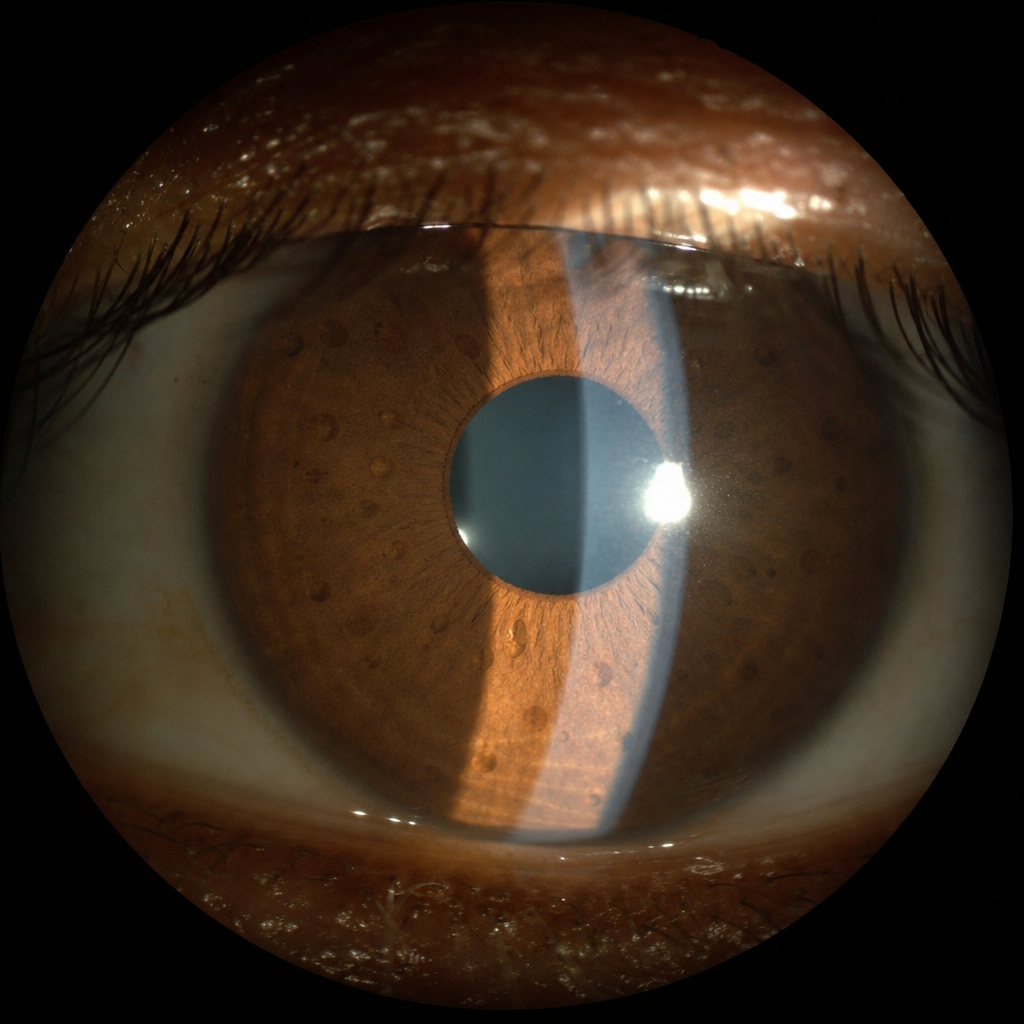
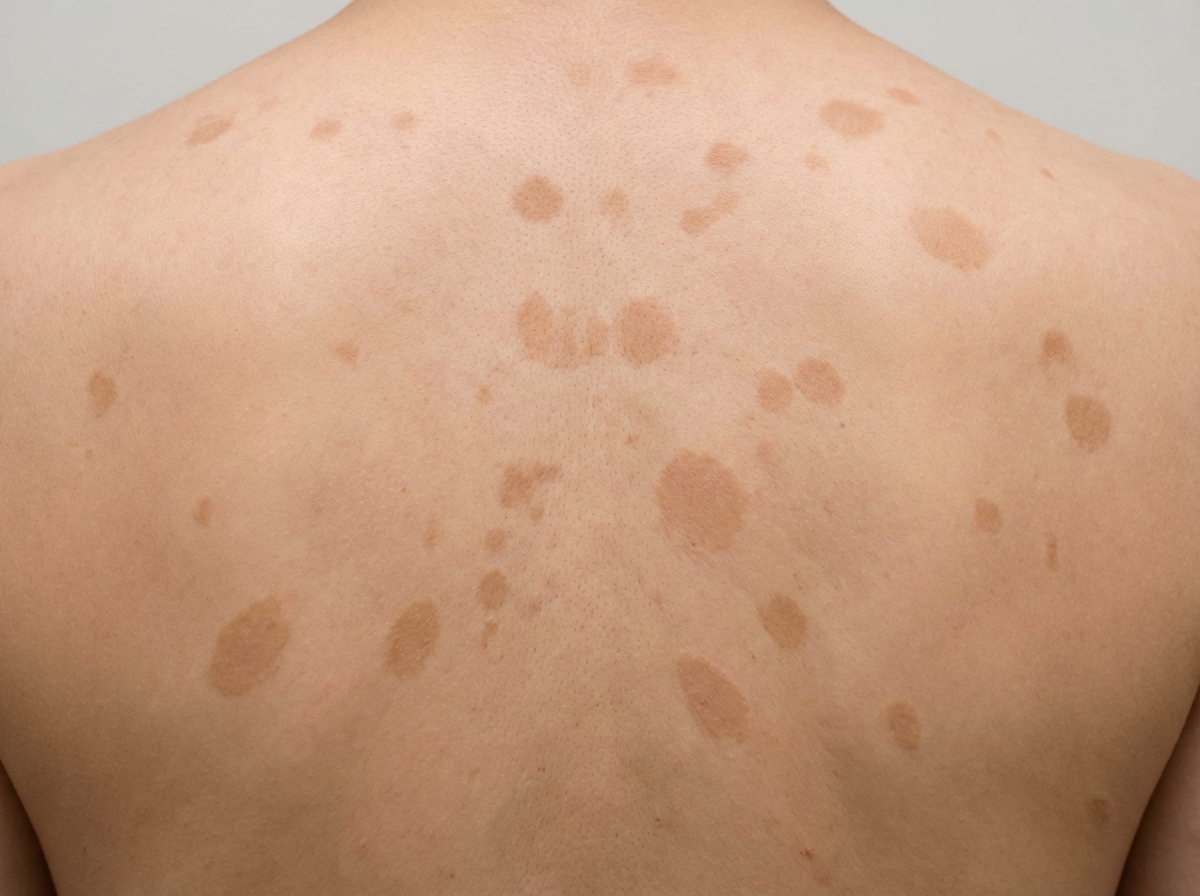
These lesions are seen in which condition?

LEOPARD syndrome does not include which of the following?
Which of the following is NOT a feature of Neurofibromatosis-1?
Explanation: **Explanation:** **Acrodermatitis Enteropathica (AE)** is an autosomal recessive disorder caused by a mutation in the **SLC39A4 gene**, which encodes the **ZIP4 transporter**. This defect leads to impaired intestinal absorption of dietary zinc. **Why 2 mg/kg is correct:** The standard therapeutic dose for treating AE is **1–3 mg/kg/day of elemental zinc** (most commonly cited as **2 mg/kg/day**). This pharmacological dose bypasses the defective active transport mechanism via passive diffusion in the gut. Clinical improvement is often dramatic, with skin lesions beginning to heal within 48–72 hours of starting treatment. **Analysis of Incorrect Options:** * **0.5 mg/kg (Option A):** This is below the therapeutic threshold required to overcome the primary absorption defect in AE. * **5 mg/kg and 7 mg/kg (Options C & D):** These doses are excessively high for long-term management. Excessive zinc intake can lead to **secondary copper deficiency** (as zinc induces metallothionein, which sequesters copper) and gastrointestinal irritation. **High-Yield Clinical Pearls for NEET-PG:** * **Classic Triad:** Periorificial and acral dermatitis, Alopecia, and Diarrhea (seen in only ~20% of cases). * **Clinical Presentation:** Typically occurs when an infant is **weaned from breast milk** to formula/solid food, as breast milk contains a zinc-binding ligand (low molecular weight picolinic acid) that aids absorption. * **Diagnosis:** Low serum zinc levels (<50 µg/dL) and low **alkaline phosphatase** (a zinc-dependent enzyme). * **Treatment Duration:** Lifelong supplementation is required for the hereditary form.
Explanation: **Acrodermatitis Enteropathica (AE)** is an autosomal recessive disorder caused by a mutation in the **SLC39A4 gene**, which encodes the **ZIP4 transporter**. This leads to the selective malabsorption of **Zinc** from the duodenum and jejunum, not protein. ### **Explanation of Options:** * **Why B is the Correct Answer (The Exception):** The primary defect is a **Zinc deficiency**, not protein malabsorption. While malnutrition can coexist in severe cases, the pathophysiology of AE is specifically tied to the body's inability to absorb dietary zinc. * **Why A is Incorrect:** **Chronic diarrhea** is a classic component of the clinical triad of AE. * **Why C is Incorrect:** Zinc deficiency is the **definitive etiology**. The condition typically manifests when an infant is weaned from breast milk to formula or cow's milk (as breast milk contains a zinc-binding ligand that aids absorption). * **Why D is Incorrect:** The hallmark cutaneous finding is **periorificial and acral dermatitis**. This presents as symmetrical, erythematous, vesiculobullous, or eczematous plaques that often become denuded/eroded around the mouth, anus, and genitals (mucocutaneous junctions). ### **High-Yield Clinical Pearls for NEET-PG:** * **The Classic Triad:** 1. Diarrhea, 2. Alopecia, 3. Acral/Periorificial Dermatitis. * **Diagnosis:** Low serum zinc levels (though alkaline phosphatase, a zinc-dependent enzyme, is a more sensitive marker). * **Treatment:** Lifelong oral **Zinc supplementation** (elemental zinc 1–3 mg/kg/day). * **Secondary AE:** Can occur in adults due to total parenteral nutrition (TPN) without zinc, chronic alcoholism, or inflammatory bowel disease.
Explanation: ### Explanation **Pityriasis alba** is the correct diagnosis based on the classic clinical triad: **young age (children), history of atopy, and characteristic morphology** (faintly hypopigmented macules with fine scaling on the face). #### Why Pityriasis Alba? It is considered a minor manifestation of **atopic dermatitis**. The lesions typically progress through three stages: an initial faint pink erythema, followed by the characteristic hypopigmented macules with **fine, branny scaling** (pityriasis means "scaly"), and finally smooth hypopigmentation. It is most common on the cheeks and is often more noticeable after sun exposure as the surrounding skin tans. #### Why other options are incorrect: * **Acrofacial Vitiligo:** Presents as **depigmented** (chalky white) macules, not hypopigmented. It has sharp margins, lacks scaling, and typically involves the periorificial areas and fingertips. * **Pityriasis Versicolor:** Caused by *Malassezia* furfur. While it presents with scaling and hypopigmentation, it is rare in young children and typically involves the "seborrheic areas" like the chest and back rather than the face. * **Indeterminate Leprosy:** Presents as a solitary or few hypopigmented macules. However, it usually lacks scaling, and the hallmark is a **loss of sensation** or hair within the patch, which is absent here. #### NEET-PG High-Yield Pearls: * **Histopathology:** Shows hyperkeratosis, parakeratosis, and decreased melanin in the basal layer. * **Treatment:** Reassurance, sun protection, and emollients. Low-potency topical steroids or calcineurin inhibitors (Tacrolimus) may be used for inflammation. * **Differential Diagnosis Tip:** If a hypopigmented patch on a child's face is **anesthetic**, think Leprosy; if it is **scaly and atopic**, think Pityriasis alba; if it is **completely white**, think Vitiligo.
Explanation: **Explanation:** **Harlequin Ichthyosis (HI)** is the most severe and life-threatening form of congenital ichthyosis. It is inherited in an **Autosomal Recessive (AR)** pattern. 1. **Why Autosomal Recessive is correct:** The condition is caused by mutations in the **ABCA12 gene** (ATP-binding cassette transporter A12) located on chromosome 2q35. This protein is essential for transporting lipids into lamellar granules within keratinocytes. A deficiency leads to a defective skin barrier, resulting in the characteristic thick, plate-like scales. Since it is AR, both parents are typically asymptomatic carriers, and there is a 25% recurrence risk in subsequent pregnancies. 2. **Why other options are incorrect:** * **Autosomal Dominant:** Conditions like *Ichthyosis Vulgaris* (the most common type) can follow this pattern, but HI requires two defective alleles. * **X-linked Recessive:** This is the inheritance pattern for *Steroid Sulfatase Deficiency* (X-linked Ichthyosis), which typically affects only males and presents with "dirty" brown scales. * **X-linked Dominant:** This pattern is rare in dermatology (e.g., *Incontinentia Pigmenti*), and HI does not show the male lethality or female-skewed distribution associated with this mode. **High-Yield Clinical Pearls for NEET-PG:** * **Clinical Features:** Thick, diamond-shaped keratin plates separated by deep red fissures, **Eclabium** (eversion of lips), **Ectropion** (eversion of eyelids), and flattened ears. * **Management:** Immediate admission to a neonatal ICU, humidified incubators, and early initiation of **Oral Retinoids** (Acitretin) to promote desquamation. * **Prenatal Diagnosis:** Possible via DNA analysis (fetal cells via CVS/amniocentesis) or ultrasonography (detecting "fish-mouth" appearance or restricted limb movement).
Explanation: **Explanation:** The correct answer is **Salmon’s patch** (Option C). This condition, also known as **Nevus Simplex**, is the most common vascular lesion in neonates. It represents a capillary malformation consisting of dilated dermal capillaries. These lesions are typically found on the nape of the neck ("stork bite"), eyelids, or glabella ("angel’s kiss"). The clinical hallmark of Salmon’s patch is its tendency to fade and **disappear spontaneously**, usually within the first year of life, as the capillaries regress. **Analysis of Incorrect Options:** * **Port-wine stain (Nevus Flammeus):** This is a permanent capillary malformation. Unlike Salmon’s patch, it is usually unilateral, grows proportionately with the child, and **never disappears spontaneously**. It may darken or become hypertrophic (cobblestoned) over time. * **Nevus flammeus:** This is the medical term for a Port-wine stain (see above). * **Strawberry hemangioma (Infantile Hemangioma):** While these do undergo spontaneous involution, the timeline is much longer. They typically proliferate during the first year and begin to regress after age one, with 50% resolving by age 5 and 90% by age nine. They do **not** disappear within the first year. **NEET-PG High-Yield Pearls:** * **Salmon’s Patch:** Midline location, blanches on pressure, becomes more prominent during crying. * **Sturge-Weber Syndrome:** Associated with Port-wine stains in the V1/V2 distribution of the trigeminal nerve; look for glaucoma and "tram-track" intracranial calcifications. * **Treatment of choice:** For persistent Port-wine stains or problematic Hemangiomas, the **Pulsed Dye Laser (PDL)** is the gold standard.
Explanation: **Explanation:** Sturge-Weber Syndrome (SWS), also known as encephalotrigeminal angiomatosis, is a neurocutaneous disorder characterized by a sporadic mutation in the **GNAQ gene**. It is defined by the triad of a facial capillary malformation, leptomeningeal angiomas, and ocular involvement. **Why Option D is correct:** The characteristic intracranial lesion in SWS is a **leptomeningeal angioma** (a vascular malformation of the pia mater), not a hamartoma. Intracranial hamartomas (such as cortical tubers or subependymal nodules) are hallmark features of **Tuberous Sclerosis**, not Sturge-Weber Syndrome. **Analysis of incorrect options:** * **A. Port-wine stain (Nevus Flammeus):** This is the most common clinical sign, typically presenting in the distribution of the trigeminal nerve (V1 and V2 branches). * **B. Calcification in the brain:** Chronic ischemia due to leptomeningeal angiomas leads to cortical calcification. On imaging (CT scan), these appear as classic **"tram-track" calcifications**. * **C. Cortical atrophy:** Reduced blood flow and recurrent seizures lead to progressive neuronal loss and atrophy of the underlying cerebral cortex, usually ipsilateral to the facial lesion. **NEET-PG High-Yield Pearls:** * **Inheritance:** Sporadic (not hereditary). * **Radiology:** "Tram-track" calcifications on CT; "pial enhancement" on MRI with gadolinium. * **Ocular finding:** Glaucoma is the most common ocular manifestation (buphthalmos may occur). * **Clinical Presentation:** Port-wine stain + Contralateral hemiparesis + Seizures + Intellectual disability.
Explanation: **Explanation:** **Impetigo Herpetiformis (IH)** is a rare, severe variant of **pustular psoriasis** occurring specifically during pregnancy, typically in the third trimester. Despite the name, it is **not** caused by the herpes virus. 1. **Why Option C is Correct:** The primary pathophysiology involves systemic inflammation and neutrophil infiltration. **Systemic corticosteroids** (e.g., Prednisolone) are the first-line treatment to control the inflammatory process. Because the sterile pustules are prone to bacterial colonization and the patient is at high risk for sepsis, **antimicrobials** are added to treat or prevent secondary infections. 2. **Why Other Options are Incorrect:** * **Options A, B, and D:** These include **Acyclovir**, which is an antiviral medication. Since Impetigo Herpetiformis is a dermatosis of pregnancy and not a viral infection (like Herpes Simplex or Varicella), Acyclovir has no therapeutic role. The term "herpetiformis" refers only to the *cluster-like* (herpetiform) arrangement of the pustules, not the etiology. **High-Yield Clinical Pearls for NEET-PG:** * **Presentation:** Sudden onset of symmetrical, sterile pustules on an erythematous base, starting in intertriginous areas (groin/axilla) and spreading centrifugally. * **Key Lab Finding:** **Hypocalcemia** is a classic association and must be monitored as it can lead to tetany. * **Maternal/Fetal Risks:** If untreated, it can lead to placental insufficiency, stillbirth, or maternal sepsis/cardiac failure. * **Prognosis:** Lesions typically resolve rapidly after delivery but may recur in subsequent pregnancies or with oral contraceptive use. * **Histopathology:** Shows **Kogoj’s spongiform pustules** (neutrophils in the stratum spinosum).
Explanation: ***Neurofibromatosis type 1 (NF1)*** - **Café-au-lait macules** (≥6 spots >5mm in prepubertal children or >15mm in adults) are pathognomonic for NF1 and form part of the diagnostic criteria. - These lesions appear as **flat, light brown patches** with smooth borders and are often the first manifestation of NF1 in childhood. *Tuberous sclerosis* - Characterized by **ash-leaf spots** (hypopigmented macules) and **shagreen patches** (leathery plaques), not café-au-lait macules. - Also presents with **adenoma sebaceum** (facial angiofibromas) and **periungual fibromas** around nails. *Sturge-Weber syndrome* - Primary cutaneous manifestation is a **port-wine stain** (capillary malformation) typically in the **trigeminal nerve distribution**. - The lesion is a **vascular malformation** that appears as a flat, pink-to-red birthmark, not pigmented macules. *Von Hippel-Lindau syndrome* - Primarily presents with **retinal angiomas** and **cerebellar hemangioblastomas** rather than distinctive skin lesions. - May have **café-au-lait spots** occasionally, but they are not a defining feature and occur much less frequently than in NF1.
Explanation: **Explanation:** **LEOPARD syndrome**, also known as **Noonan syndrome with multiple lentigines**, is an autosomal dominant neuro-cardio-facial-cutaneous disorder caused primarily by mutations in the **PTPN11 gene**. The name is a mnemonic representing its characteristic clinical features. **Why Atrial Myxoma is the correct answer:** Atrial myxoma is **not** a component of LEOPARD syndrome. Instead, it is a hallmark of **Carney Complex** (along with spotty skin pigmentation, endocrine overactivity, and schwannomas). In LEOPARD syndrome, the primary cardiac findings are structural and electrical, not neoplastic. **Analysis of incorrect options (Components of LEOPARD):** * **L – Lentigines:** Multiple small, dark brown macules appearing in childhood. * **E – ECG abnormalities:** Most commonly bundle branch blocks or ventricular hypertrophy. * **O – Ocular hypertelorism:** Widely spaced eyes. * **P – Pulmonary stenosis:** A common structural heart defect in these patients (though hypertrophic cardiomyopathy is actually more frequent). * **A – Abnormalities of genitalia:** Such as cryptorchidism or hypospadias. * **R – Retardation of growth:** Patients often exhibit short stature. * **D – Deafness:** Specifically sensorineural hearing loss. **Clinical Pearls for NEET-PG:** * **Mnemonic Check:** If a question asks about "Multiple Lentigines" + "Heart defects," think LEOPARD. * **Genetics:** PTPN11 mutation (seen in ~80% of cases), similar to Noonan syndrome. * **Differential Diagnosis:** Do not confuse with **NAME/LAMB syndrome** (variants of Carney Complex), which specifically feature atrial myxomas. * **Most Common Cardiac Finding:** While 'P' stands for Pulmonary Stenosis, **Hypertrophic Cardiomyopathy** is the most common cardiac abnormality in LEOPARD syndrome.
Explanation: **Explanation:** Neurofibromatosis Type 1 (NF-1), also known as von Recklinghausen disease, is an autosomal dominant neurocutaneous syndrome caused by a mutation in the *NF1* gene on chromosome 17. **Why "Ash leaf spots" is the correct answer:** Ash leaf spots (hypopigmented macules) are the earliest cutaneous sign of **Tuberous Sclerosis**, not NF-1. In NF-1, the characteristic pigmentary lesions are hyperpigmented, such as Café-au-lait macules. **Analysis of Incorrect Options:** * **Family History:** NF-1 has 100% penetrance. A first-degree relative with NF-1 is one of the seven formal NIH diagnostic criteria. * **Optic Glioma:** This is a specific central nervous system tumor (pilocytic astrocytoma) associated with NF-1 and is a major diagnostic criterion. * **Axillary Freckle:** Also known as **Crowe’s sign**, these are small hyperpigmented macules in the axillary or inguinal folds. It is a highly specific diagnostic feature of NF-1. **High-Yield Clinical Pearls for NEET-PG:** To diagnose NF-1, at least **two** of the following NIH criteria must be met: 1. **6+ Café-au-lait spots** (>5mm prepubertal, >15mm postpubertal). 2. **2+ Neurofibromas** or one plexiform neurofibroma. 3. **Axillary or inguinal freckling** (Crowe’s sign). 4. **Optic glioma**. 5. **2+ Lisch nodules** (iris hamartomas seen on slit-lamp exam). 6. **Distinctive bony lesions** (e.g., sphenoid dysplasia or thinning of long bone cortex). 7. **First-degree relative** with NF-1. *Mnemonic for Chromosome:* NF**1** is on Chromosome **17** (17 letters in Neurofibromatosis). NF**2** is on Chromosome **22**.
Neonatal Dermatology
Practice Questions
Infantile Hemangiomas and Vascular Malformations
Practice Questions
Atopic Dermatitis in Children
Practice Questions
Acne in Childhood and Adolescence
Practice Questions
Childhood Exanthems
Practice Questions
Genetic Skin Disorders in Children
Practice Questions
Genodermatoses
Practice Questions
Nutritional Dermatoses in Children
Practice Questions
Pigmentary Disorders in Children
Practice Questions
Hair Disorders in Children
Practice Questions
Child Abuse: Cutaneous Manifestations
Practice Questions
Therapeutic Considerations in Pediatric Dermatology
Practice Questions
Get full access to all questions, explanations, and performance tracking.
Start For Free