
Worker's Compensation Issues — MCQs

Which among the following is an example of type I hypersensitivity reaction?
Which type of dermatitis is evaluated through patch testing?
Chemical peeling is indicated in all of the following except
A child has a rash. His family history is positive for asthma. What could be the most probable diagnosis?
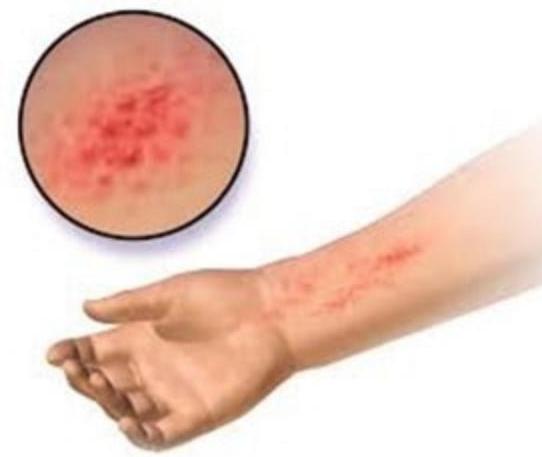
A 39-year-old woman claims that she injured her hand at work. She states that the pain caused by her injury prevents her from working. She has no further hand problems after she receives a Rs1 Lakh workers' compensation settlement. This clinical presentation is an example of
Most common precipitant of contact dermatitis is?
Which of the following is not a feature of dermatomyositis?
Evaluate the following scenario: A 38-year-old worker in an electronics manufacturing unit develops hand dermatitis. Initial patch testing shows multiple positive reactions to metals (nickel, cobalt, chromium). Despite workplace modifications and protective equipment, the dermatitis persists. Re-evaluation reveals positive patch test to colophony. What is the best strategic approach?
A 45-year-old florist develops dermatitis on hands and forearms. Patch testing shows positive reactions to Compositae mix and sesquiterpene lactones. She also has scattered airborne pattern dermatitis on face and neck. Analyzing this pattern, what is the most likely diagnosis?
A 32-year-old dental technician presents with hyperkeratotic fissured dermatitis on fingertips despite using vinyl gloves. Patch testing to rubber accelerators is negative, but shows positive reaction to methacrylate. Analysis of the clinical presentation suggests which underlying mechanism?
Want unlimited practice?
Get full access to all questions, explanations, and performance tracking.
Scan to download app