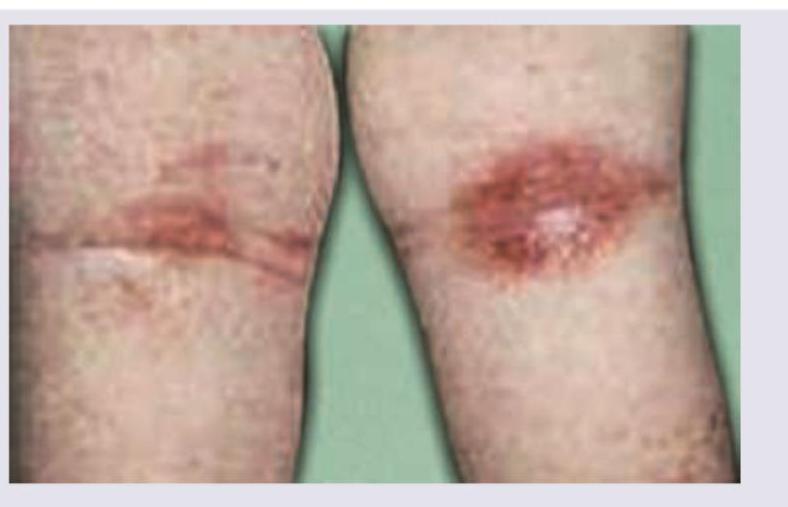
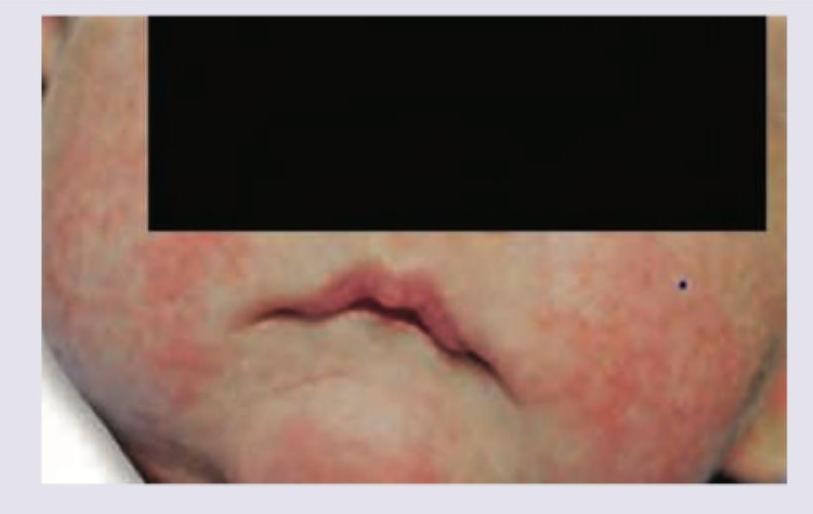
A 36-year-old farmer presented to the dermatology department with pruritic erythematous lesions on the arms, forearms, face, and retroauricular area after removing weeds in his farm. A diagnosis of phytodermatitis was made. What is the most likely plant responsible for this condition?
Which of the following materials used to make jewelry will commonly cause contact dermatitis in sensitive individuals?
Seborrheic dermatitis is produced by deficiency of which vitamin?
A patient presents with a rash. There is a family history of asthma. What is the most probable diagnosis?
A 55-year-old male, with uncontrolled diabetes mellitus and hypertension, developed severe airborne contact dermatitis. What is the most appropriate drug for his treatment?
What type of eczema is characterized by coin-shaped lesions?
Id reaction is associated with which of the following conditions?
A 25-year-old male presents with multiple erythematous annular plaques with peripheral collarette of scales arranged predominantly over the trunk. What is the most probable diagnosis?
What is the most common cause of airborne contact dermatitis?
Atopic Dermatitis is diagnosed by?
Explanation: ### Explanation **Correct Option: A. Parthenium hysterophorus** The clinical presentation describes **Parthenium Dermatitis**, a common form of **Airborne Contact Dermatitis (ABCD)** in India. *Parthenium hysterophorus* (Congress grass/Gajar Ghas) contains **Sesquiterpene lactones**, which act as haptens. * **Mechanism:** It is a Type IV (Delayed) Hypersensitivity reaction. * **Distribution:** The "Airborne" pattern typically involves exposed areas like the face, neck, V-area of the chest, flexures (antecubital/popliteal fossae), and the **retroauricular area** (a classic diagnostic site that helps differentiate it from photodermatitis, which usually spares the retroauricular shadow). **Incorrect Options:** * **B. Urtica dioica (Stinging Nettle):** Causes **Contact Urticaria** (Type I Hypersensitivity/Immediate) via mechanical stings that release histamine and acetylcholine. It presents with immediate wheals rather than chronic eczematous lesions. * **C. Alstroemeria (Peruvian Lily):** A common cause of **Tulip finger** (allergic contact dermatitis) in florists, typically affecting the fingertips. * **D. Melaleuca alternifolia (Tea Tree Oil):** Known for causing allergic contact dermatitis due to oxidized terpenoids, but it is not associated with the specific airborne/weed-clearing pattern described. **Clinical Pearls for NEET-PG:** 1. **Diagnostic Test:** Patch testing with the **Sesquiterpene Lactone mix** or Parthenium leaf. 2. **Clinical Sign:** The **"Spare-part" sign** (sparing of the skin folds) is sometimes seen, though Parthenium is notorious for involving the folds in later stages. 3. **Differential Diagnosis:** Must be distinguished from **Chronic Actinic Dermatitis (CAD)**; however, Parthenium dermatitis involves the skin folds and retroauricular area, which are usually spared in CAD. 4. **Seasonality:** Often flares during the rainy season when the weed grows abundantly.
Explanation: **Explanation:** **1. Why Nickel/Chromium is Correct:** Nickel is the **most common cause of Allergic Contact Dermatitis (ACD)** worldwide. It is a **Type IV (delayed-type) hypersensitivity reaction** mediated by T-cells. In jewelry, nickel is frequently used as a base metal or alloy to provide hardness and luster. Chromium (often found in leather tanning and cement) is also a potent sensitizer. When these metals come into contact with sweat, metal ions are released, which act as **haptens**. These haptens bind to skin proteins to form a complete antigen, triggering an inflammatory response in sensitized individuals. **2. Why Other Options are Incorrect:** * **Sapphire:** This is a gemstone (corundum). Gemstones are chemically inert and do not release ions that penetrate the skin; therefore, they do not cause ACD. * **Silver:** Pure silver is generally non-allergenic. While some "sterling silver" contains copper or trace nickel that might cause a reaction, pure silver itself is considered safe. * **Gold:** Pure 24k gold is highly inert. While gold sodium thiosulfate is a known allergen, clinical dermatitis from gold jewelry is significantly rarer than nickel allergy. **3. High-Yield Clinical Pearls for NEET-PG:** * **Dimethylglyoxime Test:** A bedside chemical test used to detect the presence of nickel in jewelry (turns pink in the presence of nickel). * **Patch Test:** The gold standard investigation for diagnosing Allergic Contact Dermatitis. * **Common Sites:** Earlobes (earrings), wrists (watch straps), and infra-umbilical region (jeans buttons/belt buckles). * **Cross-reactivity:** Patients allergic to nickel often show cross-reactivity with **Cobalt**.
Explanation: ### Explanation **Correct Option: C (Vitamin B2 / Riboflavin)** The correct answer is **Vitamin B2 (Riboflavin)**. Riboflavin deficiency, often referred to as **Ariboflavinosis**, classically presents with a "seborrheic dermatitis-like" eruption. The underlying medical concept involves the role of riboflavin as a precursor to FAD and FMN, cofactors essential for lipid metabolism and skin integrity. Deficiency leads to inflammation of the sebaceous-rich areas, resulting in greasy, scaly plaques on the nasolabial folds, scrotum, and scalp. **Analysis of Incorrect Options:** * **Vitamin C (Ascorbic Acid):** Deficiency causes **Scurvy**. Clinical features include perifollicular hemorrhages, corkscrew hairs, and bleeding gums, rather than seborrheic-pattern dermatitis. * **Vitamin B1 (Thiamine):** Deficiency leads to **Beriberi** (Dry/Wet) or Wernicke-Korsakoff syndrome. It primarily affects the cardiovascular and nervous systems, not the skin. * **Vitamin A (Retinol):** Deficiency typically causes **Phrynoderma** (follicular hyperkeratosis) and ocular symptoms like xerophthalmia and Bitot’s spots. **Clinical Pearls for NEET-PG:** 1. **The "2-O" Rule for B2:** Riboflavin deficiency is characterized by **O**ro-oculo-genital syndrome (Cheilosis, Angular stomatitis, Glossitis, and Seborrheic dermatitis of the scrotum/face). 2. **Vitamin B6 (Pyridoxine) Connection:** B6 deficiency can also present with a seborrheic-like rash; however, in standard medical examinations, B2 is the classic association for this specific question. 3. **Etiology Note:** While vitamin deficiencies cause "seborrheic-like" rashes, the most common cause of Seborrheic Dermatitis in the general population is an inflammatory response to the yeast ***Malassezia furfur***. 4. **Zinc Deficiency:** Do not confuse this with **Acrodermatitis Enteropathica**, which presents with periorificial and acral dermatitis.
Explanation: **Explanation:** The correct answer is **Allergic Contact Dermatitis (ACD)**. While a family history of asthma is a classic hallmark of the "Atopic Triad" (Atopy, Asthma, Allergic Rhinitis), this question serves as a high-yield reminder for NEET-PG: **Atopy is a significant predisposing risk factor for developing Allergic Contact Dermatitis.** Patients with a defective skin barrier (common in atopic individuals) have increased percutaneous absorption of allergens, making them more susceptible to Type IV hypersensitivity reactions. **Analysis of Options:** * **Allergic Contact Dermatitis (Correct):** It is a T-cell mediated (Type IV) delayed hypersensitivity reaction. In the context of this specific question format, it highlights that atopic individuals are frequently sensitized to environmental allergens (like nickel or fragrances). * **Atopic Dermatitis:** While the history of asthma strongly suggests an atopic diathesis, in many clinical vignettes, if ACD is the marked answer, the question implies a specific localized trigger or emphasizes the co-morbidity. (Note: In standard clinical practice, Atopic Dermatitis is the primary diagnosis associated with asthma; however, for this specific MCQ key, the focus is on the association between the two). * **Seborrheic Dermatitis:** This is an inflammatory response to *Malassezia* furfur, typically affecting "greasy" areas (scalp, nasolabial folds). It has no direct association with asthma. * **Erysipelas:** This is a bacterial infection (Group A Strep) of the upper dermis characterized by a well-demarcated, raised, erythematous plaque and systemic symptoms (fever). **Clinical Pearls for NEET-PG:** * **The Atopic Triad:** Atopic Dermatitis, Asthma, and Allergic Rhinitis. * **Gold Standard Test for ACD:** Patch Test (Readings taken at 48 and 72/96 hours). * **Filaggrin Gene Mutation:** The most common genetic cause for skin barrier dysfunction in atopic patients. * **Type of Hypersensitivity:** Atopic Dermatitis is Type I; Allergic Contact Dermatitis is Type IV.
Explanation: **Explanation:** The patient presents with **Airborne Contact Dermatitis (ABCD)**, most commonly caused by *Parthenium hysterophorus* in India. This condition often requires long-term immunosuppression as it is a chronic, relapsing Type IV hypersensitivity reaction. **Why Azathioprine is the Correct Answer:** Azathioprine is considered the **gold standard "steroid-sparing" agent** for chronic, recalcitrant ABCD. In this specific case, the patient has **uncontrolled diabetes mellitus and hypertension**. Azathioprine is preferred because it does not exacerbate glycemic levels or blood pressure, unlike systemic steroids or cyclosporine. Before starting, a Thiopurine Methyltransferase (TPMT) assay is ideally performed to prevent bone marrow toxicity. **Analysis of Incorrect Options:** * **Systemic Corticosteroids:** While effective for acute flares, they are contraindicated for long-term use in this patient due to his **uncontrolled diabetes** (causes hyperglycemia) and **hypertension** (causes fluid retention). * **Cyclosporine:** Although a potent immunosuppressant, it is avoided here because it is **nephrotoxic** and frequently causes or worsens **hypertension**, which is already uncontrolled in this patient. * **Thalidomide:** Primarily used in ENL (Leprosy) or actinic prurigo; it is not a first-line treatment for ABCD and carries a significant side-effect profile. **Clinical Pearls for NEET-PG:** * **Parthenium dermatitis** typically presents in an "airborne pattern" involving the eyelids, nasolabial folds, and retroauricular areas. * **Patch Test** is the gold standard for diagnosis. * **Steroid-sparing agents** (Azathioprine, Methotrexate) are essential for long-term management to avoid the "Cushingoid" side effects of chronic prednisone.
Explanation: **Explanation:** **1. Why Nummular Eczema is Correct:** The term "Nummular" is derived from the Latin word *'nummulus'*, meaning a small coin. **Nummular eczema** (also known as discoid eczema) is classically characterized by well-demarcated, **coin-shaped**, erythematous, and crusty plaques. These lesions are typically intensely pruritic and most commonly involve the extensor surfaces of the limbs (especially the legs in men and arms in women). The underlying pathophysiology often involves skin barrier dysfunction and xerosis (dry skin). **2. Why the Other Options are Incorrect:** * **Atopic eczema:** This is a chronic, relapsing inflammatory condition characterized by the "itch-scratch cycle." While it presents with ill-defined erythematous patches, its hallmark is distribution based on age (e.g., facial involvement in infants, flexural involvement in adults) rather than a coin-like shape. * **Infantile eczema:** This is a subset of atopic dermatitis occurring in infants (usually 2 months to 2 years). It typically presents as itchy, weeping, and crusted lesions on the **cheeks (facial involvement)** and scalp, sparing the diaper area. * **Endogenous eczema:** This is a broad category of eczemas caused by internal factors (like Atopic or Seborrheic dermatitis) rather than external triggers. It is a general classification, not a specific morphological description like nummular eczema. **Clinical Pearls for NEET-PG:** * **Morphology:** Look for the keyword "discoid" or "coin-shaped" in the clinical vignette. * **Differential Diagnosis:** Must be differentiated from **Tinea Corporis** (which has central clearing and active borders) and **Psoriasis** (which has silvery-white scales and Auspitz sign). * **Treatment:** High-potency topical corticosteroids are the first-line treatment, along with aggressive moisturization.
Explanation: **Explanation:** **Id reaction**, also known as **Auto-eczematization**, is a secondary immunological response occurring in a site distant from the primary inflammatory or infectious focus. It is a **Type IV hypersensitivity reaction** triggered by circulating antigens (fungal, bacterial, or parasitic) rather than the spread of the organism itself. **Why Candidiasis is the correct answer:** Candidiasis is a classic cause of an Id reaction (specifically called a **Candidid**). When a primary infection (like vulvovaginal candidiasis or intertrigo) becomes acute or is treated aggressively, fungal antigens enter the bloodstream. This triggers a symmetrical, pruritic, papulovesicular eruption, typically on the hands or trunk. Other common triggers include dermatophytosis (Tinea pedis causing a 'Dermatophytid' on the hands) and stasis dermatitis. **Analysis of Incorrect Options:** * **Aphthous ulcer:** These are localized inflammatory ulcers of the oral mucosa. They are not associated with systemic hypersensitivity reactions like auto-eczematization. * **Herpetic stomatitis:** While viral infections can cause erythema multiforme, they are not typically associated with the classic "Id reaction" pattern seen in eczematous dermatology. * **Syphilis:** Secondary syphilis presents with a generalized rash, but this is due to the **direct hematogenous spread of *Treponema pallidum*** itself, not a sterile hypersensitivity reaction to distant antigens. **High-Yield Clinical Pearls for NEET-PG:** * **Key Feature:** The Id reaction is **sterile** (culture from the secondary site will be negative). * **Commonest trigger:** Tinea pedis (causing vesicles on the sides of fingers). * **Treatment:** The primary focus of infection must be treated for the Id reaction to resolve. Topical steroids are used for symptomatic relief of the secondary rash. * **Other triggers:** *Mycobacterium tuberculosis* (Lichen scrofulosorum) and *Staphylococcus aureus*.
Explanation: **Explanation:** The clinical presentation of **Pityriasis Rosea (PR)** is classic in this scenario. PR is a self-limiting, inflammatory skin disease, likely viral in origin (HHV-6 or HHV-7). The hallmark lesion is an **erythematous annular plaque** with a characteristic **"collarette of scales"**—where the scale is attached at the periphery and free towards the center. These lesions typically follow the lines of cleavage (Langer’s lines), creating a **"Christmas Tree" distribution** on the trunk. **Why the other options are incorrect:** * **Pityriasis versicolor:** Presents as hypo- or hyperpigmented macules with fine, "branny" (furfuraceous) scales, usually caused by *Malassezia* species. It lacks the inflammatory annular morphology and collarette scaling. * **Pityriasis rubra pilaris (PRP):** Characterized by follicular papules on an erythematous base, "islands of sparing," and orange-red palmoplantar keratoderma. It does not typically present with isolated annular plaques and collarette scales. * **Pityriasis lichenoides chronica (PLC):** Presents with asymptomatic, brownish-pink papules with a "frosted glass" or "wafer-like" scale that can be lifted off entirely. It lacks the specific annular arrangement seen in PR. **NEET-PG High-Yield Pearls:** * **Herald Patch:** The first lesion to appear (larger, 2–10 cm) in 50–90% of cases, usually preceding the generalized eruption by 1–2 weeks. * **Hanging Curtain Sign:** On stretching the lesion, the scales fold inwards (characteristic of PR). * **Differential Diagnosis:** Always rule out **Secondary Syphilis**, which also involves the palms and soles (PR spares them). * **Treatment:** Reassurance; it is self-limiting (6–8 weeks). Severe cases may benefit from acyclovir or UVB therapy.
Explanation: **Explanation:** **1. Why Parthenium hysterophorus is correct:** *Parthenium hysterophorus* (Congress grass) is the most common cause of **Airborne Contact Dermatitis (ABCD)** in India. The primary allergen involved is **Sesquiterpene lactone**, found in the trichomes of the plant. These allergens become airborne and settle on exposed areas of the body, leading to a **Type IV (Delayed) Hypersensitivity reaction**. Clinically, it presents as symmetrical erythematous, itchy, and lichenified plaques on "air-exposed" areas like the face, V-area of the neck, eyelids, and flexures. **2. Why the other options are incorrect:** * **Poison Ivy & Poison Oak (Options B & C):** These belong to the *Anacardiaceae* family and contain the allergen **Urushiol**. While they are classic causes of Allergic Contact Dermatitis (ACD), they typically cause a **linear** vesicular eruption (Phytophotodermatitis) via direct contact with the plant, rather than an airborne pattern. * **Pollen (Option D):** While pollens can trigger Type I hypersensitivity (allergic rhinitis or asthma) and occasionally exacerbate atopic dermatitis, they are not the primary cause of the classic clinical entity known as Airborne Contact Dermatitis. **3. High-Yield Clinical Pearls for NEET-PG:** * **Clinical Pattern:** ABCD typically **spares** the upper eyelids (due to the deep fold), the area under the nose, and the submental region (the "shadow" areas). * **Differential Diagnosis:** Must be distinguished from **Photoallergic Dermatitis**; however, ABCD involves the skin folds (flexures), which are usually spared in photosensitivity. * **Diagnosis:** Confirmed via **Patch Testing** using the Indian Standard Series (Parthenium is a key antigen). * **Evolution:** Chronic exposure can lead to a generalized state called **Erythroderma** (Exfoliative Dermatitis).
Explanation: **Explanation:** Atopic Dermatitis (AD) is primarily a **clinical diagnosis**. It is a chronic, pruritic, inflammatory skin disease characterized by a relapsing course and a personal or family history of atopy (asthma, allergic rhinitis, or AD). There are no specific laboratory biomarkers or imaging studies to confirm the diagnosis. Instead, clinicians rely on validated diagnostic criteria, most notably the **Hanifin and Rajka Criteria** (requiring 3/4 major and 3/4 minor features) or the simplified **UK Working Party Criteria**. **Analysis of Options:** * **Clinical Examination (Correct):** Diagnosis is based on the morphology and distribution of lesions (e.g., facial/extensor involvement in infants, flexural involvement in adults) and the hallmark symptom of intense pruritus ("the itch that rashes"). * **Patch Test (Incorrect):** This is the gold standard for diagnosing **Allergic Contact Dermatitis** (Type IV hypersensitivity), not Atopic Dermatitis. While some AD patients have secondary allergies, it is not a diagnostic tool for AD itself. * **Wood’s Lamp (Incorrect):** This is used to diagnose fungal infections (e.g., Tinea capitis), bacterial infections (e.g., Erythrasma), and pigmentary disorders (e.g., Vitiligo). It has no role in AD. **High-Yield Clinical Pearls for NEET-PG:** * **Filaggrin (FLG) Mutation:** The most common genetic mutation associated with AD, leading to epidermal barrier dysfunction. * **Dennie-Morgan Fold:** An extra fold of skin under the lower eyelid; a classic minor sign of AD. * **Hertoghe’s Sign:** Thinning of the lateral third of the eyebrows due to chronic rubbing. * **Serum IgE:** Often elevated in extrinsic AD, but not diagnostic as it can be normal in the intrinsic variant.
Atopic Dermatitis
Practice Questions
Seborrheic Dermatitis
Practice Questions
Contact Dermatitis: Irritant
Practice Questions
Contact Dermatitis: Allergic
Practice Questions
Nummular Eczema
Practice Questions
Dyshidrotic Eczema
Practice Questions
Stasis Dermatitis
Practice Questions
Asteatotic Eczema
Practice Questions
Lichen Simplex Chronicus
Practice Questions
Autoeczematization (Id Reaction)
Practice Questions
Photosensitive Eczemas
Practice Questions
Treatment Strategies for Eczematous Disorders
Practice Questions
Get full access to all questions, explanations, and performance tracking.
Start For Free