In contact dermatitis, which cells play a major role?
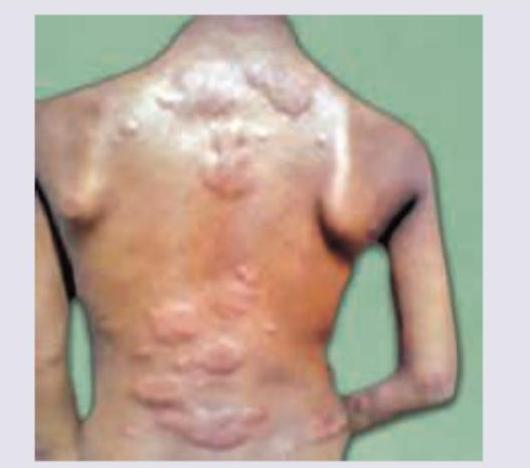
A 16-year-old boy presented with asymptomatic, multiple, erythematous, annular lesions with a collarette of scales at the periphery of the lesions present on the trunk. What is the most likely diagnosis?
Which mineral causes skin allergy?
Which of the following is a minor clinical feature in the diagnosis of atopic dermatitis?
A 3-year-old child presents with eczematous dermatitis on extensor surfaces. The child's mother has a history of bronchial asthma. What is the most likely diagnosis?
Atopic dermatitis may be associated with which of the following conditions?
A child presents with itchy skin lesions on the elbows and other extensor surfaces. The mother reports a history of bronchial asthma. What is the most likely diagnosis?
The day after playing in the high grasses of a neighbour's fields, an 8-year-old boy develops a weeping, vesicular, erythematous, and itchy rash on his arms, legs, and neck. Which of the following best describes this inflammatory response?
A 'fir-tree' type of distribution is characteristically seen in which of the following dermatological conditions?
A 26-year-old female presented with diffuse reticulate erythematous to brown, macular, non-blanching discoloration around her umbilicus. There was no evidence of telangiectasia, atrophy, bullae, or superficial erosions. The lesions were asymptomatic, and she frequently applied hot water bags to her abdomen for recurrent abdominal pain. What is the likely diagnosis?
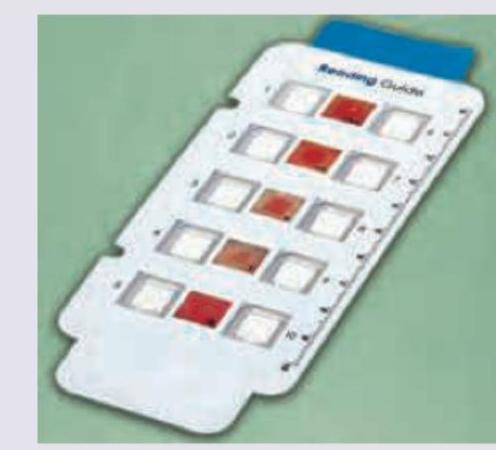
Explanation: **Explanation:** Allergic Contact Dermatitis (ACD) is the classic clinical example of a **Type IV (Delayed-type) Hypersensitivity reaction**. The pathogenesis occurs in two phases: the sensitization phase and the elicitation phase. **1. Why T-cells are the correct answer:** While various cells are involved in the immune cascade, **T-cells (specifically CD4+ Th1 and CD8+ T-cells)** are the primary **effector cells** responsible for the tissue damage and clinical manifestations of the disease. Upon re-exposure to an allergen, sensitized T-cells migrate to the skin, release pro-inflammatory cytokines (like IFN-γ and IL-2), and recruit other inflammatory cells, leading to the characteristic eczematous reaction. **2. Analysis of Incorrect Options:** * **B-cells:** These are involved in Type I, II, and III hypersensitivity (antibody-mediated). ACD is cell-mediated and does not involve antibodies. * **Langerhans cells (LCs):** These are the **antigen-presenting cells (APCs)**. While they are crucial for picking up the hapten and presenting it to T-cells in the lymph nodes during the sensitization phase, they are "initiators" rather than the "major effector" cells that execute the inflammatory response. * **Macrophages:** These act as accessory cells that are recruited by T-cells to cause non-specific tissue damage, but they are not the primary drivers of the antigen-specific memory response. **High-Yield Clinical Pearls for NEET-PG:** * **Gold Standard Test:** Patch Test (Readings taken at 48 and 72/96 hours). * **Most common allergen worldwide:** Nickel (causes "Jewelry dermatitis"). * **Most common allergen in India:** Parthenium (causes "Airborne Contact Dermatitis"). * **Hapten:** The allergen in ACD is usually a low-molecular-weight molecule (<500 Daltons) called a hapten, which becomes immunogenic only after binding to a skin protein.
Explanation: ### Explanation **Correct Option: C. Pityriasis rosea** The clinical presentation of **annular, erythematous lesions** with a characteristic **collarette of scales** (scales attached at the periphery with the free edge pointing inwards) is the hallmark of **Pityriasis rosea (PR)**. PR typically affects adolescents and young adults. It often begins with a single, larger "Herald Patch," followed by a generalized eruption on the trunk and proximal limbs. The lesions follow the lines of cleavage (Langer’s lines), creating the classic **"Christmas Tree" appearance**. It is thought to be associated with Human Herpesvirus 6 and 7 (HHV-6/7). **Why other options are incorrect:** * **A. Pityriasis versicolor:** Presents as hypo- or hyperpigmented macules with fine, "branny" (furfuraceous) scales. It lacks the annular configuration and the specific inward-pointing collarette of scales. * **B. Pityriasis alba:** Characterized by ill-defined, hypopigmented patches with very fine scaling, usually on the face of children. It is considered a manifestation of atopic dermatitis and does not present with erythematous annular lesions. * **D. Pityriasis rubra pilaris (PRP):** Presents with follicular papules on an erythematous base, "islands of sparing" (normal skin within affected areas), and orange-red palmoplantar keratoderma. It does not feature the peripheral collarette of scales. **High-Yield Clinical Pearls for NEET-PG:** * **Herald Patch:** The initial, largest lesion (2–6 cm) seen in 50-90% of PR cases. * **Collarette of Scales:** Scales are attached peripherally and trail toward the center. * **Hanging Curtain Sign:** When the skin is pinched, the scales fold like a curtain (specific to PR). * **Treatment:** Usually self-limiting (6–8 weeks). Reassurance is key; topical steroids or antihistamines are used for pruritus.
Explanation: **Explanation:** **Nickel** is the most common cause of **Allergic Contact Dermatitis (ACD)** worldwide. It acts as a **hapten**, a small molecule that becomes antigenic only after binding to skin proteins. This triggers a **Type IV (Delayed-type) Hypersensitivity reaction**, mediated by T-lymphocytes. Common sources include artificial jewelry, watch straps, jean buttons, and zippers. * **Why Nickel is Correct:** It is the classic allergen tested in dermatology. The clinical presentation often involves an itchy, eczematous rash at the site of contact (e.g., the earlobes or periumbilical area). The gold standard for diagnosis is the **Patch Test**. * **Why Incorrect Options are Wrong:** * **Magnesium:** It is an essential intracellular cation. While it can cause systemic toxicity if ingested in excess, it is not a recognized cutaneous allergen. * **Zinc:** Zinc is actually used therapeutically in dermatology (e.g., Zinc oxide) for its soothing and anti-inflammatory properties in barrier creams and calamine lotion. * **Copper:** While copper can rarely cause ACD, it is significantly less common than nickel. In many cases, "copper allergy" is actually a reaction to nickel impurities within the copper alloy. **High-Yield Clinical Pearls for NEET-PG:** 1. **Dimethylglyoxime Test:** A spot test used to detect the presence of nickel in metallic objects. 2. **The "Baboon Syndrome":** A systemic allergic contact dermatitis that can occur if a nickel-sensitive individual ingests nickel-rich foods (like chocolate, nuts, or oats). 3. **Potassium Dichromate:** Another high-yield allergen, commonly associated with **cement dermatitis** in construction workers.
Explanation: To master Atopic Dermatitis (AD) for NEET-PG, it is essential to understand the **Hanifin and Rajka Diagnostic Criteria**, which divide features into Major and Minor categories. ### **Explanation of the Correct Answer** **Pruritus (Option B)** is a **Major Criterion**. In fact, it is the hallmark of atopic dermatitis—often described as "the itch that rashes." According to Hanifin and Rajka, a patient must meet at least **3 out of 4 Major Criteria** for a diagnosis: 1. **Pruritus** (The most essential feature). 2. **Typical morphology and distribution** (Facial/extensor involvement in infants; flexural lichenification in adults). 3. **Chronic or chronically relapsing dermatitis.** 4. **Personal or family history of atopy** (Asthma, allergic rhinitis, or AD). ### **Analysis of Incorrect Options** The other options are **Minor Criteria**. To satisfy the diagnosis, a patient needs **3 or more** of these (out of 23 possible features): * **Dry skin (Xerosis) (Option A):** A very common but non-specific minor feature. * **Morgagnian fold (Dennie-Morgan fold) (Option C):** An extra fold of skin under the lower eyelid due to chronic edema/rubbing. * **Pityriasis alba (Option D):** Hypopigmented, slightly scaly patches commonly seen on the face of children. ### **High-Yield Clinical Pearls for NEET-PG** * **Filaggrin (FLG) Mutation:** The most common genetic defect leading to skin barrier dysfunction in AD. * **Hertoghe’s Sign:** Thinning of the lateral third of the eyebrows (a minor criterion). * **Keratosis Pilaris:** "Chicken skin" appearance on outer arms/thighs; also a minor criterion. * **Serum IgE:** Often elevated in AD, but it is a minor criterion, not a major one. * **Treatment Gold Standard:** Topical Corticosteroids for flares; Topical Calcineurin Inhibitors (Tacrolimus) for maintenance.
Explanation: ### Explanation **Correct Answer: A. Atopic dermatitis** **Why it is correct:** Atopic Dermatitis (AD) is a chronic, relapsing inflammatory skin disease characterized by intense pruritus and a specific age-dependent distribution. The diagnosis in this case is based on two key clinical features: 1. **Age-specific distribution:** In infants and young children (up to age 2), AD typically involves the **extensor surfaces** (knees, elbows) and the face/scalp. As the child grows older (childhood phase), the distribution shifts toward the flexural folds. 2. **Atopic Diathesis:** The mother’s history of bronchial asthma is a crucial clue. AD is part of the "Atopic March," and a personal or family history of asthma, allergic rhinitis, or AD (Hanifin and Rajka criteria) strongly supports the diagnosis. **Why the other options are wrong:** * **B. Contact dermatitis:** Usually presents as a localized rash corresponding to the area of allergen/irritant exposure. It does not typically follow a family history of asthma. * **C. Seborrheic dermatitis:** Typically occurs in the first few months of life ("Cradle Cap"). It involves the scalp, diaper area, and skin folds (axilla/groin) rather than extensor surfaces, and is usually non-pruritic. * **D. Infantile eczematous dermatitis:** This is a descriptive term rather than a specific diagnosis. While AD in infants is a form of infantile eczema, "Atopic Dermatitis" is the most definitive diagnosis given the family history. **High-Yield Clinical Pearls for NEET-PG:** * **The "Atopic March":** Sequence of IgE-mediated diseases: Atopic Dermatitis → Food Allergy → Asthma → Allergic Rhinitis. * **Filaggrin (FLG) Mutation:** The most common genetic defect leading to skin barrier dysfunction in AD. * **Dennie-Morgan Fold:** An extra fold of skin under the lower eyelid, a classic sign of AD. * **Treatment of Choice:** Topical corticosteroids are the first-line for flares; Topical Calcineurin Inhibitors (Tacrolimus) are used for maintenance and sensitive areas (face).
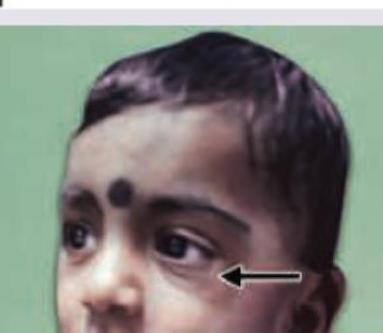
Explanation: ### Explanation Atopic dermatitis (AD) is a chronic inflammatory skin condition characterized by a defective skin barrier and immune dysregulation. It is frequently associated with other "atopic" conditions (Asthma, Allergic Rhinitis) and a variety of **ocular complications** due to the proximity of periorbital skin involvement and chronic rubbing. **Why "All of the Above" is Correct:** * **A. Conjunctivitis:** This is the most common ocular complication. Patients often suffer from **Atopic Keratoconjunctivitis (AKC)** or Seasonal Allergic Conjunctivitis. It presents with bilateral itching, burning, and mucous discharge. * **B. Keratoconus:** Chronic rubbing of the eyes (due to pruritus) leads to mechanical trauma and thinning of the cornea, resulting in a cone-shaped protrusion known as Keratoconus. * **C. Cataract:** Atopic cataracts are a classic association. They are typically **bilateral, subcapsular (anterior or posterior)**, and often exhibit a characteristic "shield-like" appearance. They usually occur in the second to third decade of life. **Clinical Pearls for NEET-PG:** 1. **Dennie-Morgan Fold:** An extra fold of skin under the lower eyelid, highly characteristic of atopic individuals. 2. **Hertoghe’s Sign:** Thinning or loss of the lateral third of the eyebrows due to chronic rubbing/scratching. 3. **Hyperlinear palms** and **Ichthyosis vulgaris** are common cutaneous co-morbidities. 4. **Filaggrin (FLG) mutation** is the most common genetic defect associated with an impaired skin barrier in AD. 5. **Treatment Gold Standard:** Topical corticosteroids or calcineurin inhibitors (Tacrolimus) for flares; emollients for maintenance.
Explanation: ### Explanation **Correct Answer: A. Atopic dermatitis** The diagnosis is based on the **Atopic Triad** and the age-specific distribution of lesions. Atopic dermatitis (AD) is a chronic, relapsing inflammatory skin disease characterized by intense pruritus. * **The Clinical Clue:** The presence of **bronchial asthma** in the patient (or family) is a major diagnostic criterion according to Hanifin and Rajka. This association between asthma, allergic rhinitis, and dermatitis is known as **atopy**. * **Distribution:** In **infants and young children**, AD typically involves the **extensor surfaces** (elbows, knees) and the face. As the child grows into adolescence/adulthood, the distribution shifts to the flexural surfaces (antecubital and popliteal fossae). --- ### Why the other options are incorrect: * **B. Airborne contact dermatitis:** Usually affects exposed areas like the eyelids and face (Parthenium dermatitis); it does not typically correlate with a personal history of asthma. * **C. Scabies:** Characterized by nocturnal itching and lesions in web spaces, genitals, and wrists. While it is itchy, it lacks the atopic association. * **D. Allergic contact dermatitis:** A Type IV hypersensitivity reaction occurring at the site of allergen contact (e.g., nickel, leather). It is less common in young children and does not follow the extensor-to-flexor progression. --- ### NEET-PG High-Yield Pearls: * **Major Criteria (Hanifin & Rajka):** Pruritus, Typical morphology/distribution, Chronic/relapsing course, Personal/Family history of atopy. * **Dennie-Morgan Fold:** An extra fold of skin under the lower eyelid, a classic sign of AD. * **Filaggrin (FLG) Gene:** Mutations in this gene lead to skin barrier defects, a primary cause of AD. * **Treatment of Choice:** Topical corticosteroids for flares; Topical Calcineurin Inhibitors (Tacrolimus) for maintenance.
Explanation: **Explanation:** The clinical presentation describes a classic case of **Acute Allergic Contact Dermatitis (ACD)**, likely triggered by plants (e.g., Poison Ivy or similar vegetation) found in the fields. This is a **Type IV (Delayed) Hypersensitivity reaction**. **1. Why Spongiotic Dermatitis is Correct:** Histologically, the hallmark of acute eczema/dermatitis is **Spongiosis**. This refers to intercellular edema within the epidermis, which stretches the desmosomes (intercellular bridges) apart. Clinically, this manifests as the "weeping" and "vesicular" lesions described in the question. "Spongiotic dermatitis" is the pathological umbrella term for various forms of eczema, including contact dermatitis. **2. Why the Other Options are Incorrect:** * **Erythema Nodosum:** This is a form of septal panniculitis (inflammation of subcutaneous fat). It presents as painful, tender, erythematous nodules, typically on the shins, rather than itchy, weeping vesicles on the arms and neck. * **Pemphigus:** This is an autoimmune blistering disease caused by IgG antibodies against desmogleins. It results in **acantholysis** (loss of intercellular connections), not spongiosis. It is usually chronic and involves oral mucosa. * **Psoriasis:** This is a chronic inflammatory condition characterized histologically by **Acanthosis** (epidermal thickening), parakeratosis, and Munro’s microabscesses. Clinically, it presents as silvery-white scales on erythematous plaques, not acute weeping vesicles. **Clinical Pearls for NEET-PG:** * **Linearity:** If the rash appears in a linear pattern (due to brushing against plant leaves), it is termed **Phytophotodermatitis** or "Linear Dermatitis." * **Histology Sequence:** Acute Dermatitis = Spongiosis; Chronic Dermatitis = Acanthosis and Hyperkeratosis. * **Common Trigger:** Nickel is the most common cause of ACD worldwide; Urushiol is the allergen in plants like Poison Ivy.
Explanation: ### Explanation **Correct Answer: A. Pityriasis Rosea** **Pityriasis Rosea (PR)** is a self-limiting, inflammatory skin condition likely triggered by Human Herpesvirus 6 or 7 (HHV-6/7). The classic clinical presentation involves: 1. **Herald Patch:** A single, large (2–6 cm), oval, erythematous scaly plaque that appears first, usually on the trunk. 2. **Secondary Eruption:** 1–2 weeks later, smaller maculopapular lesions appear. On the back, these lesions follow the lines of cleavage (Langer’s lines). Because these lines run obliquely downward and outward from the spine, the resulting pattern resembles the branches of a coniferous tree, termed the **'Fir-tree' or 'Christmas tree' distribution.** --- ### Why the other options are incorrect: * **B. Psoriasis:** Characterized by well-demarcated, silvery-white scaly plaques on extensor surfaces (knees, elbows). It shows the **Auspitz sign** and **Koebner phenomenon**, but lacks a tree-like distribution. * **C. Measles:** Presents with a cephalocaudal (head-to-toe) progression of a morbilliform rash, starting behind the ears. It is associated with **Koplik spots** on the buccal mucosa. * **D. Secondary Syphilis:** Often called "The Great Mimicker," it presents with a generalized papulosquamous eruption. A key differentiator is the involvement of **palms and soles**, which is rare in PR. --- ### High-Yield Clinical Pearls for NEET-PG: * **Collarette Scale:** In PR, the scales are attached at the periphery and free in the center, directed inwards. * **Hanging Curtain Sign:** When the skin is stretched across the long axis of a PR lesion, the scales tend to fold or "hang" like a curtain. * **Treatment:** Usually reassurance, as it resolves spontaneously in 6–8 weeks ("Six to eight weeks of pityriasis rosea"). * **Differential Diagnosis:** Always rule out Secondary Syphilis using a VDRL/RPR test if the presentation is atypical.
Explanation: ### Explanation **Correct Answer: B. Erythema ab igne** **1. Why it is correct:** Erythema ab igne (EAI) is a localized, reticulate (net-like) pigmented dermatosis caused by chronic, repeated exposure to **sub-threshold infrared radiation** (heat that is not enough to cause a thermal burn). * **Mechanism:** Chronic heat exposure leads to superficial vascular damage, dermal elastic fiber changes, and epidermal melanin/hemosiderin deposition. * **Clinical Correlation:** The patient’s history of frequent **hot water bag** application for abdominal pain is the classic "trigger." The description of a non-blanching, reticulate, brown-to-red macular rash in the area of heat application is pathognomonic for EAI. **2. Why the other options are incorrect:** * **A. Livedo reticularis:** While also reticulate, this is a vascular pattern caused by sluggish blood flow. It typically blanches with pressure and is often associated with systemic conditions (like SLE or APS) or cold exposure, rather than localized heat. * **C. Poikiloderma atrophicans vasculare:** This presents with a triad of **atrophy, telangiectasia, and mottled pigmentation**. The question explicitly states there was no evidence of atrophy or telangiectasia. * **D. Cutis marmorata:** This is a physiological, transient, reticulate vascular mottling seen in infants or adults when exposed to **cold**. It disappears upon rewarming. **3. NEET-PG High-Yield Pearls:** * **Common Triggers:** Laptop use on thighs ("Laptop thigh"), heating pads, space heaters, or working near furnaces (bakers/blacksmiths). * **Histology:** Similar to actinic keratosis; shows epidermal dysplasia and increased elastic fibers (solar elastosis). * **Long-term Complication:** If the heat source is not removed, there is a small risk of transformation into **Squamous Cell Carcinoma (SCC)** or Merkel cell carcinoma. * **Key Sign:** Always look for the "history of heat exposure" in the clinical stem.
Atopic Dermatitis
Practice Questions
Seborrheic Dermatitis
Practice Questions
Contact Dermatitis: Irritant
Practice Questions
Contact Dermatitis: Allergic
Practice Questions
Nummular Eczema
Practice Questions
Dyshidrotic Eczema
Practice Questions
Stasis Dermatitis
Practice Questions
Asteatotic Eczema
Practice Questions
Lichen Simplex Chronicus
Practice Questions
Autoeczematization (Id Reaction)
Practice Questions
Photosensitive Eczemas
Practice Questions
Treatment Strategies for Eczematous Disorders
Practice Questions
Get full access to all questions, explanations, and performance tracking.
Start For Free