Which of the following are treatment options for acne vulgaris?
What is the best way to control the MRSA infection in the ward?
A patient with a non-obstructing carcinoma of the sigmoid colon is being prepared for elective resection. To minimize the risk of postoperative infectious complications, what should be included in your planning?
A boil is due to staphylococcal infection of:
Which of the following disorders would be more likely associated with Staphylococcus saprophyticus rather than Staphylococcus aureus?
A diabetic patient developed cellulitis due to S. aureus, which was found to be methicillin resistant on the antibiotic sensitivity testing. All of the following antibiotics will be appropriate except ?
Hyperkalemia management includes all except:
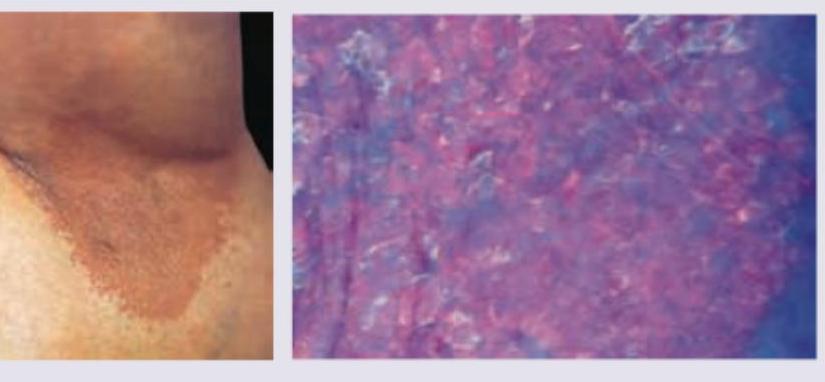
A 35-year-old obese woman presents with recurrent lesions in both axilla in summer season. Wood lamp examination is shown. The diagnosis is:
What is the treatment for granuloma inguinale?
A child presents with grouped vesicles on an erythematous base on the buttocks. What is the most likely diagnosis?
Explanation: ***All of the options*** - All listed options (Isotretinoin, Topical erythromycin, and Oral Minocycline) are well-established and commonly used **treatment options for acne vulgaris**, depending on the severity and type of acne. - The choice of treatment often follows a stepped approach, starting with topical agents for mild to moderate acne and progressing to oral medications like antibiotics or isotretinoin for more severe or resistant cases. *Isotretinoin* - **Isotretinoin** is a powerful oral retinoid primarily used for **severe, recalcitrant nodular acne** that has not responded to other treatments. - It works by reducing sebum production, follicular hyperkeratinization, inflammation, and the growth of *P. acnes*. *Topical erythromycin* - **Topical erythromycin** is an **antibiotic** used to treat mild to moderate inflammatory acne by reducing the growth of *Cutibacterium acnes* (formerly *Propionibacterium acnes*) and decreasing inflammation. - It is often combined with other topical agents like benzoyl peroxide to minimize the development of **antibiotic resistance**. *Oral Minocycline* - **Oral minocycline** is a **tetracycline antibiotic** used for moderate to severe inflammatory acne. - It reduces bacterial populations on the skin and exhibits **anti-inflammatory properties**, making it effective for widespread or deeper lesions.
Explanation: **Washing hand before and after attending patients** - **Hand hygiene** is the single most effective measure in preventing the transmission of **healthcare-associated infections**, including **MRSA**. - **Healthcare workers' hands** are the primary vehicle for spreading pathogens from one patient to another. *Fumigation of ward frequently* - **Fumigation** is generally not recommended for routine infection control and has limited efficacy against resistant organisms like **MRSA** in this context. - It does not address the primary mode of transmission, which is direct contact via **contaminated hands** or surfaces. *Wearing masks during invasive procedures in ICU is important.* - While important for preventing infections during **invasive procedures** and protecting against **aerosolized pathogens**, masks are not the primary strategy for controlling the spread of **MRSA** in routine ward settings. - **MRSA transmission** is predominantly contact-based, not airborne. *Vancomycin given empirically to all the patients* - **Empirical broad-spectrum antibiotic use** for all patients is a significant driver of **antibiotic resistance**, including **MRSA**. - It should be reserved for patients with suspected or confirmed **MRSA infections** based on clinical criteria and culture results, not as a general preventive measure.
Explanation: ***Single preoperative parenteral dose of antibiotic effective against aerobes and anaerobes*** - For **elective colorectal surgery**, a single dose of a **broad-spectrum parenteral antibiotic** administered within 60 minutes prior to incision is the standard of care to reduce surgical site infections. - This approach ensures adequate drug levels in the tissues during the period of potential bacterial contamination and is a cornerstone of modern surgical prophylaxis. - Current guidelines (WHO, SCIP) recommend a single preoperative dose, which may be redosed intraoperatively if the procedure is prolonged beyond 3-4 hours. *Avoidance of oral antibiotics to prevent emergence of Clostridioides difficile* - This is **incorrect**. **Oral antibiotics** (such as neomycin and metronidazole) are routinely used preoperatively in conjunction with mechanical bowel preparation for colorectal surgery to reduce intraluminal bacterial load. - The concern for *Clostridioides difficile* infection is generally low with short-term, targeted prophylactic antibiotic regimens compared to broad-spectrum, prolonged use. - The combination of oral and parenteral antibiotics has been shown to further reduce surgical site infections. *Postoperative administration for 5 to 7 days of parenteral antibiotics* - **Prolonged postoperative antibiotic administration** beyond 24 hours in uncomplicated cases is not recommended as it increases the risk of **antibiotic resistance**, *C. difficile* infection, and adverse drug reactions without additional benefit. - The goal of prophylactic antibiotics is to cover the period of contamination during surgery, not to treat presumed ongoing infection postoperatively. *Postoperative administration for 2 to 4 days of parenteral antibiotics* - While administration for up to 24 hours post-operatively may be considered in some high-risk cases, routine **prolonged postoperative antibiotics** (2-4 days) are unnecessary for most elective colorectal resections. - Evidence suggests that continuing antibiotics beyond the immediate perioperative period does not further reduce the incidence of **surgical site infections** in clean-contaminated surgeries.
Explanation: ***Hair follicle*** - A **boil**, also known as a **furuncle**, is a **deep bacterial infection** of a **hair follicle** and the surrounding tissue. - It is most commonly caused by **Staphylococcus aureus**. *Sweat gland* - While sebaceous glands and apocrine sweat glands can be involved in other skin abscesses (e.g., **hidradenitis suppurativa**), a classic boil originates from a hair follicle. - Infections of sweat glands alone are not typically classified as boils. *Subcutaneous tissue* - An infection primarily in the **subcutaneous tissue** is more characteristic of **cellulitis** or a **cutaneous abscess**, which is a broader term for a collection of pus. - A boil starts specifically at a hair follicle and then extends into deeper tissues. *Epidermis* - The **epidermis** is the outermost layer of the skin, and infections limited to this layer are usually superficial, such as **impetigo**. - A boil is a much deeper infection, involving structures beneath the epidermis.
Explanation: ***Acute cystitis*** - **Staphylococcus saprophyticus** is a common cause of **urinary tract infections (UTIs)**, particularly acute cystitis, in young sexually active women. - This bacterium has a high affinity for **uroepithelial cells**, facilitating its colonization and subsequent infection of the bladder. *Tension pneumothorax* - A **tension pneumothorax** is a medical emergency characterized by air accumulation in the pleural space, leading to lung collapse and mediastinal shift. - It is typically caused by trauma or iatrogenic factors, not directly by bacterial infection from either *Staphylococcus saprophyticus* or *Staphylococcus aureus*. *Burns* - Burn wounds are highly susceptible to bacterial colonization and infection, with **Staphylococcus aureus** being a primary pathogen in this context. - *Staphylococcus saprophyticus* is rarely associated with burn wound infections. *Osteomyelitis* - **Osteomyelitis**, an infection of the bone, is most frequently caused by **Staphylococcus aureus** via hematogenous spread or direct inoculation. - *Staphylococcus saprophyticus* is not a common pathogen in osteomyelitis.
Explanation: ***Imipenem*** - **Imipenem** is a carbapenem antibiotic that is effective against many Gram-positive and Gram-negative bacteria, but it is **not active against MRSA (methicillin-resistant *Staphylococcus aureus*)**. - MRSA strains are resistant to all beta-lactam antibiotics, including penicillins, cephalosporins, and carbapenems like imipenem, due to the presence of the **mecA gene** which encodes for an altered penicillin-binding protein (PBP2a). *Vancomycin* - **Vancomycin** is a glycopeptide antibiotic that is a primary choice for treating **MRSA infections**, including cellulitis. - It inhibits cell wall synthesis by binding to the D-Ala-D-Ala precursor, preventing cross-linking, and is specifically active against **Gram-positive bacteria**. *Teicoplanin* - **Teicoplanin** is another glycopeptide antibiotic, similar to vancomycin, and is also considered a suitable agent for treating **MRSA infections**. - It works by inhibiting bacterial cell wall synthesis and has a **longer half-life** than vancomycin, allowing for less frequent dosing. *Linezolid* - **Linezolid** is an oxazolidinone antibiotic known for its activity against **Gram-positive bacteria**, including **MRSA** and vancomycin-resistant enterococci (VRE). - It inhibits protein synthesis by binding to the 50S ribosomal subunit, preventing the formation of the initiation complex.
Explanation: ***MgSO4*** - **Magnesium sulfate (MgSO4)** is primarily used to treat **hypomagnesemia** and certain arrhythmias like **Torsades de Pointes**, and for seizures in preeclampsia. - It does **not have a direct role** in the acute management of hyperkalemia. *Insulin drip* - **Insulin** (often given with glucose) actively drives potassium **into cells**, thereby lowering serum potassium levels [1]. - This is a common and effective temporary measure for **hyperkalemia**, especially in urgent situations. *Salbutamol nebulisation* - **Salbutamol**, a **beta-2 agonist**, stimulates the cellular **Na-K ATPase pump**, leading to a shift of potassium from the extracellular to the intracellular space [1]. - It provides a **rapid, albeit temporary**, reduction in serum potassium levels. *Calcium gluconate* - **Calcium gluconate** does not lower serum potassium levels but rather **stabilizes the cardiac membrane**, protecting the heart from the adverse effects of hyperkalemia [1]. - It is crucial for preventing **life-threatening arrhythmias** in severe hyperkalemia [1].
Explanation: ***Erythrasma*** - Erythrasma is a superficial bacterial infection caused by **Corynebacterium minutissimum**, which commonly presents as red-brown patches in intertriginous areas like the axilla, especially in obese individuals and warm, humid conditions (summer season). - The distinctive **coral-red fluorescence under Wood's lamp** is due to porphyrin production by the bacteria, which is a classic diagnostic feature of erythrasma, as shown in the image. *Ecthyma* - Ecthyma is a deeper form of impetigo characterized by **ulcerative lesions with a thick, adherent crust** that extend into the dermis. - It is typically caused by *Streptococcus pyogenes* and sometimes *Staphylococcus aureus*, and would not exhibit coral-red fluorescence under Wood's lamp. *Impetigo contagiosa* - Impetigo contagiosa (non-bullous impetigo) presents with **honey-colored crusted lesions**, usually on the face and extremities. - While also a bacterial skin infection, it is typically caused by *Staphylococcus aureus* or *Streptococcus pyogenes* and does not show coral-red fluorescence under Wood's lamp. *Bullous impetigo* - Bullous impetigo is characterized by **flaccid bullae** (blisters) that rupture to form thin, varnish-like crusts, primarily caused by *Staphylococcus aureus* producing exfoliative toxins. - Similar to other forms of impetigo, it does not produce the coral-red fluorescence under Wood's lamp.
Explanation: ***Azithromycin*** - **Azithromycin** is the recommended first-line treatment for **granuloma inguinale** (donovanosis) caused by *Klebsiella granulomatis*. - Current recommended regimens: **Azithromycin 1g orally once weekly** OR **500mg daily for at least 3 weeks** (until all lesions have completely healed). - Preferred due to excellent tissue penetration, good efficacy, and convenient dosing that improves patient compliance. *Tetracycline* - **Tetracycline** (500mg four times daily) was historically used but has been largely replaced by **doxycycline** (100mg twice daily) as the preferred tetracycline-class antibiotic. - While effective against *Klebsiella granulomatis*, it requires frequent dosing leading to poor adherence. - **Doxycycline** (not listed here) is actually considered a co-first-line option alongside azithromycin in current CDC guidelines. *Clarithromycin* - **Clarithromycin** is a macrolide antibiotic but is not a recommended first-line agent for granuloma inguinale. - Limited clinical data supports its use for this condition, and it is not included in standard treatment guidelines. - Azithromycin from the same macrolide class is preferred due to better-established efficacy. *Streptomycin* - **Streptomycin** is an aminoglycoside antibiotic primarily used for mycobacterial infections (e.g., tuberculosis, plague). - Not indicated for granuloma inguinale as *Klebsiella granulomatis* responds well to macrolides (azithromycin) and tetracyclines (doxycycline). - Requires parenteral administration and has significant toxicity concerns (ototoxicity, nephrotoxicity).
Explanation: ***Herpes simplex*** - Herpes simplex virus (HSV) classically presents with **grouped vesicles on an erythematous base**, which perfectly matches this clinical presentation. - In **children**, HSV commonly affects the **buttocks** through autoinoculation or direct contact, especially in the diaper area. - The lesions are typically **painful and pruritic**, and may be preceded by tingling or burning sensation. - Diagnosis is confirmed by **Tzanck smear** (multinucleated giant cells), **PCR**, or **viral culture**. - Treatment includes **acyclovir** or other antivirals, especially for severe or recurrent cases. *Dermatitis herpetiformis* - While DH does present with intensely pruritic, grouped vesicles on an erythematous base, it is **extremely rare in children** and typically presents in **adults (3rd-4th decade)**. - Classic sites include **extensor surfaces** (elbows, knees), scalp, and buttocks, but the pediatric presentation makes this diagnosis unlikely. - It is strongly associated with **celiac disease** and responds to **gluten-free diet** and **dapsone**. *Bullous impetigo* - Bullous impetigo presents with **flaccid bullae** that rupture to form **honey-colored crusts**, not grouped vesicles. - It is a **bacterial infection** caused by *Staphylococcus aureus* producing exfoliative toxin. - Common in **young children**, particularly in warm, humid conditions. *Pemphigus* - Pemphigus is **extremely rare in children** and causes **fragile bullae** that easily rupture, leading to erosions. - Typically affects **mucous membranes first** (oral cavity), then skin. - It is an **autoimmune blistering disease** with antibodies against desmoglein, causing intraepidermal acantholysis.
Get full access to all questions, explanations, and performance tracking.
Start For Free