Which of the following statements about lichen planus is true?
What condition is associated with Gottron's sign?
Heliotrope sign is seen in?
What is the treatment of choice for lichen planus?
Treatment of dermatitis herpetiformis:
Pathergy test is used for which condition?
Which of the following is NOT a characteristic of pemphigus vulgaris?
Which of the following is not a feature of dermatomyositis?
Which of the following is the most characteristic feature of erythema marginatum?
Quincke's disease is also known as:
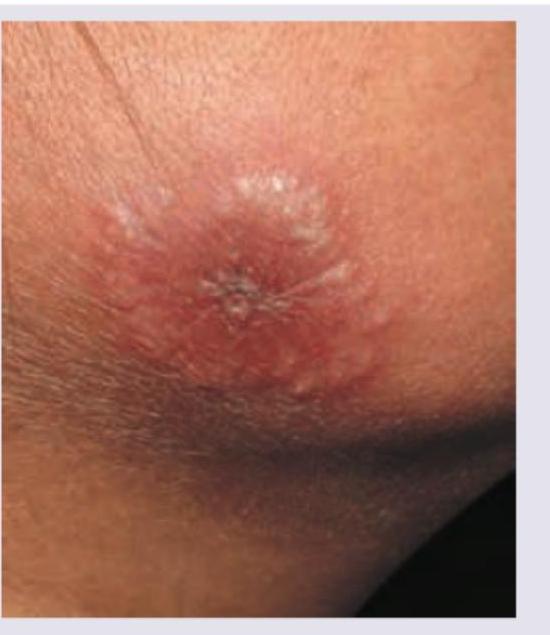
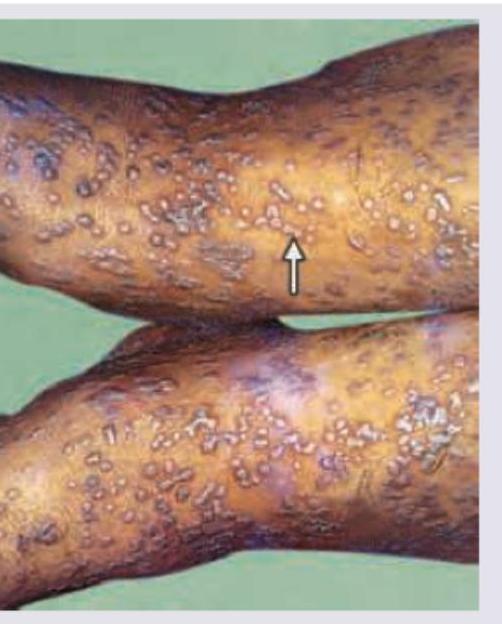
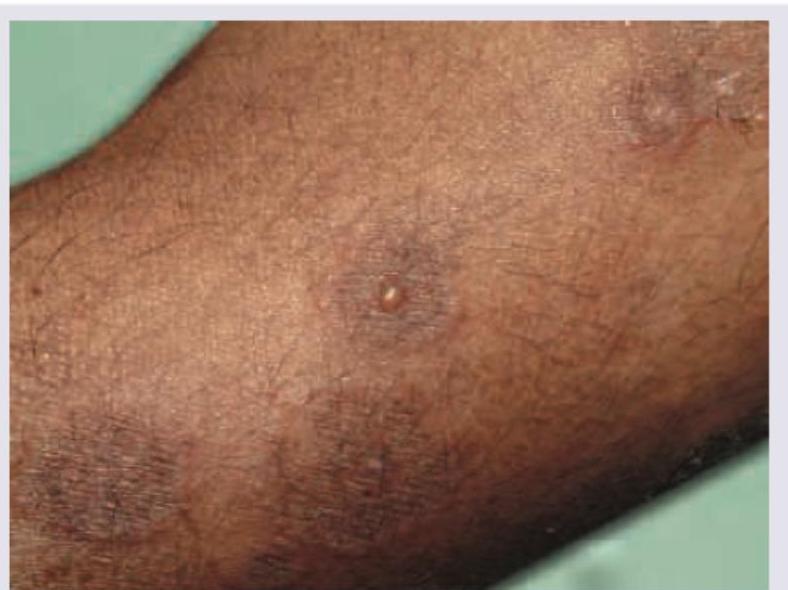
Explanation: ***Oral lichen planus has a small risk of malignancy.*** - **Oral lichen planus (OLP)** is classified by WHO as an **oral potentially malignant disorder (OPMD)** with a documented malignant transformation rate of approximately **0.4-1.5%**. - The risk is highest in **erosive and atrophic forms**, particularly affecting the tongue and buccal mucosa. - **Regular monitoring** with biopsy of suspicious lesions is recommended due to this small but clinically significant **risk of squamous cell carcinoma**. - Among all the options presented, this represents the most clinically important statement requiring awareness in medical practice. *Lichen planus can heal spontaneously.* - This statement is **medically accurate** - cutaneous lichen planus can resolve spontaneously in 50-75% of cases within 1-2 years. - However, **oral and erosive forms** tend to be chronic and persistent, often requiring treatment. - While true, this is less clinically significant than recognizing the malignancy risk of oral lesions. *Lichen planus can cause scarring alopecia.* - This statement is also **medically accurate** - **lichen planopilaris (LPP)** is a follicular variant that causes **permanent scarring alopecia**. - LPP leads to irreversible hair loss due to follicular destruction and scarring. - However, this affects only the follicular variant, not classic lichen planus, making it a more limited statement. *Ocular pterygium is a feature of lichen planus.* - This is **incorrect** - **ocular pterygium** is a conjunctival growth extending onto the cornea, typically caused by **UV exposure**, not lichen planus. - Lichen planus does affect nails (causing thinning, ridging, pterygium formation in nails, or nail loss) but does **not** cause ocular pterygium.
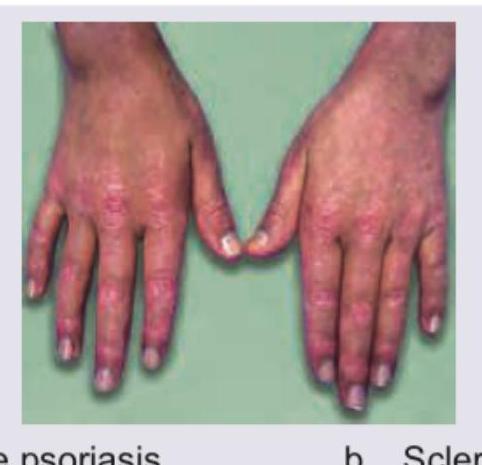
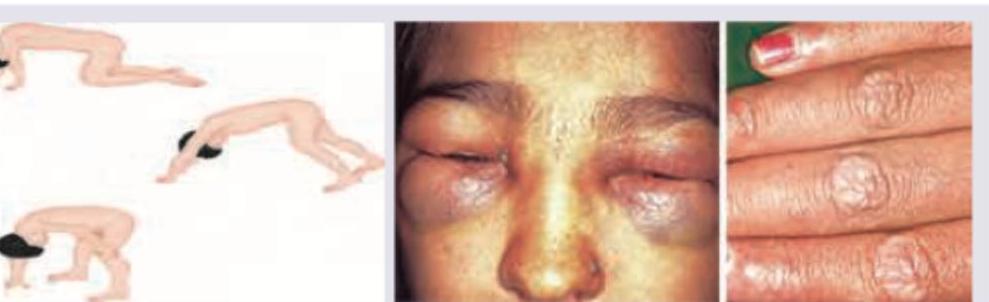
Explanation: ***Dermatomyositis*** - **Gottron's sign** is a pathognomonic rash associated with **dermatomyositis**, characterized by **erythematous, scaly papules** over the dorsal aspect of the interphalangeal joints. - This condition is an **inflammatory myopathy** affecting both the skin and muscles, leading to muscle weakness and characteristic skin manifestations. *Herpes infection* - Herpes infections cause **vesicular lesions** often seen in clusters, such as **cold sores** (herpes labialis) or **shingles** (herpes zoster), and do not present as Gottron's sign. - The rash is typically painful and burning, unlike the papular rash of Gottron's sign. *Bacterial infection* - Bacterial infections can cause a wide variety of skin lesions, including **abscesses**, **cellulitis**, or **pustules**, but these are distinct from the specific morphology of Gottron's sign. - They are usually accompanied by signs of local inflammation like warmth, swelling, and tenderness, and often respond to antibiotics. *None of the options.* - This option is incorrect because **Gottron's sign** is definitively associated with **dermatomyositis**, which is listed as an option. - There is a clear and well-documented medical condition directly corresponding to the described skin manifestation.
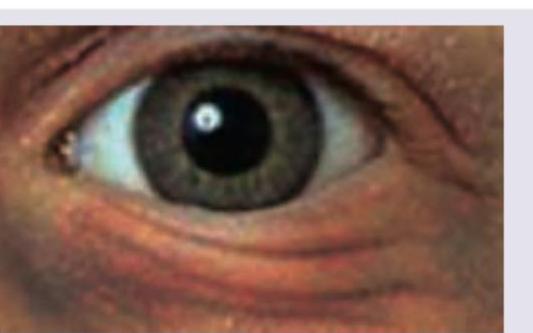
Explanation: ***Dermatomyositis*** - The **heliotrope sign** is a classic cutaneous manifestation of **dermatomyositis**, presenting as a violaceous or purplish discoloration of the eyelids. - This symptom, often accompanied by **periorbital edema**, is a key diagnostic indicator for the condition. *Scleroderma (skin hardening condition)* - **Scleroderma** is characterized by **skin thickening and hardening**, Raynaud's phenomenon, and internal organ involvement, not periorbital discoloration. - While it can cause changes in skin appearance, the **heliotrope sign** is not associated with this condition. *Vitiligo (patchy skin color loss)* - **Vitiligo** is an autoimmune condition resulting in **depigmented macules** and patches due to melanocyte destruction. - It involves a loss of skin color, which is distinct from the erythematous-violaceous coloration of the heliotrope sign. *Photodermatitis (sun-induced skin reaction)* - **Photodermatitis** is an inflammatory skin reaction triggered by **sun exposure**, presenting with erythema, edema, and sometimes blistering in sun-exposed areas. - While it affects sun-exposed skin, it does not specifically manifest as a violaceous discoloration of the eyelids like the heliotrope sign.
Explanation: ***Topical corticosteroids*** - **Topical corticosteroids** are the first-line treatment for localized lichen planus due to their potent **anti-inflammatory** and **immunosuppressive** effects. - They effectively reduce **itching**, **inflammation**, and the characteristic **violaceous papules** of lichen planus. *Systemic corticosteroids* - **Systemic corticosteroids** are typically reserved for widespread, severe, or refractory cases of lichen planus, not as initial treatment. - Their use is limited by potential **systemic side effects**, such as **osteoporosis**, **hypertension**, and **diabetes**. *Antihistamines* - **Antihistamines** primarily target **itching** (pruritus) associated with lichen planus but do not address the underlying **inflammatory process** or resolve the skin lesions themselves. - They may be used as an adjunct for symptomatic relief, especially for nocturnal pruritus. *Acitretin* - **Acitretin** is a **retinoid** used for severe or refractory cases of lichen planus (including erosive, oral, and hypertrophic variants), but not as first-line treatment for localized cutaneous disease. - It carries significant **teratogenic risks** and other side effects, making it unsuitable as initial therapy when topical corticosteroids are effective.
Explanation: ***All of the options*** - **Dermatitis herpetiformis (DH)** is a chronic, intensely itchy blistering skin condition associated with **celiac disease**. - Effective management involves both a **gluten-free diet** to address the underlying autoimmune process and medications like **dapsone** or **sulfonamides** for symptomatic relief. *Gluten-free diet* - A strict **gluten-free diet** is crucial for long-term management as it addresses the underlying small intestinal enteropathy associated with **celiac disease** and **dermatitis herpetiformis**. - While it may take several months to see full skin improvement, it can eventually lead to resolution of skin lesions and reduced or eliminated need for medication. *Dapsone* - **Dapsone** is a rapidly effective medication for alleviating the intense itching and rash of **dermatitis herpetiformis**, often providing relief within 24-48 hours. - It works by inhibiting neutrophil migration and inflammation, but does not treat the underlying gluten-sensitive enteropathy. *Sulfonamide* - **Sulfonamides**, such as sulfapyridine or sulfamethoxypyridazine, can be used as an alternative for patients who cannot tolerate **dapsone** or who respond inadequately to it. - Like dapsone, these medications provide symptomatic relief by reducing inflammation and neutrophil activity in the skin, but do not address the gluten-induced intestinal damage.
Explanation: ***Behçet's syndrome*** - The **pathergy test** is a diagnostic test where a sterile needle is used to prick the skin, and a positive result (erythematous papule or pustule) indicates a hyperreactivity of the skin, common in **Behçet's syndrome**. - This syndrome is a **vasculitis** characterized by recurrent oral and genital ulcers, ocular inflammation, and skin lesions, where pathergy is a characteristic feature. *Lichen planus* - This is an **inflammatory dermatosis** affecting the skin, hair, nails, and mucous membranes, characterized by "6 P's": **Pruritic, Purple, Polygonal, Planar, Papules, and Plaques**. - The pathergy test is **not used** in the diagnosis of lichen planus. *Atopic dermatitis* - Also known as **eczema**, it is a chronic, relapsing inflammatory skin condition characterized by dry, itchy skin and often associated with a personal or family history of allergies, asthma, or allergic rhinitis. - Diagnosis is primarily clinical, focusing on characteristic skin lesions and symptoms, and the **pathergy test is not applicable**. *Reiter's syndrome* - Now known as **reactive arthritis**, this condition is an autoimmune disorder that develops in response to an infection elsewhere in the body, typically genitourinary or gastrointestinal. - It classically presents with **arthritis, urethritis, and conjunctivitis** (Can't see, can't pee, can't climb a tree), and the **pathergy test is not used** for its diagnosis.
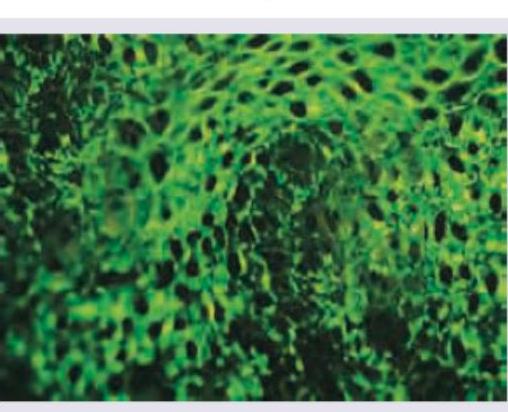
Explanation: ***Subepidermal bulla*** - Pemphigus vulgaris is characterized by **intraepidermal bullae** resulting from acantholysis (loss of cohesion between keratinocytes), not subepidermal bullae. - **Subepidermal bullae** are characteristic of conditions like **bullous pemphigoid**, where the split occurs below the epidermis. *Positive Nikolsky’s sign* - The **Nikolsky's sign** is positive in pemphigus vulgaris, indicating the fragility of the skin where gentle lateral pressure causes epidermal shearing. - This sign is a direct result of the **intraepidermal blistering** due to weakened cell-to-cell adhesion. *Oral erosions* - **Oral erosions** are a very common and often the initial manifestation of pemphigus vulgaris, frequently preceding skin lesions. - These painful erosions are persistent and heal slowly, sometimes making eating difficult. *Tzanck smear showing acantholytic cells* - A **Tzanck smear** from a fresh blister in pemphigus vulgaris typically reveals **acantholytic cells**, which are detached, rounded keratinocytes with basophilic cytoplasm. - The presence of acantholytic cells confirms the **loss of intercellular adhesion** within the epidermis, a hallmark of pemphigus.
Explanation: ***Salmon Patch*** - A **salmon patch** (also known as a nevus simplex or stork bite) is a common, benign vascular birthmark that presents as a flat, red or pink patch. - It is **not associated with dermatomyositis** and has no pathogenic link to the condition. *Gottron's patch* - **Gottron's patches** are a classic cutaneous manifestation of dermatomyositis, characterized by erythematous, violaceous, or dusky red papules or plaques over the **extensor surfaces of the metacarpophalangeal and interphalangeal joints**. - Their presence is highly suggestive of dermatomyositis, often preceding or co-occurring with muscle weakness. *Periungual telangiectasias* - **Periungual telangiectasias** are dilated capillaries around the nail folds and are a common skin manifestation of dermatomyositis. - They represent small vessel vasculopathy, a histological feature, and suggest microvascular damage often seen in systemic connective tissue diseases like dermatomyositis. *Mechanic's hands* - **Mechanic's hands** are a cutaneous feature seen in dermatomyositis (and other inflammatory myopathies like antisynthetase syndrome). - They are characterized by **hyperkeratosis**, fissuring, and scaling of the skin, particularly on the lateral and palmar aspects of the fingers, resembling the hands of a manual laborer.
Explanation: ***Lesions are serpiginous and non-itchy.*** - **Erythema marginatum** is best characterized by its distinctive **serpiginous (snake-like)** morphology with **pink or red macules** that have pale centers. - The **non-pruritic (non-itchy)** nature is a key diagnostic feature that distinguishes it from other cutaneous manifestations in **rheumatic fever**. *Rash is transient and may appear and disappear.* - While this statement is factually correct, as erythema marginatum lesions do **migrate rapidly** and can **appear and disappear**, it is less diagnostically specific. - The **morphological features** (serpiginous pattern) and **symptomatic characteristics** (non-itchy) are more clinically useful for diagnosis than behavioral patterns. *Rash is itchy.* - This is incorrect; **erythema marginatum** is characteristically **non-pruritic**. - The presence of itching would suggest alternative dermatological conditions such as **urticaria** or **allergic dermatitis**. *Rash does not improve with cold application.* - This statement lacks clinical relevance as **cold application** is not a standard diagnostic test for erythema marginatum. - The diagnosis relies on **morphological appearance** and **clinical context** (association with rheumatic fever), not response to temperature changes.
Explanation: ***Angioneurotic oedema*** - **Quincke's disease** is an alternative name for **angioedema**, also known as angioneurotic edema. - It involves localized **subcutaneous or submucosal swelling**, often affecting the face, lips, and airways. *Norwegian scabies* - This is a severe form of **scabies**, characterized by crusted skin lesions and a high mite burden. - It is not related to angioedema or any form of swelling. *Seborrhoea oleosa* - This refers to severe **oily skin** and **dandruff**, particularly affecting the scalp and face, due to overactive sebaceous glands. - It is a dermatological condition unrelated to angioedema. *Piebaldism* - This is a rare, **autosomal dominant genetic disorder** characterized by patches of **white skin (leukoderma)** and hair (poliosis) due to the absence of melanocytes in affected areas. - It is a pigmentary disorder and has no association with angioedema.
Lupus Erythematosus: Cutaneous Forms
Practice Questions
Lupus Erythematosus: Systemic with Skin Manifestations
Practice Questions
Dermatomyositis
Practice Questions
Scleroderma and Morphea
Practice Questions
Mixed Connective Tissue Disease
Practice Questions
Sjögren's Syndrome: Cutaneous Manifestations
Practice Questions
Relapsing Polychondritis
Practice Questions
Autoimmune Thyroid Disease and the Skin
Practice Questions
Immunobullous Disorders
Practice Questions
Vasculitis
Practice Questions
Diagnostic Methods in Autoimmune Dermatoses
Practice Questions
Management of Autoimmune Skin Diseases
Practice Questions
Get full access to all questions, explanations, and performance tracking.
Start For Free