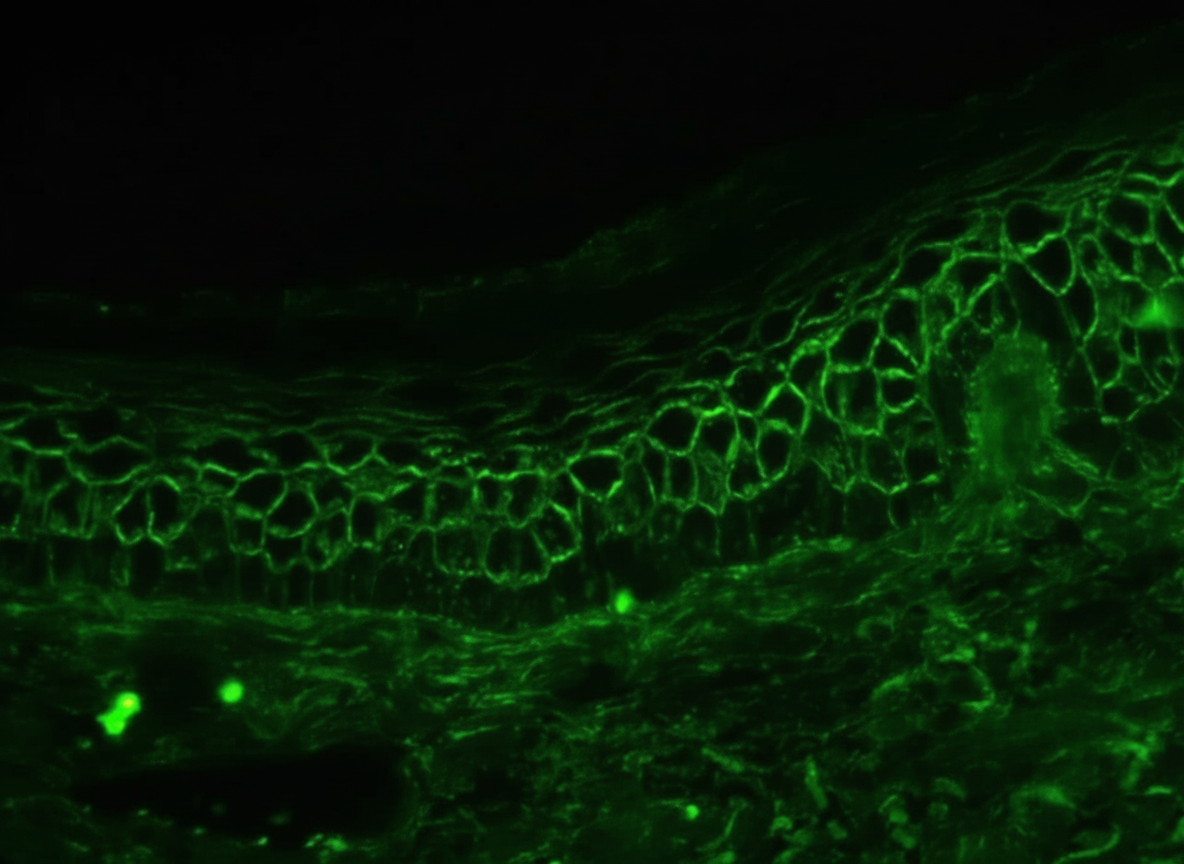
The mode of inheritance of Incontinentia pigmenti is:
A study of persons developing skin lesions following sun exposure is conducted. The lesions are not found on skin protected from ultraviolet light. Biopsies of involved skin show immunoglobulin G deposition along the dermal-epidermal junction, along with vacuolization of the basal layer and a perivascular lymphocytic infiltrate. No other organ involvement is present. Which of the following diseases do these patients most likely have?
Morphea most commonly occurs in which location?
Gottron's papules are a characteristic clinical finding in which of the following conditions?
Which of the following is a common association with Celiac sprue?
Which of the following is NOT a feature of Netherton Syndrome?
Helitrope rash is seen in which of the following conditions?
Salt and pepper dyschromatosis is seen in which of the following conditions?
Koenen's periungual fibroma is a feature of which condition?
Coup-de Sabre is commonly associated with which of the following conditions?
Explanation: **Explanation:** **Incontinentia Pigmenti (Bloch-Sulzberger syndrome)** is a rare multisystem neurocutaneous disorder caused by a mutation in the **IKBKG gene** (formerly NEMO). 1. **Why X-linked Dominant is correct:** The inheritance is **X-linked dominant**. The mutation is typically **lethal in males** in utero, which is why the clinical phenotype is seen almost exclusively in females. Affected females survive due to functional mosaicism resulting from **X-chromosome inactivation (Lyonization)**. 2. **Why other options are wrong:** * **Autosomal Dominant/Recessive:** The gene is located on the X chromosome (Xq28), ruling out autosomal inheritance. * **X-linked Recessive:** In recessive conditions, heterozygous females are usually asymptomatic carriers. In IP, a single mutated allele is sufficient to cause the disease phenotype in females. **Clinical Phases (High-Yield for NEET-PG):** The skin lesions characteristically follow the **Lines of Blaschko** and evolve through four distinct stages: 1. **Vesicular stage:** Linear vesicles (present at birth or shortly after). 2. **Verrucous stage:** Hyperkeratotic, wart-like plaques. 3. **Hyperpigmented stage:** "Swirl-like" or "Marble cake" pigmentation (due to melanin incontinence into the dermis). 4. **Hypopigmented/Atrophic stage:** Linear streaks of hypopigmentation and hair loss. **Clinical Pearls:** * **Associated findings:** Peg-shaped (conical) teeth, delayed dentition, seizures, and cicatricial alopecia. * **Histology:** Eosinophilic spongiosis is a characteristic feature of the first stage. * **Key differentiator:** Unlike other X-linked dominant conditions, the male-to-female ratio is heavily skewed due to male lethality.
Explanation: ### Explanation The clinical presentation and histopathology described are classic for **Discoid Lupus Erythematosus (DLE)**, a form of Chronic Cutaneous Lupus Erythematosus (CCLE). **1. Why Discoid Lupus Erythematosus (DLE) is correct:** * **Photosensitivity:** DLE lesions are typically triggered or exacerbated by UV light and are confined to sun-exposed areas (face, scalp, ears). * **Histopathology:** The "vacuolization of the basal layer" (interface dermatitis) and "perivascular lymphocytic infiltrate" are hallmark features. * **Direct Immunofluorescence (DIF):** The "Lupus Band Test" shows a granular deposition of IgG and C3 along the dermal-epidermal junction (DEJ). In DLE, this is positive **only in involved (lesional) skin**, consistent with the question stating no other organ involvement (systemic lupus would often show deposition in uninvolved skin as well). **2. Why the other options are incorrect:** * **Bullous Pemphigoid:** While it shows IgG at the DEJ, it presents with subepidermal blisters and a linear (not granular) pattern. It is not typically induced by sun exposure. * **Celiac Disease:** This is associated with Dermatitis Herpetiformis, which presents with itchy vesicles on elbows/knees and shows **IgA** (not IgG) deposition in the dermal papillae. * **Dysplastic Nevus Syndrome:** This involves pigmented melanocytic lesions with architectural atypia, not an autoimmune inflammatory process with IgG deposition. **High-Yield Clinical Pearls for NEET-PG:** * **Lupus Band Test:** Positive in lesional skin in DLE; positive in both lesional and non-lesional skin in SLE. * **DLE Triad:** Erythema, adherent scales (carpet tack sign/follicular plugging), and atrophic scarring. * **Progression:** Only about 5-10% of patients with DLE progress to Systemic Lupus Erythematosus (SLE). * **Treatment:** Sun protection is the first step; topical corticosteroids or antimalarials (Hydroxychloroquine) are first-line medical therapies.
Explanation: **Explanation:** **Morphea**, also known as localized scleroderma, is characterized by excessive collagen deposition leading to thickening and hardening of the skin. Unlike systemic sclerosis, it typically lacks internal organ involvement or Raynaud’s phenomenon. **Correct Option: A. Forehead** While morphea can occur anywhere on the body, the **forehead** is the most characteristic and classic site for the linear subtype of morphea, specifically known as **"En coup de sabre"** (resembling a stroke from a sword). This presentation involves a linear induration and atrophy on the forehead and scalp, often associated with alopecia and, occasionally, underlying hemi-facial atrophy (Parry-Romberg syndrome). In the context of standard medical examinations like NEET-PG, the forehead is recognized as the most frequently tested and clinically significant site for localized linear morphea. **Incorrect Options:** * **B. Sternum:** While morphea can occur on the trunk, the sternum is not the most common site. The trunk is more frequently involved in "Generalized Morphea," but the forehead remains the classic site for localized linear variants. * **C. Limbs:** Linear morphea can affect the extremities, potentially leading to joint contractures or limb-length discrepancies, but it is statistically less "classic" for board-style questions than the forehead presentation. * **D. Back:** Plaque-type morphea often appears on the trunk (including the back), but it is not the most common or characteristic site compared to the forehead in clinical vignettes. **Clinical Pearls for NEET-PG:** * **En coup de sabre:** Linear morphea on the forehead/scalp. * **Histology:** Shows "squared-off" biopsy specimens, thickened collagen bundles, and loss of adnexal structures (eccrine glands/hair follicles). * **Treatment:** First-line therapy typically involves topical corticosteroids or calcineurin inhibitors; methotrexate or UVA1 phototherapy is used for deeper or progressive disease.
Explanation: **Explanation:** **Dermatomyositis** is the correct answer. Gottron’s papules are considered a **pathognomonic** cutaneous feature of this idiopathic inflammatory myopathy. They are characterized by erythematous to violaceous, flat-topped papules and plaques found symmetrically over the dorsal aspects of the interphalangeal (IP) and metacarpophalangeal (MCP) joints. Pathologically, they represent interface dermatitis similar to lupus but are specific to the bony prominences of the hands. **Why other options are incorrect:** * **Sarcoidosis:** Typically presents with "apple-jelly" nodules, lupus pernio (violaceous plaques on the nose/cheeks), or erythema nodosum. It does not feature Gottron’s papules. * **Scleroderma:** Characterized by skin tightening (sclerodactyly), Raynaud’s phenomenon, and "beaked nose" appearance. While it affects the hands, the pathology involves fibrosis rather than inflammatory papules over joints. * **Fungal infection:** Dermatophytosis (Tinea) usually presents as annular erythematous plaques with central clearing and peripheral scaling, not localized papules over small joints. **NEET-PG High-Yield Pearls:** 1. **Gottron’s Sign:** Symmetrical violaceous erythema (macular) over the knuckles, elbows, or knees (distinguish from *papules*). 2. **Heliotrope Rash:** Violaceous edema of the upper eyelids; another pathognomonic sign. 3. **Shawl Sign & V-Sign:** Photosensitive erythema over the upper back and chest, respectively. 4. **Mechanic’s Hands:** Hyperkeratosis and fissuring of the palms and lateral fingers (associated with **Anti-Jo-1** antibodies and interstitial lung disease). 5. **Malignancy:** Dermatomyositis in adults is frequently associated with internal malignancies (paraneoplastic syndrome).
Explanation: **Explanation:** **Dermatitis Herpetiformis (DH)** is considered the cutaneous manifestation of gluten-sensitive enteropathy (**Celiac sprue**). The underlying pathophysiology involves IgA antibodies directed against **tissue transglutaminase (tTG)** in the gut, which cross-react with **epidermal transglutaminase (eTG)** in the skin. This leads to the characteristic subepidermal blisters and intense pruritus. Nearly 90% of patients with DH have associated gluten-sensitive enteropathy, though many remain asymptomatic for gastrointestinal symptoms. **Analysis of Incorrect Options:** * **A. Herpes Gestationalis (Pemphigoid Gestationis):** This is a pregnancy-associated autoimmune bullous disease caused by IgG antibodies against BP180. It has no association with gluten sensitivity. * **C. Pemphigus Vulgaris:** An intraepidermal blistering disease caused by antibodies against Desmoglein 1 and 3. It is associated with other autoimmune conditions (like Myasthenia Gravis) but not Celiac sprue. * **D. Bullous Pemphigoid:** A subepidermal blistering disease seen primarily in the elderly, targeting BP180 and BP230. It is not linked to gluten-sensitive enteropathy. **High-Yield Clinical Pearls for NEET-PG:** * **Clinical Presentation:** Symmetrical, extremely pruritic vesicles on extensors (elbows, knees, buttocks). * **Histopathology:** Neutrophilic microabscesses at the tips of dermal papillae. * **Direct Immunofluorescence (DIF):** **Granular IgA deposits** in the dermal papillae (Gold Standard). * **Treatment:** **Dapsone** is the drug of choice for skin lesions, while a **Gluten-free diet** is essential for long-term management and reducing the risk of intestinal lymphoma (EATL).
Explanation: **Explanation:** Netherton Syndrome is a rare, severe multisystem disorder characterized by a classic triad of **ichthyosis linearis circumflexa**, **hair shaft abnormalities**, and **atopic features**. **1. Why Option A is the correct answer:** Netherton Syndrome is inherited in an **Autosomal Recessive** pattern, not autosomal dominant. It is caused by a mutation in the **SPINK5 gene** on chromosome 5q32, which encodes the serine protease inhibitor **LEKTI**. The deficiency of LEKTI leads to overactive epidermal proteases, resulting in premature desquamation and a severely compromised skin barrier. **2. Why the other options are incorrect:** * **B. Ichthyosis:** Patients typically present with **Ichthyosis Linearis Circumflexa (ILC)**, characterized by migratory, erythematous, polycyclic plaques with a unique "double-edged" scale. * **C. Very short hair:** This refers to **Trichorrhexis invaginata** (Bamboo hair), the pathognomonic hair defect. The hair is brittle and breaks easily, leading to short, sparse hair and eyebrows. * **D. Erythroderma:** Most neonates with Netherton Syndrome present at birth with generalized **congenital ichthyosiform erythroderma**, which can lead to life-threatening complications like dehydration and hypernatremia. **High-Yield Clinical Pearls for NEET-PG:** * **Pathognomonic Hair Sign:** "Bamboo hair" (intussusception of the distal hair shaft into the proximal portion). * **The Triad:** Ichthyosis + Trichorrhexis invaginata + Atopy (high IgE levels/asthma). * **Differential Diagnosis:** Often misdiagnosed as Atopic Dermatitis or Omenn Syndrome in infancy. * **Key Gene:** SPINK5 (LEKTI protein).
Explanation: **Explanation:** **Dermatomyositis** is the correct answer. The **Heliotrope rash** is a hallmark cutaneous manifestation of this idiopathic inflammatory myopathy. It is characterized by a symmetric, violaceous (purplish) to dusky-red erythema involving the upper eyelids, often accompanied by periorbital edema. The name is derived from the *Heliotropium* flower, which shares this distinct purple hue. **Analysis of Incorrect Options:** * **Systemic Lupus Erythematosus (SLE):** While SLE presents with a "Malar rash" (butterfly rash), it typically **spares the nasolabial folds** and does not specifically involve the eyelids in a violaceous pattern like Dermatomyositis. * **Lichen Planus:** This condition presents with the "6 Ps" (Planar, Purple, Polygonal, Pruritic, Papules, and Plaques) and Wickham striae, usually on the wrists and oral mucosa, rather than a specific eyelid rash. * **Pityriasis Alba:** This is a common, benign condition (often associated with atopy) presenting as hypopigmented, slightly scaly patches on the face of children, unrelated to inflammatory myopathies. **High-Yield Clinical Pearls for NEET-PG:** * **Gottron’s Papules:** Pathognomonic for Dermatomyositis; these are violaceous papules found over the dorsal aspect of interphalangeal and metacarpophalangeal joints. * **Shawl Sign & V-Sign:** Erythema over the upper back/shoulders and the anterior chest/neck, respectively. * **Mechanic’s Hands:** Hyperkeratosis and fissuring of the lateral and palmar aspects of the fingers (often associated with Anti-Jo-1 antibodies). * **Malignancy Link:** Dermatomyositis in adults is frequently associated with internal malignancies (paraneoplastic syndrome).
Explanation: **Explanation:** **Salt and pepper dyschromatosis** is a classic clinical sign of **Systemic Sclerosis (Scleroderma)**. It refers to a pattern of diffuse skin pigmentation characterized by areas of **perifollicular sparing** (retained pigment around hair follicles) against a background of depigmentation (leukoderma). The underlying medical concept involves the destruction of melanocytes in the interfollicular epidermis, while the melanocytes within the hair follicle bulbs are preserved. Because hair follicles have a rich capillary network, they are relatively spared from the ischemic changes seen in scleroderma, allowing them to serve as a reservoir for pigment. This sign is often one of the earliest cutaneous markers of the disease, typically appearing on the upper chest, neck, and back. **Analysis of Incorrect Options:** * **Dermatofibrositis:** This is not a standard dermatological term; however, Dermatofibrosarcoma Protuberans (DFSP) presents as a firm, multinodular plaque, not dyschromatosis. * **Systemic Lupus Erythematosus (SLE):** While SLE can cause various pigmentary changes (like post-inflammatory hyperpigmentation or discoid scars), it does not typically manifest with the specific perifollicular sparing seen in the "salt and pepper" pattern. * **Psoriasis:** Characterized by well-demarcated erythematous plaques with silvery-white scales. While it may leave post-inflammatory hypopigmentation, it lacks the specific follicular sparing of scleroderma. **NEET-PG High-Yield Pearls:** * **Salt and Pepper Pigmentation:** Also known as "Scleroderma-associated leukoderma." * **Other Scleroderma Signs:** Microstomia (small mouth), Mouse facies, Raynaud’s phenomenon (earliest symptom), and Sclerodactyly. * **Antibody Association:** Anti-Scl-70 (Diffuse type) and Anti-centromere (Limited/CREST syndrome).
Explanation: **Explanation:** **Bourneville’s disease**, also known as **Tuberous Sclerosis Complex (TSC)**, is an autosomal dominant neurocutaneous syndrome characterized by the development of benign tumors (hamartomas) in multiple organs. **Koenen’s tumors** (periungual fibromas) are a pathognomonic cutaneous marker of TSC. These are flesh-colored or reddish, elongated papules or nodules that arise from the nail fold, typically appearing during or after puberty. They represent one of the major clinical criteria for the diagnosis of TSC. **Analysis of Incorrect Options:** * **Kawasaki’s disease:** A pediatric systemic vasculitis. Cutaneous features include a polymorphic rash, strawberry tongue, and characteristic **periungual desquamation** (peeling) during the subacute phase, but not fibromas. * **Refsum disease:** A rare metabolic disorder (phytanic acid storage disease). Its primary dermatological feature is **ichthyosis** (scaly skin), along with retinitis pigmentosa and neuropathy. * **Darier’s disease:** An autosomal dominant genodermatosis characterized by greasy, keratotic papules in seborrheic areas. Nail findings include **V-shaped nicking** at the distal edge and alternating red and white longitudinal bands, but not periungual fibromas. **High-Yield Clinical Pearls for TSC:** * **Vogt’s Triad:** Adenoma sebaceum (angiofibromas), mental retardation, and epilepsy (present in only ~30% of cases). * **Earliest Sign:** Ash-leaf spots (hypopigmented macules), best seen under **Wood’s lamp**. * **Shagreen Patch:** Connective tissue nevus usually found on the lumbosacral area. * **Confetti lesions:** Multiple tiny hypopigmented macules on the limbs. * **Internal findings:** Renal angiomyolipomas, Cardiac rhabdomyomas, and Subependymal giant cell astrocytomas (SEGA).
Explanation: **Explanation:** **Coup-de-Sabre** (En coup de sabre) is a specific morphological subtype of **localized scleroderma (Morphea)**. The term is French for "stroke of the sword," describing a linear, indented scar-like lesion that typically occurs on the forehead or scalp. 1. **Why Systemic Sclerosis is the correct answer:** While "Coup-de-Sabre" is technically a form of localized scleroderma (Linear Morphea), in the context of standard medical examinations like NEET-PG, it is classified under the umbrella of **Scleroderma/Systemic Sclerosis** spectrum diseases. It represents a localized fibrotic process where the skin becomes atrophic, hardened, and hyperpigmented, often involving underlying muscle and bone, leading to a "sabre-cut" appearance. 2. **Why other options are incorrect:** * **Pemphigus:** This is an autoimmune blistering (bullous) disease caused by antibodies against desmogleins. It presents with flaccid bullae and erosions, not linear fibrosis or atrophy. * **Scleroderma (Option A vs C):** In many entrance exams, "Systemic Sclerosis" is used interchangeably with the broader term "Scleroderma." However, if both are present, Systemic Sclerosis is often the preferred clinical term for the disease family involving pathological fibrosis. **Clinical Pearls for NEET-PG:** * **Parry-Romberg Syndrome:** Often associated with Coup-de-Sabre; it involves progressive hemifacial atrophy (loss of subcutaneous fat and muscle on one side of the face). * **Morphea vs. Systemic Sclerosis:** Morphea (localized) typically lacks Raynaud’s phenomenon and internal organ involvement, unlike Systemic Sclerosis. * **Histology:** Both show "squared-off" biopsy specimens due to dense collagen deposition and loss of skin appendages. * **Salt and Pepper Pigmentation:** A classic sign of Systemic Sclerosis (vitiligo-like depigmentation with perifollicular sparing).
Explanation: **Explanation:** **Dermatomyositis** is an idiopathic inflammatory myopathy characterized by proximal muscle weakness and pathognomonic cutaneous findings. The **Heliotrope sign** is a hallmark feature consisting of a symmetric, violaceous (purplish) to erythematous rash on the upper eyelids, often accompanied by periorbital edema. It is named after the heliotrope flower (*Heliotropium*) due to its similar color. The underlying pathology involves a microangiopathy affecting the skin and muscles. **Analysis of Incorrect Options:** * **Scleroderma:** Characterized by skin thickening (sclerosis), Raynaud’s phenomenon, and "beaked nose" or "microstomia" (small mouth). It does not present with a violaceous eyelid rash. * **Photodermatitis:** While this involves sun-exposed areas, it typically presents as eczematous or polymorphic eruptions. It lacks the specific violaceous hue and periorbital distribution characteristic of the Heliotrope sign. * **Vitiligo:** An autoimmune destruction of melanocytes resulting in depigmented (chalky white) macules and patches, not inflammatory rashes. **High-Yield Clinical Pearls for NEET-PG:** * **Gottron’s Papules:** Violaceous, lichenoid papules over the dorsal aspect of interphalangeal and metacarpophalangeal joints (Pathognomonic). * **Shawl Sign:** Erythema over the upper back and shoulders. * **V-Sign:** Erythema over the anterior neck and upper chest. * **Mechanic’s Hands:** Hyperkeratosis and fissuring of the lateral and palmar aspects of the fingers (associated with Anti-Jo-1 antibodies). * **Malignancy:** Dermatomyositis in adults is significantly associated with internal malignancies (e.g., ovarian, lung, gastric).
Explanation: **Explanation:** **Behcet’s Disease (Correct Answer):** The Pathergy test is a hallmark diagnostic tool for Behcet’s disease. It represents a state of **cutaneous vascular hyper-reactivity** to minor trauma. The test is performed by pricking the skin (usually the forearm) with a sterile 20-gauge needle. A positive result is defined by the formation of a sterile erythematous papule or pustule (>2 mm) at the site within 24–48 hours. While highly specific for Behcet’s, its sensitivity varies geographically (highest in Silk Road populations). **Incorrect Options:** * **Richter’s Disease (Option A):** This refers to Richter’s Transformation, where a low-grade B-cell lymphoma (like CLL) transforms into an aggressive high-grade diffuse large B-cell lymphoma. It has no association with skin hyper-reactivity. * **Ritter’s Disease (Option C):** Also known as **Staphylococcal Scalded Skin Syndrome (SSSS)**, this is caused by exfoliative toxins from *Staphylococcus aureus*. It presents with widespread bullae and a positive Nikolsky sign, not pathergy. * **Erythema Multiforme (Option D):** A hypersensitivity reaction (often triggered by HSV or Mycoplasma) characterized by "target" or "iris" lesions. It does not involve pathergy. **Clinical Pearls for NEET-PG:** 1. **Other Pathergy-positive conditions:** Pyoderma Gangrenosum, Sweet Syndrome, and occasionally Crohn’s disease. 2. **Behcet’s Triad:** Recurrent oral ulcers (most common), genital ulcers (most specific), and uveitis. 3. **HLA Association:** Strongly associated with **HLA-B51**. 4. **Histopathology:** A positive pathergy test histologically shows a heavy neutrophilic infiltrate (leukocytoclastic vasculitis).
Explanation: **Explanation:** The clinical presentation describes a **Salmon patch** (also known as Nevus Simplex), which is the most common vascular lesion in newborns. **1. Why Salmon Patch is Correct:** Salmon patches are capillary malformations (ectasias) that appear as flat, pink-to-red or bluish-red patches. They are typically found on the midline, most commonly the nape of the neck ("Stork bite"), the glabella, or the **upper eyelids** ("Angel’s kiss"). A hallmark feature is their **spontaneous regression**, usually within the first year of life, as seen in this case. **2. Why Other Options are Incorrect:** * **Port Wine Stain (Nevus Flammeus):** These are permanent capillary malformations. Unlike salmon patches, they are usually unilateral, do not cross the midline, grow proportionately with the child, and **never regress spontaneously**. * **Capillary Hemangioma (Strawberry Hemangioma):** These are true vascular tumors. While they can regress, they typically appear a few weeks after birth (not always present at birth), are **raised/lobulated** rather than flat, and undergo a rapid proliferative phase before slow involution over several years. * **Cirsoid Aneurysm:** This is an arteriovenous malformation (AVM) usually found on the scalp. It presents as a pulsatile, "bag of worms" mass with a thrill or bruit, and does not regress. **High-Yield Clinical Pearls for NEET-PG:** * **Salmon Patch:** Most common vascular lesion of infancy; midline location; disappears by age 1. * **Stork Bite vs. Angel’s Kiss:** Nape of neck lesions (Stork bite) often persist longer than facial lesions (Angel’s kiss). * **Port Wine Stain:** Associated with **Sturge-Weber Syndrome** (if in V1/V2 distribution) and **Klippel-Trenaunay Syndrome**. * **Kasabach-Merritt Syndrome:** A life-threatening consumptive coagulopathy associated with rapidly growing vascular tumors (Tufted angioma or Kaposiform hemangioendothelioma), *not* simple salmon patches.
Explanation: **Explanation:** **Dermatomyositis** is the correct answer. It is an idiopathic inflammatory myopathy characterized by proximal muscle weakness and distinctive cutaneous findings. **Gottron’s sign** refers to symmetric, erythematous to violaceous macules or patches found over the bony prominences, most commonly the interphalangeal and metacarpophalangeal joints, elbows, or knees. When these lesions become palpable and scaly, they are termed **Gottron’s papules**, which are considered pathognomonic for the disease. **Analysis of Incorrect Options:** * **Systemic Lupus Erythematosus (SLE):** While SLE presents with a malar (butterfly) rash, it typically **spares the nasolabial folds**, whereas the rash in Dermatomyositis often involves them. SLE does not feature Gottron’s sign. * **Polymyositis:** This condition shares the proximal muscle weakness seen in Dermatomyositis but is characterized by the **absence** of diagnostic cutaneous features like Gottron’s sign or the Heliotrope rash. * **Acrodermatitis:** This refers to inflammation of the skin of the extremities (e.g., Acrodermatitis enteropathica due to Zinc deficiency). It presents with periorificial and acral dermatitis, unrelated to the inflammatory myopathy of Dermatomyositis. **High-Yield Clinical Pearls for NEET-PG:** * **Heliotrope Rash:** Violaceous edema of the upper eyelids (another pathognomonic sign). * **Shawl Sign/V-sign:** Erythema over the upper back/shoulders or the anterior chest. * **Mechanic’s Hands:** Hyperkeratosis and fissuring of the lateral and palmar aspects of the fingers (associated with Anti-Jo-1 antibodies). * **Malignancy:** Dermatomyositis in adults carries a high association with internal malignancies (e.g., ovarian, lung, breast, GI). * **Antibodies:** Anti-Mi-2 is highly specific for Dermatomyositis; Anti-Jo-1 is associated with Antisynthetase Syndrome (interstitial lung disease).
Explanation: **Hereditary Hemorrhagic Telangiectasia (HHT)**, also known as **Osler-Weber-Rendu Syndrome**, is an autosomal dominant disorder characterized by multisystem vascular malformations. ### **Explanation of the Correct Option** **Option B is correct** because HHT involves the formation of direct connections between arteries and veins, bypassing the capillary bed. These **Arteriovenous Malformations (AVMs)** commonly occur in the **lungs (50%), liver (70%), and brain (10%)**. Cerebral AVMs are high-yield clinical features as they can lead to life-threatening complications like seizures or intracranial hemorrhage. ### **Analysis of Incorrect Options** * **Option A:** While GI bleeding occurs in about 25% of patients (usually later in life), **epistaxis (nosebleeds)** is the most common and earliest presenting feature, seen in over 90% of cases. * **Option C:** HHT involves both **mucosal and cutaneous** surfaces. Characteristic telangiectasias are typically found on the lips, tongue, face, and fingertips. * **Option D:** Estrogen was historically used to reduce bleeding, but it is **not first-line**. Management focuses on local measures (cautery, laser) and **Bevacizumab** (anti-VEGF antibody) for systemic involvement. ### **NEET-PG High-Yield Pearls** * **Curacao Criteria:** Used for diagnosis (Epistaxis, Telangiectasias, Visceral AVMs, and First-degree relative with HHT). 3/4 criteria confirm the diagnosis. * **Genetics:** Mutations in **ENG** (HHT1 - more pulmonary AVMs) or **ACVRL1** (HHT2 - more hepatic involvement). * **Complication:** Pulmonary AVMs can lead to paradoxical embolism, resulting in **brain abscesses** or strokes.
Explanation: **Explanation:** **Dermatomyositis** is an idiopathic inflammatory myopathy characterized by proximal muscle weakness and distinctive cutaneous manifestations. The **Shawl sign** refers to a persistent, confluent, erythematous to violaceous macular rash involving the upper back, posterior neck, and shoulders (resembling the distribution of a shawl). This is a photosensitive eruption and is a classic diagnostic clue for the disease. **Analysis of Options:** * **Dermatomyositis (Correct):** Along with the Shawl sign, other pathognomonic features include **Gottron papules** (violaceous papules over bony prominences/knuckles), **Heliotrope rash** (periorbital violaceous edema), and the **V-sign** (rash on the anterior chest). * **Psoriasis:** Characterized by well-demarcated erythematous plaques with silvery-white scales, typically on extensors. It is associated with the Auspitz sign and Koebner phenomenon, not the Shawl sign. * **Sunburn:** While sunburn causes erythema in sun-exposed areas, the Shawl sign is a specific chronic inflammatory marker of dermatomyositis, often appearing even with minimal UV exposure and persisting longer than a simple burn. * **Skin Cancer:** While UV radiation is a risk factor for both, skin cancers (like BCC or SCC) present as localized nodules or non-healing ulcers rather than a diffuse, symmetrical "shawl-like" macular eruption. **High-Yield Clinical Pearls for NEET-PG:** * **Holster sign:** Erythema on the lateral aspect of the thighs (another specific sign of Dermatomyositis). * **Mechanic’s Hands:** Hyperkeratosis and fissuring of the palms/fingers; often associated with **Anti-Jo-1 antibodies** and interstitial lung disease. * **Malignancy Link:** Dermatomyositis in adults is a paraneoplastic syndrome; always screen for underlying visceral malignancies (e.g., ovarian, lung, or GI cancers).
Explanation: **Explanation:** **Scleredema (Scleredema of Buschke)** is a rare sclerodermiform condition characterized by diffuse, non-pitting induration of the skin, primarily affecting the neck, shoulders, and upper back. **Why Diabetes is the Correct Answer:** Scleredema is classically associated with three clinical scenarios, the most common being **Diabetes Mellitus (Type 2)**. In diabetic patients (Scleredema Diabeticorum), the condition is typically seen in middle-aged, obese males with long-standing, poorly controlled glycemia. The underlying pathophysiology involves the non-enzymatic glycosylation of collagen and an increase in collagen synthesis by fibroblasts, leading to a thickened dermis with heavy deposits of acid mucopolysaccharides (mucin). **Analysis of Incorrect Options:** * **A. Progressive Systemic Sclerosis (PSS):** While both involve skin thickening, PSS (Scleroderma) typically starts distally (sclerodactyly), involves Raynaud’s phenomenon, and shows loss of skin appendages—features absent in Scleredema. * **B. Leprosy:** Leprosy presents with anesthetic patches, nerve thickening, or nodules (lepromas), not diffuse woody induration of the trunk. * **C. Hypothyroidism:** This is associated with **Generalized Myxedema**, where skin is dry, pale, and waxy due to dermal mucin, but it does not present with the specific "woody" induration of the upper back seen in Scleredema. **High-Yield Clinical Pearls for NEET-PG:** * **Three Types of Scleredema:** 1. **Type 1:** Follows an acute febrile illness (usually Streptococcal). 2. **Type 2:** Associated with Monoclonal Gammopathy (Multiple Myeloma). 3. **Type 3:** Associated with Diabetes Mellitus (most persistent form). * **Histopathology:** Significant dermal thickening with large collagen bundles separated by clear spaces containing **Hyaluronic acid** (Mucin). * **Clinical Sign:** The "Peau d’orange" appearance may be seen on the affected skin.
Explanation: **Explanation:** **Pemphigus Vulgaris (Option A)** is the correct answer because it is a classic **Type II hypersensitivity** autoimmune bullous disorder. It is characterized by the production of IgG autoantibodies against **Desmoglein 3** (and sometimes Desmoglein 1), which are cadherin-type cell adhesion molecules. This leads to **acantholysis** (loss of keratinocyte cohesion), resulting in flaccid blisters on the skin and oral mucosa. **Why other options are incorrect:** * **Psoriasis (Option B):** While it involves an immune-mediated pathway (primarily Th17/IL-23 axis), it is classified as a **chronic inflammatory** disease rather than a primary autoimmune disease, as specific autoantigens are not the sole cause. * **Lichen Planus (Option C):** This is an **idiopathic inflammatory** condition. Although it involves a T-cell mediated cytotoxic reaction against basal keratinocytes, it is generally categorized as an inflammatory dermatosis. * **Acne Vulgaris (Option D):** This is a multifactorial disorder of the **pilosebaceous unit** involving follicular hyperkeratinization, sebum production, and *Cutibacterium acnes* colonization; it is not autoimmune. **NEET-PG High-Yield Pearls:** * **Nikolsky Sign:** Positive in Pemphigus Vulgaris (diagnostic hallmark). * **Tzanck Smear:** Shows **Acantholytic cells** (Tzanck cells/Row of tombstone appearance on histology). * **Immunofluorescence (DIF):** Shows a characteristic **"Fishnet" or "Lace-like"** pattern of IgG/C3 deposits in the intercellular spaces. * **Target Antigen:** Desmoglein 3 (Mucosal-dominant); Desmoglein 1 & 3 (Mucocutaneous).
Explanation: **Explanation:** **En-coup-de-sabre** is a specific localized clinical variant of **Linear Scleroderma** (Morphea). The term is French for "stroke of the sword," describing its characteristic appearance: a linear, depressed, atrophic band typically occurring on the forehead or scalp. 1. **Why Scleroderma is correct:** Scleroderma is characterized by the hardening and thickening of the skin due to excessive collagen deposition. In the "En-coup-de-sabre" variant, this process leads to a vertical line of ivory-colored, sclerotic skin that may involve underlying muscle and bone, often resulting in permanent scarring alopecia in the affected scalp area. 2. **Why other options are incorrect:** * **Syphilis:** Primary syphilis presents with a painless chancre, and secondary syphilis with a generalized maculopapular rash (including palms/soles). It does not cause linear sclerotic bands. * **Lupus Erythematosus:** While Discoid Lupus (DLE) causes scarring alopecia, it typically presents as well-demarcated erythematous scaly plaques, not linear sword-like depressions. * **Alopecia:** While En-coup-de-sabre causes hair loss, it is a *cause* of cicatricial (scarring) alopecia, not a form of alopecia itself. **High-Yield Clinical Pearls for NEET-PG:** * **Parry-Romberg Syndrome:** This is a severe form of progressive facial hemiatrophy that is often associated with En-coup-de-sabre. * **Morphea vs. Systemic Sclerosis:** Unlike Systemic Sclerosis, Morphea (localized scleroderma) generally lacks Raynaud’s phenomenon and internal organ involvement. * **Histology:** Early lesions show thick collagen bundles and "loss of periappendageal fat." * **Complications:** Can be associated with neurological abnormalities (seizures or uveitis).
Explanation: **Explanation:** The clinical presentation of a young female with **fever, oral ulcers, and erythematous facial lesions** is a classic triad for **Systemic Lupus Erythematosus (SLE)**. 1. **Why SLE is correct:** SLE is a multisystem autoimmune disease predominantly affecting women of childbearing age. The facial lesions described typically represent the **Malar (Butterfly) rash**, which is characterized by erythema over the cheeks and nasal bridge, notably **sparing the nasolabial folds**. Oral ulcers (usually painless) and systemic symptoms like fever are part of the ACR/SLICC diagnostic criteria. 2. **Why other options are incorrect:** * **Dermatomyositis:** While it presents with facial rashes (Heliotrope rash), it typically involves the upper eyelids and is associated with proximal muscle weakness and Gottron papules. It does not usually present with oral ulcers. * **Melasma:** This presents as asymptomatic, hyperpigmented (brownish) macules and patches, usually triggered by UV exposure or hormones. It lacks systemic symptoms like fever or mucosal involvement. * **Rosacea:** This presents with erythema, telangiectasia, and papulopustules. Crucially, Rosacea **involves the nasolabial folds** and lacks systemic features like fever and oral ulcers. **High-Yield Clinical Pearls for NEET-PG:** * **Most specific antibody for SLE:** Anti-dsDNA and Anti-Smith. * **Most sensitive screening test:** ANA (Indirect Immunofluorescence). * **Lupus Band Test:** Direct Immunofluorescence (DIF) shows a linear band of IgG and C3 at the dermo-epidermal junction in both involved and uninvolved skin. * **Drug-induced Lupus:** Most common drug is Procainamide; most common antibody is **Anti-Histone**.
Explanation: **Explanation:** The hallmark of **Scleroderma (Systemic Sclerosis)** is the excessive deposition of collagen throughout the dermis. However, the fibrosis is not limited to the upper 1/3; instead, it typically involves the **entire thickness of the dermis** and often extends into the subcutaneous fat. * **Why Option A is the correct answer:** In scleroderma, fibrosis is **pan-dermal**. The collagen bundles become thick, packed, and oriented parallel to the epidermis. Restricting the description to only the "upper 1/3" is histologically inaccurate as the disease process characteristically involves the deep dermis and leads to the loss of the dermo-hypodermal interface. * **Why other options are incorrect:** * **Decreased adnexal structures (B):** As collagen bundles expand and pack tightly, they "choke" or replace normal skin structures. This leads to the atrophy and eventual disappearance of hair follicles and sweat glands. * **Homogenization of collagen (C):** Under the microscope, the collagen bundles lose their distinct outlines and appear as a solid, eosinophilic (pink), glassy mass. * **Increased dermal thickness (D):** The massive deposition of Type I and Type III collagen significantly increases the overall depth of the dermal layer, which clinically manifests as skin tightening and induration. **NEET-PG High-Yield Pearls:** 1. **Square-off Sign:** On biopsy, the specimen often appears rectangular or "squared-off" because the tissue is so rigid it does not curl. 2. **Entrapment of Eccrine Glands:** A classic sign where sweat glands appear "trapped" in the middle of dense dermal collagen rather than sitting at the dermo-hypodermal junction. 3. **CD34+ Fibroblasts:** There is a characteristic **loss** of CD34+ dendritic interstitial cells in the affected dermis. 4. **Clinical Triad:** Vascular injury (Raynaud’s), Autoimmunity (ANA, Scl-70, Anti-centromere), and Progressive Fibrosis.
Explanation: **Explanation:** The correct answer is **Autoimmune hypoparathyroidism**. This condition is a hallmark component of **Autoimmune Polyendocrine Syndrome Type 1 (APS-1)**, also known as **APECED** (Autoimmune Polyendocrinopathy-Candidiasis-Ectodermal Dystrophy). **1. Why Autoimmune Hypoparathyroidism is Correct:** APS-1 is caused by a mutation in the **AIRE (Autoimmune Regulator) gene**. The classic clinical triad includes: * **Chronic Mucocutaneous Candidiasis (CMC):** Usually the first sign, appearing in early childhood. * **Autoimmune Hypoparathyroidism:** The most common endocrine manifestation. * **Addison’s Disease:** Typically develops later. The presence of CMC in this context is due to the production of autoantibodies against Th17 cytokines (IL-17 and IL-22), which are essential for fungal mucosal immunity. **2. Why Other Options are Incorrect:** * **DiGeorge Syndrome:** While it involves hypocalcemia and T-cell deficiency (which can lead to infections), the classic triad involves thymic aplasia, cardiac defects, and cleft palate. It is not primarily defined by the specific CMC-hypoparathyroidism association seen in APS-1. * **Pseudohypoparathyroidism:** This is a genetic resistance to PTH (end-organ resistance). It is characterized by Albright’s Hereditary Osteodystrophy (short stature, round face, short 4th/5th metacarpals) but does not involve autoimmune candidiasis. * **Post-surgical Hypoparathyroidism:** This is an acquired mechanical complication (e.g., after thyroidectomy) and lacks any autoimmune or immunological component. **High-Yield Clinical Pearls for NEET-PG:** * **APS-1 Triad:** Candidiasis + Hypoparathyroidism + Addison’s Disease. * **Inheritance:** Autosomal Recessive (AIRE gene mutation on Chromosome 21). * **Dermatological Clue:** CMC in APS-1 often presents as persistent oral thrush, nail dystrophy, or angular cheilitis that is refractory to standard treatment.
Explanation: **Explanation:** **Heliotrope rash** is a pathognomonic cutaneous feature of **Dermatomyositis**, an idiopathic inflammatory myopathy. It is characterized by a violaceous (reddish-purple) eruption, often accompanied by periorbital edema, affecting the upper eyelids. The name is derived from the *Heliotropium* flower, which shares this distinct purple hue. The underlying mechanism involves microvascular injury and inflammation within the papillary dermis. **Analysis of Incorrect Options:** * **Pityriasis rosea:** Characterized by a "Herald patch" followed by a generalized "Christmas tree" distribution of oval, scaly papules. It does not involve the eyelids or present with violaceous hues. * **Secondary syphilis:** Typically presents with a generalized maculopapular rash involving the palms and soles, along with lymphadenopathy and condyloma lata. * **Polymorphous light eruption (PMLE):** The most common photodermatosis, presenting as itchy papules or vesicles on sun-exposed areas. While it is triggered by UV light, it lacks the specific violaceous periorbital distribution of dermatomyositis. **High-Yield Clinical Pearls for NEET-PG:** * **Gottron’s Papules:** Violaceous flat-topped papules over the dorsal aspect of interphalangeal/metacarpophalangeal joints (also pathognomonic for Dermatomyositis). * **Other Signs:** Shawl sign (V-shaped rash on chest/back), Mechanic’s hands (hyperkeratosis of palms), and Holster sign (rash on lateral thighs). * **Association:** In adults, dermatomyositis is frequently associated with **internal malignancies** (paraneoplastic syndrome), most commonly ovarian, lung, and gastric cancers. * **Antibody:** Anti-Mi-2 is highly specific for dermatomyositis.
Explanation: ### Explanation **Correct Answer: B. Dermatomyositis** **Dermatomyositis** is an idiopathic inflammatory myopathy characterized by proximal muscle weakness and distinctive cutaneous findings. The **Heliotrope rash** is a pathognomonic sign of this condition. It presents as a violaceous (purplish) or dusky erythematous eruption on the upper eyelids, often accompanied by periorbital edema. The name is derived from the *Heliotropium* flower, which has a similar purple hue. **Analysis of Incorrect Options:** * **A. Psoriasis:** Characterized by well-demarcated erythematous plaques with silvery-white scales, typically on extensor surfaces (knees, elbows) and the scalp. It does not present with a heliotrope rash. * **C. Discoid Lupus Erythematosus (DLE):** Presents with well-defined erythematous, scaly plaques that lead to scarring, atrophy, and telangiectasia. While it affects sun-exposed areas, it typically spares the upper eyelids (unlike the heliotrope rash). * **D. Pemphigus:** An autoimmune blistering disease characterized by flaccid bullae and erosions on the skin and mucous membranes due to acantholysis (loss of cell-to-cell adhesion). **High-Yield Clinical Pearls for NEET-PG:** * **Gottron’s Papules:** Violaceous papules over the dorsal aspect of interphalangeal and metacarpophalangeal joints (also pathognomonic for Dermatomyositis). * **Shawl Sign:** Erythema over the upper back and shoulders. * **V-Sign:** Erythema over the anterior neck and upper chest. * **Mechanic’s Hands:** Hyperkeratosis and fissuring of the palms and lateral fingers (associated with Anti-Jo-1 antibodies). * **Malignancy Link:** Dermatomyositis in adults is frequently associated with internal malignancies (paraneoplastic syndrome).
Explanation: **Explanation:** The characteristic feature of the chickenpox (Varicella-Zoster Virus) rash is its **pleomorphic** nature. 1. **Why Pleomorphic is Correct:** Pleomorphism refers to the presence of lesions in **different stages of development** (macules, papules, vesicles, and crusts) simultaneously in the same anatomical area. This occurs because the rash appears in successive crops over 3–5 days. The classic vesicle is described as a **"dewdrop on a rose petal"** (clear vesicle on an erythematous base). 2. **Analysis of Incorrect Options:** * **Polymorphic:** While often used interchangeably in common parlance, in strict dermatological terms for NEET-PG, "pleomorphic" is the specific descriptor for the temporal evolution of chickenpox lesions. * **Centripetal:** This describes the **distribution**, not the morphology. The chickenpox rash is centripetal (starts on the trunk and spreads to the face and extremities), but the question asks for a defining characteristic of the rash itself. * **Cytoplasmic inclusions:** Varicella-Zoster Virus (a DNA herpesvirus) produces **intranuclear** eosinophilic inclusions (Cowdry type A), not cytoplasmic ones. Cytoplasmic inclusions are characteristic of Poxviruses (e.g., Molluscum bodies). **High-Yield Clinical Pearls for NEET-PG:** * **Tzanck Smear:** Shows **multinucleated giant cells** and acantholytic cells (common to HSV and VZV). * **Distribution:** Rapid progression from trunk → face → extremities (centripetal). Palms and soles are usually spared. * **Incubation Period:** 10–21 days. * **Infectivity:** From 1–2 days before the rash appears until all lesions have crusted over.
Explanation: **Explanation:** **Dermatomyositis** is an idiopathic inflammatory myopathy characterized by proximal muscle weakness and distinctive cutaneous findings. **1. Why "Salmon patch" is the correct answer:** A **Salmon patch** (Nevus simplex) is a common congenital capillary malformation (vascular nevus) typically found on the nape of the neck (Stork bite) or eyelids (Angel kiss) in newborns. It is a benign developmental anomaly and has no clinical association with dermatomyositis. **2. Analysis of incorrect options (Features seen in Dermatomyositis):** * **Gottron’s Papules:** These are considered **pathognomonic**. They are violaceous, flat-topped papules found over the dorsal aspect of interphalangeal and metacarpophalangeal joints. * **Perioral/Periungual Telangiectasia:** Vascular changes are a hallmark of the disease. Periungual telangiectasia (dilated capillary loops at the nail folds) and facial telangiectasias are frequently observed due to underlying microvascular damage. * **Mechanic’s Hands:** This refers to hyperkeratotic, fissured, "dirty-appearing" scaling on the palmar and lateral aspects of the fingers. It is highly associated with **Anti-synthetase syndrome** (Jo-1 antibodies). **Clinical Pearls for NEET-PG:** * **Heliotrope Rash:** Violaceous edema of the upper eyelids (Pathognomonic). * **Shawl Sign & V-sign:** Poikiloderma (atrophy, telangiectasia, pigmentation) over the upper back and chest, respectively. * **Holster Sign:** Poikiloderma over the lateral thighs. * **Malignancy:** Dermatomyositis in adults is associated with an increased risk of internal malignancies (Ovarian, Lung, Gastric). * **Antibody of choice:** **Anti-Mi-2** is highly specific for dermatomyositis; **Anti-Jo-1** is associated with interstitial lung disease (ILD).
Explanation: **Explanation:** **1. Why Dermatomyositis is Correct:** Gottron papules are considered **pathognomonic** (specifically diagnostic) for Dermatomyositis. They are characterized by symmetric, violaceous (purplish), flat-topped papules or plaques found over the dorsal aspects of the interphalangeal and metacarpophalangeal joints. The underlying mechanism involves interface dermatitis, leading to inflammation at the dermo-epidermal junction. **2. Why Other Options are Incorrect:** * **Inclusion body myositis (IBM):** While it is an inflammatory myopathy, it typically lacks the classic cutaneous hallmarks of dermatomyositis. It presents with insidious, asymmetric muscle weakness, particularly affecting the finger flexors and quadriceps. * **Polymyositis:** This is a systemic inflammatory myopathy that shares similar muscle involvement with dermatomyositis but **lacks the characteristic skin rashes** (Gottron papules, Heliotrope rash). * **Discoid lupus erythematosus (DLE):** DLE presents with well-demarcated, erythematous, scaly plaques that lead to scarring and atrophy. Crucially, DLE lesions on the hands typically occur in the **inter-articular** areas (between the joints), whereas Gottron papules occur directly **over** the joints. **3. NEET-PG High-Yield Clinical Pearls:** * **Heliotrope Rash:** Violaceous edema of the upper eyelids; another hallmark of Dermatomyositis. * **Gottron Sign:** Macular erythema (not papules) over the knuckles, elbows, or knees. * **Shawl Sign/V-Sign:** Photosensitive erythema over the back/shoulders or upper chest. * **Mechanic’s Hands:** Hyperkeratosis and fissuring of the palms and lateral fingers (associated with **Anti-Jo-1** antibodies/Antisynthetase syndrome). * **Malignancy Link:** Dermatomyositis in adults is frequently a **paraneoplastic syndrome**; always screen for underlying internal malignancies (e.g., ovarian, lung, GI).
Explanation: **Explanation:** The clinical presentation is classic for **Dermatomyositis (DM)**. The diagnosis is based on the presence of pathognomonic cutaneous markers: 1. **Heliotrope Rash:** Erythema and edema of the periorbital region. 2. **Gottron’s Papules:** Violaceous papules and plaques over the knuckles (MCP, PIP, DIP joints) and dorsolateral forearms. 3. **Samitz’s Sign:** Ragged cuticles and periungual telangiectasia. Notably, the absence of muscle weakness suggests **Amyopathic Dermatomyositis**, a variant where characteristic skin lesions occur without clinical or laboratory evidence of myositis for at least 6 months. **Why other options are incorrect:** * **SLE:** While it causes malar rashes, it typically **spares the nasolabial folds** and involves the interjoint areas of the fingers rather than the knuckles (Gottron’s). * **Systemic Sclerosis:** Characterized by skin tightening (sclerodactyly), Raynaud’s phenomenon, and "beaked nose" facies, rather than inflammatory periorbital edema or Gottron’s papules. * **Mixed Connective Tissue Disorder (MCTD):** Usually presents with overlapping features of SLE, Scleroderma, and Polymyositis, often with high titers of **Anti-U1 RNP** antibodies. **High-Yield Clinical Pearls for NEET-PG:** * **Pathognomonic signs:** Gottron’s papules and Heliotrope rash. * **Shawl sign:** Erythema over the upper back and shoulders. * **V-sign:** Erythema over the anterior neck and upper chest. * **Mechanic’s hands:** Hyperkeratotic, fissured skin on the lateral aspects of fingers (associated with **Anti-Jo-1** antibodies and interstitial lung disease). * **Malignancy:** Dermatomyositis in adults is associated with an increased risk of internal malignancies (Ovarian, Lung, Gastric).
Explanation: **Explanation:** **Tuberous Sclerosis Complex (TSC)** is an autosomal dominant neurocutaneous syndrome characterized by the development of benign tumors (hamartomas) in multiple organs. **Why Ash Leaf Spot is correct:** The **Ash leaf spot** (hypomelanotic macule) is the **earliest clinical sign** of Tuberous Sclerosis. These macules are often present at birth or appear in early infancy (usually before age 2). They are best visualized using a **Wood’s lamp**, which highlights the contrast between the hypopigmented area and normal skin. At least three such macules are required to meet the major diagnostic criteria. **Analysis of Incorrect Options:** * **Facial Angiofibromas (Adenoma Sebaceum):** These typically appear later in childhood, usually between **2 to 5 years of age**. They are malar distributions of pink-to-red papules. * **Shagreen Patch:** These are connective tissue nevi (leathery plaques) usually found on the lower back. They typically appear between **2 to 6 years of age**. * **Gingival Fibroma:** These are oral manifestations that generally appear in **late childhood or adolescence**, much later than the initial cutaneous markers. **NEET-PG High-Yield Pearls:** * **Vogt’s Triad:** Epilepsy, Mental Retardation, and Adenoma Sebaceum (only seen in ~30% of patients). * **Confetti Lesions:** Multiple tiny hypopigmented macules; these are highly specific for TSC. * **Koenen’s Tumor:** Periungual fibromas appearing around puberty; they are a major diagnostic criterion. * **Genetics:** Mutation in **TSC1 (Hamartin)** on chromosome 9 or **TSC2 (Tuberin)** on chromosome 16.
Explanation: **Explanation:** **Stevens-Johnson Syndrome (SJS)** and **Erythema Multiforme (EM)** are often discussed together as part of a spectrum of reactive dermatoses. While drugs (like sulfonamides, anticonvulsants, and NSAIDs) are the most common triggers for SJS/TEN, **infectious agents** play a significant role, particularly in recurrent cases. 1. **Why Herpes Simplex Virus (HSV) is correct:** HSV is the most frequently identified infectious trigger for the Erythema Multiforme/SJS spectrum. Specifically, HSV-1 and HSV-2 are associated with **Herpes-associated Erythema Multiforme (HAEM)**, which can progress to or present similarly to SJS in clinical scenarios. The viral DNA is often found in the keratinocytes, triggering a cell-mediated immune response that leads to epidermal necrosis. 2. **Why the other options are incorrect:** * **CMV and Varicella-zoster virus:** While these herpesviruses can occasionally trigger reactive skin rashes, they are significantly less common than HSV in the etiology of SJS. * **Toxoplasma gondii:** This is a protozoan parasite. While it can cause systemic illness, it is not a recognized primary trigger for SJS. **High-Yield Clinical Pearls for NEET-PG:** * **Most common overall cause of SJS:** Drugs (Sulfonamides are the #1 culprit). * **Most common infectious cause in children:** *Mycoplasma pneumoniae*. * **Most common viral cause:** Herpes Simplex Virus (HSV). * **Classification by Body Surface Area (BSA):** * SJS: <10% epidermal detachment. * SJS/TEN Overlap: 10–30%. * Toxic Epidermal Necrolysis (TEN): >30%. * **Nikolsky Sign:** Characteristically positive in SJS/TEN due to the loss of cohesion in the epidermis.
Explanation: **Explanation:** **Scleroderma-like disorders** (also known as **Pseudo-scleroderma**) are a group of conditions that mimic the skin thickening and fibrosis seen in Systemic Sclerosis (SSc) but typically lack the characteristic internal organ involvement (like interstitial lung disease), Raynaud’s phenomenon, or specific autoantibodies (like anti-Scl-70). The correct answer is **All of the above** because each of these agents triggers distinct fibrotic pathways: 1. **Vinyl Chloride:** This is a classic occupational cause. Workers in the plastics industry exposed to vinyl chloride monomer can develop "Vinyl Chloride Disease," characterized by scleroderma-like skin changes, acro-osteolysis (resorption of distal phalanges), and Raynaud’s phenomenon. 2. **Bleomycin:** A chemotherapeutic agent known to induce skin fibrosis and pulmonary fibrosis. It increases the expression of Transforming Growth Factor-beta (TGF-β), the primary cytokine responsible for collagen synthesis. 3. **Pentazocine:** Chronic subcutaneous or intramuscular injections of this analgesic can lead to localized woody induration and fibrosis of the skin and underlying muscle at the injection sites. **High-Yield Clinical Pearls for NEET-PG:** * **Other Chemical Triggers:** Trichloroethylene, Epoxy resins, and L-tryptophan (Eosinophilia-Myalgia Syndrome). * **Drug-Induced:** Taxanes (Docetaxel) and Vitamin K1 injections can also cause similar changes. * **Distinguishing Feature:** Unlike systemic sclerosis, drug-induced scleroderma rarely involves the heart or kidneys and often improves upon withdrawal of the offending agent. * **Nephrogenic Systemic Fibrosis (NSF):** A scleroderma-mimic caused by **Gadolinium** contrast in patients with renal failure.
Explanation: **Explanation:** **Gorham Syndrome** (also known as Gorham-Stout disease or "Vanishing Bone Disease") is a rare musculoskeletal condition characterized by the proliferation of vascular or lymphatic channels, leading to the progressive destruction and resorption of bone (osteolysis). **Why Cutaneous Hemangioma is correct:** The hallmark of Gorham syndrome is the abnormal growth of blood vessels (angiomatosis) or lymphatic vessels. While the primary pathology occurs within the bone, approximately **10% of patients** present with associated **cutaneous hemangiomas** or vascular malformations overlying the affected skeletal site. These skin lesions serve as a vital clinical clue to the underlying vascular proliferation causing bone loss. **Analysis of Incorrect Options:** * **A. Hyperpigmentation:** This is not a characteristic feature of Gorham syndrome. Hyperpigmentation is more commonly associated with conditions like Addison’s disease or Melasma. * **C. Alloplasia:** This refers to the development of tissue at an abnormal site or into a different form. It is not a recognized feature of this angiomatous bone disorder. * **D. Photosensitivity:** This is a feature of connective tissue diseases (like SLE) or porphyrias, but it has no pathological link to the vascular/lymphatic proliferation seen in Gorham syndrome. **NEET-PG High-Yield Pearls:** * **Radiological Sign:** "Phantom bone" or "Vanishing bone" appearance due to cortical bone loss. * **Pathophysiology:** Replacement of normal bone with non-neoplastic vascular tissue. * **Key Association:** Chylothorax (if the ribs or thoracic vertebrae are involved), which significantly increases morbidity. * **Diagnosis:** Often a diagnosis of exclusion; biopsy shows thin-walled vascular channels replacing bone.
Explanation: **Explanation:** **Dermatomyositis** is an idiopathic inflammatory myopathy characterized by symmetrical proximal muscle weakness and distinctive cutaneous findings. The **Heliotrope rash** is considered a pathognomonic sign of this condition. It presents as a violaceous (reddish-purple) eruption on the upper eyelids, often accompanied by periorbital edema. The name is derived from the *Heliotropium* flower, which shares this characteristic purple hue. **Analysis of Options:** * **Dermatomyositis (Correct):** It is the only condition among the choices that features both the Heliotrope rash and Gottron’s papules (violaceous papules over bony prominences like MCP/PIP joints). * **Polymyositis:** While it shares the same proximal muscle weakness as dermatomyositis, it is strictly a muscle disease and **lacks** the characteristic cutaneous manifestations (no rash). * **Inclusion Body Myositis:** This typically affects older individuals and involves distal muscles (like finger flexors) asymmetrically. It does not present with a Heliotrope rash. * **Dermatitis Herpetiformis:** This is an intensely pruritic, blistering skin disease associated with Celiac disease. It presents with grouped vesicles on the elbows, knees, and buttocks, not a facial violaceous rash. **High-Yield Clinical Pearls for NEET-PG:** * **Gottron’s Papules:** The most specific sign of Dermatomyositis. * **Shawl Sign/V-Sign:** Erythema over the upper back/shoulders and anterior chest. * **Holster Sign:** Erythema on the lateral thighs. * **Mechanic’s Hands:** Hyperkeratosis and fissuring of the palms and lateral fingers (associated with Anti-Jo-1 antibodies). * **Malignancy:** Dermatomyositis in adults is frequently associated with internal malignancies (paraneoplastic syndrome), necessitating age-appropriate cancer screening.
Explanation: **Explanation:** **Heliotrope rash** is a pathognomonic cutaneous feature of **Dermatomyositis**. It is characterized by a symmetric, violaceous (purplish) to dusky red erythema involving the upper eyelids, often accompanied by periorbital edema. The name is derived from the *Heliotropium* flower, which shares a similar purple hue. This rash is a primary diagnostic criterion and is often one of the earliest signs of the disease. **Analysis of Options:** * **Dermatomyositis (Correct):** An idiopathic inflammatory myopathy that presents with proximal muscle weakness and characteristic skin findings like the Heliotrope rash, Gottron papules, and the Shawl sign. * **Polymyositis:** While clinically similar to dermatomyositis regarding proximal muscle weakness, it **lacks** the characteristic cutaneous manifestations (no rash). * **Scleroderma:** Characterized by skin thickening and tightening (sclerodactyly) and Raynaud’s phenomenon, but does not feature a violaceous eyelid rash. * **Pityriasis Rosea:** A self-limiting inflammatory condition presenting with a "Herald patch" followed by a "Christmas tree" distribution of scaly papules on the trunk. **High-Yield Clinical Pearls for NEET-PG:** * **Gottron Papules:** Violaceous flat-topped papules over the dorsal aspects of interphalangeal and metacarpophalangeal joints (also pathognomonic for Dermatomyositis). * **Mechanic’s Hands:** Hyperkeratosis and fissuring of the palms and lateral fingers; associated with **Anti-Jo-1 antibodies** and interstitial lung disease. * **Malignancy:** Dermatomyositis in adults is frequently associated with internal malignancies (paraneoplastic syndrome); age-appropriate cancer screening is mandatory. * **Holster Sign:** Erythema on the lateral aspect of the thighs.
Explanation: **Explanation:** **Arthritis mutilans** is a severe, destructive form of inflammatory arthritis characterized by the resorption of bones and the collapse of soft tissue. It is a classic, high-yield manifestation of **Psoriatic Arthritis (PsA)**, occurring in approximately 5% of patients with PsA. The hallmark clinical feature is the **"telescoping finger"** (main en lorgnette), where the digits can be pulled back to their original length due to extensive osteolysis. Radiologically, this presents as the **"pencil-in-cup" deformity**, where the proximal bone erodes into a point that fits into the widened base of the distal bone. **Analysis of Incorrect Options:** * **Lichen planus:** An inflammatory condition of the skin and mucous membranes characterized by the "6 Ps" (Planar, Purple, Polygonal, Pruritic, Papules, and Plaques). It does not involve the joints or cause bone destruction. * **Staphylococcal scalded skin syndrome (SSSS):** A toxin-mediated blistering disease caused by *Staphylococcus aureus*. It affects the superficial epidermis (desmoglein-1) and presents with skin peeling; it has no association with chronic arthritis. * **Eczema:** A broad term for dermatitis characterized by pruritus and inflammation. While it can be chronic, it is limited to the dermo-epidermal layers and does not cause systemic joint destruction. **NEET-PG High-Yield Pearls:** * **Moll and Mason Criteria:** Used for classifying Psoriatic Arthritis. * **HLA Association:** Psoriatic arthritis is strongly associated with **HLA-B27**. * **Nail Changes:** Pitting and onycholysis are strong predictors of joint involvement in psoriasis patients. * **Radiology:** Look for "pencil-in-cup" deformity and "Gull-wing" appearance in the distal interphalangeal (DIP) joints.
Explanation: **Explanation:** **Dermatomyositis** is an idiopathic inflammatory myopathy characterized by proximal muscle weakness and distinct cutaneous manifestations. **Gottron’s papules** are considered a **pathognomonic** (highly specific) sign of this condition. They are violaceous, flat-topped, lichenoid papules typically found over the dorsal aspects of the interphalangeal and metacarpophalangeal joints. **Analysis of Options:** * **Dermatomyositis (Correct):** Along with Gottron’s papules, other classic signs include the **Heliotrope rash** (violaceous edema of the eyelids) and **Gottron’s sign** (macular erythema over joints). * **Scleroderma:** Characterized by skin tightening (sclerodactyly), Raynaud’s phenomenon, and "salt and pepper" pigmentation. It does not feature Gottron’s papules. * **Mixed Connective Tissue Disorder (MCTD):** This is an overlap syndrome (SLE, Scleroderma, and Polymyositis) characterized by high titers of **anti-U1 RNP antibodies**. While it can share features of dermatomyositis, Gottron’s papules specifically point toward a primary diagnosis of dermatomyositis. * **Pemphigus Vulgaris:** An autoimmune blistering disease caused by antibodies against **Desmoglein 3**. It presents with flaccid bullae and oral erosions, not inflammatory papules over joints. **High-Yield Clinical Pearls for NEET-PG:** * **Shawl Sign:** Erythema over the upper back and shoulders. * **V-Sign:** Erythema over the anterior neck and upper chest. * **Mechanic’s Hands:** Hyperkeratotic, fissured skin on the lateral fingers (associated with **Anti-Jo-1 antibodies** and interstitial lung disease). * **Malignancy:** Dermatomyositis in adults is associated with an increased risk of internal malignancies (e.g., ovarian, lung, breast). * **Holster Sign:** Erythema on the lateral thighs.
Explanation: **Explanation:** The correct answer is **Dermatitis herpetiformis (DH)**. **1. Why Dermatitis herpetiformis is correct:** Dermatitis herpetiformis is a chronic, intensely pruritic autoimmune blistering disease strongly associated with **Gluten-Sensitive Enteropathy (Celiac Disease)**. The genetic predisposition is linked to the Major Histocompatibility Complex (MHC) Class II molecules, specifically **HLA-DR3** and **HLA-DQ2/DQ8**. In these patients, IgA antibodies against tissue transglutaminase (tTG) cross-react with epidermal transglutaminase, leading to subepidermal blisters. **2. Why the other options are incorrect:** * **Pemphigus vulgaris:** This is primarily associated with **HLA-DR4** and **HLA-DRw6**. It is characterized by IgG antibodies against Desmoglein 3, leading to intraepidermal acantholytic blisters. * **Behcet disease:** This multi-system inflammatory disorder is strongly linked to **HLA-B51**. It presents with the classic triad of oral ulcers, genital ulcers, and uveitis. * **Psoriasis vulgaris:** The strongest genetic association for chronic plaque psoriasis is **HLA-Cw6** (within the PSORS1 locus). **Clinical Pearls for NEET-PG:** * **DH Histopathology:** Characterized by **neutrophilic microabscesses** at the tips of dermal papillae. * **Direct Immunofluorescence (DIF):** Shows **granular IgA deposits** in the dermal papillae (Gold Standard for diagnosis). * **Treatment of Choice:** **Dapsone** (provides rapid symptomatic relief) along with a **Gluten-free diet**. * **Mnemonic for HLA-DR3:** "DR3 is for the **3** D's: **D**ermatitis herpetiformis, **D**iabetes (Type 1), and **D**LE/SLE."
Explanation: **Explanation:** The correct answer is **D. Salmon Rash**. This rash is a characteristic feature of **Systemic Onset Juvenile Idiopathic Arthritis (Still’s Disease)**, not Dermatomyositis. It is typically an evanescent (transient), non-pruritic, salmon-pink maculopapular eruption that coincides with fever spikes. **Why the other options are seen in Dermatomyositis:** * **Gottron’s Papules (Option A):** These are considered **pathognomonic** for Dermatomyositis. They are violaceous, flat-topped papules found over the dorsal aspects of the interphalangeal and metacarpophalangeal joints. * **Heliotrope Rash (Option B):** A classic sign consisting of a violaceous (lilac) eruption on the upper eyelids, often associated with periorbital edema. * **Mechanic’s Hands (Option C):** Characterized by hyperkeratosis, scaling, and fissuring on the palmar and lateral aspects of the fingers. While seen in Dermatomyositis, it is strongly associated with **Anti-synthetase syndrome** (Anti-Jo-1 antibodies). **High-Yield Clinical Pearls for NEET-PG:** * **Shawl Sign:** Erythema over the upper back and shoulders. * **V-Sign:** Erythema over the anterior neck and upper chest. * **Holster Sign:** Poikiloderma on the lateral aspects of the thighs. * **Malignancy:** Dermatomyositis in adults is frequently a **paraneoplastic syndrome** (most commonly associated with ovarian, lung, and gastric cancers). * **Antibodies:** **Anti-Mi-2** is highly specific for Dermatomyositis; **Anti-Jo-1** is linked to interstitial lung disease (ILD).
Explanation: **Explanation:** The clinical presentation of **linear, itchy wheals** appearing shortly after scratching or firm stroking is the hallmark of **Dermatographic Urticaria** (also known as "skin writing" or urticaria factitia). **1. Why Dermatographic Urticaria is correct:** This is the most common form of physical urticaria. It is caused by the release of histamine from mast cells in response to **mechanical shear forces** (like scratching or friction). The wheals typically appear within minutes, are confined to the site of trauma, and resolve within 30–60 minutes. The "linear" pattern mentioned in the question is a classic sign of the patient scratching the skin. **2. Why other options are incorrect:** * **Pressure Urticaria:** This typically presents as deep, painful swelling (rather than itchy linear wheals) that occurs **4–8 hours after** sustained pressure (e.g., from tight waistbands or standing). * **Acute Urticaria:** Defined as hives lasting <6 weeks. While it presents with wheals, they are usually spontaneous and generalized, not specifically linear or triggered by stroking. * **Chronic Urticaria:** Defined as hives occurring most days of the week for >6 weeks. Like acute urticaria, these are typically spontaneous and not localized to lines of friction. **Clinical Pearls for NEET-PG:** * **Diagnosis:** Usually clinical; can be confirmed using a **frictest** or a **dermographometer**. * **Treatment:** First-line treatment is **H1 antihistamines** (e.g., Cetirizine, Loratadine). * **Darier’s Sign:** Do not confuse dermatographism with Darier’s sign (wheal and flare formation upon stroking a lesion of **Mastocytosis/Urticaria Pigmentosa**). * **Prevalence:** It affects approximately 2–5% of the general population.
Explanation: ### Explanation **1. Why Option D is the Correct Answer (The False Statement):** While Systemic Sclerosis (Scleroderma) does show a significant female predilection, the ratio is typically cited as **3:1 to 5:1**. A ratio of **9:1** is characteristic of **Systemic Lupus Erythematosus (SLE)**. In NEET-PG, distinguishing between these female-to-male ratios is a common way to differentiate between connective tissue disorders. **2. Analysis of Other Options (True Statements):** * **A. Digital Ulceration:** This is a hallmark of systemic sclerosis, resulting from severe Raynaud’s phenomenon and chronic digital ischemia. These ulcers are painful, slow to heal, and often lead to "pitting scars" on the fingertips. * **B. Gastroesophageal Reflux Disease (GERD):** The esophagus is the most common internal organ involved (up to 90% of cases). Fibrosis leads to lower esophageal sphincter (LES) incompetence and dysmotility, causing severe GERD and "watermelon stomach" (GAVE). * **C. Mask-like Facies:** Cutaneous fibrosis leads to a loss of expression, microstomia (small mouth), thinning of lips, and radial furrowing around the mouth (Mauskopf facies). **3. High-Yield Clinical Pearls for NEET-PG:** * **Classification:** Divided into **Limited** (CREST syndrome) and **Diffuse** (rapid skin thickening, early visceral involvement). * **Antibody Markers:** * **Anti-Scl-70 (Anti-topoisomerase I):** Specific for Diffuse Scleroderma (associated with Pulmonary Fibrosis). * **Anti-Centromere:** Specific for Limited Scleroderma/CREST (associated with Pulmonary Hypertension). * **Anti-RNA Polymerase III:** Associated with **Scleroderma Renal Crisis**. * **First Sign:** Raynaud’s phenomenon is usually the earliest clinical manifestation.
Explanation: **Explanation:** **Systemic Lupus Erythematosus (SLE)** is the correct answer because the **butterfly rash** (also known as a **malar rash**) is the classic cutaneous hallmark of Acute Cutaneous Lupus Erythematosus (ACLE). **Why it occurs:** The rash is a fixed, erythematous, flat or raised eruption over the malar eminences (cheeks) and the bridge of the nose. A key diagnostic feature for NEET-PG is that it **spares the nasolabial folds**, which helps differentiate it from seborrheic dermatitis. It is often triggered or exacerbated by ultraviolet (UV) light exposure (photosensitivity). **Analysis of Incorrect Options:** * **Herpes Simplex:** Typically presents as grouped vesicles on an erythematous base ("dewdrops on a rose petal"). It is localized (e.g., Herpes Labialis) and does not follow a malar distribution. * **Scleroderma:** Characterized by skin thickening and tightening (sclerosis). While it affects the face (leading to "mask-like facies" or "microstomia"), it does not present with a transient malar butterfly rash. **High-Yield Clinical Pearls for NEET-PG:** * **Differential Diagnosis:** The main differential for a butterfly rash is **Erysipelas** (which is painful, raised, and has a sharp border) and **Rosacea** (which involves the nasolabial folds and may show telangiectasia or pustules). * **Histopathology of SLE:** Shows vacuolar degeneration of the basal layer and a "Lupus Band Test" (granular IgG/C3 deposits at the dermo-epidermal junction). * **Systemic Association:** The presence of a malar rash is one of the ACR/SLICC criteria for diagnosing SLE.
Explanation: ### Explanation **Correct Answer: A. Systemic Lupus Erythematosus (SLE)** **Medical Concept:** Systemic Lupus Erythematosus (SLE) is a multisystem autoimmune disease characterized by the production of various autoantibodies. While **Anti-nuclear antibody (ANA)** is the most sensitive screening test (positive in >95% of cases), it lacks specificity. In contrast, **Anti-dsDNA** and **Anti-Smith (Anti-Sm)** antibodies are highly specific for SLE. * **Anti-dsDNA:** Its levels often correlate with disease activity, particularly lupus nephritis. * **Anti-Smith:** It is directed against small nuclear ribonucleoproteins (snRNPs). While only present in about 10–30% of patients, it is considered **pathognomonic** because it is rarely found in any other condition. **Why other options are incorrect:** * **B. Erythema Multiforme (EM):** This is a hypersensitivity reaction, most commonly triggered by infections (like Herpes Simplex Virus) or drugs. It is not characterized by specific autoantibodies like Anti-Sm. * **C. Lichen Planus:** This is a T-cell mediated chronic inflammatory condition affecting the skin and mucosa. Diagnosis is clinical and histological (Civatte bodies, Saw-tooth rete ridges), not serological. * **D. All of the above:** Incorrect, as the mentioned antibodies are specific to the pathogenesis of SLE only. **High-Yield Clinical Pearls for NEET-PG:** * **Most Sensitive Test for SLE:** ANA (Best initial screening). * **Most Specific Tests for SLE:** Anti-dsDNA and Anti-Smith. * **Drug-Induced Lupus:** Characterized by **Anti-Histone antibodies**; Anti-dsDNA is usually negative. * **Neonatal Lupus/Congenital Heart Block:** Strongly associated with **Anti-Ro (SS-A)** and **Anti-La (SS-B)** antibodies. * **Mixed Connective Tissue Disease (MCTD):** Associated with high titers of **Anti-U1 RNP**.
Explanation: **Explanation:** **Localized Scleroderma (Morphea)** is a chronic autoimmune connective tissue disorder characterized by excessive collagen deposition, leading to thickening and hardening of the skin. Unlike systemic sclerosis, morphea typically lacks internal organ involvement, Raynaud’s phenomenon, or sclerodactyly. It clinically presents as asymptomatic, circumscribed, ivory-colored sclerotic plaques with a characteristic "lilac border" during the active inflammatory phase. **Analysis of Incorrect Options:** * **A. Shagreen patch:** This is a connective tissue nevus (collagenoma) found on the lower back. It is a major diagnostic criterion for **Tuberous Sclerosis**, not scleroderma. * **C. Heliotrope erythema:** This refers to a violaceous eruption on the upper eyelids, often associated with periorbital edema. It is a pathognomonic feature of **Dermatomyositis**. * **D. Gottron’s papule:** These are lichenoid, violaceous papules found over the bony prominences of the hands (MCP, PIP, and DIP joints). They are also a hallmark sign of **Dermatomyositis**. **High-Yield Clinical Pearls for NEET-PG:** * **Histopathology:** Shows "squared-off" biopsy specimens due to dense collagen bundles replacing the subcutaneous fat and loss of skin appendages (eccrine glands/hair follicles). * **Linear Morphea:** A subtype that can follow Blaschko’s lines. When it occurs on the forehead/scalp, it is called **"En coup de sabre"** (resembling a sword cut). * **Parry-Romberg Syndrome:** Progressive hemifacial atrophy that can be associated with linear morphea. * **Treatment:** Potent topical steroids or calcineurin inhibitors for limited disease; UVA1 phototherapy or systemic methotrexate for generalized/disabling cases.
Explanation: Stevens-Johnson Syndrome (SJS) and Toxic Epidermal Necrolysis (TEN) are severe mucocutaneous adverse drug reactions characterized by extensive keratinocyte apoptosis and epidermal detachment. They exist on a clinical spectrum, differentiated solely by the **Total Body Surface Area (TBSA)** of epidermal involvement (skin that is detached or detachable via a positive Nikolsky sign). **Explanation of the Correct Answer:** * **Option D (>30%):** This is the diagnostic threshold for **Toxic Epidermal Necrolysis (TEN)**. In TEN, the immune-mediated destruction (primarily via CD8+ T-cells and Granulysin) is widespread, leading to full-thickness epidermal sloughing over more than 30% of the body. **Explanation of Incorrect Options:** * **Option A (<10%):** This defines **Stevens-Johnson Syndrome (SJS)**. It is the less extensive form of the disease but still carries significant morbidity due to mucosal involvement. * **Options B & C (10% - 30%):** This range defines the **SJS/TEN Overlap**. If a patient has between 10% and 30% skin involvement, they fall into this transitional category. **High-Yield Clinical Pearls for NEET-PG:** * **Etiology:** Most commonly caused by drugs like Sulfonamides, Antiepileptics (Phenytoin, Carbamazepine), NSAIDs (Piroxicam), and Allopurinol. * **Nikolsky Sign:** Characteristically **positive** (perilesional skin detaches with lateral pressure). * **Histopathology:** Shows **subepidermal bullae** with full-thickness epidermal necrosis and minimal dermal inflammation. * **SCORTEN:** A prognostic scoring system used to predict mortality in SJS/TEN based on parameters like age, heart rate, malignancy, urea, glucose, bicarbonate, and initial TBSA. * **Management:** Immediate withdrawal of the offending drug and supportive care in a Burn Unit/ICU is the priority.
Explanation: **Explanation:** **Gottron’s papules** are considered a pathognomonic cutaneous feature of **Dermatomyositis**. These are erythematous to violaceous, flat-topped, lichenoid papules and plaques. The underlying medical concept involves an autoimmune inflammatory process targeting the skin and muscles. They characteristically occur over **pressure points and bony prominences**, specifically the **dorsal aspects of the metacarpophalangeal (MCP) and interphalangeal (IP) joints**. This distribution is a key diagnostic criterion (Option D). **Analysis of Incorrect Options:** * **A. Face:** While Dermatomyositis presents with facial features like the **Heliotrope rash** (periorbital violaceous edema) and the **Shawl sign** (erythema on the upper back/neck), Gottron’s papules are specifically localized to the hands. * **B. Trunk:** Erythema on the trunk is seen in the **V-sign** (anterior chest) or **Shawl sign**, but these are confluent macules/patches, not the discrete papules described by Gottron. * **C. Spine:** This is not a characteristic site for Dermatomyositis lesions. **NEET-PG High-Yield Pearls:** * **Gottron’s Sign:** Symmetrical violaceous erythema (without papules) over the elbows, knees, or medial malleoli. * **Mechanic’s Hands:** Hyperkeratosis, scaling, and fissuring on the lateral and palmar aspects of the fingers (associated with **Anti-Jo-1** antibodies and interstitial lung disease). * **Holster Sign:** Poikiloderma on the lateral aspect of the thighs. * **Malignancy:** Dermatomyositis in adults is frequently associated with internal malignancies (e.g., ovarian, lung, breast).
Explanation: **Explanation:** **Behçet’s Disease** is a chronic, multisystem, relapsing inflammatory perivasculitis. The correct answer is **C** because Behçet’s disease typically carries a **poor visual prognosis**. Ocular involvement occurs in about 70% of patients and is a leading cause of morbidity; persistent inflammation leads to complications like secondary glaucoma, cataract, and retinal vasculitis, often resulting in blindness if not treated aggressively. **Analysis of Options:** * **Option A:** This describes the classic **"Triple Symptom Complex"** (Oral ulcers, Genital ulcers, and Uveitis). Recurrent aphthous stomatitis is the most common and usually the first presenting sign. * **Option B:** Ocular involvement is classically a **bilateral panuveitis**. A hallmark finding is **acute recurrent iridocyclitis with a "shifting" hypopyon** (sterile pus in the anterior chamber that moves with head position). * **Option D:** Immunosuppressants are the mainstay for systemic or sight-threatening disease. **Chlorambucil**, Cyclosporine, and Azathioprine are used to control severe ocular and neurological manifestations. **High-Yield Clinical Pearls for NEET-PG:** * **Pathergy Test:** A highly specific diagnostic test where a sterile needle prick results in a papule or pustule within 24–48 hours. * **HLA Association:** Strongly associated with **HLA-B51**. * **Major Criteria:** Recurrent oral ulceration (mandatory for diagnosis) plus any two of: recurrent genital ulcers, eye lesions, skin lesions (erythema nodosum/pseudofolliculitis), or a positive pathergy test. * **Most common cause of death:** Rupture of large vessel aneurysms (e.g., pulmonary artery).
Explanation: **Explanation:** The **butterfly rash** (malar rash) is the classic cutaneous manifestation of **Systemic Lupus Erythematosus (SLE)**. It is characterized by an erythematous, sometimes edematous, eruption over the malar eminence. **1. Why Nasolabial Folds are Spared:** The hallmark feature that distinguishes the butterfly rash of SLE from other facial rashes (like seborrheic dermatitis or rosacea) is the **sparing of the nasolabial folds**. This occurs because the rash is primarily **photosensitive**; the deep anatomical contour of the nasolabial fold is relatively shielded from direct UV radiation, preventing the inflammatory cascade in that specific area. **2. Analysis of Incorrect Options:** * **Cheeks (A):** These are the primary site of the rash (malar distribution). * **Lower eyelids (C):** While the rash can approach the eyes, it typically involves the malar area just below the lids; however, the nasolabial fold is the *characteristic* spared site mentioned in textbooks. * **Bridge of nose (D):** The rash characteristically connects across the bridge of the nose, completing the "butterfly" shape. **High-Yield Clinical Pearls for NEET-PG:** * **Differential Diagnosis:** In **Dermatomyositis**, the rash (Heliotrope rash) involves the eyelids and **does not** spare the nasolabial folds. In **Rosacea**, there are often associated pustules and telangiectasia, which are absent in SLE. * **Systemic Association:** A malar rash is one of the 11 ACR criteria for diagnosing SLE. * **Histopathology:** SLE shows vacuolar degeneration of the basal layer and a "lupus band" (IgG/C3 deposits) at the dermo-epidermal junction.
Explanation: **Explanation:** **En coup de sabre** is a classic clinical presentation of **Linear Scleroderma**, a subtype of localized scleroderma (morphea). The term is French for "cut of the sword," describing a linear, indented scar-like lesion that typically occurs on the forehead or scalp. 1. **Why Scleroderma is correct:** In linear scleroderma, there is localized inflammation followed by fibrosis and atrophy of the skin, subcutaneous tissue, and sometimes the underlying muscle and bone. When this occurs on the frontoparietal region, it creates a sunken, ivory-colored furrow that mimics a sword wound. It can be associated with hemi-facial atrophy (Parry-Romberg Syndrome). 2. **Why other options are incorrect:** * **Syphilis:** Presents with features like chancre (primary), condyloma lata, or maculopapular rashes (secondary), and gummas (tertiary), but not linear atrophy. * **Leprosy:** Characterized by hypopigmented patches with loss of sensation or thickened nerves, not linear fibrotic furrows. * **Scabies:** A parasitic infestation presenting with intense nocturnal pruritus and "burrows" (short, wavy lines), primarily in finger webs and flexures. **High-Yield Clinical Pearls for NEET-PG:** * **Morphea:** Localized scleroderma that lacks systemic involvement (no sclerodactyly or Raynaud’s). * **Parry-Romberg Syndrome:** Progressive facial hemi-atrophy often seen in conjunction with *en coup de sabre*. * **Histology:** Look for "squared-off" biopsy specimens due to dense collagen deposition and loss of periappecular fat. * **Treatment:** Potent topical steroids or calcineurin inhibitors for limited disease; methotrexate for deep or progressive lesions.
Explanation: **Explanation:** **Dermatomyositis (DM)** is an idiopathic inflammatory myopathy characterized by distinctive cutaneous findings and proximal muscle weakness. **1. Why Option B is Correct:** Dermatomyositis exhibits a classic **bimodal age distribution**. It primarily affects two distinct groups: * **Juvenile DM:** Typically occurs between ages 5 and 15 years. * **Adult DM:** Typically occurs between ages 40 and 60 years. **2. Why Other Options are Incorrect:** * **Option A:** DM is associated with **HLA-DR3, DR52, and DRw53**, not HLA-B27 (which is linked to Seronegative Spondyloarthropathies like Ankylosing Spondylitis). * **Option C:** Joint involvement is common. Patients often present with **non-erosive polyarthritis or arthralgia**, typically affecting small joints of the hands in a symmetrical pattern similar to Rheumatoid Arthritis. * **Option D:** In approximately **60% of cases, skin lesions precede or occur simultaneously** with muscle weakness. When skin lesions occur without muscle involvement for $\geq$ 6 months, it is termed "Amyopathic Dermatomyositis." **3. NEET-PG High-Yield Pearls:** * **Pathognomonic Signs:** **Gottron papules** (violaceous papules over bony prominences/knuckles) and **Heliotrope rash** (periorbital violaceous erythema with edema). * **Other Signs:** Shawl sign (V-neck distribution), Holster sign (lateral thigh), and Mechanic’s hands. * **Malignancy:** Adult-onset DM is strongly associated with internal malignancies (Ovarian, Lung, Gastric). Screening is mandatory. * **Antibodies:** **Anti-Mi2** (specific for DM, good prognosis), **Anti-Jo1** (associated with Antisynthetase syndrome/interstitial lung disease). * **Histopathology:** Interface dermatitis (similar to SLE) and perifascicular atrophy on muscle biopsy.
Explanation: **Explanation:** **Discoid Lupus Erythematosus (DLE)** is a chronic cutaneous form of Lupus Erythematosus characterized by photosensitivity. Exposure to **Ultraviolet (UV) radiation** (specifically UVB) triggers keratinocyte apoptosis and the release of nuclear antigens. In genetically predisposed individuals, this leads to an inflammatory response, resulting in the classic erythematous, scaly plaques with follicular plugging and scarring alopecia. Photosensitivity is a hallmark feature of most Lupus variants. **Analysis of Incorrect Options:** * **Chloasma (Melasma):** While sunlight *exacerbates* or darkens existing melasma due to melanocyte stimulation, it is primarily a hormonal condition (pregnancy, OCPs) rather than a disease "precipitated" or caused by sunlight in the same pathological sense as DLE. * **Dermatitis Herpetiformis (DH):** This is an autoimmune blistering disease associated with **Gluten-sensitive enteropathy**. It is triggered by gluten ingestion, not UV light. Lesions typically appear on extensor surfaces. * **Lupus Vulgaris:** Despite the name "Lupus," this is a chronic progressive form of **Cutaneous Tuberculosis**. It is caused by *Mycobacterium tuberculosis* in individuals with moderate to high immunity and is unrelated to sunlight exposure. **High-Yield Clinical Pearls for NEET-PG:** * **DLE Triad:** Erythema, Adherent Scaling (Carpet tack sign/Tin tack sign), and Atrophy. * **Photosensitive Dermatoses (The "S" Rule):** **S**LE/DLE, **S**olar urticaria, **S**unburn, **S**teven-Johnson Syndrome (rarely), and **S**un-induced exacerbation of Darier’s disease. * **Drug-induced Photosensitivity:** Common culprits include Thiazides, Tetracyclines (Doxycycline), and Sulfonamides.
Explanation: ### Explanation The clinical presentation of pruritic lesions with **cigarette paper atrophy**, **poikiloderma**, and generalized lymphadenopathy, combined with the presence of **CD4-positive Sézary-Lutzner cells** (cerebriform nuclei), is diagnostic of **Mycosis Fungoides (MF)**, the most common type of Cutaneous T-Cell Lymphoma (CTCL). #### Why Option A is Correct The hallmark histopathological feature of Mycosis Fungoides is **epidermotropism**—the migration of atypical T-lymphocytes into the epidermis without significant spongiosis. When these malignant T-cells (Sézary-Lutzner cells) aggregate into small clusters within the epidermis, they form **Pautrier’s microabscesses**. This is a highly specific diagnostic finding for MF. #### Why Other Options are Incorrect * **B. Pinpoint ulcers:** These are more characteristic of conditions like Ecthyma or certain vasculitides, not a primary feature of CTCL. * **C. Discharging sinus:** This suggests deep fungal infections (like Actinomycosis) or Scrofuloderma (cutaneous TB), which present with chronic inflammatory tracts rather than epidermal atrophy. * **D. Miliaria:** This is a common sweat gland disorder (prickly heat) caused by the occlusion of eccrine ducts, unrelated to lymphocytic malignancies. #### High-Yield Clinical Pearls for NEET-PG * **Stages of MF:** It progresses through three stages: **Patch** (cigarette paper atrophy/poikiloderma) → **Plaque** → **Tumor**. * **Sézary Syndrome:** The leukemic triad of MF consisting of erythroderma, generalized lymphadenopathy, and >1000/mm³ Sézary cells in peripheral blood. * **Immunophenotype:** Malignant cells are typically **CD3+ and CD4+** (T-helper cells). * **Treatment:** Early-stage MF is treated with topical steroids, PUVA, or Narrowband UVB; advanced stages may require systemic chemotherapy or electron beam therapy.
Explanation: **Explanation:** **Lupus Erythematosus (LE)** is the classic prototype of an **autoimmune connective tissue disease (CTD)**. The underlying pathophysiology involves a Type III hypersensitivity reaction where immune complexes are deposited in various tissues, including the dermo-epidermal junction. In dermatology, LE (whether Systemic or Discoid) is characterized by the destruction of collagen and vascular components, often presenting with the classic triad of atrophy, scarring, and photosensitivity. **Analysis of Incorrect Options:** * **Lichen Planus (A):** This is a chronic inflammatory **papulosquamous disorder** mediated by T-cells (Type IV hypersensitivity) targeting keratinocytes. While immunologically mediated, it is not classified as a collagen vascular disease. * **Pemphigus Vulgaris (B):** This is an **autoimmune bullous (blistering) disease** caused by IgG antibodies against desmogleins (cell-to-cell adhesion molecules). It affects the epidermis, not the underlying connective tissue or vasculature. * **Epidermolysis Bullosa (D):** This is primarily a group of **inherited mechanobullous genetic disorders** caused by mutations in structural proteins (like keratin or laminin). It is not an immunologically mediated collagen vascular disease. **High-Yield Clinical Pearls for NEET-PG:** * **Connective Tissue Diseases (CTDs):** This group includes Lupus Erythematosus, Scleroderma (Systemic Sclerosis), and Dermatomyositis. * **Lupus Hallmark:** The "Lupus Band Test" (direct immunofluorescence) shows a linear band of IgG and C3 at the dermo-epidermal junction. * **Key Association:** Systemic Lupus Erythematosus (SLE) is often associated with **Anti-dsDNA** (specific) and **ANA** (sensitive) antibodies. * **Differential:** Always distinguish CTDs from Bullous diseases (Pemphigus/Pemphigoid) and Papulosquamous diseases (Psoriasis/Lichen Planus) in clinical vignettes.
Explanation: ### Explanation **Correct Answer: A. Fixed Drug Eruption (FDE)** The clinical hallmark of a **Fixed Drug Eruption (FDE)** is the recurrence of a lesion at the **exact same anatomical site** upon re-exposure to the offending drug. The glans penis is the most common site for FDE in males. These lesions typically present as well-demarcated, dusky red or violaceous plaques that may blister and characteristically heal with **residual slate-grey hyperpigmentation** due to pigmentary incontinence (melanin dropping into the dermis). Common triggers include NSAIDs (like paracetamol), sulfonamides, and tetracyclines. **Why the other options are incorrect:** * **B. Herpes Simplex (Genital):** While recurrent and occurring at similar sites, herpes typically presents as clusters of painful, fluid-filled vesicles on an erythematous base. It heals without significant hyperpigmentation and is often preceded by a prodrome of tingling or burning. * **C. Candida Balanoposthitis:** This presents as diffuse erythema, white curd-like discharge, and satellite pustules. It is usually associated with poor hygiene or diabetes and does not strictly recur at the "same spot" with post-inflammatory hyperpigmentation. * **D. Behcet’s Disease:** This involves painful, deep, "punched-out" scrotal or penile ulcers as part of a systemic triad (including oral ulcers and uveitis). These ulcers heal with scarring rather than simple hyperpigmentation. **High-Yield Clinical Pearls for NEET-PG:** * **Most common site (Overall):** Extremities. * **Most common site (Genitalia):** Glans penis. * **Most common drug cause (India):** Cotrimoxazole and NSAIDs. * **Pathology:** Shows "Interface Dermatitis" with necrotic keratinocytes (Civatte bodies) and dermal melanophages. * **Refractory Period:** After a reaction, there is a brief period where re-exposure does not cause a flare at that site.
Explanation: **Explanation:** **Systemic Lupus Erythematosus (SLE)** is a multisystem autoimmune disease with diverse cutaneous manifestations. The correct answer is **Lichen planus pigmentosus (LPP)** because it is a primary pigmentary disorder (a variant of Lichen Planus) characterized by grey-brown macules in sun-exposed or intertriginous areas. It is **not** etiologically or clinically associated with SLE. **Analysis of Options:** * **Lichen planus-like dermatitis (Option B):** Also known as "Lupus Erythematosus-Lichen Planus Overlap Syndrome," this is a recognized subtype where patients exhibit clinical and histological features of both diseases. * **Lupus profundus (Option C):** Also called Lupus Panniculitis, this is a chronic cutaneous LE variant involving the deep dermis and subcutaneous fat, leading to painful nodules and subsequent lipoatrophy (depressions in the skin). * **Recurrent urticaria (Option A):** Chronic urticaria or urticarial vasculitis is a well-documented "non-specific" cutaneous manifestation of SLE, often correlating with systemic activity and hypocomplementemia. **High-Yield Clinical Pearls for NEET-PG:** * **Specific LE lesions:** Malar rash (ACLE), Discoid rash (CCLE), and Psoriasiform/Annular lesions (SCLE). * **Non-specific LE lesions:** Photosensitivity, Non-scarring alopecia, Raynaud’s phenomenon, and Periungual telangiectasia. * **LPP vs. SLE:** While LPP occurs in sun-exposed areas (like SLE), it lacks the interface dermatitis and systemic autoantibodies (ANA/Anti-dsDNA) characteristic of Lupus. * **Lupus Profundus** most commonly affects the proximal extremities, buttocks, and face.
Explanation: The **Lupus Band Test (LBT)** is a diagnostic immunofluorescence technique used to detect the deposition of immunoglobulins (IgG, IgM, IgA) and complement (C3) at the dermo-epidermal junction (DEJ). ### **Why Systemic Lupus Erythematosus (SLE) is Correct** In SLE, circulating immune complexes deposit at the DEJ, forming a characteristic continuous or granular "band" of fluorescence. * **Positive LBT in Lesional Skin:** Found in both Discoid LE (DLE) and SLE. * **Positive LBT in Non-Lesional (Normal) Skin:** This is highly specific for **Systemic Lupus Erythematosus (SLE)**. It helps differentiate SLE from purely cutaneous forms of lupus. ### **Why Other Options are Incorrect** * **A. Rheumatoid Arthritis:** While an autoimmune disease, it primarily affects joints through synovial inflammation. It does not typically show immune complex deposition at the dermo-epidermal junction. * **C. Scleroderma:** Characterized by excessive collagen deposition and fibrosis of the skin and internal organs. Diagnosis is clinical and supported by specific antibodies (Anti-Scl70, Anti-centromere), not a band test. * **D. Polyarteritis Nodosa:** A systemic necrotizing vasculitis affecting medium and small-sized arteries. Diagnosis requires biopsy showing transmural inflammation of arteries, not DEJ immunofluorescence. ### **High-Yield Clinical Pearls for NEET-PG** * **Sun-exposed vs. Non-exposed skin:** A positive LBT in non-lesional, **non-sun-exposed** skin (e.g., inner forearm or buttocks) is a strong indicator of systemic involvement and high disease activity in SLE. * **Most common immunoglobulin:** **IgM** is the most frequently detected antibody in the Lupus Band Test. * **False Positives:** Can occur in sun-damaged skin (actinic keratosis) or occasionally in Rosacea, but the band is usually faint and focal.
Explanation: ### Explanation **Correct Option: C. Atopic Dermatitis** Atopic dermatitis (AD) is a chronic, relapsing inflammatory skin disease characterized by the "itch that rashes." In children, it typically presents with **intense pruritus** and excoriated papules. The diagnosis is clinical, but a hallmark laboratory finding in approximately 70-80% of patients is **elevated serum IgE levels**. This reflects the Type I hypersensitivity component and the "Atopic March" (association with asthma and allergic rhinitis). **Why other options are incorrect:** * **A. Scabies:** While intensely itchy, it is characterized by **burrows** in web spaces and a history of similar symptoms in family members. It does not typically cause a systemic rise in IgE. * **B. Seborrheic Dermatitis:** Usually presents in infants ("Cradle Cap") or adults as greasy, yellowish scales on erythematous bases in seborrheic areas (scalp, nasolabial folds). It is **not typically associated with elevated IgE** or severe pruritus. * **D. Urticaria:** Presents as transient, evanescent wheals (hives) that resolve within 24 hours. While IgE-mediated, it does not present as persistent excoriated papules. **Clinical Pearls for NEET-PG:** * **Filaggrin (FLG) Mutation:** The most common genetic defect leading to skin barrier dysfunction in AD. * **Infantile AD:** Classically involves the **face (cheeks)** and extensor surfaces, sparing the diaper area. * **Childhood/Adult AD:** Shifts to **flexural surfaces** (antecubital and popliteal fossae) with lichenification. * **Dennie-Morgan Fold:** An extra fold of skin under the lower eyelid, a classic physical sign of atopy. * **Treatment of Choice:** Topical corticosteroids (for flares) and topical calcineurin inhibitors (Tacrolimus) for maintenance.
Explanation: **Explanation:** Primary prevention of obesity aims to prevent the onset of the disease by modifying risk factors, primarily through dietary interventions and lifestyle changes. **Why High Fiber Diet is Correct:** A high-fiber diet is a cornerstone of primary prevention for obesity due to several physiological mechanisms: 1. **Satiety:** Fiber adds bulk to the diet and slows gastric emptying, leading to a prolonged feeling of fullness, which reduces overall caloric intake. 2. **Energy Density:** High-fiber foods (like whole grains, vegetables, and fruits) typically have a lower energy density compared to processed foods. 3. **Insulin Regulation:** Soluble fiber slows the absorption of glucose, preventing rapid insulin spikes that promote fat storage (lipogenesis). **Analysis of Incorrect Options:** * **Low Fiber Diet:** Associated with high energy density and rapid digestion, leading to frequent hunger and overconsumption of calories. * **High Cholesterol Diet:** While primarily linked to dyslipidemia and atherosclerosis, a diet high in cholesterol often mirrors a high-saturated fat intake, which is calorically dense and promotes weight gain. * **High Intake of Protein:** While protein aids in thermogenesis and muscle preservation, an excessively high intake (beyond physiological needs) does not serve as a primary preventive measure for obesity as effectively as fiber-rich dietary patterns. **NEET-PG Clinical Pearls:** * **Definition:** Primary prevention occurs *before* the disease develops (Pre-pathogenesis phase). * **Fiber Recommendations:** The WHO recommends an intake of >25g of dietary fiber per day for adults. * **Obesity Indices:** Remember that for the Indian population, the BMI cutoff for obesity is lower (**>25 kg/m²**) compared to the international WHO cutoff (>30 kg/m²). * **Metabolic Syndrome:** Obesity is a key component of Metabolic Syndrome (ATP III criteria), which also includes hypertension, hyperglycemia, and dyslipidemia.
Explanation: ### Explanation **Correct Answer: B. Dermatomyositis** **Medical Concept:** The **Heliotrope rash** is a pathognomonic cutaneous feature of **Dermatomyositis**, an idiopathic inflammatory myopathy. It is characterized by a symmetrical, violaceous (reddish-purple) eruption involving the upper eyelids, often accompanied by periorbital edema. The name is derived from the *Heliotropium* flower, which shares this distinct purple hue. This rash is photosensitive and results from underlying inflammation of the dermal capillaries. **Analysis of Incorrect Options:** * **A. Psoriasis:** Characterized by well-demarcated erythematous plaques with silvery-white scales, typically on extensors (knees, elbows) and the scalp. It is not associated with periorbital violaceous rashes. * **C. Discoid Lupus Erythematosus (DLE):** Presents with well-defined, coin-shaped erythematous plaques with follicular plugging and scarring (atrophy). While it affects sun-exposed areas, it does not present as a heliotrope rash. * **D. Pemphigus:** An autoimmune blistering disease characterized by flaccid bullae and erosions due to acantholysis (loss of keratinocyte adhesion). It does not feature the specific violaceous eyelid discoloration seen in dermatomyositis. **High-Yield Clinical Pearls for NEET-PG:** * **Gottron’s Papules:** Violaceous papules over the dorsal aspect of interphalangeal and metacarpophalangeal joints (also pathognomonic for Dermatomyositis). * **Shawl Sign:** Erythema over the upper back and shoulders. * **V-Sign:** Erythema over the anterior neck and upper chest. * **Mechanic’s Hands:** Hyperkeratosis and fissuring of the palms and lateral fingers (associated with Anti-Jo-1 antibodies). * **Malignancy Link:** Dermatomyositis in adults is frequently associated with internal malignancies (paraneoplastic syndrome), most commonly ovarian, lung, and gastric cancers.
Explanation: Stevens-Johnson Syndrome (SJS) and Toxic Epidermal Necrolysis (TEN) are severe mucocutaneous adverse drug reactions characterized by extensive keratinocyte apoptosis and epidermal detachment. They are classified as a spectrum of the same disease, differentiated solely by the **percentage of total body surface area (TBSA)** involved with skin detachment. ### **Explanation of Options:** * **Option D (> 30%) is Correct:** By clinical definition, TEN is diagnosed when the epidermal detachment involves **more than 30%** of the body surface area. This represents the most severe end of the spectrum, often associated with high mortality and requiring management in a burn unit. * **Option A (< 10%):** This defines **Stevens-Johnson Syndrome (SJS)**, the less extensive form of the disease. * **Options B & C (10-30%):** This range is classified as **SJS/TEN Overlap**. It serves as a transitional category for patients whose disease is progressing from SJS toward full-blown TEN. ### **High-Yield Clinical Pearls for NEET-PG:** 1. **Pathogenesis:** Mediated by cytotoxic T-cells and the **Fas-Fas ligand** pathway, leading to massive apoptosis. **Granulysin** is the key cytolytic protein found in the blisters. 2. **Clinical Sign:** **Nikolsky Sign** is positive (perifocal extension of a blister or denudation of skin upon applying lateral pressure). 3. **Common Triggers:** Sulfonamides, Anticonvulsants (Phenytoin, Carbamazepine), Allopurinol, and NSAIDs. 4. **Prognosis:** Calculated using the **SCORTEN** scale, which assesses variables like age (>40), heart rate (>120), malignancy, and serum urea/glucose/bicarbonate levels. 5. **Histology:** Shows **subepidermal bullae** with full-thickness epidermal necrosis and a sparse inflammatory infiltrate.
Explanation: **Explanation:** The **Nucleotide Excision Repair (NER)** pathway is the primary mechanism for repairing DNA damage caused by ultraviolet (UV) radiation, specifically bulky adducts like pyrimidine dimers. Defects in this pathway lead to photosensitivity and genomic instability. **Why Muir-Torre Syndrome is the Correct Answer:** Muir-Torre syndrome is a clinical variant of **Lynch syndrome (HNPCC)**. It is caused by mutations in **Mismatch Repair (MMR) genes** (most commonly *MSH2* and *MLH1*), not the NER pathway. It is characterized by at least one sebaceous gland tumor (e.g., sebaceous adenoma or carcinoma) and at least one internal malignancy (most commonly colorectal cancer). **Why the Other Options are Incorrect:** * **Xeroderma pigmentosum (XP):** The classic NER defect. It involves mutations in *XPA* through *XPG* genes, leading to extreme photosensitivity and a 10,000-fold increased risk of skin cancers. * **Cockayne syndrome:** Caused by defects in **Transcription-Coupled Repair (TCR)**, a sub-pathway of NER. Clinical features include "cachectic dwarfism," bird-like facies, and photosensitivity, but notably *no* increased risk of skin cancer. * **Trichothiodystrophy (TTD):** Characterized by sulfur-deficient brittle hair (tiger-tail banding under polarized light). Many cases are caused by mutations in *ERCC2/XPD* or *ERCC3/XPB* genes, which are components of the TFIIH complex involved in NER. **High-Yield Clinical Pearls for NEET-PG:** * **Muir-Torre:** Think **MMR genes** + Sebaceous tumors + GI malignancy. * **Tiger-tail hair:** Pathognomonic for **Trichothiodystrophy**. * **XP vs. Cockayne:** Both have NER defects, but XP has high skin cancer risk, while Cockayne has neurodegeneration and premature aging without increased cancer risk.
Explanation: **Explanation:** **Dermatomyositis (Option A)** is the correct answer. **Gottron’s sign** is a pathognomonic cutaneous feature of this inflammatory myopathy. It is characterized by symmetric, erythematous to violaceous, somewhat scaly macules or patches found over the dorsal aspects of the interphalangeal (IP) and metacarpophalangeal (MCP) joints. It is often confused with **Gottron’s papules**, which are similar but present as raised, palpable lesions. These findings reflect the underlying systemic inflammation targeting the skin and skeletal muscles. **Incorrect Options:** * **Systemic Lupus Erythematosus (B):** While SLE presents with a malar rash, it typically **spares the IP/MCP joints** (interarticular sparing), whereas dermatomyositis specifically involves them. * **Scleroderma (C):** This is characterized by skin thickening (sclerodactyly), Raynaud’s phenomenon, and "salt and pepper" pigmentation, but not Gottron’s sign. * **Mixed Connective Tissue Disease (D):** MCTD features an overlap of SLE, Scleroderma, and Polymyositis (high anti-U1 RNP titers). While it can show features of dermatomyositis, Gottron’s sign is specifically the hallmark of classic Dermatomyositis. **High-Yield Clinical Pearls for NEET-PG:** * **Heliotrope Rash:** Violaceous edema of the upper eyelids (another pathognomonic sign). * **Shawl Sign:** Erythema over the upper back and shoulders. * **Mechanic’s Hands:** Hyperkeratotic, fissured skin on the lateral and palmar aspects of fingers (associated with Anti-Jo-1 antibodies). * **Malignancy:** Dermatomyositis in adults is strongly associated with internal malignancies (paraneoplastic syndrome). * **Muscle Enzymes:** Elevated Creatine Kinase (CK) and Aldolase are key diagnostic markers.
Explanation: **Explanation:** **Carpet tacking sign** (also known as the **Besnier’s sign** or **Tinel’s sign**) is a pathognomonic clinical feature of **Discoid Lupus Erythematosus (DLE)**. In DLE, chronic inflammation leads to **follicular plugging**, where keratinous plugs accumulate within the dilated openings of hair follicles. When an adherent scale is forcibly removed from a long-standing DLE plaque, these keratinous plugs are pulled out along with the scale. The underside of the scale then shows small, spike-like projections resembling carpet tacks or upholstery tacks. **Analysis of Incorrect Options:** * **Systemic Lupus Erythematosus (SLE):** While DLE can occur in SLE patients, the classic "carpet tacking" is a feature of the localized, chronic discoid lesions rather than the acute malar rash of SLE, which typically does not show significant follicular plugging. * **Lichen Planus:** Characterized by **Wickham’s striae** (whitish reticular lines) and the Koebner phenomenon, but it lacks the follicular plugging seen in DLE. * **Dermatitis Herpetiformis:** A bullous disorder associated with celiac disease, characterized by intensely pruritic vesicles on extensor surfaces and **subepidermal neutrophils** on histology, not scaling or plugging. **High-Yield Clinical Pearls for NEET-PG:** * **Triad of DLE:** Erythema, Adherent Scaling, and Follicular Plugging (leading to Atrophy/Scarring). * **Histology:** DLE shows vacuolar degeneration of the basal layer and "periadnexal" lymphocytic infiltrate. * **Wolf’s Isotopic Response:** DLE lesions frequently occur at the site of healed Herpes Zoster. * **Scalp Involvement:** DLE is a common cause of **cicatricial (scarring) alopecia**.
Explanation: **Explanation:** The clinical triad of **abdominal pain, arthralgia (joint aches), and a palpable purpuric rash** on the lower extremities in a child is the classic presentation of **Henoch-Schönlein Purpura (HSP)**, now also known as **IgA Vasculitis**. **Why Option D is correct:** HSP is a small-vessel vasculitis characterized by the deposition of **IgA-dominant immune complexes**. It typically follows an upper respiratory tract infection. The rash is characteristically "palpable purpura" (non-blanchable) found on gravity-dependent areas like the legs and buttocks. The absence of bleeding tendencies (normal platelet count) distinguishes it from thrombocytopenic purpuras. **Why other options are incorrect:** * **A. Acute Urticaria:** Presents as transient, itchy wheals (hives) that blanch on pressure. It does not cause purpura or systemic symptoms like joint pain and abdominal distress. * **B. DIC:** A life-threatening consumptive coagulopathy. While it causes purpura (purpura fulminans), patients are critically ill with active bleeding from multiple sites and abnormal coagulation profiles. * **C. Erythema Nodosum:** Presents as painful, erythematous, tender nodules, typically on the shins. It is a form of panniculitis (septal), not a vasculitic purpuric rash. **High-Yield Clinical Pearls for NEET-PG:** * **Most common systemic vasculitis in children.** * **Renal involvement:** IgA nephropathy (Berger’s disease-like) is the most serious long-term complication; monitor with serial urinalysis. * **Gastrointestinal:** Can lead to **intussusception** (usually ileo-ileal). * **Biopsy:** Shows **Leukocytoclastic vasculitis (LCV)** with IgA deposits on immunofluorescence. * **Platelet count:** Always **normal** (Non-thrombocytopenic purpura).
Explanation: **Explanation:** **Lupus Erythematosus (LE)** is the correct answer because it is a classic example of a **Connective Tissue Disorder (CTD)**. These are a group of autoimmune diseases characterized by the body’s immune system attacking its own connective tissues, including collagen and ground substance. In LE, the pathogenesis involves Type III (immune-complex mediated) and Type II hypersensitivity reactions, leading to multi-organ involvement, including the skin, joints, and kidneys. **Analysis of Incorrect Options:** * **Pemphigus (A):** This is an **autoimmune bullous (blistering) disease** caused by IgG antibodies against desmogleins (desmosomes), leading to loss of cell-to-cell adhesion (acantholysis) in the epidermis. It is not a primary connective tissue disorder. * **Bullous Pemphigoid (B):** This is also an **autoimmune blistering disease**, but it targets the hemidesmosomes (BP180/BP230) at the dermo-epidermal junction. It is classified as a subepidermal immunobullous disease. * **Lichen Planus (D):** This is a **chronic inflammatory papulosquamous disorder** mediated by T-cells (Type IV hypersensitivity) targeting basal keratinocytes. While immunologically mediated, it is not classified as a collagen/connective tissue disease. **High-Yield Clinical Pearls for NEET-PG:** * **Connective Tissue Diseases (CTDs):** Include Lupus Erythematosus (SLE/DLE), Scleroderma (Systemic Sclerosis), and Dermatomyositis. * **Hallmark of SLE:** Presence of Anti-nuclear antibodies (ANA) is the best screening test; Anti-dsDNA is highly specific. * **Histopathology of LE:** Characterized by vacuolar degeneration of the basal layer and basement membrane thickening. * **Pemphigus vs. Pemphigoid:** Pemphigus is **intraepidermal** (flaccid bullae, +ve Nikolsky sign), while Pemphigoid is **subepidermal** (tense bullae, -ve Nikolsky sign).
Explanation: **Explanation:** **Subacute Cutaneous Lupus Erythematosus (SCLE)** is a distinct subset of lupus erythematosus characterized by photosensitive, non-scarring annular or psoriasiform skin lesions. **Why Anti-Ro is correct:** The hallmark of SCLE is the presence of **Anti-Ro (SS-A) antibodies**, which are found in approximately **75–90%** of patients. These antibodies are highly specific for this clinical subtype and are also associated with neonatal lupus and Sjögren’s syndrome. Anti-Ro antibodies are thought to play a role in the photosensitivity characteristic of the disease. **Analysis of Incorrect Options:** * **Anti-dsDNA (Option A):** Highly specific for **Systemic Lupus Erythematosus (SLE)** and correlates with disease activity and lupus nephritis. It is rarely the primary marker for isolated cutaneous variants like SCLE. * **Anti-La (SS-B) (Option C):** Often found in conjunction with Anti-Ro (in about 30–40% of SCLE cases), but it is less frequently positive than Anti-Ro alone. Anti-Ro remains the "most suggestive" and primary marker. * **U1 RNP (Option D):** The diagnostic marker for **Mixed Connective Tissue Disease (MCTD)**. While it can be seen in SLE, it is not specifically associated with the SCLE phenotype. **High-Yield Clinical Pearls for NEET-PG:** * **Drug-Induced SCLE:** Often caused by Hydrochlorothiazide, Terbinafine, Calcium channel blockers, and ACE inhibitors. * **Neonatal Lupus:** Strongly associated with maternal Anti-Ro/La antibodies; the most serious complication is **congenital third-degree heart block**. * **Morphology:** SCLE lesions heal **without scarring** (unlike Discoid Lupus/DLE) but may leave behind temporary telangiectasia or hypopigmentation.
Explanation: **Explanation:** The question focuses on the Direct Immunofluorescence (DIF) patterns of autoimmune and inflammatory skin diseases. **Why Pemphigoid is Correct:** In **Bullous Pemphigoid**, autoantibodies (IgG and C3) target the hemidesmosomes (BP180 and BP230) at the dermo-epidermal junction. On DIF, this manifests as a **linear, continuous, or patchy/shaggy deposition** of IgG and C3 along the **basement membrane zone (BMZ)**. The term "patchy" or "shaggy" is often used to describe the irregular intensity of the linear band seen in subepidermal blistering diseases. **Analysis of Incorrect Options:** * **Lichen Planus:** DIF typically shows **shaggy** deposits of **fibrinogen** along the BMZ and globular deposits of IgM (Cytoid/Civatte bodies) in the papillary dermis. It is not primarily characterized by patchy IgG at the BMZ. * **Pemphigus:** This is an intraepidermal disease. DIF shows a characteristic **"fishnet" or "lace-like" pattern** of IgG and C3 in the intercellular spaces of the epidermis, not at the basement membrane. * **Lupus Erythematosus (SLE/DLE):** While LE shows a "Lupus Band" (granular IgG/IgM at the BMZ), it is classically described as a **continuous granular band**, rather than the patchy distribution characteristic of the pemphigoid group. **NEET-PG High-Yield Pearls:** * **Bullous Pemphigoid:** Linear BMZ pattern; Salt-split skin study shows localization to the **roof** of the blister. * **Epidermolysis Bullosa Acquisita (EBA):** Also shows linear BMZ pattern, but localization is to the **floor** of the blister. * **Dermatitis Herpetiformis:** Characterized by **granular IgA** deposits at the tips of dermal papillae. * **Pemphigus Vulgaris:** IgG targets **Desmoglein 3** (mucosal) and **Desmoglein 1** (skin).
Explanation: **Explanation:** Systemic Lupus Erythematosus (SLE) is a multisystem autoimmune disorder where skin involvement occurs in approximately 80% of patients. **Why Option C is correct:** The most common cutaneous manifestation of SLE is **photosensitivity**, clinically presenting as **erythema of light-exposed areas**. This includes the classic **Malar rash** (butterfly rash), which is a fixed erythema, sometimes slightly edematous, over the malar eminences with characteristic **sparing of the nasolabial folds**. Ultraviolet (UV) radiation triggers keratinocyte apoptosis and the release of nuclear antigens, inciting an inflammatory response in genetically predisposed individuals. **Analysis of Incorrect Options:** * **Option A (Palmar erythema):** While seen in SLE (often as part of vasculitis or associated with Raynaud’s), it is non-specific and more commonly associated with chronic liver disease or pregnancy. * **Option B (Discoid lesions):** These are the hallmark of Chronic Cutaneous Lupus Erythematosus (CCLE). While they can occur in SLE (about 15-25% of cases), they are not the *most common* eruption. * **Option D (Diffuse morbilliform erythema):** This is more typical of drug eruptions (Type IV hypersensitivity) rather than a primary manifestation of SLE. **High-Yield Clinical Pearls for NEET-PG:** * **Malar Rash vs. Seborrheic Dermatitis:** Malar rash *spares* the nasolabial folds; Seborrheic dermatitis *involves* them. * **Lupus Hair:** Thin, fragile hair at the frontal hairline is a common non-specific sign of SLE activity. * **Most Specific Test:** Anti-dsDNA and Anti-Smith antibodies. * **Most Sensitive Test:** ANA (Antinuclear Antibody). * **Histopathology:** The "Lupus Band Test" shows linear IgG/C3 deposits at the dermo-epidermal junction.
Explanation: The **Lupus Band Test (LBT)** is a direct immunofluorescence (DIF) technique used to detect the deposition of immunoglobulins (primarily IgG and IgM) and complement (C3) at the dermo-epidermal junction (DEJ). ### **Why Systemic Lupus Erythematosus (SLE) is Correct** In SLE, immune complexes deposit at the DEJ, appearing as a continuous or granular "band" under a fluorescence microscope. The test is highly specific for Lupus: * **Lesional LBT:** Performed on skin with a rash. It is positive in both Discoid LE (DLE) and SLE. * **Non-lesional LBT:** Performed on clinically normal skin. A positive result here is highly suggestive of **Systemic Lupus Erythematosus (SLE)** and helps differentiate it from localized cutaneous forms. ### **Why Other Options are Incorrect** * **A. Rheumatoid Arthritis:** While an autoimmune disease, it primarily affects synovium. It does not typically show specific immunoglobulin banding at the dermo-epidermal junction. * **C. Scleroderma:** Characterized by excessive collagen deposition and fibrosis. Diagnosis is clinical and supported by specific antibodies (Anti-Scl70, Anti-centromere), not the Band test. * **D. Polyarteritis Nodosa:** A systemic necrotizing vasculitis of medium and small-sized arteries. Diagnosis requires biopsy showing transmural inflammation of arteries, not DEJ immunofluorescence. ### **High-Yield Clinical Pearls for NEET-PG** * **Sun-exposed vs. Sun-protected skin:** A positive LBT in **sun-protected** normal skin (e.g., inner forearm) is a strong indicator of systemic involvement and high disease activity in SLE. * **False Positives:** Can occur in sun-damaged skin (actinic keratosis) or occasionally in Rosacea. * **Most common Ig:** **IgM** is the most frequently detected antibody in the Lupus Band Test.
Explanation: **Explanation:** Behçet’s syndrome is a chronic, multisystem inflammatory disorder characterized by systemic vasculitis. The diagnosis is primarily clinical, based on the **International Study Group (ISG) criteria**, which require the presence of recurrent oral ulcers plus any two of the following: recurrent genital ulcers, eye lesions, skin lesions, or a positive pathergy test. **Why Pyoderma Gangrenosum (PG) is the correct answer:** While Behçet’s syndrome is associated with various cutaneous manifestations, **Pyoderma gangrenosum** is not a characteristic feature. PG is a neutrophilic dermatosis typically associated with Inflammatory Bowel Disease (IBD), Rheumatoid Arthritis, and hematological malignancies. In Behçet’s, the classic skin lesions are **erythema nodosum-like lesions**, pseudofolliculitis, acneiform nodules, and palpable purpura. **Analysis of incorrect options:** * **Oral Ulcers (Option C):** These are the hallmark and usually the first sign of the disease. They are painful, recurrent, and must occur at least three times in a 12-month period for diagnosis. * **Genital Ulcers (Option A):** These are highly specific for Behçet’s. Unlike oral ulcers, they are deeper and often heal with scarring. * **Uveitis (Option B):** Ocular involvement occurs in about 70% of patients. **Bilateral posterior uveitis** is the most common serious complication and can lead to blindness. **Clinical Pearls for NEET-PG:** * **Pathergy Test:** A unique diagnostic feature where a sterile pustule forms 24–48 hours after a skin prick with a 20-gauge needle. * **HLA Association:** Strongly linked with **HLA-B51**. * **Hypopyon:** The presence of inflammatory cells in the anterior chamber of the eye (sterile pus) is a classic ocular finding. * **Magic Syndrome:** A rare variant showing features of both Behçet’s and Relapsing Polychondritis (Mouth And Genital Ulcers with Inflamed Cartilage).
Explanation: **Explanation:** **Tuberous Sclerosis Complex (TSC)**, also known as Bourneville’s disease, is an autosomal dominant neurocutaneous syndrome caused by mutations in the **TSC1 (Hamartin)** or **TSC2 (Tuberin)** genes. The classic clinical triad (Vogt’s triad) includes seizures, mental retardation, and adenoma sebaceum. * **Adenoma Sebaceum:** Despite the name, these are actually **facial angiofibromas**. They typically appear as reddish papules in a butterfly distribution over the nose and cheeks. * **Shagreen Patches:** These are connective tissue nevi (collagenomas) usually found in the lumbosacral region, presenting as firm, leathery, "orange-peel" textured plaques. **Analysis of Incorrect Options:** * **Neurofibromatosis I (NF-1):** Characterized by Lisch nodules, Café-au-lait spots (6 or more), and neurofibromas. It does not feature shagreen patches. * **Von Hippel-Lindau (VHL):** Associated with hemangioblastomas of the retina and cerebellum, and renal cell carcinoma. It lacks the specific cutaneous markers of TSC. * **Li-Fraumeni Syndrome:** A cancer predisposition syndrome caused by p53 mutations, leading to various internal malignancies (sarcomas, breast cancer) rather than specific hamartomatous skin lesions. **High-Yield Clinical Pearls for NEET-PG:** * **Ash-leaf spots:** Hypopigmented macules; often the *earliest* sign of TSC. * **Koenen tumors:** Periungual fibromas appearing around the nails. * **Confetti lesions:** Multiple tiny hypopigmented macules on the limbs. * **Systemic findings:** Cardiac rhabdomyomas (often regress), Renal Angiomyolipomas (AML), and Giant Cell Astrocytomas (SEGA).
Explanation: **Explanation:** Systemic Lupus Erythematosus (SLE) is a multisystem autoimmune disease characterized by a wide array of dermatological manifestations. **Why Option C is Correct:** The most common cutaneous eruption in SLE is **photosensitivity**, manifesting as **erythema of light-exposed areas**. This includes the classic **malar rash** (butterfly rash), which is a fixed erythema over the cheeks and bridge of the nose, typically sparing the nasolabial folds. Photosensitivity is reported in approximately 70-90% of SLE patients. The underlying mechanism involves UV-induced apoptosis of keratinocytes, leading to the exposure of nuclear antigens (like Ro/SSA) to the immune system, triggering an inflammatory response. **Analysis of Incorrect Options:** * **A. Palmar erythema:** While it can occur in SLE (often as part of vasculitis or associated pregnancy/liver issues), it is non-specific and much less common than photosensitivity. * **B. Discoid lesions:** These are the hallmark of Chronic Cutaneous Lupus Erythematosus (CCLE). While 10-15% of SLE patients may have discoid lesions, they are not the *most common* eruption in the systemic form. * **D. Diffuse morbilliform erythema:** This is a non-specific maculopapular rash often seen in drug eruptions or viral exanthems. While SLE can present with a generalized maculopapular rash, it is less frequent than localized malar/photosensitive erythema. **High-Yield Clinical Pearls for NEET-PG:** * **Malar Rash:** Sparing of the **nasolabial folds** is a key clinical differentiator from seborrheic dermatitis or rosacea. * **Lupus Hair:** Characterized by thin, frizzy hair at the frontal hairline; a common sign of systemic activity. * **Most Specific Test:** Anti-dsDNA and Anti-Smith antibodies. * **Most Sensitive Test:** ANA (Antinuclear Antibody). * **Histopathology:** The "Lupus Band Test" shows linear IgG/C3 deposits at the dermo-epidermal junction.
Explanation: **Explanation:** **Subacute Cutaneous Lupus Erythematosus (SCLE)** is a distinct subset of lupus erythematosus characterized by photosensitive, non-scarring annular or psoriasiform skin lesions. **Why Anti-Ro/SSA is the correct answer:** The hallmark of SCLE is its strong association with **Anti-Ro/SSA antibodies** (present in ~75–90% of cases) and, to a lesser extent, Anti-La/SSB antibodies. These antibodies are pathogenic in inducing photosensitivity. SCLE is also the classic presentation of **Drug-Induced SCLE** (commonly caused by HCTZ, Terbinafine, and Calcium Channel Blockers) and is the primary antibody profile seen in **Neonatal Lupus**. **Analysis of Incorrect Options:** * **A. dsDNA antibodies:** Highly specific for **Systemic Lupus Erythematosus (SLE)** and correlate with disease activity and lupus nephritis, but they are typically negative in pure SCLE. * **B. Anti-Jo-1 antibody:** The most common anti-synthetase antibody associated with **Dermatomyositis**, characterized by "Mechanic’s hands," interstitial lung disease, and arthritis. * **D. Anti-histone antibodies:** The classic marker for **Drug-Induced SLE** (e.g., caused by Hydralazine, Procainamide, Isoniazid). Note: Drug-induced *SLE* has anti-histone antibodies, but drug-induced *SCLE* has anti-Ro antibodies. **High-Yield Clinical Pearls for NEET-PG:** * **SCLE Morphology:** Annular/polycyclic or Psoriasiform lesions; heals **without scarring** (unlike Discoid Lupus). * **HLA Association:** Strongly linked to **HLA-DR3**. * **Neonatal Lupus:** Caused by transplacental transfer of Anti-Ro/SSA; most common complication is **congenital heart block**. * **ANA:** Usually positive in SCLE, but Anti-Ro is the most specific serological marker for this subtype.
Explanation: **Explanation:** **Dermatomyositis** is an idiopathic inflammatory myopathy characterized by proximal muscle weakness and distinctive cutaneous findings. **Gottron’s papules** are considered a pathognomonic (highly specific) feature of this condition. They are erythematous to violaceous, flat-topped papules found over the dorsal aspects of the interphalangeal and metacarpophalangeal joints. **Gottron’s sign** refers to similar symmetric violaceous erythema (with or without edema) over the elbows, knees, or medial malleoli. **Analysis of Incorrect Options:** * **Multiple Myeloma:** This plasma cell dyscrasia is associated with skin findings like systemic amyloidosis (e.g., pinch purpura, macroglossia) but not Gottron’s papules. * **Acute Myeloid Leukemia (AML):** Cutaneous manifestations of AML include Leukemia Cutis (nodules/plaques) or Sweet Syndrome (neutrophilic dermatosis), which are clinically distinct from the papules seen in dermatomyositis. * **Psoriasis:** While psoriasis presents with erythematous plaques, they typically feature silvery-white scales and are found on extensor surfaces (elbows/knees) rather than specifically over the small joints of the hands. **High-Yield Clinical Pearls for NEET-PG:** * **Heliotrope Rash:** Violaceous eruption on the upper eyelids with periorbital edema (another pathognomonic sign). * **Shawl Sign & V-Sign:** Erythema over the upper back/shoulders and the anterior chest, respectively. * **Mechanic’s Hands:** Hyperkeratosis and fissuring of the palmar and lateral surfaces of the fingers (associated with Anti-Jo-1 antibodies). * **Malignancy Risk:** Dermatomyositis in adults is frequently a **paraneoplastic syndrome**; always screen for underlying internal malignancies (e.g., ovarian, lung, or GI cancers).
Explanation: The correct answer is **A. Salmon patch**. ### **Explanation** **Salmon patch** (Nevus simplex) is a common congenital capillary malformation (vascular birthmark) typically found on the nape of the neck (stork bite) or the forehead/eyelids (angel kiss). It is a benign, developmental condition and has no clinical association with **Dermatomyositis**, which is an autoimmune inflammatory myopathy. ### **Analysis of Other Options** * **B. Gottron’s papules:** These are considered **pathognomonic** for dermatomyositis. They are violaceous, lichenoid papules found over the dorsal aspects of the interphalangeal and metacarpophalangeal joints. * **C. Periungual/Perioral telangiectasia:** Dilated capillary loops at the nail folds (periungual) or around the mouth are classic vascular signs of dermatomyositis, reflecting the underlying microangiopathy. * **D. Mechanic’s hands/fingers:** This refers to hyperkeratotic, fissured, "dirty-appearing" scaling on the lateral and palmar aspects of the fingers. It is highly associated with **Anti-synthetase syndrome** (a subset of dermatomyositis) and interstitial lung disease (ILD). ### **High-Yield Clinical Pearls for NEET-PG** * **Heliotrope rash:** Violaceous edema of the upper eyelids (another pathognomonic sign). * **Shawl sign & V-sign:** Poikiloderma (atrophy, telangiectasia, pigmentation) over the upper back/shoulders and the anterior chest, respectively. * **Holster sign:** Poikiloderma on the lateral aspect of the thighs. * **Malignancy:** Dermatomyositis in adults carries a high risk of internal malignancy (e.g., ovarian, lung, breast, GI). * **Key Antibody:** **Anti-Mi-2** is highly specific for dermatomyositis; **Anti-Jo-1** is associated with Mechanic's hands and ILD.
Explanation: **Explanation:** **Chloroquine** and its derivative, Hydroxychloroquine (HCQ), are **antimalarial agents** that have become a cornerstone in the management of various connective tissue disorders. **1. Why DLE is the Correct Answer:** Discoid Lupus Erythematosus (DLE) is a chronic, scarring form of cutaneous lupus. Antimalarials are the **first-line systemic treatment** for DLE. They work by inhibiting antigen presentation, reducing the production of pro-inflammatory cytokines (like IFN-alpha), and protecting the skin from UV-induced damage by stabilizing lysosomal membranes. They are particularly effective for patients who do not respond adequately to topical corticosteroids or calcineurin inhibitors. **2. Why Other Options are Incorrect:** * **Pemphigus:** This is an autoimmune blistering disease treated primarily with systemic corticosteroids and immunosuppressants (e.g., Azathioprine, Rituximab). * **Psoriasis:** Chloroquine is generally **contraindicated** in psoriasis as it can trigger a flare-up or cause the disease to transition into a more severe form, such as erythrodermic or pustular psoriasis. * **Nummular Eczema:** This is an inflammatory skin condition treated with emollients, topical steroids, and phototherapy; antimalarials have no role in its management. **3. NEET-PG High-Yield Pearls:** * **Ocular Toxicity:** The most significant side effect of long-term Chloroquine use is **retinopathy** (Bull’s eye maculopathy). Baseline and periodic ophthalmological exams are mandatory. * **Other Indications:** Antimalarials are also used in Systemic Lupus Erythematosus (SLE), Porphyria Cutanea Tarda (PCT), and Polymorphous Light Eruption (PMLE). * **Smoking Interference:** Smoking significantly reduces the clinical efficacy of antimalarials in patients with cutaneous lupus.
Explanation: **Explanation:** **Lupus Erythematosus (LE)** is a chronic inflammatory disease characterized by the loss of self-tolerance, leading to the production of **autoantibodies** (such as ANA and anti-dsDNA) and the formation of immune complexes. These complexes deposit in various tissues, triggering a Type III hypersensitivity reaction that causes multi-organ damage. In dermatology, this spectrum ranges from **Discoid Lupus Erythematosus (DLE)**, which is skin-limited, to **Systemic Lupus Erythematosus (SLE)**, which involves internal organs. **Analysis of Options:** * **Reactive lesion (A):** These are non-neoplastic growths or inflammatory responses to a specific stimulus (e.g., trauma or infection), such as Pyogenic Granuloma. LE is an endogenous immune dysfunction, not a simple reaction to external stimuli. * **Degenerative condition (B):** These involve the progressive deterioration of tissues due to aging or wear-and-tear (e.g., Osteoarthritis). While LE causes tissue damage, the primary mechanism is active inflammation, not degeneration. * **Neoplastic condition (D):** Neoplasia refers to autonomous, abnormal cell proliferation (cancer). While chronic DLE scars can rarely undergo malignant transformation into Squamous Cell Carcinoma, LE itself is not a malignancy. **High-Yield Clinical Pearls for NEET-PG:** * **Hallmark Histopathology:** Interface dermatitis with vacuolar degeneration of the basal layer and "follicular plugging." * **Direct Immunofluorescence (DIF):** The **Lupus Band Test** shows granular IgG and C3 deposits at the dermo-epidermal junction. * **Drug-Induced Lupus:** Most commonly associated with **Procainamide** and **Hydralazine**; characteristically shows **Anti-Histone antibodies** and spares the kidneys. * **Most Specific Marker for SLE:** Anti-Smith (Anti-Sm) and Anti-dsDNA antibodies.
Explanation: **Explanation:** The clinical presentation of a **collodion membrane** at birth followed by the development of **large, thick, plate-like brown scales** in a generalized distribution is classic for **Lamellar Ichthyosis (LI)**. 1. **Why Lamellar Ichthyosis is correct:** LI is an autosomal recessive disorder (often associated with consanguinity) caused primarily by a mutation in the **TGM1 gene** (Transglutaminase-1). It typically presents at birth as a collodion baby. As the membrane sheds, it leaves behind large, dark, quadrilateral scales that are arranged in a "mosaic" or "plate-like" pattern. While ectropion is common in LI, its absence does not rule out the diagnosis, especially when compared to the specific scaling patterns of other options. 2. **Why other options are incorrect:** * **Ichthyosis vulgaris:** The most common type, but it **never** presents as a collodion membrane. It appears later in childhood with fine, white scales, sparing the flexures, and is associated with hyperlinear palms. * **X-linked ichthyosis:** Caused by **Steroid Sulfatase deficiency**. It presents with "dirty" brown scales (comma-shaped) on the neck and trunk, but it is not associated with a collodion membrane at birth. * **Netherton syndrome:** A triad of Ichthyosis linearis circumflexa, bamboo hair (trichorrhexis invaginata), and atopy. It typically presents with migratory, erythematous, polycyclic plaques with double-edged scales, not thick brown plates. **High-Yield Clinical Pearls for NEET-PG:** * **Collodion Membrane:** Seen in Lamellar Ichthyosis and Non-bullous Congenital Ichthyosiform Erythroderma (NBCIE). * **TGM1 Mutation:** Most common cause of Lamellar Ichthyosis; leads to defective cornified cell envelope formation. * **Steroid Sulfatase Deficiency:** Key feature of X-linked Ichthyosis; associated with **undescended testes** and **delayed labor** (due to low placental estrogen). * **Hyperlinear palms/Atopy:** Strongly associated with Ichthyosis Vulgaris (Filaggrin mutation).
Explanation: **Explanation:** **Scleroderma** (Systemic Sclerosis) is referred to as **"Hidebound disease"** because of the characteristic progressive fibrosis and thickening of the skin. The term "hidebound" literally describes skin that is so tight and bound to the underlying subcutaneous structures that it cannot be pinched or moved. This occurs due to excessive collagen deposition, leading to the loss of skin elasticity. **Analysis of Options:** * **Scleroderma (Correct):** In addition to hidebound skin, clinical features include **Microstomia** (fish-mouth appearance), **Sclerodactyly** (tapering of fingers), and **Raynaud’s phenomenon** (often the earliest sign). * **Discoid Lupus Erythematosus (DLE):** This is a chronic cutaneous form of Lupus characterized by well-defined erythematous scaly plaques, follicular plugging, and scarring alopecia. It does not cause the generalized "hidebound" tightening seen in scleroderma. * **Acrodermatitis Enteropathica:** This is an autosomal recessive disorder caused by **Zinc deficiency**. It presents with a triad of periorificial/acral dermatitis, alopecia, and diarrhea, but does not involve skin fibrosis. **High-Yield Clinical Pearls for NEET-PG:** * **Salt and Pepper Pigmentation:** A classic sign of Scleroderma characterized by vitiligo-like depigmentation with sparing of the perifollicular areas. * **CREST Syndrome:** A limited form of systemic sclerosis (Calcinosis, Raynaud’s, Esophageal dysmotility, Sclerodactyly, Telangiectasia). * **Antibody Markers:** **Anti-Scl-70** (Topoisomerase I) is specific for Diffuse Systemic Sclerosis, while **Anti-Centromere** antibody is specific for Limited Scleroderma (CREST). * **En coup de sabre:** A linear form of localized scleroderma (morphea) occurring on the scalp or forehead.
Explanation: **Explanation:** **Dermatomyositis** is the correct answer. **Gottron’s sign** is a pathognomonic clinical feature of this idiopathic inflammatory myopathy. It presents as symmetric, erythematous to violaceous macules or plaques located over the dorsal aspect of the interphalangeal and metacarpophalangeal joints. These lesions may sometimes become atrophic or scaly. It is distinct from **Gottron’s papules**, which are palpable, lichenoid papules in the same distribution. **Analysis of Incorrect Options:** * **Lupus Erythematosus (SLE):** While SLE also presents with photosensitive rashes, the classic malar rash spares the nasolabial folds. Crucially, hand involvement in SLE typically affects the **interarticular skin** (the skin between the joints), specifically sparing the knuckles, which helps differentiate it from Dermatomyositis. * **Scleroderma:** This condition is characterized by skin thickening and tightening (sclerodactyly) and Raynaud’s phenomenon, but it does not feature Gottron’s sign. * **Bell’s Palsy:** This is an isolated lower motor neuron facial nerve palsy and has no primary dermatological manifestations. **High-Yield Clinical Pearls for NEET-PG:** * **Heliotrope Rash:** Violaceous edema of the upper eyelids (another pathognomonic sign). * **Shawl Sign/V-sign:** Erythema over the upper back/shoulders or anterior chest. * **Mechanic’s Hands:** Hyperkeratosis and fissuring of the lateral and palmar aspects of the fingers (associated with Anti-Jo-1 antibodies). * **Malignancy:** Dermatomyositis in adults is frequently associated with internal malignancies (paraneoplastic syndrome).
Explanation: ### Explanation **1. Understanding the Correct Answer (B: 22%)** Discoid Lupus Erythematosus (DLE) is the most common form of Chronic Cutaneous Lupus Erythematosus (CCLE). It is clinically categorized into two types: * **Localized DLE:** Lesions are confined to the head and neck (above the neck). The risk of progression to Systemic Lupus Erythematosus (SLE) is low, approximately **5%**. * **Disseminated DLE:** Lesions occur both above and below the neck (trunk and extremities). Patients with disseminated DLE have a significantly higher risk of developing SLE, with studies indicating a progression rate of approximately **22%**. The increased risk in disseminated cases is often associated with a higher frequency of laboratory abnormalities, such as positive ANA titers and leukopenia. **2. Analysis of Incorrect Options** * **A (2%):** This is too low even for localized DLE (which is ~5%). * **C (52%) & D (82%):** These percentages are far too high. While DLE is a manifestation of lupus, the majority of patients with DLE (especially localized) remain limited to cutaneous involvement throughout their lives. **3. Clinical Pearls for NEET-PG** * **Classic Triad of DLE:** Erythema, Adherent scaling (Carpet tack sign/Tin tack sign), and Atrophy. * **Histopathology:** Interface dermatitis, follicular plugging, and basement membrane thickening. * **Lupus Band Test (LBT):** In DLE, the LBT is positive in **lesional skin** only. In SLE, the LBT can be positive in both lesional and **sun-protected non-lesional skin**. * **Treatment:** Sun protection is mandatory. First-line therapy includes topical corticosteroids or calcineurin inhibitors; systemic antimalarials (Hydroxychloroquine) are the gold standard for recalcitrant or disseminated cases.
Explanation: **Explanation:** The progression of Discoid Lupus Erythematosus (DLE) to Systemic Lupus Erythematosus (SLE) depends significantly on the distribution of skin lesions. DLE is categorized into two types: **Localized** (lesions confined to the head and neck) and **Disseminated** (lesions occurring both above and below the neck). 1. **Why 22% is correct:** While only about **5%** of patients with localized DLE progress to SLE, the risk increases significantly in the disseminated form. Clinical studies and standard dermatology textbooks (such as Fitzpatrick) indicate that approximately **22%** of patients with disseminated DLE will eventually develop systemic involvement. The presence of lesions on the trunk and extremities often correlates with a higher frequency of immunological abnormalities (like ANA positivity). 2. **Why other options are incorrect:** * **A (2%):** This is too low; even localized DLE has a higher conversion rate (~5%). * **C (52%) & D (82%):** These figures are overestimates. While disseminated DLE carries a higher risk than localized DLE, the majority of patients (nearly 80%) still do not develop full-blown systemic disease. **High-Yield Clinical Pearls for NEET-PG:** * **Most common site for DLE:** The concha of the ear. * **Classic Histology:** Interface dermatitis, follicular plugging, and basement membrane thickening. * **Lupus Band Test (LBT):** In DLE, the LBT is positive in **lesional skin** only. In SLE, the LBT can be positive in both lesional and **sun-exposed non-lesional skin**. * **Risk Factor:** Patients with disseminated DLE and high-titer ANA are at the highest risk for progression to SLE.
Explanation: **Explanation:** The correct answer is **Dermatitis herpetiformis (DH)**. This condition is a cutaneous manifestation of gluten-sensitive enteropathy (Celiac disease). The hallmark diagnostic feature on **Direct Immunofluorescence (DIF)** is the presence of **granular deposits of IgA** localized at the tips of the dermal papillae (dermoepidermal junction). These deposits are formed by IgA antibodies reacting against **epidermal transglutaminase (eTG)**. **Analysis of Options:** * **Pemphigus vulgaris:** Characterized by IgG and C3 deposits in a **"fish-net" or "lace-like"** pattern within the epidermis (intercellular), targeting Desmoglein 3. * **Bullous pemphigoid:** Shows **linear** (not granular) deposits of IgG and C3 along the basement membrane zone (BMZ), targeting BP180 and BP230. * **Pemphigus foliaceous:** Similar to Pemphigus vulgaris, it shows a "fish-net" pattern of IgG, but it is restricted to the **superficial layers** of the epidermis, targeting Desmoglein 1. **High-Yield Clinical Pearls for NEET-PG:** * **Clinical Presentation:** Extremely pruritic, grouped vesicles (herpetiform) symmetrically distributed over extensor surfaces (elbows, knees, buttocks). * **Histopathology:** Shows **neutrophilic microabscesses** at the tips of dermal papillae (Papillary tip abscesses). * **Association:** Strongly associated with **HLA-DQ2 and HLA-DQ8**. * **Management:** The drug of choice is **Dapsone** (provides rapid symptomatic relief), combined with a strict **Gluten-free diet** for long-term remission.
Explanation: **Explanation:** The correct answer is **Dermatitis herpetiformis (DH)**. This condition is a cutaneous manifestation of gluten-sensitive enteropathy (Celiac disease). The hallmark immunopathological finding in DH is the **granular deposition of IgA** at the tips of the dermal papillae (dermoepidermal junction). These deposits are directed against **epidermal transglutaminase (eTG)**. **Why the other options are incorrect:** * **Pemphigus vulgaris:** Characterized by **IgG and C3** deposits in a **"fish-net" or "lace-like"** pattern within the epidermis (intercellular), targeting Desmoglein 3. * **Bullous pemphigoid:** Shows **linear** (not granular) deposition of **IgG and C3** along the basement membrane zone (BMZ), targeting BP180 and BP230. * **Pemphigus foliaceus:** Similar to Pemphigus vulgaris, it shows a **fish-net IgG** pattern, but it is localized to the superficial layers of the epidermis, targeting Desmoglein 1. **High-Yield Clinical Pearls for NEET-PG:** * **Clinical Presentation:** Intensely pruritic, grouped vesicles (herpetiform) symmetrically distributed on extensor surfaces (elbows, knees, buttocks). * **Histopathology:** Characterized by **neutrophilic microabscesses** (Papillary tip abscesses) and subepidermal blisters. * **Association:** Strongly associated with **HLA-DQ2 and HLA-DQ8**. * **Treatment of Choice:** **Dapsone** (provides rapid symptomatic relief) along with a strict **gluten-free diet**. * **Gold Standard Diagnosis:** Direct Immunofluorescence (DIF) of perilesional skin showing granular IgA.
Explanation: **Explanation:** The correct answer is **Dermatitis herpetiformis (DH)**. This condition is a cutaneous manifestation of gluten-sensitive enteropathy (Celiac disease). The hallmark immunopathological finding in DH is the **granular deposition of IgA** at the tips of the dermal papillae (dermoepidermal junction). These deposits are directed against **epidermal transglutaminase (eTG)**. **Why the other options are incorrect:** * **Pemphigus vulgaris:** Characterized by **IgG and C3** deposits in a **"fish-net" or "lace-like"** pattern within the epidermis (intercellular), targeting Desmoglein 3. * **Bullous pemphigoid:** Characterized by **linear IgG and C3** deposits along the basement membrane zone (BMZ), targeting BP180 and BP230. * **Pemphigus foliaceus:** Similar to pemphigus vulgaris, it shows a **"fish-net" IgG** pattern, but it is restricted to the superficial layers of the epidermis, targeting Desmoglein 1. **High-Yield Clinical Pearls for NEET-PG:** * **Clinical Presentation:** Intensely pruritic, symmetrical vesicles and papules typically located on **extensor surfaces** (elbows, knees, buttocks). * **Histopathology:** Characterized by **neutrophilic microabscesses** at the tips of dermal papillae (Papillary tip microabscesses). * **Association:** Strongly associated with **HLA-DQ2 and HLA-DQ8**. * **Treatment:** The drug of choice is **Dapsone**, combined with a strict **gluten-free diet**. Note that Dapsone treats the skin lesions but not the underlying enteropathy.
Explanation: **Explanation:** **Henoch-Schönlein Purpura (HSP)**, also known as **IgA Vasculitis**, is the correct answer because it is a small-vessel vasculitis characterized by the deposition of **IgA-dominant immune complexes** in the walls of small vessels (capillaries, venules, or arterioles). On Direct Immunofluorescence (DIF) of a skin biopsy, the hallmark finding is granular IgA deposits within the dermal vessel walls. Clinically, this presents as the classic tetrad of palpable purpura, arthralgia, abdominal pain, and renal involvement (IgA nephropathy). **Analysis of Incorrect Options:** * **B. Giant Cell Arteritis:** This is a large-vessel vasculitis. Diagnosis is made via temporal artery biopsy showing granulomatous inflammation; it is not characterized by IgA deposits. * **C. Microscopic Polyangiitis (MPA):** This is a small-vessel vasculitis associated with **p-ANCA** (anti-MPO). It is a "pauci-immune" vasculitis, meaning there are little to no immunoglobulin deposits on immunofluorescence. * **D. Wegener’s Granulomatosis (GPA):** Now called Granulomatosis with Polyangiitis, this is a small-vessel vasculitis associated with **c-ANCA** (anti-PR3). Like MPA, it is pauci-immune and lacks significant IgA deposition. **High-Yield Clinical Pearls for NEET-PG:** * **DIF in Dermatology:** IgA deposits are also the hallmark of **Dermatitis Herpetiformis** (granular deposits at the tips of dermal papillae) and **Linear IgA Bullous Dermatosis** (linear deposits along the BMZ). * **HSP Trigger:** Often follows an Upper Respiratory Tract Infection (URTI). * **Biopsy Timing:** For vasculitis, the best site for biopsy is a fresh lesion (<24–48 hours old) to capture the immune deposits before they are degraded by inflammation.
Explanation: ***Topical steroids***- **Lichen planus** is an inflammatory, immune-mediated disorder, and high-potency **topical corticosteroids** are the first-line treatment for localized cutaneous disease on flexural surfaces.- They reduce the inflammation (T-cell-mediated injury to the **basal layer** of the epidermis) and effectively alleviate symptoms like intense **pruritus** (itching).*Antibiotics*- Lichen planus is a **sterile inflammatory process**, not caused by a bacterial infection, making antibiotics ineffective for treating the underlying pathology.- Antibiotics are reserved for infectious conditions like cellulitis or **secondary bacterial infection** of the lesions, which is not indicated here.*Immunosuppressants*- Systemic **immunosuppressants** (e.g., methotrexate, cyclosporine) are reserved for severe, widespread, or treatment-refractory cases, or extensive subtypes like **erosive oral lichen planus**.- For localized cutaneous disease, the risk profile of systemic immunosuppression does not justify its use over topical therapy.*Anti-fungal*- Anti-fungal agents are used to treat infections caused by fungi, such as **Tinea corporis** (ringworm), which presents with scaly, erythematous plaques, not flat-topped violaceous papules.- Lichen planus is an autoimmune/inflammatory dermatosis; therefore, anti-fungals have no role in its primary management.
Explanation: ***Lichen planus*** - The image displays classic features of lichen planus, which are often described by the **'5 P's'**: **P**ruritic (itchy), **P**olygonal, **P**lanar (flat-topped), **P**urple **P**apules and plaques. - A characteristic sign, though not always clearly visible, is the presence of fine white lines on the surface of the lesions, known as **Wickham's striae**. It is also associated with **Hepatitis C** infection. *Scabies* - Scabies presents with intensely pruritic small papules, vesicles, and pathognomonic **burrows**, which are not seen in the image. The lesions shown are large plaques, not typical for a mite infestation. - The distribution of scabies is characteristic, favoring **finger web spaces**, wrists, axillae, and the genital area, whereas the lesions shown are on a broader surface. *Psoriasis* - Psoriasis typically appears as well-demarcated, erythematous plaques covered with a thick, **silvery-white scale**. The lesions in the image are violaceous and lack the prominent silvery scale. - A key clinical sign in psoriasis is the **Auspitz sign**, where pinpoint bleeding occurs after the scale is removed. Lesions are commonly found on **extensor surfaces** like the elbows and knees. *Warts* - Warts (verruca vulgaris) are caused by the **Human Papillomavirus (HPV)** and present as hyperkeratotic, exophytic papules with a rough, papillomatous surface, unlike the flat-topped lesions in the image. - On close inspection, warts often show thrombosed capillaries appearing as **black dots** (pepper pot sign), which are absent in these lesions.
Explanation: ***Dermatomyositis*** - The presence of a **heliotrope rash** (violaceous eruption on the upper eyelids) and **Gottron's papules** (violaceous papules over the knuckles) are pathognomonic for this inflammatory myopathy. - Other characteristic skin findings include the **shawl sign** (a photosensitive rash on the upper back, shoulders, and posterior neck, as seen in the image), the **V-sign**, and associated proximal muscle weakness. *Systemic lupus erythematosus* - SLE is classically associated with a **malar rash** (butterfly rash) over the bridge of the nose and cheeks, which spares the nasolabial folds. - While photosensitivity is a common feature, the specific findings of a heliotrope rash and Gottron's papules are not typical for SLE. *Systemic sclerosis* - This condition is characterized by progressive **skin thickening** and fibrosis, particularly **sclerodactyly** (tightening of the skin on the fingers). - Key differentiating features include **Raynaud phenomenon** and internal organ involvement, which are absent in this presentation. *Cushing syndrome* - This endocrine disorder is caused by excess **cortisol** and presents with distinct features like a **moon face**, **buffalo hump**, and purple **striae**. - It does not cause the inflammatory, photosensitive rashes that are characteristic of dermatomyositis.
Explanation: ***Dermatitis herpetiformis*** - The combination of severely **pruritic, grouped vesicles (herpetiform)** on extensor surfaces (elbows, buttocks) and underlying **gluten-sensitive enteropathy** is pathognomonic. - The immunofluorescence image demonstrates characteristic **granular IgA deposition** specifically in the **dermal papillae**, which confirms the diagnosis. *Pemphigus vulgaris* - DIF typically shows a **"fishnet" pattern** of **IgG and C3** deposition in the **intercellular spaces** of the epidermis. - Clinically presents with **flaccid intraepidermal bullae** and extensive mucosal erosions, which is distinct from the patient's presentation. *Bullous pemphigoid* - DIF is characterized by **linear deposition of IgG and C3 along the basement membrane zone** (BMZ), not granular IgA in the dermal papillae. - Clinically, it presents with **tense bullae**, often in the elderly, and is not linked to gluten-sensitive enteropathy. *Psoriasis* - This condition is characterized by **erythematous plaques with silvery scales** (Koebner phenomenon is common) and is a papulosquamous disorder, not a bullous disease. - The histopathology involves acanthosis and Munro microabscesses, and it lacks the specific **IgA deposits** seen in the image.
Explanation: ***Dermatomyositis*** - The image shows **Gottron's papules** over the extensor surfaces of the elbows, which are characteristic of dermatomyositis. These are violaceous, erythematous, flat-topped papules. - While typically found on the **dorsum of the hands** over the MCP and IP joints, they can also occur on elbows, knees, and ankles. *Psoriasis* - Psoriasis typically presents with **well-demarcated erythematous plaques** covered with silvery scales, especially on extensor surfaces. - The lesions in the image lack the characteristic **silvery scaling** of psoriasis. *Dermatitis herpetiformis* - This condition presents with intensely **itchy, polymorphic lesions**, including vesicles, bullae, and excoriations, arranged in a symmetrical fashion, often on extensor surfaces. - The lesions in the image are papular and nodular, not exhibiting the characteristic **vesicular or bullous eruption** of dermatitis herpetiformis. *Erythema marginatum* - Erythema marginatum is a **transient, non-pruritic erythematous rash** with serpiginous borders and central clearing, typically seen in **acute rheumatic fever**. - The lesions in the image are fixed papules/nodules without the characteristic migrating or rapidly changing appearance of erythema marginatum.
Explanation: ***Erythema nodosum*** - The image displays typical **erythematous, tender nodules**, consistent with **erythema nodosum**. - These lesions usually appear on the **shins** but can be found elsewhere, representing a form of **panniculitis**. *Erythema infectiosum* - Characterized by a distinctive **"slapped cheek" rash** on the face and a lacy, reticular rash on the body, which is not seen here. - It is caused by **parvovirus B19** and primarily affects children. *Erythema induratum* - Presents as chronic, recurring **tender nodules and plaques**, typically on the **calves**, often associated with tuberculosis. - While it is a form of panniculitis, its specific morphology and association with TB differ from the common presentation of erythema nodosum. *Erythema multiforme* - Known for its characteristic **target lesions** with multiple rings and a central blister or crust, often symmetrically distributed. - It is commonly triggered by infections (e.g., herpes simplex virus) or drugs, presenting with a different morphology from the image.
Explanation: ***Fox-Fordyce disease*** - The image shows **multiple, firm, dome-shaped papules** primarily affecting the axillary and genitofemoral regions. - These lesions often arise from **blocked apocrine sweat ducts** and are typically intensely pruritic, a common presentation of Fox-Fordyce disease. *Acne fulminans* - This condition is characterized by an **acute onset of severe, nodulocystic acne lesions** with ulceration, hemorrhagic crusts, and systemic symptoms like fever and arthritis. - The image does not display the extensive inflammation, ulceration, or typical clinical features of acne fulminans. *Acne conglobata* - Acne conglobata presents with interconnected **comedones, cysts, abscesses, and sinus tracts**, often leading to significant scarring. - While it can be severe, the individual lesions pictured are less inflammatory and interconnected than typically seen in acne conglobata. *Hidradenitis Suppurativa* - Hidradenitis suppurativa is characterized by **recurrent painful nodules, abscesses, and sinus tracts**, predominantly in intertriginous areas (axillae, groin, gluteal folds). - Although the location is similar to the image, the lesions in hidradenitis suppurativa are typically larger, more inflamed, and often result in extensive scarring and drainage, which is not the primary feature here.
Explanation: ***Sulfapyridine*** - The image shows **pyoderma gangrenosum**, a painful ulcerative skin condition often associated with inflammatory bowel disease like ulcerative colitis. Among the given options, **sulfapyridine** has the **least established role** in pyoderma gangrenosum management. - **Sulfapyridine** is an inactive component of **sulfasalazine** and primarily acts as an **antibacterial agent**. While sulfasalazine has been reported in some PG cases, sulfapyridine alone is not a recognized treatment for the inflammatory, non-infectious nature of pyoderma gangrenosum. - Unlike the other options which have well-established roles, sulfapyridine lacks strong evidence for efficacy in PG. *Steroids* - **Corticosteroids** (oral or topical) are the **first-line treatment** for pyoderma gangrenosum due to their potent anti-inflammatory and immunosuppressive effects. - They help to reduce the inflammation and promote healing of the painful ulcers. *Procto-colectomy* - In cases of severe, refractory pyoderma gangrenosum associated with ulcerative colitis, **colectomy** can be a **definitive treatment** as it removes the underlying inflammatory trigger. - This surgical intervention is considered when medical therapies are unsuccessful or when the colonic disease itself necessitates surgery. *Infliximab* - **Infliximab**, a **TNF-alpha inhibitor**, is a biologic agent effective in treating both ulcerative colitis and pyoderma gangrenosum. - It is used in cases that are refractory to steroids or when patients cannot tolerate steroid therapy.
Explanation: ***Pyoderma gangrenosum*** - Pyoderma gangrenosum is a **neutrophilic dermatosis** strongly associated with **inflammatory bowel disease** (particularly ulcerative colitis in 50% of cases). - Presents as rapidly progressive, painful **ulcerative lesions** with characteristic **violaceous, undermined borders**. - While classically found on the **lower extremities**, it can occur at any site including the face (rare). - **Standard treatment** includes systemic corticosteroids, cyclosporine, and biologics (anti-TNF agents). - Note: Potassium iodide is **not a standard therapy** for pyoderma gangrenosum; this represents an unusual treatment response if documented in this case. *Erythema nodosum* - Presents as **tender, erythematous nodules** (panniculitis) typically on the **anterior shins**. - Can be associated with inflammatory bowel disease as an extraintestinal manifestation. - Rarely presents on the face; lesions are **non-ulcerative**. - May respond to **potassium iodide** in some cases, but the lesion morphology (ulcerative) does not fit. *Erythema marginatum* - A rare cutaneous manifestation of **acute rheumatic fever**. - Presents as **pink or red annular lesions** with central clearing and serpiginous borders on trunk and proximal extremities. - **Not associated** with inflammatory bowel disease. - Does not present as ulcerative lesions. *Sweet syndrome* - **Acute febrile neutrophilic dermatosis** presenting with **tender, erythematous plaques and nodules**. - Can be associated with inflammatory bowel disease. - Typically affects the **face, neck, and upper extremities**. - Lesions are characteristically **non-ulcerative** (unlike pyoderma gangrenosum). - Does not respond to potassium iodide; treatment is systemic corticosteroids.
Explanation: ***Hypertrophic pulmonary osteoarthropathy*** - The image displays prominent **clubbing of the fingers** and **swollen, painful joints**, which are classic signs of hypertrophic pulmonary osteoarthropathy (HPO). - HPO is characterized by **periostosis** (new bone formation) of the long bones, especially in the distal extremities, often secondary to chronic pulmonary or cardiac diseases. *Sausage digits* - Sausage digits (dactylitis) are characterized by **diffuse swelling of an entire digit**. While the fingers appear swollen, the specific, uniform swelling characteristic of dactylitis is not overtly present or is overshadowed by other features. - This condition is typically associated with **psoriatic arthritis** or **spondyloarthritis**. *Heberden's nodes* - Heberden's nodes are **bony enlargements** of the **distal interphalangeal (DIP) joints**, characteristic of osteoarthritis. - The image shows more widespread swelling and less distinct bony nodes, and the swelling extends beyond just the DIP joints. *Subungual fibroma* - Subungual fibromas are **benign tumors** that occur **underneath the nail**, typically causing a bulge or distortion of the nail plate. - While there might be some nail changes, the predominant features in the image are the generalized swelling and clubbing of the digits, not isolated subungual growths.
Explanation: ***Non pruritic*** - The lesions shown are characteristic of **Lichen Planus**, which is classically described as intensely **pruritic**. - **Pruritus** is a hallmark symptom of lichen planus, often preceding the appearance of the rash. - Since the question asks "all are true **EXCEPT**", this is the **correct answer** as it is the FALSE statement. *Violaceous lesions* - **Lichen Planus** typically presents with **violaceous**, polygonal, planar, pruritic papules and plaques. - The image indeed shows lesions with a purplish or violaceous hue. - This is a TRUE statement about lichen planus. *Wickham Striae* - **Wickham Striae** are fine, white, lacy patterns seen on the surface of papules in lichen planus, especially when examined with a dermatoscope or magnification. - These are a distinctive and diagnostic feature of **lichen planus**, indicating areas of hypertrophic stratum granulosum. - This is a TRUE statement about lichen planus. *Saw tooth appearance of rete ridges* - On **histopathology**, lichen planus is characterized by a **"sawtooth" appearance of the rete ridges** due to irregular epidermal proliferation and a dense, band-like lymphocytic infiltrate at the dermo-epidermal junction. - This is a key microscopic feature for diagnosing **lichen planus**. - This is a TRUE statement about lichen planus.
Explanation: The image shows **Erythema Multiforme (EM)**, characterized by target (iris) lesions with a predilection for acral areas. ***Correct Answer: Seen in chronic renal failure*** - Erythema Multiforme is **NOT associated with chronic renal failure** - EM is a **hypersensitivity reaction** most commonly triggered by infections (especially HSV, Mycoplasma) or drugs - Chronic renal failure is associated with other dermatologic conditions like **pseudoporphyria**, **acquired perforating dermatosis**, and **calciphylaxis**, but NOT Erythema Multiforme - This is the FALSE statement, making it the correct answer to this EXCEPT question *Incorrect: Target lesions* - **Target (iris) lesions are PATHOGNOMONIC for Erythema Multiforme** - These appear as concentric zones of color change with a dusky central area, surrounded by pale edema, and an outer erythematous ring - The "three-zone" target lesion is the hallmark feature that distinguishes EM from other conditions - This statement is TRUE, so it is NOT the answer to this EXCEPT question *Incorrect: Crops heal with Hyperpigmentation* - **TRUE** - EM lesions typically heal with post-inflammatory hyperpigmentation, especially in darker skin types - The lesions appear in crops over 3-5 days and resolve over 1-2 weeks - No scarring occurs, but pigmentary changes may persist for weeks to months - This statement is TRUE, so it is NOT the answer to this EXCEPT question *Incorrect: Predominant on acral and face area* - **TRUE** - EM has a characteristic **acral distribution** - Lesions favor the **extensor surfaces of distal extremities** (dorsum of hands, feet, elbows, knees) - **Palms, soles, and face** are commonly involved - This acral predominance distinguishes EM from other erythematous eruptions - This statement is TRUE, so it is NOT the answer to this EXCEPT question
Explanation: ***Allergic shiners*** - The image clearly displays **dark, discolored patches under the eyes**, which are characteristic of allergic shiners. - These are caused by **venous congestion** and extravasation of deoxygenated blood secondary to inflammation or chronic nasal congestion, often associated with allergies. *Allergic salute* - The allergic salute is a **physical maneuver**, where a person rubs their nose upwards with their palm, not a visible sign in this static image. - It results in a **transverse crease across the nasal bridge** over time, which is not what the image shows. *Allergic line* - An "allergic line" or "allergic crease" typically refers to the **transverse nasal crease** caused by the allergic salute, which is not depicted here. - There is no such specific medical term as an "allergic line" referring to the suborbital discoloration shown. *Dennis Morgan's fold* - A Dennis-Morgan fold (more commonly **Dennie-Morgan fold**) is an **extra fold or crease in the skin below the lower eyelid**, often associated with allergic conditions like atopic dermatitis. - While related to allergies, the term more precisely describes this specific **skin fold**, and the image predominantly shows the diffuse dark discoloration, which is the defining characteristic of allergic shiners.
Explanation: ***Fixed drug eruption*** - The appearance of a **well-demarcated, erythematous, and pigmented patch** on the skin, combined with a history of recent **NSAID use** and prior fever/arthralgia (suggesting possible prior exposure and sensitization to the drug), is highly characteristic of fixed drug eruption. - FDEs typically recur at the **same site(s)** upon re-exposure to the offending drug, and NSAIDs are known culprits. The lesion often heals with post-inflammatory **hyperpigmentation**. *Chikungunya* - While Chikungunya causes **fever and severe joint pain**, the rash associated with it is typically a more generalized, **maculopapular rash**, not a localized, well-demarcated lesion as seen in the image. - The onset of the skin lesion **10 days after starting NSAIDs** points more towards a drug reaction than a viral exanthem, especially with the appearance of a **pigmented patch**. *Dengue* - Dengue fever presents with **fever, joint pain, and often a rash**, but the rash is usually a generalized **macular or maculopapular eruption**, sometimes with petechiae, and is not typically a single, demarcated, post-inflammatory hyperpigmented lesion. - Similar to Chikungunya, the timing and morphology of the lesion are not typical for Dengue rash. *Melasma* - Melasma is a chronic skin condition causing **dark, discolored patches** on the face, primarily due to hormonal changes (e.g., pregnancy, birth control) or sun exposure. - It does not typically present acutely after drug ingestion with accompanying inflammation or an eruption-like morphology.
Explanation: ***Diabetes mellitus*** - The image shows **diabetic dermopathy** (also known as "shin spots"), which presents as hyperpigmented, atrophic macules or papules, usually on the shins. This condition is a common cutaneous manifestation of **diabetes mellitus**. - Other dermatological conditions associated with diabetes include **necrobiosis lipoidica diabeticorum**, **acanthosis nigricans**, and **erythrasma**, which are important to recognize in patients with diabetes. *Hypothyroidism* - Hypothyroidism is associated with **myxedema**, which typically manifests as non-pitting edema, dry and coarse skin, and hair loss. - While it can cause skin changes, it does not typically present with the pigmented, atrophic lesions seen in the image. *Hyperthyroidism* - Hyperthyroidism can cause skin changes such as **pretibial myxedema** (a specific form of localized skin thickening, typically on the shins, that is often associated with Graves' disease) and warm, moist skin due to increased metabolism. - The lesions shown in the image are not consistent with the typical presentation of pretibial myxedema or other hyperthyroid skin manifestations. *Sarcoidosis* - Sarcoidosis can present with various skin lesions, including **erythema nodosum**, lupus pernio, plaques, and papules. - The skin changes seen in the image, characterized by small, atrophic, hyperpigmented macules, do not fit the typical pattern of cutaneous sarcoidosis.
Explanation: ***Pyoderma gangrenosum*** - This patient has **ulcerative colitis**, which is strongly associated with **pyoderma gangrenosum**, a neutrophilic dermatosis. - The image shows characteristic **painful, rapidly expanding ulcers** with violaceous, undermined borders, typical of pyoderma gangrenosum. *Febrile neutropenic dermatosis* - This condition (also known as **Sweet syndrome**) occurs in patients with **neutropenia** and **fever**, presenting with painful erythematous plaques or nodules. - While systemic illness like ulcerative colitis can predispose to skin conditions, the specific presentation and lack of mentioned neutropenia make this less likely. *Necrotizing fasciitis* - **Necrotizing fasciitis** is a rapidly progressive, life-threatening infection of the deep fascia and subcutaneous tissue, typically presenting with severe pain, erythema, swelling, and crepitus. - The lesions in the image appear to be chronic ulcers with specific borders rather than acute, rapidly spreading infection of necrotizing fasciitis. *Granulomatosis with polyangiitis* - Also known as **Granulomatosis with polyangiitis (GPA)**, formerly **Wegener's granulomatosis**, this is an autoimmune vasculitis primarily affecting the respiratory tract and kidneys, and can cause skin lesions such as palpable purpura, nodules, or ulcers. - While skin lesions can occur, the characteristic features of **pyoderma gangrenosum** and its strong association with inflammatory bowel disease make it a more probable diagnosis in this context.
Explanation: ***Cultures often show Gram positive Staphylococci*** - Pyoderma gangrenosum is a **sterile inflammatory dermatosis**, meaning that the ulcers are not caused by bacterial infection. - While secondary infection can occur, the primary lesion itself is **non-infectious**, and therefore, routine cultures of the ulcer base would typically be negative for primary pathogens like *Staphylococci*. *It is often secondary to heightened immunological reactivity from another disease process* - Pyoderma gangrenosum is well-known for its association with underlying systemic conditions, particularly **inflammatory bowel disease**, **rheumatoid arthritis**, and certain **hematologic malignancies**. - Its pathogenesis is thought to involve **dysregulated neutrophils** and an underlying autoimmune or autoinflammatory process. *Lesions generally respond to steroids* - **Corticosteroids** are the first-line treatment for Pyoderma gangrenosum, used to reduce inflammation and promote healing. - Both topical and systemic corticosteroids, such as **prednisone**, are effective in managing the condition. *It is characterized by cutaneous ulceration with purple undermined edges* - The classic presentation of Pyoderma gangrenosum is a rapidly evolving, painful, **necrotic ulcer** with a characteristic **violaceous (purple) undermined border**. - This distinctive appearance helps differentiate it from other types of skin ulcers.
Explanation: ***Anti-tissue transglutaminase antibodies*** - The patient's presentation with **pruritic papules and vesicles on elbows and knees**, history of **gluten sensitivity**, and **IgA deposits in dermal papillae** points to **dermatitis herpetiformis**. - **Dermatitis herpetiformis** is strongly associated with **celiac disease**, which involves an immune response to **gluten**, leading to elevated **anti-tissue transglutaminase (tTG) antibodies**. *Anti-DNA antibodies* - **Anti-DNA antibodies**, particularly **anti-dsDNA**, are characteristic markers for **systemic lupus erythematosus (SLE)**, a systemic autoimmune disease not suggested by the clinical picture or biopsy findings. - SLE presents with a wide range of symptoms including joint pain, malar rash, renal involvement, and serositis, which are not described here. *Anti-type VII collagen antibodies* - **Anti-type VII collagen antibodies** are associated with **epidermolysis bullosa acquisita (EBA)**, a subepidermal blistering disease. - EBA lesions are typically more **tense bullae** and often associated with trauma, and the immunofluorescence pattern is different from the granular IgA deposits seen in dermatitis herpetiformis. *Anti-BP180 antibodies* - **Anti-BP180 antibodies** (also known as anti-BPAg2) are the primary autoantibodies found in **bullous pemphigoid**, another subepidermal blistering disease. - **Bullous pemphigoid** typically presents with large, tense blisters in elderly patients, and direct immunofluorescence shows **linear IgA/IgG deposition along the basement membrane zone**, not granular IgA in dermal papillae.
Explanation: ***Sweet syndrome*** - Sweet syndrome is also known as **Acute febrile neutrophilic dermatosis**. - It presents with **fever**, painful erythematous plaques, and a prominent **neutrophilic infiltrate** in the dermis. *Behcet's syndrome* - Behcet's syndrome is characterized by **recurrent oral and genital ulcers**, uveitis, and skin lesions like **erythema nodosum** or **pathergy**. - It is a systemic vasculitis, not typically presenting as acute febrile neutrophilic dermatosis. *Haberman syndrome* - Haberman syndrome is better known as **Pityriasis lichenoides et varioliformis acuta (PLEVA)**. - It is a rare skin condition characterized by an acute eruption of **papules** and **erosions** that can resemble **chickenpox**. *Kasabach-Merritt syndrome* - This syndrome is a rare disorder involving **vascular tumors** (e.g., hemangiomas) that lead to profound **thrombocytopenia** and **consumptive coagulopathy**. - It does not present with acute febrile neutrophilic dermatosis.
Explanation: ***Reactive arthritis*** - **Keratoderma blennorrhagica** is a classic mucocutaneous manifestation of reactive arthritis, presenting as hyperkeratotic lesions on the palms and soles. - Reactive arthritis is also associated with a preceding infection, asymmetric oligoarthritis, enthesitis, and often **HLA-B27 positivity**. *Rheumatoid arthritis* - This condition is characterized by chronic symmetrical polyarthritis, primarily affecting small joints, and is associated with **rheumatoid factor (RF)** and **anti-CCP antibodies**. - Skin manifestations in rheumatoid arthritis are typically rheumatoid nodules, vasculitis, or neutrophilic dermatoses, not keratoderma blennorrhagica. *Psoriatic arthritis* - While it can involve skin lesions (psoriasis), these are typically well-demarcated erythematous plaques with silvery scales, distinct from **keratoderma blennorrhagica**. - Psoriatic arthritis often presents with dactylitis, enthesitis, and nail pitting, but keratoderma blennorrhagica is not a typical feature. *Ankylosing spondylitis* - This is a chronic inflammatory disease primarily affecting the axial skeleton, leading to **sacroiliitis** and spondylitis. - Skin manifestations like keratoderma blennorrhagica are not associated with ankylosing spondylitis.
Explanation: ***DLE*** - **Discoid lupus erythematosus (DLE)** lesions are characterized by **erythematous-to-violaceous plaques**, often with **follicular plugging** and a **firmly adherent scale**. - The "carpet tack" sign refers to the painful, prickly projections observed on the undersurface of a removed scale, indicating keratinous plugs within hair follicles, which is highly suggestive of DLE. *Scleroderma* - **Scleroderma** involves **fibrosis** of the skin, leading to hardening and thickening, often preceded by Raynaud's phenomenon. - It does not typically present with elevated red or purple macules with adherent scales or the "carpet tack" sign. *SLE* - **Systemic lupus erythematosus (SLE)** is a multi-system autoimmune disease that can have cutaneous manifestations, but these are often more diffuse (**malar rash**, photosensitivity) or non-scarring. - While DLE can occur in SLE patients, the description specifically points to the localized, scarring nature of DLE rather than the systemic features of SLE itself. *Lichen planus* - **Lichen planus** typically presents with **pruritic, polygonal, planar, purple papules and plaques** (the "6 Ps"). - While it can have scaling, it does not exhibit the "carpet tack" sign or the distinct follicular plugging seen in DLE.
Explanation: ***Lichen planus*** - **Lacy linear lesions on the tongue** are characteristic of **Wickham's striae**, a hallmark feature of oral lichen planus. - **Elongation of the nail fold beyond the nail bed** (known as pterygium formation) is a specific nail finding seen in lichen planus. *Candidiasis* - Oral candidiasis typically presents as **white, creamy patches** that can be scraped off, unlike the lacy lesions described. - It does not typically cause **nail fold elongation** or similar specific nail changes. *Psoriasis* - While psoriasis can affect the tongue (geographic tongue-like lesions) and nails, the classic oral lesions are not described as **lacy linear patterns**. - Nail changes in psoriasis include **pitting, onycholysis, and oil spots**, not usually elongation of the nail fold beyond the nail bed. *Geographic tongue* - Geographic tongue presents as **irregular, depapillated red patches with white borders** that migrate over time. - It is a benign inflammatory condition of the tongue and is not associated with **nail changes** like elongated nail folds.
Explanation: ***Limited scleroderma*** - CREST syndrome is an acronym for **Calcinosis**, **Raynaud's phenomenon**, **Esophageal dysmotility**, **Sclerodactyly**, and **Telangiectasias**, which are the hallmark features of **limited cutaneous systemic sclerosis**. - Its clinical presentation is distinguished by skin thickening that affects only the **distal extremities** (below the elbows and knees) and the face. - This is the **most specific answer** as CREST syndrome is synonymous with limited scleroderma. *Localised scleroderma* - This typically presents as **morphea** or **linear scleroderma**, which are benign forms of scleroderma largely confined to the skin without systemic involvement. - It does not involve the characteristic internal organ manifestations or the full spectrum of features seen in CREST syndrome. *Generalised scleroderma* - This term is often synonymous with **diffuse cutaneous systemic sclerosis**, a more severe form where skin thickening extends to the trunk and proximal extremities. - It involves a higher risk of early and severe **internal organ involvement**, differentiating it from the more benign course of limited scleroderma. *Systemic sclerosis* - While CREST syndrome is technically a subtype of systemic sclerosis (specifically the limited cutaneous form), this option is **too broad** and does not specifically define what CREST syndrome represents. - Systemic sclerosis encompasses both **limited (CREST)** and **diffuse forms**, which have different prognoses and patterns of organ involvement. - "Limited scleroderma" is the more **precise and preferred answer** for CREST syndrome.
Explanation: ***Butterfly rash sparing the nasolabial folds*** - The patient's presentation with oral ulcers, sensitivity to light (photosensitivity), and a rash over the malar area **sparing the nasolabial folds** is highly characteristic of **Systemic Lupus Erythematosus (SLE)**, a condition where a butterfly rash is a hallmark. - This specific distribution of the malar rash is a key diagnostic feature differentiating it from other facial rashes. *Heliotrope rash on upper eyelid, bilateral hilar lymphadenopathy* - A **heliotrope rash** on the upper eyelids is characteristic of **dermatomyositis**, which also presents with muscle weakness, not typically oral ulcers or a malar rash. - **Bilateral hilar lymphadenopathy** is a classic finding in **sarcoidosis**, a granulomatous disease, not directly related to the patient's symptoms. *Port-wine stain, CNS malformations: seen in Sturge-Weber syndrome* - A **port-wine stain** (nevus flammeus) is a congenital capillary malformation, often on the face, and is a principal feature of **Sturge-Weber syndrome**, which involves CNS malformations and seizures. - This condition has no association with oral ulcers, photosensitivity, or the described malar rash. *Silvery scales or plaques: seen in psoriasis* - **Silvery scales or plaques** are the characteristic dermatological lesions of **psoriasis**, a chronic inflammatory skin condition. - Psoriasis typically presents with well-demarcated erythematous plaques and is not associated with oral ulcers, photosensitivity, or a lupus-specific malar rash.
Explanation: ***Dermatomyositis*** - **Gottron papules** are pathognomonic for **dermatomyositis**, presenting as violaceous, flat-topped papules or plaques over the extensor surfaces of the **metacarpophalangeal (MCP)** and **interphalangeal (IP)** joints. - They are one of the characteristic cutaneous manifestations, often accompanied by **heliotrope rash** and **proximal muscle weakness**. *Behcet's syndrome* - Characterized by **recurrent oral and genital aphthous ulcers**, **ocular inflammation**, and skin lesions like **erythema nodosum**, but not Gottron papules. - It is a **vasculitis** affecting various organs, primarily due to immune dysregulation. *Sarcoidosis* - A **multisystem granulomatous disorder** that can affect the skin with lesions such as **lupus pernio** or **erythema nodosum**, but not Gottron papules. - It is often associated with pulmonary involvement and can cause **hypercalcemia**. *Scleroderma* - Also known as **systemic sclerosis**, is characterized by **skin thickening** and **fibrosis** due to excessive collagen deposition. - Common skin manifestations include **Raynaud phenomenon**, **sclerodactyly**, and **telangiectasias**, distinct from Gottron papules.
Explanation: ***Gottron papules*** - **Gottron papules** are raised, erythematous, or violaceous plaques over the **extensor surfaces of the metacarpophalangeal (MCP)** and **interphalangeal (IP)** joints. - They are considered **pathognomonic** (diagnostic) for dermatomyositis and are the most universally accepted characteristic cutaneous marker of the condition. *Heliotrope rash* - The **heliotrope rash** is a characteristic violaceous (purple-red) discoloration on the upper eyelids, often associated with **periorbital edema**. - While highly characteristic of **dermatomyositis**, Gottron papules are more universally accepted as the most pathognomonic feature. *Butterfly rash* - The **butterfly rash** (malar rash) is a classic manifestation of **systemic lupus erythematosus (SLE)**, characterized by redness over the cheeks and nasal bridge, sparing the nasolabial folds. - It is not typically seen in dermatomyositis and suggests a different underlying autoimmune condition. *Shawl sign* - The **shawl sign** refers to a diffuse, flat, erythematous rash over the **shoulders, upper back, and posterior neck**, often exacerbated by sun exposure. - Although seen in dermatomyositis, it is less specific than Gottron papules, which are directly diagnostic of the condition.
Explanation: ***Dermatitis herpetiformis*** - This condition is characterized by **itchy, blistering skin lesions** that typically appear on the elbows, knees, and buttocks. - It is strongly associated with **celiac disease** (gluten-sensitive enteropathy) and improves significantly with a **gluten-free diet**. *Pemphigus vulgaris* - Pemphigus vulgaris is an **autoimmune blistering disease** caused by antibodies against **desmogleins** in the epidermis, leading to intraepidermal blistering. - Its pathogenesis is not related to gluten sensitivity, but rather to a breakdown of **cell adhesion** in the skin. *Psoriasis* - Psoriasis is a **chronic inflammatory skin disease** characterized by red, scaly patches (plaques) due to rapid skin cell turnover. - While it has an autoimmune component, it is not directly linked to **gluten sensitivity**, though some patients report symptom improvement with dietary changes. *Scleroderma* - Scleroderma (systemic sclerosis) is a **chronic autoimmune disease** that causes **fibrosis** (hardening) of the skin and internal organs. - Its pathophysiology involves **collagen overproduction** and vascular dysfunction, with no known association with gluten sensitivity.
Explanation: ***Pemphigus vulgaris*** - **Pemphigus vulgaris** is an **autoimmune blistering disease** that affects the skin and mucous membranes, characterized by flaccid bullae, not subcutaneous nodules. - Its pathophysiology involves **autoantibodies** against **desmoglein 1 and 3**, leading to **acantholysis**, which is distinct from the inflammatory changes seen in erythema nodosum. *Tuberculosis* - **Tuberculosis (TB)** is a common infectious cause of **erythema nodosum**, especially in regions with high TB prevalence. - The development of erythema nodosum in TB is often considered a **hypersensitivity reaction** to mycobacterial antigens. *Sarcoidosis* - **Sarcoidosis** is a systemic granulomatous disease, and **erythema nodosum** can be a prominent cutaneous manifestation, particularly in **Löfgren's syndrome**. - Its presence with **bilateral hilar lymphadenopathy** and **arthralgia** is highly suggestive of acute sarcoidosis. *Leprosy* - **Leprosy**, caused by *Mycobacterium leprae*, can be associated with **erythema nodosum leprosum (ENL)**, which is a type 2 lepra reaction. - **ENL** involves the formation of painful, tender, inflamed nodules that resemble erythema nodosum and is linked to elevated immune complex deposition.
Explanation: ***Dermatomyositis*** - **Gottron's papules** are pathognomonic raised, erythematous to violaceous papules usually found over the **extensor surfaces of the metacarpophalangeal (MCP) and interphalangeal (IP) joints**. - They are a characteristic cutaneous manifestation of **dermatomyositis**, which is an inflammatory myopathy. *Systemic lupus erythematosus* - While it can cause various skin manifestations, **Gottron's papules** are not characteristic of SLE. - Common skin findings in SLE include a **malar rash** and discoid lesions. *Scleroderma* - This condition is primarily characterized by skin thickening and fibrosis (sclerosis), often leading to **Raynaud's phenomenon** and telangiectasias. - **Gottron's papules** are not a feature of scleroderma. *Psoriasis* - Psoriasis is characterized by well-demarcated, erythematous plaques with silvery scales, often on extensor surfaces. - While psoriasis can affect the joints (**psoriatic arthritis**), **Gottron's papules** are not a typical skin finding.
Explanation: ***22%*** - Approximately **20-25% (often cited as 22%)** of patients with **disseminated/widespread DLE** will eventually develop **systemic lupus erythematosus (SLE)**. - This represents a **significantly higher risk** compared to localized DLE (~5% risk). - Disseminated DLE involving multiple body sites is a **recognized risk factor** for progression to systemic disease. - Patients with disseminated DLE require closer monitoring for systemic manifestations. *2%* - This percentage is **too low** for disseminated DLE. - While only **~5% of localized DLE** cases progress to SLE, **disseminated DLE carries a much higher risk**. - The extent of skin involvement (localized vs. disseminated) is an important prognostic factor. *52%* - This percentage is **too high** for the conversion rate of disseminated DLE to SLE. - While disseminated DLE has elevated risk, the majority of patients still do not develop systemic disease. *82%* - This percentage is **significantly higher** than the established conversion rate. - Such a high figure would suggest that nearly all disseminated DLE cases become SLE, which is not supported by epidemiological data.
Explanation: ***Pyoderma gangrenosum*** - The classic presentation includes a rapidly progressive, painful ulcer with an **undermined violaceous border** and **purulent exudate**. - A strong association with **inflammatory bowel disease** (e.g., Crohn's disease, ulcerative colitis) is a key diagnostic clue. *Venous ulcer* - Typically found around the **malleoli**, often with a **shallow base**, irregular borders, and associated signs of venous insufficiency like edema and hyperpigmentation. - While they can be painful and purulent if infected, the **undermined border** and strong IBD link point away from this. *Arterial ulcer* - Characteristically located on the **distal extremities** (toes, foot), with a **"punched-out" appearance**, pale base, and often painful, especially at night. - They are associated with **peripheral arterial disease** and cool, pulseless limbs, which are not described here. *Diabetic ulcer* - Usually painless (due to neuropathy), found on **pressure points** of the foot, often with a **calloused rim**. - While they can become secondarily infected and purulent, the defining features like **painful undermined border** and **IBD association** are inconsistent.
Explanation: ***Dermatomyositis (DM)*** - The **heliotrope rash** is a characteristic violaceous (purplish-red) discoloration on the eyelids, often with edema, and is pathognomonic for dermatomyositis. - Other classic cutaneous findings include **Gottron's papules** (violaceous papules over the knuckles) and the **shawl sign** (erythema over the posterior neck and shoulders), along with proximal muscle weakness. *Systemic lupus erythematosus (SLE)* - SLE is known for a **malar rash** (butterfly rash) over the cheeks and nasal bridge, and discoid lupus lesions, but not a heliotrope rash. - It involves multiple organ systems and can present with arthralgia, serositis, and kidney involvement. *Pemphigus vulgaris* - This condition is characterized by **flaccid bullae** and erosions on the skin and mucous membranes due to autoantibodies against desmogleins, leading to intraepidermal blistering. - It typically does not cause the heliotrope rash or muscle weakness associated with dermatomyositis. *Scleroderma (Systemic sclerosis)* - Scleroderma is primarily characterized by **skin thickening** and **fibrosis**, often leading to Raynaud's phenomenon, telangiectasias, and internal organ involvement. - While it can affect the skin, it does not present with a heliotrope rash or the specific inflammatory muscle disease seen in dermatomyositis.
Explanation: ***Discoid lupus erythematosus*** - This condition is characterized by **erythematous, scaly plaques** with associated **permanent hair loss (scarring alopecia)** on the scalp, often forming **atrophic scars**. - Histologically, it presents with a **lymphocytic infiltrate** around hair follicles and the **dermal-epidermal junction**, along with **follicular plugging** and **basal layer degeneration**. *Alopecia areata* - This is a non-scarring form of hair loss, meaning the hair follicles are not permanently destroyed, and hair can regrow. - While it involves lymphocytic infiltration, it typically presents as **smooth, well-demarcated patches of hair loss** without significant erythema or scaling of the skin. *Tinea capitis* - This is a **fungal infection** that causes scaly patches and hair loss, but a biopsy would reveal **fungal elements** within the hair shafts and follicles, not primarily a lymphocytic infiltrate. - Often associated with **broken hairs** and sometimes **pustules**, and can be diagnosed with a **KOH prep** or fungal culture. *Psoriasis* - Scalp psoriasis presents as **thick, silvery scales** on an erythematous base, often with well-demarcated plaques. - While it can cause hair shedding due to inflammation, it does not typically lead to scarring alopecia or the specific perifollicular lymphocytic infiltrate seen in lupus.
Explanation: ***Malar rash*** - This rash is characteristic of **systemic lupus erythematosus (SLE)** and presents as an **erythematous** eruption in a **butterfly distribution** over the cheeks and bridge of the nose. - It is often **photosensitive**, meaning it is triggered or exacerbated by sun exposure, as described in the patient's presentation. *Discoid rash* - While also associated with lupus (particularly discoid lupus erythematosus), a **discoid rash** presents as chronic, scarring lesions with **follicular plugging** and **atrophy**, which is not described as a **butterfly distribution**. - Discoid lesions are typically sharply demarcated and can lead to permanent changes in skin texture and pigmentation. *Photosensitive rash* - This is a general term describing any rash that appears or worsens with **sun exposure**. While the malar rash is photosensitive, this option is too broad and does not specify the characteristic appearance. - Many skin conditions, not just lupus-related rashes, can be photosensitive. *Livedo reticularis* - This is a vascular mottled rash characterized by a **net-like** or **lacy pattern** caused by constriction of small blood vessels, often due to abnormalities in blood flow. - It is not typically described as a **butterfly distribution** and is not the classic rash associated with acute lupus flares after sun exposure.
Explanation: ***Discoid lupus erythematosus*** - This patient's history of **systemic lupus erythematosus (SLE)** and the description of a **discoid rash** with erythematous, scaly, and atrophic areas on the face are classic findings for discoid lupus erythematosus (DLE). - DLE is a **chronic cutaneous form of lupus** that can occur in patients with SLE or as an isolated condition, characterized by scarring and pigmentary changes. *Psoriasis* - Psoriasis typically presents as **well-demarcated, erythematous plaques** with silvery scales, often on extensor surfaces like elbows and knees, distinct from the described rash. - While psoriasis can affect the face, the presence of **atrophy** and history of SLE make DLE a far more likely diagnosis. *Rosacea* - Rosacea often involves **facial erythema, telangiectasias, papules, and pustules**, primarily affecting the central face, but does not present with the same scaly, atrophic, and scarring lesions characteristic of DLE. - It lacks the **discoid morphology** and is not typically associated with SLE. *Seborrheic dermatitis* - Seborrheic dermatitis manifests as **greasy, yellowish scales on an erythematous base**, commonly affecting areas rich in sebaceous glands such as the scalp, eyebrows, and nasolabial folds. - The lesions usually do not lead to **atrophy or scarring**, which are key features of the described rash.
Explanation: ***Groove sign*** - The **Groove sign** (referring to prominent **longitudinal ridging and grooves** in the nails) is NOT a typical feature of dermatomyositis. - This nail manifestation is characteristically seen in **lichen planus** and other conditions, but not in classic dermatomyositis. - In dermatomyositis, nail changes include **periungual telangiectasias**, **ragged cuticles**, and **nail fold capillary changes**, but not prominent nail grooves. *'V' sign* - The **'V' sign** is a characteristic cutaneous finding in dermatomyositis, presenting as **photodistributed erythema** on the anterior neck and upper chest in a 'V' shape. - This distribution corresponds to sun-exposed areas and is a common manifestation of the disease. *Holster sign* - The **Holster sign** refers to **poikilodermatous changes** located on the lateral aspects of the thighs, resembling the area where a holster would be worn. - It is a specific cutaneous manifestation of dermatomyositis, often indicating chronic photodamage in the disease. *Poikiloderma* - **Poikiloderma** is a combination of **atrophy**, **telangiectasias**, and **dyspigmentation** (both hypo- and hyperpigmentation) of the skin. - Poikiloderma is a prominent feature in dermatomyositis, especially in photodistributed areas like the neck (V-sign), upper back (Shawl sign), and lateral thighs (Holster sign).
Explanation: ***Dermatitis herpetiformis*** - This condition is strongly associated with **celiac disease** (gluten-sensitive enteropathy), where **IgA deposits** are found in the skin and small intestine. - Patients typically present with intensely pruritic, polymorphic skin lesions, and often have **villous atrophy** of the small intestine, requiring a **gluten-free diet**. *Linear IgA disease* - Characterized by **linear IgA deposits** along the basement membrane zone, but it is not typically associated with enteropathy. - The disease can be **idiopathic** or **drug-induced**, commonly seen with **vancomycin**. *Pemphigus foliaceus* - An autoimmune blistering disease where **antibodies target desmoglein 1** in the superficial epidermis, leading to superficial blisters and erosions. - It is not associated with **gastrointestinal pathology** or enteropathy. *Erythema multiforme* - This is an acute, self-limited, and often recurrent mucocutaneous syndrome characterized by target lesions, often triggered by **infections (e.g., HSV)** or **drugs**. - It is an immune-mediated reaction and does not have a primary association with **enteropathy**.
Explanation: ***Oral lichen planus has a small risk of malignancy.*** - **Oral lichen planus (OLP)** is classified by WHO as an **oral potentially malignant disorder (OPMD)** with a documented malignant transformation rate of approximately **0.4-1.5%**. - The risk is highest in **erosive and atrophic forms**, particularly affecting the tongue and buccal mucosa. - **Regular monitoring** with biopsy of suspicious lesions is recommended due to this small but clinically significant **risk of squamous cell carcinoma**. - Among all the options presented, this represents the most clinically important statement requiring awareness in medical practice. *Lichen planus can heal spontaneously.* - This statement is **medically accurate** - cutaneous lichen planus can resolve spontaneously in 50-75% of cases within 1-2 years. - However, **oral and erosive forms** tend to be chronic and persistent, often requiring treatment. - While true, this is less clinically significant than recognizing the malignancy risk of oral lesions. *Lichen planus can cause scarring alopecia.* - This statement is also **medically accurate** - **lichen planopilaris (LPP)** is a follicular variant that causes **permanent scarring alopecia**. - LPP leads to irreversible hair loss due to follicular destruction and scarring. - However, this affects only the follicular variant, not classic lichen planus, making it a more limited statement. *Ocular pterygium is a feature of lichen planus.* - This is **incorrect** - **ocular pterygium** is a conjunctival growth extending onto the cornea, typically caused by **UV exposure**, not lichen planus. - Lichen planus does affect nails (causing thinning, ridging, pterygium formation in nails, or nail loss) but does **not** cause ocular pterygium.
Explanation: ***Dermatomyositis*** - The **heliotrope sign** is a classic cutaneous manifestation of **dermatomyositis**, presenting as a violaceous or purplish discoloration of the eyelids. - This symptom, often accompanied by **periorbital edema**, is a key diagnostic indicator for the condition. *Scleroderma (skin hardening condition)* - **Scleroderma** is characterized by **skin thickening and hardening**, Raynaud's phenomenon, and internal organ involvement, not periorbital discoloration. - While it can cause changes in skin appearance, the **heliotrope sign** is not associated with this condition. *Vitiligo (patchy skin color loss)* - **Vitiligo** is an autoimmune condition resulting in **depigmented macules** and patches due to melanocyte destruction. - It involves a loss of skin color, which is distinct from the erythematous-violaceous coloration of the heliotrope sign. *Photodermatitis (sun-induced skin reaction)* - **Photodermatitis** is an inflammatory skin reaction triggered by **sun exposure**, presenting with erythema, edema, and sometimes blistering in sun-exposed areas. - While it affects sun-exposed skin, it does not specifically manifest as a violaceous discoloration of the eyelids like the heliotrope sign.
Explanation: ***Dermatomyositis*** - **Gottron's sign** is a pathognomonic rash associated with **dermatomyositis**, characterized by **erythematous, scaly papules** over the dorsal aspect of the interphalangeal joints. - This condition is an **inflammatory myopathy** affecting both the skin and muscles, leading to muscle weakness and characteristic skin manifestations. *Herpes infection* - Herpes infections cause **vesicular lesions** often seen in clusters, such as **cold sores** (herpes labialis) or **shingles** (herpes zoster), and do not present as Gottron's sign. - The rash is typically painful and burning, unlike the papular rash of Gottron's sign. *Bacterial infection* - Bacterial infections can cause a wide variety of skin lesions, including **abscesses**, **cellulitis**, or **pustules**, but these are distinct from the specific morphology of Gottron's sign. - They are usually accompanied by signs of local inflammation like warmth, swelling, and tenderness, and often respond to antibiotics. *None of the options.* - This option is incorrect because **Gottron's sign** is definitively associated with **dermatomyositis**, which is listed as an option. - There is a clear and well-documented medical condition directly corresponding to the described skin manifestation.
Explanation: ***All of the options*** - **Dermatitis herpetiformis (DH)** is a chronic, intensely itchy blistering skin condition associated with **celiac disease**. - Effective management involves both a **gluten-free diet** to address the underlying autoimmune process and medications like **dapsone** or **sulfonamides** for symptomatic relief. *Gluten-free diet* - A strict **gluten-free diet** is crucial for long-term management as it addresses the underlying small intestinal enteropathy associated with **celiac disease** and **dermatitis herpetiformis**. - While it may take several months to see full skin improvement, it can eventually lead to resolution of skin lesions and reduced or eliminated need for medication. *Dapsone* - **Dapsone** is a rapidly effective medication for alleviating the intense itching and rash of **dermatitis herpetiformis**, often providing relief within 24-48 hours. - It works by inhibiting neutrophil migration and inflammation, but does not treat the underlying gluten-sensitive enteropathy. *Sulfonamide* - **Sulfonamides**, such as sulfapyridine or sulfamethoxypyridazine, can be used as an alternative for patients who cannot tolerate **dapsone** or who respond inadequately to it. - Like dapsone, these medications provide symptomatic relief by reducing inflammation and neutrophil activity in the skin, but do not address the gluten-induced intestinal damage.
Explanation: ***Topical corticosteroids*** - **Topical corticosteroids** are the first-line treatment for localized lichen planus due to their potent **anti-inflammatory** and **immunosuppressive** effects. - They effectively reduce **itching**, **inflammation**, and the characteristic **violaceous papules** of lichen planus. *Systemic corticosteroids* - **Systemic corticosteroids** are typically reserved for widespread, severe, or refractory cases of lichen planus, not as initial treatment. - Their use is limited by potential **systemic side effects**, such as **osteoporosis**, **hypertension**, and **diabetes**. *Antihistamines* - **Antihistamines** primarily target **itching** (pruritus) associated with lichen planus but do not address the underlying **inflammatory process** or resolve the skin lesions themselves. - They may be used as an adjunct for symptomatic relief, especially for nocturnal pruritus. *Acitretin* - **Acitretin** is a **retinoid** used for severe or refractory cases of lichen planus (including erosive, oral, and hypertrophic variants), but not as first-line treatment for localized cutaneous disease. - It carries significant **teratogenic risks** and other side effects, making it unsuitable as initial therapy when topical corticosteroids are effective.
Explanation: ***Behçet's syndrome*** - The **pathergy test** is a diagnostic test where a sterile needle is used to prick the skin, and a positive result (erythematous papule or pustule) indicates a hyperreactivity of the skin, common in **Behçet's syndrome**. - This syndrome is a **vasculitis** characterized by recurrent oral and genital ulcers, ocular inflammation, and skin lesions, where pathergy is a characteristic feature. *Lichen planus* - This is an **inflammatory dermatosis** affecting the skin, hair, nails, and mucous membranes, characterized by "6 P's": **Pruritic, Purple, Polygonal, Planar, Papules, and Plaques**. - The pathergy test is **not used** in the diagnosis of lichen planus. *Atopic dermatitis* - Also known as **eczema**, it is a chronic, relapsing inflammatory skin condition characterized by dry, itchy skin and often associated with a personal or family history of allergies, asthma, or allergic rhinitis. - Diagnosis is primarily clinical, focusing on characteristic skin lesions and symptoms, and the **pathergy test is not applicable**. *Reiter's syndrome* - Now known as **reactive arthritis**, this condition is an autoimmune disorder that develops in response to an infection elsewhere in the body, typically genitourinary or gastrointestinal. - It classically presents with **arthritis, urethritis, and conjunctivitis** (Can't see, can't pee, can't climb a tree), and the **pathergy test is not used** for its diagnosis.
Explanation: ***Subepidermal bulla*** - Pemphigus vulgaris is characterized by **intraepidermal bullae** resulting from acantholysis (loss of cohesion between keratinocytes), not subepidermal bullae. - **Subepidermal bullae** are characteristic of conditions like **bullous pemphigoid**, where the split occurs below the epidermis. *Positive Nikolsky’s sign* - The **Nikolsky's sign** is positive in pemphigus vulgaris, indicating the fragility of the skin where gentle lateral pressure causes epidermal shearing. - This sign is a direct result of the **intraepidermal blistering** due to weakened cell-to-cell adhesion. *Oral erosions* - **Oral erosions** are a very common and often the initial manifestation of pemphigus vulgaris, frequently preceding skin lesions. - These painful erosions are persistent and heal slowly, sometimes making eating difficult. *Tzanck smear showing acantholytic cells* - A **Tzanck smear** from a fresh blister in pemphigus vulgaris typically reveals **acantholytic cells**, which are detached, rounded keratinocytes with basophilic cytoplasm. - The presence of acantholytic cells confirms the **loss of intercellular adhesion** within the epidermis, a hallmark of pemphigus.
Explanation: ***Salmon Patch*** - A **salmon patch** (also known as a nevus simplex or stork bite) is a common, benign vascular birthmark that presents as a flat, red or pink patch. - It is **not associated with dermatomyositis** and has no pathogenic link to the condition. *Gottron's patch* - **Gottron's patches** are a classic cutaneous manifestation of dermatomyositis, characterized by erythematous, violaceous, or dusky red papules or plaques over the **extensor surfaces of the metacarpophalangeal and interphalangeal joints**. - Their presence is highly suggestive of dermatomyositis, often preceding or co-occurring with muscle weakness. *Periungual telangiectasias* - **Periungual telangiectasias** are dilated capillaries around the nail folds and are a common skin manifestation of dermatomyositis. - They represent small vessel vasculopathy, a histological feature, and suggest microvascular damage often seen in systemic connective tissue diseases like dermatomyositis. *Mechanic's hands* - **Mechanic's hands** are a cutaneous feature seen in dermatomyositis (and other inflammatory myopathies like antisynthetase syndrome). - They are characterized by **hyperkeratosis**, fissuring, and scaling of the skin, particularly on the lateral and palmar aspects of the fingers, resembling the hands of a manual laborer.
Explanation: ***Lesions are serpiginous and non-itchy.*** - **Erythema marginatum** is best characterized by its distinctive **serpiginous (snake-like)** morphology with **pink or red macules** that have pale centers. - The **non-pruritic (non-itchy)** nature is a key diagnostic feature that distinguishes it from other cutaneous manifestations in **rheumatic fever**. *Rash is transient and may appear and disappear.* - While this statement is factually correct, as erythema marginatum lesions do **migrate rapidly** and can **appear and disappear**, it is less diagnostically specific. - The **morphological features** (serpiginous pattern) and **symptomatic characteristics** (non-itchy) are more clinically useful for diagnosis than behavioral patterns. *Rash is itchy.* - This is incorrect; **erythema marginatum** is characteristically **non-pruritic**. - The presence of itching would suggest alternative dermatological conditions such as **urticaria** or **allergic dermatitis**. *Rash does not improve with cold application.* - This statement lacks clinical relevance as **cold application** is not a standard diagnostic test for erythema marginatum. - The diagnosis relies on **morphological appearance** and **clinical context** (association with rheumatic fever), not response to temperature changes.
Explanation: ***Angioneurotic oedema*** - **Quincke's disease** is an alternative name for **angioedema**, also known as angioneurotic edema. - It involves localized **subcutaneous or submucosal swelling**, often affecting the face, lips, and airways. *Norwegian scabies* - This is a severe form of **scabies**, characterized by crusted skin lesions and a high mite burden. - It is not related to angioedema or any form of swelling. *Seborrhoea oleosa* - This refers to severe **oily skin** and **dandruff**, particularly affecting the scalp and face, due to overactive sebaceous glands. - It is a dermatological condition unrelated to angioedema. *Piebaldism* - This is a rare, **autosomal dominant genetic disorder** characterized by patches of **white skin (leukoderma)** and hair (poliosis) due to the absence of melanocytes in affected areas. - It is a pigmentary disorder and has no association with angioedema.
Explanation: ***Systemic lupus erythematosus*** - The **malar rash** (sparing the nasolabial folds) and photosensitivity are classic dermatological findings in **systemic lupus erythematosus (SLE)**. - **Focal alopecia** and other **maculopapular lesions** are also characteristic skin manifestations of SLE. *Dermatomyositis* - While dermatomyositis can also present with photosensitive rashes, the typical facial involvement includes **heliotrope rash** around the eyes or **Gottron's papules** over bony prominences. - The description of a malar rash sparing nasal folds and scattered maculopapular lesions is less consistent with dermatomyositis. *Progressive systemic sclerosis* - This condition is primarily characterized by **skin thickening and hardening** (scleroderma), often starting in the extremities and face. - The described **erythematous rash** with separate maculopapular lesions and alopecia is not typical for progressive systemic sclerosis. *Rheumatoid arthritis* - Rheumatoid arthritis is a chronic inflammatory joint disease and does **not typically present with primary dermatological manifestations** like the facial rash, photosensitivity, or alopecia described. - While some skin findings can occur (e.g., rheumatoid nodules), they are not the prominent features described.
Explanation: ***Does not involve mucosa*** - Erythema multiforme often presents with **mucosal involvement**, particularly in the oral cavity, which can range from mild erosions to severe blistering. - The presence of mucosal lesions, especially oral, ocular, or genital, is a key feature distinguishing more severe forms like **erythema multiforme major**. *Target lesion* - The **target lesion** (or iris lesion) is the hallmark dermatological finding in erythema multiforme, characterized by concentric rings of different colors. - This classic lesion is crucial for the clinical diagnosis of erythema multiforme. *Associated with HSV* - **Herpes Simplex Virus (HSV) infection** is the most common precipitating factor for erythema multiforme, especially for recurrent episodes. - The onset of lesions typically follows an HSV outbreak by several days to weeks. *Extensor involvement* - The rash of erythema multiforme commonly affects the **extensor surfaces of the extremities**, such as the dorsal hands, forearms, and shins. - While it can appear elsewhere, this distribution is a characteristic pattern.
Explanation: ***Sarcoidosis*** - **Lupus pernio** is considered a **pathognomonic** and chronic cutaneous manifestation of sarcoidosis, characterized by violaceous plaques on the nose, cheeks, lips, and ears. - Its presence often indicates a **more severe and chronic course** of sarcoidosis, frequently associated with systemic involvement, particularly in the respiratory tract. *Tuberculosis* - While tuberculosis can cause various skin manifestations, such as **lupus vulgaris** (a form of cutaneous tuberculosis), it does not typically present as lupus pernio. - **Lupus vulgaris** involves granulomatous lesions, but their appearance and distribution differ from lupus pernio. *Carcinoid syndrome* - Carcinoid syndrome is characterized by symptoms like **flushing**, diarrhea, and bronchospasm, primarily due to the release of vasoactive substances like serotonin. - It does not present with **lupus pernio** or similar skin lesions of a granulomatous nature. *Lymphoma* - Cutaneous lymphomas can manifest as various skin lesions, including **plaques, nodules, or tumors**, depending on the specific type of lymphoma. - However, **lupus pernio** with its characteristic violaceous color and location is not a typical presentation of lymphoma.
Explanation: ***Dermatitis herpetiformis*** - This condition is a **cutaneous manifestation of celiac disease**, presenting with intensely itchy, vesicular lesions. - A strict **gluten-free diet** is the cornerstone of treatment, leading to improvement in both skin lesions and underlying enteropathy. *Psoriasis* - While some research explores a potential link between diet and psoriasis, a **gluten-free diet is not a primary or universally recognized treatment** for psoriasis. - Psoriasis is primarily an **immune-mediated inflammatory skin disease** with various treatment modalities, but not specifically gluten restriction. *Exfoliative dermatitis* - Also known as **erythroderma**, this is a severe inflammatory skin condition characterized by generalized redness and scaling of the skin. - It has diverse causes including other dermatoses, drug reactions, and lymphoma, but is **not linked to gluten sensitivity** or improved by a gluten-free diet. *Pemphigoid* - **Bullous pemphigoid** is an autoimmune blistering skin disease caused by antibodies targeting components of the basement membrane. - The treatment typically involves **corticosteroids and immunosuppressants**, with no established role for a gluten-free diet.
Lupus Erythematosus: Cutaneous Forms
Practice Questions
Lupus Erythematosus: Systemic with Skin Manifestations
Practice Questions
Dermatomyositis
Practice Questions
Scleroderma and Morphea
Practice Questions
Mixed Connective Tissue Disease
Practice Questions
Sjögren's Syndrome: Cutaneous Manifestations
Practice Questions
Relapsing Polychondritis
Practice Questions
Autoimmune Thyroid Disease and the Skin
Practice Questions
Immunobullous Disorders
Practice Questions
Vasculitis
Practice Questions
Diagnostic Methods in Autoimmune Dermatoses
Practice Questions
Management of Autoimmune Skin Diseases
Practice Questions
Get full access to all questions, explanations, and performance tracking.
Start For Free