
Acne in Special Populations — MCQs

Which of the following are treatment options for acne vulgaris?
A 17 year old girl had been taking a drug for the treatment of acne for the last 2 years, which has led to pigmentation. Which drug could it be?
Which is a specific lesion of acne vulgaris?
What is the key distinguishing feature between acne rosacea and acne vulgaris?
An 18-year-old man has facial and upper back lesions that have waxed and waned for the past 6 years. On physical examination, there are 0.3- to 0.9-cm comedones, erythematous papules, nodules, and pustules most numerous on the lower face and posterior upper trunk. Other family members have been affected by this condition at a similar age. The lesions worsen during a 5-day cruise to the Adriatic. Which of the following organisms is most likely to play a key role in the pathogenesis of these lesions?
A 24-year-old male presents with a lesion at the site shown in the image for 4 years. He says it has increased in thickness over the years. Diagnosis is:
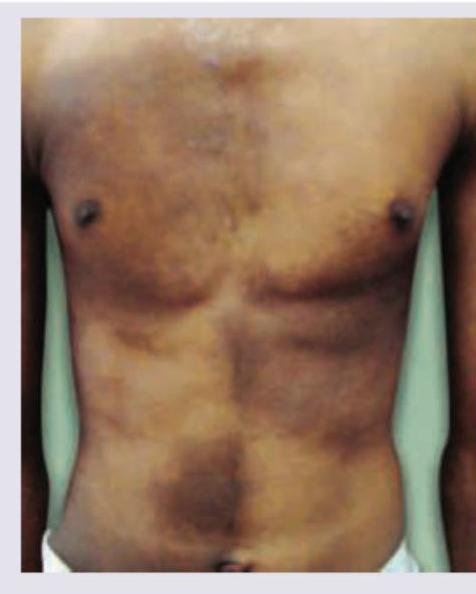
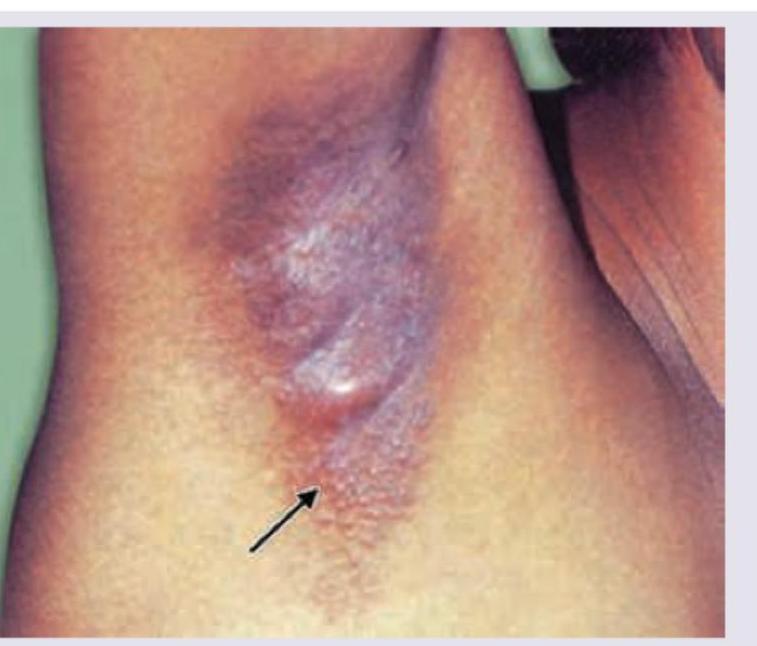
A 25-year-old female presents with the following lesions in the axilla, as shown by the arrow:
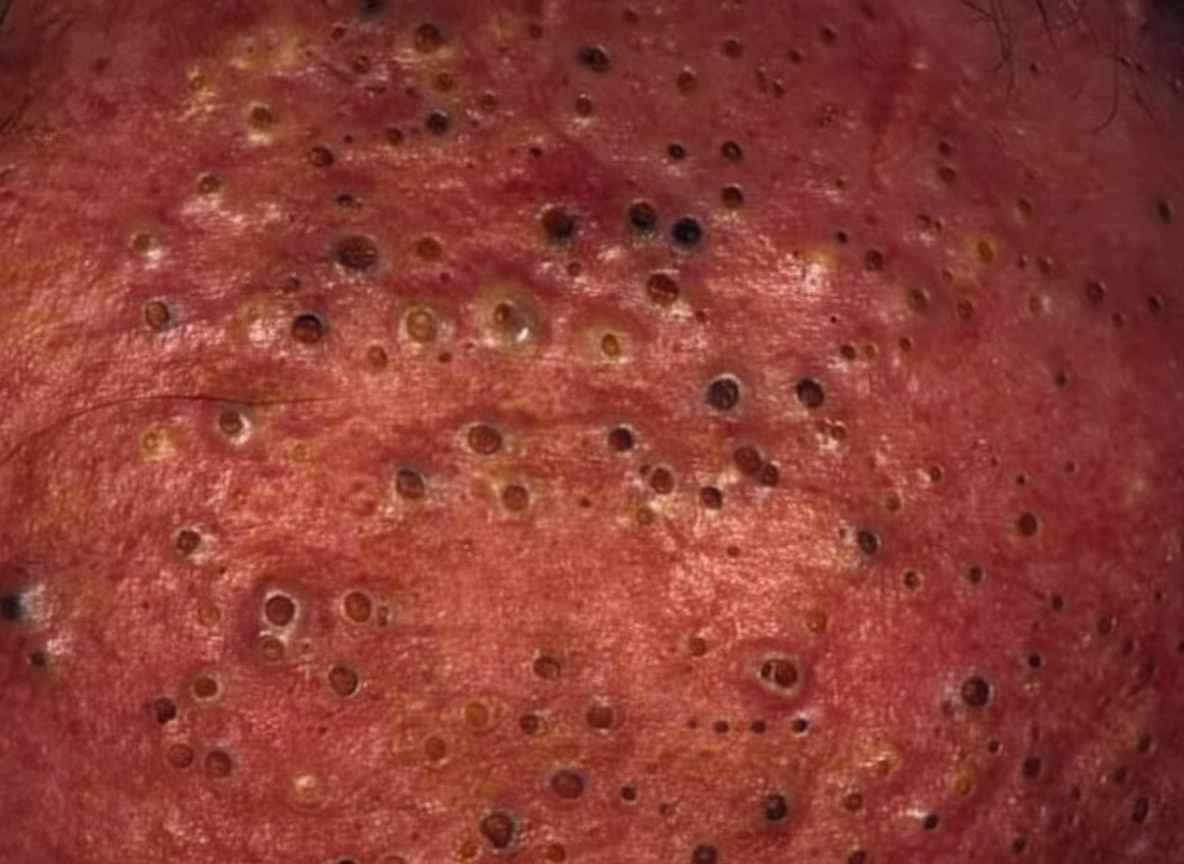
A young boy with oily skin presents with acne as shown. What is the appropriate treatment?
A male patient presents with patchy loss of hair involving the scalp, eyebrows, and beard with presence of grey hair in the affected areas. What is the most likely diagnosis?
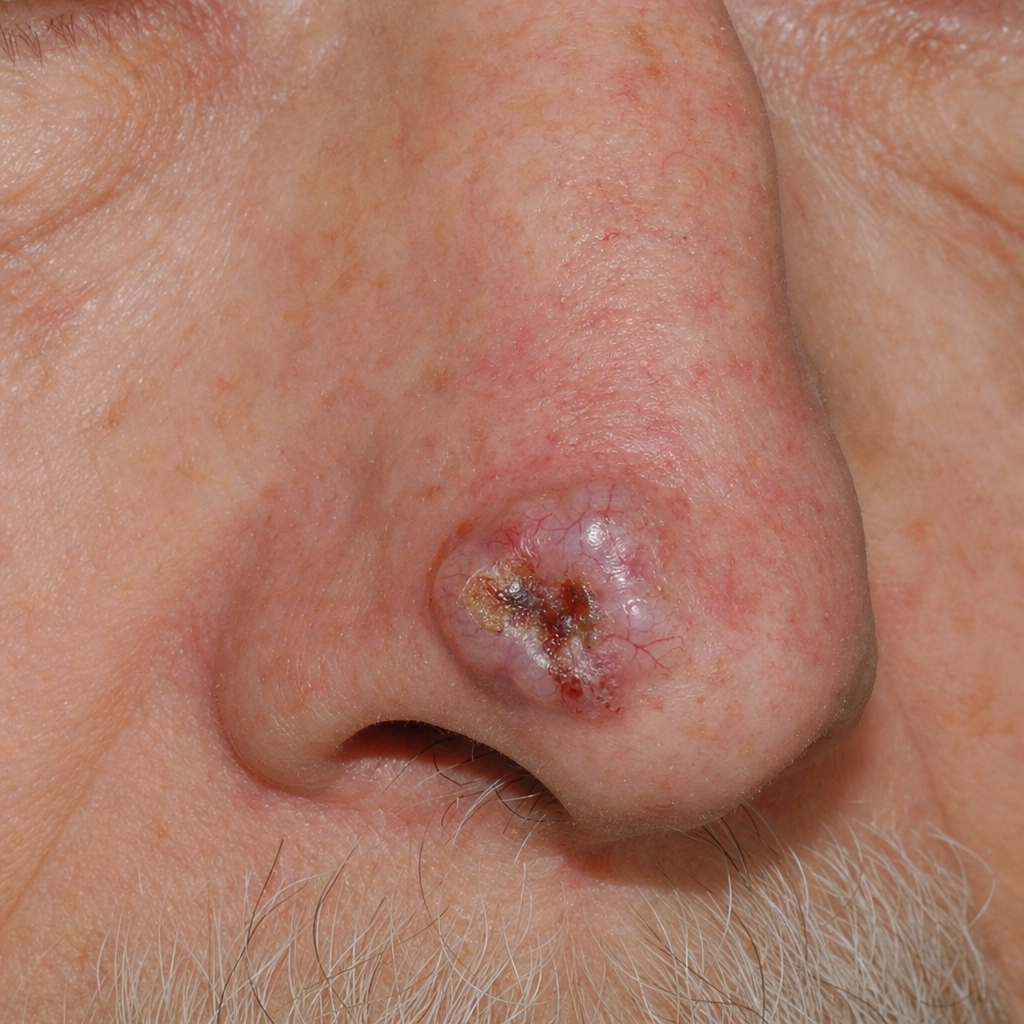
A 72-year-old fair-skinned farmer presents with a slowly enlarging, non-healing lesion on his nose that occasionally bleeds. He reports decades of outdoor sun exposure. The lesion has been present for approximately 18 months. On examination, a pearly, translucent nodule with rolled telangiectatic borders and central ulceration is noted on the nasal ala — a high-risk H-zone location. Which of the following is the most appropriate primary treatment for this lesion?
Want unlimited practice?
Get full access to all questions, explanations, and performance tracking.
Scan to download app