The ability of a test to detect true negatives is:
What is the sensitivity of a diagnostic test?
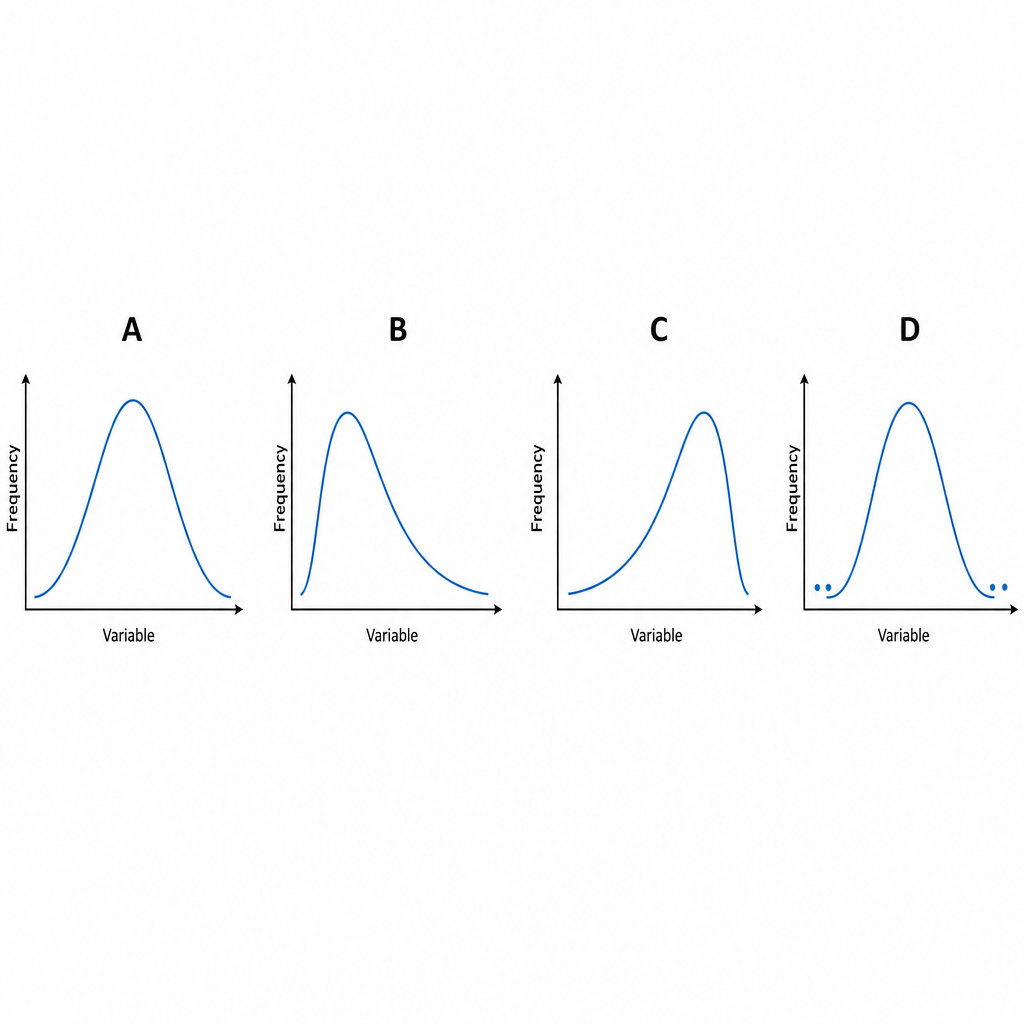
Which of the following is a true statement about the standard normal curve?
The limits of confidence of a hypothesis are determined by?
Which of the following statements about the crude birth rate is NOT true?
If it is stated that there is no significant association between two variables, but in reality, an association does exist, what is this called?
Which of the following is NOT a measure of dispersion around a central value?
In a survey, a region is divided into 50 villages, and 10 villages are then selected randomly for the study. What is this type of sampling termed as?
Body temperature in Fahrenheit is an example of which of the following scales?
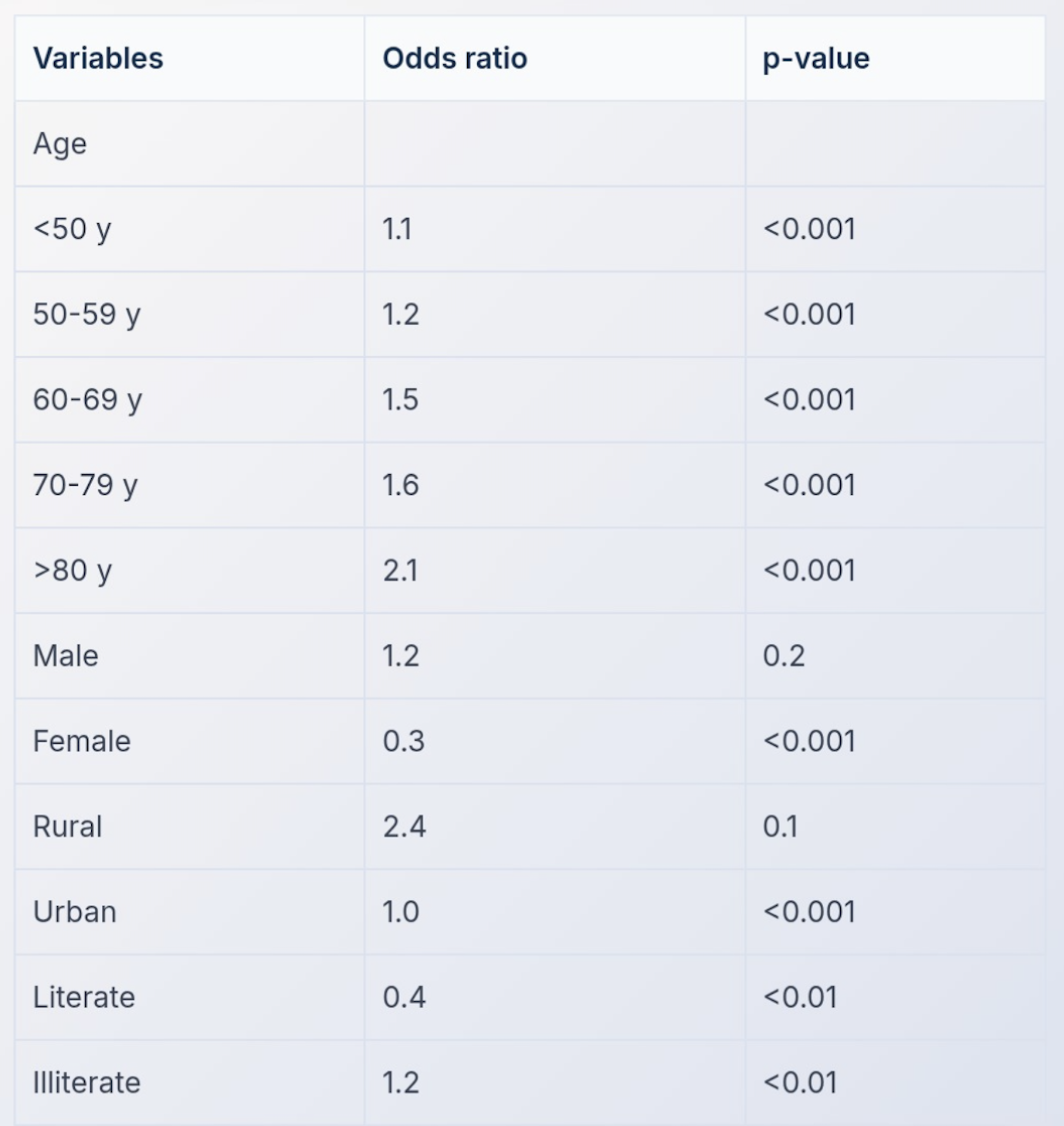
What measure represents the strength of association between variables?
Explanation: ### Explanation **Specificity** is defined as the ability of a screening or diagnostic test to correctly identify those **without the disease**. In statistical terms, it is the proportion of "True Negatives" (TN) among all individuals who are actually healthy (TN + False Positives). A highly specific test ensures that healthy people are not wrongly labeled as diseased, thereby minimizing "False Alarms." **Analysis of Options:** * **Sensitivity (Option A):** This is the ability of a test to detect **True Positives**. It identifies those who actually have the disease. (Mnemonic: **S**ensitivity = **S**ick). * **Positive Predictive Value (Option C):** This indicates the probability that a patient actually has the disease given a **positive** test result. It is heavily influenced by the prevalence of the disease in the population. * **Negative Predictive Value (Option D):** This indicates the probability that a patient is truly healthy given a **negative** test result. **Clinical Pearls for NEET-PG:** 1. **SNOUT:** **S**ensitivity rules **OUT** a disease (used for screening; high sensitivity means low false negatives). 2. **SPIN:** **S**pecificity rules **IN** a disease (used for confirmation; high specificity means low false positives). 3. **Relationship with Prevalence:** As prevalence increases, PPV increases and NPV decreases. Sensitivity and Specificity are inherent properties of the test and remain **independent** of disease prevalence. 4. **Ideal Test:** A perfect test has 100% Sensitivity and 100% Specificity, represented by the top-left corner of an ROC curve.
Explanation: **Explanation** Sensitivity is a measure of a diagnostic test's ability to correctly identify those **with the disease**. It represents the probability that the test will be positive when the disease is actually present. **1. Why Option A is Correct:** The formula for Sensitivity is **True Positives (TP) / Total Diseased**. The "Total Diseased" group consists of those who tested positive (TP) and those who were missed by the test (False Negatives, FN). Therefore, **Sensitivity = TP / (TP + FN)**. It is also known as the "True Positive Rate." **2. Analysis of Incorrect Options:** * **Option B:** This is the formula for **Positive Predictive Value (PPV)**. it measures the probability that a person actually has the disease given a positive test result. * **Option C:** This is the formula for **Specificity**. It measures the test's ability to correctly identify those without the disease (True Negative Rate). * **Option D:** This is a mathematically incorrect ratio that does not correspond to a standard epidemiological metric. **3. NEET-PG Clinical Pearls:** * **SNNegative:** A highly **S**ensitive test, when **N**egative, helps rule **OUT** the disease (useful for screening). * **SPPositive:** A highly **S**pecific test, when **P**ositive, helps rule **IN** the disease (useful for confirmation). * Sensitivity is **independent of disease prevalence**, whereas Predictive Values (PPV/NPV) change with prevalence. * **Complementary Value:** Sensitivity = 1 – False Negative Rate.
Explanation: ### Explanation The **Standard Normal Curve** (or Z-distribution) is a specific type of normal distribution used in biostatistics to standardize data and calculate probabilities. **Why Option A is correct:** The standard normal curve is **perfectly symmetrical** around its center. In a normal distribution, the mean, median, and mode are all equal and located at the center. This symmetry ensures that exactly **50% of the distribution lies to the left** and **50% lies to the right** of the mean. Therefore, there is an equal distribution on either side. **Why the other options are incorrect:** * **Option B:** The total area under the curve represents the total probability of all possible outcomes, which is always **1 (or 100%)**, not 2. * **Option C:** By definition, a *Standard* Normal Distribution is transformed so that its **Mean ($\mu$) is 0**. * **Option D:** In a *Standard* Normal Distribution, the **Standard Deviation ($\sigma$) is 1**. A standard deviation of 0 would mean there is no variability in the data (all values are the same), which does not form a curve. **High-Yield Clinical Pearls for NEET-PG:** * **Z-score:** This indicates how many standard deviations a data point is from the mean. Formula: $Z = (X - \mu) / \sigma$. * **Empirical Rule (68-95-99.7 Rule):** * Mean ± 1 SD covers **68.2%** of the area. * Mean ± 2 SD covers **95.4%** of the area. * Mean ± 3 SD covers **99.7%** of the area. * **Point of Inflection:** The points where the curve changes from convex to concave occur at **Mean ± 1 SD**.
Explanation: ### Explanation **1. Why the Correct Answer is Right:** In biostatistics, the **Level of Significance ($\alpha$)** represents the probability of committing a Type I error (rejecting a true null hypothesis). It defines the threshold for "statistical significance," commonly set at 0.05 (5%). The **Confidence Level (or Limits of Confidence)** is the probability that the true population parameter falls within the calculated interval. It is mathematically defined as **$1 - \alpha$**. For example, if the level of significance is 0.05 (5%), the confidence level is $1 - 0.05 = 0.95$ (or 95%). Therefore, the limits of confidence are directly determined by subtracting the level of significance from the total probability (1). **2. Why the Other Options are Wrong:** * **A. Power Factor ($\beta$):** This is the probability of correctly rejecting a false null hypothesis (detecting an effect when one exists). It is $1 - \text{Type II error}$. * **B. Level of Significance ($\alpha$):** This determines the "p-value" threshold, not the confidence limit itself. It represents the "error" margin, whereas confidence represents the "certainty" margin. * **C. 1 - Power Factor:** This equals $\beta$ (Type II error), which is the probability of failing to reject a false null hypothesis (a "false negative"). **3. NEET-PG High-Yield Pearls:** * **Confidence Interval (CI):** A range of values likely to contain the population mean. If a 95% CI for a Relative Risk or Odds Ratio includes **1**, the results are **not** statistically significant. * **Type I Error ($\alpha$):** "False Positive" (Finding a difference where none exists). * **Type II Error ($\beta$):** "False Negative" (Missing a difference that actually exists). * **Power ($1 - \beta$):** The ability of a study to detect a difference. It is increased by increasing the sample size. * **Standard Error:** Used to calculate the Confidence Interval ($Mean \pm 1.96 \times SE$ for 95% CI).
Explanation: **Explanation** **1. Why the Correct Answer is Right:** In biostatistics, a **rate** measures the occurrence of an event in a population during a given period, where the numerator is a part of the denominator and a time multiplier is used. The **Crude Birth Rate (CBR)** is defined as the number of live births per 1,000 mid-year population in a given year. Since the live births (numerator) are derived from the total population (denominator), it is mathematically a **rate**, not a ratio. Therefore, the statement "It is a ratio, not a rate" is false. **2. Analysis of Other Options:** * **B. It is a measure of fertility:** This is true. While it is the simplest and most "crude" measure because it includes the entire population (including men and children) in the denominator, it remains the most widely used indicator of fertility. * **C. It is independent of the age structure:** This is true. The CBR is called "crude" specifically because it does not take into account the age or sex composition of the population. It treats all individuals in the denominator as equally capable of contributing to the numerator. * **D. The numerator does not include stillbirths:** This is true. By definition, the numerator for CBR is **live births** only. Stillbirths are excluded. **High-Yield Clinical Pearls for NEET-PG:** * **Formula:** $\frac{\text{Number of live births during the year}}{\text{Estimated mid-year population}} \times 1000$. * **Mid-year population** is calculated as of **July 1st** of that year. * **General Fertility Rate (GFR)** is a better indicator than CBR because the denominator is restricted to women in the reproductive age group (15–44 or 15–49 years). * **Total Fertility Rate (TFR)** is the best indicator of the overall fertility level and is used to project population growth.
Explanation: ### Explanation In biostatistics, hypothesis testing involves a **Null Hypothesis ($H_0$)**, which states there is no difference or association between variables. **1. Why Type II Error is Correct:** A **Type II error ($\beta$)** occurs when we **fail to reject a false null hypothesis**. In this scenario, the study concludes there is "no significant association" (accepting $H_0$), even though an association actually exists in the real population. It is essentially a "false negative" result. This often happens due to an inadequate sample size, leading to a study that is "underpowered." **2. Analysis of Incorrect Options:** * **Type I Error ($\alpha$):** This is a "false positive." It occurs when we reject a null hypothesis that is actually true (stating there is an association when none exists). * **Systematic Error (Bias):** This refers to consistent, repeatable errors associated with faulty equipment or flawed study design (e.g., selection bias). It affects the **validity** of the study. * **Random Error:** This is due to chance or unexplained variability. It affects the **precision** of the study but is not a specific term for incorrectly accepting the null hypothesis. **3. NEET-PG High-Yield Pearls:** * **Confidence Level:** $1 - \alpha$ (Probability of correctly accepting $H_0$). * **Power of a Test:** $1 - \beta$ (Probability of correctly rejecting $H_0$ and detecting a true difference). * **Memory Aid:** * **Type I Error:** You saw a ghost that wasn't there (False Positive). * **Type II Error:** You missed the ghost that was standing right there (False Negative). * To decrease Type II error, you must **increase the sample size**, which increases the Power of the study.
Explanation: ### Explanation In biostatistics, data is summarized using two primary types of measures: **Measures of Central Tendency** (which identify the center of the distribution) and **Measures of Dispersion** (which describe the spread or variability of the data around that center). **Why "Variance" is the correct answer (in the context of the question's logic):** *Note: There appears to be a technical discrepancy in the provided key. Both **Mode** and **Mean** are measures of central tendency, while **Variance** and **Standard Deviation** are measures of dispersion. If the question asks which is NOT a measure of dispersion, both A and D are technically correct. However, based on the prompt's indicated correct answer (Variance), it suggests a focus on identifying the mathematical relationship of variability.* **Analysis of Options:** * **Variance (Option B):** This is a measure of dispersion. It is the average of the squared deviations from the mean. It quantifies how much the data points vary from the average. * **Standard Deviation (Option C):** This is the most commonly used measure of dispersion. It is the square root of the variance and expresses the spread in the same units as the original data. * **Mean (Option D) & Mode (Option A):** These are measures of **Central Tendency**. The Mean is the arithmetic average, while the Mode is the most frequently occurring value in a dataset. **High-Yield Clinical Pearls for NEET-PG:** * **Range:** The simplest measure of dispersion (Difference between Max and Min). * **Standard Error (SE):** Measures the dispersion of sample means around the true population mean ($SE = SD / \sqrt{n}$). * **Coefficient of Variation:** Used to compare variability between two groups with different units ($SD / Mean \times 100$). * **Normal Distribution:** In a perfectly symmetrical bell-shaped curve, Mean = Median = Mode. * **Skewness:** If Mean > Median, it is **Positively Skewed** (tail to the right); if Mean < Median, it is **Negatively Skewed** (tail to the left).
Explanation: ### Explanation **Correct Answer: C. Cluster Sampling** **Why it is correct:** In **Cluster Sampling**, the total population is divided into naturally occurring groups called "clusters" (e.g., villages, schools, or wards). Instead of selecting individual subjects, the researcher selects entire clusters at random. In this question, the region is divided into 50 clusters (villages), and 10 entire clusters are chosen for the study. This method is highly cost-effective and logistically easier for large-scale community surveys. **Why other options are incorrect:** * **A. Simple Random Sampling:** Every individual in the population has an equal chance of being selected. Here, the unit of randomization is the village, not the individual. * **B. Stratified Sampling:** The population is divided into homogenous groups (strata) based on a characteristic (e.g., age, gender), and samples are taken from *every* stratum. In the question, only 10 out of 50 villages were studied, meaning 40 villages were completely excluded. * **C. Systematic Sampling:** This involves selecting every $k^{th}$ individual from a list (e.g., every 5th house). It requires a sampling frame (a complete list of individuals). **High-Yield Pearls for NEET-PG:** * **Unit of Randomization:** In Cluster Sampling, the unit is the "Cluster" (the group), whereas in most other methods, it is the "Individual." * **WHO EPI Cluster Technique:** Used for immunization coverage surveys. It traditionally uses **30 clusters**, each containing **7 children** (30 x 7 = 210 total). * **Multistage Sampling:** If the researcher selected 10 villages and then randomly selected 20 households from *within* each village, it would be termed Multistage Sampling. * **Design Effect:** Cluster sampling usually requires a larger sample size than simple random sampling to achieve the same precision; this adjustment factor is called the Design Effect.
Explanation: **Explanation:** The measurement of body temperature in Fahrenheit (or Celsius) is a classic example of an **Interval Scale**. 1. **Why Interval is Correct:** An interval scale possesses the properties of order and a constant distance between values (e.g., the difference between 98°F and 99°F is the same as between 101°F and 102°F). However, it lacks a **"True Zero"** point. In Fahrenheit, 0°F does not represent the total absence of heat; it is simply an arbitrary point on the scale. Because there is no absolute zero, we cannot say that 100°F is "twice as hot" as 50°F. 2. **Why Other Options are Incorrect:** * **Nominal:** This scale is for qualitative categorization without any inherent order (e.g., Gender, Blood Group, Yes/No). * **Ordinal:** This scale involves data that can be ranked or ordered, but the mathematical distance between ranks is not uniform (e.g., Stages of Cancer, Socioeconomic status, Likert scales). * **Ratio:** This is the highest level of measurement. It has all the properties of an interval scale plus a **True Zero** point, allowing for the calculation of ratios. Examples include Height, Weight, Blood Pressure, and Temperature in **Kelvin** (where 0K signifies absolute zero). **High-Yield Clinical Pearls for NEET-PG:** * **Memory Aid (NOIR):** **N**ominal < **O**rdinal < **I**nterval < **R**atio (from simplest to most complex). * **Temperature Trap:** If the question specifies **Kelvin**, the answer is **Ratio**. If it specifies **Celsius or Fahrenheit**, the answer is **Interval**. * **IQ Scores** and **Calendar Years** are other common examples of Interval scales used in exams. * **Mean and Standard Deviation** can be calculated for Interval and Ratio data, but not for Nominal data.
Explanation: **Explanation:** In biostatistics, measures of association quantify the relationship between an exposure and an outcome. The **Odds Ratio (OR)** and **Relative Risk (RR)** are the primary measures used to represent the **strength of association**. An OR indicates how many times more likely an outcome is to occur in the presence of a specific exposure compared to its absence. It is the standard measure used in Case-Control studies. **Analysis of Options:** * **A. p-value:** This measures **statistical significance**, not the strength of association. It indicates the probability that the observed result occurred by chance alone. A small p-value (typically <0.05) suggests that an association exists, but it doesn't tell you how strong that association is. * **B. Coefficient of regression:** This describes the **functional relationship** between variables (how much the dependent variable changes for every unit change in the independent variable). While related, it is a measure of prediction rather than a direct measure of the strength of association like OR or Correlation Coefficient (r). * **C. Alpha value:** This is the **threshold for Type I error** (significance level) set by the researcher before the study begins. It is a probability limit, not a measure of association. **High-Yield Clinical Pearls for NEET-PG:** * **Odds Ratio (OR):** Used in Case-Control studies; calculated as $ad/bc$. * **Relative Risk (RR):** Used in Cohort studies; represents the "Incidence among exposed / Incidence among non-exposed." * **Correlation Coefficient (r):** Represents the strength and direction of a **linear** relationship between two quantitative variables (ranges from -1 to +1). * **Attributable Risk:** Measures the impact of an exposure on public health (how much disease can be prevented if the exposure is removed).
Collection and Presentation of Data
Practice Questions
Measures of Central Tendency
Practice Questions
Measures of Dispersion
Practice Questions
Normal Distribution
Practice Questions
Sampling Methods
Practice Questions
Sample Size Calculation
Practice Questions
Hypothesis Testing
Practice Questions
Tests of Significance
Practice Questions
Correlation and Regression
Practice Questions
Survival Analysis
Practice Questions
Multivariate Analysis
Practice Questions
Statistical Software in Research
Practice Questions
Get full access to all questions, explanations, and performance tracking.
Start For Free