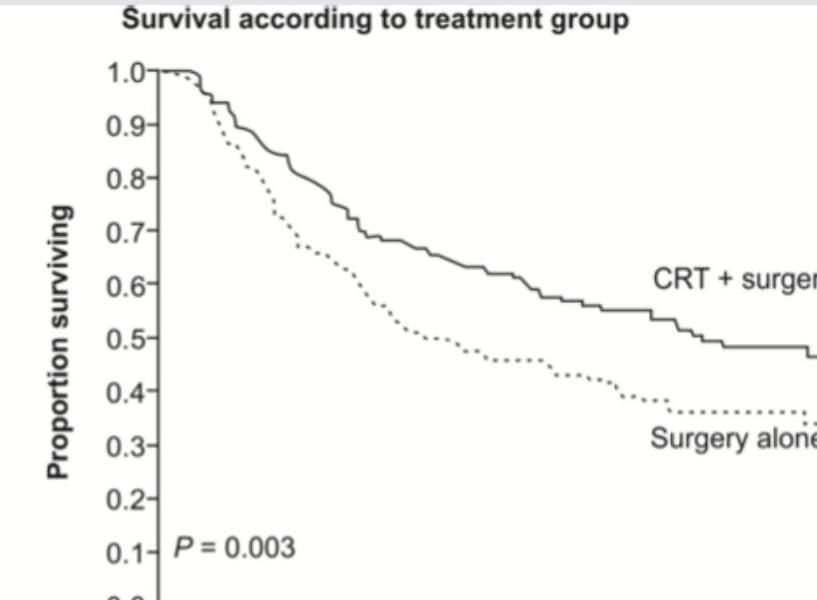
When the dependent or outcome variable is survival data, what regression method is applied?
Select the true statement regarding correlation.
If the annual growth rate of a population is 1.2%, in how many years is the population likely to get doubled?
Statistical power of a trial is equal to:
A population pyramid is an example of which type of graphical representation?
Which color container is used for the disposal of human anatomical waste materials?
Specificity is represented by which of the following formulas?
In a case-control study on smoking and lung cancer, 33 out of 35 lung cancer patients were smokers. Of 82 controls, 27 were non-smokers. Calculate the odds ratio.
What does the Sullin index measure?
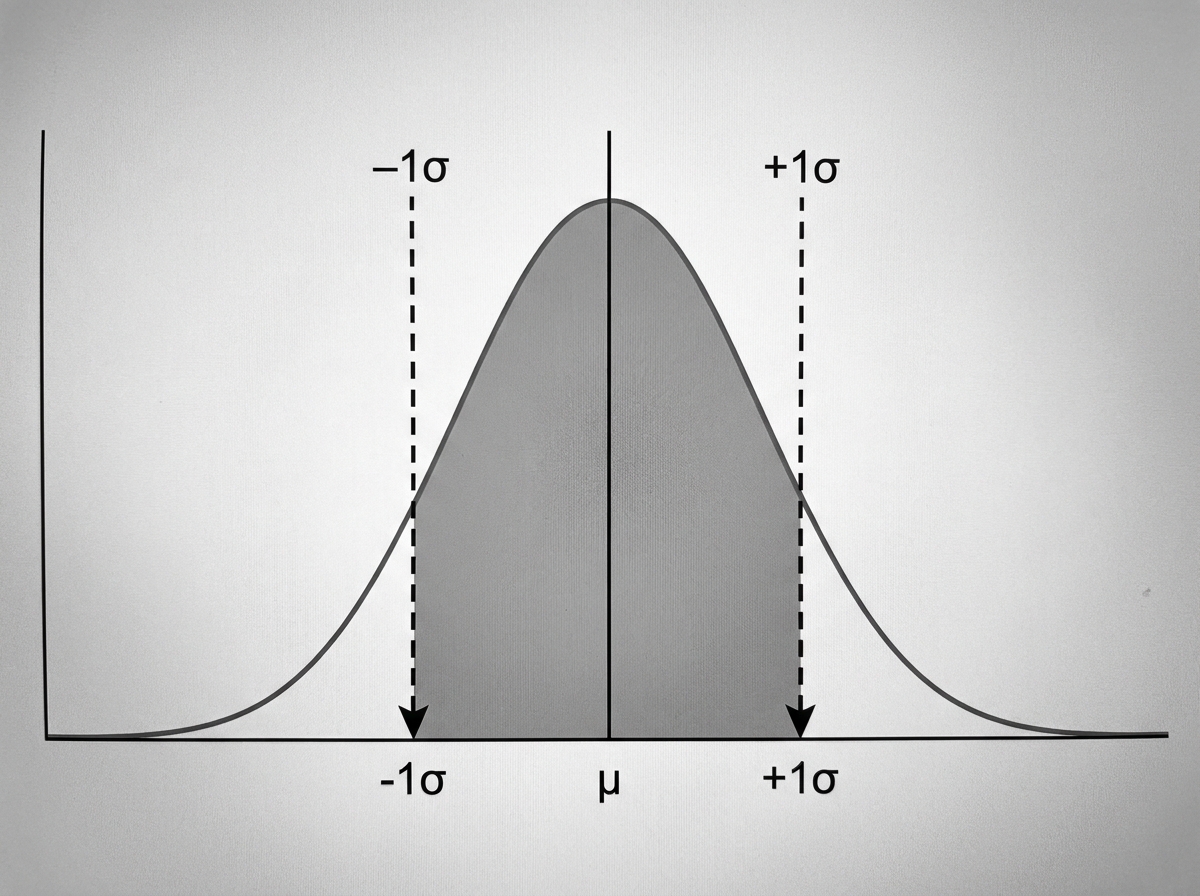
What are the properties of a standard normal distribution?
Explanation: ### Explanation **Correct Answer: C. Cox regression analysis** **Why it is correct:** Cox regression (or **Cox Proportional Hazards Model**) is the gold standard for analyzing **survival data**. Survival data is unique because it involves "time-to-event" outcomes (e.g., time until death, relapse, or recovery). Unlike other regressions, it can handle **censored data**—cases where the event hasn't occurred by the end of the study or the patient is lost to follow-up. It calculates the **Hazard Ratio (HR)**, which estimates the risk of the event occurring at any given point in time based on various independent variables. **Why the other options are incorrect:** * **A. Multiple Linear Regression:** This is used when the dependent variable is **continuous and numerical** (e.g., predicting blood pressure or BMI). It cannot account for time-to-event or censoring. * **B. Multiple Logistic Regression:** This is used when the dependent variable is **dichotomous/binary** (e.g., Yes/No, Dead/Alive). While it predicts the probability of an outcome, it ignores *when* the outcome occurred. **High-Yield Clinical Pearls for NEET-PG:** * **Kaplan-Meier Curve:** A non-parametric method used to *estimate and visualize* survival probabilities over time. It does not account for multiple covariates (unlike Cox regression). * **Log-Rank Test:** The statistical test used to *compare* the survival curves of two or more groups. * **Hazard Ratio (HR):** If HR = 1 (No difference); HR > 1 (Increased risk/harm); HR < 1 (Protective effect). * **Key Distinction:** Use **Logistic Regression** for "if" an event happens; use **Cox Regression** for "when" an event happens.
Explanation: ### Explanation Correlation measures the strength and direction of a linear relationship between two continuous variables. The correlation coefficient ($r$) ranges from **-1 to +1**. **Why Option A is Correct:** In a **positive correlation** ($0 < r < +1$), both variables move in the **same direction**. If one variable increases, the other also increases. "Moderately positive" implies a clear upward trend, though the data points do not fall perfectly on a straight line. **Analysis of Incorrect Options:** * **Option B:** In a **perfectly negative correlation** ($r = -1$), a rise in one variable leads to a proportional **fall** (not rise) in the other. They move in opposite directions. * **Option C:** In any **negative correlation**, the variables move in opposite directions. If one variable falls, the other must **rise**. A "proportional" change is only characteristic of "perfect" correlation ($r = 1$ or $-1$). * **Option D:** In a **perfectly positive correlation** ($r = +1$), a rise in one variable leads to a proportional **rise** (not fall) in the other. --- ### High-Yield Clinical Pearls for NEET-PG 1. **Range of $r$:** Always between **-1 and +1**. * $+1$: Perfect positive correlation (straight line, upward slope). * $-1$: Perfect negative correlation (straight line, downward slope). * $0$: No linear correlation. 2. **Strength of Correlation:** * $0.0 - 0.3$: Weak * $0.3 - 0.7$: Moderate * $0.7 - 1.0$: Strong 3. **Coefficient of Determination ($r^2$):** This represents the proportion of variance in one variable that is predictable from the other. (e.g., if $r = 0.6$, then $r^2 = 0.36$ or $36\%$). 4. **Golden Rule:** Correlation does **not** imply causation. It only describes a mathematical relationship. 5. **Graphical Representation:** Correlation is visualized using a **Scatter Diagram**.
Explanation: ### Explanation **1. Why the Correct Answer is Right** The time required for a population to double in size is calculated using the **Rule of 70**. This is a simplified mathematical formula used in demography and biostatistics to estimate doubling time based on a constant annual growth rate. The formula is: **Doubling Time (T) = 70 / Annual Growth Rate (r)** Applying the values from the question: * Growth Rate (r) = 1.2% * Doubling Time = 70 / 1.2 = **58.33 years** Looking at the options provided, **Option D (47-50 years)** is the closest approximation to the calculated value. In many standard textbooks (like Park’s Preventive and Social Medicine), the "Rule of 70" or "Rule of 69" is used to explain that a 1% growth rate doubles a population in 70 years, while a 2% rate doubles it in 35 years. At 1.2%, the value falls between 50 and 60 years. **2. Why Other Options are Wrong** * **Option A (18-20 years):** This would require a growth rate of approximately 3.5% to 3.8% ($70/18 \approx 3.8$). * **Option B (20-23 years):** This would require a growth rate of approximately 3% ($70/23 \approx 3$). * **Option C (28-35 years):** This corresponds to a growth rate of 2% to 2.5% ($70/2 \approx 35$). **3. Clinical Pearls & High-Yield Facts for NEET-PG** * **Rule of 70 vs. 69:** While 70 is easier for mental calculation, some statisticians use 69.3 (natural log of 2) for higher precision. * **India’s Context:** According to the 2011 Census, India's annual exponential growth rate was approximately 1.64%. * **Demographic Gap:** The difference between the Crude Birth Rate (CBR) and Crude Death Rate (CDR) determines the natural increase in population. * **Vital Index:** (Births / Deaths) × 100. It measures the population's biological success.
Explanation: ### Explanation **1. Understanding the Correct Answer (B):** The **Power of a Study** is the probability that a test will correctly reject a null hypothesis when it is false (i.e., the ability of a study to detect a true difference or effect). * **Type II Error ($\beta$):** Occurs when we fail to reject a null hypothesis that is actually false (a "false negative"). * **Power ($1 - \beta$):** Represents the probability of avoiding a Type II error. If $\beta$ is 0.20 (20%), the power is 0.80 (80%), meaning there is an 80% chance of detecting a statistically significant difference if one truly exists. **2. Analysis of Incorrect Options:** * **Option A ($1 + \alpha$):** This is a mathematically invalid expression in biostatistics. * **Option C ($\alpha + \beta$):** This represents the sum of the probabilities of making a Type I and Type II error, which does not define any specific statistical parameter. * **Option D ($\alpha / \beta$):** This ratio is not used to define power. However, the relationship between $\alpha$ and $\beta$ is inverse; decreasing the risk of a Type I error typically increases the risk of a Type II error for a fixed sample size. **3. NEET-PG High-Yield Pearls:** * **Type I Error ($\alpha$):** "False Positive" – Rejecting the null hypothesis when it is true. (Fixed by the p-value, usually 0.05). * **Type II Error ($\beta$):** "False Negative" – Accepting the null hypothesis when it is false. * **Determinants of Power:** Power increases with **increased sample size**, increased effect size, and increased $\alpha$ level. * **Standard Values:** In most clinical trials, the minimum acceptable power is **80%**. * **Confidence Level:** Defined as **$1 - \alpha$** (the probability of correctly accepting the null hypothesis when it is true).
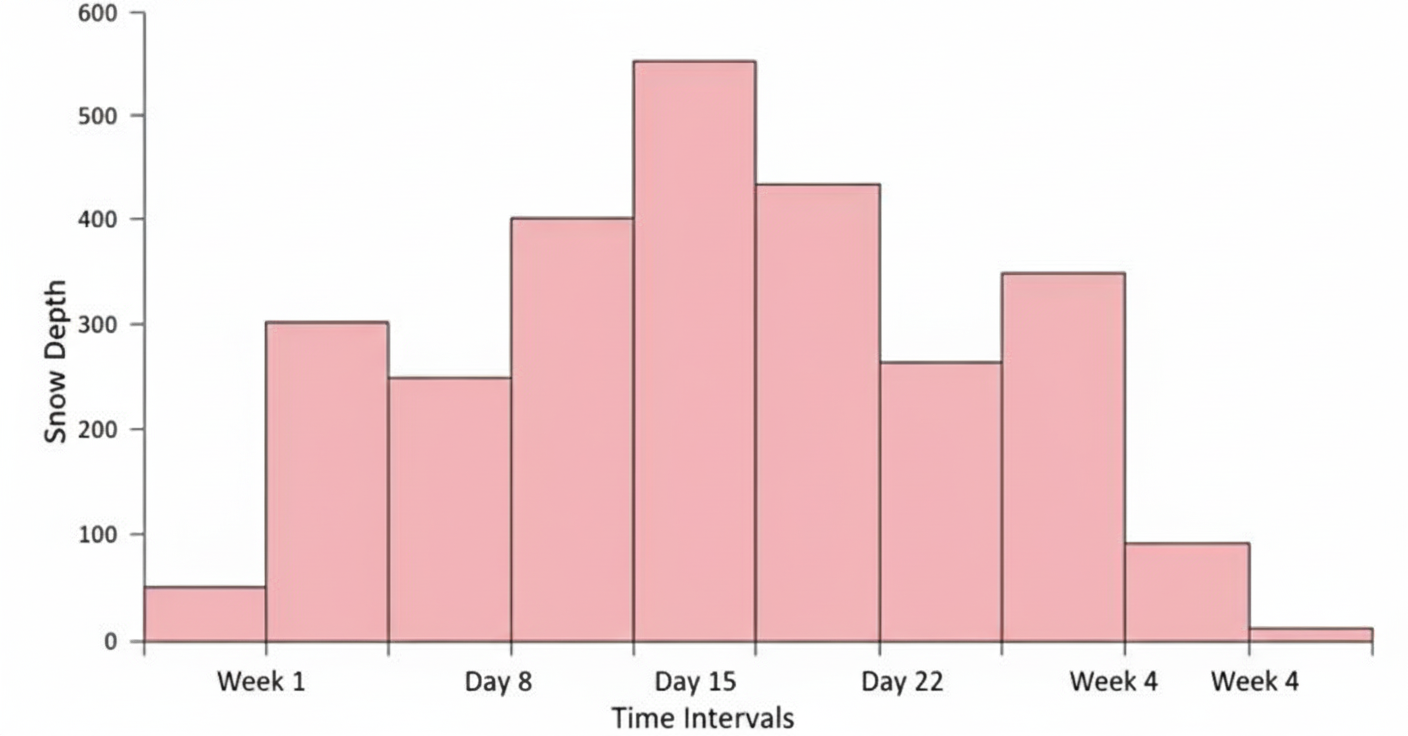
Explanation: ### Explanation **1. Why the Correct Answer is Right:** A **population pyramid** (also known as an age-sex pyramid) is essentially a **double-sided horizontal bar chart**. It consists of two back-to-back sets of horizontal bars representing the age structure of a population, with males on the left and females on the right. Each bar represents a specific age group (e.g., 0–4 years), and the length of the bar corresponds to the number or percentage of people in that group. Because the data categories (age groups) are discrete intervals and the bars are used to compare these categories, it is classified as a modified bar chart. **2. Why the Incorrect Options are Wrong:** * **Histogram:** While a population pyramid looks similar to a histogram, histograms are used for continuous data where there are no gaps between bars. In a population pyramid, the bars are distinct representations of specific age cohorts. * **Frequency Polygon:** This is a line graph used to represent frequency distributions by joining the midpoints of the tops of the bars of a histogram. It does not use bars and cannot represent two variables (male/female) simultaneously in the same "pyramid" format. * **Pie Chart:** This is a circular chart used to show proportions of a whole (segments of 360°). It cannot represent the complex, multi-layered age and sex distribution required for a population pyramid. **3. High-Yield Clinical Pearls for NEET-PG:** * **Expansive Pyramid:** Wide base (high fertility) and narrow top (high mortality). Typical of developing countries like India (though India is transitioning). * **Constrictive Pyramid:** Narrow base (low fertility). Typical of developed countries (e.g., Japan, Italy). * **Stationary Pyramid:** Narrow base and similar width across age groups, indicating low birth and death rates. * **Dependency Ratio:** Can be derived from the population pyramid by comparing the "dependent" groups (<15 and >64 years) to the "working" group (15–64 years).
Explanation: **Explanation:** The disposal of Biomedical Waste (BMW) is governed by the **BMW Management Rules (2016)**. According to these guidelines, **Yellow-colored non-chlorinated plastic bags/containers** are designated for highly infectious and organic waste that requires incineration or deep burial. **1. Why Yellow is Correct:** Human anatomical waste (tissues, organs, body parts, and fetuses) falls under the category of waste that must be incinerated to ensure complete destruction of pathogens and to prevent aesthetic/ethical issues. Other items for the yellow bag include soiled waste (blood-soaked cotton), discarded medicines, and chemical waste. **2. Why the Other Options are Incorrect:** * **Red:** Used for **recyclable contaminated waste** (plastics) such as catheters, IV tubes, syringes (without needles), and gloves. These undergo autoclaving/microwaving followed by recycling. * **Black:** Previously used for general municipal waste; however, under current rules, general waste is disposed of in **Green (biodegradable)** and **Blue (non-biodegradable)** bins for municipal collection. * **Blue:** Specifically used for **glassware** (broken or intact ampoules/vials) and metallic body implants. These undergo disinfection and recycling. **Clinical Pearls for NEET-PG:** * **White (Translucent) Containers:** Used for **sharps** (needles, scalpels). They must be puncture-proof and leak-proof. * **Cytotoxic drugs:** Must be disposed of in yellow bags/containers labeled with the "Cytotoxic" symbol. * **Placenta:** Always goes into the **Yellow bag**. * **Blood bags:** Also go into the **Yellow bag**. * **Chlorinated plastic bags** are strictly prohibited in BMW management to prevent the release of dioxins during incineration.
Explanation: ### Explanation **1. Understanding the Correct Answer (Option D)** Specificity is the ability of a diagnostic test to correctly identify those **without the disease** (True Negatives). It is the proportion of people who are truly healthy and are correctly identified as such by the test. * **Formula:** $\text{Specificity} = \frac{\text{True Negatives (TN)}}{\text{True Negatives (TN)} + \text{False Positives (FP)}}$ * The denominator (TN + FP) represents the total number of people who actually **do not have the disease**. Therefore, specificity measures the "True Negative Rate." **2. Analysis of Incorrect Options** * **Option A:** This is the formula for **Sensitivity**. It represents the ability of a test to correctly identify those with the disease (True Positive Rate). * **Option B:** This is an incorrect mathematical ratio. It uses True Negatives in the numerator but the "Total Diseased" (TP + FN) in the denominator, which does not represent a standard epidemiological metric. * **Option C:** This is also an incorrect ratio. It compares True Positives against the "Total Healthy" population, which lacks clinical utility. **3. NEET-PG High-Yield Pearls** * **SNOUT:** **S**ensitivity rules **OUT** (a highly sensitive test, if negative, helps rule out the disease). * **SPIN:** **S**pecificity rules **IN** (a highly specific test, if positive, helps rule in/confirm the disease). * **Screening vs. Diagnosis:** Screening tests should have high **Sensitivity** (to catch all cases), while confirmatory tests should have high **Specificity** (to avoid false labeling). * **Relationship with False Positives:** Specificity is equal to $(1 - \text{False Positive Rate})$. As specificity increases, the number of false positives decreases.
Explanation: ### **Explanation** The **Odds Ratio (OR)** is the standard measure of association used in **Case-Control studies**. It represents the ratio of the odds of exposure among cases to the odds of exposure among controls. #### **Step 1: Construct the 2x2 Contingency Table** To calculate OR, we must first organize the data into a standard table: | | Lung Cancer (Cases) | No Lung Cancer (Controls) | | :--- | :---: | :---: | | **Smokers (Exposed)** | **a** = 33 | **b** = 55 (82 total - 27 non-smokers) | | **Non-Smokers (Non-exposed)** | **c** = 2 (35 total - 33 smokers) | **d** = 27 | #### **Step 2: Apply the Formula** The formula for Odds Ratio is: **(a × d) / (b × c)** * **OR** = (33 × 27) / (55 × 2) * **OR** = 891 / 110 = **8.1** An OR of 8.1 indicates that the odds of lung cancer are 8.1 times higher among smokers compared to non-smokers. --- #### **Analysis of Incorrect Options** * **Option A (0.21):** This value is less than 1, which would imply smoking is a "protective factor" against lung cancer. * **Option C (4.1) & D (2.1):** These are mathematical errors resulting from misplacing values in the 2x2 table (e.g., using the total number of subjects instead of the non-exposed cells). --- #### **High-Yield Clinical Pearls for NEET-PG** 1. **Study Design:** Odds Ratio is used for Case-Control studies (retrospective), while **Relative Risk (RR)** is used for Cohort studies (prospective). 2. **Interpretation:** * OR > 1: Positive association (Risk factor). * OR = 1: No association. * OR < 1: Negative association (Protective factor). 3. **Rare Disease Assumption:** If the disease is rare, the Odds Ratio provides a good approximation of the Relative Risk. 4. **Cross-Product Ratio:** OR is also known as the "Cross-product ratio" because it is the product of the diagonals (ad/bc).
Explanation: ### Explanation **Correct Answer: C. Life expectancy adjusted for disability** The **Sullivan Index** (also known as Disability-Free Life Expectancy) is a composite health indicator that measures the number of years a person is expected to live in a healthy state (without disability). It is calculated by subtracting the duration of bed disability and/or inability to perform major activities from the estimated life expectancy. It is considered one of the most advanced indicators of a population's health status because it combines mortality data with morbidity data. **Analysis of Incorrect Options:** * **A. Disability:** Disability alone is usually measured by "Impairment/Disability rates" or specific surveys. The Sullivan index is a longitudinal projection, not a point prevalence of disability. * **B. Life years adjusted with disability:** This refers to **DALY (Disability Adjusted Life Years)**. DALY is a measure of the "Global Burden of Disease" and expresses years of life lost due to premature death plus years lived with disability. While similar in name, DALY measures *loss* of health, whereas the Sullivan Index measures *remaining* healthy life. * **D. Life expectancy:** This is a pure mortality indicator (usually expressed as $e_0$ at birth). It does not account for the quality of those years or the presence of disease/disability. **High-Yield Clinical Pearls for NEET-PG:** * **Sullivan Index Formula:** Life Expectancy – Duration of Disability. * **HALE (Health-Adjusted Life Expectancy):** Often used interchangeably with Sullivan’s index in modern contexts; it is the equivalent number of years in full health that a newborn can expect to live. * **PQLI (Physical Quality of Life Index):** Includes Infant Mortality Rate (IMR), Life Expectancy at age 1, and Literacy. (Note: It does *not* include Income/GNP). * **HDI (Human Development Index):** Includes Life Expectancy at birth, Mean/Expected years of schooling, and GNI per capita.
Explanation: ### Explanation The **Standard Normal Distribution** (also known as the **Z-distribution**) is a specific type of normal distribution used in biostatistics to standardize different sets of data for comparison. It is defined by two fixed parameters: a **Mean ($\mu$) of 0** and a **Standard Deviation ($\sigma$) of 1**. **Why Option D is Correct:** In any distribution, the **Variance** is the square of the Standard Deviation ($\sigma^2$). Since the standard deviation of a standard normal distribution is 1, the variance is $1^2$, which equals **1.0**. **Analysis of Incorrect Options:** * **Option A:** A standard normal distribution is **perfectly symmetrical** (bell-shaped), not skewed. In this distribution, the Mean, Median, and Mode all coincide at the center (zero). * **Option B:** The mean of a standard normal distribution is **0**, not 1.0. A mean of 0 ensures the distribution is centered on the y-axis. * **Option C:** The standard deviation is **1.0**, not 0.0. A standard deviation of 0 would mean all data points are identical, resulting in no "distribution" at all. **High-Yield Clinical Pearls for NEET-PG:** * **Z-Score:** This represents the number of standard deviations a data point is from the mean. Formula: $Z = (x - \mu) / \sigma$. * **68-95-99 Rule:** * Mean ± 1 SD covers **68.2%** of values. * Mean ± 2 SD covers **95.4%** of values. * Mean ± 3 SD covers **99.7%** of values. * **Total Area:** The total area under the curve is always equal to **1** (representing 100% probability). * **Point of Inflection:** In a standard normal curve, the points of inflection occur at ± 1 SD.
Collection and Presentation of Data
Practice Questions
Measures of Central Tendency
Practice Questions
Measures of Dispersion
Practice Questions
Normal Distribution
Practice Questions
Sampling Methods
Practice Questions
Sample Size Calculation
Practice Questions
Hypothesis Testing
Practice Questions
Tests of Significance
Practice Questions
Correlation and Regression
Practice Questions
Survival Analysis
Practice Questions
Multivariate Analysis
Practice Questions
Statistical Software in Research
Practice Questions
Get full access to all questions, explanations, and performance tracking.
Start For Free