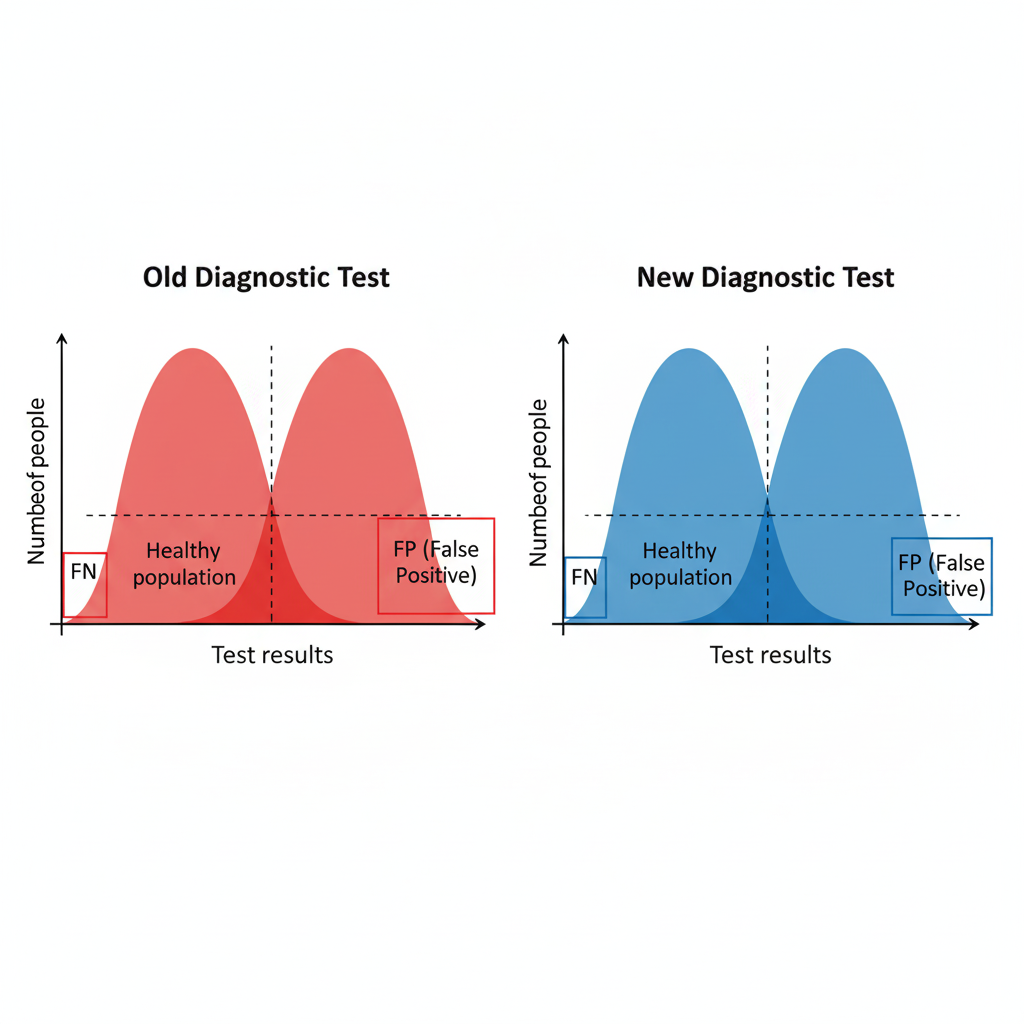
The American Diabetes Association (ADA) recently lowered the cut-off value for fasting glucose used in diagnosing diabetes mellitus from 140 mg/dL to 126 mg/dL. This reference interval change would be expected to produce which of the following alterations?
Out of 11 births in a hospital, 5 babies weighed over 2.5 kg and 5 weighed less than 2.5 kg. What value does 2.5 represent?
If the mean is 209, the median is 196, and the mode is 135, what type of distribution does this indicate?
Which of the following is a pre-requisite for the Chi-square test to compare two samples?
What type of data description is represented by a stem-and-leaf diagram?
A party was attended by 100 people. 60 cases of food poisoning were reported, and 12 deaths were recorded. What is the case fatality rate in this scenario?
What is the minimum number of newborns that should be examined in a given population to accurately calculate the percentage of low birth weight (LBW) babies?
If neonatal deaths are 450, stillbirths are 212, and total live births are 12450, what is the Neonatal Mortality Rate (NMR)?
Which statistical test is appropriate for comparing ten blood pressure readings taken before and after treatment?
Which of the following is NOT a method of survival analysis?
Explanation: ### Explanation This question tests the understanding of how changing diagnostic cut-off points affects screening test parameters. **1. Why Option C is Correct:** When the cut-off for a disease is **lowered** (from 140 to 126 mg/dL), the test becomes more "inclusive." This results in: * **Increased Sensitivity:** More people with the disease are correctly identified. * **Decreased False Negatives:** Fewer cases are missed. * **Increased Negative Predictive Value (NPV):** Since the number of false negatives decreases, a "negative" result becomes more reliable. If the test says you don't have diabetes at a lower threshold, it is highly likely you truly do not have it. **2. Analysis of Incorrect Options:** * **Option A (Decrease Sensitivity):** Incorrect. Lowering the cut-off **increases** sensitivity because it captures more diseased individuals who were previously classified as "normal." * **Option B (Increase False Negative Rate):** Incorrect. As sensitivity increases, the false negative rate **decreases** ($FN = 1 - Sensitivity$). * **Option D (Increase Positive Predictive Value):** Incorrect. Lowering the cut-off increases the number of **False Positives** (decreases specificity). As the number of false positives rises, the PPV **decreases**, because a positive result is now less likely to represent a true case of the disease. **3. High-Yield Clinical Pearls for NEET-PG:** * **Trade-off Rule:** Sensitivity and Specificity are inversely related. Moving a cut-off to include more diseased individuals (increasing sensitivity) always happens at the expense of specificity. * **Screening vs. Diagnosis:** For screening tests, we prefer high sensitivity (low cut-off) to avoid missing cases. For confirmatory/diagnostic tests, we prefer high specificity (high cut-off) to avoid false labeling. * **Predictive Values & Prevalence:** Unlike Sensitivity/Specificity, PPV and NPV are dependent on the **prevalence** of the disease in the population. If prevalence increases, PPV increases and NPV decreases.
Explanation: ### Explanation **Correct Answer: C. Median** The **Median** is defined as the middle-most value in a distribution when the data points are arranged in ascending or descending order. It divides the distribution into two equal halves, such that 50% of the observations lie above it and 50% lie below it. In this scenario: * Total births ($n$) = 11. * Observations above 2.5 kg = 5. * Observations below 2.5 kg = 5. * The 2.5 kg value occupies the 6th position (the exact center), making it the median. --- ### Why other options are incorrect: * **Arithmetic Average (Mean):** This is the sum of all observations divided by the total number of observations. We cannot calculate the mean here because the specific weights of the other 10 babies are not provided. * **Geometric Average:** This is the $n^{th}$ root of the product of all observations. It is typically used for rates and ratios (e.g., bacterial growth or population growth) and is not applicable here. * **Mode:** This represents the most frequently occurring value in a dataset. The question does not state that 2.5 kg is the most common weight, only that it is the central point. --- ### High-Yield Clinical Pearls for NEET-PG: 1. **Best Measure of Central Tendency:** * For **Normally distributed (symmetrical) data**: Mean is preferred. * For **Skewed data (outliers)**: Median is the most robust measure as it is not affected by extreme values. 2. **Relationship in Skewed Data:** * **Right (Positive) Skew:** Mean > Median > Mode. * **Left (Negative) Skew:** Mode > Median > Mean. 3. **Median Calculation:** For an odd number of observations, the median is the $(\frac{n+1}{2})^{th}$ value. For an even number, it is the average of the two middle values.
Explanation: ### Explanation **1. Why Positively Skewed is Correct:** In a frequency distribution, the relationship between the three measures of central tendency (Mean, Median, and Mode) determines the "skewness" or asymmetry of the curve. * **The Rule:** In a **Positively Skewed** distribution (also known as Right-skewed), the tail of the curve extends toward the higher values (right side). * **The Relationship:** **Mean > Median > Mode**. * **In this question:** Mean (209) > Median (196) > Mode (135). Since the mean is pulled toward the higher extreme values, it confirms a positive skew. **2. Why Incorrect Options are Wrong:** * **Standard Curve (Normal Distribution):** In a perfectly symmetrical bell-shaped curve, the **Mean = Median = Mode**. Here, the values are significantly different. * **Negatively Skewed:** In a left-skewed distribution, the tail extends toward the lower values. The relationship is reversed: **Mean < Median < Mode**. * **J-shaped:** This represents a distribution where the frequency is maximum at one end and minimum at the other, not following the typical unimodal central tendency relationship described here. **3. Clinical Pearls & High-Yield Facts for NEET-PG:** * **Mnemonic for Positive Skew:** "The **Mean** is **More**" (Mean > Median). * **Sensitivity to Outliers:** The **Mean** is the most affected by extreme values (outliers), while the **Mode** is the least affected. * **Karl Pearson’s Formula:** For moderately skewed distributions: * $Mode = (3 \times Median) - (2 \times Mean)$ * **Clinical Example:** Income distribution or incubation periods of most infectious diseases (like Salmonellosis) typically show a positive skew.
Explanation: ### Explanation The **Chi-square ($\chi^2$) test** is a non-parametric test used to compare proportions or determine the association between categorical variables. **Why Option A is Correct:** A fundamental assumption of the Chi-square test is the **independence of observations**. This means that each individual or observation must fall into one, and only one, category. The samples must be **mutually exclusive**; an individual cannot belong to both groups being compared (e.g., a patient cannot be in both the 'Treatment' group and the 'Placebo' group simultaneously). If the samples were related or paired (e.g., pre-test and post-test results for the same person), the McNemar Chi-square test would be used instead. **Why Other Options are Incorrect:** * **Option B:** If samples are not mutually exclusive, the assumption of independence is violated, leading to an overestimation of the significance (Type I error). * **Option C:** The Chi-square test is **non-parametric**, meaning it does not require the data to follow a **Normal (Gaussian) distribution**. It is "distribution-free" and deals with frequencies rather than mean values. **High-Yield Clinical Pearls for NEET-PG:** * **Qualitative Data:** Chi-square is the most common test for qualitative/categorical data (e.g., Male vs. Female, Cured vs. Not Cured). * **Yates’ Correction:** Applied when the sample size is small or any expected cell frequency is **< 5** in a 2x2 table. * **Degrees of Freedom (df):** For a contingency table, $df = (r-1) \times (c-1)$. For a 2x2 table, $df = 1$. * **Null Hypothesis:** The Chi-square test assumes there is no association between the variables; a p-value < 0.05 rejects this hypothesis.
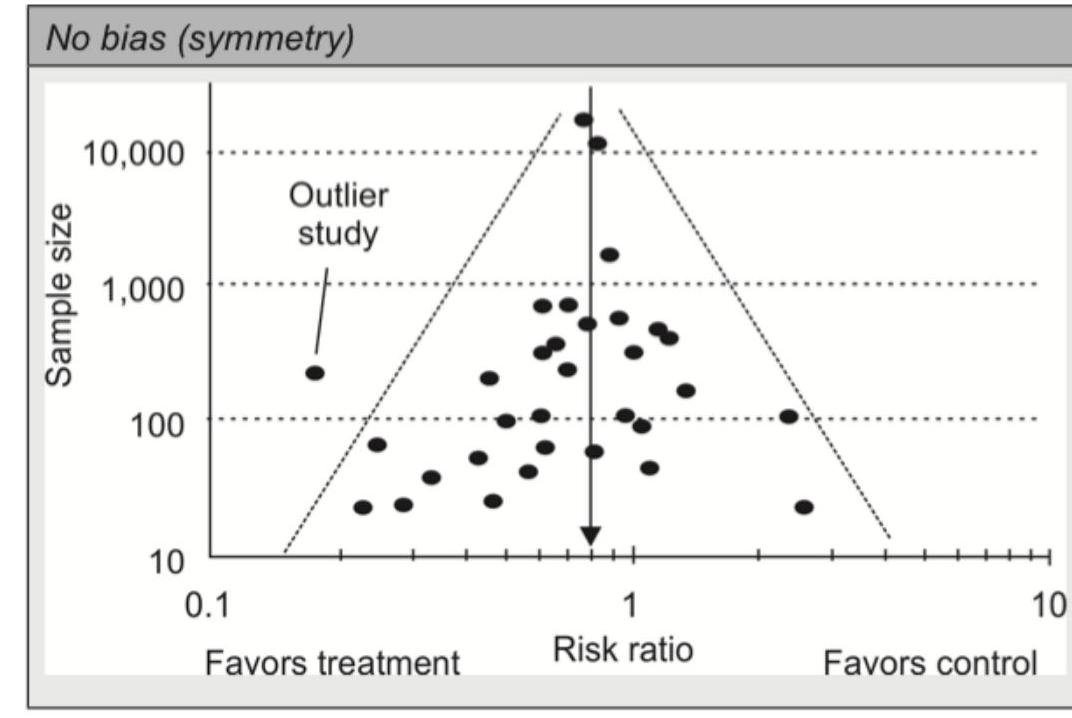
Explanation: ### Explanation **Correct Answer: A. Stem and leaf diagram** **Understanding the Concept:** A **Stem-and-Leaf diagram** is a unique hybrid tool in biostatistics that acts as both a **tabular and a graphical representation** of data. It is used to describe the **frequency distribution** of a quantitative dataset. * The "Stem" represents the leading digit(s) (e.g., tens), and the "Leaf" represents the trailing digit (e.g., units). * Unlike a histogram, it **retains the individual raw data values** while simultaneously showing the shape of the distribution (skewness, outliers, and modal class). This makes it an excellent tool for small to medium-sized datasets where seeing every data point is necessary. **Why the other options are incorrect:** * **B. Box Whisker Plot:** This is used to represent the **five-number summary** of a dataset (Minimum, First Quartile, Median, Third Quartile, and Maximum). It is primarily used to visualize dispersion and identify outliers, but it does not show individual raw data points like a stem-and-leaf plot. * **C. Forrest Plot:** This is a graphical display used specifically in **Meta-analysis**. It illustrates the individual results (odds ratios/relative risks) of multiple studies and provides a "pooled" or summary effect size. * **D. Funnel Plot:** This is a scatter plot used in Meta-analysis to detect **Publication Bias**. A symmetrical funnel indicates no bias, while an asymmetrical funnel suggests the presence of bias. **NEET-PG High-Yield Pearls:** * **Stem-and-Leaf vs. Histogram:** Both show distribution shape, but only the Stem-and-Leaf plot preserves the original data values. * **Quantitative Data Tools:** Histograms, Frequency Polygons, and Box plots are for quantitative data. * **Qualitative Data Tools:** Bar charts, Pie charts, and Pictograms are for qualitative data. * **Scatter Diagram:** Used to show the **correlation** between two continuous variables.
Explanation: ### Explanation **1. Understanding the Correct Answer (C: 20%)** The **Case Fatality Rate (CFR)** measures the virulence or killing power of a disease. It is defined as the proportion of deaths from a specific disease compared to the total number of people diagnosed with that disease during a specific period. The formula is: $$\text{CFR} = \frac{\text{Total number of deaths due to a disease}}{\text{Total number of cases of that disease}} \times 100$$ In this scenario: * Total cases of food poisoning = 60 * Total deaths = 12 * Calculation: $(12 / 60) \times 100 = \mathbf{20\%}$ **2. Why Other Options are Incorrect** * **A (6%):** This value is obtained by dividing deaths (12) by the total population (200) if the denominator was doubled, or it represents a miscalculation of the Cause-Specific Mortality Rate. * **B (15%):** This is a mathematical error and does not correspond to any standard epidemiological indicator in this data set. * **D (30%):** This might be confused with the Attack Rate if the number of cases (60) was divided by a different denominator, but it is mathematically incorrect for CFR here. **3. NEET-PG High-Yield Pearls** * **CFR vs. Mortality Rate:** CFR is a **ratio** (often expressed as a percentage), not a true rate, because time is not explicitly in the denominator. * **Denominator Importance:** The denominator for CFR is always the **number of cases**, whereas for the Mortality Rate, it is the **total mid-year population**. * **Clinical Significance:** CFR is the best indicator of the **severity** of an acute infectious disease and the effectiveness of treatment. * **Attack Rate:** In this scenario, the Attack Rate would be $(60 / 100) \times 100 = 60\%$.
Explanation: ### Explanation **Core Concept: Sample Size for Proportions** In biostatistics, the minimum sample size required to estimate a proportion (like the prevalence of LBW) with reasonable precision depends on the expected prevalence and the allowable margin of error. According to standard epidemiological guidelines (often cited in Park’s Textbook of Preventive and Social Medicine), a sample size of **500** is considered the minimum threshold for calculating birth-related statistics, such as Low Birth Weight (LBW) or Infant Mortality Rate (IMR), in a community to ensure the results are statistically representative. **Analysis of Options:** * **Option C (500 babies):** This is the standard "rule of thumb" in community medicine for estimating the prevalence of common health indicators. It provides a balance between statistical power and feasibility in field surveys. * **Option A (100 babies):** This sample size is too small. The margin of error would be too high, leading to an inaccurate estimation of LBW, which is a critical indicator of community health. * **Option B (1000 babies):** While a larger sample size increases accuracy, it is not the *minimum* required. In the context of competitive exams, "500" is the specific benchmark taught for this calculation. * **Option D (10,000 babies):** This size is typically required for calculating rare events or vital rates like Maternal Mortality Ratio (MMR), but it is unnecessary and resource-intensive for LBW. **High-Yield Facts for NEET-PG:** * **LBW Definition:** Birth weight less than **2.5 kg** (regardless of gestational age). * **Sample Size for MMR:** Because maternal death is a rarer event, a much larger sample (often 10,000 to 100,000) is required compared to LBW or IMR. * **Precision Rule:** If you want to double the precision of your estimate, you must quadruple the sample size ($n \propto 1/L^2$). * **LBW in India:** It is one of the most important predictors of infant mortality; approximately 25-30% of Indian babies are LBW.
Explanation: **Explanation:** The **Neonatal Mortality Rate (NMR)** is a key indicator of newborn care and maternal health. It is defined as the number of deaths of live-born infants during the first 28 completed days of life per 1,000 live births in a given year. **Calculation:** * **Formula:** (Number of neonatal deaths / Total live births) × 1000 * **Data provided:** Neonatal deaths = 450; Live births = 12,450. * **Calculation:** (450 / 12,450) × 1000 = **36.14 per 1000 live births.** * Rounding to the nearest whole number gives **36**. **Analysis of Options:** * **Option B (36):** Correct. This follows the standard formula using only live births in the denominator. * **Option A (17):** Incorrect. This value does not correlate with the provided data. * **Option C (64):** Incorrect. This value is approximately the **Perinatal Mortality Rate (PMR)**. PMR includes (Stillbirths + Early Neonatal Deaths) / (Live births + Stillbirths) × 1000. If one mistakenly adds stillbirths to the numerator and total births to the denominator, they arrive at a higher figure (~52), but 64 is mathematically incorrect for NMR. * **Option D (92):** Incorrect. This is a distractor value significantly higher than typical NMR ranges. **High-Yield Clinical Pearls for NEET-PG:** * **Denominator Rule:** For NMR, IMR, and U5MR, the denominator is always **Live Births**. For Perinatal Mortality Rate and Maternal Mortality Rate (Ratio), the denominator includes **Total Births** (Live births + Stillbirths). * **Early Neonatal Death:** Death within 0–7 days of birth. * **Late Neonatal Death:** Death between 7–28 days of birth. * **Most common cause of Neonatal Mortality in India:** Prematurity and low birth weight (followed by birth asphyxia and sepsis).
Explanation: **Explanation:** The correct answer is **A. Paired t-test**. In this scenario, the data consists of quantitative (numerical) measurements—blood pressure—taken from the **same group of individuals** at two different points in time (before and after treatment). This is a classic example of **"paired" or "dependent" data**, where each "before" value has a direct match with an "after" value. The Paired t-test is specifically designed to compare the means of two related groups to determine if the intervention (treatment) caused a statistically significant change. **Why other options are incorrect:** * **Z-test:** Used for comparing means when the sample size is large (typically **n > 30**) and the population variance is known. Here, the sample size is small (n=10). * **Student’s t-test (Unpaired/Independent):** Used to compare the means of two **independent** groups (e.g., comparing BP between Group A and Group B). It does not account for the relationship between "before and after" readings in the same person. * **Correlation test:** Measures the strength and direction of a linear relationship between two variables (e.g., height and weight), but it does not compare means or determine the effectiveness of a treatment. **High-Yield Clinical Pearls for NEET-PG:** * **Quantitative Data + 2 Groups (Dependent/Matched):** Paired t-test. * **Quantitative Data + 2 Groups (Independent):** Unpaired t-test. * **Quantitative Data + >2 Groups:** ANOVA (Analysis of Variance). * **Qualitative (Categorical) Data:** Chi-square test. * If the data is not normally distributed (Non-parametric), the alternative to the Paired t-test is the **Wilcoxon Signed Rank Test**.
Explanation: ### Explanation The core of this question lies in distinguishing between a **statistical method (test)** and a **descriptive measure (parameter)**. **Why "Survival Rate" is the correct answer:** Survival rate is a **descriptive statistic** (a proportion or percentage) that indicates the fraction of people in a study group who are alive after a certain period (e.g., 5-year survival rate). It is an **outcome measure**, not a mathematical method or test used to analyze time-to-event data. **Analysis of Incorrect Options:** * **A. Kaplan-Meier Method:** This is the most common **non-parametric** method used to estimate the survival function. It uses "product-limit" calculations and is ideal for small samples where the exact time of death/event is known for each subject. * **B. Actuarial Method (Life Table):** Also known as the "Interval-based" method, it is used for large samples. It calculates survival probabilities over fixed time intervals (e.g., 1 year, 5 years) rather than at the exact time of each event. * **C. Kruskal-Wallis Test:** While this is a non-parametric test, it is used to compare the medians of **three or more independent groups**. It is essentially the non-parametric alternative to one-way ANOVA. Since it can be used to compare survival times across multiple groups, it is considered a tool within the broader scope of survival analysis. **High-Yield NEET-PG Pearls:** * **Survival Analysis:** Used when the outcome of interest is the **time** until an event occurs (Time-to-event data). * **Censoring:** A unique feature of survival analysis where the event has not occurred for a subject by the end of the study or they are lost to follow-up. * **Log-Rank Test:** The most common statistical test used to compare the survival curves of two or more groups. * **Cox Proportional Hazards Model:** A semi-parametric regression method used to investigate the relationship between survival time and several predictor variables.
Collection and Presentation of Data
Practice Questions
Measures of Central Tendency
Practice Questions
Measures of Dispersion
Practice Questions
Normal Distribution
Practice Questions
Sampling Methods
Practice Questions
Sample Size Calculation
Practice Questions
Hypothesis Testing
Practice Questions
Tests of Significance
Practice Questions
Correlation and Regression
Practice Questions
Survival Analysis
Practice Questions
Multivariate Analysis
Practice Questions
Statistical Software in Research
Practice Questions
Get full access to all questions, explanations, and performance tracking.
Start For Free