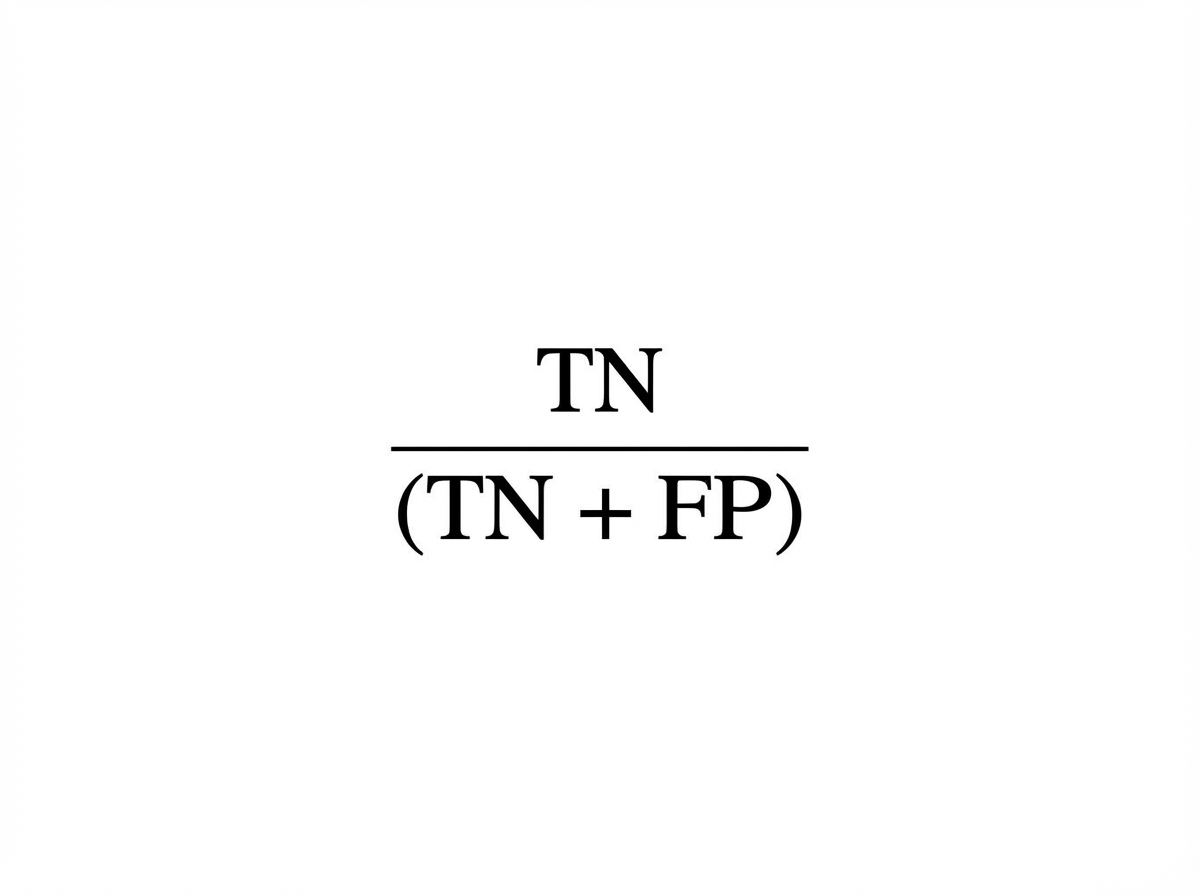
Sensitivity of a screening test measures:
All of the following are true regarding the Sample Registration System (SRS) EXCEPT:
Which of the following is the best measure of variability?
Which of the following is NOT included in the Human Development Index?
According to the 1991 census, what was the average family size?
A box and whisker plot is also known as which of the following?
Proportional mortality rate is:
In a given population, approximately 10% of all deaths in the age group 0 to 14 years were due to accidents and injuries. In the same population, 20% of all deaths in the age group 15 to 35 years were due to accidents and injuries. How many times is the risk of dying due to accidents and injuries among 15 to 35 years as compared to the 0-14 years age group?
Mammography has 90% sensitivity and 98% specificity for breast carcinoma. What is the probability that a woman with breast carcinoma remains undiagnosed for 2 consecutive years?
Twenty-five children are chosen randomly from a school playground. Their heights are measured in 2 consecutive months. What statistical test could be used to test the hypothesis that their heights are not different in consecutive months?
Explanation: **Explanation:** **Sensitivity** is defined as the ability of a screening test to correctly identify those who actually have the disease. It is the proportion of people with the disease who test positive. 1. **Why Option A is Correct:** Sensitivity is mathematically expressed as **[True Positives (TP) / (True Positives + False Negatives)]**. Since (TP + FN) represents the total number of diseased individuals, sensitivity directly measures the **True Positive Rate**. A test with high sensitivity is ideal for screening because it ensures that very few cases are missed (low false negatives). 2. **Why Other Options are Incorrect:** * **Option B (False Positive Rate):** This is calculated as (1 – Specificity). It represents the proportion of healthy individuals incorrectly identified as diseased. * **Option C (True Negative Rate):** This is the definition of **Specificity**. It measures the test's ability to correctly identify those without the disease. * **Option D (False Negative Rate):** This is calculated as (1 – Sensitivity). It represents the proportion of diseased individuals whom the test fails to identify. **Clinical Pearls for NEET-PG:** * **SNOUT:** A highly **S**ensitive test, when **N**egative, rules **OUT** the disease (useful for screening). * **SPIN:** A highly **SP**ecific test, when **P**ositive, rules **IN** the disease (useful for confirmation). * Sensitivity and Specificity are **inherent properties** of a test; they do not change with the prevalence of the disease in a population (unlike Predictive Values). * **Ideal Screening Test:** High sensitivity, low cost, and safe.
Explanation: The **Sample Registration System (SRS)** is a large-scale demographic survey in India that provides reliable annual estimates of birth rate, death rate, and other fertility/mortality indicators at the national and sub-national levels. ### Why Option D is the Correct Answer (The "EXCEPT") The SRS does **not** conduct an annual survey; instead, it conducts a **half-yearly survey** (every 6 months). The system relies on a continuous enumeration of births and deaths by a resident part-time enumerator, which is then verified by an independent supervisor every six months. This retrospective supervision ensures the accuracy of the data collected. ### Explanation of Other Options * **Option A (Initiated in the 1960s):** This is correct. The SRS was initiated by the Registrar General of India on a pilot basis in 1964-65 and became fully operational in 1969-70. * **Option B (Estimates birth and death rates):** This is correct. The primary objective of the SRS is to provide reliable annual estimates of the Crude Birth Rate (CBR), Crude Death Rate (CDR), Infant Mortality Rate (IMR), and Total Fertility Rate (TFR). * **Option C (Dual-record system):** This is correct. The SRS is unique because it uses a **Dual Record System**, consisting of: 1. **Continuous enumeration** by a local resident (usually a teacher). 2. **Independent retrospective survey** every six months by a supervisor. The records from both sources are matched to minimize under-reporting. ### High-Yield Facts for NEET-PG * **Nodal Agency:** Office of the Registrar General of India (Ministry of Home Affairs). * **Gold Standard:** SRS is considered the most reliable source of vital statistics in India (more reliable than Civil Registration System/CRS). * **Sample Unit:** In rural areas, the unit is a village (or a segment if population >2000); in urban areas, it is a census enumeration block. * **IMR Data:** SRS is the main source for calculating the current Infant Mortality Rate in India.
Explanation: ### Explanation **1. Why Standard Deviation (SD) is the correct answer:** In biostatistics, measures of variability (or dispersion) describe how spread out the data points are from the center. **Standard Deviation** is considered the best and most widely used measure of variability because: * It is based on all observations in the dataset. * It is mathematically stable and used in further statistical tests (like calculating the Standard Error). * It indicates how much, on average, each value deviates from the mean. In a normal distribution, approximately 68% of values lie within ±1 SD. **2. Why the other options are incorrect:** * **Mean, Mode, and Median (Options A, B, and C):** These are **Measures of Central Tendency**, not variability. They describe the "center" or "average" of a dataset but provide no information about how scattered the data points are. * **Mean:** The arithmetic average. * **Median:** The middle-most value (best for skewed data). * **Mode:** The most frequently occurring value. **3. High-Yield Clinical Pearls for NEET-PG:** * **Range:** The simplest but most unstable measure of variability (Difference between Maximum and Minimum). * **Variance:** The square of the Standard Deviation ($SD^2$). * **Coefficient of Variation (CV):** Used to compare the variability of two different series (e.g., comparing height in cm vs. weight in kg). Formula: $(SD / Mean) \times 100$. * **Standard Error (SE):** Measures the variability of sample means; it is always smaller than the SD. Formula: $SD / \sqrt{n}$. * **Ideal Measure:** While SD is the best for normally distributed data, the **Interquartile Range (IQR)** is the best measure of variability for skewed data.
Explanation: The **Human Development Index (HDI)** is a composite statistical measure used to rank countries based on social and economic development. It is based on three core dimensions, each measured by specific indicators. ### **Explanation of the Correct Answer** The question asks which is **NOT** included. While "Life expectancy at birth" is indeed the indicator for the health dimension, the correct answer selection in this specific MCQ context often hinges on the distinction between **Dimensions** and **Indicators**. However, looking at the options provided, there is a technical nuance: HDI is composed of **three dimensions** (Long and healthy life, Knowledge, and A decent standard of living). * **Option B (Life expectancy at birth)** is the *indicator* for the health dimension. * **Option C (Schooling)** represents the *indicators* for the knowledge dimension. * **Option A (GNI per capita)** is the *indicator* for the standard of living. * **Option D (Knowledge)** is the *dimension* itself. *Note: If the question intended to ask for the component NOT included in the calculation, all are technically parts of the HDI. However, in many NEET-PG pattern questions, "Life expectancy at 1 year" is often used as a distractor (as it belongs to PQLI), whereas "Life expectancy at birth" belongs to HDI.* ### **Analysis of Options** * **A. GNI per capita:** This is the current indicator used to measure the "Decent Standard of Living" dimension (replacing GDP per capita). * **C. Schooling:** Includes "Mean years of schooling" (for adults) and "Expected years of schooling" (for children), together forming the "Knowledge" dimension. * **D. Knowledge:** This is one of the three fundamental dimensions of the HDI. ### **High-Yield NEET-PG Pearls** * **HDI Components:** 1. Health (Life expectancy at birth), 2. Knowledge (Mean/Expected schooling), 3. Standard of Living (GNI per capita). * **Calculation:** HDI is the **Geometric Mean** of these three normalized indices. * **HDI vs. PQLI:** * **PQLI (Physical Quality of Life Index)** includes: Infant Mortality Rate (IMR), Life Expectancy at Age 1, and Literacy. * **Crucial Difference:** PQLI does **not** include per capita income; HDI does. * **Range:** HDI values range from 0 to 1.
Explanation: **Explanation:** In Community Medicine and Demography, understanding historical census data is crucial for tracking population trends and planning public health interventions. **1. Why 5.5 is Correct:** According to the **1991 Census of India**, the average family size (household size) was recorded as **5.5**. This period was characterized by a high Total Fertility Rate (TFR) and the prevalence of joint or extended family systems in both rural and urban areas. Monitoring family size is a key demographic indicator used to calculate housing needs, per capita resource allocation, and the efficacy of family planning programs. **2. Analysis of Incorrect Options:** * **A (2.4):** This value is significantly lower than any recorded national average for India. For context, 2.1 is the "Replacement Level Fertility" goal, not the family size. * **C (4.4):** This represents a more modern figure. As per the **NFHS-5 (2019-21)**, the average household size in India has declined to approximately **4.4**, reflecting the transition toward nuclear families and lower fertility rates. * **D (5.9):** This figure is higher than the 1991 average. While some specific states or rural pockets may have reached this level, the national average remained at 5.5. **3. High-Yield Clinical Pearls for NEET-PG:** * **Definition:** A "Household" in the census refers to a group of persons who commonly live together and take their meals from a common kitchen. * **Trend:** India’s family size has shown a steady **downward trend** from 1991 (5.5) to 2001 (5.3), 2011 (4.8/4.9), and currently ~4.4 (NFHS-5). * **Demographic Transition:** The reduction in family size is a direct result of the demographic transition, specifically the decline in the Birth Rate and the success of the "Small Family Norm."
Explanation: ### Explanation **1. Why the Correct Answer is Right:** A **Box and Whisker Plot** is a graphical representation used in biostatistics to display the distribution, central tendency, and dispersion of a dataset. It is called a **Five-number summary plot** because it is constructed using five specific statistical values: 1. **Minimum value:** The lowest data point (excluding outliers). 2. **First Quartile (Q1):** The 25th percentile (lower edge of the box). 3. **Median (Q2):** The 50th percentile (the line inside the box). 4. **Third Quartile (Q3):** The 75th percentile (upper edge of the box). 5. **Maximum value:** The highest data point (excluding outliers). The "box" represents the **Interquartile Range (IQR = Q3 – Q1)**, which contains the middle 50% of the data, while the "whiskers" extend to the minimum and maximum values. **2. Why the Incorrect Options are Wrong:** * **Magical box:** This is not a recognized statistical term. * **Four summary plot:** This is incorrect because four values are insufficient to define both the spread (range) and the internal distribution (quartiles/median) of a dataset. A box plot specifically requires the five parameters mentioned above to be complete. **3. Clinical Pearls & High-Yield Facts for NEET-PG:** * **Outliers:** In a box plot, outliers are typically plotted as individual dots or asterisks beyond the whiskers (usually defined as values >1.5 times the IQR from the edge of the box). * **Skewness:** If the median line is not in the center of the box, the data is skewed. If the median is closer to the bottom, it is **positively skewed**; if closer to the top, it is **negatively skewed**. * **Comparison:** Box plots are excellent for comparing distributions between different clinical groups (e.g., comparing blood pressure across three different age groups). * **Non-Parametric:** Box plots are particularly useful for visualizing non-parametrically distributed data where the mean and standard deviation may be misleading.
Explanation: ### Explanation The correct answer is **Proportion**. **1. Why it is a Proportion:** Despite its name, **Proportional Mortality Rate (PMR)** is mathematically a proportion, not a rate. It measures the number of deaths due to a specific cause (or in a specific age group) relative to the **total number of deaths** from all causes in the same population during the same period. * **Formula:** (Deaths due to a specific cause / Total deaths from all causes) × 100. * Because the numerator (deaths from a specific cause) is a subset of the denominator (total deaths), it satisfies the definition of a proportion. It is usually expressed as a percentage. **2. Why other options are incorrect:** * **Rate:** A true rate (like Crude Death Rate) requires a "population at risk" in the denominator and a time component. PMR does not use the mid-year population; it only compares deaths to deaths. * **Ratio:** A ratio compares two independent entities (e.g., Male:Female ratio) where the numerator is not part of the denominator. In PMR, the specific deaths are inherently part of the total deaths. **3. NEET-PG High-Yield Pearls:** * **Indicator of Burden:** PMR is used to identify the leading causes of death in a community and to determine the relative importance of a specific disease. * **Case Fatality Rate (CFR):** Like PMR, CFR is also a **proportion**, even though it is called a "rate." It measures the killing power of a disease (Numerator: Deaths from disease; Denominator: Total cases of that disease). * **Key Distinction:** PMR is **not** a measure of the risk of dying from a disease (that is the Cause-Specific Mortality Rate); it only shows the composition of deaths.
Explanation: ### Explanation The correct answer is **D. Cannot be concluded from the data.** **1. Why the correct answer is right:** The data provided in the question refers to **Proportional Mortality Rates (PMR)**, not actual risk or incidence. * **PMR** = (Number of deaths due to a specific cause / Total deaths in that age group) × 100. * PMR describes the *composition* of deaths within a group; it does not measure the *risk* of dying. * To calculate **Risk** (Relative Risk or Risk Ratio), we require the **Age-Specific Mortality Rate (ASMR)**, which uses the total mid-year population of that age group as the denominator. Since the total population sizes for the 0–14 and 15–35 age groups are not provided, we cannot determine the actual risk. A higher proportion does not necessarily mean a higher risk if the overall death rate in that group is very low. **2. Why the incorrect options are wrong:** * **Option A (2):** This is a common trap. While 20% is twice 10%, this only compares the *proportions* of deaths. Without knowing the total number of deaths or the population size in each bracket, we cannot say the risk is doubled. * **Option B (0.5):** This would imply the risk is halved, which is mathematically unsupported by the proportions given. * **Option C (1):** This would imply the risks are equal, which cannot be determined without the denominators (population at risk). **3. High-Yield Clinical Pearls for NEET-PG:** * **Proportional Mortality Rate:** Useful for identifying the leading causes of death within a specific group and for resource allocation, but **cannot** be used to compare the risk of death between two different populations. * **Specific Death Rate:** The only reliable way to compare risk between groups is to use the population at risk as the denominator. * **Numerator Analysis:** If the PMR for a disease increases, it could be because the disease is becoming more fatal, OR because deaths from other causes are decreasing.
Explanation: ### Explanation **1. Understanding the Correct Answer (1%)** To solve this, we must first identify the **False Negative Rate (FNR)**. * **Sensitivity** is the ability of a test to correctly identify those with the disease. Here, it is 90% (0.9). * The **False Negative Rate** is the probability that a person *with* the disease tests negative. It is calculated as: $1 - \text{Sensitivity}$. * $1 - 0.90 = 0.10$ (or 10%). The question asks for the probability of remaining undiagnosed for **two consecutive years**. Since each year's screening is an independent event, we use the **Multiplication Rule of Probability**: * Year 1 False Negative (0.10) × Year 2 False Negative (0.10) = **0.01 or 1%**. **2. Why Other Options are Incorrect** * **10% (Implicitly considered):** This represents the probability of a false negative in a single year. It fails to account for the second consecutive screening. * **2%:** This is a common distractor often confused with the complement of specificity (False Positive Rate). Specificity (98%) is irrelevant here because the question specifies the woman *has* breast carcinoma. * **0.1%:** This would be the result if the sensitivity were 99% ($0.01 \times 0.01$). **3. Clinical Pearls & High-Yield Facts for NEET-PG** * **Sensitivity (True Positive Rate):** Best for **screening** tests (SNOUT: Sensitivity rules OUT). * **Specificity (True Negative Rate):** Best for **confirmatory** tests (SPIN: Specificity rules IN). * **False Negative Rate (Type II Error/β):** The probability of missing a diagnosis. * **False Positive Rate (Type I Error/α):** Calculated as $1 - \text{Specificity}$. * **Sequential Testing:** When two tests are used in series (like yearly mammograms), the overall sensitivity decreases, but the overall specificity increases. However, the probability of a "miss" (False Negative) across multiple tests is the product of individual false negative rates.
Explanation: ### Explanation **Why Paired t-test is the Correct Answer:** The core concept here is the **comparison of means in a "before-and-after" scenario** involving the same group of individuals. In this question, the same 25 children are measured twice (Month 1 and Month 2). Since the two sets of data are dependent (linked to the same person), we use the **Paired t-test**. This test evaluates whether the mean difference between these two related observations is significantly different from zero. **Analysis of Incorrect Options:** * **A. Unpaired t-test (Independent t-test):** This is used to compare the means of two **independent** groups (e.g., comparing heights of 25 children from School A with 25 different children from School B). * **C. Z-test:** While also used to compare means, a Z-test requires a **large sample size (n > 30)** and a known population variance. Here, the sample size is small (n = 25). * **D. Regression:** This is used to determine the **strength and direction of a relationship** between a dependent and independent variable (e.g., how much height increases for every year of age), rather than testing the difference between two sets of measurements. **High-Yield Clinical Pearls for NEET-PG:** * **Paired data** occurs in: Before-after studies, cross-over trials, and case-control studies with 1:1 matching. * **Parametric vs. Non-parametric:** If the data were not normally distributed, the non-parametric alternative to the Paired t-test would be the **Wilcoxon Signed-Rank Test**. * **Sample Size Rule:** Use **t-test** for n < 30; use **Z-test** for n > 30. * **ANOVA:** Use this when comparing means of **more than two** independent groups.
Collection and Presentation of Data
Practice Questions
Measures of Central Tendency
Practice Questions
Measures of Dispersion
Practice Questions
Normal Distribution
Practice Questions
Sampling Methods
Practice Questions
Sample Size Calculation
Practice Questions
Hypothesis Testing
Practice Questions
Tests of Significance
Practice Questions
Correlation and Regression
Practice Questions
Survival Analysis
Practice Questions
Multivariate Analysis
Practice Questions
Statistical Software in Research
Practice Questions
Get full access to all questions, explanations, and performance tracking.
Start For Free