What is the scale of measurement used for classifying a person as 'hypertensive', 'normotensive', or 'hypotensive'?
What is the best method for comparing mortality rates between two populations with different age structures?
95% of the values in a distribution correspond to which of the following number of standard deviations from the mean?
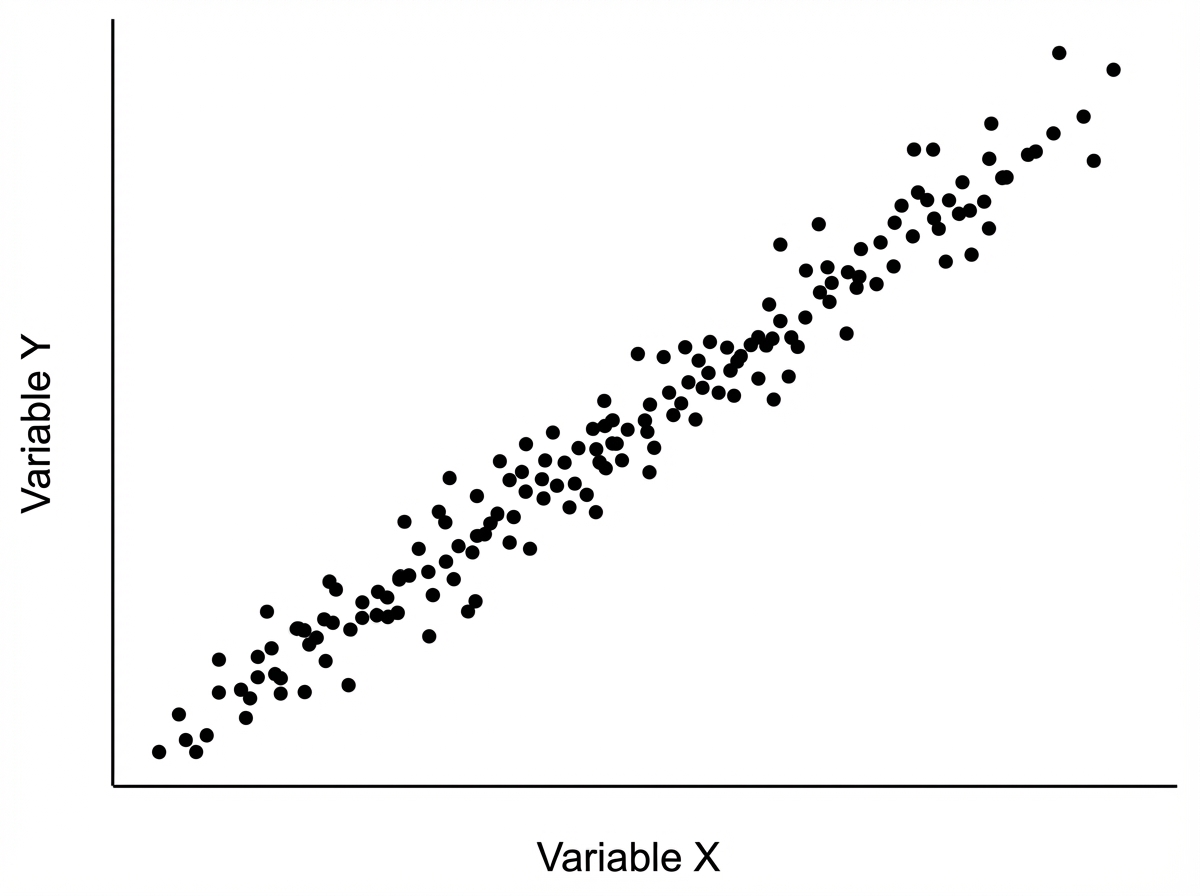
What is the correlation coefficient that best depicts the relationship between age and height in a toddler?
Calculate the positive predictive value of an ELISA test for HIV, given a sensitivity of 99%, specificity of 99%, and a prevalence of HIV in the population of 5 per 1000?
What is the P-value?
Statistical analysis of data from various studies on the same matter is called as?
If the birth weight of each of the 10 babies born in a hospital in a day is found to be 2.8 kgs, what will be the standard deviation of this sample?
A centile divides data into how many equal parts?
Which of the following is true regarding statistical significance testing?
Explanation: ### Explanation **1. Why Ordinal Scale is Correct:** The classification of blood pressure into categories like **hypotensive, normotensive, and hypertensive** involves data that is qualitative but possesses a **natural rank or order**. In this case, there is a clear progression of severity or magnitude (Hypo < Normo < Hyper). While the exact numerical difference between these categories is not uniform, the relative position is fixed. Therefore, it falls under the **Ordinal Scale** (Order = Ordinal). **2. Why Other Options are Incorrect:** * **Nominal Scale:** This is used for simple labeling without any inherent order (e.g., Gender, Blood Group, or Eye Color). Since "Hypertensive" is objectively "higher" than "Normotensive," it is more than just a label. * **Interval Scale:** This scale has a definite order and equal intervals between units, but **no absolute zero** (e.g., Temperature in Celsius). Clinical categories do not have equal mathematical intervals. * **Ratio Scale:** This is the highest level of measurement and possesses an **absolute zero** (e.g., Height, Weight, or the actual BP reading in mmHg). If the question asked about the *actual systolic value* (e.g., 120 mmHg), the answer would be Ratio. **3. Clinical Pearls & High-Yield Facts for NEET-PG:** * **Mnemonic (NOIR):** **N**ominal (Name), **O**rdinal (Order), **I**nterval (In-between), **R**atio (Real zero). * **Key Distinction:** If a variable is descriptive (Mild, Moderate, Severe), it is **Ordinal**. If it is a raw numerical value (Pulse rate, Glucose level), it is **Ratio**. * **Likert Scales:** (e.g., "Strongly Agree" to "Strongly Disagree") are always **Ordinal**. * **Statistical Test Tip:** For Nominal/Ordinal data, use **Non-parametric tests** (e.g., Chi-square). For Interval/Ratio data, use **Parametric tests** (e.g., T-test, ANOVA).
Explanation: ### Explanation **Why Age-adjusted rates are correct:** Mortality is heavily influenced by age; older populations naturally have higher death rates. When comparing two populations with different age distributions (e.g., a "young" developing country vs. an "old" developed country), a direct comparison of deaths is misleading. **Age-adjusted (standardized) rates** remove the confounding effect of age by applying the observed age-specific death rates to a single "standard population." This ensures that any observed difference in mortality is due to actual health factors rather than simply having more elderly citizens. **Why the other options are incorrect:** * **Crude rates:** These are calculated by dividing total deaths by the total population. They do not account for age distribution, making them unsuitable for comparing populations with different demographics. * **Proportional rates:** These measure the proportion of total deaths attributed to a specific cause (e.g., % of deaths due to CVD). They do not reflect the actual risk of dying in a population and are influenced by changes in other causes of death. **High-Yield NEET-PG Pearls:** * **Standardization Methods:** * **Direct Standardization:** Used when age-specific death rates of the study population are known. * **Indirect Standardization:** Used when age-specific rates are unknown or the population is small. It calculates the **Standardized Mortality Ratio (SMR)**. * **SMR Formula:** (Observed Deaths / Expected Deaths) × 100. * **Gold Standard:** Age-adjustment is the "Gold Standard" for comparing disease frequency or mortality across different geographic areas or time periods.
Explanation: ### Explanation This question tests the fundamental concept of the **Normal Distribution (Gaussian Curve)**, which is a cornerstone of biostatistics in medical research. In a perfectly symmetrical, bell-shaped curve, the distribution of data points follows the **Empirical Rule** (also known as the 68-95-99.7 rule). **Why Option B is Correct:** In a normal distribution, the area under the curve represents the probability or percentage of data points. * **Mean ± 1.96 Standard Deviations (SD)** encompasses exactly **95%** of the values. * In most competitive exams like NEET-PG, **1.96 is rounded to 2 SD** for simplicity. Therefore, 95% of the population falls within 2 SD of the mean. **Analysis of Incorrect Options:** * **Option A (1 SD):** Approximately **68.3%** of the values lie within Mean ± 1 SD. This represents the "central" majority of the data. * **Option C (3 SD):** Approximately **99.7%** of the values lie within Mean ± 3 SD. This covers almost the entire distribution, leaving only 0.3% as extreme outliers. * **Option D (4 SD):** This covers **99.99%** of the data. In medical statistics, we rarely use 4 SD as 3 SD already accounts for nearly all biological variation. **High-Yield Clinical Pearls for NEET-PG:** * **Confidence Interval (CI):** The 95% CI is the most commonly used range in medical literature to determine statistical significance. * **Normal Distribution Characteristics:** Mean = Median = Mode. The curve is asymptotic (tails never touch the baseline). * **Z-score:** This indicates how many standard deviations a value is from the mean. A Z-score of 1.96 corresponds to the 95% confidence limit. * **Standard Error vs. Standard Deviation:** SD measures the dispersion of individual values; Standard Error (SE) measures the precision of the sample mean compared to the population mean.
Explanation: ### Explanation **1. Why Option A is Correct:** The correlation coefficient ($r$) measures the strength and direction of a linear relationship between two variables. In a toddler, growth is a physiological certainty; as age increases, height increases in a predictable, linear fashion. A **Correlation coefficient of +1** represents a **Perfect Positive Correlation**. This means that for every unit increase in age, there is a proportional and consistent increase in height. In biological growth phases, these two variables are so closely linked that they represent the strongest possible positive relationship. **2. Why Other Options are Incorrect:** * **Option B (–1):** This represents a **Perfect Negative Correlation**. This would imply that as a toddler gets older, their height decreases (e.g., the older they get, the shorter they become), which is physiologically impossible. * **Option C (+2):** This is mathematically impossible. The value of the correlation coefficient ($r$) **must always range between –1 and +1**. Any value outside this range (e.g., +2 or –1.5) is invalid. * **Option D:** Incorrect because Option A accurately describes the biological relationship. **3. Clinical Pearls & High-Yield Facts for NEET-PG:** * **Range of $r$:** Always –1 to +1. * **$r = 0$:** Indicates **Zero Correlation** (no linear relationship), such as the relationship between shoe size and intelligence. * **Direction:** Positive (+) means variables move in the same direction; Negative (–) means they move in opposite directions (e.g., Price vs. Demand). * **Strength:** The closer the value is to 1 (regardless of the sign), the stronger the relationship. * **Coefficient of Determination ($r^2$):** This represents the proportion of variance in one variable that is predictable from the other. If $r = 0.8$, then $r^2 = 0.64$ (64% of the change is explained).
Explanation: ### Explanation **1. Understanding the Calculation (Why C is Correct)** Positive Predictive Value (PPV) is the probability that a person who tests positive actually has the disease. It is heavily influenced by the **prevalence** of the disease in the population. To calculate PPV, we can use a hypothetical population of 10,000: * **Prevalence:** 5 per 1,000 = 50 cases in 10,000. * **True Positives (TP):** Sensitivity (99%) of 50 = **49.5** * **False Positives (FP):** 10,000 - 50 = 9,950 healthy people. Specificity is 99%, so the False Positive Rate is 1%. 1% of 9,950 = **99.5** * **PPV Formula:** $TP / (TP + FP) \times 100$ * $49.5 / (49.5 + 99.5) \times 100 = 49.5 / 149 \times 100 \approx \mathbf{33.2\%}$ **2. Analysis of Incorrect Options** * **Option A (10):** This value is too low. While low prevalence reduces PPV, a test with 99% sensitivity/specificity still maintains a moderate PPV at 0.5% prevalence. * **Option B (70):** This would be the PPV if the prevalence were significantly higher (approx. 2-3%). * **Option D (All):** PPV is a specific mathematical derivative based on fixed parameters; it cannot be multiple values simultaneously. **3. High-Yield Clinical Pearls for NEET-PG** * **Prevalence Dependency:** PPV is **directly proportional** to prevalence. As prevalence increases, PPV increases. Conversely, Negative Predictive Value (NPV) is **inversely proportional** to prevalence. * **Screening vs. Diagnostic:** In low-prevalence populations (like general screening), even a highly specific test will yield many false positives. * **Sensitivity/Specificity:** These are inherent properties of the test and do **not** change with disease prevalence, unlike PPV and NPV. * **Formula Shortcut (Bayes' Theorem):** $PPV = \frac{\text{Sensitivity} \times \text{Prevalence}}{(\text{Sensitivity} \times \text{Prevalence}) + (1 - \text{Specificity}) \times (1 - \text{Prevalence})}$
Explanation: ### Explanation The **P-value** is a fundamental concept in inferential statistics used to determine the significance of research findings. It represents the probability that the observed difference (or a more extreme one) occurred by **chance alone**, assuming the Null Hypothesis ($H_0$) is true. **Why Option B is Correct:** In the context of hypothesis testing, the P-value defines the probability of committing a **Type I Error (Alpha error)**. A Type I error occurs when a researcher wrongly rejects a true null hypothesis (finding a "statistically significant" result when no real difference exists). If the P-value is less than the pre-set alpha level (usually 0.05), we reject the null hypothesis, accepting a 5% risk that we are wrong. **Analysis of Incorrect Options:** * **Option A:** This describes a **Correct Decision** (Confidence Level, $1 - \alpha$). It is the probability of correctly failing to reject a null hypothesis that is actually true. * **Option C:** This defines a **Type II Error (Beta error)**. It occurs when a researcher fails to reject a null hypothesis that is actually false (a "false negative"). * **Option D:** This defines **Statistical Power ($1 - \beta$)**. It is the probability of correctly rejecting a false null hypothesis (a "true positive"). **High-Yield Clinical Pearls for NEET-PG:** * **P < 0.05:** Statistically significant; reject the Null Hypothesis. * **P > 0.05:** Not statistically significant; fail to reject the Null Hypothesis. * **Type I Error ($\alpha$):** "False Positive" (Finding a difference where none exists). * **Type II Error ($\beta$):** "False Negative" (Missing a difference that actually exists). * **Power ($1 - \beta$):** The ability of a study to detect a difference if one truly exists. It is increased by increasing the sample size.
Explanation: ### Explanation **Correct Answer: A. Meta-analysis** **Why it is correct:** A **Meta-analysis** is a quantitative, formal, epidemiological study design used to systematically assess the results of previous research to derive conclusions about that body of research. It involves the statistical integration of data from multiple independent studies (usually Randomized Controlled Trials) on the same subject to increase the statistical power and provide a single, more precise estimate of effect (often visualized using a **Forest Plot**). It sits at the very top of the hierarchy of evidence-based medicine. **Why the other options are incorrect:** * **B. Data review:** This is a generic term for examining data. While a "Systematic Review" is a structured qualitative summary of literature, "Data review" lacks the specific statistical synthesis required by the question. * **C. Propaganda:** This refers to biased or misleading information used to promote a particular political cause or point of view; it has no scientific standing in biostatistics. * **D. Cohort study:** This is an observational, longitudinal study where a group of people (exposed and non-exposed) are followed forward in time to determine the incidence of an outcome. It analyzes primary data from one study, not aggregate data from multiple studies. **High-Yield Clinical Pearls for NEET-PG:** * **Forest Plot (Blobbogram):** The graphical representation used in meta-analysis. The diamond at the bottom represents the combined "pooled" result. * **Heterogeneity:** Measured by the **I² statistic**; it tells us how much the results of the included studies vary from each other. * **Publication Bias:** Often assessed using a **Funnel Plot**. If the plot is asymmetrical, publication bias is likely present. * **Hierarchy of Evidence:** Meta-analysis of RCTs > Systematic Reviews > RCTs > Cohort > Case-Control > Case Series > Expert Opinion.
Explanation: ### Explanation **1. Why the Correct Answer is Right:** Standard Deviation (SD) is a measure of **dispersion** or **variability** in a data set. It quantifies how much the individual values in a sample deviate from the arithmetic mean. In this scenario, every single baby has the exact same birth weight (2.8 kgs). * **Step 1:** Calculate the Mean ($\bar{x}$) = $(2.8 \times 10) / 10 = 2.8$ kgs. * **Step 2:** Calculate the deviation of each value from the mean ($x - \bar{x}$). Since every value is 2.8, the deviation for every baby is $2.8 - 2.8 = 0$. * **Step 3:** Since there is **zero variation** in the data, the Standard Deviation must be **0**. **2. Why the Incorrect Options are Wrong:** * **Option A (2.8 kgs):** This is the mean and the individual value, not the measure of dispersion. * **Option C (1):** A standard deviation of 1 would imply that the weights vary around the mean (e.g., some babies weighing 1.8 kg or 3.8 kg). * **Option D (0.28 kgs):** This is likely a distractor representing 10% of the mean, but it has no mathematical basis in this constant data set. **3. Clinical Pearls & High-Yield Facts for NEET-PG:** * **Definition:** SD is the most commonly used measure of dispersion in medical research. It is the square root of the **Variance**. * **Properties:** If a constant value is added or subtracted from every observation in a dataset, the SD remains **unchanged**. However, if there is no variation (all values are identical), the SD is always zero. * **Normal Distribution:** In a normal (Gaussian) distribution: * Mean ± 1 SD covers **68.3%** of values. * Mean ± 2 SD covers **95.4%** of values. * Mean ± 3 SD covers **99.7%** of values. * **Standard Error (SE):** Do not confuse SD with SE. $SE = SD / \sqrt{n}$. SE measures the variation of sample means, while SD measures variation within a single sample.
Explanation: **Explanation:** In biostatistics, **Centiles** (also known as **Percentiles**) are measures of central position that divide a frequency distribution into **100 equal parts**. Each part represents 1% of the total data set. For example, the 50th percentile is the Median, which divides the data into two halves. **Analysis of Options:** * **A. 100 equal parts (Correct):** The term "Centile" is derived from the Latin *centum* (hundred). It indicates the value below which a certain percentage of observations fall. * **B. 10 equal parts (Incorrect):** These are called **Deciles**. The 1st decile is the 10th percentile, and the 5th decile is the Median. * **C. 5 equal parts (Incorrect):** These are called **Quintiles**. Each quintile represents 20% of the data. * **D. 20 equal parts (Incorrect):** These are called **Vigintiles**. Each part represents 5% of the data. **Clinical Pearls & High-Yield Facts for NEET-PG:** * **Quartiles:** Divide data into **4 equal parts** (Q1=25th, Q2=50th/Median, Q3=75th percentile). * **Interquartile Range (IQR):** Calculated as $Q3 - Q1$. It contains the middle 50% of the observations and is the preferred measure of dispersion for skewed data. * **Growth Charts:** In Pediatrics, centiles are used to monitor growth (e.g., a child on the 95th percentile for weight is heavier than 95% of children of the same age/sex). * **Median:** It is the only measure of central tendency that corresponds to the 50th percentile, 5th decile, and 2nd quartile.
Explanation: In biostatistics, hypothesis testing is the framework used to determine if a clinical finding is due to chance or a true effect. ### **Why Option C is Correct** The **Alpha (α)** level represents the probability of committing a **Type 1 error**. It is the threshold set by the researcher (usually 0.05) to define the maximum risk they are willing to take of falsely claiming a significant result. If the calculated p-value is less than alpha, we reject the null hypothesis. ### **Analysis of Other Options** * **Option A & B:** While these definitions are technically correct in a general sense, they are **incomplete** in the context of "statistical significance testing" compared to Option C. In NEET-PG, when multiple statements are factually true, the most precise definition or the one describing the *probabilistic relationship* (like α or β) is often the preferred answer. *Note: In many standardized formats, if A, B, and D are all true, the question might be flawed or intended as an "All of the above" style; however, Option C specifically defines the mathematical notation used in testing.* * **Option D:** While true that alpha is typically 5%, this is a convention rather than a mathematical rule of significance testing itself. ### **High-Yield Clinical Pearls for NEET-PG** * **Type 1 Error (α):** "False Positive." Rejecting $H_0$ when it is true (finding a difference where none exists). * **Type 2 Error (β):** "False Negative." Failing to reject $H_0$ when it is false (missing a real difference). * **Power of Study ($1 - β$):** The probability of correctly detecting a difference if one actually exists. Power is increased by increasing the sample size. * **Confidence Interval ($1 - α$):** The range within which the true population parameter lies with a specific degree of assurance. * **P-value:** The actual probability of obtaining the observed results by chance alone. If $p < α$, the result is "statistically significant."
Collection and Presentation of Data
Practice Questions
Measures of Central Tendency
Practice Questions
Measures of Dispersion
Practice Questions
Normal Distribution
Practice Questions
Sampling Methods
Practice Questions
Sample Size Calculation
Practice Questions
Hypothesis Testing
Practice Questions
Tests of Significance
Practice Questions
Correlation and Regression
Practice Questions
Survival Analysis
Practice Questions
Multivariate Analysis
Practice Questions
Statistical Software in Research
Practice Questions
Get full access to all questions, explanations, and performance tracking.
Start For Free