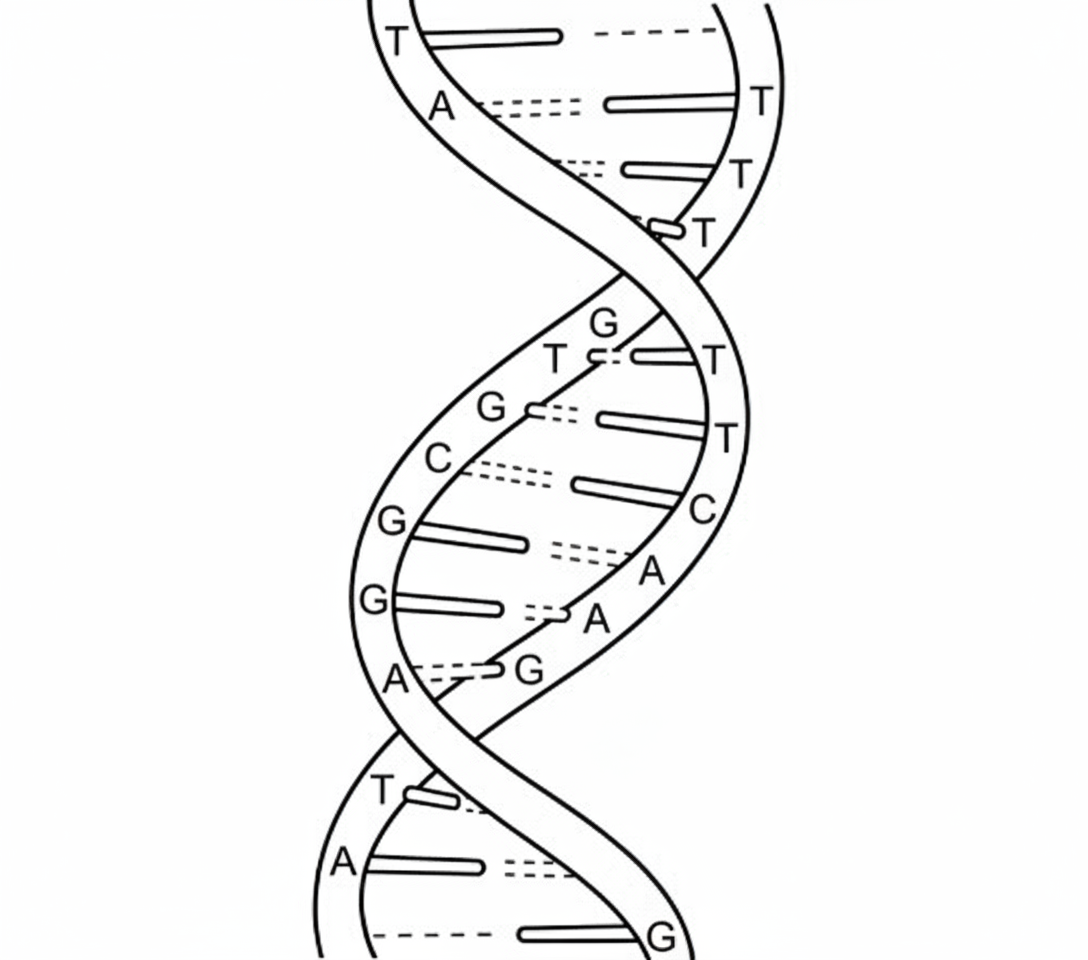
What are the components of a nucleoside?
What are nucleosomes composed of?
All of the following abbreviations are true except?
Which purine base contains an amino group at carbon 6?
Which of the following is considered an abnormal base found in tRNA?
What is the common end product of catabolism of all pyrimidines?
Which enzyme catalyzes the production of orotidylic acid?
Gout is a disorder of:
Which of the following best represents commonalities in the de novo synthesis pathways of IMP and UMP?
PRPP glutamyl amidotransferase is increased to increase purine synthesis in which of the following?
Explanation: **Explanation:** The fundamental building blocks of nucleic acids (DNA and RNA) are organized into hierarchical structures. Understanding the distinction between a nucleoside and a nucleotide is a frequent high-yield topic in medical biochemistry. **1. Why Option A is correct:** A **Nucleoside** is formed by the chemical linkage of a **nitrogenous base** (purine or pyrimidine) to a **pentose sugar** (ribose or deoxyribose). The bond connecting them is a **β-N-glycosidic bond**, which attaches the N-1 of a pyrimidine or the N-9 of a purine to the C-1’ of the sugar. **2. Why the other options are incorrect:** * **Option B:** This describes a **Nucleotide**. A nucleotide is a "nucleoside monophosphate" (Base + Sugar + Phosphate). The phosphate group is typically attached to the C-5’ hydroxyl group of the sugar via an ester bond. * **Option C:** This describes the **sugar-phosphate backbone** of DNA/RNA, but without the base, it lacks genetic information. * **Option D:** A nitrogenous base alone (e.g., Adenine, Guanine) is simply a heterocyclic aromatic compound, not a nucleoside. **Clinical Pearls & High-Yield Facts for NEET-PG:** * **Nucleoside Analogs in Medicine:** Many antiviral and anticancer drugs are synthetic nucleosides. For example, **Zidovudine (AZT)** is a nucleoside analog used in HIV treatment that inhibits reverse transcriptase. * **The "Tide" vs. "Side" Mnemonic:** Nucleo**T**ide has **T**hree components (Base + Sugar + Phosphate), whereas Nucleo**S**ide has **S**ugar and Base. * **Synthetic Pathway:** In the *de novo* synthesis of purines, the sugar (PRPP) is provided first, and the base is built upon it. In pyrimidine synthesis, the base is synthesized first and then attached to the sugar.
Explanation: **Explanation:** A **nucleosome** is the fundamental structural unit of chromatin in eukaryotic cells, often described as "beads on a string." It consists of a segment of **DNA** (approximately 147 base pairs) wrapped 1.67 times around a protein core called the **Histone Octamer**. This octamer is composed of two copies each of four core histones: **H2A, H2B, H3, and H4**. * **Why Option B is correct:** DNA is negatively charged (due to phosphate groups) and histones are positively charged (rich in basic amino acids like **Lysine and Arginine**). This electrostatic attraction allows the DNA to wrap tightly around the histone core, facilitating the packaging of long DNA strands into the nucleus. * **Why Options A, C, and D are incorrect:** **RNA** is not a structural component of the nucleosome. While RNA is involved in transcription and translation, it does not form the "bead" structure of chromatin. **NEET-PG High-Yield Pearls:** 1. **Linker DNA:** The DNA between two nucleosomes is called linker DNA, which is associated with **Histone H1**. H1 is not part of the core octamer; it helps stabilize the 30nm chromatin fiber. 2. **Amino Acid Composition:** Histones are exceptionally rich in **Arginine and Lysine**, which is a frequent exam question. 3. **Acetylation vs. Methylation:** Histone **acetylation** (by HATs) decreases the positive charge, leading to relaxed chromatin (Euchromatin) and active transcription. **Deacetylation** (by HDACs) leads to condensed chromatin (Heterochromatin) and gene silencing.
Explanation: **Explanation:** The core concept tested here is the nomenclature of **nucleosides** versus **nucleotides**. A nucleotide consists of a nitrogenous base, a pentose sugar, and a phosphate group. The naming convention depends on the specific base and sugar involved. **Why Option B is the Correct Answer (The False Statement):** In the abbreviation **CMP**, the 'C' stands for **Cytidine**, which is a nucleoside (Cytosine + Ribose). However, the question asks for the correct full form of the abbreviation. While CMP is indeed Cytidine monophosphate, the naming of nucleotides follows a specific pattern: the prefix refers to the nucleoside. The error in such questions often lies in the subtle distinction between the **base** (Cytosine) and the **nucleoside** (Cytidine). However, in the context of standard biochemical nomenclature for NEET-PG, **TMP (Option D)** is the most technically "incorrect" abbreviation in a standard ribose-based list. *Correction/Refinement:* In most standard biochemistry texts (like Harper’s or Lehninger), **TMP** specifically refers to **Thymidine monophosphate**. Thymine is the base; Thymidine is the nucleoside. More importantly, because Thymine is almost exclusively found in DNA, it is technically **dTMP** (deoxythymidine monophosphate). **Analysis of Other Options:** * **A. AMP:** Correct. Adenosine (Nucleoside) + Monophosphate. * **C. GMP:** Correct. Guanosine (Nucleoside) + Monophosphate. * **D. TMP:** This is often the "exception" in exams because Thymine is a base, while the abbreviation should represent the nucleoside **Thymidine**. **High-Yield Clinical Pearls for NEET-PG:** 1. **Base vs. Nucleoside:** Adenine → Adenosine; Guanine → Guanosine; Cytosine → Cytidine; Uracil → Uridine; Thymine → Thymidine. 2. **The "d" Prefix:** For DNA precursors, a lowercase 'd' is added (e.g., dATP, dCTP) to signify **deoxyribose**. 3. **Synthetic Analogues:** Many anticancer drugs are nucleotide analogues (e.g., **5-Fluorouracil** inhibits thymidylate synthase, preventing the conversion of dUMP to dTMP). 4. **Energy Currency:** ATP is the primary energy currency, but **GTP** is specifically required for protein synthesis (translation) and gluconeogenesis.
Explanation: **Explanation:** The core of this question lies in understanding the chemical structure of purine bases. Purines (Adenine and Guanine) consist of a fused six-membered and five-membered nitrogen-containing ring. **1. Why Adenine is Correct:** Adenine is chemically defined as **6-aminopurine**. It features an amino group ($-NH_2$) attached specifically to the **Carbon 6 (C6)** position of the purine ring. This structural feature is essential for its ability to form two hydrogen bonds with Thymine (in DNA) or Uracil (in RNA). **2. Analysis of Incorrect Options:** * **Guanine:** This is **2-amino-6-oxopurine**. While it is a purine, it has an amino group at **C2** and a carbonyl (oxo) group at **C6**. * **Uracil & Cytosine:** These are **Pyrimidines** (single-ring structures), not purines. Uracil is 2,4-dioxopyrimidine, and Cytosine is 2-oxo-4-aminopyrimidine. **3. High-Yield Clinical Pearls for NEET-PG:** * **Deamination Reactions:** Spontaneous deamination of bases is a common source of DNA damage. * Deamination of **Adenine** yields **Hypoxanthine** (found in tRNA as Inosine). * Deamination of **Guanine** yields **Xanthine**. * Deamination of **Cytosine** yields **Uracil** (a key reason why DNA uses Thymine instead of Uracil to prevent mutations). * **Metabolic Pathway:** The first fully formed purine nucleotide in the *de novo* synthesis pathway is **IMP (Inosine Monophosphate)**, which serves as the precursor for both AMP and GMP. * **Rule of Thumb:** Remember "Pure As Gold" (Purines = Adenine, Guanine). Adenine has the amino group "up top" at C6.
Explanation: ### Explanation **Correct Option: A. Dihydrouracil** Transfer RNA (tRNA) is unique among nucleic acids because it undergoes extensive post-transcriptional modifications. While it is synthesized using the four standard bases (A, U, G, C), specific enzymes modify these bases to create "abnormal" or "modified" bases. **Dihydrouracil** is formed by the saturation of the double bond in uracil. It is a hallmark of the **D-loop** (Dihydrouridine loop) of tRNA, which is essential for recognition by the enzyme aminoacyl-tRNA synthetase. Other common modified bases in tRNA include Pseudouridine (in the TψC loop) and Inosine (in the anticodon loop). **Analysis of Incorrect Options:** * **B. Orotic Acid:** This is a normal metabolic intermediate in the **de novo pyrimidine synthesis pathway**. It is the precursor to UMP but is not incorporated into the final structure of mature tRNA. * **C. Methyl xanthine:** These are a group of alkaloids (like caffeine, theobromine, and theophylline) that act as phosphodiesterase inhibitors. They are not components of nucleic acids. * **D. Cystine:** This is a sulfur-containing **amino acid** formed by the oxidation of two cysteine residues. It is related to protein structure (disulfide bonds), not nucleic acid composition. **High-Yield Clinical Pearls for NEET-PG:** * **The "Cloverleaf" vs. "L-shape":** tRNA has a 2D cloverleaf secondary structure but a 3D **L-shaped** tertiary structure. * **The 3' End:** All tRNA molecules end in the sequence **5'-CCA-3'**. The amino acid attaches to the 3'-hydroxyl group of the Adenosine. * **Pseudouridine (ψ):** Known as the "5th ribonucleoside," it is found in the TψC loop, which helps in binding the tRNA to the ribosome. * **Inosine:** Found in the wobble position (1st base of anticodon), allowing a single tRNA to recognize multiple codons.
Explanation: ### Explanation **Correct Answer: C. Urea** The catabolism of pyrimidines (Cytosine, Uracil, and Thymine) differs significantly from purine catabolism. While purines are excreted as uric acid, the pyrimidine ring is completely cleaved into highly soluble products. * **Cytosine and Uracil** are broken down into **$\beta$-alanine**, $NH_3$, and $CO_2$. * **Thymine** is broken down into **$\beta$-aminoisobutyrate**, $NH_3$, and $CO_2$. The ammonia ($NH_3$) generated from the deamination and ring-opening of all three pyrimidines enters the **Urea Cycle** in the liver. Therefore, the nitrogenous waste from the complete catabolism of all pyrimidines is ultimately excreted as **Urea**. --- ### Why other options are incorrect: * **A. Beta-alanine:** This is an intermediate product specifically of Uracil and Cytosine catabolism, but not Thymine (which produces $\beta$-aminoisobutyrate). It is not the final common nitrogenous excretory product. * **B. Uric acid:** This is the end product of **Purine** (Adenine and Guanine) catabolism in humans. * **D. Xanthine:** This is an intermediate in the purine degradation pathway, converted into uric acid by the enzyme Xanthine Oxidase. --- ### High-Yield Clinical Pearls for NEET-PG: 1. **Solubility:** Unlike purine end-products (uric acid), pyrimidine catabolites are highly water-soluble; thus, pyrimidine overproduction does not lead to conditions like Gout. 2. **$\beta$-aminoisobutyrate:** Increased urinary excretion of this metabolite is a diagnostic marker for high cell turnover (e.g., leukemia or post-radiation therapy), as it is unique to Thymine (DNA) degradation. 3. **Rate-limiting enzyme:** Dihydropyrimidine dehydrogenase (DPD) is the rate-limiting enzyme in pyrimidine catabolism. DPD deficiency can lead to severe toxicity in patients treated with the chemotherapy drug **5-Fluorouracil (5-FU)**.
Explanation: **Explanation:** The production of **Orotidylic acid (OMP)** is a crucial step in the **de novo synthesis of pyrimidines**. 1. **Why Option D is Correct:** Orotidylic acid (Orotidine 5'-monophosphate) is formed by the transfer of a phosphoribosyl moiety from **PRPP** (5-phosphoribosyl-1-pyrophosphate) to **Orotate**. This reaction is catalyzed by **Orotate phosphoribosyl transferase (OPRTase)**. In humans, this enzyme is part of a bifunctional protein called **UMP Synthase**, which also contains OMP decarboxylase activity (converting OMP to UMP). 2. **Why Other Options are Incorrect:** * **A. Aspartyl transcarbamoylase:** Catalyzes the first committed step of the pathway, combining Carbamoyl phosphate and Aspartate to form N-carbamoyl aspartate. * **B. Dihydroorotase:** Catalyzes the ring closure of N-carbamoyl aspartate to form L-Dihydroorotate. * **C. Dihydroorotate dehydrogenase:** An enzyme located on the inner mitochondrial membrane that oxidizes Dihydroorotate to form Orotate. **Clinical Pearls & High-Yield Facts:** * **Hereditary Orotic Aciduria:** Caused by a deficiency in the bifunctional enzyme **UMP Synthase**. It presents with megaloblastic anemia (refractory to B12/Folate), orotic acid crystals in urine, and growth retardation. Treatment involves **Uridine** supplementation. * **Leflunomide:** An immunosuppressant used in Rheumatoid Arthritis that inhibits **Dihydroorotate dehydrogenase**, thereby blocking pyrimidine synthesis in T-cells. * **Rate-limiting step:** In humans, the rate-limiting enzyme for pyrimidine synthesis is **Carbamoyl Phosphate Synthetase II (CPS-II)**, located in the cytosol.
Explanation: **Explanation:** **1. Why Purine Metabolism is Correct:** Gout is a metabolic disorder characterized by **hyperuricemia** (elevated levels of uric acid in the blood). In humans, **Uric Acid** is the final end-product of **Purine catabolism** (Adenine and Guanine). When there is either overproduction of uric acid (due to enzyme defects like PRPP synthetase overactivity or HGPRT deficiency in Lesch-Nyhan syndrome) or decreased renal excretion, uric acid levels rise. This leads to the deposition of **Monosodium Urate (MSU) crystals** in joints and soft tissues, causing acute inflammatory arthritis. **2. Why Other Options are Incorrect:** * **Pyrimidine Metabolism:** The end-products of pyrimidine catabolism (Cytosine, Thymine, Uracil) are highly water-soluble compounds like **β-alanine and β-aminoisobutyrate**, which are easily excreted in urine and do not cause gout. * **Ketone Metabolism:** Disorders here lead to ketoacidosis (e.g., Diabetic Ketoacidosis). While high ketone levels can compete with uric acid for excretion in the kidneys (potentially triggering a gout flare), gout is fundamentally a primary disorder of purines. * **Protein Metabolism:** While purines are found in protein-rich foods, "protein metabolism" generally refers to amino acid breakdown and urea cycle disorders. **3. High-Yield Clinical Pearls for NEET-PG:** * **Gold Standard Diagnosis:** Identification of **negatively birefringent, needle-shaped crystals** under polarized light microscopy. * **Key Enzyme:** **Xanthine Oxidase** converts hypoxanthine to xanthine and xanthine to uric acid. It is the target of **Allopurinol** (a suicide inhibitor). * **Von Gierke’s Disease (G6PD deficiency):** A common biochemical link where lactic acidosis inhibits uric acid excretion, leading to secondary gout. * **Drug-induced Gout:** Thiazide and Loop diuretics are notorious for increasing serum uric acid levels.
Explanation: This question tests your understanding of the overlapping precursors required for **Purine (IMP)** and **Pyrimidine (UMP)** nucleotide synthesis. ### **Explanation of the Correct Answer (A)** Both pathways share three fundamental building blocks: 1. **PRPP (5-Phosphoribosyl-1-pyrophosphate):** Acts as the ribose sugar donor for both. In purine synthesis, PRPP is the starting scaffold; in pyrimidine synthesis, it is added after the ring is formed. 2. **Glutamine:** Serves as the nitrogen donor for both. It provides N3 and N9 for purines and N3 for pyrimidines (via carbamoyl phosphate). 3. **Aspartic Acid:** Contributes atoms to both rings. It provides N1, C2, and C3 of the pyrimidine ring and N1 of the purine ring. ### **Analysis of Incorrect Options** * **Option B:** While correct, it is incomplete. Glutamine is a vital shared precursor that must be included for the "best" representation. * **Option C:** **Folate derivatives** (N10-formyl THF) are exclusive to **Purine** synthesis (providing C2 and C8). Pyrimidine synthesis (UMP) does not require folate; only the conversion of dUMP to dTMP (catalyzed by Thymidylate Synthase) requires folate. * **Option D:** **Glycine** is a precursor **only for Purines** (providing C4, C5, and N7). It is not involved in pyrimidine synthesis. ### **High-Yield Clinical Pearls for NEET-PG** * **The "Common" Precursors:** Remember the mnemonic **"GAP"** (Glutamine, Aspartic Acid, PRPP) for both pathways. * **Rate-Limiting Steps:** * Purine: Glutamine-PRPP amidotransferase. * Pyrimidine: Cytosolic Carbamoyl Phosphate Synthetase II (CPS-II). * **Leflunomide:** An immunosuppressant that inhibits **Dihydroorotate dehydrogenase**, blocking de novo pyrimidine synthesis. * **Methotrexate:** Inhibits Dihydrofolate Reductase (DHFR), affecting both purine synthesis and dTMP production, thus halting DNA replication.
Explanation: **Explanation:** The synthesis of purine nucleotides occurs via two pathways: the **De Novo pathway** and the **Salvage pathway**. **1. Why Liver is the Correct Answer:** The **Liver** is the primary site for the de novo synthesis of purine nucleotides. The rate-limiting and committed step of this pathway is catalyzed by the enzyme **PRPP glutamyl amidotransferase** (Amidophosphoribosyltransferase). This enzyme converts PRPP (5-phosphoribosyl-1-pyrophosphate) to 5-phosphoribosylamine using glutamine. In the liver, this enzyme is highly active and regulated by feedback inhibition (AMP/GMP) and substrate availability (PRPP), allowing the liver to export nucleosides and bases to other tissues. **2. Why Other Options are Incorrect:** * **RBCs, Brain, and Polymorphs:** These tissues lack the complete enzymatic machinery required for the de novo synthesis of purines. Specifically, they have low or negligible levels of PRPP glutamyl amidotransferase. Instead, these tissues rely almost exclusively on the **Salvage Pathway** (using enzymes like HGPRT and APRT) to meet their purine requirements by utilizing preformed bases (hypoxanthine, guanine, adenine) transported from the liver. **Clinical Pearls & High-Yield Facts:** * **Rate-limiting step:** PRPP glutamyl amidotransferase is the key regulatory enzyme for de novo purine synthesis. * **Lesch-Nyhan Syndrome:** Caused by a deficiency of **HGPRT** (Salvage pathway). This leads to an accumulation of PRPP, which over-activates PRPP glutamyl amidotransferase, resulting in excessive de novo purine production and severe hyperuricemia. * **Inhibitor:** The drug **6-Mercaptopurine** acts as a competitive inhibitor of PRPP glutamyl amidotransferase, halting DNA synthesis in rapidly dividing cells.
Nucleotide Structure and Function
Practice Questions
DNA Structure and Replication
Practice Questions
RNA Structure and Types
Practice Questions
Transcription: RNA Synthesis
Practice Questions
Post-Transcriptional Modifications
Practice Questions
Translation: Protein Synthesis
Practice Questions
Genetic Code and Codon Usage
Practice Questions
Regulation of Gene Expression
Practice Questions
Mutations and DNA Repair
Practice Questions
Purine Metabolism and Disorders
Practice Questions
Pyrimidine Metabolism and Disorders
Practice Questions
Nucleotide Degradation and Salvage Pathways
Practice Questions
Get full access to all questions, explanations, and performance tracking.
Start For Free