All of the following are true about the structure of bases found in nucleotides, EXCEPT?
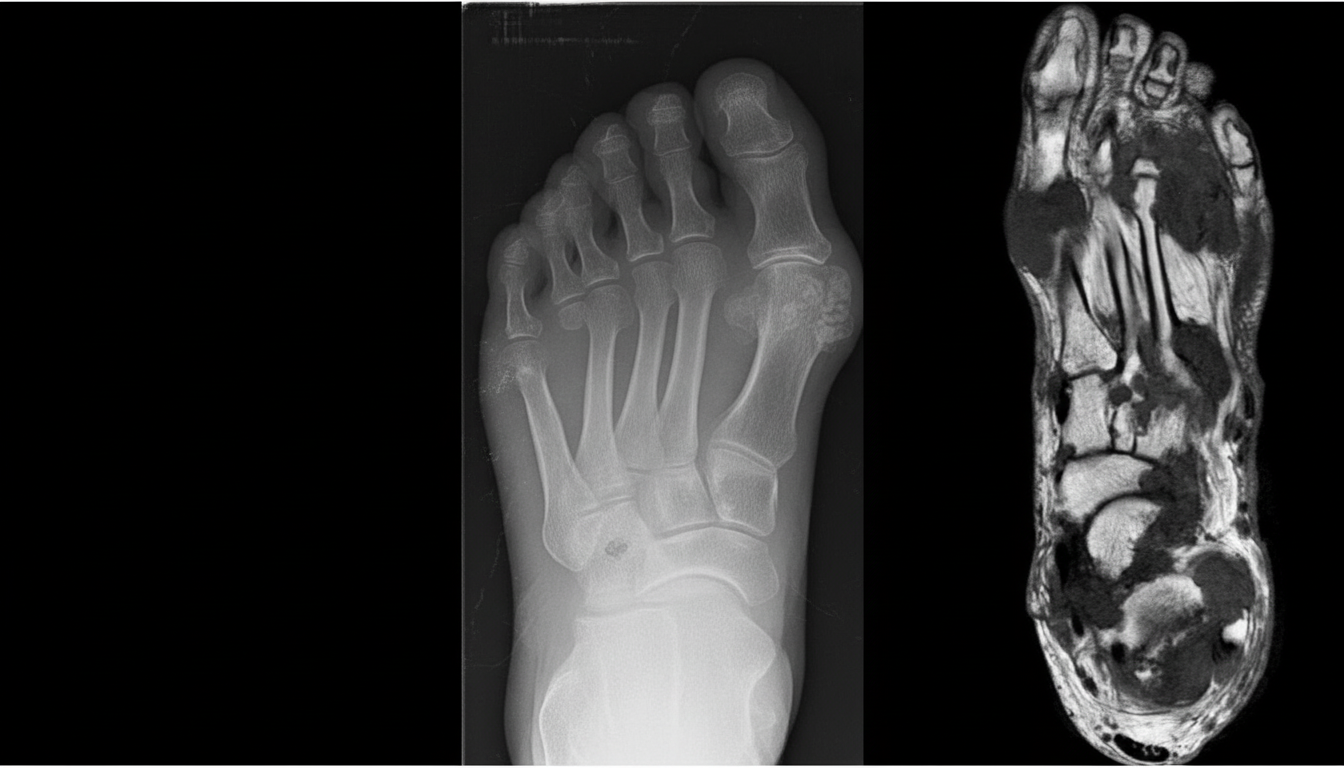
Pyrimidine 5'-Nucleotidase deficiency presents clinically as:
In a sample of double-stranded DNA (dsDNA), the molar ratio of Adenosine is 20%. What is the molar content of Cytosine?
At physiological pH, what is the net charge of DNA molecules?
Purines and pyrimidines both get their nitrogen atoms from which source?
Allantoin is the end product of metabolism of which of the following?
Which is the most abundant type of RNA molecule in a cell?
Which type of RNA contains the maximum number of unusual base pairs?
Adenosine triphosphate (ATP) contains which of the following sugars?
Which form of DNA is predominantly found in the human body?
Explanation: ### Explanation **1. Why Option D is the Correct Answer (The Exception)** Nitrogenous bases (purines and pyrimidines) exist in different chemical forms called **tautomers**. * **Keto vs. Enol (Lactam vs. Lactim):** Bases containing oxygen (Guanine, Thymine, Uracil) can exist in keto (lactam) or enol (lactim) forms. At physiological pH, the **keto (lactam) form is significantly more stable** and predominant. * **Amino vs. Imino:** Bases containing amino groups (Adenine, Cytosine) can exist in amino or imino forms. The **amino form is more stable** and predominant. The statement in Option D is incorrect because the **amino and keto (lactam)** forms are the stable configurations, not the imino and lactim forms. **2. Analysis of Incorrect Options (True Statements)** * **Option A:** Purines (Adenine and Guanine) consist of a fused ring system: a six-membered pyrimidine ring fused to a five-membered imidazole ring, making a **nine-membered** structure. * **Option B:** Pyrimidines (Cytosine, Thymine, Uracil) consist of a single **six-membered** ring. * **Option C:** Both rings are **heterocyclic** because they contain atoms of more than one element (Carbon and Nitrogen) within the ring structure. **3. Clinical Pearls & High-Yield Facts for NEET-PG** * **Tautomeric Shifts:** If a base shifts into its rare imino or enol form during DNA replication, it can lead to **mismatched base pairing** (e.g., a rare enol-Guanine pairing with Thymine), causing point mutations. * **Purine Synthesis:** Remember the sources of the purine ring: **Glycine** (C4, C5, N7), **Aspartate** (N1), **Glutamine** (N3, N9), **CO2** (C6), and **THF** (C2, C8). * **Solubility:** Purines and pyrimidines are hydrophobic and relatively insoluble in water at physiological pH, which facilitates the "base stacking" that stabilizes the DNA helix.
Explanation: **Explanation:** **Pyrimidine 5'-Nucleotidase (P5N) deficiency** is an autosomal recessive condition that primarily results in **Hereditary Nonspherocytic Hemolytic Anemia**. **Why Anemia is the Correct Answer:** P5N is an enzyme responsible for the dephosphorylation of pyrimidine nucleotides (UMP and CMP) into nucleosides, allowing them to exit the mature erythrocyte. In its absence, pyrimidine nucleotides accumulate within the red blood cell. These excess nucleotides interfere with glycolysis and pentose phosphate pathway enzymes. Furthermore, the accumulated pyrimidines are mistakenly incorporated into RNA degradation processes, leading to the characteristic histological finding of **coarse basophilic stippling** on a peripheral blood smear. The metabolic stress and membrane damage eventually lead to premature destruction of RBCs (hemolysis). **Why Other Options are Incorrect:** * **Dementia & Seizures:** While some metabolic disorders (like Lead poisoning) present with neurological symptoms, isolated P5N deficiency is clinically restricted to hematologic manifestations. It does not typically involve the central nervous system. * **Bleeding:** Bleeding disorders are associated with platelet dysfunction or coagulation factor deficiencies. P5N deficiency affects the erythrocyte metabolic pathway, not the primary or secondary hemostasis. **High-Yield Clinical Pearls for NEET-PG:** * **Basophilic Stippling:** P5N deficiency is the most common genetic cause of prominent basophilic stippling. * **Lead Poisoning Link:** Lead inhibits the P5N enzyme. Therefore, lead poisoning "mimics" P5N deficiency, presenting with similar basophilic stippling and hemolytic anemia. * **Diagnosis:** Suspect this in a patient with chronic hemolysis, normal osmotic fragility, and marked basophilic stippling.
Explanation: ### Explanation **Concept: Chargaff’s Rule** The fundamental principle governing this question is **Chargaff’s Rule**, which states that in a double-stranded DNA (dsDNA) molecule, the concentration of purines equals the concentration of pyrimidines. Specifically: 1. **A = T:** Adenosine pairs with Thymidine. 2. **G = C:** Guanosine pairs with Cytosine. 3. **A + G = T + C:** (Total Purines = Total Pyrimidines = 50%). **Step-by-Step Calculation:** * If **Adenosine (A) = 20%**, then its pair **Thymidine (T)** must also be **20%**. * Together, A + T = 40%. * The remaining percentage for G + C is 100% – 40% = **60%**. * Since G = C, the content of **Cytosine (C)** is 60% / 2 = **30%**. --- ### Analysis of Options * **A (10%):** Incorrect. This would imply A+T = 80%, which contradicts the given data. * **B (20%):** Incorrect. This is the value for Thymidine, not Cytosine. * **C (30%): Correct.** As calculated above, C = (100 - 2A) / 2. * **D (40%):** Incorrect. This would result in a total percentage exceeding 100% (A+T+G+C = 20+20+40+40 = 120%). --- ### NEET-PG High-Yield Pearls * **Applicability:** Chargaff’s rule applies **only to double-stranded DNA**. It does not apply to single-stranded DNA (ssDNA) or RNA (e.g., Parvovirus B19 or HIV genome). * **Stability:** DNA with a higher **G-C content** has a higher melting temperature (**Tm**) because G-C pairs are held by **three hydrogen bonds**, whereas A-T pairs have only two. * **Base Ratio:** The ratio of (A+T) / (G+C) varies between species but is constant for a specific species.
Explanation: **Explanation:** **Why the correct answer is right:** DNA (Deoxyribonucleic acid) is composed of three components: a nitrogenous base, a deoxyribose sugar, and a **phosphate group**. The phosphate groups are located on the exterior of the double helix, forming the "sugar-phosphate backbone." Each phosphate group contains a hydroxyl group that dissociates at physiological pH (~7.4), releasing a hydrogen ion (proton) and leaving behind a **negatively charged oxygen atom**. Since every nucleotide in the DNA polymer contributes one phosphate group, the entire molecule carries a high density of negative charges. **Why incorrect options are wrong:** * **A. Positively charged:** DNA is not positively charged; however, it interacts closely with **Histones**, which are highly basic proteins rich in Arginine and Lysine. Histones carry a positive charge to neutralize and package the negatively charged DNA. * **C. Neutral:** DNA can only be neutral if the negative charges of the phosphate groups are completely shielded by cations or basic proteins, but the molecule itself remains inherently anionic. * **D. Amphipathic:** This term describes molecules with both hydrophilic and hydrophobic parts (like phospholipids). While DNA has a hydrophobic core (bases) and a hydrophilic exterior (backbone), it is primarily classified by its strong anionic (negative) charge in a physiological environment. **High-Yield Clinical Pearls for NEET-PG:** * **Agarose Gel Electrophoresis:** Because DNA is negatively charged, it migrates toward the **Anode (positive electrode)** during electrophoresis. * **Histone Acetylation:** Acetylation of histones (by HATs) reduces their positive charge, weakening their affinity for the negatively charged DNA. This results in "relaxed" **Euchromatin**, which is transcriptionally active. * **Basophilia:** In histology, DNA stains with **basic dyes** (like Hematoxylin) because of its acidic, negatively charged nature. This is why the nucleus is described as basophilic.
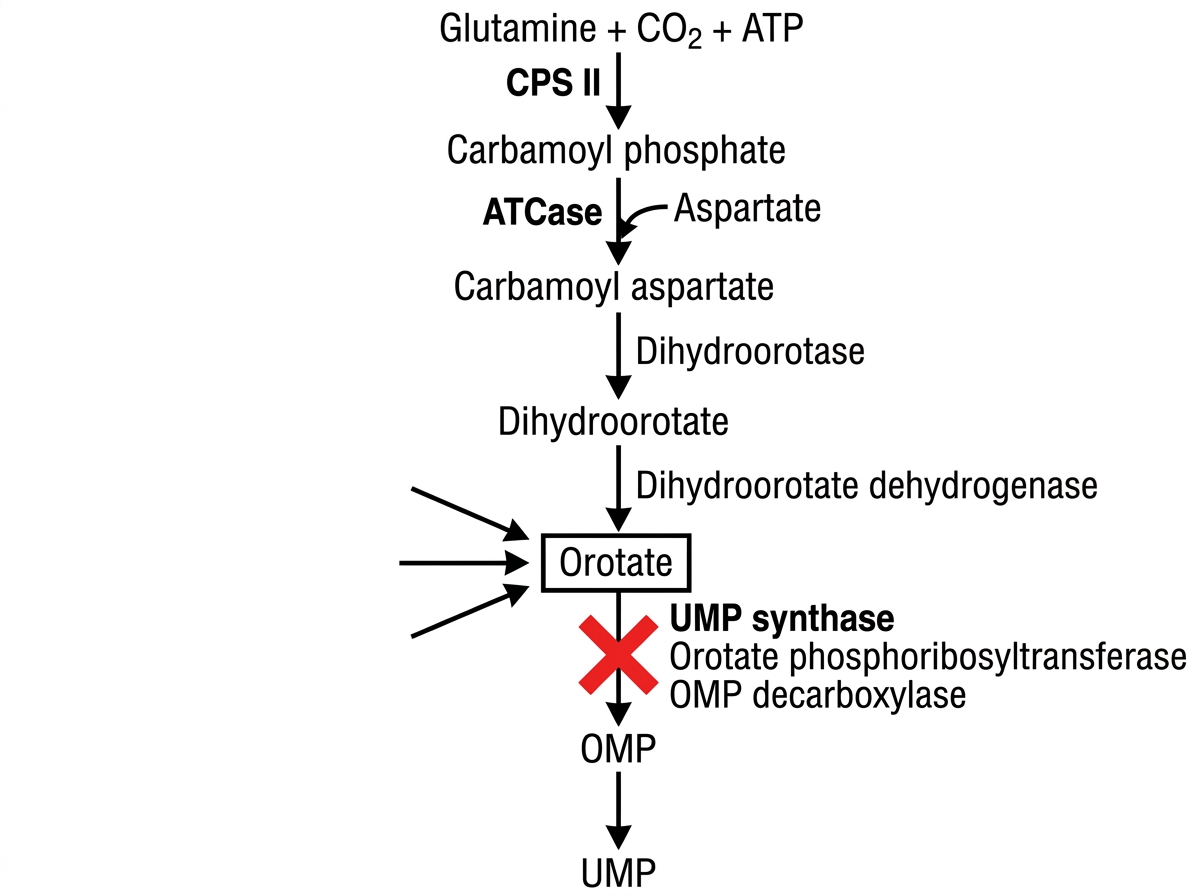
Explanation: ### Explanation The synthesis of nucleotides is a high-yield topic for NEET-PG. Both purine and pyrimidine rings are assembled from various precursors, but **Aspartate** is the unique common donor of nitrogen atoms for both. **1. Why Aspartate is Correct:** * **In Purine Synthesis:** Aspartate provides the **N1** nitrogen atom of the purine ring. It also acts as the nitrogen donor in the conversion of IMP to AMP. * **In Pyrimidine Synthesis:** Aspartate is a major contributor, providing the **N1, C4, C5, and C6** atoms of the pyrimidine ring. Essentially, the entire "backbone" of the pyrimidine ring (except for C2 and N3) comes from aspartate. **2. Why Other Options are Incorrect:** * **B. Glutamate:** While Glutamine (derived from glutamate) provides N3 and N9 for purines and N3 for pyrimidines, **Glutamate** itself is not a direct donor to the ring structure. * **C. Carbamoyl Phosphate:** This molecule provides the **C2 and N3** atoms for the pyrimidine ring only. It is not involved in the purine ring structure. * **D. CO2:** CO2 provides the **C6** atom in purines and the **C2** atom (via carbamoyl phosphate) in pyrimidines, but it does not contribute nitrogen atoms. **3. High-Yield Clinical Pearls for NEET-PG:** * **Mnemonic for Purine Precursors:** "Cats Purr (Purine) **G**ently **A**nd **G**ladly" (**G**lycine, **A**spartate, **G**lutamine) + CO2 and N10-formyl THF. * **Rate-Limiting Enzymes:** PRPP synthetase/amidotransferase for purines; Carbamoyl Phosphate Synthetase II (CPS-II) for pyrimidines. * **Leflunomide:** An immunosuppressant that inhibits *dihydroorotate dehydrogenase*, blocking *de novo* pyrimidine synthesis. * **Methotrexate:** Inhibits dihydrofolate reductase, affecting both purine and thymidine synthesis (clinical relevance in oncology).
Explanation: **Explanation:** The correct answer is **Purine**. **Why Purine is correct:** In humans, the final product of purine (Adenine and Guanine) catabolism is **Uric Acid**. However, in most other mammals and non-primate vertebrates, uric acid is further oxidized by the enzyme **Urate Oxidase (Uricase)** into **Allantoin**, which is highly water-soluble and easily excreted. While humans lack a functional uricase enzyme (due to evolutionary gene silencing), Allantoin remains a high-yield biochemical marker for purine degradation pathways in comparative biochemistry and is often tested in the context of purine metabolism. **Why the other options are incorrect:** * **Glycogen:** The end product of glycogenolysis is Glucose-1-phosphate (converted to Glucose-6-phosphate), eventually yielding Glucose (in the liver) or Lactate/CO₂ (in muscles). * **Pyrimidine:** Unlike purines, pyrimidine rings are completely catabolized into highly soluble products: **β-alanine** (from Cytosine and Uracil) and **β-aminoisobutyrate** (from Thymine), which are then excreted or converted to CO₂ and NH₃. * **Histidine:** This amino acid is catabolized to **Glutamate**. A key intermediate in this pathway is FIGLU (Formiminoglutamate); a deficiency in Vitamin B12 or Folate leads to increased urinary FIGLU excretion. **High-Yield Clinical Pearls for NEET-PG:** * **Gout:** Caused by hyperuricemia (accumulation of uric acid). * **Rasburicase:** A recombinant version of the enzyme **Urate Oxidase** used clinically to treat Tumor Lysis Syndrome by converting insoluble uric acid into soluble **Allantoin**. * **Von Gierke’s Disease:** Associated with hyperuricemia because increased G-6-P shunts into the Pentose Phosphate Pathway, increasing Ribose-5-Phosphate and stimulating *de novo* purine synthesis.
Explanation: **Explanation:** The correct answer is **Ribosomal RNA (rRNA)**. In a typical eukaryotic cell, RNA distribution is not uniform, and rRNA constitutes the vast majority of the total cellular RNA. **1. Why rRNA is the correct answer:** Ribosomal RNA (rRNA) accounts for approximately **80%** of the total RNA in a cell. It is the structural and catalytic component of ribosomes, the "protein factories" of the cell. Its high abundance is necessary to support the massive scale of protein synthesis required for cellular function and maintenance. **2. Why other options are incorrect:** * **Transfer RNA (tRNA):** Comprises about **15%** of total RNA. While numerous, they are smaller molecules (75–95 nucleotides) and serve as adapters that carry amino acids to the ribosome. * **Messenger RNA (mRNA):** Despite its critical role in carrying genetic code, it is the most heterogeneous but least stable, accounting for only **2–5%** of total RNA. * **Micro RNA (miRNA):** These are regulatory non-coding RNAs present in trace amounts, involved in post-transcriptional gene silencing. **High-Yield NEET-PG Clinical Pearls:** * **Abundance Mnemonic:** **R > T > M** (rRNA > tRNA > mRNA). * **Size Mnemonic:** **R > T > M** (rRNA is the largest/longest, mRNA is the most variable in size). * **Synthesis Sites:** rRNA is synthesized in the **nucleolus** (except 5S rRNA), while mRNA and tRNA are synthesized in the nucleoplasm. * **RNA Polymerases:** Remember **1, 2, 3** for **R, M, T**: * Pol I: rRNA * Pol II: mRNA (and miRNA) * Pol III: tRNA (and 5S rRNA)
Explanation: **Explanation:** **tRNA (Transfer RNA)** is the correct answer because it undergoes extensive post-transcriptional modifications, leading to the highest concentration of "unusual" or modified bases (approximately 10–15% of its nucleotides). These modifications are essential for stabilizing its cloverleaf secondary structure and L-shaped tertiary structure, as well as ensuring high fidelity during translation. Common unusual bases found in tRNA include **Pseudouridine (ψ)**, **Dihydrouridine (D)**, **Inosine (I)**, and **Ribothymidine (T)**. **Analysis of Options:** * **rRNA (Ribosomal RNA):** While rRNA contains some modified bases (like methylated nucleotides), its primary characteristic is being the most **abundant** type of RNA in the cell (80%). * **mRNA (Messenger RNA):** This is the most **heterogeneous** RNA. While it features a 5' methylguanosine cap and a 3' poly-A tail, it contains very few unusual internal bases compared to tRNA. * **snRNA (Small nuclear RNA):** These are involved in splicing (spliceosomes). While they do have some modifications, the density and variety do not match that of tRNA. **High-Yield Facts for NEET-PG:** * **Abundance Hierarchy:** rRNA (80%) > tRNA (15%) > mRNA (5%). * **Size Hierarchy:** rRNA (Largest) > mRNA > tRNA (Smallest/Soluble RNA). * **The "Arm" Markers:** * **D-arm:** Contains Dihydrouridine (recognized by aminoacyl-tRNA synthetase). * **TψC arm:** Contains Pseudouridine and Ribothymidine (helps in binding to the ribosome). * **Anticodon arm:** Contains Inosine, which allows for "Wobble" base pairing. * **CCA Tail:** All tRNAs have a CCA sequence at the 3' end where the amino acid attaches.
Explanation: **Explanation:** **1. Why Ribose is Correct:** Adenosine triphosphate (ATP) is a **nucleotide** consisting of three components: a nitrogenous base (adenine), a pentose sugar, and three phosphate groups. In biochemistry, ATP is classified as a **ribonucleoside triphosphate**. The sugar present in ATP is **D-ribose**, which is a five-carbon sugar (pentose) characterized by having hydroxyl (-OH) groups on both the 2' and 3' carbons. This structure is essential for its role as the primary energy currency of the cell and as a precursor for RNA synthesis. **2. Analysis of Incorrect Options:** * **B. Deoxyribose:** This sugar is found in **dATP** (deoxyadenosine triphosphate), which is used specifically for DNA synthesis. Deoxyribose lacks an oxygen atom at the 2' position. * **C. Both:** ATP specifically refers to the ribose-containing form. While dATP exists in the body, the term "ATP" by convention refers strictly to the ribonucleotide used in energy metabolism. * **D. Dideoxyribose:** This sugar lacks hydroxyl groups at both the 2' and 3' positions. Dideoxynucleotides (ddNTPs) are synthetic analogs used in **Sanger sequencing** to cause chain termination. **3. NEET-PG High-Yield Pearls:** * **Energy Bonds:** The energy in ATP is stored in high-energy **phosphoanhydride bonds** between the phosphate groups. * **Precursor Role:** ATP is one of the four direct precursors for **RNA synthesis** (transcription), whereas dATP is the precursor for **DNA synthesis** (replication). * **Cyclic AMP (cAMP):** Derived from ATP by the enzyme Adenylyl Cyclase, cAMP also contains a ribose sugar and serves as a vital second messenger in signal transduction. * **Universal Currency:** ATP is not just for energy; it also acts as a coenzyme in reactions like those catalyzed by kinases.
Explanation: **Explanation:** The correct answer is **B-DNA**. In the physiological environment of the human cell (high humidity and low salt concentration), DNA exists predominantly in the **B-form**. This is the classic double-helical structure described by Watson and Crick. **Why B-DNA is the correct answer:** B-DNA is a **right-handed** helix with approximately **10.5 base pairs per turn**. It is the most stable and biologically active form under physiological conditions because its structure allows for optimal base stacking and hydrogen bonding. It features distinct **major and minor grooves**, which are essential sites for the binding of regulatory proteins and transcription factors. **Analysis of Incorrect Options:** * **A-DNA:** This is also a right-handed helix but is shorter and wider than B-DNA. It is found in **dehydrated** conditions or in DNA-RNA hybrids. It is not the predominant form in the aqueous environment of the cell. * **C-DNA:** A right-handed form that occurs under even lower humidity than A-DNA. It is not found naturally in biological systems. * **Z-DNA:** This is a **left-handed** helix with a "zigzag" sugar-phosphate backbone. While it can occur in vivo in regions rich in alternating purine-pyrimidine sequences (like GC repeats) during transcription, it is transient and not the predominant form. **High-Yield Clinical Pearls for NEET-PG:** * **Directionality:** A and B forms are Right-handed; Z-form is **Left-handed**. * **Base Pairs per turn:** A-DNA (11), B-DNA (10.5), Z-DNA (12). * **Glycosidic Bond:** Anti-configuration in A and B; **Syn-configuration** (for purines) in Z-DNA. * **Biological Significance:** Z-DNA is associated with gene expression regulation and areas of high torsional strain.
Nucleotide Structure and Function
Practice Questions
DNA Structure and Replication
Practice Questions
RNA Structure and Types
Practice Questions
Transcription: RNA Synthesis
Practice Questions
Post-Transcriptional Modifications
Practice Questions
Translation: Protein Synthesis
Practice Questions
Genetic Code and Codon Usage
Practice Questions
Regulation of Gene Expression
Practice Questions
Mutations and DNA Repair
Practice Questions
Purine Metabolism and Disorders
Practice Questions
Pyrimidine Metabolism and Disorders
Practice Questions
Nucleotide Degradation and Salvage Pathways
Practice Questions
Get full access to all questions, explanations, and performance tracking.
Start For Free