In Hartnup disease, which amino acid is considered the limiting amino acid?
An infant presents with a history of vomiting and poor feeding. A musty odor is noted in the baby's urine. A Guthrie test was performed and found to be positive. What is the most likely diagnosis?
A clinical study of adults with a body mass index of at least 30 is undertaken. About 8% of these individuals do not have hyperphagia but are found to have normal levels of leptin and ghrelin, along with a diminished basal metabolic rate. A mutation in which of the following genes is most likely present in these individuals?
Which of the following statements about cystinosis is incorrect?
Which chromosome is associated with familial polyposis coli?
Which of the following is NOT true about phenylketonuria?
What is the karyotype of testicular feminisation?
Which of the following is an X-linked dominant condition?
Which of the following is the most specific marker for Neural Tube Defects?
Which of the following is an X-linked mucopolysaccharidosis?
Explanation: ### Explanation **1. Why Tryptophan is the Correct Answer:** Hartnup disease is an autosomal recessive disorder caused by a mutation in the **SLC6A19 gene**, which encodes a sodium-dependent neutral amino acid transporter (System B0) located in the proximal renal tubules and the intestinal mucosa. This defect leads to the malabsorption of neutral amino acids, most significantly **Tryptophan**. Tryptophan is considered the "limiting" amino acid because it is the essential precursor for the synthesis of **Niacin (Vitamin B3)** via the kynurenine pathway. In Hartnup disease, the deficiency of Tryptophan leads to a secondary deficiency of Niacin, resulting in **pellagra-like symptoms** (Dermatitis, Diarrhea, Dementia). **2. Why the Other Options are Incorrect:** * **Option A (Tyrosine):** While Tyrosine is a neutral amino acid, its deficiency does not drive the primary clinical pathology of Hartnup disease. Tyrosine is primarily associated with Alkaptonuria or Tyrosinemia. * **Option C (Phenylalanine):** Phenylalanine is also a neutral amino acid affected by the transporter defect, but its clinical impact is negligible compared to Tryptophan. Phenylalanine metabolism is primarily discussed in the context of Phenylketonuria (PKU). **3. High-Yield Clinical Pearls for NEET-PG:** * **Clinical Presentation:** Characterized by a photosensitive scaly rash (pellagra-like), intermittent cerebellar ataxia, and aminoaciduria. * **Diagnostic Hallmark:** **Neutral Aminoaciduria** (presence of neutral amino acids in urine, but *not* proline, hydroxyproline, or arginine). * **The "Indican" Connection:** Unabsorbed Tryptophan in the gut is converted by bacteria into indoles, which are absorbed and excreted in the urine as **Indican** (Blue diaper syndrome is a related differential). * **Treatment:** High-protein diet and **Nicotinic acid (Niacin) supplementation**.
Explanation: **Explanation:** **1. Why Phenylketonuria (PKU) is the correct answer:** The clinical triad of **vomiting/poor feeding**, a characteristic **"musty" or "mousy" odor** in the urine, and a **positive Guthrie test** is pathognomonic for Phenylketonuria. PKU is most commonly caused by a deficiency of the enzyme **Phenylalanine Hydroxylase (PAH)**, which converts Phenylalanine to Tyrosine. The accumulation of phenylalanine leads to the production of alternative metabolites like phenylacetate (responsible for the odor). The Guthrie test is a bacterial inhibition assay where *B. subtilis* growth occurs only in the presence of high phenylalanine levels, confirming the diagnosis. **2. Why the other options are incorrect:** * **Alkaptonuria:** Characterized by a deficiency of Homogentisate oxidase. Clinical features include urine that turns **black on standing** and ochronosis (pigmentation of connective tissue), not a musty odor or positive Guthrie test. * **Tyrosinemia:** Presents with severe liver involvement (jaundice, hepatomegaly) and a characteristic **"cabbage-like" odor**. * **Maple Syrup Urine Disease (MSUD):** Caused by a deficiency in the Branched-chain alpha-keto acid dehydrogenase complex. It presents with a **"burnt sugar" or "maple syrup" odor** in the urine. **High-Yield Clinical Pearls for NEET-PG:** * **Inheritance:** Autosomal Recessive. * **Cofactor:** A small percentage of cases are due to a deficiency in **Dihydrobiopterin reductase (BH4)**. * **Clinical Feature:** Patients often have fair skin and blue eyes due to decreased melanin synthesis (Tyrosine is a precursor to melanin). * **Management:** Dietary restriction of Phenylalanine and supplementation of Tyrosine (which becomes an essential amino acid in PKU).
Explanation: **Explanation:** The correct answer is **MC4R (Melanocortin 4 Receptor)**. **1. Why MC4R is correct:** The **Melanocortin-4 Receptor (MC4R)** is a critical component of the leptin-melanocortin signaling pathway in the hypothalamus, which regulates energy homeostasis and food intake. Mutations in the *MC4R* gene are the **most common monogenic cause of human obesity**, accounting for up to 5-8% of cases of severe adult obesity. Unlike leptin or POMC deficiencies, which typically present with early-onset extreme hyperphagia, MC4R mutations can present with a **diminished basal metabolic rate (BMR)** and a more variable appetite profile in adulthood. Since the defect is at the receptor level (downstream), levels of upstream hormones like **Leptin** and **Ghrelin** remain normal. **2. Why other options are incorrect:** * **OB (Leptin) & OB-R (Leptin Receptor):** Mutations in the *OB* gene (causing leptin deficiency) or *OB-R* gene (causing leptin resistance) result in **extreme hyperphagia** and early-onset morbid obesity. In *OB* mutations, leptin levels would be undetectable, not normal. * **POMC (Pro-opiomelanocortin):** POMC is a precursor for $\alpha$-MSH, which activates MC4R. POMC deficiency causes severe obesity and hyperphagia, but it is classically associated with **hypoadrenalism** (due to lack of ACTH) and **red hair/pale skin** (due to lack of MSH). **Clinical Pearls for NEET-PG:** * **MC4R mutation:** Most common monogenic obesity; inherited in an autosomal dominant fashion. * **Leptin:** Produced by adipocytes (the "satiety hormone"); acts on the arcuate nucleus to inhibit NPY/AgRP (orexigenic) and stimulate POMC/CART (anorexigenic) neurons. * **Ghrelin:** Produced by P/D1 cells of the stomach fundus; the only peripheral orexigenic (appetite-stimulating) hormone. * **Prader-Willi Syndrome:** The most common *syndromic* cause of obesity, characterized by high ghrelin levels.
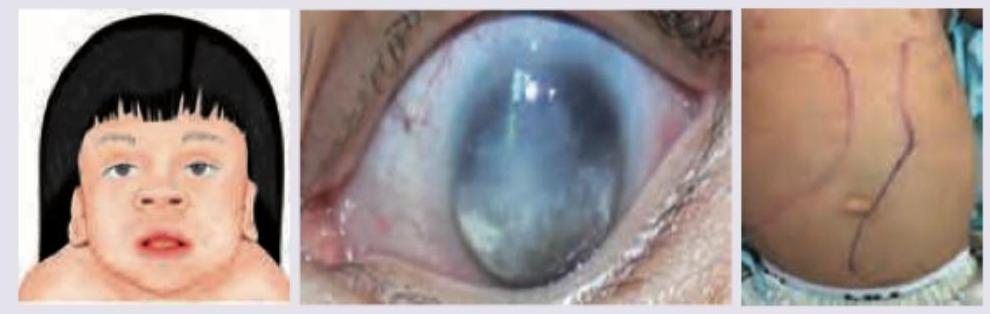
Explanation: ### Explanation **Cystinosis** is a rare autosomal recessive lysosomal storage disorder caused by a mutation in the **CTNS gene**, which encodes **cystinosin**, a lysosomal membrane transporter. This leads to the accumulation of free cystine within lysosomes across various tissues. **1. Why Option A is the Correct (Incorrect Statement):** In cystinosis, cystine accumulates **intracellularly** within lysosomes. It does not spill over into the urine in high enough concentrations to form stones. **Cystine stones** are instead the hallmark of **Cystinuria**, a defect in the renal tubular amino acid transporter (COAL) leading to high urinary excretion of cystine. Therefore, the presence of stones is characteristic of Cystinuria, not Cystinosis. **2. Analysis of Other Options:** * **Option B (Corneal crystals):** Deposition of cystine crystals in the cornea is a pathognomonic feature, often leading to severe photophobia and visual impairment. * **Option C (Fanconi syndrome):** The accumulation of cystine in the proximal convoluted tubule (PCT) cells causes cellular damage, leading to Renal Fanconi Syndrome (generalized malabsorption of glucose, amino acids, uric acid, and phosphates). * **Option D (White/Blond hair and Photophobia):** Patients often exhibit hypopigmentation (fair skin and blond hair) due to altered melanin metabolism. Photophobia occurs due to the aforementioned corneal crystal deposits. **Clinical Pearls for NEET-PG:** * **Cystinosis:** Intracellular (lysosomal) accumulation; causes Fanconi syndrome and Renal Failure. * **Cystinuria:** Extracellular (urinary) accumulation; causes Hexagonal crystals and staghorn calculi. * **Diagnosis:** Confirmed by measuring increased cystine content in polymorphonuclear leukocytes. * **Treatment:** **Cysteamine** (depletes lysosomal cystine).
Explanation: **Explanation:** **Familial Adenomatous Polyposis (FAP)**, also known as familial polyposis coli, is an autosomal dominant condition characterized by the development of hundreds to thousands of adenomatous colonic polyps. 1. **Why Chromosome 5 is correct:** The disease is caused by a mutation in the **APC (Adenomatous Polyposis Coli) gene**, which is located on the **long arm of chromosome 5 (5q21)**. The APC gene is a tumor suppressor gene that regulates the Wnt signaling pathway by promoting the degradation of β-catenin. Loss of this gene leads to uncontrolled cell proliferation and inevitable progression to colorectal cancer if left untreated. 2. **Why the other options are incorrect:** * **Chromosome 6:** Associated with the **HLA complex** (Major Histocompatibility Complex) and conditions like Hemochromatosis (*HFE* gene). * **Chromosome 11:** Associated with **Wilms tumor (WT1)**, β-globin synthesis (Sickle cell, Thalassemia), and MEN1 syndrome. * **Chromosome 13:** Associated with the **RB1 gene** (Retinoblastoma) and the **ATP7B gene** (Wilson disease). **High-Yield Clinical Pearls for NEET-PG:** * **Inheritance:** Autosomal Dominant. * **Gardner Syndrome:** FAP + Osteomas (mandible) + Soft tissue tumors (desmoid tumors) + Dental abnormalities. * **Turcot Syndrome:** FAP + CNS tumors (Medulloblastoma). * **Screening:** Annual sigmoidoscopy/colonoscopy starting at age 10–12 years. * **Management:** Prophylactic total proctocolectomy is usually required by the second or third decade of life.
Explanation: **Explanation:** **Phenylketonuria (PKU)** is an autosomal recessive inborn error of metabolism. The correct answer is **D (Coke-coloured urine)** because this clinical finding is characteristic of **Alkaptonuria** (due to homogentisic acid oxidase deficiency), not PKU. 1. **Why Option D is correct (The False Statement):** In PKU, the urine typically has a characteristic **"mousy" or "musty" odor** due to the presence of phenylacetic acid. Coke-colored or dark urine that turns black upon standing is the hallmark of Alkaptonuria, where homogentisic acid undergoes oxidation. 2. **Why Option A is incorrect:** PKU most commonly occurs due to a deficiency of the enzyme **phenylalanine hydroxylase (PAH)**, which converts phenylalanine to tyrosine. (A rarer form involves a deficiency of the cofactor Tetrahydrobiopterin, BH4). 3. **Why Option B is incorrect:** When the primary pathway is blocked, phenylalanine is diverted to alternative pathways, producing **phenylpyruvate**, phenyllactate, and phenylacetate. Phenylpyruvate is a keto-acid excreted in high amounts in the urine. 4. **Why Option C is incorrect:** Untreated PKU leads to severe intellectual disability, developmental delays (failure to walk/talk), and neurological symptoms like seizures and tremors due to the neurotoxic effects of high phenylalanine levels and decreased neurotransmitter synthesis. **NEET-PG High-Yield Pearls:** * **Guthrie Test:** A bacterial inhibition assay used for neonatal screening of PKU. * **Ferric Chloride Test:** Gives a **transient blue-green** color in PKU (compared to the deep green in Alkaptonuria). * **Clinical Triad:** Intellectual disability, mousy odor, and **hypopigmentation** (fair skin/blue eyes) due to decreased melanin synthesis from tyrosine. * **Management:** Dietary restriction of phenylalanine and supplementation of tyrosine (which becomes an essential amino acid).
Explanation: **Explanation:** **Testicular Feminization Syndrome**, now more commonly known as **Androgen Insensitivity Syndrome (AIS)**, is a condition where an individual is genetically male but has a female phenotype. 1. **Why 46, XY is correct:** The underlying pathology is a mutation in the **Androgen Receptor (AR) gene** located on the X chromosome. These individuals have normal male chromosomes (**46, XY**) and functional testes (usually undescended). The testes produce normal or high levels of testosterone; however, because the peripheral receptors are unresponsive, the body defaults to a female external phenotype. Since Anti-Müllerian Hormone (AMH) is still produced by the Sertoli cells, internal female structures (uterus, fallopian tubes) are absent. 2. **Why the other options are incorrect:** * **45, XO (Turner Syndrome):** Characterized by a female phenotype, short stature, webbed neck, and streak ovaries. * **47, XXY (Klinefelter Syndrome):** Characterized by a male phenotype, small firm testes, gynecomastia, and infertility. * **46, XXY:** This is a chromosomal abnormality (aneuploidy) similar to Klinefelter, but 47, XXY is the classic representation. **High-Yield Clinical Pearls for NEET-PG:** * **Presentation:** A phenotypically "normal" female presenting with **primary amenorrhea**, a short/blind-ending vagina, and absent pubic/axillary hair (due to androgen resistance). * **Biochemical Profile:** High Testosterone, High LH (due to lack of negative feedback), and normal to high Estrogen (via peripheral aromatization). * **Management:** Gonadectomy is performed after puberty to prevent **Gonadoblastoma** (malignancy risk in undescended testes). * **Key Differentiator:** Unlike Müllerian Agenesis (46, XX), AIS patients have **low/absent pubic hair** and **XY karyotype**.
Explanation: **Explanation:** **Phosphate Diabetes (X-linked Hypophosphatemic Rickets)** is the correct answer. It is one of the classic examples of an **X-linked dominant (XLD)** disorder. It is caused by a mutation in the **PHEX gene**, leading to increased levels of Fibroblast Growth Factor 23 (FGF23). This results in renal phosphate wasting and impaired vitamin D metabolism, leading to rickets that is "resistant" to standard Vitamin D therapy. In XLD conditions, both males and females are affected, but females often show milder symptoms due to lyonization (X-inactivation). **Analysis of Incorrect Options:** * **Hemophilia (A and B):** These are classic **X-linked recessive (XLR)** disorders. They primarily affect males, while females are typically asymptomatic carriers. * **Gaucher Disease:** This is the most common lysosomal storage disorder and follows an **Autosomal Recessive (AR)** inheritance pattern. It is caused by a deficiency of glucocerebrosidase. * **Cystic Fibrosis:** This is a classic **Autosomal Recessive (AR)** disorder caused by mutations in the CFTR gene on chromosome 7. **High-Yield Clinical Pearls for NEET-PG:** * **Other XLD Disorders:** Alport Syndrome (some forms), Rett Syndrome, and Incontinentia Pigmenti (the latter two are often lethal in males). * **Biochemical Hallmark of Phosphate Diabetes:** Low serum phosphate, normal serum calcium, and inappropriately low or normal 1,25-(OH)₂D levels despite hypophosphatemia. * **Mnemonic for XLD:** "**A**lport, **R**ett, **I**ncontinentia pigmenti, **P**hosphate diabetes" (**ARIP**).
Explanation: **Explanation:** The correct answer is **Acetylcholinesterase (AChE)**. **1. Why Acetylcholinesterase is the Correct Answer:** While Alpha-fetoprotein (AFP) is the most common *screening* tool, **AChE is the most specific marker** for confirming Neural Tube Defects (NTDs). In a fetus with an open NTD (like anencephaly or open spina bifida), the fetal cerebrospinal fluid (CSF) leaks directly into the amniotic fluid. Since AChE is an enzyme found in high concentrations within the fetal central nervous system, its presence in the amniotic fluid (detected via amniocentesis and gel electrophoresis) is a definitive indicator of exposed neural tissue. **2. Analysis of Incorrect Options:** * **Alpha-fetoprotein (AFP):** This is highly sensitive but lacks specificity. Elevated levels are seen in NTDs, but also in abdominal wall defects (omphalocele/gastroschisis), multiple gestations, and fetal demise. It is used for screening, not definitive diagnosis. * **Pseudocholinesterase (Butyrylcholinesterase):** This is found in the liver and plasma. It is not a specific marker for neural tissue and does not help in diagnosing NTDs. * **Human Chorionic Gonadotropin (HCG):** This is a marker used in the "Triple" or "Quadruple" screen primarily to screen for chromosomal abnormalities like Down Syndrome (where HCG is elevated) or Edwards Syndrome (where HCG is decreased). **3. Clinical Pearls for NEET-PG:** * **Screening Sequence:** Maternal Serum AFP (MSAFP) $\rightarrow$ Ultrasound $\rightarrow$ Amniotic Fluid AFP $\rightarrow$ **Amniotic Fluid AChE (Gold Standard for confirmation).** * **False Positives:** If a sample is contaminated with fetal blood, AFP may be elevated, but the AChE test helps differentiate true NTDs from blood contamination. * **Folic Acid:** Supplementation (400mcg/day for low risk; 4mg/day for high risk) starting 1 month pre-conception reduces NTD incidence by 70%.
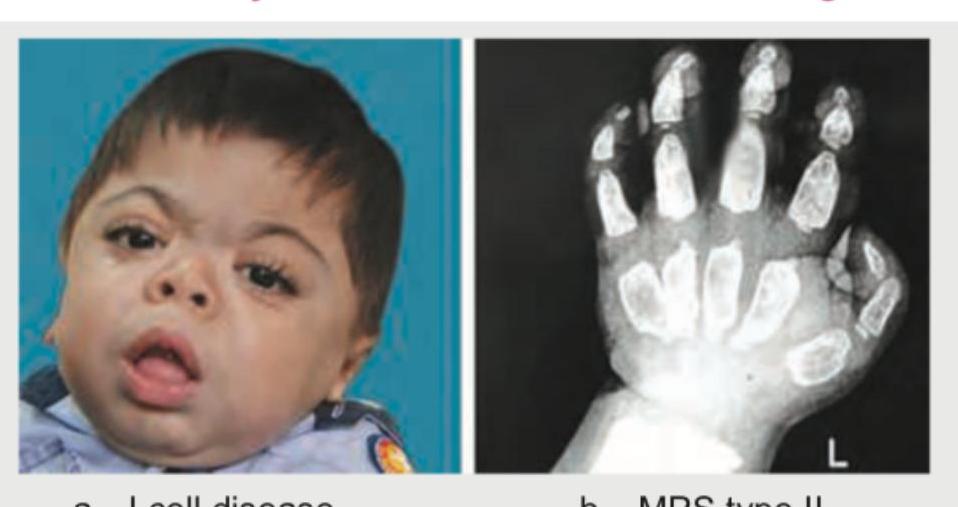
Explanation: **Explanation:** The Mucopolysaccharidoses (MPS) are a group of lysosomal storage disorders caused by the deficiency of enzymes required to break down glycosaminoglycans (GAGs). **Correct Answer: B. Hunter’s Syndrome (MPS II)** Hunter’s syndrome is unique among the mucopolysaccharidoses because it is inherited in an **X-linked recessive** pattern. It is caused by a deficiency of the enzyme **Iduronate-2-sulfatase**, leading to the accumulation of dermatan sulfate and heparan sulfate. Clinically, it presents similarly to Hurler’s syndrome but is generally milder and is characteristically distinguished by the **absence of corneal clouding**. **Incorrect Options:** * **A. Hurler’s Syndrome (MPS IH):** This is the most severe form of MPS, caused by a deficiency of **$\alpha$-L-iduronidase**. Unlike Hunter’s, it is inherited in an **Autosomal Recessive (AR)** pattern and features prominent corneal clouding. * **C. Scheie’s Syndrome (MPS IS):** This is a milder variant of MPS I (also AR inheritance). While patients have corneal clouding and valvular heart disease, they often have a normal lifespan and intelligence. * **D. Sanfilippo’s Syndrome (MPS III):** Inherited as an **AR** trait, this disorder is characterized by severe CNS degeneration and mental retardation with relatively mild somatic features. **High-Yield NEET-PG Pearls:** 1. **Mnemonic:** "The **Hunter** needs clear vision to aim at the **X**" (Hunter = **X**-linked; No corneal clouding). 2. All Mucopolysaccharidoses are **Autosomal Recessive EXCEPT Hunter’s Syndrome** (X-linked). 3. **Urinary Screening:** Large amounts of GAGs in the urine are a diagnostic hallmark. 4. **Enzyme Replacement Therapy (ERT):** Available for MPS I (Laronidase) and MPS II (Idursulfase).
Single Gene Disorders
Practice Questions
Biochemical Diagnosis of Genetic Disorders
Practice Questions
Inborn Errors of Metabolism
Practice Questions
Lysosomal Storage Diseases
Practice Questions
Glycogen Storage Diseases
Practice Questions
Disorders of Lipoprotein Metabolism
Practice Questions
Disorders of Purine and Pyrimidine Metabolism
Practice Questions
Hemoglobinopathies
Practice Questions
Porphyrias
Practice Questions
Biochemical Markers for Disease Diagnosis
Practice Questions
Newborn Screening for Genetic Disorders
Practice Questions
Enzyme Replacement Therapy
Practice Questions
Get full access to all questions, explanations, and performance tracking.
Start For Free