What is the treatment for multiple carboxylase deficiency?
A 44-year-old female presented with bony pain. On general examination, hepatosplenomegaly was observed. Biopsy from the spleen shows a crumpled tissue paper appearance. Which of the following products is likely to have accumulated?
A baby presents with refusal to feed, skin lesions, seizures, and ketosis with organic acids in urine but normal ammonia levels. What is the likely diagnosis?
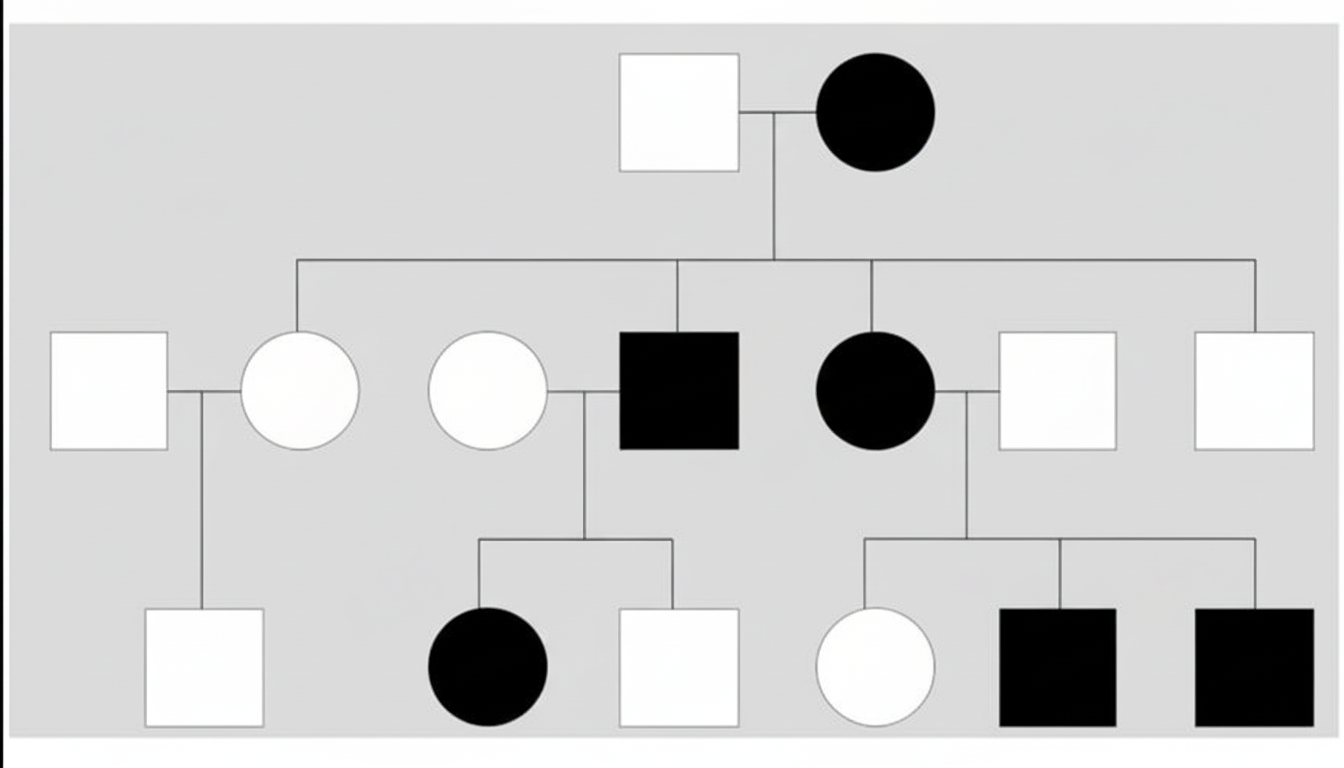
Which of the following is true regarding X-linked recessive disorders?
Oral contraceptive pills (OCPs) intake can cause psychiatric symptoms and abdominal pain. What is the most likely diagnosis associated with these symptoms?
What is the total number of chromosomes in a patient with Turner syndrome?
A defect in the MRP2 transporter leads to which of the following conditions?
Niemann-Pick disease is inherited in which pattern?
A 6-year-old child presents with black spots on sclera and ear. Urine examination reveals that after 30 minutes of collection, the colour of the urine sample had changed. What is the most probable enzyme deficiency the child is suffering from?
Which of the following karyotypes is characteristic of Turner syndrome?
Explanation: **Explanation:** **Multiple Carboxylase Deficiency (MCD)** is a metabolic disorder caused by a defect in the metabolism of **Biotin (Vitamin B7)**. Biotin acts as a vital coenzyme for four major carboxylase enzymes: Pyruvate carboxylase, Acetyl-CoA carboxylase, Propionyl-CoA carboxylase, and 3-methylcrotonyl-CoA carboxylase. The correct answer is **Biotin** because MCD typically results from deficiencies in either **Holocarboxylase synthetase** (neonatal onset) or **Biotinidase** (late-onset). Holocarboxylase synthetase is required to attach biotin to the apoenzymes, while biotinidase is necessary to recycle biotin from dietary sources or protein turnover. Supplementation with pharmacological doses of free biotin bypasses these enzymatic blocks, restoring carboxylase activity and resolving clinical symptoms like dermatitis, alopecia, and metabolic acidosis. **Why incorrect options are wrong:** * **Pyridoxine (B6):** Used for Homocystinuria, Sideroblastic anemia, and B6-dependent seizures. It is a cofactor for transamination and decarboxylation, not carboxylation. * **Thiamine (B1):** Used for Beriberi, Wernicke-Korsakoff syndrome, and Maple Syrup Urine Disease (MSUD). It is a cofactor for oxidative decarboxylation (e.g., Pyruvate dehydrogenase). * **Folic acid (B9):** Used for Megaloblastic anemia and neural tube defect prevention. It is involved in one-carbon metabolism. **High-Yield Clinical Pearls for NEET-PG:** * **Clinical Triad:** Alopecia, skin rash (periorificial), and metabolic acidosis/organic aciduria. * **Biotinidase Deficiency:** Often presents later in infancy with neurological symptoms (seizures, hypotonia, hearing loss). * **Diagnosis:** Confirmed by measuring enzyme activity in leukocytes or fibroblasts and organic acid analysis in urine (showing 3-hydroxyisovaleric acid).
Explanation: ### Explanation The clinical presentation of bony pain, hepatosplenomegaly, and the pathognomonic histological finding of **"crumpled tissue paper"** appearance in the spleen points directly to **Gaucher Disease**. **1. Why Glucocerebroside is Correct:** Gaucher disease is the most common lysosomal storage disorder, caused by a deficiency of the enzyme **Glucocerebrosidase** (Acid $\beta$-glucosidase). This deficiency leads to the accumulation of **Glucocerebroside** within the lysosomes of macrophages. These lipid-laden macrophages are called "Gaucher cells." Under the microscope, their cytoplasm appears fibrillar and wrinkled, resembling crumpled tissue paper or crumpled silk. These cells infiltrate the bone marrow (causing pain and Erlenmeyer flask deformity), spleen, and liver. **2. Why Other Options are Incorrect:** * **Ganglioside (GM2):** Accumulates in **Tay-Sachs Disease**. It presents with a cherry-red spot on the macula and neurodegeneration but lacks hepatosplenomegaly. * **Sphingomyelin:** Accumulates in **Niemann-Pick Disease**. While it features hepatosplenomegaly, the histology shows "foam cells" (vacuolated appearance) rather than crumpled tissue paper. * **Sulfatides:** Accumulate in **Metachromatic Leukodystrophy** due to Arylsulfatase A deficiency, leading to central and peripheral demyelination. **3. High-Yield Clinical Pearls for NEET-PG:** * **Enzyme Deficient:** Glucocerebrosidase. * **Radiological Sign:** **Erlenmeyer flask deformity** of the distal femur. * **Biochemical Marker:** Elevated serum **Chitotriosidase** and Tartrate-resistant acid phosphatase (TRAP). * **Treatment:** Enzyme Replacement Therapy (ERT) with Recombinant Glucocerebrosidase (Imiglucerase). * **Inheritance:** Autosomal Recessive.
Explanation: ### Explanation **1. Why Multiple Carboxylase Deficiency (MCD) is correct:** MCD is a metabolic disorder caused by a deficiency in **Biotinidase** (late-onset) or **Holocarboxylase synthetase** (early-onset). Biotin is a mandatory cofactor for four essential carboxylase enzymes: * **Pyruvate carboxylase:** Gluconeogenesis (deficiency leads to lactic acidosis). * **Acetyl-CoA carboxylase:** Fatty acid synthesis. * **Propionyl-CoA carboxylase:** Metabolism of odd-chain fatty acids and branched-chain amino acids (deficiency leads to **ketosis and organic aciduria**). * **3-Methylcrotonyl-CoA carboxylase:** Leucine catabolism. The hallmark of MCD that distinguishes it from isolated organic acidurias is the **triad of neurological symptoms (seizures), organic aciduria, and cutaneous manifestations (alopecia and skin lesions/rashes).** **2. Why the other options are incorrect:** * **Propionic aciduria:** While it presents with ketosis and organic aciduria, it typically does **not** feature the characteristic skin lesions (dermatitis) seen in biotin-related deficiencies. * **Maple syrup urine disease (MSUD):** Caused by a deficiency in Branched-Chain Alpha-Keto Acid Dehydrogenase. It presents with a "maple syrup" odor and neurological decline, but **not** with the specific skin lesions or the specific pattern of multiple organic acids seen in MCD. * **Urea cycle enzyme deficiency:** These disorders typically present with **hyperammonemia** and respiratory alkalosis. The question explicitly states ammonia levels are normal, ruling this out. **3. NEET-PG High-Yield Pearls:** * **Biotin (Vitamin B7)** is the "CO2 carrier." * **Clinical Clue:** If a question mentions "organic aciduria + skin rash/alopecia," always think of Biotinidase deficiency/MCD. * **Treatment:** High-dose oral Biotin supplementation (often results in dramatic improvement). * **Egg White Injury:** Consuming raw egg whites (avidin) can induce a similar biotin deficiency state.
Explanation: **Explanation:** **1. Why Option A is Correct:** **Menkes disease** (Kinky Hair Syndrome) is an **X-linked recessive** disorder caused by a mutation in the **ATP7A gene**. This gene encodes a P-type ATPase responsible for the absorption of dietary copper from the GI tract and its distribution to various tissues. A defect leads to systemic copper deficiency. Since copper is a vital cofactor for enzymes like **lysyl oxidase** (collagen cross-linking) and **tyrosinase** (melanin synthesis), patients present with brittle "steely" hair, growth failure, and neurological degeneration. **2. Why the Other Options are Incorrect:** * **Option B:** While Ehlers-Danlos Syndrome (EDS) involves collagen defects (e.g., Type V collagen in the Classical type), it is primarily characterized by skin hyperextensibility, joint hypermobility, and vascular fragility. It is not primarily a lung disorder. * **Option C:** Alport syndrome is caused by mutations in **Type IV collagen**. Its classic triad involves **Hereditary Nephritis** (hematuria/renal failure), **Sensorineural deafness**, and **Ocular defects** (Anterior lenticonus). It is not a primary skin disorder. * **Option D:** Marfan syndrome is an **Autosomal Dominant** defect in the **Fibrillin-1 (FBN1) gene**. While it affects the skeletal system (arachnodactyly), it is most famous for cardiovascular complications like **Aortic Dissection** and ocular issues like **Ectopia lentis** (upward dislocation). **Clinical Pearls for NEET-PG:** * **Menkes vs. Wilson:** Menkes is a defect in **ATP7A** (Copper *deficiency*), whereas Wilson disease is a defect in **ATP7B** (Copper *overload*). * **Inheritance:** Most structural protein defects (Marfan, EDS) are Autosomal Dominant, while most enzyme deficiencies are Autosomal Recessive. Menkes is a notable X-linked exception. * **High-Yield Enzyme:** Lysyl oxidase requires copper; its failure in Menkes leads to the characteristic connective tissue and hair defects.
Explanation: **Explanation:** **Acute Intermittent Porphyria (AIP)** is the correct diagnosis. AIP is an autosomal dominant metabolic disorder caused by a deficiency of the enzyme **Porphobilinogen (PBG) deaminase**. The clinical hallmark of AIP is the "classic triad": abdominal pain, neuropsychiatric symptoms (anxiety, psychosis), and peripheral neuropathy. **Why OCPs trigger AIP:** Oral contraceptive pills contain progesterone, which induces the enzyme **ALA synthase (ALAS1)** in the liver. This induction leads to an accumulation of toxic heme precursors, specifically **delta-aminolevulinic acid (ALA)** and **porphobilinogen (PBG)**. These precursors are neurotoxic, precipitating acute attacks of abdominal pain and psychiatric distress. **Analysis of Incorrect Options:** * **B. Systemic Lupus Erythematosus (SLE):** While OCPs can exacerbate SLE, the primary presentation involves malar rash, joint pain, and photosensitivity rather than acute, drug-induced neuro-abdominal crises. * **C. Thrombosis:** OCPs are a major risk factor for Venous Thromboembolism (VTE) due to increased clotting factors, but this presents with limb swelling or pulmonary embolism, not psychiatric symptoms. * **D. Anemia:** OCPs actually reduce menstrual blood loss and are often used to *treat* iron-deficiency anemia. **High-Yield Clinical Pearls for NEET-PG:** * **Enzyme Deficient:** PBG Deaminase (also known as HMB Synthase). * **Accumulated Products:** ALA and PBG (detected in urine). * **Urine Finding:** Urine turns **"port-wine"** color on standing due to oxidation of PBG to porphobilin. * **Triggers:** Drugs (Barbiturates, Sulfonamides, OCPs), Alcohol, and Fasting (starvation). * **Treatment:** Intravenous **Hematin/Hemin** (inhibits ALA synthase via negative feedback) and high-glucose infusion.
Explanation: **Explanation:** **Turner Syndrome** is a chromosomal disorder characterized by **monosomy of the X chromosome**. In a typical human cell, there are 46 chromosomes (23 pairs). In Turner syndrome, one of the sex chromosomes is missing, resulting in a **45,X** karyotype. Therefore, the total number of chromosomes is **45**. This is the only monosomy compatible with life in humans. **Analysis of Options:** * **Option A (45):** Correct. This represents the 44 autosomes plus a single X chromosome (45,X). * **Option B (47):** Incorrect. This represents **trisomy**. Common examples include Down syndrome (Trisomy 21), Klinefelter syndrome (47,XXY), or Patau syndrome (Trisomy 13). * **Option C (46):** Incorrect. This is the **euploid** (normal) number of chromosomes in humans (46,XX or 46,XY). * **Option D (42):** Incorrect. This number does not correspond to any common clinical chromosomal syndrome. **High-Yield Clinical Pearls for NEET-PG:** * **Karyotype:** 45,X is the most common (50%), but mosaicism (e.g., 45,X/46,XX) and structural abnormalities (e.g., Isochromosome Xq) also occur. * **Clinical Features:** Short stature (most common), **streak ovaries** (leading to primary amenorrhea and infertility), webbed neck (cystic hygroma), and widely spaced nipples (shield chest). * **Cardiovascular:** Bicuspid aortic valve (most common) and **Coarctation of the aorta**. * **Renal:** Horseshoe kidney. * **Biochemical Marker:** Elevated LH and FSH levels due to hypergonadotropic hypogonadism (lack of feedback inhibition from estrogen).
Explanation: **Explanation:** **Dubin-Johnson Syndrome (DJS)** is an autosomal recessive disorder characterized by conjugated hyperbilirubinemia. The underlying defect lies in the **MRP2 (Multidrug Resistance-associated Protein 2)** gene, also known as **ABCC2**. This protein is an ATP-dependent canalicular transporter responsible for the efflux of conjugated bilirubin from hepatocytes into the bile canaliculi. When MRP2 is defective, conjugated bilirubin leaks back into the blood, and a dark pigment (metabolites of epinephrine) accumulates in the lysosomes, giving the liver a characteristic **"black" appearance** on biopsy. **Analysis of Incorrect Options:** * **Menke’s Disease:** Caused by a defect in the **ATP7A** gene, leading to impaired copper absorption and transport. It is characterized by "kinky" hair and neurological degeneration. * **Familial Intrahepatic Cholestasis (PFIC):** These are a group of disorders involving different transporters. For example, PFIC1 involves **ATP8B1**, and PFIC2 involves the Bile Salt Export Pump (**BSEP/ABCB11**). * **Benign Recurrent Intrahepatic Cholestasis (BRIC):** This is a milder, episodic version of cholestasis often linked to mutations in the same genes as PFIC1 (ATP8B1). **High-Yield Clinical Pearls for NEET-PG:** * **DJS vs. Rotor Syndrome:** Both present with conjugated hyperbilirubinemia, but **Rotor Syndrome** lacks the black liver pigmentation and is caused by defects in OATP1B1 and OATP1B3 transporters. * **Urinary Coproporphyrin:** In DJS, total urinary coproporphyrin levels are normal, but **>80% is Coproporphyrin I** (normally, Coproporphyrin III predominates). * **Oral Cholecystography:** The gallbladder is typically **not visualized** in Dubin-Johnson Syndrome due to the transport defect.
Explanation: **Explanation:** **Niemann-Pick Disease (NPD)** is a lysosomal storage disorder characterized by the deficient activity of the enzyme **acid sphingomyelinase (ASM)** or defects in cholesterol trafficking (NPC1/NPC2). It follows an **Autosomal Recessive (AR)** inheritance pattern. This means an affected individual must inherit two mutated alleles (one from each carrier parent) to manifest the disease. Most enzyme deficiency disorders in biochemistry, particularly sphingolipidoses, follow this pattern. **Analysis of Options:** * **Autosomal Dominant (B):** This pattern usually involves structural protein defects (e.g., Marfan syndrome) or receptors (e.g., Familial Hypercholesterolemia). Metabolic enzyme deficiencies are rarely dominant because 50% enzyme activity in a heterozygote is typically sufficient for normal function. * **X-linked (C):** While some storage diseases like **Fabry disease** and **Hunter syndrome** are X-linked recessive, Niemann-Pick is not. * **Mitochondrial (D):** These are inherited exclusively from the mother and typically affect high-energy tissues (e.g., MELAS). NPD is caused by nuclear DNA mutations. **High-Yield Clinical Pearls for NEET-PG:** * **Biochemical Defect:** Accumulation of **sphingomyelin** in reticuloendothelial cells. * **Histology:** Pathognomonic **"Foam cells"** (lipid-laden macrophages) are seen in the bone marrow and tissues. * **Clinical Triad:** Hepatosplenomegaly, progressive neurodegeneration, and a **Cherry-red spot** on the macula (shared with Tay-Sachs, but Tay-Sachs lacks organomegaly). * **Type C:** Unlike Types A and B, Type C is due to a defect in **cholesterol transport** (NPC1/NPC2 genes), not a primary sphingomyelinase deficiency.
Explanation: ### Explanation The clinical presentation of black spots on the sclera and ear (ochronosis) combined with urine that darkens upon standing is classic for **Alkaptonuria**. **1. Why Homogentisic acid oxidase is correct:** Alkaptonuria is an autosomal recessive disorder caused by a deficiency of **homogentisic acid oxidase** in the phenylalanine-tyrosine catabolic pathway. This deficiency leads to the accumulation of **homogentisic acid (HGA)**. When urine is left standing, HGA is oxidized to benzoquinone acetate, which polymerizes into a black pigment (alkapton), causing the characteristic color change. In tissues, this pigment binds to collagen in cartilage and connective tissue, leading to **ochronosis** (bluish-black pigmentation of the ears and sclera) and eventually ochronotic arthritis in adulthood. **2. Why the other options are incorrect:** * **Phenylalanine hydroxylase:** Deficiency causes **Phenylketonuria (PKU)**, characterized by intellectual disability, "mousy" body odor, and hypopigmentation, not darkening of urine or ochronosis. * **Epimerase:** UDP-glucose 4-epimerase deficiency is a rare form of **Galactosemia**. It presents with jaundice, hepatomegaly, and cataracts in infants. * **Multiple carboxylase:** This deficiency affects biotin-dependent enzymes, leading to skin rashes, alopecia, and metabolic acidosis, but does not cause pigmentary changes in urine or sclera. **3. High-Yield NEET-PG Pearls:** * **Diagnostic Test:** Ferric chloride test (gives a transient deep blue color) and Benedict’s test (gives a yellow-orange precipitate but the supernatant turns black). * **Triad of Alkaptonuria:** Homogentisic aciduria (dark urine), Ochronosis (pigmentation), and Arthritis (large joints/spine). * **Dietary Management:** Restriction of Phenylalanine and Tyrosine; high doses of Vitamin C (ascorbic acid) may decrease pigment deposition. * **New Drug:** **Nitisinone** inhibits 4-hydroxyphenylpyruvate dioxygenase, reducing HGA production.
Explanation: **Explanation:** **Turner Syndrome (45,XO)** is a chromosomal disorder characterized by complete or partial monosomy of the X chromosome in females. It is the most common sex chromosome abnormality in females, occurring in approximately 1 in 2,500 live births. **Why 45,XO is Correct:** The normal human karyotype consists of 46 chromosomes (23 pairs). In Turner syndrome, a nondisjunction event (usually during paternal meiosis) results in a zygote with only one functional X chromosome. The notation **45,XO** (or 45,X) signifies a total of 45 chromosomes with a single X sex chromosome and no second sex chromosome (O denotes the absence). **Analysis of Incorrect Options:** * **46,XO:** This is a nomenclatural error. A "46" count implies a full set of chromosomes; if an X is missing, the count must be 45. * **47,XXX (Triple X Syndrome):** This represents a trisomy of the X chromosome. These individuals are phenotypically female and often asymptomatic, though they may have tall stature or learning disabilities. * **Trisomy 21 (Down Syndrome):** This is an autosomal trisomy (47,XX+21 or 47,XY+21) involving chromosome 21, not a sex chromosome monosomy. **High-Yield Clinical Pearls for NEET-PG:** * **Clinical Features:** Short stature (most common), **webbed neck** (cystic hygroma remnant), **streak ovaries** (leading to primary amenorrhea and infertility), and a broad "shield" chest. * **Cardiovascular:** **Bicuspid aortic valve** (most common) and **Coarctation of the aorta**. * **Renal:** Horseshoe kidney. * **Biochemical Marker:** Elevated LH and FSH levels due to hypergonadotropic hypogonadism (lack of feedback inhibition from estrogen). * **Genetics:** 50% are 45,X; others are mosaics (e.g., 45,X/46,XX) or have structural abnormalities of the X chromosome.
Single Gene Disorders
Practice Questions
Biochemical Diagnosis of Genetic Disorders
Practice Questions
Inborn Errors of Metabolism
Practice Questions
Lysosomal Storage Diseases
Practice Questions
Glycogen Storage Diseases
Practice Questions
Disorders of Lipoprotein Metabolism
Practice Questions
Disorders of Purine and Pyrimidine Metabolism
Practice Questions
Hemoglobinopathies
Practice Questions
Porphyrias
Practice Questions
Biochemical Markers for Disease Diagnosis
Practice Questions
Newborn Screening for Genetic Disorders
Practice Questions
Enzyme Replacement Therapy
Practice Questions
Get full access to all questions, explanations, and performance tracking.
Start For Free