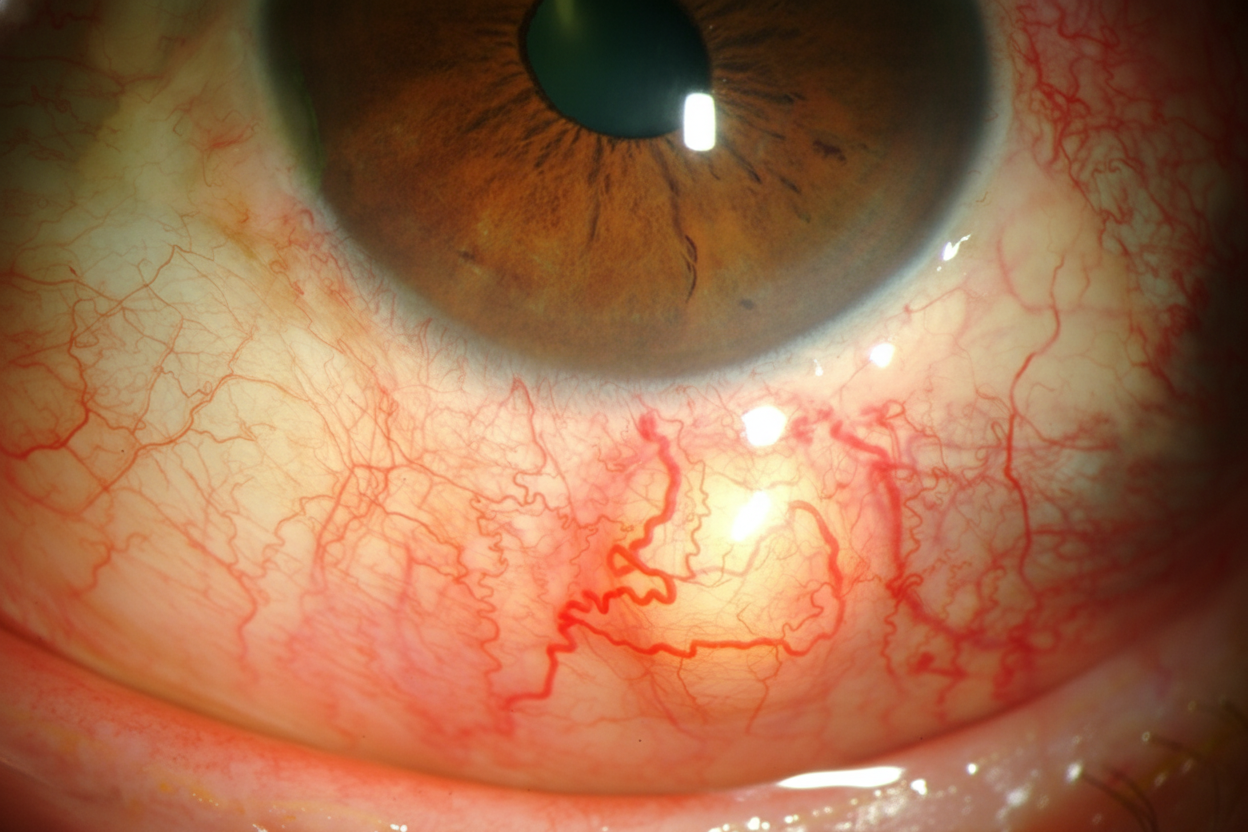
A male infant's parents report that male children over three generations in the mother's family have been affected by a progressive disorder involving multiple organ systems. These children had coarse facial features, corneal clouding, joint stiffness, hepatosplenomegaly, and mental retardation, and many died in childhood. At autopsy, some of the children had subendothelial coronary arterial deposits that caused myocardial infarction. Laboratory testing of the infant shows increased urinary excretion of mucopolysaccharides. Bone marrow biopsy reveals that the accumulated mucopolysaccharides are found in macrophages ('balloon cells' filled with minute vacuoles). Which of the following enzyme deficiencies is most likely to be seen in this infant?
For the development of sickle cell disease, the codon for the amino acid glutamate is replaced with the codon for which amino acid at the 6th position of the beta-globin gene?
A child presents with massive hepatomegaly and hypoglycemia. There is no improvement in blood glucose on the administration of glucagon. What is the probable diagnosis?
Enzyme replacement therapy is not available for which of the following diseases?
Cystic fibrosis is inherited as an autosomal recessive condition. A normal couple has one daughter affected with the disease. They are now planning to have another child. What is the chance of her sibling being affected by the disease?
In 1990, Michaele Blease and W. French Andresco of the National Institute of Health, Bethesda, U.S.A. attempted gene therapy on a human patient. Which of the following diseases was attempted to be cured?
Chronic nonspherocytic hemolytic anemia is a manifestation of:
In Alkaptonuria, which enzyme is deficient?
Trisomy 21 is also known as:
Hanup disease is related to which of the following conditions?
Explanation: ### Explanation The clinical presentation describes a classic case of **Hurler Syndrome (Mucopolysaccharidosis Type IH)**. **1. Why the Correct Answer is Right:** The patient exhibits the hallmark "gargoyle" features: coarse facial features, corneal clouding, hepatosplenomegaly, and skeletal deformities (dysostosis multiplex). The accumulation of **dermatan sulfate** and **heparan sulfate** due to a deficiency of **$\alpha$-L-iduronidase** leads to multi-organ dysfunction. The "balloon cells" in the bone marrow are macrophages engorged with undegraded glycosaminoglycans (GAGs). A critical high-yield point is the **coronary artery involvement**; GAG deposition in the coronary subendothelium leads to narrowing and early myocardial infarction, a common cause of death in these patients. **2. Why the Incorrect Options are Wrong:** * **Adenosine deaminase:** Deficiency causes Severe Combined Immunodeficiency (SCID), presenting with recurrent infections and lymphopenia, not GAG accumulation or coarse features. * **Glucocerebrosidase:** Deficiency causes **Gaucher Disease**. While it features hepatosplenomegaly and "wrinkled tissue paper" macrophages, it lacks corneal clouding and urinary mucopolysaccharides. * **Glucose-6-phosphatase:** Deficiency causes **Von Gierke Disease** (GSD Type I), presenting with hypoglycemia, lactic acidosis, and "doll-like" facies, but not skeletal stiffness or corneal clouding. **3. Clinical Pearls for NEET-PG:** * **Hurler vs. Hunter:** Both have similar features, but **Hunter Syndrome (MPS II)** is X-linked recessive, lacks corneal clouding, and is caused by **Iduronate-2-sulfatase** deficiency ("The Hunter needs clear eyes to see the X"). * **Inheritance:** Hurler syndrome is Autosomal Recessive. * **Diagnosis:** Initial screening via urinary GAGs; confirmed by enzyme assay or genetic testing.
Explanation: ### Explanation **Correct Option: A (Valine)** Sickle Cell Anemia is a classic example of a **point mutation (missense mutation)**. In the $\beta$-globin chain of hemoglobin, the amino acid **Glutamate** (which is polar and negatively charged) is replaced by **Valine** (which is non-polar and hydrophobic) at the **6th position**. * **Molecular Level:** The DNA codon **GAG** (coding for Glutamate) changes to **GTG** (coding for Valine). * **Pathophysiology:** This substitution creates a "sticky patch" on the surface of the hemoglobin molecule. Under deoxygenated conditions, these hydrophobic patches interact, leading to the polymerization of HbS into long fibers, which distorts the RBC into a sickle shape. **Incorrect Options:** * **B (Phenylalanine):** While hydrophobic, it is not involved in the standard sickle cell mutation. * **C (Asparagine):** This is a polar amino acid; its substitution does not cause the polymerization characteristic of HbS. * **D (Serine):** Serine is a polar amino acid and is not the substituent in sickle cell disease. **High-Yield NEET-PG Pearls:** 1. **HbC Disease:** Glutamate is replaced by **Lysine** at the same 6th position of the $\beta$-chain. (Mnemonic: **S**ickle = **V**aline; **C** = Ly**s**ine). 2. **Electrophoresis:** On alkaline electrophoresis, HbA moves fastest toward the anode, followed by HbF, HbS, and HbC (Mnemonic: **A** Fat **S**anta **C**laus). 3. **Protective Effect:** Heterozygotes (Sickle cell trait) show resistance to *Plasmodium falciparum* malaria. 4. **Diagnosis:** The definitive test is **Hemoglobin Electrophoresis** or HPLC; the screening test is the **Sickling test** (using Sodium metabisulfite).
Explanation: ### Explanation **Correct Answer: A. Von Gierke disease (GSD Type I)** The clinical presentation of **massive hepatomegaly** and **fasting hypoglycemia** that is **unresponsive to glucagon** is classic for Von Gierke disease. **Underlying Concept:** Von Gierke disease is caused by a deficiency of **Glucose-6-Phosphatase**. This enzyme is the final common step for both **glycogenolysis** (breakdown of glycogen) and **gluconeogenesis** (production of glucose from non-carbohydrate sources). Because this enzyme is missing, the liver cannot release free glucose into the blood. When glucagon is administered, it attempts to stimulate these pathways, but since the "exit gate" (Glucose-6-Phosphatase) is blocked, blood glucose levels fail to rise. **Why incorrect options are wrong:** * **B. McArdle disease (GSD Type V):** This is a muscle phosphorylase deficiency. It presents with muscle cramps and myoglobinuria after exercise; it does **not** cause hypoglycemia or hepatomegaly. * **C & D. Cori/Forbes disease (GSD Type III):** This is a deficiency of the **Debranching enzyme**. While it causes hepatomegaly and hypoglycemia, the hypoglycemia is usually milder because **gluconeogenesis remains intact**. Therefore, patients typically show a **partial glycemic response to glucagon** (especially in the post-prandial state). **High-Yield Clinical Pearls for NEET-PG:** * **Biochemical Hallmarks:** Look for the "4 Hypers": **Hyper**uricemia (leading to gout), **Hyper**lipidemia, **Hyper**lactatemia (lactic acidosis), and **Hyper**ketonemia. * **Physical Exam:** "Doll-like facies" (fatty cheeks) due to adipose deposition. * **Diagnostic Clue:** If the question mentions "lactic acidosis after glucagon administration," it strongly points to Type I, as the liver diverts glucose-6-phosphate into the glycolytic pathway instead of releasing glucose.
Explanation: **Explanation:** The correct answer is **Hunter disease (Mucopolysaccharidosis II)**. While Enzyme Replacement Therapy (ERT) exists for many lysosomal storage disorders, its effectiveness is severely limited in diseases with significant **Central Nervous System (CNS) involvement**. The blood-brain barrier (BBB) prevents intravenously administered enzymes from reaching the brain. Hunter disease (caused by a deficiency of **Iduronate-2-sulfatase**) often presents with severe neurodegeneration. While ERT (Idursulfase) is FDA-approved for the *systemic* manifestations of Hunter syndrome, it does not cross the BBB and therefore cannot treat the cognitive decline. In the context of NEET-PG questions, Hunter disease is often highlighted as the condition where ERT fails to address the primary neurological pathology compared to others. **Analysis of Incorrect Options:** * **Gaucher Disease (Type 1):** The gold standard for ERT. **Imiglucerase** (recombinant glucocerebrosidase) effectively treats hepatosplenomegaly and hematological issues. * **Hurler Disease (MPS I):** Treated with **Laronidase**. While it has CNS involvement, the standard of care often involves Hematopoietic Stem Cell Transplant (HSCT) to address neurological issues, but ERT is widely available for systemic management. * **Pompe Disease:** Treated with **Alglucosidase alfa**. It is a glycogen storage disease (Type II) where ERT effectively targets cardiac and skeletal muscle. **High-Yield Clinical Pearls for NEET-PG:** * **Hunter vs. Hurler:** Hunter syndrome is **X-linked Recessive** and lacks corneal clouding ("The Hunter needs clear vision to see the X"). * **Gaucher Disease:** Most common lysosomal storage disorder; look for "Crinkled paper" appearance of macrophages. * **Fabry Disease:** Another X-linked disorder where ERT (Agalsidase beta) is used.
Explanation: ### Explanation **1. Why Option C (1 in 4) is Correct:** Cystic Fibrosis (CF) follows an **Autosomal Recessive (AR)** inheritance pattern. For a couple to have an affected child (genotype *aa*) despite being phenotypically normal, both parents must be **obligate carriers** (genotype *Aa*). According to Mendelian laws, when two carriers (*Aa x Aa*) conceive, the probability of offspring genotypes are: * 25% Homozygous Dominant (*AA*) – Normal * 50% Heterozygous (*Aa*) – Carrier (Normal phenotype) * **25% Homozygous Recessive (*aa*) – Affected** Since each pregnancy is an independent event, the probability of the next sibling being affected remains **1 in 4 (25%)**. **2. Why Other Options are Incorrect:** * **Option B (1 in 2):** This 50% risk occurs in Autosomal Dominant conditions if one parent is affected (*Aa x aa*) or in AR conditions if one parent is affected and the other is a carrier. * **Option D (3 in 4):** This 75% represents the probability of a child being **phenotypically normal** (sum of *AA* and *Aa*) in an AR cross. * **Note on Option A:** It is identical to Option C, which is the correct mathematical probability. **3. High-Yield Clinical Pearls for NEET-PG:** * **Molecular Defect:** Mutation in the **CFTR gene** (Cystic Fibrosis Transmembrane Conductance Regulator) located on **Chromosome 7**. * **Most Common Mutation:** **ΔF508** (deletion of phenylalanine at position 508), leading to protein misfolding and degradation in the Proteasome. * **Diagnosis:** Sweat Chloride Test (Gold Standard) showing chloride levels **>60 mEq/L**. * **Key Presentation:** Recurrent pulmonary infections (*Pseudomonas*), pancreatic insufficiency (steatorrhea), and **Infertility in males** (Congenital Bilateral Absence of Vas Deferens - CBAVD).
Explanation: **Explanation:** The correct answer is **Severe Combined Immunodeficiency Disease (SCID)**. In 1990, the first successful human gene therapy trial was performed on a four-year-old girl, Ashanti DeSilva, who suffered from **Adenosine Deaminase (ADA) deficiency**, a common cause of autosomal recessive SCID. The procedure involved extracting the patient's T-lymphocytes, inserting a functional ADA gene using a retroviral vector, and re-infusing the genetically modified cells back into the patient. **Why the other options are incorrect:** * **Cystic Fibrosis:** While it is a major target for gene therapy (targeting the CFTR gene), early trials in the 1990s faced significant hurdles regarding delivery to lung epithelium and did not mark the "first" successful human attempt. * **Haemophilia:** Gene therapy for Haemophilia A and B (targeting Factors VIII and IX) is currently a high-yield topic in modern medicine, but these trials gained clinical momentum much later than the 1990 SCID trial. * **Thalassemia:** Treatment for β-thalassemia involves targeting the HBB gene. While gene therapy is now a viable curative option (e.g., Zynteglo), it was not the pioneering case in 1990. **Clinical Pearls for NEET-PG:** * **ADA Deficiency Pathophysiology:** Deficiency of the ADA enzyme leads to the accumulation of **deoxyadenosine** and **dATP**, which are toxic to immature B and T lymphocytes, leading to lymphopenia and profound immunodeficiency. * **Vector Used:** Retroviruses were the primary vectors used in early gene therapy trials. * **Alternative Treatments:** Apart from gene therapy, ADA-SCID can be managed with **Enzyme Replacement Therapy (PEG-ADA)** or Bone Marrow Transplantation (the treatment of choice).
Explanation: **Explanation:** **Glucose-6-Phosphate Dehydrogenase (G6PD) deficiency** is the most common enzyme deficiency causing **Chronic Nonspherocytic Hemolytic Anemia (CNSHA)**. G6PD is the rate-limiting enzyme of the Hexose Monophosphate (HMP) shunt, responsible for producing **NADPH**. NADPH is essential for maintaining a pool of reduced glutathione, which protects red blood cells (RBCs) from oxidative stress. In G6PD deficiency, oxidative damage leads to the denaturation of hemoglobin (**Heinz bodies**) and subsequent hemolysis. While most variants cause episodic hemolysis triggered by fava beans or infections, certain "Class I" mutations lead to chronic, baseline hemolysis without spherocytes on the peripheral smear. **Analysis of Incorrect Options:** * **Hereditary Elliptocytosis:** This is a structural membrane defect (usually involving spectrin) characterized by elliptical-shaped RBCs, not a primary enzyme deficiency. * **Sickle Cell Anemia:** This is a qualitative hemoglobinopathy (Glu → Val at position 6 of the β-globin chain). While it causes chronic hemolysis, it is characterized by "sickle cells" and vaso-occlusive crises rather than being classified as nonspherocytic enzyme-related anemia. * **Hexokinase Deficiency:** Although it can cause CNSHA, it is extremely rare compared to G6PD deficiency. In the context of standard medical examinations, G6PD is the classic association for this presentation. **High-Yield Pearls for NEET-PG:** * **Inheritance:** G6PD deficiency is **X-linked recessive**. * **Morphology:** Look for **Heinz bodies** (supravital stain) and **Bite cells** (degmacytes) on peripheral smear. * **Trigger factors:** AAA (Antimalarials like Primaquine, Antibiotics like Sulfa drugs, and Aspirin/Acidosis). * **Protection:** G6PD deficiency offers a selective advantage against *Plasmodium falciparum* malaria.
Explanation: **Explanation:** **Alkaptonuria** is an autosomal recessive disorder of phenylalanine and tyrosine metabolism. The correct answer is **Homogentisate oxidase** (also known as homogentisate 1,2-dioxygenase). This enzyme is responsible for converting homogentisic acid into maleylacetoacetic acid. Its deficiency leads to the accumulation of homogentisic acid in the blood and tissues, which is then excreted in the urine. **Analysis of Incorrect Options:** * **Phosphofructokinase (PFK-1):** This is the rate-limiting enzyme of glycolysis. Its deficiency leads to Tarui disease (GSD Type VII). * **HMG CoA reductase:** This is the rate-limiting enzyme for cholesterol synthesis and the target of Statin drugs. * **Xanthine oxidase:** This enzyme converts hypoxanthine to xanthine and xanthine to uric acid. Its deficiency leads to xanthinuria, while its inhibition (by Allopurinol) is used to treat Gout. **Clinical Pearls for NEET-PG:** 1. **The "Black Urine" Sign:** Urine turns black upon standing or alkalinization due to the oxidation and polymerization of homogentisic acid into melanin-like compounds. 2. **Ochronosis:** Deposition of dark pigment in connective tissues, such as the sclera (brown spots) and ear cartilage (bluish tint). 3. **Ochronotic Arthritis:** Long-term accumulation in large joints and intervertebral discs leads to severe, early-onset arthritis and "bamboo spine" appearance on X-ray. 4. **Diagnosis:** Confirmed by detecting homogentisic acid in urine using Gas Chromatography-Mass Spectrometry (GC-MS). 5. **Treatment:** Low protein diet (restricting Phenylalanine/Tyrosine) and **Nitisinone**, which inhibits 4-hydroxyphenylpyruvate dioxygenase to prevent homogentisate formation.
Explanation: **Explanation:** **Correct Answer: C. Down’s syndrome** Down’s syndrome is the most common chromosomal disorder, caused by the presence of an extra copy of chromosome 21 (**Trisomy 21**). This usually occurs due to **meiotic non-disjunction** during gametogenesis, strongly associated with advanced maternal age. In a small percentage of cases, it can result from Robertsonian translocation (usually between chromosomes 14 and 21) or mosaicism. **Analysis of Incorrect Options:** * **A. Turner’s syndrome:** This is a monosomy characterized by a **45,X** karyotype. It affects females and is characterized by short stature, webbed neck, and primary amenorrhea. * **B. Klinefelter’s syndrome:** This is a sex chromosome aneuploidy characterized by a **47,XXY** karyotype. It affects males and presents with testicular atrophy, gynecomastia, and infertility. * **D. Alpo’s syndrome:** This is not a standard medical term. It may be a distractor for **Alport syndrome**, which is a genetic disorder of Type IV collagen affecting the kidneys, ears, and eyes, rather than a chromosomal trisomy. **High-Yield Clinical Pearls for NEET-PG:** * **First Trimester Screening:** Look for increased **nuchal translucency** on ultrasound and decreased **PAPP-A** (Pregnancy-associated plasma protein A) in maternal serum. * **Quadruple Test (Second Trimester):** Characterized by **decreased AFP** (Alpha-fetoprotein), **decreased unconjugated estriol (uE3)**, **increased hCG**, and **increased Inhibin A**. * **Clinical Associations:** Early-onset Alzheimer’s disease (due to APP gene on Ch 21), Endocardial cushion defects (ASD/VSD), and an increased risk of Acute Leukemia (ALL and AML-M7).
Explanation: **Explanation:** **Hartnup disease** is an autosomal recessive disorder characterized by a defect in the **SLC6A19 transporter**, which is responsible for the absorption of neutral amino acids (especially **Tryptophan**) in the intestinal mucosa and renal tubules. **Why Pellagra symptoms is correct:** Tryptophan is an essential precursor for the endogenous synthesis of **Niacin (Vitamin B3)**; approximately 60 mg of Tryptophan yields 1 mg of Niacin. In Hartnup disease, the profound deficiency of Tryptophan leads to a secondary deficiency of Niacin. This manifests as **Pellagra-like symptoms**, classically described by the "4 Ds": Dermatitis (photosensitive rash), Diarrhea, Dementia, and eventually Death. **Why other options are incorrect:** * **Rickets symptoms:** Caused by Vitamin D deficiency or calcium/phosphate metabolism defects, unrelated to neutral amino acid transport. * **Burning foot syndrome:** Associated with **Pantothenic acid (Vitamin B5)** deficiency. * **Angular stomatitis:** A classic sign of **Riboflavin (Vitamin B2)** deficiency, though it can also be seen in B6, B12, or iron deficiency. **High-Yield Clinical Pearls for NEET-PG:** * **Diagnostic Hallmark:** The presence of **neutral aminoaciduria** (neutral amino acids in urine) but *not* proline or hydroxyproline. * **Indicanuria:** Unabsorbed tryptophan in the gut is converted by bacteria into indoles, which are excreted in the urine as indican (turning blue upon oxidation). * **Management:** High-protein diet and **Nicotinamide** supplementation. * **Differential:** Always differentiate from **Carcinoid Syndrome**, where Tryptophan is diverted to Serotonin synthesis, also potentially causing Pellagra.
Single Gene Disorders
Practice Questions
Biochemical Diagnosis of Genetic Disorders
Practice Questions
Inborn Errors of Metabolism
Practice Questions
Lysosomal Storage Diseases
Practice Questions
Glycogen Storage Diseases
Practice Questions
Disorders of Lipoprotein Metabolism
Practice Questions
Disorders of Purine and Pyrimidine Metabolism
Practice Questions
Hemoglobinopathies
Practice Questions
Porphyrias
Practice Questions
Biochemical Markers for Disease Diagnosis
Practice Questions
Newborn Screening for Genetic Disorders
Practice Questions
Enzyme Replacement Therapy
Practice Questions
Get full access to all questions, explanations, and performance tracking.
Start For Free