A 17-year-old with type 1 diabetes presents with diabetic ketoacidosis after a weekend camping trip. He is noted to be jaundiced, and the plasma has a red color. Which of the following is a product of the enzyme for which this patient has a deficiency?
A young male presented with an X-linked recessive disorder characterized by hyperuricemia and mild mental retardation. What is the underlying biochemical defect?
Which of the following inborn errors of metabolism is associated with mental retardation?
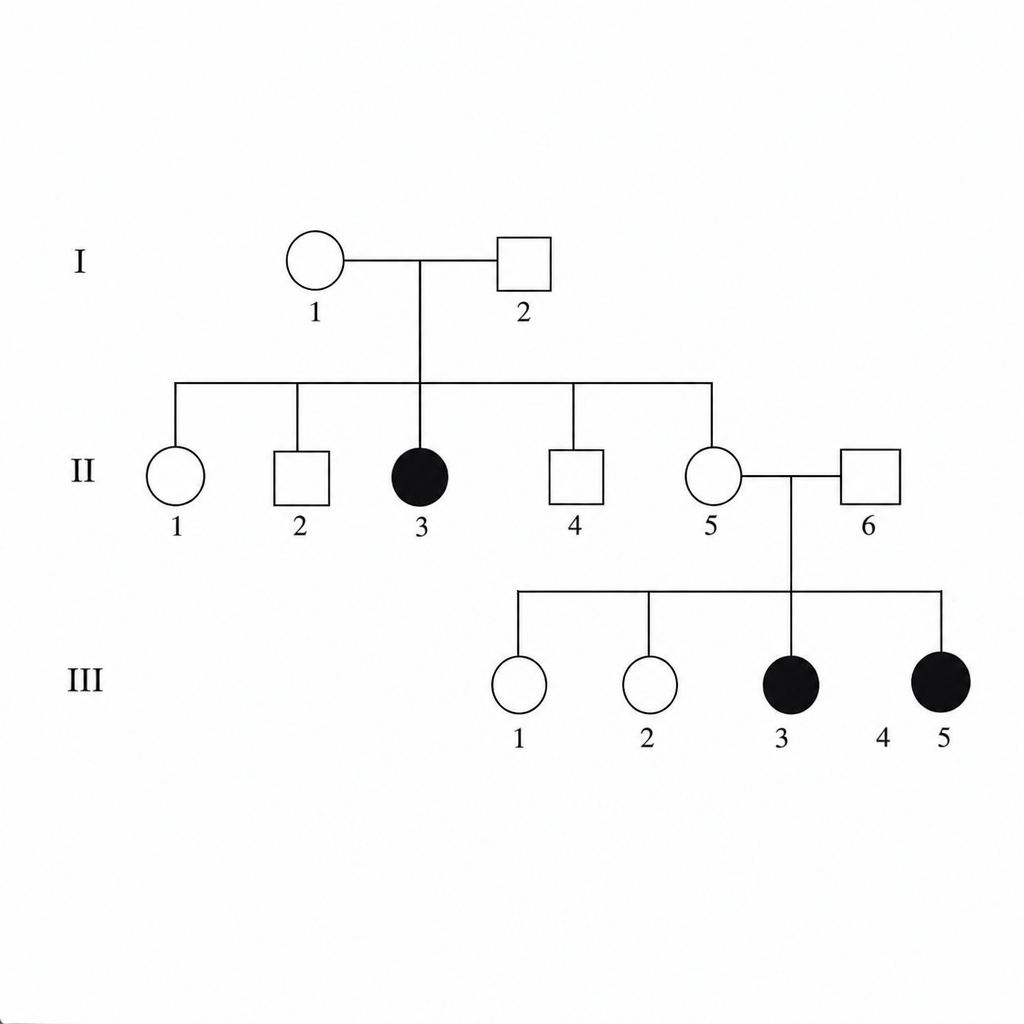
The following pedigree is associated with which of the following conditions?

Alkaptonuria is a metabolic disease caused by a defect in or lack of homogentisic acid oxidase, which leads to what?
All of the following are examples of predominantly unconjugated hyperbilirubinemia, except?
In sickle cell anemia, which amino acid replaces glutamic acid?
A young boy presents with difficulty in getting up from a sitting position and is diagnosed with Duchenne's muscular dystrophy. Which of the following statements is true regarding a mutation in the promoter region of the dystrophin gene?
NARP syndrome is a part of which of the following group of disorders?
Zinc transporter 8 (ZnT8) antibody is seen in which of the following conditions?
Explanation: ### Explanation **1. Why NADPH is the Correct Answer:** The clinical presentation describes a patient with **G6PD (Glucose-6-Phosphate Dehydrogenase) deficiency** triggered by **Diabetic Ketoacidosis (DKA)**. In G6PD deficiency, oxidative stress (caused here by acidosis and infection/stress from the trip) leads to the oxidation of hemoglobin into **Heinz bodies**, resulting in acute hemolysis (jaundice and red plasma/hemoglobinemia). G6PD is the rate-limiting enzyme of the **Hexose Monophosphate (HMP) Shunt**. It catalyzes the conversion of Glucose-6-Phosphate to 6-Phosphogluconolactone, and in the process, it reduces NADP+ to **NADPH**. NADPH is essential for maintaining the pool of **reduced glutathione**, which protects erythrocytes from oxidative damage by neutralizing free radicals and hydrogen peroxide. **2. Why Other Options are Incorrect:** * **A. FADH2:** Produced primarily in the TCA cycle (Succinate dehydrogenase) and Beta-oxidation. It is not a product of the G6PD enzyme. * **B. NAD+:** This is an oxidized coenzyme. The HMP shunt is focused on producing *reduced* coenzymes (NADPH). * **C. NADH:** Produced during glycolysis and the TCA cycle. While it is a reducing equivalent, it is not the product of the HMP shunt and cannot be used by Glutathione Reductase to protect against oxidative stress in RBCs. **3. Clinical Pearls for NEET-PG:** * **Inheritance:** X-linked recessive (more common in males). * **Triggers:** Fava beans, Infections, DKA, and Drugs (AAA: **A**ntimalarials like Primaquine, **A**ntibiotics like Sulfa drugs, **A**spirin/NSAIDs). * **Morphology:** **Heinz Bodies** (denatured Hb) and **Bite Cells** (formed by splenic macrophages removing Heinz bodies). * **Diagnosis:** Enzyme assay (Note: Levels may be falsely normal during an acute hemolytic episode as young reticulocytes have higher enzyme levels).
Explanation: ### Explanation **Correct Answer: C. Hypoxanthine-guanine phosphoribosyltransferase (HGPRT) deficiency** The clinical presentation of an **X-linked recessive** inheritance pattern, **hyperuricemia**, and **mental retardation** is classic for **Lesch-Nyhan Syndrome**. 1. **Biochemical Defect:** HGPRT is a key enzyme in the **Purine Salvage Pathway**. It converts Hypoxanthine to IMP and Guanine to GMP. 2. **Pathophysiology:** When HGPRT is deficient, these purine bases cannot be salvaged and are instead degraded into **uric acid**, leading to severe hyperuricemia (gouty arthritis, urate stones). 3. **Metabolic Consequence:** The failure of the salvage pathway leads to a compensatory increase in *de novo* purine synthesis (increased PRPP levels and decreased feedback inhibition), further exacerbating uric acid production. --- ### Analysis of Incorrect Options: * **A. Deficiency in branched-chain amino acid metabolites:** This refers to **Maple Syrup Urine Disease (MSUD)**. It presents with a "burnt sugar" odor in urine and neurological deterioration but is autosomal recessive and not associated with hyperuricemia. * **B. Defective homogentisate oxidase:** This is the defect in **Alkaptonuria**. It is characterized by ochronosis (darkening of tissues) and urine that turns black upon standing, not mental retardation or hyperuricemia. * **D. Phenylalanine hydroxylase deficiency:** This causes **Phenylketonuria (PKU)**. While it involves mental retardation and is a common metabolic disorder, it is autosomal recessive and characterized by a "mousy" odor and fair skin, not hyperuricemia. --- ### High-Yield Clinical Pearls for NEET-PG: * **Lesch-Nyhan Syndrome Mnemonic (HGPRT):** **H**yperuricemia, **G**out, **P**issed off (Self-mutilation/aggression), **R**etardation (Intellectual disability), **T**one (Dystonia). * **Self-mutilation:** The hallmark clinical sign (biting of lips and fingers). * **Treatment:** Allopurinol or Febuxostat (to manage uric acid), but these do not reverse neurological symptoms. * **Inheritance:** Always remember it is **X-linked Recessive** (affects males).
Explanation: **Explanation:** **Homocystinuria (Correct Answer):** Homocystinuria is an autosomal recessive disorder, most commonly caused by a deficiency of the enzyme **Cystathionine β-synthase (CBS)**. This leads to the accumulation of homocysteine and methionine. Elevated levels of homocysteine are neurotoxic and interfere with the cross-linking of collagen and elastin. Clinical manifestations include **mental retardation**, ectopia lentis (downward dislocation), marfanoid habitus, and a high risk of thromboembolism. Mental retardation is a hallmark feature that distinguishes it from similar-looking conditions like Marfan syndrome. **Incorrect Options:** * **Alkaptonuria:** Caused by a deficiency of **Homogentisate oxidase**. It is characterized by the triad of dark urine (on standing), ochronosis (pigmentation of connective tissue), and arthritis in later life. It is generally **not** associated with intellectual disability. * **Pentosuria:** A benign condition caused by a deficiency of **L-xylulose reductase**, leading to the excretion of L-xylulose in the urine. It is asymptomatic and does not affect mental development. **NEET-PG High-Yield Pearls:** * **Diagnostic Test:** Cyanide-nitroprusside test (positive in Homocystinuria). * **Treatment:** High doses of **Vitamin B6 (Pyridoxine)** are effective in about 50% of cases (B6-responsive). * **Differential Diagnosis:** Unlike Marfan syndrome (Upward lens dislocation, normal IQ), Homocystinuria presents with **Downward lens dislocation** and **Mental retardation**. * **Mnemonic for Homocystinuria:** **HOMOCY** (Homocysteine ↑, Osteoporosis, Mental retardation, Ocular changes, Cardiovascular/Cerebrovascular stroke, Kyphosis).
Explanation: ***All of the above*** - The pedigree demonstrates **autosomal recessive inheritance** pattern, characterized by affected individuals having unaffected parents and horizontal transmission within generations. - All three conditions (**thalassemia**, **cystic fibrosis**, and **homocystinuria**) follow **autosomal recessive inheritance**, making this the correct comprehensive answer. *Thalassemia* - This is indeed an **autosomal recessive** hemoglobinopathy affecting **beta-globin chain synthesis**, consistent with the pedigree pattern. - However, this option is incomplete as it doesn't account for the other conditions that also match the inheritance pattern shown. *Cystic fibrosis* - This **autosomal recessive** disorder affects the **CFTR gene** causing defective chloride transport, matching the pedigree pattern. - Like thalassemia, this is a correct individual answer but incomplete since other conditions also fit the inheritance pattern. *Homocystinuria* - This **autosomal recessive** metabolic disorder involves deficiency of **cystathionine beta-synthase** enzyme in methionine metabolism. - While correctly matching the inheritance pattern, this option alone doesn't encompass all possible conditions represented by the pedigree.
Explanation: **Explanation:** **Alkaptonuria** is an autosomal recessive disorder caused by a deficiency of the enzyme **homogentisate 1,2-dioxygenase (HGD)**. This enzyme is essential in the catabolic pathway of phenylalanine and tyrosine. 1. **Why Option C is Correct:** The enzyme deficiency leads to the accumulation of **homogentisic acid (HGA)**. When HGA is excreted in urine and exposed to air, it oxidizes to form a brownish-black pigment. Within the body, HGA undergoes oxidation and polymerization to form a melanin-like pigment that binds to connective tissue, a process known as **Ochronosis**. This results in the characteristic dark pigmentation (slate-blue/grey) of the **sclera, cornea, and ear cartilage**. 2. **Why Incorrect Options are Wrong:** * **Option A (Absent patella):** This is a hallmark of **Nail-Patella Syndrome**, a genetic disorder affecting the LMX1B gene. * **Option B (Blue sclera):** This is classically associated with **Osteogenesis Imperfecta** (Type I collagen defect) or Ehlers-Danlos Syndrome, not Alkaptonuria. * **Option D (Absent radii):** This is seen in **TAR Syndrome** (Thrombocytopenia-absent radius) or Fanconi Anemia. **NEET-PG High-Yield Pearls:** * **Triad of Alkaptonuria:** 1. Homogentisic aciduria (urine turns black on standing/alkalinization), 2. Ochronosis (pigmentation), and 3. Ochronotic arthritis (large joint arthritis and intervertebral disc calcification). * **Diagnosis:** Ferric chloride test (turns urine green/blue) or silver nitrate test. * **Management:** Dietary restriction of Phenylalanine and Tyrosine; **Nitisinone** (inhibits 4-hydroxyphenylpyruvate dioxygenase) is used to reduce HGA production.
Explanation: ### Explanation Hyperbilirubinemia is classified based on whether the elevation is in **unconjugated (indirect)** or **conjugated (direct)** bilirubin. This distinction depends on whether the metabolic defect occurs before or after the conjugation process in the liver. #### Why Dubin-Johnson Syndrome is the Correct Answer: **Dubin-Johnson Syndrome** is a hereditary **conjugated hyperbilirubinemia**. It is caused by a mutation in the **MRP2 protein** (Multidrug Resistance-associated Protein 2), which is responsible for the ATP-dependent transport of conjugated bilirubin from hepatocytes into the bile canaliculi. Since the liver can conjugate the bilirubin but cannot excrete it, conjugated bilirubin leaks back into the blood. A hallmark finding is a **grossly black/pigmented liver** due to impaired excretion of epinephrine metabolites. #### Why the Other Options are Incorrect: * **Gilbert’s Syndrome (A):** The most common hereditary hyperbilirubinemia. It is caused by reduced activity of the enzyme **UDP-glucuronosyltransferase (UGT1A1)**. It results in mild, fluctuating **unconjugated** hyperbilirubinemia, often triggered by stress or fasting. * **Crigler-Najjar Syndrome Type I (B):** A severe, often fatal condition characterized by a **complete absence** of UGT1A1 activity. This leads to massive **unconjugated** hyperbilirubinemia and kernicterus. * **Crigler-Najjar Syndrome Type II (D):** Also known as Arias syndrome, there is a **partial deficiency** (less than 10% activity) of UGT1A1. It causes moderate **unconjugated** hyperbilirubinemia but usually responds to Phenobarbital. #### NEET-PG High-Yield Pearls: * **Unconjugated Disorders:** Gilbert’s, Crigler-Najjar I & II, Hemolytic anemia. * **Conjugated Disorders:** Dubin-Johnson, Rotor Syndrome (Rotor lacks the black liver pigmentation). * **Diagnostic Tip:** If the question mentions a "black liver" or "normal urinary coproporphyrin levels but abnormal isomer ratio (80% Isomer I)," always think **Dubin-Johnson**. * **Phenobarbital Test:** Used to differentiate Crigler-Najjar Type I (no response) from Type II (bilirubin levels decrease).
Explanation: **Explanation:** Sickle cell anemia is an autosomal recessive disorder caused by a **point mutation** (specifically a transversion) in the **$\beta$-globin gene** on chromosome 11. 1. **Why Valine is Correct:** The mutation involves a single nucleotide change where Adenine is replaced by Thymine (**GAG $\rightarrow$ GTG**). This results in the substitution of **Glutamic acid** (a polar, negatively charged amino acid) with **Valine** (a non-polar, hydrophobic amino acid) at the **6th position** of the $\beta$-polypeptide chain. This substitution creates a "sticky patch" on the hemoglobin molecule (HbS). Under deoxygenated conditions, these patches cause HbS to polymerize into long fibers, distorting the RBC into a sickle shape. 2. **Analysis of Incorrect Options:** * **Alanine:** Not involved in common hemoglobinopathies. * **Glycine:** While the smallest amino acid, it is not the substitute in sickle cell disease. * **Aspartic Acid:** This is a negatively charged amino acid similar to Glutamic acid; its substitution would not cause the hydrophobic collapse seen in sickling. (Note: Substitution of Glutamic acid by **Lysine** at the same 6th position results in **Hemoglobin C**). **High-Yield Clinical Pearls for NEET-PG:** * **Mutation Type:** Missense mutation (Point mutation/Transversion). * **Electrophoresis:** HbS moves **slower** than HbA toward the anode because it loses two negative charges (one per $\beta$ chain). * **Protective Effect:** Heterozygotes (Sickle cell trait) show resistance to *Plasmodium falciparum* malaria. * **Diagnosis:** Solubility test (Screening) and Hb Electrophoresis or HPLC (Confirmatory).
Explanation: ### Explanation **1. Why Option A is Correct:** The **promoter region** of a gene is a specific DNA sequence located upstream (5' end) of the transcription start site. It serves as the binding site for RNA polymerase and various transcription factors. Its primary function is to signal where transcription should begin and to regulate the frequency of initiation. Therefore, a mutation in the promoter region directly impairs the **initiation of transcription**, leading to reduced or absent production of dystrophin mRNA. **2. Analysis of Incorrect Options:** * **Option B (Capping):** Capping involves adding a 7-methylguanosine cap to the 5' end of the nascent mRNA. This is a post-transcriptional modification governed by capping enzymes, not the DNA promoter sequence. * **Option C (Tailing):** Polyadenylation (tailing) occurs at the 3' end of the mRNA. It is directed by the polyadenylation signal sequence (AAUAAA) at the end of the gene, not the promoter at the beginning. * **Option D (Premature Termination):** This typically occurs due to a **nonsense mutation** (a point mutation creating a stop codon) or a **frameshift mutation** within the coding region (exons). The promoter is a non-coding regulatory element and does not dictate the translation stop site. **3. Clinical Pearls for NEET-PG:** * **Duchenne Muscular Dystrophy (DMD):** Caused by **out-of-frame deletions** (most common) or nonsense mutations in the *Dystrophin* gene (the largest known human gene), leading to a complete absence of functional protein. * **Becker Muscular Dystrophy (BMD):** Caused by **in-frame mutations**, resulting in a truncated but partially functional protein (milder phenotype). * **Gower’s Sign:** The classic clinical finding described in the question (using hands to "climb up" the legs to stand) due to proximal muscle weakness. * **Promoter vs. Enhancer:** Promoters are essential for *initiation*, while enhancers increase the *rate* of transcription.
Explanation: **Explanation:** **NARP syndrome** (Neurogenic muscle weakness, Ataxia, and Retinitis Pigmentosa) is a classic example of a **Mitochondrial disease**. It is caused by a point mutation in the **MT-ATP6 gene**, which encodes a subunit of the mitochondrial ATP synthase (Complex V). This mutation impairs the oxidative phosphorylation pathway, leading to a deficit in cellular energy (ATP) production, which primarily affects high-energy-demand tissues like the brain and nerves. **Why other options are incorrect:** * **Glycogen storage diseases (GSDs):** These are caused by deficiencies in enzymes involved in glycogen synthesis or breakdown (e.g., Von Gierke, Pompe). They typically present with hypoglycemia, hepatomegaly, or exercise intolerance, rather than the neuro-ophthalmic triad of NARP. * **Lysosomal storage diseases (LSDs):** These result from defects in lysosomal acid hydrolases (e.g., Gaucher, Tay-Sachs), leading to the accumulation of undigested macromolecules. * **Lipid storage diseases:** These involve the abnormal accumulation of lipids (e.g., Niemann-Pick) due to enzymatic defects in lipid metabolism, distinct from mitochondrial DNA mutations. **High-Yield Clinical Pearls for NEET-PG:** * **Maternal Inheritance:** Like most mitochondrial disorders, NARP is inherited exclusively from the mother. * **Heteroplasmy:** The severity of NARP depends on the ratio of mutant to wild-type mitochondrial DNA. * **Leigh Syndrome Link:** If the mutation load in the MT-ATP6 gene exceeds 90%, the phenotype shifts from NARP to the more severe **Maternally Inherited Leigh Syndrome (MILS)**, characterized by subacute necrotizing encephalomyelopathy. * **Key Triad:** Always look for the combination of **Proximal Muscle Weakness + Sensory Ataxia + Salt-and-pepper Retinitis Pigmentosa**.
Explanation: **Explanation:** **Type 1 Diabetes Mellitus (T1DM)** is an autoimmune condition characterized by the destruction of pancreatic beta cells. **Zinc transporter 8 (ZnT8)** is a protein localized in the membrane of insulin secretory granules within these beta cells. It plays a critical role in transporting zinc into the granules, which is essential for the structural stabilization and crystallization of insulin hexamers. Antibodies against ZnT8 (ZnT8Ab) are one of the major autoantibodies used in the diagnosis of T1DM, alongside Glutamic Acid Decarboxylase (GAD65), Insulinoma-Associated Protein 2 (IA-2), and Insulin Autoantibodies (IAA). ZnT8Ab is particularly high-yield because it can be present even when other markers are negative, increasing the diagnostic sensitivity for T1DM. **Analysis of Incorrect Options:** * **Hashimoto's thyroiditis:** Associated with antibodies against thyroid peroxidase (anti-TPO) and thyroglobulin (anti-Tg). * **Hypoparathyroidism:** Often associated with antibodies against the calcium-sensing receptor (CaSR) in autoimmune cases (APS Type 1). * **Type A insulin resistance:** This is a genetic defect in the insulin receptor signaling pathway (e.g., INSR gene mutations), not an autoimmune process involving ZnT8. **High-Yield Clinical Pearls for NEET-PG:** * **ZnT8 (SLC30A8 gene):** Polymorphisms in this gene are also linked to an increased risk of Type 2 Diabetes. * **Diagnostic Utility:** ZnT8Ab is often the last antibody to appear before clinical onset and is a strong predictor of rapid progression to insulin dependence. * **LADA:** ZnT8 antibodies can also be found in patients with Latent Autoimmune Diabetes in Adults.
Single Gene Disorders
Practice Questions
Biochemical Diagnosis of Genetic Disorders
Practice Questions
Inborn Errors of Metabolism
Practice Questions
Lysosomal Storage Diseases
Practice Questions
Glycogen Storage Diseases
Practice Questions
Disorders of Lipoprotein Metabolism
Practice Questions
Disorders of Purine and Pyrimidine Metabolism
Practice Questions
Hemoglobinopathies
Practice Questions
Porphyrias
Practice Questions
Biochemical Markers for Disease Diagnosis
Practice Questions
Newborn Screening for Genetic Disorders
Practice Questions
Enzyme Replacement Therapy
Practice Questions
Get full access to all questions, explanations, and performance tracking.
Start For Free