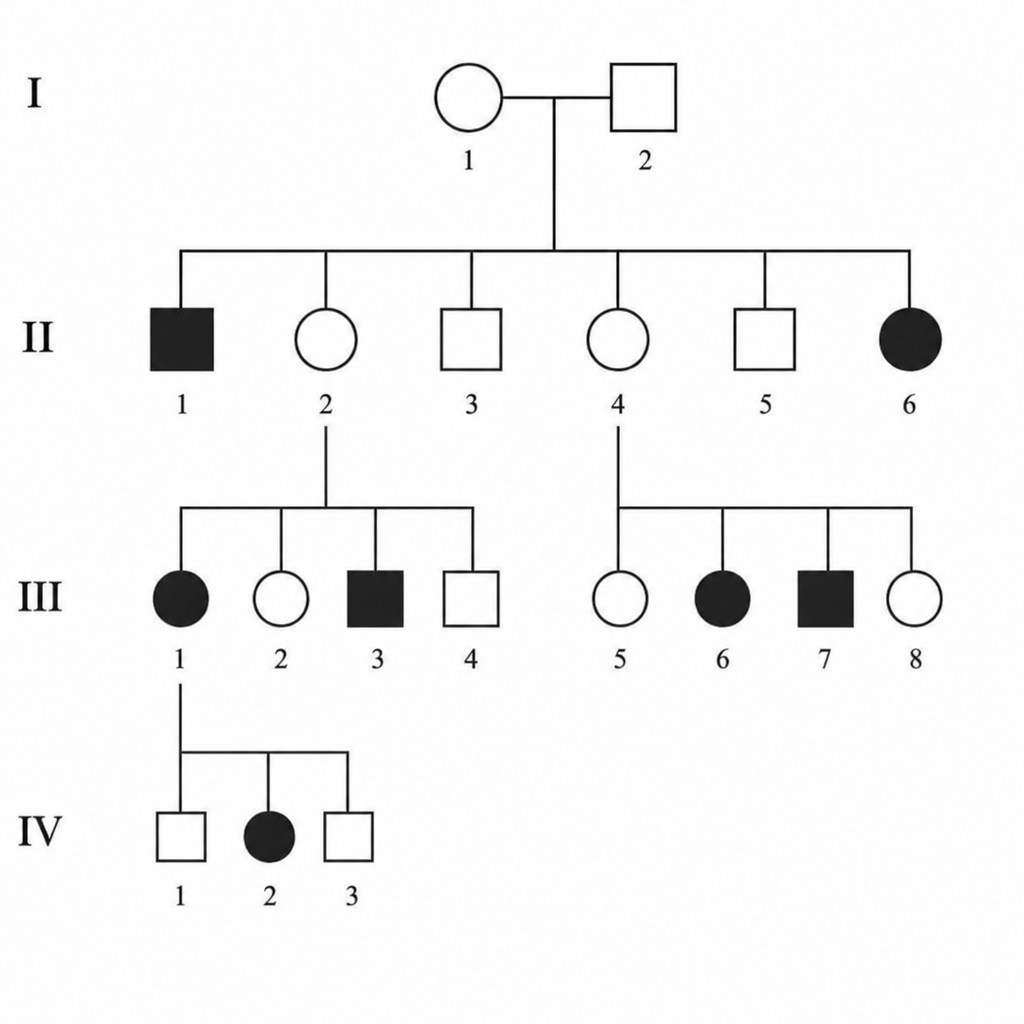
Males are more commonly affected than females in which of the following modes of inheritance?
Phenylketonuria is detected by which urine test?
An infant presents with a history of vomiting and poor feeding. A musty odor is noted in the baby's urine. The Guthrie test was positive. Which of the following is NOT a treatment modality for this condition?
In a study of inheritance of the cystic fibrosis gene (CFTR), genetic mutations in carriers and affected individuals were documented. Based on these findings, investigators determined that there is no simple screening test to detect all carriers of CFTR gene mutations. Which of the following is most likely to be the greatest limitation to the development of a screening test for CFTR mutations?
Abnormalities of copper metabolism are implicated in the pathogenesis of all the following except?
Which enzyme is deficient in oculocutaneous albinism type 1?
What is true about Lesch-Nyhan Syndrome?
Adenosine deaminase deficiency is seen in which of the following conditions?
What is the gene affected in Gilbert's syndrome?
All of the following tests can help in the diagnosis of Galactosemia EXCEPT?
Explanation: **Explanation:** The correct answer is **X-linked recessive (XLR) disorder**. **Why X-linked recessive is correct:** In XLR inheritance, the mutated gene is located on the X chromosome. Males are **hemizygous** (having only one X chromosome). Therefore, a single copy of the mutant allele is sufficient to manifest the disease. Females, having two X chromosomes, usually act as asymptomatic **carriers** because the presence of a normal dominant allele on the second X chromosome compensates for the defect. A female would only be affected if she inherits two copies of the mutant gene (one from an affected father and one from a carrier/affected mother), which is statistically rare. **Analysis of Incorrect Options:** * **Autosomal Recessive (AR):** These affect males and females equally. The gene is located on an autosome, and two copies of the mutant allele are required for the disease to manifest, regardless of sex. * **Autosomal Dominant (AD):** These also affect both sexes equally. Only one copy of the mutant allele is needed to cause the disease, and it is transmitted vertically through generations. * **X-linked Dominant (XLD):** While both sexes are affected, these are often **more common in females** (though often less severe) because females have two chances to inherit an affected X chromosome. **High-Yield Clinical Pearls for NEET-PG:** * **Criss-Cross Inheritance:** XLR disorders are typically transmitted from an affected father to his grandsons through his carrier daughters. * **No Male-to-Male Transmission:** This is a hallmark of X-linked inheritance; a father gives his Y chromosome to his sons, not his X. * **Common XLR Examples:** Hemophilia A & B, G6PD deficiency, Duchenne Muscular Dystrophy (DMD), and Color Blindness. * **Lyonization:** In females, random X-inactivation (Lyon hypothesis) can sometimes lead to "skewed lyonization," causing a carrier female to show mild symptoms of an XLR disorder.
Explanation: **Explanation:** **Phenylketonuria (PKU)** is an autosomal recessive disorder caused by a deficiency of the enzyme **phenylalanine hydroxylase**, leading to the accumulation of phenylalanine. 1. **Why Guthrie Test is Correct:** The Guthrie test is a **semi-quantitative bacterial inhibition assay** used for neonatal screening. It utilizes *Bacillus subtilis*, which requires phenylalanine to grow in the presence of an inhibitor ($\beta$-2-thienylalanine). If the infant's blood (or historically, urine) contains high levels of phenylalanine, it overcomes the inhibition, allowing bacterial growth. While modern screening uses Tandem Mass Spectrometry (TMS), the Guthrie test remains the classic "gold standard" answer for exams. 2. **Analysis of Incorrect Options:** * **Sodium Nitroprusside Test:** Used to detect **Cystine** or **Homocysteine** in urine (positive in Cystinuria and Homocystinuria). * **Blot Test:** Refers to molecular biology techniques (Southern, Northern, Western) used to detect DNA, RNA, or proteins; it is not a routine urine screening test for PKU. * **FeCl3 (Ferric Chloride) Test:** This is a non-specific bedside test. In PKU, it yields a **transient blue-green color** due to phenylpyruvic acid. However, it is not the primary diagnostic screening test like the Guthrie test because it is less sensitive and can give false positives. **High-Yield Clinical Pearls for NEET-PG:** * **Mousy/Musty Odor:** Characteristic of urine in PKU patients due to phenylacetic acid. * **Clinical Triad:** Mental retardation, seizures, and hypopigmentation (fair skin/blue eyes) due to decreased melanin synthesis. * **Dietary Management:** Restriction of phenylalanine and supplementation of **Tyrosine** (which becomes an essential amino acid in PKU). * **Sapropterin:** A synthetic form of BH4 (tetrahydrobiopterin) used as an adjuvant treatment for BH4-responsive PKU.
Explanation: ### Explanation **Diagnosis: Phenylketonuria (PKU)** The clinical presentation of vomiting, poor feeding, a characteristic **"musty" or "mousy" odor** in urine, and a positive **Guthrie test** (a bacterial inhibition assay for phenylalanine) confirms the diagnosis of Phenylketonuria. PKU is most commonly caused by a deficiency of the enzyme **Phenylalanine Hydroxylase (PAH)**, leading to the accumulation of phenylalanine and its metabolites (phenylpyruvate, phenyllactate). **Why Option D is Correct:** All the listed options (A, B, and C) are valid, established treatment modalities for PKU. Since the question asks for which is **NOT** a treatment modality, "None of the above" is the correct choice. **Analysis of Treatment Modalities:** * **Low-phenylalanine diet (Option C):** This is the cornerstone of management. Since the body cannot metabolize phenylalanine, dietary restriction (avoiding high-protein foods and aspartame) is essential to prevent neurotoxicity and intellectual disability. * **Sapropterin dihydrochloride (Option B):** This is a synthetic form of **Tetrahydrobiopterin (BH4)**, the essential cofactor for PAH. In patients with residual enzyme activity or BH4 deficiency, sapropterin can enhance phenylalanine metabolism. * **Large Neutral Amino Acids (LNAAs) (Option A):** Phenylalanine competes with other LNAAs (like tyrosine and tryptophan) for transport across the blood-brain barrier via the **LAT1 transporter**. Supplementing other LNAAs competitively inhibits phenylalanine entry into the brain, reducing neurotoxicity. **High-Yield Clinical Pearls for NEET-PG:** * **Enzyme Deficiency:** Most common is Phenylalanine Hydroxylase; 2% of cases are due to Dihydrobiopterin reductase deficiency. * **Maternal PKU:** If a mother with PKU does not maintain a strict diet during pregnancy, the fetus may develop microcephaly, CHD, and growth restriction (teratogenic effect of phenylalanine). * **Tyrosine becomes an essential amino acid** in PKU patients because it can no longer be synthesized from phenylalanine. * **Ferric Chloride Test:** Urine turns **blue-green** in the presence of phenylpyruvic acid.
Explanation: ### Explanation **1. Why Option C is Correct:** Cystic Fibrosis (CF) is an autosomal recessive disorder caused by mutations in the **CFTR gene** on chromosome 7. While the **ΔF508 mutation** is the most common (accounting for ~70% of cases in Caucasians), there are over **2,000 different mutations** identified within the gene. The prevalence of these specific mutations varies significantly across different ethnic groups. A screening panel designed for one population (e.g., Northern Europeans) will have very low **sensitivity** in another (e.g., Ashkenazi Jews or Asians). Because no single test can economically cover all possible pathogenic variants, "allelic heterogeneity" remains the greatest barrier to a universal screening test. **2. Why Other Options are Incorrect:** * **Option A:** Modern molecular techniques (like PCR or sequencing) can easily detect mutations in a single copy of a gene (heterozygotes). Detection does not require both copies to be abnormal. * **Option B:** FISH is used for large chromosomal deletions or translocations. CFTR mutations are typically small point mutations or deletions (like ΔF508) that are detected via PCR-based assays or DNA sequencing, not FISH. * **Option D:** This is epidemiologically incorrect. In Caucasian populations, the carrier frequency is approximately **1 in 25**, making it one of the most common genetic conditions, not rare (1 in 10,000). **3. NEET-PG High-Yield Pearls:** * **Genetics:** Autosomal Recessive; Chromosome **7q31**. * **Most Common Mutation:** **ΔF508** (deletion of Phenylalanine), leading to **misfolding** and degradation of the protein in the Endoplasmic Reticulum (Class II defect). * **Diagnosis:** Sweat Chloride Test (>60 mEq/L) is the gold standard. * **Clinical Triad:** Recurrent pulmonary infections (*P. aeruginosa*), Pancreatic insufficiency (steatorrhea), and Infertility (Congenital Bilateral Absence of Vas Deferens - CBAVD).
Explanation: **Explanation:** The correct answer is **Keshan disease** because it is a cardiomyopathy caused by a deficiency of **Selenium**, not copper. It is often exacerbated by the presence of the Coxsackievirus B3. Selenium is a vital component of the enzyme **glutathione peroxidase**, which protects tissues from oxidative damage. **Analysis of Options:** * **Wilson’s Disease (Hepatolenticular Degeneration):** An autosomal recessive disorder caused by a mutation in the **ATP7B gene**. It leads to impaired biliary copper excretion and failure to incorporate copper into ceruloplasmin, resulting in toxic copper accumulation in the liver, brain (basal ganglia), and eyes (Kayser-Fleischer rings). * **Menkes’ Kinky-Hair Syndrome:** An X-linked recessive disorder caused by a mutation in the **ATP7A gene**. This leads to defective intestinal copper absorption and transport, resulting in systemic copper deficiency. Clinical features include "steely" or "kinky" hair, growth failure, and neurological degeneration. * **Indian Childhood Cirrhosis (ICC):** A severe form of liver disease in children characterized by excessive copper deposition in hepatocytes. It is traditionally linked to the ingestion of milk stored in brass or copper vessels, combined with a genetic predisposition. **High-Yield Clinical Pearls for NEET-PG:** * **ATP7A vs. ATP7B:** Remember **"A"** for **A**bsorption (Menkes/ATP7A) and **"B"** for **B**iliary excretion (Wilson/ATP7B). * **Ceruloplasmin:** Low in both Wilson’s and Menkes’ diseases, but for different reasons (failure of synthesis vs. systemic deficiency). * **Selenium Deficiency:** Associated with **Keshan disease** (cardiomyopathy) and **Kashin-Beck disease** (osteoarthropathy). * **Copper-containing enzymes:** Tyrosinase, Cytochrome c oxidase, Superoxide dismutase, and Lysyl oxidase.
Explanation: **Explanation:** **Oculocutaneous Albinism (OCA)** is a group of autosomal recessive disorders characterized by a reduction or absence of melanin pigment in the skin, hair, and eyes. 1. **Why Tyrosinase is Correct:** **OCA Type 1 (OCA1)** is caused by mutations in the *TYR* gene, which encodes the enzyme **Tyrosinase**. This enzyme is the rate-limiting step in melanogenesis, responsible for converting **L-Tyrosine to DOPA** and subsequently **DOPA to Dopaquinone**. A complete absence of tyrosinase activity results in OCA1A (snow-white hair and pink skin), while reduced activity results in OCA1B. 2. **Analysis of Incorrect Options:** * **Pink protein (P-protein):** Deficient in **OCA Type 2**. This is the most common form of albinism worldwide. The P-protein is involved in regulating the pH of melanosomes. * **Tyrosinase-related protein 1 (TRP-1):** Deficient in **OCA Type 3** (often seen in African populations, leading to "Rufous" or reddish-brown albinism). * **Membrane-associated transport protein (MATP/SLC45A2):** Deficient in **OCA Type 4**, which is clinically similar to OCA2 and common in Japan. **High-Yield Clinical Pearls for NEET-PG:** * **Rate-limiting enzyme:** Tyrosinase is the key enzyme for melanin synthesis. * **Precursor:** Tyrosine is the amino acid precursor for melanin, catecholamines (Dopamine, Epinephrine), and Thyroid hormones. * **Clinical Feature:** Patients with OCA have a significantly increased risk of **Squamous Cell Carcinoma (SCC)** due to lack of photoprotective melanin. * **Diagnostic Test:** The **Hair Bulb Incubation Test** (Tyrosinase test) was historically used to differentiate between tyrosinase-positive and tyrosinase-negative albinism.
Explanation: **Lesch-Nyhan Syndrome (LNS)** is a rare, X-linked recessive disorder caused by a complete deficiency of the enzyme **Hypoxanthine-Guanine Phosphoribosyltransferase (HGPRT)**. ### **Explanation of the Correct Option** **C. Uric acid stones are frequently formed:** HGPRT is a key enzyme in the **Purine Salvage Pathway**. Its absence prevents the recycling of hypoxanthine and guanine, leading to their conversion into uric acid via xanthine oxidase. This results in severe **hyperuricemia**. Excessive uric acid excretion (hyperuricosuria) leads to the formation of orange "sand-like" crystals in diapers and the frequent development of uric acid stones (nephrolithiasis) and obstructive uropathy. ### **Why Other Options are Incorrect** * **A. Normal intellectual capacity:** LNS is characterized by severe neurological dysfunction, including intellectual disability, spasticity, and choreoathetosis. A hallmark feature is **compulsive self-mutilation** (biting of lips and fingers). * **B. Pyrimidine overproduction:** LNS involves **Purine** overproduction. The failure of the salvage pathway leads to an increase in PRPP (Phosphoribosyl pyrophosphate) levels, which stimulates the *de novo* purine synthesis pathway. * **D. X-linked dominant:** LNS follows an **X-linked recessive** inheritance pattern, primarily affecting males. ### **High-Yield Clinical Pearls for NEET-PG** * **Enzyme Deficiency:** HGPRT (converts Hypoxanthine → IMP and Guanine → GMP). * **Mnemonic (HGPRT):** **H**yperuricemia, **G**out, **P**issed off (self-mutilation), **R**etardation (intellectual disability), **T**one (dystonia). * **Diagnostic Marker:** Elevated serum uric acid and elevated **PRPP** levels. * **Treatment:** **Allopurinol** or Febuxostat (xanthine oxidase inhibitors) are used to manage hyperuricemia, but they do not improve neurological symptoms.
Explanation: **Explanation:** **Adenosine Deaminase (ADA) Deficiency** is the second most common cause of **Severe Combined Immunodeficiency (SCID)**, accounting for approximately 15% of cases (autosomal recessive inheritance). **Why Option B is Correct:** ADA is an enzyme in the purine salvage pathway that converts adenosine to inosine and deoxyadenosine to deoxyinosine. In its absence, **deoxyadenosine** and **dATP** accumulate to toxic levels. High dATP inhibits **ribonucleotide reductase**, preventing DNA synthesis. This toxicity is particularly lethal to rapidly dividing **T-cells and B-cells**, leading to a profound lack of both cell-mediated and humoral immunity. **Why Other Options are Incorrect:** * **A. Common Variable Immunodeficiency (CVID):** Characterized by hypogammaglobulinemia and normal/near-normal B-cell counts; it is not caused by purine metabolic defects. * **C. Chronic Granulomatous Disease (CGD):** A defect in **NADPH oxidase**, leading to impaired respiratory burst in phagocytes (neutrophils/macrophages), not a lymphocyte deficiency. * **D. Nezelof Syndrome:** An older term for a type of T-cell deficiency with varying B-cell involvement; it is not specifically linked to ADA deficiency. **High-Yield Facts for NEET-PG:** * **First Gene Therapy:** ADA deficiency was the first disease treated with human gene therapy (1990). * **Radiology:** Look for the **absence of a thymic shadow** on a chest X-ray in SCID patients. * **Clinical Presentation:** Recurrent "opportunistic" infections (e.g., *Pneumocystis jirovecii*, *Candida*), failure to thrive, and chronic diarrhea in infancy. * **Treatment:** Bone marrow transplant (curative), enzyme replacement therapy (PEG-ADA), or gene therapy.
Explanation: **Explanation:** **Gilbert’s Syndrome** is a common, benign autosomal recessive condition characterized by mild, unconjugated hyperbilirubinemia. 1. **Why UGT1A1 is Correct:** The condition is caused by a mutation in the **UGT1A1 gene** (specifically a TA repeat expansion in the promoter region). This gene encodes the enzyme **Uridine diphosphate-glucuronosyltransferase**, which is responsible for conjugating bilirubin with glucuronic acid in the liver. In Gilbert’s syndrome, enzyme activity is reduced to approximately 30% of normal, leading to impaired conjugation and a rise in indirect (unconjugated) bilirubin. 2. **Why the Other Options are Incorrect:** * **MRP2 (Multidrug Resistance-associated Protein 2):** Mutations in this gene lead to **Dubin-Johnson Syndrome**. MRP2 is a canalicular multispecific organic anion transporter; its deficiency prevents the excretion of *conjugated* bilirubin into the bile. * **MRP3:** This transporter is involved in the basolateral transport of bile acids and organic anions back into the blood; it is not the primary defect in common hereditary hyperbilirubinemias. * **Unknown:** The genetic basis of Gilbert's syndrome is well-established as the UGT1A1 mutation. **High-Yield Clinical Pearls for NEET-PG:** * **Triggers:** Jaundice typically appears during periods of **stress, fasting, infection, or strenuous exercise**. * **Lab Findings:** Isolated elevation of unconjugated bilirubin with normal ALT, AST, and Alkaline Phosphatase. No hemolysis (normal Hgb/Reticulocyte count). * **Crigler-Najjar Syndrome:** Also involves the UGT1A1 gene but represents a more severe deficiency (Type I: 0% activity; Type II/Arias Syndrome: <10% activity). * **Diagnosis:** Often a diagnosis of exclusion; the "Fasting Test" (bilirubin increases upon calorie restriction) was historically used.
Explanation: **Explanation:** The correct answer is **Guthrie’s test** because it is a specific screening tool for **Phenylketonuria (PKU)**, not Galactosemia. It is a bacterial inhibition assay that detects elevated levels of phenylalanine in the blood using *Bacillus subtilis*. **Analysis of Options:** * **GALT Assay (Option A):** This is the **gold standard** for diagnosing Classical Galactosemia. It measures the activity of the enzyme *Galactose-1-phosphate uridyltransferase* in erythrocytes. Low or absent activity confirms the diagnosis. * **Mutation Analysis (Option B):** Molecular genetic testing (e.g., identifying mutations in the *GALT* gene like Q188R) is used for definitive diagnosis, carrier screening, and prenatal testing. * **Benedict’s Test (Option C):** This is a non-specific screening test for **reducing substances** in the urine. Since galactose is a reducing sugar, a child with galactosemia will show a positive Benedict’s test but a **negative Glucose Oxidase (Dipstick) test**, providing a strong clinical clue. **High-Yield Clinical Pearls for NEET-PG:** * **Classical Galactosemia** is an autosomal recessive deficiency of **GALT**. * **Clinical Triad:** Oil-drop cataracts, hepatosplenomegaly (jaundice), and intellectual disability. * **Early Sign:** Increased susceptibility to **E. coli sepsis** in the neonatal period. * **Management:** Immediate withdrawal of lactose/galactose from the diet (switch to soy-based formula). * **Duarte Variant:** A milder form of the disease with partial enzyme activity.
Single Gene Disorders
Practice Questions
Biochemical Diagnosis of Genetic Disorders
Practice Questions
Inborn Errors of Metabolism
Practice Questions
Lysosomal Storage Diseases
Practice Questions
Glycogen Storage Diseases
Practice Questions
Disorders of Lipoprotein Metabolism
Practice Questions
Disorders of Purine and Pyrimidine Metabolism
Practice Questions
Hemoglobinopathies
Practice Questions
Porphyrias
Practice Questions
Biochemical Markers for Disease Diagnosis
Practice Questions
Newborn Screening for Genetic Disorders
Practice Questions
Enzyme Replacement Therapy
Practice Questions
Get full access to all questions, explanations, and performance tracking.
Start For Free