5'-Nucleotidase activity is increased in which of the following conditions?
The Guaiac slide test is used for which of the following diagnostic purposes?
Which is the BEST diagnostic enzymatic assay to be performed within 4 hours following an acute myocardial infarction?
Which of the following is a cause of conjugated hyperbilirubinemia?
Which of the following conditions is associated with an increase in serum gamma-glutamyl transpeptidase (GGT)?
Which of the following porphyrins is soluble in water and excreted in urine?
Van den Berg test is used for which of the following?
Acid phosphatase is associated with which of the following cell types?
Which is the earliest reliable enzyme to show an increase in acute myocardial infarction (AMI)?
Which enzyme is specifically raised in chronic alcoholics?
Explanation: **Explanation:** **5'-Nucleotidase (5'-NT)** is a glycoprotein enzyme located on the plasma membrane of various cells, including hepatocytes and bile ductular cells. **Why Cholestatic Disorders is Correct:** In clinical biochemistry, 5'-NT is a highly specific marker for **hepatobiliary disease**, particularly those involving **cholestasis** (obstruction of bile flow). When bile salts accumulate due to cholestasis, they exert a detergent-like effect on the hepatocyte membranes, causing the release of 5'-NT into the circulation. Its primary clinical utility lies in its ability to differentiate the source of an elevated **Alkaline Phosphatase (ALP)**. While ALP is elevated in both bone and liver diseases, 5'-NT is **not** elevated in bone disorders. **Why Other Options are Incorrect:** * **A. Bone diseases:** Conditions like Paget’s disease, rickets, or bone metastases cause an isolated rise in ALP. 5'-NT levels remain normal because the enzyme is not present in significant amounts in osteoblasts. * **B. Prostate cancer:** This is typically associated with elevated **Acid Phosphatase (ACP)** and **Prostate-Specific Antigen (PSA)**, not 5'-NT. * **C. Chronic renal failure:** While various biochemical markers are deranged in CRF (e.g., Creatinine, Urea, PTH), 5'-NT is not a diagnostic or prognostic marker for renal dysfunction. **High-Yield Clinical Pearls for NEET-PG:** * **The "Rule of Three":** ALP, GGT (Gamma-glutamyl transferase), and 5'-Nucleotidase are the three primary markers for cholestasis. * **Specificity:** 5'-NT is more specific for liver disease than ALP. * **Pregnancy:** Unlike ALP (which rises due to placental isoenzymes), 5'-NT levels remain **normal** during pregnancy, making it useful for diagnosing hepatobiliary issues in pregnant patients.
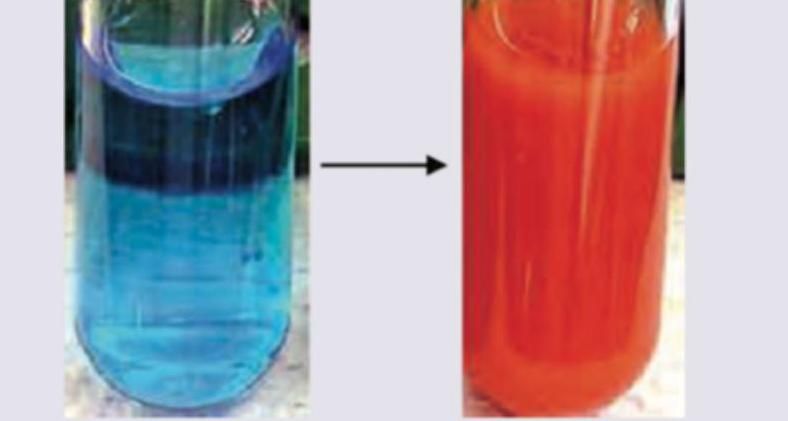
Explanation: The **Guaiac slide test** (gFOBT) is a common clinical biochemistry screening tool used to detect **Fecal Occult Blood (FOB)**—blood that is not visible to the naked eye. ### Why Option A is Correct: The test is based on the **pseudoperoxidase activity of hemoglobin**. The Guaiac paper is impregnated with a phenolic compound (alpha-guaiaconic acid). When a stool sample containing hemoglobin is applied followed by hydrogen peroxide (developer), the heme portion of hemoglobin acts as a catalyst. It breaks down the peroxide, releasing oxygen which oxidizes the colorless guaiac to a **blue-colored quinone** compound. A positive result indicates potential gastrointestinal bleeding, often associated with colorectal cancer or peptic ulcers. ### Why Other Options are Incorrect: * **Option B (H. Pylori):** Detection of *H. pylori* is typically done via the Urea Breath Test (detecting urease activity), stool antigen assays, or endoscopic biopsy. * **Option C (Bile Acids):** Bile acid malabsorption is diagnosed using the SeHCAT test or 48-hour fecal bile acid quantification, not via peroxidase-based reactions. ### High-Yield Clinical Pearls for NEET-PG: * **False Positives:** Can be caused by the consumption of **red meat** (exogenous hemoglobin), peroxidase-rich vegetables (broccoli, radish, turnip), or NSAIDs (causing minor gastric irritation). * **False Negatives:** High intake of **Vitamin C (Ascorbic acid)** can cause a false negative because it is a strong reducing agent that interferes with the oxidation reaction. * **Clinical Significance:** It is primarily used as a screening tool for **Colorectal Cancer (CRC)** in asymptomatic individuals.
Explanation: **Explanation:** In the context of acute myocardial infarction (AMI), the timing of cardiac biomarker elevation is critical for diagnosis. **Why CK-MB is the correct answer:** Creatine Kinase-MB (CK-MB) is a cardiac-specific isoenzyme that begins to rise **3 to 6 hours** after the onset of myocardial injury, peaks at 12–24 hours, and returns to baseline within 48–72 hours. Within the 4-hour window specified in the question, CK-MB is the most reliable enzymatic assay among the choices provided. While Cardiac Troponins (I and T) are the current "gold standard" due to higher sensitivity, CK-MB remains a high-yield answer for its historical diagnostic value and its specific utility in detecting **re-infarction** (due to its rapid clearance). **Analysis of Incorrect Options:** * **B. Reagin isoenzyme:** This is a distractor. Reagin is an antibody (IgE) involved in allergic reactions or associated with the RPR/VDRL tests for Syphilis; it has no role in cardiac diagnostics. * **C. LDH4:** Lactate Dehydrogenase (LDH) isoenzyme 4 is primarily found in the liver and skeletal muscle, not the heart. * **D. LDH1:** While LDH1 is found in cardiac muscle, it is a **late marker**. It begins to rise 12–24 hours after an MI, peaks at 48–72 hours, and stays elevated for up to 10–14 days. It would not be diagnostic within a 4-hour window. **High-Yield Clinical Pearls for NEET-PG:** * **Earliest Marker:** Myoglobin (rises within 1–2 hours), but it is non-specific. * **Gold Standard:** Cardiac Troponins (I and T). * **Re-infarction:** CK-MB is the investigation of choice because it returns to normal quickly (unlike Troponins, which stay elevated for 7–10 days). * **LDH Flip:** In MI, LDH1 levels exceed LDH2 (LDH1 > LDH2), reversing the normal ratio.
Explanation: **Explanation:** Hyperbilirubinemia is classified into unconjugated (pre-microsomal/microsomal) and conjugated (post-microsomal) based on the site of the defect in bilirubin metabolism. **Why Rotor Syndrome is Correct:** **Rotor Syndrome** is an autosomal recessive condition characterized by a defect in the hepatic storage and excretion of bilirubin into the bile. Specifically, there is a deficiency in the organic anion transporting polypeptides (**OATP1B1 and OATP1B3**). Since the bilirubin has already been processed by the enzyme UDP-glucuronosyltransferase (UGT) in the liver, it is **conjugated**, but it leaks back into the blood, leading to conjugated hyperbilirubinemia. **Why Other Options are Incorrect:** * **Gilbert Syndrome:** Caused by a mild reduction in UGT1A1 activity (approx. 30% of normal). It results in isolated **unconjugated** hyperbilirubinemia, often triggered by stress or fasting. * **Crigler-Najjar Syndrome (Type I & II):** Caused by a severe deficiency or total absence of UGT1A1 enzyme. This prevents the conjugation process entirely, leading to severe **unconjugated** hyperbilirubinemia. * **Breast Milk Jaundice:** Occurs due to factors in breast milk (like beta-glucuronidase or fatty acids) that inhibit UGT1A1 or increase enterohepatic circulation. It results in **unconjugated** hyperbilirubinemia. **High-Yield Clinical Pearls for NEET-PG:** 1. **Dubin-Johnson vs. Rotor:** Both cause conjugated hyperbilirubinemia. However, Dubin-Johnson presents with a **black liver** (epinephrine metabolite deposition) and abnormal coproporphyrin I levels, whereas the liver is **normal in appearance** in Rotor syndrome. 2. **Urine Findings:** In conjugated hyperbilirubinemia (Rotor, Dubin-Johnson), bilirubin is water-soluble and appears in the urine (**bilirubinuria**), making the urine dark. 3. **Gilbert Syndrome** is the most common hereditary hyperbilirubinemia.
Explanation: **Explanation:** **Gamma-glutamyl transpeptidase (GGT)** is a membrane-bound enzyme primarily found in the liver, biliary tract, and kidneys. It is a highly sensitive marker for hepatobiliary diseases. **Why Alcoholism is the Correct Answer:** GGT is the most sensitive indicator of **chronic alcohol consumption**. Alcohol induces the microsomal expression of GGT in hepatocytes, leading to elevated serum levels even in the absence of overt liver disease. It is frequently used in clinical practice to monitor abstinence in recovering alcoholics. Additionally, GGT is elevated in **obstructive jaundice** and cholestasis, often paralleling Alkaline Phosphatase (ALP) levels. **Why the Other Options are Incorrect:** * **A & C (Muscle Injury & Muscular Dystrophy):** GGT is **not** found in skeletal muscle. Therefore, it remains normal in myopathies. This makes GGT a crucial tool to differentiate whether an elevated ALP is originating from the bone or the liver. * **D (Myocardial Infarction):** While GGT is present in the heart in trace amounts, it is not a marker for MI. Enzymes like Troponins, CK-MB, and LDH are the preferred markers for cardiac injury. **High-Yield Clinical Pearls for NEET-PG:** * **GGT vs. ALP:** If both GGT and ALP are elevated, the source of ALP is likely the **liver/biliary tract**. If ALP is high but GGT is normal, the source is likely **bone** (e.g., Paget’s disease, rickets). * **Enzyme Induction:** Besides alcohol, drugs like **Phenytoin** and **Phenobarbital** can also induce GGT. * **Sensitivity:** GGT is the first enzyme to rise in biliary obstruction.
Explanation: **Explanation:** The solubility of porphyrins and their precursors is primarily determined by the number of **carboxylate (carboxylic acid) side chains** they possess. This property dictates their route of excretion from the body. **1. Why Coproporphyrin is the correct answer:** Coproporphyrin contains **four carboxylate groups**. This intermediate level of carboxyl groups makes it unique: it is soluble enough to be excreted in the **urine**, but it is also excreted in the **feces** (via bile). In clinical biochemistry, it is the primary porphyrin measured in urine to screen for conditions like Lead poisoning or certain porphyrias. **2. Analysis of Incorrect Options:** * **Uroporphyrin (Option D):** While highly water-soluble due to having **eight carboxylate groups**, it is almost exclusively excreted in the urine. However, in the context of standard NEET-PG questions regarding "solubility and excretion" patterns, Coproporphyrin is often highlighted for its dual excretion and specific clinical relevance in lead toxicity. *Note: If the question asks for the "most" water-soluble, Uroporphyrin would be the answer.* * **Protoporphyrin (Option A):** This molecule has only **two carboxylate groups**. It is highly hydrophobic (lipophilic) and is excreted exclusively in the **feces** via the biliary system. It is never found in urine. * **Delta-ALA (Option B):** This is a porphyrin **precursor**, not a porphyrin itself. While it is water-soluble and excreted in urine, it does not fit the structural definition of a porphyrin macrocycle. **High-Yield Clinical Pearls for NEET-PG:** * **Solubility Rule:** More carboxyl groups = Higher water solubility = Urinary excretion. * **Lead Poisoning:** Characterized by elevated urinary **Coproporphyrin III** and Delta-ALA. * **Porphyria Cutanea Tarda (PCT):** Characterized by elevated urinary **Uroporphyrin** (tea-colored urine). * **Mnemonic:** **U**roporphyrin (**U**rine), **P**rotoporphyrin (**P**oop/Feces), **C**oproporphyrin (**C**ommon to both).
Explanation: **Explanation:** The **Van den Bergh reaction** is the standard biochemical test used to detect and quantify bilirubin in the serum. It is based on the principle that bilirubin reacts with **Ehrlich’s diazo reagent** (diazotized sulfanilic acid) to form a purple-colored compound called **azobilirubin**. 1. **Why Direct Bilirubin is the correct answer:** **Direct (conjugated) bilirubin** is water-soluble. Because of this solubility, it reacts **immediately and directly** with the diazo reagent without the need for any solubilizing agents. Therefore, the "Direct" Van den Bergh reaction specifically measures conjugated bilirubin. 2. **Why the other options are incorrect:** * **Indirect Bilirubin:** Indirect (unconjugated) bilirubin is water-insoluble and bound to albumin. It does not react with the reagent until an "accelerator" or "solubilizer" (like methanol or caffeine) is added to break the albumin bond. * **Total Bilirubin:** This is measured only after adding an accelerator, which allows both conjugated and unconjugated bilirubin to react. * **Coproporphyrin:** These are heme precursors excreted in urine and feces; they are detected via spectrophotometry or chromatography, not the Van den Bergh test. **High-Yield Clinical Pearls for NEET-PG:** * **Direct Positive Reaction:** Seen in **Obstructive Jaundice** (conjugated hyperbilirubinemia). * **Indirect Positive Reaction:** Seen in **Hemolytic Jaundice** (unconjugated hyperbilirubinemia). * **Biphasic Reaction:** When both direct and indirect fractions are elevated, typically seen in **Hepatic Jaundice** (e.g., Viral Hepatitis). * **The Reagent:** Ehrlich’s diazo reagent consists of sulfanilic acid, hydrochloric acid, and sodium nitrite.
Explanation: **Explanation:** **Acid Phosphatase (ACP)** is a lysosomal enzyme that functions optimally at an acidic pH. In the context of hematology and clinical biochemistry, it serves as a significant marker for cells of the **mononuclear phagocyte system**. 1. **Why Monocytes are correct:** Monocytes and their mature form, macrophages, are rich in lysosomes. Acid phosphatase is a primary lysosomal enzyme used by these cells to hydrolyze phosphate esters during the phagocytosis and intracellular digestion of pathogens. In cytochemical staining (like the Tartrate-Resistant Acid Phosphatase or TRAP stain), monocytes show strong positivity. 2. **Analysis of Incorrect Options:** * **T-Lymphocytes & B-Lymphocytes:** These are lymphoid cells. While some T-cells may show focal granular positivity for ACP, lymphocytes generally lack the high lysosomal enzyme content characteristic of the myeloid/monocytic lineage. They are better identified by markers like CD3 (T-cells) or CD19/20 (B-cells). * **Myelocytes:** These are precursors in the granulocytic series. While they contain primary granules, they are more characteristically associated with **Myeloperoxidase (MPO)** and Alkaline Phosphatase (in mature neutrophils) rather than high levels of Acid Phosphatase. **Clinical Pearls for NEET-PG:** * **Prostate Cancer:** The most common clinical use of serum ACP (specifically the prostatic isoenzyme) is as a tumor marker for prostate cancer, although it has largely been replaced by PSA (Prostate-Specific Antigen). * **Hairy Cell Leukemia:** This is a high-yield exam favorite. The "hairy" cells are positive for **TRAP (Tartrate-Resistant Acid Phosphatase)**, specifically Isoenzyme 5. * **Gaucher’s Disease:** Serum ACP levels are characteristically elevated in Gaucher’s disease due to the overactivity of "Gaucher cells" (lipid-laden macrophages). * **Bone Metabolism:** Osteoclasts (specialized macrophages in bone) also secrete ACP during bone resorption.
Explanation: **Explanation:** In the context of Acute Myocardial Infarction (AMI), the timing of cardiac marker elevation is a high-yield topic for NEET-PG. **Why CPK-MB is the correct answer:** Creatine Phosphokinase-MB (CPK-MB) is a cardiac-specific isoenzyme. It is considered the **earliest reliable enzyme** because it begins to rise within **4–6 hours** of chest pain, peaks at 18–24 hours, and returns to baseline within 48–72 hours. While Troponins (proteins, not enzymes) are the gold standard for diagnosis, CPK-MB remains the enzyme of choice for detecting **re-infarction** due to its rapid clearance from the blood. **Analysis of Incorrect Options:** * **LDH (Lactate Dehydrogenase):** This is a late marker. It begins to rise after 24 hours, peaks at 3–6 days, and remains elevated for up to 2 weeks. It is used for late diagnosis of MI. * **SGOT (AST):** Aspartate Aminotransferase was the first marker used historically, but it lacks specificity (found in liver and muscle) and rises later than CPK-MB (8–12 hours). * **CK-MM:** This isoenzyme is primarily found in skeletal muscle. While it rises in muscle injury, it is not specific to cardiac tissue and is not used to diagnose AMI. **High-Yield Clinical Pearls for NEET-PG:** * **Earliest Marker Overall:** Myoglobin (rises in 1–2 hours), but it is non-specific. * **Gold Standard/Most Specific:** Cardiac Troponins (I and T). * **Marker for Re-infarction:** CPK-MB (because it returns to normal quickly). * **LDH Flip:** In AMI, LDH-1 becomes higher than LDH-2 (normally LDH-2 > LDH-1).
Explanation: **Explanation:** The correct answer is **D. Ratio of AST: ALT**. While several liver enzymes increase with alcohol consumption, the **AST:ALT ratio (De Ritis Ratio)** is the most specific diagnostic marker for alcoholic liver disease. **Why the AST:ALT Ratio is the Correct Answer:** In chronic alcoholics, the ratio is typically **>2:1**. This occurs due to two primary mechanisms: 1. **Pyridoxal-5'-phosphate (Vitamin B6) Deficiency:** Alcoholics are often malnourished. ALT synthesis is more strictly dependent on B6 than AST; thus, ALT levels remain relatively low. 2. **Mitochondrial Damage:** Alcohol is a mitochondrial toxin. Since 80% of hepatic AST is located within the mitochondria (whereas ALT is purely cytosolic), mitochondrial injury preferentially releases more AST into the serum. **Analysis of Incorrect Options:** * **A. Gamma-glutamyl transferase (GGT):** GGT is the most *sensitive* marker for alcohol ingestion and is often the first to rise. However, it lacks specificity as it also increases in biliary obstruction, phenytoin use, and non-alcoholic fatty liver disease (NAFLD). * **B & C. ALT and AST:** These are general markers of hepatocellular injury. In most forms of viral hepatitis, ALT is higher than AST. In alcoholics, while both may be elevated, the absolute values are rarely very high (usually <500 IU/L), making the *ratio* more clinically significant than the individual values. **NEET-PG High-Yield Pearls:** * **AST:ALT > 2:1** strongly suggests alcoholic liver disease. * **AST:ALT < 1:1** is typically seen in viral hepatitis or NAFLD. * **GGT** is used to monitor abstinence; levels return to normal after 2–3 weeks of cessation. * **Macrocytosis (High MCV)** is another common hematological finding in chronic alcoholics due to direct toxicity or folate deficiency.
Liver Function Tests
Practice Questions
Kidney Function Tests
Practice Questions
Cardiac Markers and Enzymes
Practice Questions
Pancreatic Function Tests
Practice Questions
Glucose Tolerance Tests
Practice Questions
Lipid Profile and Cardiovascular Risk
Practice Questions
Tumor Markers
Practice Questions
Hormonal Assays and Interpretation
Practice Questions
Electrolytes and Acid-Base Balance Tests
Practice Questions
Cerebrospinal Fluid Analysis
Practice Questions
Point-of-Care Testing
Practice Questions
Quality Control in Clinical Biochemistry
Practice Questions
Get full access to all questions, explanations, and performance tracking.
Start For Free