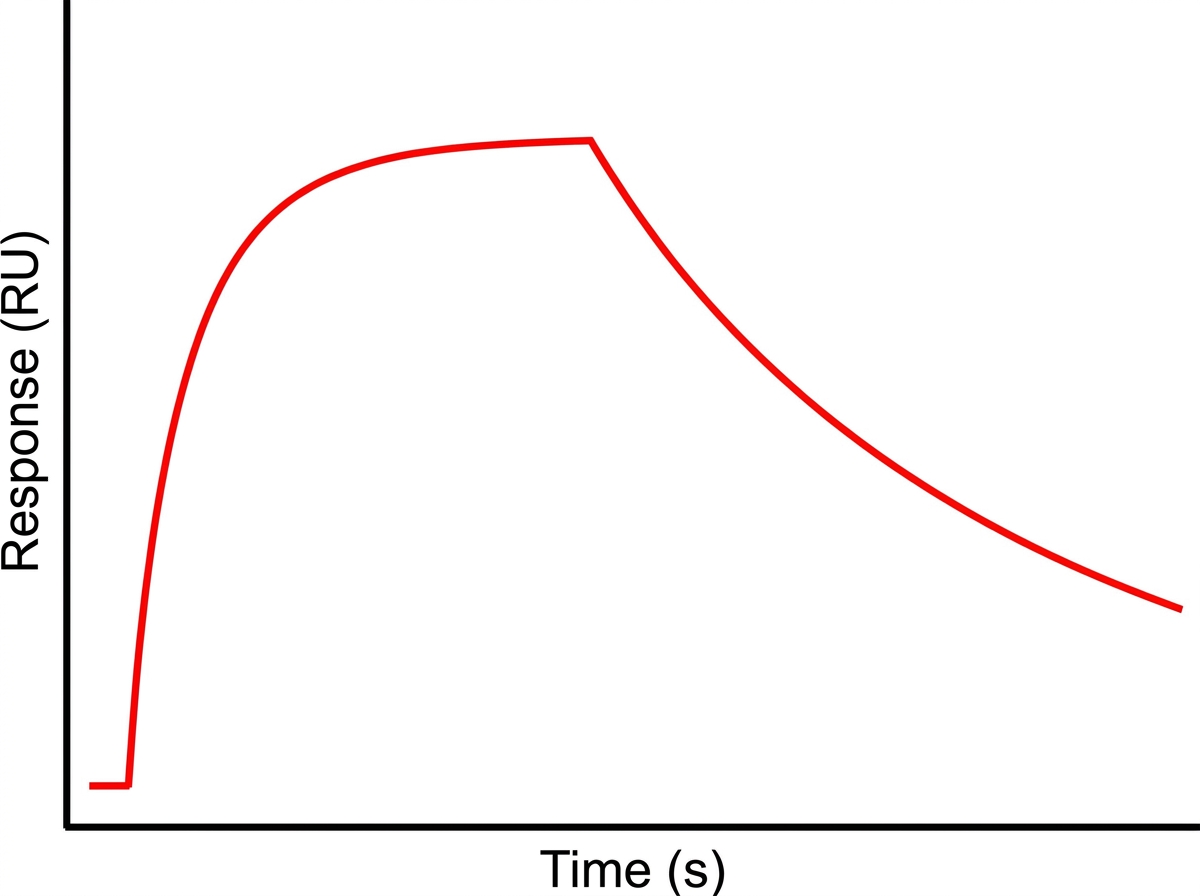
The graph below depicts a polymerase chain reaction. What type of PCR is shown?

In mass spectrometry, peptides are studied by projection of what?
Which of the following compounds is luminous?
Who invented Polymerase Chain Reaction (PCR)?
Introduction of DNA into cells with the help of electricity is known as?
Cells can be separated based on specific antigen receptors using which technique?
The number of gram equivalents in 1 litre of a solution is known as:
What is the method used to locate the isoelectric point of a protein?
Electrophoresis done under pH gradient is called?
If a radioimmunoassay is properly conducted and the amount of radioactive hormone bound to antibody is low, what would this result indicate?
Explanation: ***Real-time PCR*** - The **sigmoidal amplification curve** showing fluorescence intensity vs cycle number with a **threshold (Ct) value** is characteristic of real-time PCR. - This technique allows **continuous monitoring** of DNA amplification during the reaction using fluorescent reporters like **SYBR Green** or **TaqMan probes**. *DNA PCR* - This is a general term that encompasses all PCR types that amplify DNA, not a specific technique. - It doesn't describe the **real-time monitoring capability** shown in the graph with fluorescence detection. *Standard PCR* - Uses **gel electrophoresis** for end-point detection after all cycles are complete, not during the reaction. - Does not produce a **real-time amplification curve** or measure fluorescence during thermal cycling. *Nested PCR* - Involves **two rounds of amplification** with different primer sets to increase specificity and sensitivity. - Uses **gel electrophoresis** for detection and does not generate real-time fluorescence curves during amplification.
Explanation: **Explanation:** **1. Why Hydrogen Ion is Correct:** Mass Spectrometry (MS) is a powerful analytical technique used to identify and quantify proteins and peptides by measuring their **mass-to-charge (m/z) ratio**. For a peptide to be detected and "projected" through the mass analyzer, it must first be ionized (given an electrical charge). In biological mass spectrometry (using techniques like MALDI or ESI), peptides are typically ionized by **protonation**—the addition of one or more **Hydrogen ions (H⁺)**. These positively charged ions are then accelerated by an electric field toward the detector. Without the charge provided by the hydrogen ion, the neutral peptide molecule cannot be manipulated or measured by the electromagnetic fields of the spectrometer. **2. Why Other Options are Incorrect:** * **Helium (A):** Helium is an inert gas often used as a "carrier gas" in Gas Chromatography (GC), but it is not the entity projected to represent the peptide itself in MS. * **Oxygen (C):** Oxygen is not used for ionization in peptide mass spectrometry. In fact, oxygen is often excluded from the system to prevent unwanted oxidation of the sample. * **None of the above (D):** This is incorrect because Hydrogen ions are the fundamental basis for the "soft ionization" processes used in proteomics. **3. High-Yield Clinical Pearls for NEET-PG:** * **Soft Ionization:** Techniques like **MALDI** (Matrix-Assisted Laser Desorption/Ionization) and **ESI** (Electrospray Ionization) are "soft" because they ionize large biomolecules without breaking their covalent bonds. * **Proteomics:** Mass spectrometry is the gold standard for **proteomics**, used clinically for neonatal screening of inborn errors of metabolism (e.g., Tandem MS) and identifying bacterial species in microbiology (MALDI-TOF). * **Key Formula:** Remember that MS measures the **m/z ratio**, not the absolute mass. Adding a Hydrogen ion increases the mass by ~1 Da and the charge by +1.
Explanation: **Explanation:** **Why Porphyrin is the Correct Answer:** Porphyrins are cyclic tetrapyrroles characterized by a highly conjugated system of double bonds. This chemical structure allows them to absorb light at specific wavelengths (notably the **Soret band** around 400 nm) and emit it at longer wavelengths. When exposed to ultraviolet (UV) light, porphyrins emit a characteristic **intense red fluorescence**. This "luminous" property is a key diagnostic feature used in clinical biochemistry to detect porphyrins in urine, stool, or red blood cells. **Analysis of Incorrect Options:** * **B. Zymogen:** These are inactive precursors of enzymes (e.g., pepsinogen). They do not possess the conjugated ring systems required for fluorescence. * **C. Chromatin:** This is a complex of DNA and proteins (histones). While DNA can be stained with fluorescent dyes (like Ethidium Bromide), it is not inherently luminous or fluorescent on its own. * **D. Albumin:** The most abundant plasma protein. While it has some intrinsic fluorescence due to aromatic amino acids (Tryptophan), it is not considered a "luminous compound" in the clinical or biochemical context compared to the vivid fluorescence of porphyrins. **Clinical Pearls for NEET-PG:** * **Wood’s Lamp Examination:** Used to detect porphyrins in the urine of patients with Porphyria Cutanea Tarda (PCT); the urine glows pink-red under UV light. * **Heme Synthesis:** Porphyrins are intermediates in heme synthesis. Accumulation due to enzyme deficiencies leads to various **Porphyrias**. * **Photosensitivity:** The same property that causes fluorescence also causes tissue damage; porphyrins in the skin react with sunlight to generate free radicals, leading to blistering and scarring.
Explanation: **Explanation:** **Correct Answer: B. Kary Mullis** The Polymerase Chain Reaction (PCR) was invented by **Kary Mullis** in 1983. PCR is a revolutionary molecular biology technique used to amplify specific DNA sequences in vitro. It relies on thermal cycling, consisting of cycles of repeated heating and cooling for DNA melting and enzymatic replication. For this groundbreaking invention, Mullis was awarded the **Nobel Prize in Chemistry in 1993**. **Analysis of Incorrect Options:** * **A. Alec Jeffreys:** He is known for developing the techniques for **DNA Fingerprinting** and DNA profiling, which are essential in forensic science. * **C. Cesar Milstein:** Along with Georges Köhler, he developed the hybridoma technology used for the production of **Monoclonal Antibodies**. * **D. Gall and Pardue:** They are credited with the development of **In-situ Hybridization**, a technique used to localize specific nucleic acid sequences within biological samples. **High-Yield Clinical Pearls for NEET-PG:** * **Components of PCR:** Requires a DNA template, Primers (forward and reverse), dNTPs (nucleotides), and a heat-stable DNA polymerase (most commonly **Taq Polymerase** derived from *Thermus aquaticus*). * **Steps of PCR:** 1. **Denaturation** (~94-96°C) 2. **Annealing** (~50-65°C) 3. **Extension** (~72°C) * **RT-PCR:** Reverse Transcriptase PCR is used to amplify RNA sequences (e.g., diagnosing **SARS-CoV-2** or HIV viral load). * **Real-Time PCR (qPCR):** Used for the quantitative measurement of DNA/RNA in a sample.
Explanation: **Explanation:** **Electroporation** (also known as electropermeabilization) is a molecular biology technique that uses an **external electric field** to increase the permeability of the cell membrane. When high-voltage pulses are applied, they temporarily disrupt the phospholipid bilayer, creating microscopic pores (nanopores). This allows hydrophilic molecules like DNA, which normally cannot cross the hydrophobic membrane, to enter the cell. Once the electric field is removed, the pores reseal, trapping the DNA inside. **Analysis of Options:** * **Electrotransfer:** While often used interchangeably with "electrophoretic transfer" (like in Western Blotting), it refers to the movement of molecules from a gel to a membrane, not specifically the introduction of DNA into living cells. * **Electrofusion:** This is the use of electric currents to induce the fusion of two different cells (e.g., creating hybridomas for monoclonal antibody production). * **Electrolysis:** This is a chemical process that uses direct electric current to drive a non-spontaneous chemical reaction (e.g., splitting water into hydrogen and oxygen); it is not a gene transfer technique. **High-Yield Clinical Pearls for NEET-PG:** * **Transformation vs. Transfection:** Electroporation is a method of **transfection** (introducing nucleic acids into eukaryotic cells) or **transformation** (into bacteria). * **Applications:** It is widely used in creating **transgenic animals**, gene therapy, and producing recombinant proteins (like Insulin). * **Other Gene Transfer Methods:** * *Chemical:* Calcium Phosphate precipitation. * *Physical:* Microinjection, Biolistics (Gene gun). * *Biological:* Viral vectors (Retrovirus, Adenovirus).
Explanation: **Explanation:** **Why Flow Cytometry is correct:** Flow cytometry is a sophisticated technique used to analyze and sort cells based on their physical and chemical characteristics. The core principle involves labeling cells with **fluorescently-tagged monoclonal antibodies** that bind to specific **antigen receptors** (surface markers or Cluster of Differentiation/CD markers). As cells pass in a single-file stream through a laser beam, the light scattering and fluorescence emission are measured. A specialized version, **FACS (Fluorescence-Activated Cell Sorting)**, physically separates these cells into different containers based on their specific antigenic profile. **Why other options are incorrect:** * **Enzyme-based methods:** These are typically used for biochemical assays (like ELISA) to detect proteins or metabolites, but they are not used for the physical separation of intact cells based on surface receptors. * **Electrophoresis:** This technique separates molecules (DNA, RNA, or proteins) based on their **size and charge** in an electric field, not whole cells based on antigen receptors. * **G-banding:** This is a cytogenetic technique used to stain condensed chromosomes (using Giemsa stain) to visualize banding patterns for detecting structural abnormalities; it has no role in cell separation. **High-Yield Clinical Pearls for NEET-PG:** * **Clinical Utility:** Flow cytometry is the gold standard for **immunophenotyping** in leukemias and lymphomas and for monitoring **CD4+ T-cell counts** in HIV/AIDS patients. * **Parameters:** It measures **Forward Scatter (FSC)**, which indicates cell size, and **Side Scatter (SSC)**, which indicates internal complexity or granularity. * **FACS:** Remember that FACS is a specific type of flow cytometry that allows for the physical collection (sorting) of a specific cell population for further study.
Explanation: ### Explanation **Correct Answer: C. Normality** **1. Why Normality is Correct:** Normality (N) is defined as the number of **gram equivalents** of a solute dissolved in **one litre** of solution. In biochemistry and clinical medicine, normality is particularly important when dealing with acid-base reactions and redox titrations because it accounts for the "reactive capacity" of a molecule. * **Formula:** $N = \frac{\text{Gram equivalents of solute}}{\text{Volume of solution in Litres}}$ * **Medical Concept:** One equivalent of an acid is the amount that can donate one mole of $H^+$ ions. For example, a 1M solution of $H_2SO_4$ is 2N because each molecule provides two protons. **2. Why Other Options are Incorrect:** * **A. Molarity (M):** This refers to the number of **moles** of solute per litre of solution. It measures concentration based on molecular count rather than reactive equivalents. * **B. Molality (m):** This is the number of moles of solute per **kilogram of solvent**. Unlike molarity and normality, molality is independent of temperature because it is based on mass, not volume. * **D. None of the above:** Incorrect, as Normality is the standard definition for gram equivalents per litre. **3. High-Yield Clinical Pearls for NEET-PG:** * **Relationship:** $\text{Normality} = \text{Molarity} \times \text{Valency factor (n-factor)}$. * **Temperature Sensitivity:** Since Normality and Molarity are volume-dependent, they **change with temperature**. Molality does not. * **Clinical Application:** In clinical labs, electrolytes are often expressed in **mEq/L** (milliequivalents per litre), which is a sub-unit of Normality. For example, the normal serum concentration of Sodium is 135–145 mEq/L. * **Osmolarity vs. Osmolality:** In human physiology, **Osmolality** (mOsm/kg) is preferred over Osmolarity (mOsm/L) because it is more accurate in biological systems where temperature and pressure fluctuate.
Explanation: The **Isoelectric Point (pI)** is the specific pH at which a protein carries no net electrical charge (it exists as a zwitterion). At this point, the protein becomes electrophoretically immobile and exhibits minimum solubility, often leading to precipitation. ### Why the Correct Answer is Right: The question asks for the "method" or parameter used to locate the point of zero charge. The **Isoelectric Point (pI)** itself is the biochemical value used to define this state. When a protein is placed in a medium with a pH equal to its pI, its net charge is zero, and it will not migrate toward either the anode or the cathode in an electric field. ### Explanation of Incorrect Options: * **A. Isoelectric Focusing (IEF):** While this is the **technique** used to separate proteins based on their pI, the question asks for the method/parameter used to *locate* that specific point. IEF utilizes a pH gradient to drive proteins to their respective pI. * **C. Ion Exchange Chromatography:** This technique separates proteins based on their **net surface charge** at a specific pH, but it does not directly locate the isoelectric point; rather, it exploits the difference between the buffer pH and the protein's pI. * **D. pH Gradient:** This is a **component** or a tool used within Isoelectric Focusing to create an environment where proteins can move until they reach their pI, but it is not the name of the method/point itself. ### High-Yield Clinical Pearls for NEET-PG: * **Solubility:** Proteins are **least soluble** at their isoelectric point because the lack of net charge reduces electrostatic repulsion between molecules, causing them to aggregate. * **Case Study:** In **Sickle Cell Anemia**, the substitution of Glutamate (negative) with Valine (neutral) changes the pI of Hemoglobin (HbS), which is a classic application of pI in clinical diagnostics via electrophoresis. * **Calculation:** For amino acids with non-ionizable side chains, $pI = (pK_1 + pK_2) / 2$.
Explanation: **Explanation:** The correct answer is **Isoelectric Focusing (IEF)**. **1. Why Isoelectric is Correct:** Isoelectric focusing is a specialized electrophoretic technique used to separate amphoteric molecules, such as proteins, based on their **isoelectric point (pI)** [1], [2]. In this method, a stable **pH gradient** is established in a gel (usually using synthetic carrier ampholytes) [1], [2]. When an electric field is applied, proteins migrate through the gradient until they reach the specific pH zone that matches their pI [1]. At this point, the protein has no net charge (it becomes a zwitterion), stops moving, and "focuses" into a sharp band [2]. **2. Why Other Options are Incorrect:** * **Isoosmotic:** This term refers to solutions having the same osmotic pressure. It is a physiological concept related to fluid balance and tonicity, not a technique for separating molecules via electricity. * **Ion exchange:** This refers to **Ion Exchange Chromatography**, which separates molecules based on their surface charge using a stationary phase (resin) [3]. While it involves charge, it does not utilize a pH gradient or electrophoresis to move the molecules. **3. Clinical Pearls & High-Yield Facts for NEET-PG:** * **High Resolution:** IEF is one of the most sensitive methods for protein separation, capable of distinguishing proteins that differ by as little as 0.01 pH units in their pI. * **2D-Electrophoresis:** This is a high-yield exam topic. It combines two techniques: **1st Dimension** is Isoelectric Focusing (separation by pI) and **2nd Dimension** is SDS-PAGE (separation by molecular weight) [1], [2]. * **Clinical Application:** IEF is the "Gold Standard" for detecting **oligoclonal bands** in cerebrospinal fluid (CSF), which is a critical diagnostic marker for **Multiple Sclerosis**.
Explanation: ### Explanation **1. Why the Correct Answer is Right (The Principle of Competitive Binding)** Radioimmunoassay (RIA) is based on the principle of **competitive binding**. In this technique, a fixed amount of a specific antibody is mixed with a fixed amount of radiolabeled (hot) hormone. When a patient’s sample containing unlabeled (cold/endogenous) hormone is added, both the "hot" and "cold" hormones compete for the limited number of binding sites on the antibody. The relationship is **inversely proportional**: * If the patient’s endogenous hormone levels are **high**, they will outcompete the radioactive hormone for the antibody sites. * Consequently, less radioactive hormone binds to the antibody. * Therefore, a **low radioactivity count** in the bound fraction indicates a **high concentration** of the hormone in the patient's plasma. **2. Why the Other Options are Wrong** * **Option B:** If endogenous hormone levels were low, there would be less competition, allowing more radioactive hormone to bind to the antibody, resulting in a high radioactivity count. * **Option C:** Adding more antibody would increase the binding capacity for both labeled and unlabeled hormones, but it does not address the interpretation of the current test result; it would simply change the baseline of the assay. * **Option D:** The amount of radioactive hormone is a fixed parameter in the RIA protocol. Reducing it would decrease the sensitivity and accuracy of the test rather than explaining the observed low binding. **3. Clinical Pearls & High-Yield Facts for NEET-PG** * **Sensitivity:** RIA is highly sensitive and can measure hormones in nanogram or picogram concentrations. * **Founder:** Rosalyn Yalow received the Nobel Prize (1977) for the development of RIA (originally for measuring insulin). * **Separation Step:** A crucial step in RIA is separating the "bound" hormone from the "free" hormone (often using charcoal or secondary antibodies) before measuring radioactivity. * **Graph:** The standard curve in RIA typically plots the percentage of bound radioactivity (B/B₀) against the log concentration of the unlabeled antigen, showing a downward slope.
Spectrophotometry and Colorimetry
Practice Questions
Chromatography Techniques
Practice Questions
Electrophoresis and Applications
Practice Questions
Centrifugation and Ultracentrifugation
Practice Questions
Radioisotope Techniques
Practice Questions
Enzyme-Linked Immunosorbent Assay (ELISA)
Practice Questions
Polymerase Chain Reaction (PCR)
Practice Questions
Blotting Techniques: Southern, Northern, Western
Practice Questions
Mass Spectrometry in Biochemistry
Practice Questions
Recombinant DNA Technology
Practice Questions
DNA Sequencing
Practice Questions
Proteomics and Metabolomics
Practice Questions
Get full access to all questions, explanations, and performance tracking.
Start For Free