The body fluid compartments of a patient were measured, showing the following ion concentrations: - Sodium (Na): $10 \mathrm{mEq} / \mathrm{L}$ - Potassium (K): $140 \mathrm{mEq} / \mathrm{L}$ - Chloride (Cl): $15 \mathrm{mEq} / \mathrm{L}$ Based on these values, which fluid compartment is being described?
Hypokalemia is seen in therapy with
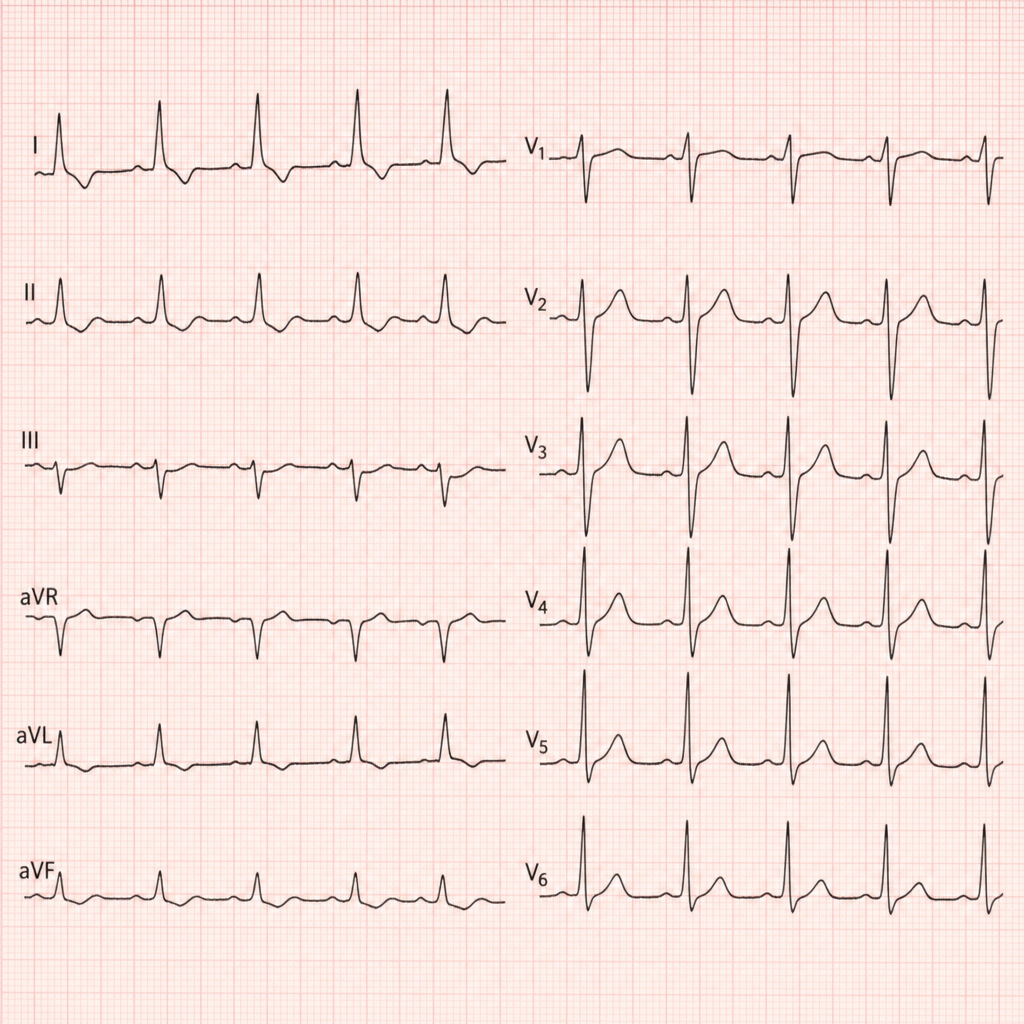
All of the following are features of hyperkalemia on ECG, EXCEPT:
All of the following drugs are known to worsen hyperkalemia except
Hyperkalemia means more than
A patient has hyperaldosteronism. Which lab finding is expected?
Reduced osmolarity ORS does not contain which of the following ion?
Most clinically significant characteristic of Ringer's Lactate is -
Which of the following receptors mediate stretch reflex?
Increased serum calcium is seen in all conditions except:
Explanation: ***ICF*** - The measured ion concentrations, especially **high potassium (140 mEq/L)** and **low sodium (10 mEq/L)**, are characteristic of the **intracellular fluid (ICF)**, where potassium is the primary cation and sodium is kept low by the Na+/K+-ATPase pump. - **Chloride levels (15 mEq/L)** are also significantly lower in the ICF compared to extracellular fluids. *Plasma* - Plasma typically has **high sodium (around 140 mEq/L)** and **low potassium (around 4 mEq/L)**, which contradicts the given measurements. - Chloride levels in plasma are usually much higher, around **100-105 mEq/L**. *Interstitial fluid* - Interstitial fluid has an electrolyte composition very similar to plasma, with **high sodium** and **low potassium**, differing mainly in protein content. - This composition is not consistent with the given measurements. *ECF* - The ECF (extracellular fluid), which includes both plasma and interstitial fluid, is characterized by **high sodium** and **low potassium**. - The given ion concentrations, particularly the very **high potassium** and **low sodium**, are directly opposite to the typical ECF profile.
Explanation: ***Corticosteroids*** - **Corticosteroids** can cause **hypokalemia** due to their mineralocorticoid activity, which promotes renal potassium excretion. - This effect is often dose-dependent and more pronounced with certain corticosteroids like **fludrocortisone** or high doses of prednisolone. *Diazepam* - **Diazepam** is a **benzodiazepine** that acts on GABA receptors in the brain. - It primarily causes central nervous system effects like sedation and anxiolysis, without directly affecting **potassium levels**. *Ibuprofen* - **Ibuprofen** is a **non-steroidal anti-inflammatory drug (NSAID)**. - It can lead to **renal dysfunction** and **fluid retention**, but it does not directly cause **hypokalemia**. *Digitalis* - **Digitalis** (digoxin) is a cardiac glycoside used to treat **heart failure** and **arrhythmias**. - While **hypokalemia** can exacerbate **digitalis toxicity**, digitalis therapy itself does not significantly cause **hypokalemia**; rather, it's a critical electrolyte to monitor.
Explanation: ***U waves*** - **U waves** are typically associated with **hypokalemia**, not hyperkalemia. They are small deflections immediately following the T wave. - Their presence suggests an abnormality in myocardial repolarization due to low potassium levels. *Shortened QT interval* - A **shortened QT interval** is *not* a typical finding in hyperkalemia; hyperkalemia usually causes a **prolonged PR interval** and QRS widening, which can make QT measurement difficult but does not inherently shorten it. - A shortened QT interval is more commonly seen in conditions like **hypercalcemia** or inherited short QT syndrome. *Peaked T waves* - **Peaked T waves** (also known as "tenting" of the T waves) are one of the earliest and most classic ECG signs of hyperkalemia [1]. - This occurs due to abnormally rapid repolarization of the ventricles. *Wide QRS complex* - As hyperkalemia progresses, the **QRS complex widens** due to a slowing of intraventricular conduction [1]. - This widening can eventually lead to a **sine wave pattern** if not treated, indicating severe hyperkalemia and impending cardiac arrest.
Explanation: ***Furosemide*** - **Furosemide** is a loop diuretic that acts on the **thick ascending limb of the loop of Henle**, inhibiting the reabsorption of sodium, chloride, and potassium. - This action leads to increased excretion of potassium in the urine, thus **preventing hyperkalemia** and often causing hypokalemia. *ACE inhibitors* - **ACE inhibitors** block the production of angiotensin II, leading to decreased aldosterone secretion. - Reduced aldosterone levels decrease potassium excretion in the renal tubules, which can **worsen hyperkalemia**. *Amiloride* - **Amiloride** is a potassium-sparing diuretic that blocks sodium channels in the collecting duct. - This action reduces potassium secretion, making it a drug that can **worsen hyperkalemia**. *Spironolactone* - **Spironolactone** is an aldosterone antagonist that also acts as a potassium-sparing diuretic. - By blocking aldosterone's effects, it **decreases potassium excretion** in the renal tubules and can therefore worsen hyperkalemia.
Explanation: ***5.5 mEq/l*** - **Hyperkalemia** is defined as a serum potassium level greater than **5.5 mEq/L** [1]. - This elevated level can lead to significant cardiac and neurological complications if not promptly addressed. *4.5 mEq/l* - A potassium level of 4.5 mEq/L falls within the normal physiological range for serum potassium, which is typically **3.5 to 5.0 mEq/L** [1]. - Therefore, this value does not indicate hyperkalemia. *10.5 mEq/l* - While 10.5 mEq/L is indeed an elevated potassium level, it represents **severe hyperkalemia**, far exceeding the general threshold for diagnosis. - The definition of hyperkalemia begins at a lower threshold of **5.5 mEq/L** [1]. *7.5 mEq/l* - A potassium level of 7.5 mEq/L indicates **moderate to severe hyperkalemia** and is a critical finding requiring immediate medical intervention [2]. - However, the initial threshold for defining hyperkalemia is **5.5 mEq/L**, making this option too high for the general definition [1].
Explanation: ***Hypokalemia*** - **Aldosterone** increases the excretion of **potassium** in the kidneys, leading to decreased serum potassium levels [1]. - This effect is mediated by aldosterone's action on the principal cells of the collecting duct, promoting potassium secretion into the urine [1]. *Metabolic acidosis* - **Hyperaldosteronism** typically causes **metabolic alkalosis** due to increased hydrogen ion excretion by the kidneys [1]. - Aldosterone promotes the reabsorption of sodium and water, and the excretion of potassium and hydrogen ions, leading to alkalosis [2]. *Hyperkalemia* - **Aldosterone's primary role** is to promote **potassium excretion** in the kidneys [1]. - Therefore, **excessive aldosterone** production would lead to **hypokalemia**, not hyperkalemia. *Hyponatremia* - **Aldosterone** promotes **sodium reabsorption** in the kidneys, which usually leads to normal or even slightly elevated serum sodium levels [1]. - **Hyponatremia** would be an unexpected finding in hyperaldosteronism [3].
Explanation: ***Lactate ion*** - **Reduced osmolarity ORS** (WHO formulation) does **NOT contain lactate**. - The current WHO-ORS uses **trisodium citrate** as the base provider to correct acidosis. - Some older commercial ORS formulations used lactate, but it has been replaced by citrate in standard formulations due to **better stability, palatability, and effectiveness**. *Potassium ion* - **Potassium ions** (20 mmol/L) are an essential component of reduced osmolarity ORS. - They are crucial for replacing electrolyte losses during diarrhea and maintaining **intracellular fluid balance**. *Citrate ion* - **Citrate** (10 mmol/L) is a key component of reduced osmolarity ORS as the base provider. - It helps correct **metabolic acidosis** associated with diarrhea and improves shelf life and taste. *Sodium ion* - **Sodium ions** (75 mmol/L) are vital in reduced osmolarity ORS. - They facilitate the **sodium-glucose co-transport mechanism** across the intestinal wall, promoting optimal water absorption and rehydration.
Explanation: ***Isotonic*** - Ringer's lactate is **isotonic** because its osmolality (approximately $ ext{273 mOsmol/L}$) is similar to that of human plasma ($ ext{275-295 mOsmol/L}$), making it suitable for intravenous fluid replacement [1]. - This characteristic prevents significant shifts of fluid in or out of cells, reducing the risk of **cellular edema** or **dehydration** [1]. *Provides bicarbonate precursors to help in metabolic acidosis.* - While Ringer's lactate contains **lactate**, which is metabolized in the liver to **bicarbonate**, this effect is considered a secondary benefit rather than its most clinically significant characteristic [2]. - The primary clinical utility of Ringer's lactate is its ability to effectively restore **intravascular volume** due to its isotonic nature [2]. *Crystalloid solution.* - Ringer's lactate is indeed a **crystalloid solution**, meaning it contains small molecules that can freely cross semipermeable membranes [1]. - However, being a crystalloid is a classification, while its **isotonicity** is a more direct and clinically significant characteristic regarding its physiological impact and primary use. *Contains potassium in a concentration lower than serum potassium.* - Ringer's lactate contains **potassium** (4 mEq/L), but this concentration is lower than typical serum potassium levels ($ ext{3.5-5.0 mEq/L}$) [2]. - This characteristic is important for fluid balance but not its most defining or clinically significant feature compared to its overall isotonicity.
Explanation: ***Muscle spindle*** - Muscle spindles are **stretch-sensitive receptors** located within the muscle belly that detect changes in muscle length and the rate of change in length. - When a muscle is stretched, the muscle spindles are activated, sending signals via **afferent neurons** to the spinal cord, which then initiates a reflex contraction of the same muscle to counteract the stretch—this is the basis of the stretch reflex. *Golgi tendon organ* - **Golgi tendon organs** are located in the tendons and respond to changes in **muscle tension**, not muscle length. Its primary role is to prevent excessive muscle contraction. - When activated by high tension, Golgi tendon organs inhibit the muscle, leading to relaxation (inverse stretch reflex), which is opposite to the stretch reflex. *Meissner's corpuscles* - **Meissner's corpuscles** are **mechanoreceptors** located in the superficial layers of the skin, primarily responsible for detecting **light touch** and **vibrations**. - They are not involved in the regulation of muscle length or tension and therefore do not mediate the stretch reflex. *Merkel's disc* - **Merkel's discs** are **mechanoreceptors** found in the basal layer of the epidermis, specialized for detecting **sustained pressure** and **texture**. - These receptors contribute to fine tactile discrimination but are unrelated to the proprioceptive mechanisms of the stretch reflex.
Explanation: ### Explanation **Correct Answer: A. Myxedema** **1. Why Myxedema is the correct answer:** Myxedema refers to severe **hypothyroidism**. In this condition, serum calcium levels are typically **normal or slightly decreased**, but never increased. Thyroid hormones normally stimulate bone resorption; therefore, in a hypothyroid state, there is a decrease in bone turnover. In contrast, it is *Hyperthyroidism* that is occasionally associated with mild hypercalcemia due to increased osteoclastic activity. **2. Analysis of Incorrect Options (Causes of Hypercalcemia):** * **Multiple Myeloma:** This is a plasma cell dyscrasia where malignant cells produce "Osteoclast Activating Factors" (like IL-6 and TNF-beta). This leads to extensive bone resorption (punched-out lesions) and significant hypercalcemia. * **Sarcoidosis:** This granulomatous disease involves macrophages that express the enzyme **1-alpha-hydroxylase**. This enzyme converts Vitamin D to its active form (1,25-dihydroxyvitamin D), leading to increased intestinal calcium absorption and hypercalcemia. * **Primary Hyperparathyroidism:** Usually caused by a parathyroid adenoma, it results in excessive secretion of Parathyroid Hormone (PTH). PTH increases bone resorption, renal calcium reabsorption, and intestinal absorption (via Vitamin D activation), making it the most common cause of hypercalcemia in outpatient settings. **3. NEET-PG High-Yield Pearls:** * **Most common cause of hypercalcemia (Outpatient):** Primary Hyperparathyroidism. * **Most common cause of hypercalcemia (Inpatient/Hospitalized):** Malignancy. * **Milk-Alkali Syndrome:** A classic triad of hypercalcemia, metabolic alkalosis, and renal failure due to excessive ingestion of calcium carbonate. * **ECG Finding:** Hypercalcemia causes a **shortened QT interval**, whereas hypocalcemia causes a prolonged QT interval.
Get full access to all questions, explanations, and performance tracking.
Start For Free