Which of the following phospholipids serves as a marker of apoptosis?
In metabolic alkalosis, which statement is true about urinary excretion?
Which of the following amino acids primarily acts as a buffer in blood due to its ability to accept and donate protons at physiological pH?
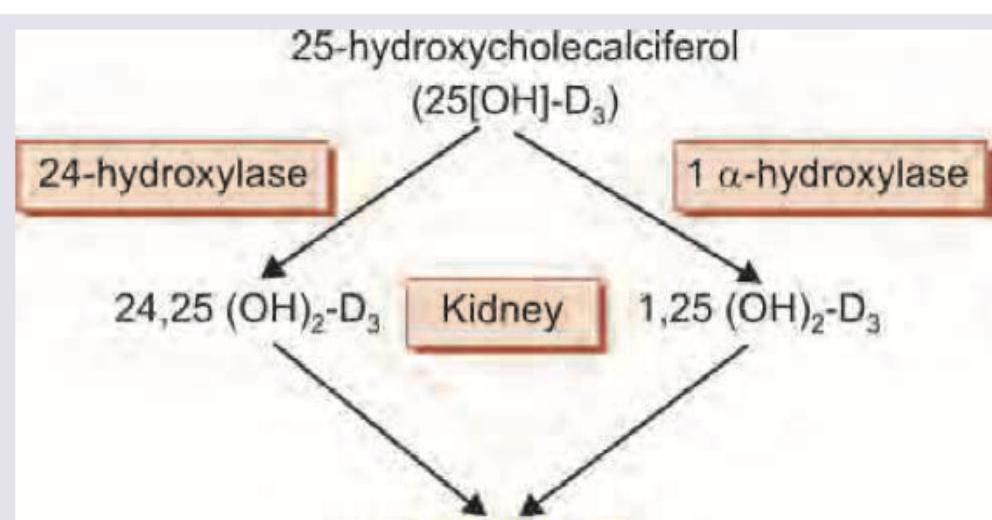
The following reaction occurs in which part of kidney?
Which one of the following biochemical abnormalities can be produced by repeated vomiting?
Maximum buffering capacity at physiological pH is for:
What is the daily requirement of potassium in a healthy adult?
Concentration of H+ ion is 10-9. What is the pH of the solution?
Osmolarity of 4.2% solution of sodium bicarbonate is ?
What is the normal serum magnesium level?
Explanation: **Explanation:** **Phosphatidylserine (PS)** is the correct answer because of its unique distribution in the cell membrane. In healthy cells, the enzyme **flippase** actively maintains PS on the **inner (cytoplasmic) leaflet** of the plasma membrane. During apoptosis, this asymmetry is lost due to the inactivation of flippase and the activation of **scramblase**. Consequently, PS "flips" to the **outer leaflet** (extracellular surface). This "PS exposure" acts as an "eat-me" signal, recognized by macrophages for phagocytosis without triggering inflammation. Clinical detection of this shift is commonly done using **Annexin V** staining in flow cytometry. **Analysis of Incorrect Options:** * **Phosphatidylinositol (A):** Primarily located on the inner leaflet, it serves as a precursor for second messengers like $IP_3$ and $DAG$ and anchors proteins via GPI linkages. It is not a marker for apoptosis. * **Phosphatidylcholine (C):** The most abundant phospholipid in the eukaryotic membrane, typically found on the outer leaflet. It serves a structural role and is not a signaling marker for cell death. * **Phosphatidylethanolamine (D):** Found mainly in the inner leaflet and involved in membrane fusion and cytokinesis, but its translocation is not the primary diagnostic marker for apoptosis. **High-Yield NEET-PG Pearls:** * **Annexin V:** A protein that binds specifically to Phosphatidylserine in the presence of $Ca^{2+}$; used to identify early apoptotic cells. * **Flippase vs. Scramblase:** Flippase (ATP-dependent) moves PS inward; Scramblase (Ca-activated) moves phospholipids non-specifically in both directions. * **Cardiolipin:** A phospholipid found exclusively in the inner mitochondrial membrane; its oxidation is also linked to the intrinsic pathway of apoptosis.
Explanation: ### Explanation **Core Concept:** In metabolic alkalosis, the body’s primary goal is to conserve hydrogen ions ($H^+$) and excrete excess bicarbonate ($HCO_3^-$) to restore a normal pH. The kidneys achieve this by reducing the secretion of $H^+$ into the tubular lumen. Since the formation and excretion of **ammonia ($NH_3$)** and **ammonium ($NH_4^+$)** are directly dependent on the availability of $H^+$ ions in the tubular fluid (to "trap" ammonia as ammonium), a state of alkalosis leads to a significant **decrease in renal ammoniagenesis** and ammonia excretion. **Analysis of Options:** * **D (Correct):** As $H^+$ secretion decreases during alkalosis, the conversion of $NH_3$ to $NH_4^+$ in the distal tubule diminishes, leading to decreased urinary ammonia excretion. * **A (Incorrect):** Increased $NH_3$ excretion is a hallmark of **metabolic acidosis**, where the kidneys ramp up ammonia production to buffer and eliminate excess acid. * **B & C (Incorrect):** Aceto-acetic acid and beta-hydroxybutyric acid are **ketoacids**. Their presence in urine (ketonuria) is associated with metabolic **acidosis** (e.g., Diabetic Ketoacidosis or starvation), not alkalosis. In alkalosis, the body is not in a state of pathological ketoacid production. **Clinical Pearls for NEET-PG:** * **Ammoniagenesis:** Occurs primarily in the **proximal convoluted tubule (PCT)** via the deamination of **Glutamine**. * **Urine pH:** In metabolic alkalosis, the urine is typically **alkaline** (pH > 7.0) as the kidney dumps $HCO_3^-$. * **Paradoxical Aciduria:** A high-yield exception where a patient has metabolic alkalosis but excretes acidic urine. This occurs in **hypokalemic, hypochloremic metabolic alkalosis** (e.g., persistent vomiting) because the kidney prioritizes volume and sodium conservation over pH balance.
Explanation: ***Histidine***- The side chain of **histidine**, the **imidazole group**, has a pKa of approximately 6.0, which is close to the physiological pH of **7.4**, making it an effective buffer.- This property is especially vital for the **buffering capacity of hemoglobin** in red blood cells, contributing significantly to pH homeostasis (Bohr effect).*Arginine*- Arginine possesses a **guanidinium group** in its side chain with a very high pKa (~12.5).- This high pKa means its side chain is almost always positively charged and protonated at physiological pH, rendering it ineffective as a physiological **acid-base buffer**.*Tryptophan*- Tryptophan has a large, non-polar **indole ring** side chain, which is chemically inert and lacks an ionizable group within the physiological pH range.- Since it cannot accept or donate protons near pH 7.4, it does not contribute to the **buffering system** of the blood.*Tyrosine*- Tyrosine contains a **phenolic hydroxyl group** with a pKa of approximately 10.5.- Because its pKa is significantly higher than physiological pH, it is largely neutral and incapable of mediating proton exchange effectively in the **blood plasma**.
Explanation: **Proximal convoluted tubule** - The image shows the conversion of 25-hydroxycholecalciferol to **1,25 (OH)₂-D₃**, also known as calcitriol, via the enzyme **1α-hydroxylase**. - This critical hydroxylation reaction, occurring primarily in the **proximal convoluted tubule** cells of the kidney, produces the biologically active form of vitamin D. *Distal convoluted tubule* - The distal convoluted tubule is primarily involved in **fine-tuning** water and electrolyte reabsorption, influenced by hormones like aldosterone and antidiuretic hormone. - It does not contain the necessary enzymes, specifically **1α-hydroxylase**, for the final activation step of vitamin D. *Loop of Henle* - The loop of Henle's main function is to create a **medullary osmotic gradient** through countercurrent multiplication, crucial for concentrating urine. - It plays no significant role in the **hydroxylation of vitamin D** precursors. *Collecting duct* - The collecting duct is responsible for final adjustments to urine volume and concentration, largely under the influence of **antidiuretic hormone**. - It lacks the **enzymatic machinery** (1α-hydroxylase) required for the activation of vitamin D.
Explanation: ***Metabolic alkalosis*** - Repeated vomiting leads to the loss of **hydrochloric acid (HCl)** from the stomach, causing **hypochloremic metabolic alkalosis** with an increase in serum **bicarbonate (HCO3-)** and a rise in blood pH. - The loss of H+ and Cl- ions results in **compensatory hypokalemia** as the kidneys exchange K+ for H+ to maintain electroneutrality. - **Volume depletion** from vomiting triggers aldosterone secretion, which further promotes K+ loss and H+ excretion, perpetuating the alkalosis (contraction alkalosis). - This is one of the most common causes of metabolic alkalosis in clinical practice. *Metabolic acidosis* - This condition is characterized by a decrease in **serum pH** and **bicarbonate levels**, typically due to excess acid production or bicarbonate loss from diarrhea or renal tubular acidosis. - Vomiting does not directly cause metabolic acidosis; rather, it leads to the opposite effect by removing acidic gastric contents. *Ketosis* - **Ketosis** occurs when the body metabolizes fat for energy, producing **ketone bodies**, common in conditions like uncontrolled diabetes or prolonged starvation. - While severe, prolonged vomiting with reduced oral intake can indirectly lead to starvation ketosis, the primary and most characteristic biochemical abnormality of repeated vomiting is metabolic alkalosis, not ketosis. *Uraemia* - **Uraemia** is a syndrome caused by the accumulation of **nitrogenous waste products** (urea, creatinine) in the blood, primarily due to kidney failure. - Vomiting may be a *symptom* of uraemia, but it does not *cause* uraemia. Kidney function is the primary determinant of urea levels.
Explanation: ***Correct Option: Histidine*** - Histidine possesses an **imidazole side chain** with a pKa value of approximately 6.0-6.5, which is close to the physiological pH of 7.4 - Maximum buffering capacity occurs when **pH ≈ pKa** (Henderson-Hasselbalch principle) - This proximity of its pKa to physiological pH allows histidine to effectively **accept and donate protons** as pH changes, providing the strongest buffering capacity among amino acids - Histidine residues are critical in **hemoglobin buffering** and protein buffer systems *Incorrect Option: Glycine* - Glycine's pKa values are around 2.3 for the carboxyl group and 9.6 for the amino group - Neither pKa value is close to **physiological pH 7.4**, making it a poor buffer at this pH - It lacks a side chain with a pKa near neutral pH to provide significant buffering capacity *Incorrect Option: Valine* - Valine has a **nonpolar aliphatic side chain** that does not ionize - Only the α-amino (pKa ~9.6) and α-carboxyl groups (pKa ~2.3) can buffer, both far from physiological pH - Provides minimal buffering capacity at **pH 7.4** *Incorrect Option: Cysteine* - Cysteine contains a **thiol group (-SH)** with a pKa of approximately 8.3 - While closer to physiological pH than glycine or valine, its pKa is still ~1 pH unit away from 7.4 - Its buffering capacity at **pH 7.4** is significantly less effective than histidine's imidazole group
Explanation: ***4-5 g/day*** - The recommended daily intake of **potassium** for a healthy adult is approximately **3,500-4,700 mg (3.5-4.7g)**, making **4-5 g/day** the most accurate answer. - This range aligns with the **Adequate Intake (AI)** recommendations from major health organizations. - Adequate potassium is crucial for maintaining proper **fluid balance**, **nerve impulses**, **muscle contraction**, and **blood pressure regulation**. *3-4 g/day* - While this range covers the minimum requirement (3.5g), it falls short of the **optimal intake of 4.7g**. - This amount may be adequate but is lower than the recommended target for cardiovascular health benefits. *2-3 g/day* - This amount is **below the minimum recommended intake** of potassium for healthy adults. - Consistent intake at this level can lead to **hypokalemia**, potentially affecting **blood pressure regulation**, **muscle function**, and increasing risk of **cardiovascular disease**. *5-7 g/day* - This intake is higher than the typical recommended daily allowance for most healthy adults. - While high potassium intake is generally safe for individuals with **healthy kidneys**, very high levels can be a concern for those with **renal impairment** or taking certain medications.
Explanation: ***9*** - This option is correct based on the **fundamental definition of pH**. pH is the negative logarithm (base 10) of the **hydrogen ion concentration ([H+])**. Therefore, if [H+] is 10^-9 M, the pH = -log(10^-9) = **9**. - A pH of **9 indicates a slightly alkaline (basic) solution**, as it is above the neutral pH of 7. *7* - This would be the pH if the **hydrogen ion concentration [H+] were 10^-7 M**, which represents a **neutral solution**. - This is incorrect for the given concentration of 10^-9 M and indicates a calculation error. *13* - This pH value represents a **highly alkaline (basic) solution**, corresponding to a very low [H+] of 10^-13 M. - This is significantly different from the given [H+] of 10^-9 M and indicates a misunderstanding of the logarithmic pH scale. *4* - This pH value represents an **acidic solution**, corresponding to a higher [H+] of 10^-4 M. - This is an incorrect calculation and does not match the given hydrogen ion concentration of 10^-9 M.
Explanation: ***1000 osmole/litre*** - To calculate osmolarity, convert the percentage to grams per liter (4.2% = 42 g/L). Divide by the **molecular weight of NaHCO₃ (84 g/mol)** to get moles/L (42/84 = 0.5 mol/L). - Since NaHCO₃ dissociates into two particles (Na⁺ and HCO₃⁻), multiply the molarity by 2 to get osmolarity (0.5 mol/L * 2 = **1 osmol/L or 1000 mOsmol/L**). *1500 osmole/litre* - This value would be correct if the molar concentration was 0.75 mol/L (0.75 x 2 = 1.5 osmol/L), which is not the case for a 4.2% solution. - This calculation might arise if an incorrect molecular weight or dissociation factor was used. *2000 osmole/litre* - This would require a molar concentration of 1 mol/L (1 x 2 = 2 osmol/L), meaning 84 grams of NaHCO₃ per liter, which is far greater than the 42 g/L provided. - This suggests an overestimation of the concentration or an incorrect calculation of dissociation. *500 osmole/litre* - This value suggests that either the dissociation factor of 2 was not applied, or the initial molar concentration was mistakenly calculated as 0.25 mol/L. - It would imply that the solution is half as concentrated as it truly is in terms of osmotic particles.
Explanation: ***1.5-2.5 mEq/L*** - The **normal serum magnesium range** in adults is **1.5 to 2.5 mEq/L** (or 1.7-2.2 mg/dL, or 0.7-1.0 mmol/L). - Magnesium plays a crucial role in various bodily functions, including **muscle and nerve function**, **blood glucose control**, **blood pressure regulation**, and as a cofactor in over **300 enzymatic reactions**. - Approximately **99% of total body magnesium is intracellular**, making serum levels only a partial reflection of total body stores. *50 mEq/L* - A serum magnesium level of **50 mEq/L** is extremely high and would indicate **severe hypermagnesemia**, which is a life-threatening condition. - This level is far outside the normal physiological range and would lead to immediate and serious **cardiac arrest** and **neurological complications**. *5 mEq/L* - A serum magnesium level of **5 mEq/L** is significantly elevated and suggests **hypermagnesemia**. - While not as immediately lethal as 50 mEq/L, this level is still a medical emergency and can cause symptoms like **hypotension**, **bradycardia**, **muscle weakness**, and **decreased deep tendon reflexes**. *25 mEq/L* - A serum magnesium level of **25 mEq/L** represents profound **hypermagnesemia** and is incompatible with life. - This level would lead to immediate **cardiac arrest** and **respiratory paralysis**.
Acid-Base Chemistry and Buffers
Practice Questions
pH Regulation in Body Fluids
Practice Questions
Respiratory Regulation of Acid-Base Balance
Practice Questions
Renal Regulation of Acid-Base Balance
Practice Questions
Respiratory and Metabolic Acidosis
Practice Questions
Respiratory and Metabolic Alkalosis
Practice Questions
Mixed Acid-Base Disorders
Practice Questions
Interpretation of Arterial Blood Gases
Practice Questions
Electrolyte Homeostasis
Practice Questions
Sodium and Water Balance
Practice Questions
Potassium Balance
Practice Questions
Calcium and Phosphate Metabolism
Practice Questions
Get full access to all questions, explanations, and performance tracking.
Start For Free