Histidine is the most important amino acid for buffering under normal physiological conditions because?
Which of the following is associated with elevated alkaline phosphatase, low calcium, and low phosphate?
Which of the following conditions is NOT associated with an increased anion-gap metabolic acidosis?
Which of the following buffer systems is most effective for maintaining a physiological pH of 7.4?
All are causes of increased anion gap except?
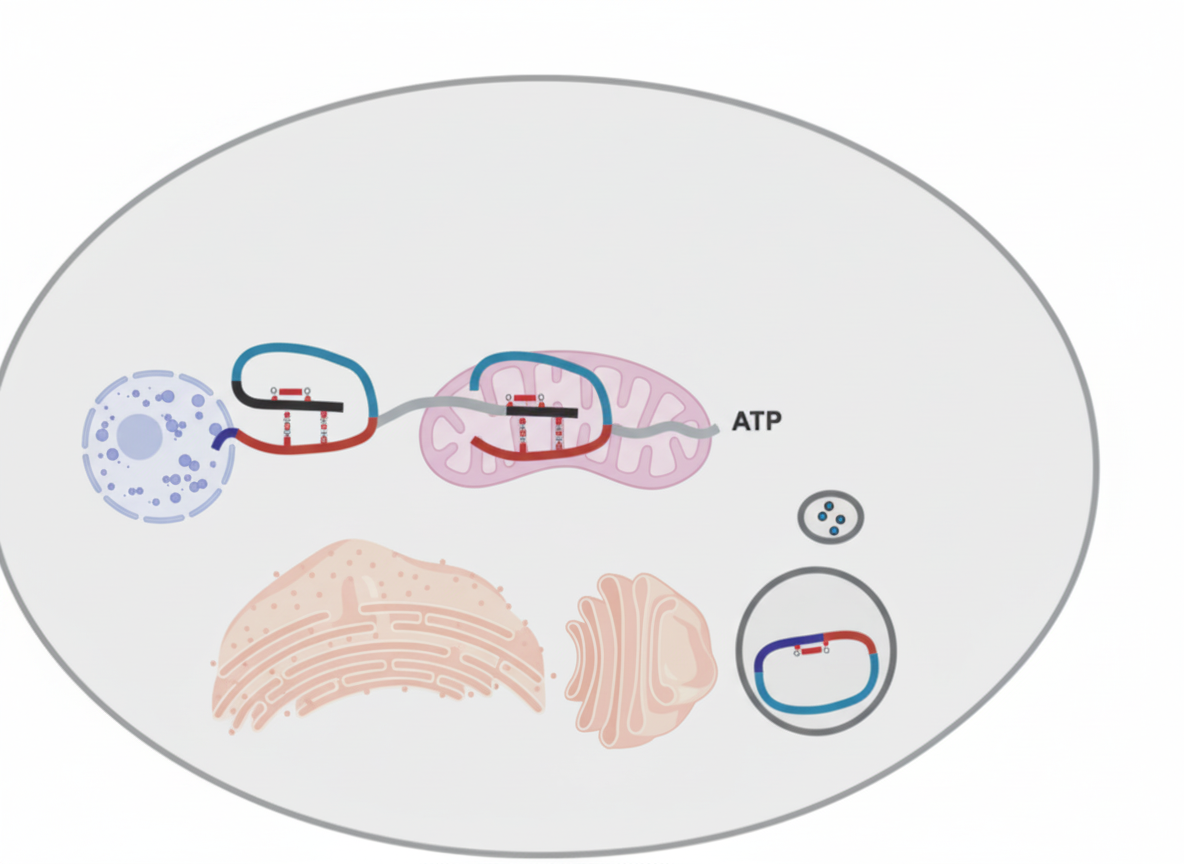
Which of the following is a precursor of the molecule shown in the illustration?
Which of the following conditions is associated with normal anion gap acidosis?
Increased anion gap is not seen in which of the following conditions?
A 40-year-old male presents with recurrent bouts of vomiting for 9 months because of pyloric obstruction. What is the compensatory biochemical change?
Hypercalcemia is seen in all of the following conditions except?
Explanation: ### Explanation **1. Why Option C is Correct:** The buffering capacity of any substance is maximal when the pH of the environment is close to its **pKa value** (the pH at which 50% of the molecule is ionized and 50% is unionized). According to the Henderson-Hasselbalch equation, a buffer is most effective within **±1 pH unit** of its pKa. * The physiological pH of human blood is approximately **7.4**. * The pKa of the imidazole side chain of **Histidine** is approximately **6.0 to 6.1**. Among all the amino acids found in proteins, Histidine is the only one with a pKa near the physiological range. This allows it to effectively donate or accept protons at body pH, making it the primary contributor to the buffering capacity of proteins like **Hemoglobin**. **2. Why Other Options are Incorrect:** * **Option A:** While the kidneys regulate acid-base balance (via bicarbonate reabsorption and H+ secretion), this is a systemic physiological process, not the biochemical reason why a specific amino acid acts as a buffer. * **Option B:** If the pKa were significantly higher than 7.4 (like Lysine, pKa ~10.5), the amino acid would remain protonated and unable to effectively neutralize added bases at physiological pH. * **Option D:** If the pKa were very low (like Aspartic acid, pKa ~3.9), the amino acid would remain deprotonated and unable to neutralize added acids at physiological pH. **3. Clinical Pearls & High-Yield Facts for NEET-PG:** * **Hemoglobin (Hb) as a Buffer:** Hb is a rich source of Histidine residues (38 residues per molecule). This makes Hb the most important non-bicarbonate buffer in the blood. * **Bohr Effect:** The buffering action of Histidine in Hb is crucial for the transport of CO2 and the release of Oxygen in tissues. * **Intracellular Buffering:** Proteins (due to Histidine) are the most abundant **intracellular** buffers. * **Maximum Buffering Capacity:** Always occurs when **pH = pKa**.
Explanation: ### Explanation **Correct Answer: D. Vitamin D deficiency** **Mechanism:** Vitamin D is essential for the intestinal absorption of **calcium** and **phosphate**. In Vitamin D deficiency (Rickets in children, Osteomalacia in adults), the lack of absorption leads to **hypocalcemia** and **hypophosphatemia**. Low serum calcium triggers a compensatory rise in **Parathyroid Hormone (PTH)**—a condition known as secondary hyperparathyroidism. PTH attempts to restore calcium levels by mobilizing it from the bone, which increases osteoblastic activity. This increased bone turnover results in the elevation of **Alkaline Phosphatase (ALP)**, a marker of osteoblast activity. **Analysis of Incorrect Options:** * **A. Paget’s Disease:** Characterized by isolated, markedly **elevated ALP** due to excessive bone remodeling. However, serum calcium and phosphate levels are typically **normal**. * **B. Osteoporosis:** This is a quantitative decrease in bone mass. Crucially, all biochemical markers—**Calcium, Phosphate, and ALP—remain normal**. * **C. Primary Hyperparathyroidism:** Caused by autonomous PTH secretion (usually an adenoma). This leads to **hypercalcemia** and **hypophosphatemia** (due to renal phosphate wasting). ALP may be elevated only if significant bone involvement (Osteitis fibrosa cystica) is present. **High-Yield Clinical Pearls for NEET-PG:** * **ALP** is a marker of **osteoblastic** activity, while **Urinary Hydroxyproline** or **Serum NTx/CTx** are markers of **osteoclastic** activity. * **Vitamin D Deficiency Triad:** ↓ Ca²⁺, ↓ PO₄³⁻, ↑ ALP, and ↑ PTH. * **Renal Osteodystrophy:** Characterized by **Hypocalcemia** and **Hyperphosphatemia** (due to decreased renal excretion of phosphate), which distinguishes it from Vitamin D deficiency. * **Hungry Bone Syndrome:** Post-parathyroidectomy, patients show low Ca, low PO₄, and high ALP (similar to Vitamin D deficiency) due to rapid bone remineralization.
Explanation: **Explanation:** The **Anion Gap (AG)** is calculated as $[Na^+] - ([Cl^-] + [HCO_3^-])$. An increased anion gap (HAGMA) occurs when unmeasured acid anions (like lactate, ketones, or exogenous toxins) accumulate in the blood, consuming bicarbonate. **Why COPD is the correct answer:** COPD (Chronic Obstructive Pulmonary Disease) causes **Respiratory Acidosis**, not metabolic acidosis. In COPD, the primary pathology is the failure of the lungs to eliminate $CO_2$, leading to hypercapnia (increased $pCO_2$). While the body may compensate by increasing bicarbonate levels, it does not involve the accumulation of unmeasured acid anions that characterize a high anion gap. **Analysis of Incorrect Options:** * **Shock (Option A):** Leads to tissue hypoxia and anaerobic metabolism, resulting in **Lactic Acidosis**. Lactate is an unmeasured anion that increases the AG. * **Ingestion of Antifreeze (Option B):** Antifreeze contains **Ethylene Glycol**, which is metabolized into glycolic and oxalic acids. These organic acids increase the AG. * **Diabetic Ketoacidosis (Option C):** Results in the overproduction of **$\beta$-hydroxybutyrate and acetoacetate**. These ketoacids consume bicarbonate and increase the AG. **High-Yield Clinical Pearls for NEET-PG:** * **Mnemonic for HAGMA:** **MUDPILES** (Methanol, Uremia, DKA, Propylene glycol, Iron/INH, Lactic acidosis, Ethylene glycol, Salicylates). * **Normal Anion Gap Acidosis (NAGMA):** Primarily caused by GI loss of $HCO_3^-$ (Diarrhea) or Renal Tubular Acidosis (RTA). * **Normal AG range:** 8–12 mEq/L. * In **COPD**, the compensation is renal (retention of $HCO_3^-$), which takes 3–5 days to fully manifest.
Explanation: The effectiveness of a buffer system is determined by the **Henderson-Hasselbalch equation**. A buffer is most efficient when its **pKa is closest to the desired pH** of the solution (ideally within ±1 pH unit). At this point, the concentrations of the conjugate base and weak acid are nearly equal, allowing the system to neutralize both added acids and bases effectively. ### Why Phosphate Buffer is Correct The physiological pH of blood is **7.4**. Among the options, the **Phosphate buffer (pKa = 6.9)** has a pKa closest to 7.4. While it is a minor buffer in the plasma due to low concentration, it is the **most potent intracellular buffer** and the primary buffer in **urine**, where the pH is closer to its pKa. ### Analysis of Incorrect Options * **Carbonic acid buffer (pKa = 6.1):** Although its pKa is 1.3 units away from 7.4, it is the most important **extracellular** buffer. Its effectiveness stems not from its pKa, but from being an **"open system"** where $CO_2$ levels can be rapidly adjusted by the lungs and $HCO_3^-$ by the kidneys. * **Glutamate buffer (pKa = 8.7):** The pKa is too high; it would be most effective at a basic pH of 8.7. * **Acetate buffer (pKa = 4.5):** The pKa is too low; it is effective only in highly acidic environments. ### NEET-PG High-Yield Pearls * **Maximum Buffering Capacity:** Occurs when **pH = pKa**. * **Primary Extracellular Buffer:** Bicarbonate/Carbonic acid system. * **Primary Intracellular Buffer:** Proteins (specifically **Histidine** residues due to a pKa of ~6.0) and Phosphate. * **Isohydric Principle:** All buffer systems in a common solution (like plasma) are in equilibrium with the same $[H^+]$; a change in one system affects all others.
Explanation: To solve this question, one must distinguish between **High Anion Gap Metabolic Acidosis (HAGMA)** and **Normal Anion Gap Metabolic Acidosis (NAGMA)**. ### **Explanation** The Anion Gap (AG) is calculated as: $[Na^+] - ([Cl^-] + [HCO_3^-])$. A high anion gap occurs when unmeasured anions (like lactate, ketones, or exogenous toxins) accumulate in the blood. **Why "Glue Sniffing" is the correct answer:** Glue sniffing involves the inhalation of **Toluene**. Toluene is metabolized to hippuric acid, which is rapidly excreted by the kidneys. This process leads to a loss of bicarbonate and a compensatory increase in chloride, resulting in **Normal Anion Gap Metabolic Acidosis (NAGMA)**. Additionally, toluene can cause Type 1 Renal Tubular Acidosis (RTA), which is a classic cause of NAGMA. **Why the other options are incorrect:** * **Diabetic Ketoacidosis (DKA):** Accumulation of acetoacetate and beta-hydroxybutyrate (unmeasured anions) leads to HAGMA. * **Starvation:** Prolonged fasting leads to the production of ketone bodies, causing HAGMA. * **Ethylene Glycol Poisoning:** Metabolism of ethylene glycol produces glycolic and oxalic acids, which are unmeasured anions that significantly increase the anion gap. ### **High-Yield Clinical Pearls for NEET-PG** * **Mnemonic for HAGMA (MUDPILES):** **M**ethanol, **U**remia, **D**KA, **P**araldehyde, **I**soniazid/Iron, **L**actic acidosis, **E**thylene glycol, **S**alicylates. * **Mnemonic for NAGMA (HARDUP):** **H**yperalimentation, **A**cetazolamide, **R**enal Tubular Acidosis (RTA), **D**iarrhea, **U**retero-sigmoidostomy, **P**ancreatic fistula. * **Key Distinction:** If a patient presents with metabolic acidosis and a **high osmolar gap**, suspect Methanol or Ethylene glycol poisoning.
Explanation: ***Insulin*** - The molecule shown is **C-peptide**, which is produced during **insulin biosynthesis** when **proinsulin** is cleaved to form insulin and C-peptide. - **Insulin** serves as the direct precursor in this pathway: **Preproinsulin** → **Proinsulin** → **Insulin + C-peptide**, making insulin the correct answer. *Glucagon* - **Glucagon** is synthesized from **proglucagon** through a completely separate biosynthetic pathway in pancreatic **alpha cells**. - It has **opposing metabolic effects** to insulin and does not contribute to **C-peptide formation**. *Somatostatin* - **Somatostatin** is derived from **prosomatostatin** in pancreatic **delta cells** and hypothalamic neurons. - It functions as a **growth hormone inhibitor** and has no role in the **insulin-C-peptide** biosynthetic pathway. *Lipase* - **Pancreatic lipase** is a **digestive enzyme** synthesized as **prolipase** and activated in the small intestine. - It is involved in **fat digestion**, not hormone biosynthesis, and has no connection to **C-peptide formation**.
Explanation: **Explanation:** Metabolic acidosis is classified based on the **Anion Gap (AG)**, calculated as: $AG = [Na^+] - ([Cl^-] + [HCO_3^-])$. The normal range is 8–12 mEq/L. **Why Hyperchloremic Acidosis is correct:** In **Normal Anion Gap Metabolic Acidosis (NAGMA)**, the loss of bicarbonate ($HCO_3^-$) is balanced by a reciprocal increase in serum chloride ($Cl^-$) to maintain electroneutrality. Because the sum of chloride and bicarbonate remains constant, the anion gap does not change. This is why NAGMA is synonymous with **Hyperchloremic Acidosis**. Common causes include diarrhea (GI loss of $HCO_3^-$) and Renal Tubular Acidosis (RTA). **Why the other options are incorrect:** * **Lactic Acidosis (A), Ketoacidosis (B), and Methanol Poisoning (C):** These are all causes of **High Anion Gap Metabolic Acidosis (HAGMA)**. In these conditions, metabolic acids (lactate, ketones, or formic acid) dissociate, adding "unmeasured anions" to the blood. These anions replace bicarbonate without increasing chloride, thus widening the gap. **High-Yield Clinical Pearls for NEET-PG:** * **Mnemonic for HAGMA:** **MUDPILES** (Methanol, Uremia, DKA, Propylene glycol, Iron/INH, Lactic acidosis, Ethylene glycol, Salicylates). * **Mnemonic for NAGMA:** **USED CARP** (Ureterosigmoidostomy, Small bowel fistula, Extra chloride, Diarrhea, Carbonic anhydrase inhibitors, Adrenal insufficiency, Renal tubular acidosis, Pancreatic fistula). * **Key Distinction:** Diarrhea is the most common cause of NAGMA, while DKA and Lactic acidosis are the most common causes of HAGMA.
Explanation: To understand this question, we must first define the **Anion Gap (AG)**, calculated as: $[Na^+] - ([Cl^-] + [HCO_3^-])$. A normal anion gap is typically **8–12 mEq/L**. ### Why Renal Tubular Acidosis (RTA) is the Correct Answer Metabolic acidosis is classified into two types based on the anion gap: 1. **High Anion Gap Metabolic Acidosis (HAGMA):** Occurs when fixed acids (like lactate or ketones) are added to the blood. The $HCO_3^-$ buffers these acids, but the unmeasured acid anions increase the gap. 2. **Normal Anion Gap Metabolic Acidosis (NAGMA):** Also known as **Hyperchloremic Metabolic Acidosis**. Here, the loss of $HCO_3^-$ is compensated by a proportional increase in $Cl^-$ to maintain electroneutrality. **Renal Tubular Acidosis (RTA)** is a classic cause of NAGMA because the primary defect is the inability to secrete $H^+$ or reabsorb $HCO_3^-$, leading to chloride retention. ### Analysis of Incorrect Options (Causes of HAGMA) * **Salicylate Poisoning:** Aspirin overdose leads to the accumulation of salicylic acid and interferes with the Krebs cycle, producing organic acids. * **Lactic Acidosis:** Seen in shock or hypoxia; the accumulation of lactate (an unmeasured anion) increases the gap. * **Ethylene Glycol Poisoning:** Metabolism of this antifreeze agent produces glycolic and oxalic acids, significantly raising the anion gap. ### High-Yield Clinical Pearls for NEET-PG * **Mnemonic for HAGMA:** **MUDPILES** (Methanol, Uremia, DKA, Propylene glycol, Iron/INH, Lactic acidosis, Ethylene glycol, Salicylates). * **Mnemonic for NAGMA (Normal Gap):** **USED CARP** (Ureterosigmoidostomy, Small bowel fistula, Extra chloride, **Diuretics/Diarrhea**, **RTA**, Pancreatic fistula). * **Key Distinction:** If the question mentions **Hyperchloremia**, always think of NAGMA (RTA or Diarrhea).
Explanation: ### **Explanation** **Underlying Concept:** Pyloric obstruction leads to persistent vomiting, causing a massive loss of gastric hydrochloric acid (HCl). This results in **Metabolic Alkalosis** (due to loss of H⁺) and **Hypochloremia** (due to loss of Cl⁻). To compensate for the volume loss (dehydration), the body activates the Renin-Angiotensin-Aldosterone System (RAAS). **Why Option C is Correct:** 1. **Hyponatremia & Hypochloremia:** Vomiting directly removes Na⁺ and Cl⁻. 2. **The "Paradox":** Normally, in alkalosis, the kidneys should excrete bicarbonate (alkaline urine) to restore pH. However, in pyloric obstruction, the body prioritizes volume over pH. 3. **Mechanism:** To conserve Na⁺ (and water), the distal tubule reabsorbs Na⁺ in exchange for H⁺ (via the H⁺/Na⁺ exchanger) and K⁺. This occurs because Cl⁻ is unavailable to be reabsorbed with Na⁺. Consequently, H⁺ ions are secreted into the urine, making it **acidic** despite the systemic **alkalosis**. This is termed **Paradoxical Aciduria**. **Why Other Options are Incorrect:** * **A & B (Respiratory Changes):** While the lungs may attempt a minor compensatory hypoventilation (increasing CO₂), the primary biochemical hallmark and "paradox" of this condition is renal, not respiratory. * **D (Metabolic Acidosis):** Vomiting gastric contents causes a loss of acid, leading to alkalosis, not acidosis. **High-Yield Clinical Pearls for NEET-PG:** * **Classic Triad:** Hypochloremic, hypokalemic, metabolic alkalosis with paradoxical aciduria. * **Key Electrolyte Shift:** Hypokalemia occurs because K⁺ is shifted into cells and excreted in the urine to save Na⁺. * **Treatment:** The definitive initial management is **Isotonic Saline (0.9% NaCl)**. The chloride in the saline allows the kidney to stop secreting H⁺, thus correcting the paradoxical aciduria.
Explanation: **Explanation:** The correct answer is **Chronic Renal Failure (CRF)** because it is typically associated with **hypocalcemia**, not hypercalcemia. In CRF, the kidneys fail to convert 25-hydroxyvitamin D into its active form, **1,25-dihydroxyvitamin D (Calcitriol)**, due to the loss of the 1-alpha-hydroxylase enzyme. Additionally, phosphate retention (hyperphosphatemia) leads to the precipitation of calcium, further lowering serum levels. This hypocalcemia triggers secondary hyperparathyroidism. (Note: Tertiary hyperparathyroidism in end-stage renal disease can cause hypercalcemia, but the classic presentation of CRF is low calcium). **Analysis of Incorrect Options:** * **Sarcoidosis:** Granulomatous diseases involve macrophages that possess 1-alpha-hydroxylase activity, leading to uncontrolled production of active Vitamin D and subsequent hypercalcemia. * **Multiple Myeloma:** Malignant plasma cells produce Osteoclast Activating Factors (OAFs) like IL-6 and RANK-L, causing extensive bone resorption and significant hypercalcemia. * **Prolonged Immobilization:** Lack of weight-bearing leads to an imbalance between bone formation and resorption. Increased osteoclastic activity releases calcium from the skeleton into the blood. **NEET-PG High-Yield Pearls:** * **Most common cause of hypercalcemia (Outpatient):** Primary Hyperparathyroidism. * **Most common cause of hypercalcemia (Inpatient):** Malignancy. * **Milk-Alkali Syndrome:** A triad of hypercalcemia, metabolic alkalosis, and renal failure due to excessive ingestion of calcium and absorbable antacids. * **ECG finding in Hypercalcemia:** Shortened QT interval ("Calcium shortens the heart's rest").
Acid-Base Chemistry and Buffers
Practice Questions
pH Regulation in Body Fluids
Practice Questions
Respiratory Regulation of Acid-Base Balance
Practice Questions
Renal Regulation of Acid-Base Balance
Practice Questions
Respiratory and Metabolic Acidosis
Practice Questions
Respiratory and Metabolic Alkalosis
Practice Questions
Mixed Acid-Base Disorders
Practice Questions
Interpretation of Arterial Blood Gases
Practice Questions
Electrolyte Homeostasis
Practice Questions
Sodium and Water Balance
Practice Questions
Potassium Balance
Practice Questions
Calcium and Phosphate Metabolism
Practice Questions
Get full access to all questions, explanations, and performance tracking.
Start For Free