
Airway Management in Trauma — MCQs

A patient is admitted following a road traffic accident. He has sustained significant blunt injury to his head, chest and abdomen and has a Glasgow Coma Scale score of 8/15. His saturations are poor at 89% on 15 L of oxygen a rebreathing mask. You note bruising around both eyes and blood-stained fluid issuing from his left ear, which forms concentric circles when dripped on a white sheet. You wish to support his airway to improve oxygenation. The first choice of airway adjunct would be
Which of the following is the safest initial approach to open the airway in a patient with maxillofacial trauma?
What is to be addressed first in case of polytrauma -
All are used in the management of head injury patient except?
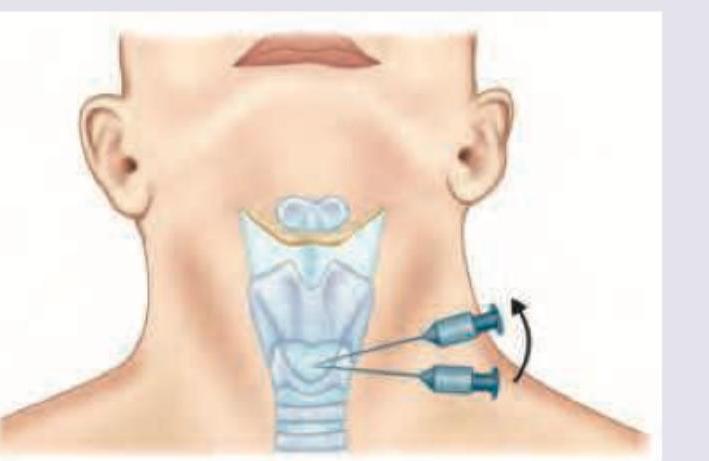
A construction worker met with an accident when a cement block fell on his face. He sustained severe maxillofacial and laryngeal injury. He was not able to open his mouth and is having jaw fracture with obstruction in nasopharynx and oropharynx. To stabilize his airway, the following procedure was done on him. Which option describes the procedure done on him?
What is the primary purpose of Sellick's maneuver?
Endotracheal tube in the esophagus is best assessed by:
During rapid sequence intubation in a child after taking brief history and clinical examination next step is:
Which of the following is an ideal method to prevent aspiration pneumonia?
In an accident case, after the arrival of medical team, all should be done in early management except;
Want unlimited practice?
Get full access to all questions, explanations, and performance tracking.
Scan to download app