The laryngeal mask airway is used for securing the airway in all of the following conditions, EXCEPT:
In which of the following scenarios is the laryngeal mask airway (LMA) typically not used?
What is the standard method used to differentiate between endotracheal and esophageal intubation?
Which of the following systems is specifically designed to produce Positive End-Expiratory Pressure (PEEP) in mechanical ventilation?
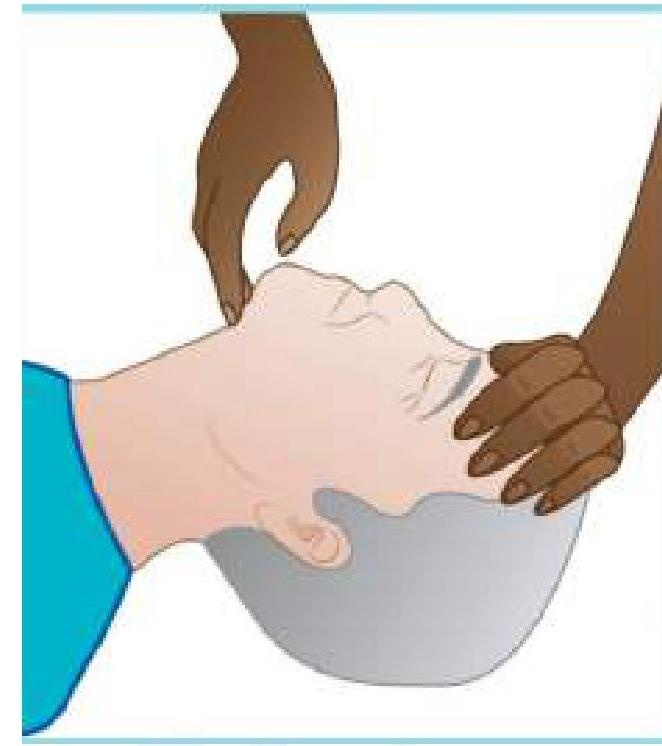
Identify the maneuver being performed.
What percentage of oxygen is provided to a victim during mouth-to-mouth respiration?
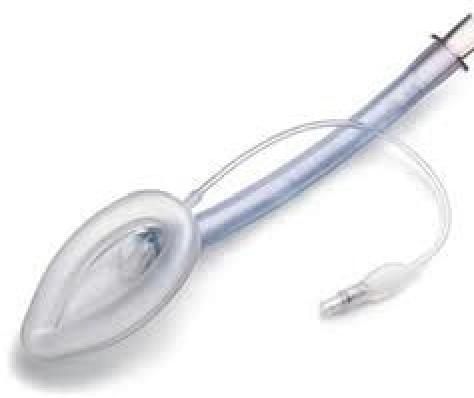
Identify the airway device shown in the image.
Laryngeal mask airway [LMA] is contraindicated in?
What is the most reliable indicator to prevent esophageal intubation?
Difficult intubation is anticipated in all except the following conditions.
Explanation: ***In a patient with a large tumor in the oral cavity*** - A **large oral cavity tumor** can obstruct the passage of a laryngeal mask airway (LMA) or prevent proper seating of the mask, making it ineffective or even dangerous. - The LMA relies on a seal around the laryngeal inlet, which would be compromised by a significant mass in the oral cavity or oropharynx. *In a patient undergoing cardiopulmonary resuscitation* - The LMA is a valuable tool for **airway management during CPR**, especially for healthcare providers who are not skilled in endotracheal intubation. - It provides a quicker and simpler method of establishing an airway and ventilating the patient compared to bag-mask ventilation alone. *In a child undergoing elective surgery* - LMAs are widely used in **pediatric anesthesia** for elective surgeries, particularly for procedures where endotracheal intubation is not strictly necessary. - They offer a less invasive airway option, reducing the risk of airway trauma often associated with repeated intubations in children. *In a patient with a difficult intubation* - The LMA serves as an important **rescue device** in difficult airway algorithms when endotracheal intubation fails. - Some LMAs, like the **intubating LMA (ILMA)**, are specifically designed to facilitate blind or fiber optic-guided tracheal intubation through the LMA itself.
Explanation: ***Difficult airway*** - While LMAs can be useful for **rescue ventilation** in a difficult airway situation when intubation fails, they are typically **not the primary choice for definitive airway management** or prolonged ventilation in a truly difficult airway unless specifically indicated as a bridge to intubation or when intubation is impossible. - The LMA does not protect against **aspiration** as effectively as an endotracheal tube, which is a significant concern in prolonged difficult airway scenarios. *Babies weighing less than 1500 grams* - **LMAs are available in pediatric sizes**, and their use can be appropriate in very small infants, including those weighing less than 1500 grams, particularly for short procedures or as a temporary airway. - The decision to use an LMA in this population depends on the specific clinical situation and the expertise of the anesthetist, but **low birth weight alone is not an absolute contraindication**. *Pregnant patients* - LMAs can be a viable option in pregnant patients, especially for short procedures or as a **rescue device** in difficult intubation scenarios, as they avoid the hemodynamic response to direct laryngoscopy. - However, due to the **increased risk of aspiration in pregnant patients** (due to decreased gastric emptying and increased intra-abdominal pressure), an endotracheal tube is often preferred for definitive airway management in high-risk cases. *Ocular surgeries* - LMAs are often used in ocular surgeries because they provide a secure airway without needing deep neuromuscular blockade, which allows for **spontaneous ventilation** and rapid emergence. - This approach minimizes variations in **intraocular pressure** that can occur with coughing and straining associated with endotracheal intubation.
Explanation: ***End tidal CO2*** - **End-tidal CO2 (EtCO2) monitoring** is the most reliable and immediate method to confirm proper endotracheal intubation. - Since CO2 is exhaled from the lungs, its presence in adequate levels (typically 35-45 mmHg) confirms the tube is in the trachea and not the esophagus. *Chest X-rays* - While a **chest X-ray** can confirm tube placement, it is not an immediate or real-time method and often requires a physician to interpret the image. - An X-ray is typically used as a **secondary confirmation** after initial clinical assessment and EtCO2 measurement. *Auscultation* - **Auscultation** of breath sounds over the lungs and epigastrium can provide clues, but it is not definitive. - Sounds can be **referred** from the stomach, and an esophageal intubation can sometimes still produce faint breath sounds or appear as bilateral breath sounds if the stomach is inflated. *Partial pressure of O2* - Measuring the **partial pressure of O2** (e.g., via pulse oximetry or blood gas) indicates blood oxygenation, but not directly where the endotracheal tube is placed. - Even with esophageal intubation, the patient may initially have good oxygen saturation due to residual oxygen in the lungs, making it an **unreliable real-time indicator** of tube placement.
Explanation: ***PEEP valve system*** - A **PEEP valve** is a specific component designed to maintain a positive pressure in the airways at the end of exhalation. - This prevents **alveolar collapse** and improves oxygenation, which is its primary function in mechanical ventilation. *Mechanical spring system for ventilation* - While springs can be used in some mechanical systems, they are not the primary or exclusive mechanism for generating and maintaining **PEEP** in ventilators. - Spring-loaded valves might contribute to some pressure regulation, but the dedicated PEEP valve is more precise and common. *Balloon valve system for ventilation* - A balloon valve system is not a standard design for generating or regulating **PEEP** in mechanical ventilation. - Such a system is not typically described in the context of advanced ventilator mechanics. *Pneumatic pressure system for ventilation* - While mechanical ventilation relies on a pneumatic (gas-driven) system, this term is too broad and does not specifically identify the component responsible for generating **PEEP**. - The pneumatic system delivers the gas, but the PEEP valve specifically regulates the pressure at the end of expiration.
Explanation: ***Head tilt, chin lift*** - This maneuver is performed by placing one hand on the patient's forehead and tilting the head back while simultaneously using the fingers of the other hand to lift the chin, thereby opening the airway. - It is a primary technique to establish an **open airway** in an unconscious patient who does not have suspected cervical spine injury. *Jaw thrust maneuver* - The jaw thrust maneuvers involves placing fingers behind the angles of the patient's mandible and displacing the jaw forward, which can be done without extending the neck. - This maneuver is preferred for patients with suspected **cervical spine injuries** to open the airway while minimizing neck movement. *Head extension technique* - This term describes the **head tilt component** of the head tilt, chin lift maneuver, but it doesn't encompass the chin lift aspect, making it an incomplete description of the depicted action. - Simply extending the head without lifting the chin might not adequately open the airway by lifting the tongue off the posterior pharynx. *In-line manual stabilization* - This technique involves manually holding the patient's head and neck to prevent movement, typically used when a **cervical spine injury** is suspected. - It is a **supportive measure** often performed *in conjunction* with airway maneuvers like the jaw thrust, not an airway maneuver itself.
Explanation: ***16%*** - Expired air from a rescuer during **mouth-to-mouth resuscitation** contains about **16% oxygen**. - This percentage is sufficient to provide adequate oxygenation to the victim until further medical help is available. *10%* - This percentage is **too low** to be effective in providing life-sustaining oxygen to a victim. - A 10% oxygen concentration would likely lead to or worsen **hypoxia**. *21%* - This represents the approximate percentage of **oxygen in ambient air**, which is what we breathe normally. - Due to oxygen consumption by the rescuer's metabolism, the expired air will have a **lower oxygen concentration**. *100%* - **100% oxygen** is typically delivered via medical equipment, such as an oxygen tank and mask, not through expired air. - Providing 100% oxygen would require specialized **emergency medical services (EMS)** equipment.
Explanation: ***Laryngeal Mask Airway*** - The image clearly displays a **Laryngeal Mask Airway (LMA)**, characterized by its inflatable, elliptical cuff designed to seal around the laryngeal inlet. - This supraglottic device is used for airway management in anesthesia and emergencies when endotracheal intubation is not required or feasible. *Nasopharyngeal Airway* - A **nasopharyngeal airway** is a soft, flexible tube inserted through the nose into the posterior pharynx. - It does not have an inflatable cuff or the broad, mask-like structure seen in the image. *Cuffed Endotracheal Tube* - A **cuffed endotracheal tube (ETT)** is a long, narrow tube inserted directly into the trachea, featuring a balloon cuff near the distal end for tracheal sealing. - The device in the image has a much broader, mask-like structure designed to sit above the larynx, not within the trachea. *Guedel Airway* - A **Guedel airway** (or oropharyngeal airway) is a rigid, curved device inserted into the mouth to prevent the tongue from obstructing the airway. - It is typically made of plastic and lacks any inflatable components or the sophisticated design of the device shown.
Explanation: ***Pregnant female*** - **Pregnant patients** are at an increased risk of **gastric reflux and aspiration pneumonitis** due to decreased lower esophageal sphincter tone and increased intra-abdominal pressure. - The LMA does not provide a secure airway seal against aspiration, making it contraindicated in cases where **aspiration risk is high**, such as pregnancy or full stomach. *Difficult airways* - The LMA is often considered a **rescue device** in difficult airway algorithms when tracheal intubation fails. - It can be used as a conduit for **fiberoptic intubation** or as a temporary airway while preparing for a definitive airway. *Ocular surgeries* - LMAs are generally suitable for ocular surgeries as they provide a stable airway without the use of a mask, which can obstruct the surgical field. - They tend to cause **less coughing and straining** upon insertion and maintenance compared to endotracheal tubes, which is beneficial in preventing increases in intraocular pressure. *In CPR* - The LMA can be an effective airway device during **cardiopulmonary resuscitation (CPR)** when endotracheal intubation is not immediately feasible. - It provides a relatively quick and easy way to establish an airway, facilitate ventilation, and reduce the risk of gastric insufflation during chest compressions.
Explanation: ***Measurement of CO2 in exhaled air (EtCO2)*** - The presence of **carbon dioxide** in exhaled air confirms tracheal intubation as the esophagus does not contain CO2. - This method provides a **real-time**, objective assessment of tube placement that is highly reliable because even small amounts of CO2 are detected. *Oxygen saturation on pulse oximeter* - This indicator measures **oxygenation**, which can remain adequate for several minutes after esophageal intubation due to pre-oxygenation. - A **delayed drop in saturation** might indicate esophageal intubation, but it's not immediate and therefore not the most reliable early indicator. *Direct visualization of passing tube beneath vocal cords* - While helpful, **direct visualization** can sometimes be misleading due to difficult airways or poor visibility, where the tube might appear to pass correctly but enter the esophagus. - This method is **operator-dependent** and its reliability can vary based on the intubator's experience and the patient's anatomy. *Auscultation over chest* - **Auscultation** can detect breath sounds; however, sounds can be transmitted from the stomach or surrounding tissues, leading to false positives. - It is also very difficult to reliably distinguish between **esophageal and tracheal sounds**, especially in noisy environments or with inexperienced personnel, making it less reliable than EtCO2.
Explanation: ***Receding incisors*** - **Receding incisors** do not typically obstruct the laryngoscope blade or alter the alignment of the oral, pharyngeal, and laryngeal axes, making intubation easier rather than difficult. - A receding or absent maxilla can actually improve the line of sight to the **glottis**, reducing the likelihood of a difficult intubation. *Increase in posterior depth of mandible* - An **increased posterior depth of the mandible** (a large jaw) can make intubation more challenging by increasing the distance from the incisors to the larynx, making it harder to visualize the glottis. - This anatomical feature can limit the space for manipulating the **laryngoscope blade** and positioning the airway. *Increased alveolar- mental distance* - An **increased alveolar-mental distance** refers to a longer distance from the alveolar ridge to the mental protuberance, which indicates a longer mandible. - A longer mandible can push the laryngeal axis posteriorly, making it difficult to align the oral, pharyngeal, and laryngeal axes for direct **laryngoscopy**. *Temporomandibular joint fibrosis* - **Temporomandibular joint fibrosis** restricts mouth opening, a crucial factor for successful intubation. - Limited mouth opening significantly impedes the insertion and manipulation of the **laryngoscope blade**, making glottis visualization difficult or impossible.
Respiratory Physiology
Practice Questions
Airway Anatomy
Practice Questions
Preoxygenation Techniques
Practice Questions
Mask Ventilation
Practice Questions
Supraglottic Airway Devices
Practice Questions
Direct Laryngoscopy
Practice Questions
Video Laryngoscopy
Practice Questions
Fiberoptic Intubation
Practice Questions
Surgical Airway Management
Practice Questions
One-Lung Ventilation Techniques
Practice Questions
Ventilation Strategies During Anesthesia
Practice Questions
Extubation Criteria and Techniques
Practice Questions
Get full access to all questions, explanations, and performance tracking.
Start For Free