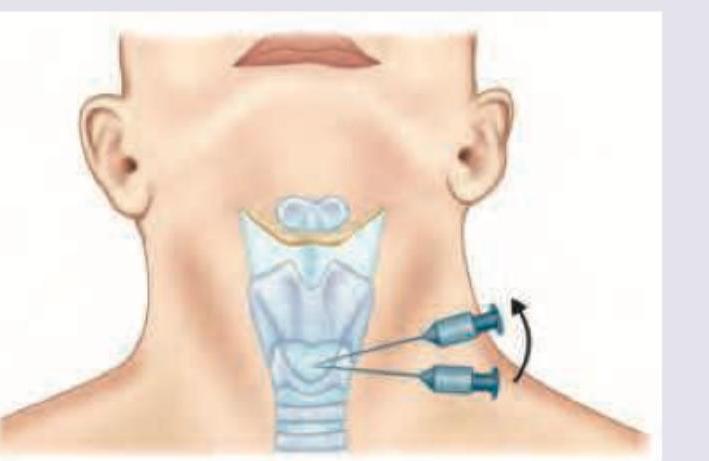
A construction worker met with an accident when a cement block fell on his face. He sustained severe maxillofacial and laryngeal injury. He was not able to open his mouth and is having jaw fracture with obstruction in nasopharynx and oropharynx. To stabilize his airway, the following procedure was done on him. Which option describes the procedure done on him?
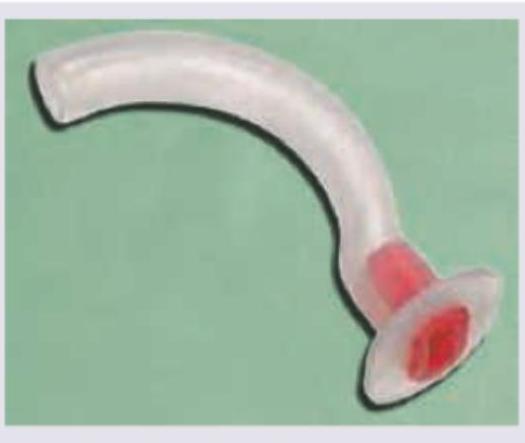
The equipment shown below is used for:
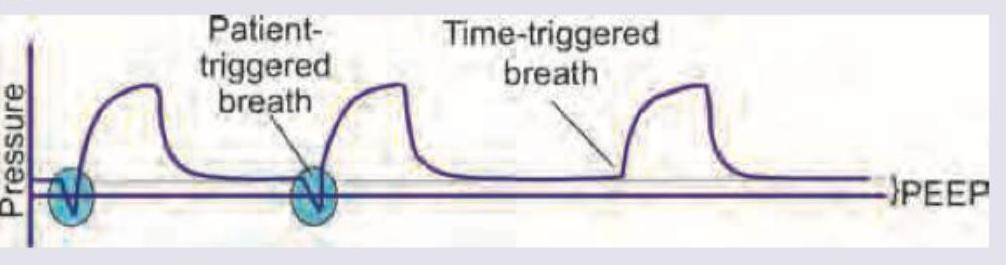
What is the mode of ventilation shown here?
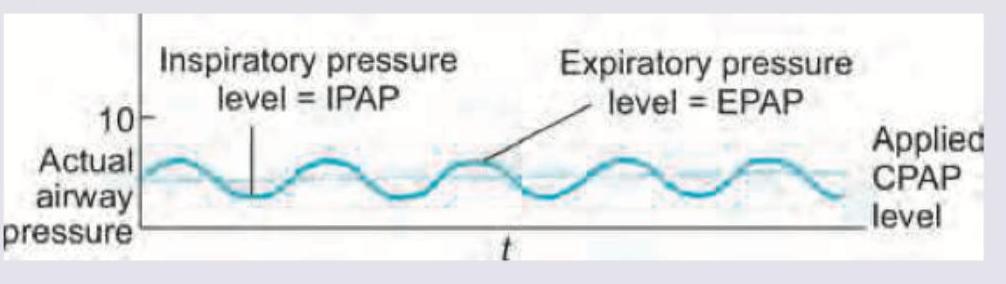
The following ventilation modality is used in:
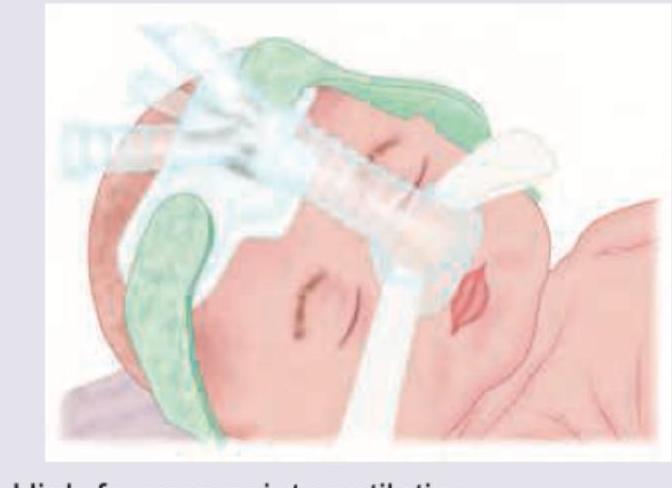
What ventilation modality is shown below?
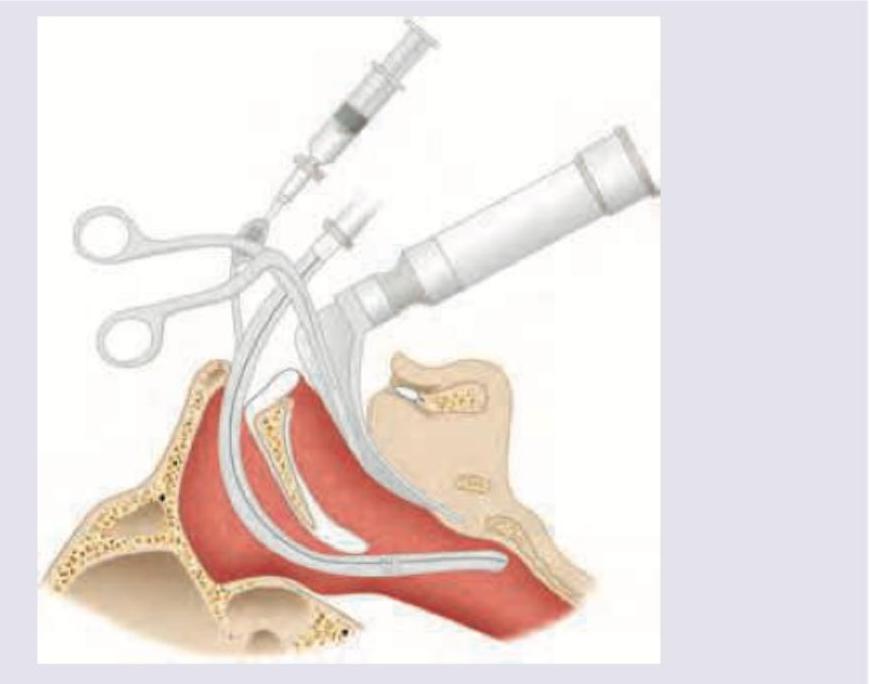
(1) Name the forceps being used in the procedure being performed:
Mallampati test is used for the assessment of :
Which of the following conditions are contraindications for noninvasive positive-pressure ventilation in patients with respiratory failure? I. Craniofacial abnormalities II. Significant burns III. Respiratory failure with PaCO_2 of 60 mm Hg IV. Cardiovascular instability Select the correct answer using the code given below :
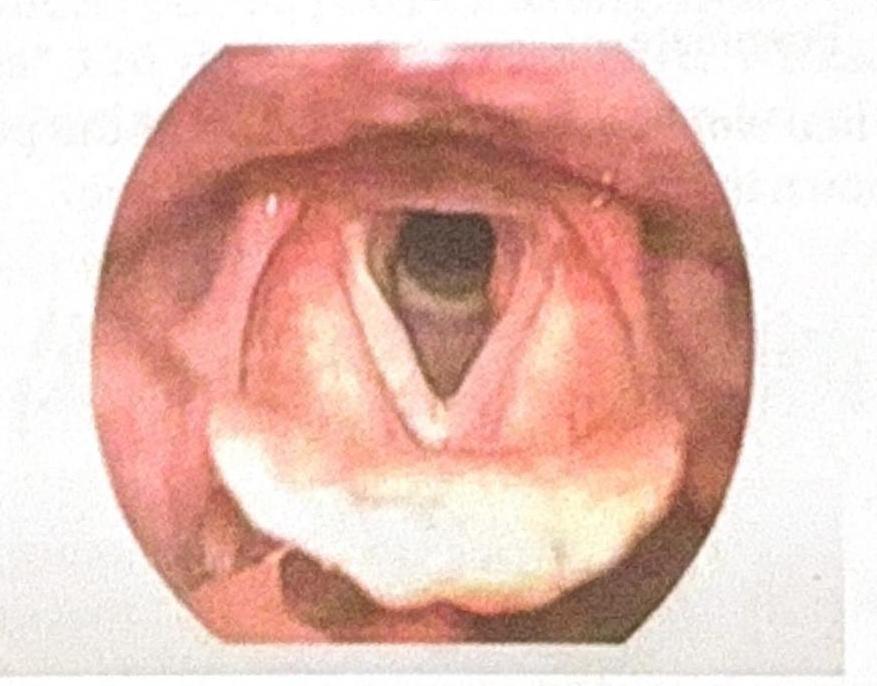
What is the staging system used for the condition seen in the patient after a history of intubation, as shown in the image?
What is the purpose of Positive End-Expiratory Pressure (PEEP)?
Explanation: ***Tracheostomy*** - A tracheostomy creates a surgical opening in the **trachea** to establish a direct airway, bypassing the upper airway. This is crucial when the **nasopharynx and oropharynx are obstructed** due to severe maxillofacial and laryngeal injuries, as described in the case. - The procedure allows for ventilation and prevents aspiration, making it the most suitable long-term solution for definitive airway management in patients with extensive facial and jaw trauma preventing oral or nasal intubation. *Cricothyroidotomy* - This procedure involves making an incision through the **cricothyroid membrane** into the trachea. It is typically a **rapid, emergency airway** procedure. - While it provides an immediate airway, it is generally considered a temporary measure due to potential complications like **subglottic stenosis** with prolonged use, and not ideal for the described severe, multifocal obstruction requiring a more stable, long-term solution. *Subcutaneous tracheostomy* - This term is **not a recognized medical procedure** for establishing an airway. - Tracheostomies are performed with direct access to the trachea, not subcutaneously. *Submental insertion of ET* - This technique involves passing an endotracheal tube through a submental incision into the oropharynx, bypassing the mouth in cases of **maxillofacial trauma** and securing the airway. - However, the question describes **obstruction in both the nasopharynx and oropharynx**, and also a laryngeal injury, which would likely preclude the passage of an endotracheal tube even via a submental approach, making a direct tracheal access (tracheostomy) a more appropriate and definitive solution.
Explanation: ***Create and maintain air passage between tongue and posterior pharyngeal wall*** - The image shows an **oropharyngeal airway (OPA)**, a device designed to prevent the tongue from falling back and obstructing the upper airway. - Its curved shape allows it to lie over the tongue and maintain a patent airway by keeping the **tongue away from the posterior pharyngeal wall**. *Create and maintain air passage between tongue and soft palate* - While the OPA does help ensure a clear passage, its primary function is not specifically to delineate a space between the tongue and soft palate. - The main issue often addressed by an OPA is the **relaxation of the tongue base** against the posterior pharynx. *Create and maintain air passage between tongue and hard palate* - The hard palate is the rigid, bony roof of the mouth and is not typically a source of airway obstruction from the tongue. - The OPA extends past the hard palate into the oropharynx to address posterior airway obstruction. *Create air and maintain air passage between tongue and anterior pharyngeal wall* - The OPA does not *create* air; it facilitates its passage. - The obstruction typically occurs at the **posterior pharyngeal wall**, not the anterior pharyngeal wall, as the tongue base falls backward.
Explanation: ***SIMV*** - The graph clearly shows a combination of **patient-triggered breaths** and **time-triggered breaths**, which is characteristic of Synchronized Intermittent Mandatory Ventilation (SIMV). - In SIMV, the ventilator delivers a set number of mandatory breaths, but also allows the patient to breathe spontaneously between these mandatory breaths, and the mandatory breaths are synchronized with the patient's inspiratory effort if within a specific window. *ACMV* - In **Assist-Control Mechanical Ventilation (ACMV)**, every patient inspiratory effort above a set threshold triggers a full mandatory breath from the ventilator. If the patient does not trigger a breath within a set time, the ventilator delivers a mandatory breath. There are no truly spontaneous breaths in ACMV. - The graph shows clearly differentiated patient-triggered and time-triggered breaths, but also implies periods where the patient might breathe spontaneously without full ventilator assistance which isn't the primary characteristic of ACMV. *CPAP* - **Continuous Positive Airway Pressure (CPAP)** provides a constant level of positive pressure throughout the respiratory cycle, supporting spontaneous breathing but not delivering mandatory breaths. - The graph shows distinct pressure cycles indicative of ventilator-delivered breaths, not just continuous positive pressure. *Volume controlled ventilation* - This term describes a **mode of breath delivery** (volume, as opposed to pressure control), not an overall ventilation strategy like SIMV or ACMV. SIMV can be delivered in either volume-controlled or pressure-controlled modes. - While the breaths shown might be volume-controlled, the question asks for the overall mode of ventilation, which is better described by how mandatory and spontaneous breaths are managed.
Explanation: ***Assessment of extubation potential*** - The image depicts **Continuous Positive Airway Pressure (CPAP)**, as indicated by the "Applied CPAP level" and the continuous positive pressure throughout the respiratory cycle, with slight variations but no distinct inspiratory aid. - CPAP is commonly used as a **weaning modality** to assess a patient's ability to breathe spontaneously and maintain adequate oxygenation and ventilation before extubation. *Meconium aspiration syndrome* - Meconium aspiration syndrome often causes severe respiratory distress, requiring **high-frequency oscillatory ventilation (HFOV)** or **conventional mechanical ventilation** with high PEEP and ventilation strategies to minimize barotrauma and air trapping. - While CPAP might be used in milder cases or during the weaning phase, it is not the primary or defining ventilation modality for initial management of severe MAS. *Bronchiolitis obliterans organizing pneumonia* - **Bronchiolitis obliterans organizing pneumonia (BOOP)**, now known as cryptogenic organizing pneumonia, is a restrictive lung disease that typically responds to **corticosteroids**. - Ventilatory support, if needed, would generally involve conventional mechanical ventilation, not specifically CPAP in its primary management. *Acute exacerbation of chronic bronchitis* - **Acute exacerbations of chronic bronchitis (AECB)**, particularly those leading to hypercapnic respiratory failure, are commonly treated with **non-invasive positive pressure ventilation (NIPPV)**, such as BiPAP, which provides both inspiratory (IPAP) and expiratory (EPAP) pressure support. - While CPAP can be used in some cases, BiPAP is generally preferred for its ability to reduce the work of breathing and improve ventilation in hypercapnic patients.
Explanation: ***Nasal CPAP*** - The image shows a device applied to the nose of an infant, providing a continuous flow of air which is characteristic of **Nasal Continuous Positive Airway Pressure (nCPAP)**. - This modality helps maintain lung volume, improve oxygenation, and reduce the work of breathing in neonates with respiratory distress. *High frequency jet ventilation* - This modality involves delivering small tidal volumes at very **high frequencies** (hundreds of breaths per minute) through a specialized ventilator and endotracheal tube. - The image does not depict an **endotracheal tube** or the rapid, small tidal volume delivery characteristic of jet ventilation. *Inverse ratio ventilation* - This is a mode of **mechanical ventilation** where the inspiratory time is longer than the expiratory time (I:E ratio > 1:1), typically used in intubated patients. - The image shows a non-invasive nasal device, not an **intubated patient** on a mechanical ventilator. *Intermittent positive pressure ventilation* - This refers to delivering breaths with positive pressure, either invasively (via endotracheal tube) or non-invasively (via mask), to assist or control breathing. - While CPAP provides positive pressure, "intermittent positive pressure ventilation" implies cyclical breaths, which is not the primary defining feature shown, and CPAP (continuous pressure) is a more specific and accurate description for the depicted setup.
Explanation: ***Magill forceps*** - The image shows **Magill forceps** being used to guide an endotracheal tube or gastric tube through the pharynx into the trachea or esophagus under direct vision. - They are specifically designed for use in the airway, often for retrieving foreign bodies or guiding tubes during **intubation**, characterized by their angled shape. *Caldwell Luc forceps* - **Caldwell-Luc forceps** are typically used in rhinology for procedures within the **maxillary sinus**, such as removing polyps or diseased tissue. - Their shape and angulation are designed for accessing the maxillary antrum, not for manipulating objects in the oropharynx as depicted. *Adson forceps* - **Adson forceps** are small, delicate forceps, often with teeth, used primarily for handling **fine tissues** in surgical procedures. - They are not designed for airway management or for manipulating large tubes in the pharynx. *Bulldog forceps* - **Bulldog forceps** (or bulldog clamps) are small, spring-loaded clamps used to temporarily occlude blood vessels, primarily in vascular surgery. - They are designed to hold tissue or vessels gently but firmly and are not suitable for guiding or retrieving objects in the airway.
Explanation: ***Airway*** - The **Mallampati test** is a widely used bedside test to assess the **visibility of the soft palate, uvula, tonsillar pillars, and tongue** within the oral cavity. - This assessment helps in predicting the **ease of intubation** and the potential for a difficult airway during anesthesia. *Tongue size* - While the Mallampati test indirectly considers the relative size of the tongue by visualizing how much of the pharynx it obstructs, its primary purpose is not to quantify **tongue size** independently. - The test assesses the **overall oral cavity geometry** for airway management, not just a single anatomical dimension. *Ability to protrude jaw* - The ability to protrude the jaw, or **mandibular protrusion**, is a different airway assessment parameter used to evaluate potential difficulty with intubation. - It is often assessed with the **upper lip bite test** or other maneuvers, not the Mallampati classification. *Breath hold time* - **Breath-hold time** is a measure related to respiratory function and patient cooperation, and it has no direct relevance to the Mallampati test. - The Mallampati test is a **visual assessment** of oral pharyngeal structures at rest or with phonation, not a dynamic respiratory measurement.
Explanation: ***I, II and IV*** - **Craniofacial abnormalities** (I) can prevent a proper mask seal, leading to air leaks and ineffective ventilation. - **Significant burns** (II), especially on the face, can make mask application impossible due to pain, skin integrity issues, and infection risk. - **Cardiovascular instability** (IV), such as severe hypotension or active myocardial ischemia, can be worsened by the positive intrathoracic pressure applied by NPPV, which can decrease venous return and cardiac output. *I, III and IV* - While **craniofacial abnormalities** (I) and **cardiovascular instability** (IV) are contraindications, NPPV can be beneficial for **respiratory failure with a PaCO2 of 60 mm Hg** (III) as it helps reduce CO2 levels and avoids intubation. - Therefore, including III as a contraindication makes this option incorrect. *II, III and IV* - **Significant burns** (II) and **cardiovascular instability** (IV) are clear contraindications. However, **respiratory failure with a PaCO2 of 60 mm Hg** (III) is often an indication for NPPV, not a contraindication. - This option incorrectly identifies a key indication as a contraindication. *I, II and III* - **Craniofacial abnormalities** (I) and **significant burns** (II) are valid contraindications for NPPV. - However, **respiratory failure with a PaCO2 of 60 mm Hg** (III) is a common indication for NPPV, especially in conditions like COPD exacerbations, as it helps improve ventilation and reduce hypercapnia.
Explanation: ***Cormack and Lehane*** - The **Cormack and Lehane classification** system is used to grade the view of the **larynx** during **direct laryngoscopy** for intubation. - Given the history of intubation and the image showing the laryngeal view, this system is the most appropriate for staging the visual difficulty or success of intubation. *AJCC* - The **American Joint Committee on Cancer (AJCC) staging system** is primarily used for **oncological staging**, classifying the extent of cancer. - It is not relevant for assessing the view of the larynx during intubation. *TNM* - **TNM staging** (Tumor, Node, Metastasis) is a widely used system for classifying the **progression of cancer**. - This system is specific to cancer staging and is not applicable to the assessment of airways for intubation. *Radkowski* - The **Radkowski staging system** is used to classify **pediatric subglottic stenosis**, a narrowing of the airway below the vocal cords. - While it deals with airway issues, the question focuses on the view during intubation, not the severity of subglottic stenosis, and the image does not specifically point to this condition.
Explanation: ***To prevent atelectasis*** - PEEP maintains a positive pressure in the airways at the end of exhalation, which helps to keep **alveoli open** and prevents their collapse. - This recruitment of collapsed alveoli improves **oxygenation** and reduces the work of breathing. *To decrease preload* - While PEEP can indirectly decrease cardiac preload by increasing intrathoracic pressure, its primary purpose is not cardiovascular but rather respiratory. - The impact on preload is a potential side effect that requires careful monitoring, especially in patients with compromised cardiac function. *To increase venous return* - PEEP actually tends to **decrease venous return** due to increased intrathoracic pressure compressing the vena cava and reducing the pressure gradient for blood flow back to the heart. - This can lead to a reduction in cardiac output, which is a potential adverse effect. *To increase respiratory rate (RR)* - PEEP does not directly increase the respiratory rate; instead, it is a setting on a mechanical ventilator that affects lung volumes and oxygenation. - Respiratory rate is typically set independently or influenced by the patient's ventilatory drive.
Respiratory Physiology
Practice Questions
Airway Anatomy
Practice Questions
Preoxygenation Techniques
Practice Questions
Mask Ventilation
Practice Questions
Supraglottic Airway Devices
Practice Questions
Direct Laryngoscopy
Practice Questions
Video Laryngoscopy
Practice Questions
Fiberoptic Intubation
Practice Questions
Surgical Airway Management
Practice Questions
One-Lung Ventilation Techniques
Practice Questions
Ventilation Strategies During Anesthesia
Practice Questions
Extubation Criteria and Techniques
Practice Questions
Get full access to all questions, explanations, and performance tracking.
Start For Free