A patient under anesthesia is found to be in a “cannot intubate, cannot ventilate” (CICV) scenario. What is the next best step in management?
A patient undergoing general anesthesia develops left lung collapse following intubation. On auscultation, breath sounds are heard only on the right side. What is the most likely cause of this condition?
A patient in the ICU with an endotracheal tube now needs a tracheostomy tube. Which type of tube will you use?
Which of the following airway devices helps maintain Fio2 of 0.25-0.60, irrespective of the patient's breathing effort?
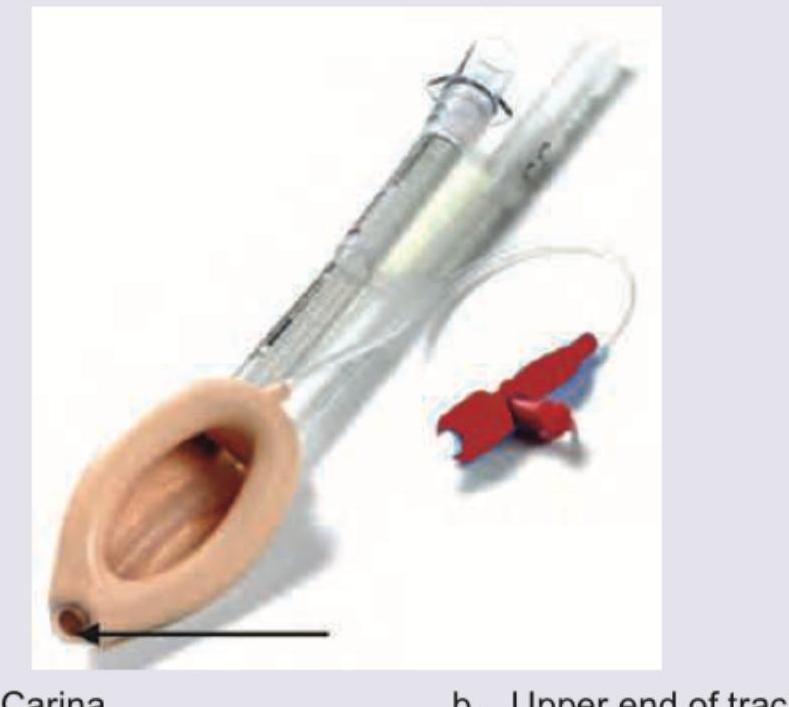
The diagram of a correctly positioned proseal-type Laryngeal Mask Airway is provided below. Above what site is the arrow marked area of the airway positioned?
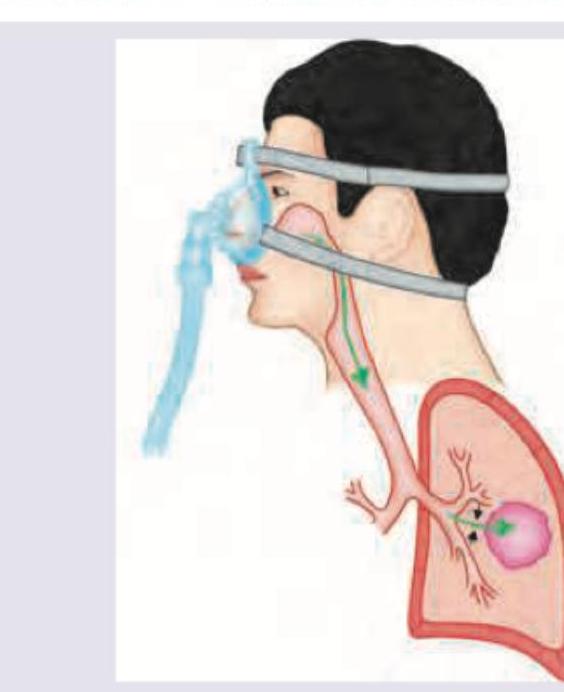
The mode of ventilation shown below is used for:
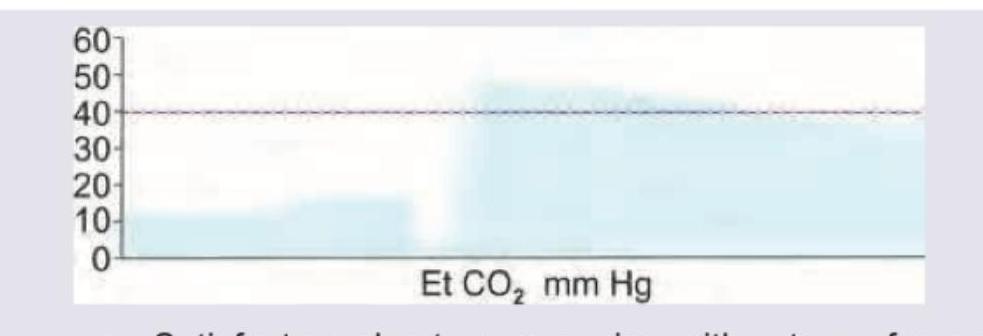
A young intern is managing a patient of Acute MI who developed cardiac arrest when thrombolysis was initiated. The patient was intubated, CPR was performed and one ampoule of adrenaline was given. The capnographic tracing indicates:
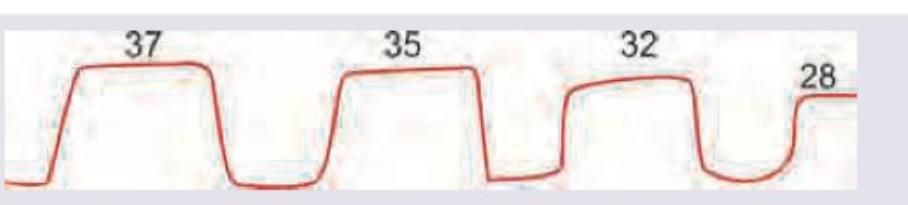
The following capnographic tracing represents:
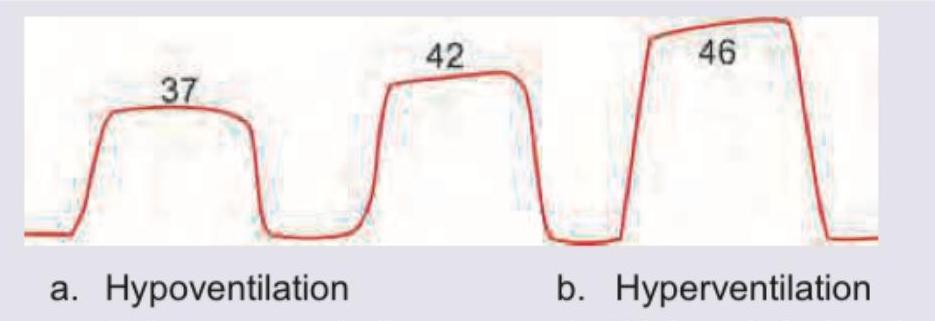
The following capnographic tracing represents:
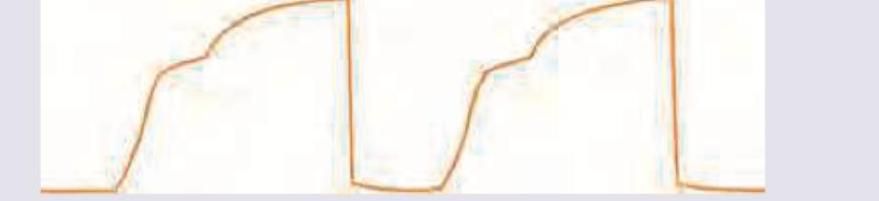
The interpretation for the following capnography is:
Explanation: ***Perform a cricothyroidotomy*** - In a “cannot intubate, cannot ventilate” (**CICV**) scenario, immediate establishment of a surgical airway is life-saving to prevent **hypoxic brain injury** and death. - A **cricothyroidotomy** is the fastest and most definitive emergency procedure to secure the airway by making an incision through the **cricothyroid membrane** into the trachea, bypassing any upper airway obstruction. *Insert nasopharyngeal airway* - A nasopharyngeal airway is a basic airway adjunct designed to relieve soft tissue obstruction at the level of the pharynx. It does not provide a definitive airway for ventilation. - In a **CICV** situation, basic maneuvers and adjuncts like this have already been attempted and failed; it is an inadequate intervention for this life-threatening emergency. *Insert a laryngeal mask airway* - A laryngeal mask airway (**LMA**) is a supraglottic airway device. A **CICV** scenario is declared only after attempts to secure the airway with both an endotracheal tube and a supraglottic device have failed. - Wasting further time attempting to insert an LMA is inappropriate when ventilation is not possible and a surgical airway is urgently needed. *Perform a tracheostomy* - A **tracheostomy** is a formal, time-consuming surgical procedure that is more complex and has a higher complication rate in an emergency setting compared to a cricothyroidotomy. - While it is a definitive airway, it is not the procedure of choice for a time-critical airway emergency. A cricothyroidotomy is the standard emergent surgical airway.
Explanation: ***Right endobronchial intubation***- This is the most common cause of unilateral lung collapse *immediately* following intubation, as the endotracheal tube (ETT) is usually advanced too far into the **right main bronchus (RMB)**, which is wider and less acutely angled than the left.- When the ETT is solely in the RMB, air ventilates the right lung exclusively, resulting in **absent breath sounds** and subsequent **atelectasis** (collapse) of the non-ventilated left lung.*Mucus secretions obstructing the endotracheal tube*- Significant obstruction of the ETT by mucus would typically lead to **bilateral loss of breath sounds** or severely impaired ventilation (high peak inspiratory pressures), affecting both lungs equally.- The specific finding of unilateral breath sounds (only on the right) excludes a primary blockage of the ETT itself.*Pneumothorax on the left side due to positive pressure ventilation*- While a left **pneumothorax** can cause absent breath sounds on the left, it would involve air accumulation in the pleural space, often requiring significant barotrauma, and is a less frequent and less immediate cause than mainstem intubation following successful intubation.- The clinical picture of immediate unilateral absence of breath sounds following intubation is overwhelmingly attributed to ETT malposition, which causes obstructive **atelectasis** (collapse), not tension pneumothorax.*Bronchospasm*- **Bronchospasm** is characterized by diffuse airway narrowing, typically presenting with high **peak inspiratory pressures** and **wheezing** heard over both lung fields.- It impairs air entry bilaterally and would not result in the complete unilateral absence of breath sounds and lung collapse described, which is indicative of complete airway obstruction to the non-ventilated lung.
Explanation: ***Cuffed tracheostomy tube*** - A **cuffed tracheostomy tube** is mandatory in the ICU setting, especially when transitioning from an endotracheal tube, because it provides a seal necessary for **positive pressure ventilation** (PPCV). - The cuff also provides crucial protection against the aspiration of **oral secretions** and **gastric contents**, which is a high risk in critically ill, often sedated, ICU patients. *Uncuffed tracheostomy tube* - *Uncuffed tubes* are inadequate for patients requiring mechanical ventilation as they cannot create the necessary sealed circuit to deliver **tidal volume**. - These tubes are generally reserved for stable patients who require a chronic airway, are not on ventilation, and have a low risk of **aspiration**. *Metallic tracheostomy tube.* - **Metallic tracheostomy tubes** (like those used historically or specific specialized tubes) are typically uncuffed and are not suitable for patients requiring mandatory **mechanical ventilation** or aspiration protection in the acute ICU setting. - They are primarily used for *long-term placement* in ambulatory patients who require a stable, durable airway and often need their tube removed and cleaned frequently. *Endotracheal tube* - An **endotracheal tube (ETT)** is the device currently in use and is being *replaced* by a tracheostomy, making this option incorrect. - While the ETT provides airway management, a tracheostomy tube offers advantages for **long-term airway maintenance** (e.g., improved comfort, easier weaning, better oral hygiene).
Explanation: ***Venturi mask***- This device utilizes the **Bernoulli principle** to mix a specific flow of 100% oxygen with a fixed volume of **room air** via interchangeable jet adapters, achieving a precise FIO2 (0.24-0.60).- Because the total gas flow delivered to the patient (O2 + entrained air) greatly exceeds the patient's peak inspiratory flow, the delivered FIO2 is **independent of the patient's breathing effort** (rate and depth).*Nasal cannula*- The actual FIO2 delivered is highly **variable** and dependent on the patient's **inspiratory flow rate** and pattern, as the device primarily provides supplemental oxygen flow into the pharynx.- It typically provides a maximum FIO2 of about 0.44 at flow rates up to 6 L/min, which is insufficient for predictable FIO2 control in the moderate range.*Simple face mask*- The FIO2 delivered is variable (typically 0.35–0.50) because a significant amount of **room air is entrained** through the ports and the seal around the mask, highly dependent on the patient’s ventilation pattern.- It requires a flow rate of at least 5 L/min to flush out the volume in the mask and prevent the risk of **carbon dioxide ($ ext{CO}_2$) rebreathing** from the mask's dead space.*Non-rebreathing mask*- Offers the **highest FIO2 available** non-invasively (up to 0.90–0.95); however, its primary purpose is maximizing oxygen delivery, not maintaining a precise, lower concentration (0.25-0.60).- While a valve prevents exhaled air from entering the reservoir bag, the exact FIO2 delivered still requires a tight seal and is generally used when high concentrations are needed, making it unsuitable for precise intermediate FIO2.
Explanation: ***Vocal cords*** - A correctly positioned laryngeal mask airway (LMA) forms a seal around the **laryngeal inlet**, with its tip resting in the **hypopharynx** superior to the esophagus. - The LMA cuff is designed to sit in the **piriform fossae**, sealing the entry to the esophagus, while the opening of the LMA tube is positioned over the **glottic opening**, which lies between the vocal cords. *Carina* - The **carina** is the bifurcation of the trachea into the main bronchi, which is much lower in the airway than where an LMA is designed to be positioned. - Positioning an LMA near the carina would mean it is deeply intubated into the trachea, which is not its intended use or design. *Upper end of trachea* - While the LMA provides an airway to the trachea, its cuff typically seals the laryngeal structures **above the trachea**, not within it. - The purpose of an LMA is to provide a supraglottic seal, meaning it sits above the true vocal cords and the tracheal opening. *Above esophagus* - Although the LMA's tip rests in the hypopharynx, providing a seal that prevents air from entering the esophagus, the primary target for airflow from the LMA is the **glottic opening (vocal cords)**, not simply "above the esophagus." - The device functions by sitting snugly over the laryngeal inlet, ensuring that ventilation is directed toward the trachea.
Explanation: ***Type 3 respiratory failure*** - The image shows a **nasal mask** providing positive pressure ventilation, often used as **Non-Invasive Ventilation (NIV)**. This mode is particularly useful for **hypoxemic respiratory failure (Type 1)** or **post-operative respiratory failure (Type 3)**, where patients may have atelectasis or reduced lung volumes. - The diagram shows a collapsed (atelectatic) alveolus, which is a common feature of **post-operative atelectasis**, a primary cause of **Type 3 respiratory failure**. NIV can help re-expand these areas and improve oxygenation. *Type 4 respiratory failure* - **Type 4 respiratory failure** refers to **shock-induced respiratory failure**, where the respiratory muscles are inadequately perfused and fail. While ventilation support might be needed, the image directly depicts a mechanism (atelectasis) more characteristic of Type 3. - Management of Type 4 failure primarily involves addressing the underlying **shock** and improving tissue perfusion to the respiratory muscles. *Tension pneumothorax with mediastinal shift* - A **tension pneumothorax** is a medical emergency requiring urgent **needle decompression** or **chest tube insertion** to relieve pressure. - **Non-invasive ventilation** is contraindicated in tension pneumothorax as it can worsen the condition by increasing intrathoracic pressure. *Interstitial lung disease* - **Interstitial lung disease (ILD)** is characterized by **fibrosis** and inflammation of the lung interstitium, leading to restrictive lung physiology. - While patients with advanced ILD may require oxygen support and sometimes ventilation, the primary issue is **stiff lungs** and impaired gas exchange due to parenchymal changes, not typically atelectasis correctable by simple NIV pressure.
Explanation: ***Satisfactory chest compression with return of spontaneous circulation*** - The initial low **EtCO2** (around 10-15 mmHg) indicates ongoing CPR with limited systemic perfusion. The sudden and sustained increase in EtCO2 to above 40 mmHg signifies a drastic improvement in **pulmonary blood flow** and CO2 delivery to the lungs, which is a strong indicator of **Return of Spontaneous Circulation (ROSC)**. - The EtCO2 values demonstrate adequate **alveolar ventilation** and **cardiac output**, reflecting effective resuscitation efforts and the re-establishment of a functional circulation. *Nonsatisfactory chest compression with brain death* - **Brain death** cannot be determined solely by capnography; it requires a comprehensive neurological assessment. - While initial EtCO2 was low, suggesting non-satisfactory compressions, the subsequent significant rise in EtCO2 contradicts this and points to improved circulation, not brain death. *Nonsatisfactory chest compression worsened with cardiogenic shock* - **Cardiogenic shock** causes severely diminished cardiac output, which would lead to persistently low EtCO2, unlike the observed increase. - The dramatic increase in EtCO2 suggests improved rather than worsened cardiac function. *Satisfactory chest compression and kinked endotracheal tube* - A **kinked or obstructed endotracheal tube** would restrict airflow and lead to a sudden and significant *decrease* in EtCO2, or even its complete absence, not an increase. - The initial EtCO2 indicated satisfactory compression, but the sudden rise clearly indicates the return of circulation, not an airway issue.
Explanation: ***Hyperventilation*** - The capnographic tracing shows a **progressive decrease in end-tidal CO2 (EtCO2)** values (from 37 to 28 mmHg). This steady decline indicates that the patient is blowing off more CO2 than is being produced, which is characteristic of hyperventilation. - **Hyperventilation** increases the rate of CO2 elimination from the lungs, leading to a reduction in the partial pressure of CO2 in the expired air. *Hypoventilation* - **Hypoventilation** would be characterized by a gradual **increase in EtCO2** values as the patient retains more carbon dioxide. - The tracing shows the opposite trend, with decreasing EtCO2 numbers. *Dislodged ET* - A **dislodged endotracheal tube (ETT)** would typically result in a **sudden and dramatic drop in EtCO2** to near zero, or an absence of a clear capnographic waveform, indicating that the sensor is no longer in the airway or is sampling ambient air. - The tracing shows a clear waveform with decreasing but still significant EtCO2 values. *Kinked ET* - A **kinked ET tube** would lead to an **increase in airway resistance**, potentially affecting ventilation and gas exchange. - This typically manifests as a **sloping or shark-fin appearance** to the capnograph waveform, indicating an expiratory flow obstruction, and might lead to an *increase* in EtCO2 if effective ventilation is compromised, not a decrease.
Explanation: ***Hypoventilation*** - The capnographic tracing shows a **gradual increase in end-tidal CO2 (ETCO2)** from 37 mmHg to 42 mmHg and then to 46 mmHg over successive breaths. - An increase in ETCO2 indicates that less carbon dioxide is being exhaled, which is characteristic of **hypoventilation** (inadequate alveolar ventilation). *Hyperventilation* - Hyperventilation would lead to an **excessive removal of CO2**, resulting in a decrease in ETCO2, which is the opposite of what is shown in the tracing. - The tracing shows increasing ETCO2 values, inconsistent with active **CO2 washout**. *Pulmonary embolism* - A pulmonary embolism typically causes an **increase in dead space ventilation**, leading to a *decrease* in ETCO2, often with a normal PaCO2 (increased alveolar-arterial CO2 gradient). - The capnogram might show a *widened alpha angle* or a *steeper ascent* but primarily a decrease in the overall ETCO2 value, not a progressive increase as seen here. *Right to left shunting* - Right-to-left shunting means that deoxygenated blood bypasses the lungs and enters the systemic circulation, causing **hypoxemia** but does not directly affect the ETCO2 value in the same manner as ventilation changes. - While it can lead to respiratory compensation with increased minute ventilation, the direct effect on the capnogram is not a steady increase in ETCO2 in the absence of hypoventilation.
Explanation: ***Curare cleft*** - The image displays a **sudden-onset notch** in the alveolar plateau phase of the capnogram, which is characteristic of a "curare cleft." - This pattern indicates that the patient has initiated a **spontaneous breathing effort** against a mechanical ventilator shortly after being given a muscle relaxant (like curare), or that the muscle relaxant is **wearing off**. *Endobronchial intubation* - Endobronchial intubation typically leads to a **reduction in EtCO2** (end-tidal carbon dioxide) values and may show a **sloping or prolonged alveolar plateau** due to reduced functional lung volume. - This pattern does not typically feature a sudden, sharp notch during the plateau like the "curare cleft." *Bronchospasm* - Bronchospasm usually results in a **sharply rising ascending phase** and a **gradual, prolonged up-sloping alveolar plateau** (shark fin appearance) on the capnogram, along with some increase in EtCO2. - The presented image does not show this characteristic "shark fin" appearance but rather a distinct clef. *Esophageal intubation* - Esophageal intubation is characterized by a **flatline capnogram**, indicating **no CO2 exhalation**, or only small, transient CO2 readings that rapidly trend to zero as stomach CO2 is exhaled. - The provided capnogram clearly shows significant, sustained CO2 readings, ruling out esophageal intubation.
Respiratory Physiology
Practice Questions
Airway Anatomy
Practice Questions
Preoxygenation Techniques
Practice Questions
Mask Ventilation
Practice Questions
Supraglottic Airway Devices
Practice Questions
Direct Laryngoscopy
Practice Questions
Video Laryngoscopy
Practice Questions
Fiberoptic Intubation
Practice Questions
Surgical Airway Management
Practice Questions
One-Lung Ventilation Techniques
Practice Questions
Ventilation Strategies During Anesthesia
Practice Questions
Extubation Criteria and Techniques
Practice Questions
Get full access to all questions, explanations, and performance tracking.
Start For Free